
雷鸟创新

Search documents
深圳智造的“广货”正以更优品质、更新形态走向世界 “全球首款”迭出助推消费电子货行天下
Sou Hu Cai Jing· 2026-01-25 05:49
Core Insights - The "Guohuo Hang Tianxia" Spring Action for consumer electronics was launched in Shenzhen, highlighting the city's role as a global hub for the electronics industry, supported by a robust manufacturing base, innovative ecosystem, efficient supply chain, and strong policy backing [1] Group 1: Industry Growth and Ecosystem - Shenzhen's smart terminal industry cluster achieved a value-added output of 204.55 billion yuan in 2024, marking a year-on-year growth of 9.9% [2] - Major products such as smartphones and color TVs account for over one-fifth of national production, with smart watch production exceeding 45 million units and notebook computer production nearing 7 million units, maintaining a leading position in the country [2] - The complete consumer electronics industry chain in Shenzhen includes R&D design, key component manufacturing, high-end manufacturing, marketing, and brand services, featuring companies like Huawei, Honor, DJI, and others [2][4] Group 2: Innovation and Global Recognition - At the 2026 CES, Shenzhen showcased 350 companies with cutting-edge technologies, including the world's first 8K panoramic drone and a compact 3D camera, demonstrating significant innovation capabilities [5] - Shenzhen companies won 32 awards at CES, accounting for 7% of the total global awards, indicating a strong competitive edge in innovation [5] - In the 2025 Best Inventions list by Time magazine, Shenzhen contributed 31 out of 43 Chinese products, showcasing its leadership in various advanced categories [5] Group 3: Policy Support and Investment - Shenzhen has established a comprehensive policy support system for the high-quality development of the consumer electronics industry, including funding and top-level design [6] - The city launched a 5 billion yuan investment fund in 2025 to support key categories such as AI smartphones and intelligent imaging devices, ensuring financial backing for technological development and capacity expansion [6] - A national AI application pilot base for mobile terminals was approved in collaboration with Dongguan, focusing on practical AI product solutions [6][8]



数码家电行业周度市场观察-20260125
Ai Rui Zi Xun· 2026-01-25 03:02
Investment Rating - The report does not explicitly provide an investment rating for the digital home appliance industry. Core Insights - The digital home appliance industry is experiencing significant transformations driven by AI technologies, particularly in consumer engagement and product innovation. Brands must adapt to the evolving landscape shaped by AI tools and consumer preferences. Industry Trends - In 2026, brands need to take AI GEO seriously as AI chat assistants become essential tools for consumers, with 96.8% of the youth viewing them as indispensable. The shift from "search" to "dialogue" is changing consumer decision-making processes, making AI the primary advisor for consumers [4] - The current AI companion market faces challenges due to high competition and low user retention, with many applications suffering from homogenization and low monetization potential. Successful models may include subscription services and advertising [4] - The healthcare sector is being transformed by AI, with the global AI healthcare market expected to reach $504.17 billion by 2032, growing at a CAGR of 44%. Companies like OpenAI and Ant Group are leading innovations in personalized health advice [6] - The CES 2026 showcased a focus on consumer-grade AI hardware, with major companies like Samsung and ByteDance competing in the smart home and AI glasses markets. The industry anticipates a multi-billion market driven by consumer adoption [6][9] - The emergence of coffee robots at CES 2026 highlights the commercialization of embodied intelligence, with products like the XBOT coffee robot demonstrating significant market potential and consumer engagement [7] - The electric vehicle market in China is evolving, with new players like Li Auto and Xpeng focusing on smart features and profitability, while traditional brands face challenges in brand positioning and market competition [8] - AI glasses did not achieve expected market success at CES 2026, facing issues like technical limitations and fragmented ecosystems, but long-term potential remains as technology improves [9] - The advertising industry is seeing a shift towards AI-driven strategies, with major tech companies dominating the digital ad market, leading to a concentration of power and resources [14] Top Brand News - NVIDIA's CEO Huang Renxun announced a new phase of AI development focused on "physical AI," emphasizing the need for AI to interact with the physical world, which could lead to the emergence of human-level robots [17] - Fuhua Co. plans to raise 700 million yuan for projects in energy storage and robotics, aiming to enhance its competitive edge in the smart appliance sector [18] - DeepSeek is set to release a new model that aims to outperform existing AI models in code generation, potentially revolutionizing programming [19] - OpenAI launched ChatGPT Health, a feature aimed at providing personalized health advice, reflecting a growing trend in AI healthcare applications [19] - Zhiyuan Huazhang Technology became the first AI model company to go public, highlighting the growing importance of AI in the capital market [20] - Midea's Weiling Robotics received recognition for its advancements in core components, showcasing China's progress in robotics technology [20]
有的发新品 有的停项目 AI眼镜赛道为何有进有退
Shang Hai Zheng Quan Bao· 2026-01-23 18:12
Group 1 - The AI glasses industry is experiencing a dichotomy between rapid product launches and project suspensions, reflecting the tension between technological prospects and commercial realities as seen with brands like Xuanjing and Vivo [1] - Major tech companies such as Google and Apple are set to release significant AI glasses products in 2026, while Vivo has reportedly halted its AI glasses project, raising discussions about the industry's future [1] - The industry faces challenges of homogenization and competition barriers, with many products lacking differentiation in performance and pricing, which may have contributed to Vivo's decision to pause its project [1][2] Group 2 - The low entry barriers and high degree of product similarity in the AI glasses market are highlighted, with a significant price range from several thousand yuan for branded AI glasses to a few hundred yuan for unbranded ones [2] - The convergence of supply chains has led to a lack of innovation in product design, resulting in a uniform appearance that fails to excite consumers [2] - To overcome hardware homogenization, a customized supply chain upgrade is necessary, which requires a substantial market volume to support the development of unique components [2] Group 3 - AI technology empowerment is becoming the core competitive advantage in the AI glasses sector, shifting the industry dynamics towards companies with strong AI capabilities like Alibaba and ByteDance [3] - The current players in the market are categorized into three groups: internet and AI model giants, smartphone manufacturers, and startup smart glasses companies, with AI model companies gaining market favor [3] - Startups are showing resilience and innovation, with companies like XREAL and Rokid presenting new products at CES 2026, focusing on niche market segments for differentiation [3] Group 4 - The AI hardware sector is expected to undergo structural changes by 2026, driven by the integration of multimodal large model technologies with hardware, which will enhance content ecosystems and application scenarios [4]
雷鸟、Rokid、阿里集体出击:中国AI眼镜天团决战放量前夜
3 6 Ke· 2026-01-23 11:12
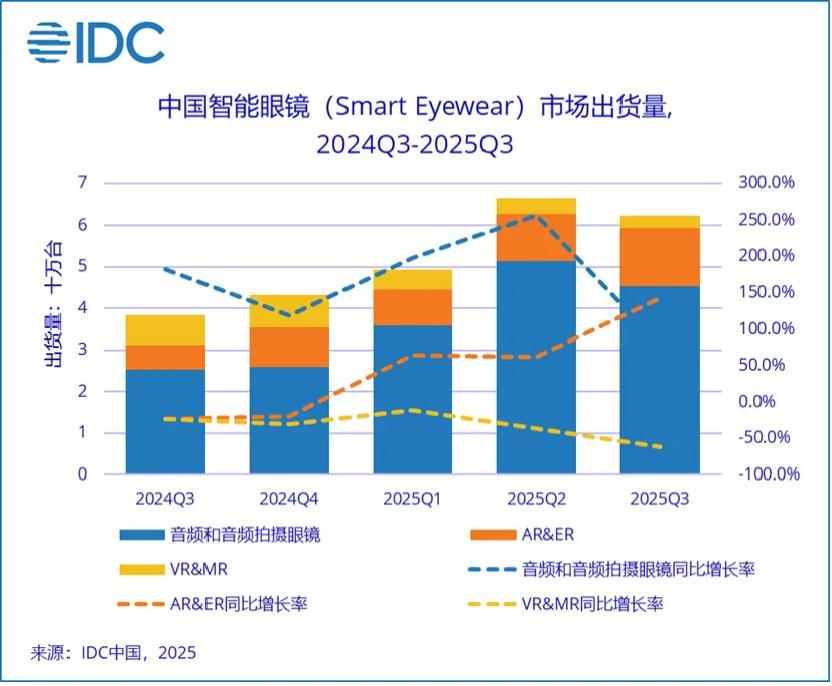
Core Insights - The AI glasses market is experiencing a significant transformation, similar to the early days of smartphones, with various Chinese manufacturers aiming to make AI glasses mainstream through diverse pricing and branding strategies [2][4][15]. Market Trends - According to IDC, global shipments of smart glasses are projected to reach 4.065 million units in the first half of 2025, marking a year-on-year growth of 64.2%, with China expected to surpass 1 million units, capturing 26.6% of the global market share [2][19]. - The AR smart glasses market is also growing, with China holding a 57.3% market share in the first half of 2025 [7]. Competitive Landscape - Meta currently dominates the smart glasses market with a 75.7% share, but Chinese companies like Xiaomi, RayBird, Xreal, and Viture are emerging as key players [5][19]. - The CES showcased numerous AI glasses from Chinese manufacturers, highlighting their technological advancements and market ambitions [9][12]. Technological Innovations - New AI glasses are focusing on lightweight designs and multi-modal AI interactions, with products like Rokid Style weighing only 38.5 grams and offering advanced features [9][10]. - Companies are developing products that integrate AR displays with AI assistants, aiming for a seamless user experience [14][15]. Industry Dynamics - The AI glasses sector is becoming a strategic battleground for various tech companies, with significant investments being made to capture market share [15][28]. - The supply chain for smart glasses is heavily concentrated in China, which produces about 80% of the necessary components, making it a critical hub for the industry [19][29]. Future Projections - The global smart glasses market is expected to see a compound annual growth rate (CAGR) of 55.6% in China, with projections of over 40 million units shipped by 2029 [31]. - By 2030, the AI glasses market could potentially reach 80 million units, representing a significant opportunity within the $150 billion traditional eyewear market [32][33].

成都这家眼镜公司,90后掌舵,半年拿了5个亿
创业邦· 2026-01-23 00:14
Core Viewpoint - The AR glasses sector is undergoing an unprecedented capital "arms race," with significant financing activities indicating strong market consensus on the future of AR hardware [4]. Financing Activities - In January 2026, three major financing events occurred: Thunderbird Innovation raised 1 billion yuan, XREAL secured 100 million USD, and Yingmu Technology completed its C1 round with a total of 500 million yuan in the last six months [4]. - Yingmu Technology stands out with its rapid financing pace, receiving continuous support from government and market capital [4]. Product Recognition and Awards - At CES 2026, Yingmu Technology's products received multiple prestigious awards, including the "Publisher Awards - CES 2026 Winner" for INMO GO3 and "Best of Application Innovation CES 2026" [7][16]. Market Performance - In 2025, Yingmu Technology's total order volume exceeded 100,000 units, representing a year-on-year increase of 300-500% [8][14]. - The company plans to expand its offline channel by establishing over 2,000 experience stores in collaboration with brands like LOHO [8]. Strategic Focus - Yingmu Technology aims to build an ecosystem by becoming the first AR glasses brand to integrate with Tencent's application platform and establishing a 20 million yuan developer fund [8]. - The company is shifting its business logic from selling "tech toys" to providing "scene services," integrating AI and AR glasses into daily life [8]. Company Background - Founded by Yang Longsheng, a post-90s entrepreneur, Yingmu Technology focuses on creating stylish, lightweight, and affordable AR glasses [10]. - The company adopted a high-barrier technology path using waveguide technology to achieve a design close to ordinary glasses [10]. Market Position - By 2022, Yingmu Technology became a major player in the domestic consumer AR glasses market, with annual production reaching tens of thousands of units [12]. - In 2024, the company launched INMO AIR3 and INMO GO2, establishing a dual product line strategy [13]. Competitive Landscape - The consumer-grade smart glasses market has seen over 100 brands entering since 2025, with significant investments from top firms [18]. - The competition is intensifying among AI glasses, AR glasses, and AI+AR glasses, with a focus on who will become the next core digital device [18]. Future Trends - The trend is shifting towards the integration of AI and AR technologies, with a focus on achieving true "all-in-one" and "lightweight" designs [25]. - The ultimate goal is to create a rich ecosystem of killer applications that will define the future of smart glasses [25].
手机遇冷、眼镜预热 eSIM仍在等待“上桌”
Bei Jing Shang Bao· 2026-01-21 23:45
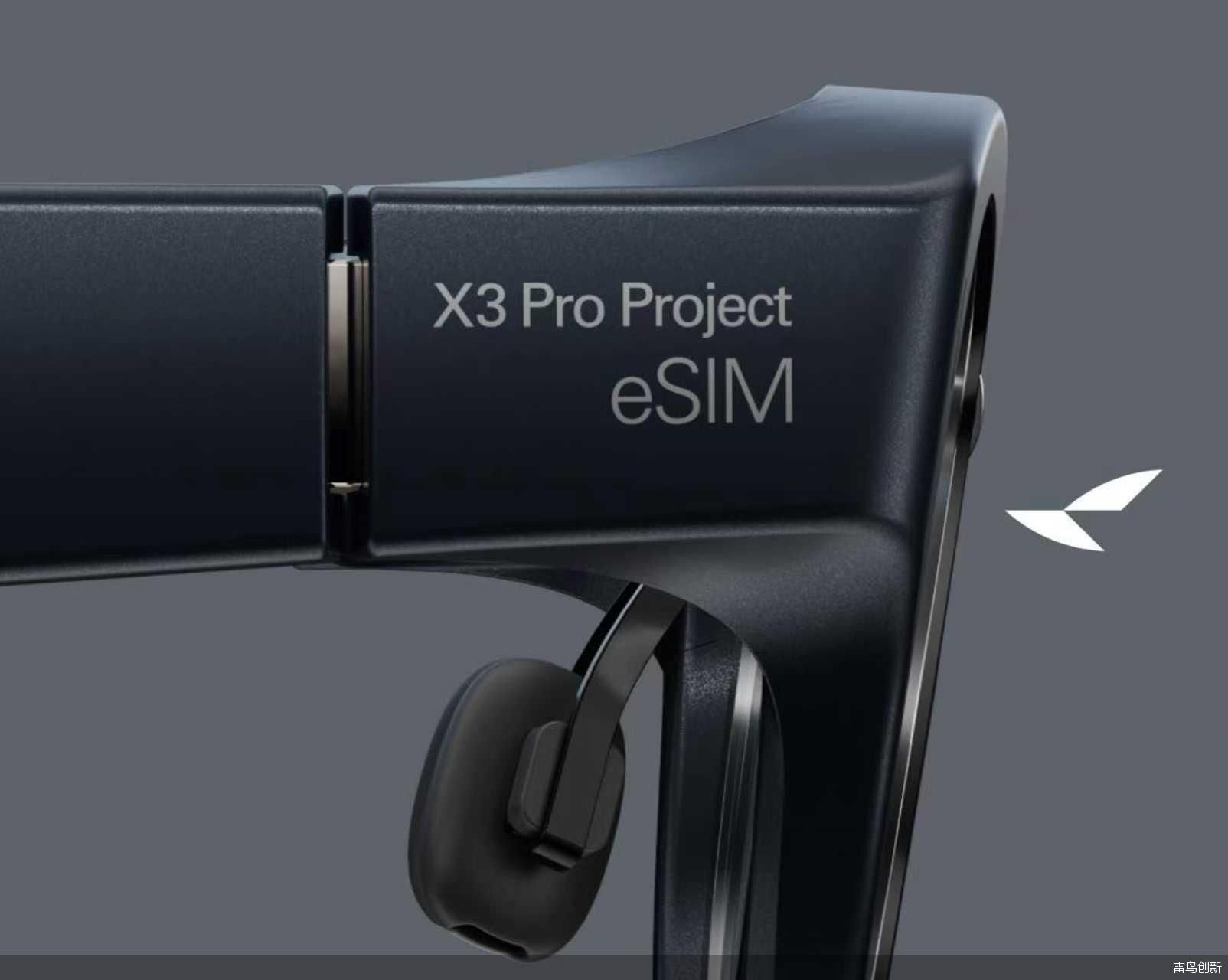
Core Insights - The demand for Apple's iPhone Air, which emphasizes extreme thinness and features eSIM technology, is significantly lower than expected, leading to supply chain cutbacks and potential component discontinuation by the end of 2025 [1] - The eSIM technology's adoption in smartphones is hindered by user habits, manufacturer conservatism, and insufficient cooperation from telecom operators, making it a secondary feature rather than a core component [2][3] Group 1: iPhone Air and eSIM Challenges - The iPhone Air's attempt to innovate with a pure eSIM design has not resonated with mainstream consumers, as many are unwilling to pay a flagship price for a device with compromised core specifications [2] - The cumbersome processes associated with eSIM activation and switching further reduce user acceptance of this technology [2] - Current smartphone models from domestic manufacturers, such as OPPO and Huawei, have adopted eSIM but still support physical SIM cards, indicating a cautious approach to eSIM integration [3] Group 2: Shift to AR Glasses - The industry is shifting focus to AR smart glasses as a more suitable application for eSIM technology, with Thunderbird Innovation launching the "Thunderbird X3 Pro Project eSIM" at CES 2026 [4] - The investment from major telecom operators into the AR glasses sector signifies a strategic interest in integrating eSIM technology into new devices [4] - The design of AR glasses, which prioritizes extreme thinness, aligns well with eSIM's no-card feature, potentially enhancing the device's functionality and independence from smartphones [5] Group 3: Future Potential and Challenges - While eSIM technology shows promise for AR glasses, the current focus in the industry remains on improving optical display and spatial computing capabilities rather than communication features [6] - The existing limitations in AR glasses, such as display technology and battery life, need to be addressed before eSIM can become a core necessity [6] - The potential for eSIM to become a necessity in various scenarios, such as cross-border travel and IoT applications, exists but requires further technological and market developments [7]


手机遇冷眼镜预热 eSIM仍在等待“上桌”
Bei Jing Shang Bao· 2026-01-21 16:11
Core Insights - The demand for Apple's iPhone Air, which emphasizes extreme thinness, is significantly lower than expected, leading to supply chain cutbacks and anticipated component discontinuation by the end of 2025 [1][3] - The iPhone Air's reliance on eSIM technology has not resonated with mainstream consumers due to compromises in battery life, heat management, and other core specifications [1][3] - The slow adoption of eSIM in mobile devices is attributed to user habits, conservative manufacturer strategies, and insufficient cooperation from telecom operators [3][4] eSIM Technology in Mobile Devices - Current mobile devices featuring eSIM, such as OPPO Find X9 Pro and Huawei Mate 80 RS, still support physical SIM cards, indicating a cautious approach from manufacturers [4] - The reluctance to fully embrace eSIM technology is influenced by concerns over user control by telecom operators and uneven global infrastructure support [4] - eSIM is currently viewed as an additional feature rather than a core necessity in mobile devices, as users are accustomed to the convenience of physical SIM cards [4] Shift to AR Smart Glasses - As eSIM faces challenges in mobile applications, the industry is exploring its potential in AR smart glasses, which align better with eSIM's capabilities [5][7] - Thunderbird Innovation's AR glasses, featuring eSIM technology, have received significant investment from Chinese telecom operators, marking a strategic entry into the AR market [6] - The design of AR glasses, which prioritizes extreme thinness, benefits from eSIM's lack of a physical card slot, allowing for more compact designs [7] Market Potential and Challenges - The integration of eSIM in AR glasses is seen as having a clearer potential for adoption compared to mobile devices, given the alignment of form factor and use cases [7][9] - However, the current focus in the AR industry remains on optical display and spatial computing capabilities, with communication technology being a secondary priority [8] - The successful scaling of eSIM in AR devices may depend on advancements in technology and market conditions, such as seamless cross-operator functionalities [9]

手机遇冷眼镜预热,eSIM仍在等待“上桌”
Bei Jing Shang Bao· 2026-01-21 13:59
Core Insights - The demand for Apple's iPhone Air, which focuses on extreme thinness, is significantly lower than expected, leading to supply chain cutbacks and anticipated component discontinuation by the end of 2025 [1][3] - The eSIM technology, initially aimed at enhancing the iPhone Air's appeal, has not gained traction in the smartphone market, with manufacturers opting for dual support of physical SIM cards and eSIMs instead of fully adopting eSIM [1][4] Group 1: iPhone Air and eSIM Challenges - The iPhone Air's attempt to innovate in the smartphone market has revealed that consumers willing to pay for an ultra-thin experience are a niche audience [3] - Users are reluctant to purchase a device that compromises on essential features like battery life and camera quality for the sake of a lightweight design [4] - The cumbersome process of activating and switching eSIMs has contributed to slow adoption rates among users [4] Group 2: Shift to AR Glasses - The introduction of eSIM-enabled AR glasses by Thunderbird Innovation at CES 2026 represents a potential new avenue for eSIM technology, as AR glasses require compact designs that benefit from eSIM's lack of a physical card slot [6][7] - The strategic investment from major telecom operators in the AR glasses sector indicates a shift in focus towards integrating eSIM technology into new devices [6] - The compatibility of eSIM with AR glasses is seen as more promising than in smartphones, as the technology aligns better with the design and functional requirements of AR devices [7] Group 3: Future of eSIM in AR - While eSIM technology is mature and can be integrated into products with relative ease, it is not currently the primary focus for AR glasses, which prioritize optical display and spatial computing capabilities [8] - The potential for eSIM to become a necessity in AR devices hinges on advancements in technology and market conditions, particularly in scenarios like cross-border travel and IoT applications [9] - The industry acknowledges that while eSIM presents opportunities, the actual implementation and validation of its benefits will require time and further development [10]
东方证券:智能眼镜是端侧AI落地重要场景 看好AI应用产业叙事
智通财经网· 2026-01-16 03:48
Core Insights - The report from Dongfang Securities highlights the growing importance of smart glasses as a key application for edge AI, particularly following CES and Meta's plans for production expansion [1] Group 1: Smart Glasses Market Trends - Smart glasses emerged as a hot topic at CES 2026, with over 90% of the core exhibition area occupied by Chinese brands, including more than 50 companies such as Thunderbird, XREAL, INMO, Rokid, and Meizu [1][2] - The global shipment of smart glasses (including audio, photography, and display features) is projected to increase from 9.93 million units in 2025 to 86.9 million units by 2030, with the market size expected to grow from 19.7 billion yuan to 161.2 billion yuan, reflecting a CAGR of 50% [3] Group 2: Key Product Innovations - Thunderbird launched the world's first dual-lens full-color AR glasses with eSIM functionality, enabling independent operation without a smartphone [2] - Rokid introduced the AI glasses Rokid Style, weighing only 38.5 grams, targeting overseas markets [2] - XGIMI unveiled its smart glasses brand MemoMind, featuring the Memo Air Display with a weight of just 28.9 grams [2] Group 3: Industry Dynamics - The report emphasizes that smart glasses are standardized products, requiring collaboration with eyewear companies to customize for individual consumer needs [3] - Weight is a critical factor influencing consumer decisions, making companies that can produce ultra-thin lenses and master fitting technology vital in the supply chain [3] - Consumer education for smart glasses heavily relies on offline channels, highlighting the importance of retail eyewear stores with strong distribution networks [3] Group 4: Notable Companies at CES - Anker Innovations showcased flagship products across various fields, winning four CES Innovation Awards [4] - Ugreen Technology presented a new smart ecosystem with high-performance hardware configurations and local AI capabilities in its NAS series [4] - Huabao New Energy introduced a comprehensive consumer-grade solar storage strategy with multiple new products [4]

东方证券:端侧AI落地场景明朗 智能眼镜与AI赋能跨境电商成双主线
智通财经网· 2026-01-16 02:14
Core Insights - The report from Dongfang Securities highlights the growing importance of smart glasses as a key application for edge AI, with a positive outlook for the eyewear industry chain and leading cross-border e-commerce companies driven by new product innovations [1][2] Group 1: Smart Glasses Market - The CES 2026 showcased smart glasses as a major trend, with over 90% of the core exhibition area occupied by Chinese brands, including more than 50 companies like Thunderbird, XREAL, INMO, and Rokid [2] - Key highlights from CES include the launch of the world's first dual-lens AR glasses with eSIM functionality by Thunderbird, Rokid's lightweight AI glasses for overseas markets weighing only 38.5 grams, and the MemoMind smart glasses by XGIMI, which weigh just 28.9 grams [2][3] - Global smart glasses shipments are projected to increase from 9.93 million units in 2025 to 86.9 million units by 2030, with the market size expected to grow from 19.7 billion yuan to 161.2 billion yuan, reflecting a CAGR of 50% [3] Group 2: Industry Dynamics - The report emphasizes that smart glasses are standardized products, requiring collaboration with eyewear companies to customize for individual consumer needs, as consumer preferences vary widely [3] - Weight is a critical factor influencing consumer decisions, making companies that can produce ultra-thin lenses and master fitting technology vital in the supply chain [3] - Consumer education for smart glasses relies heavily on offline channels, highlighting the importance of retail eyewear stores with strong distribution networks [3] Group 3: Investment Recommendations - Recommended investment targets in the smart glasses sector include companies like KANAT, Doctor Glasses, Mingyue Lenses, Aishide, and Tianyin Holdings [5] - In the cross-border e-commerce space, notable companies include Anker Innovations and Ugreen Technology, which are also highlighted for their innovative product launches at CES [5]