Apptronik

Search documents
AI的新纪元是与物理世界的结合,2025年度回顾
3 6 Ke· 2026-01-06 12:42
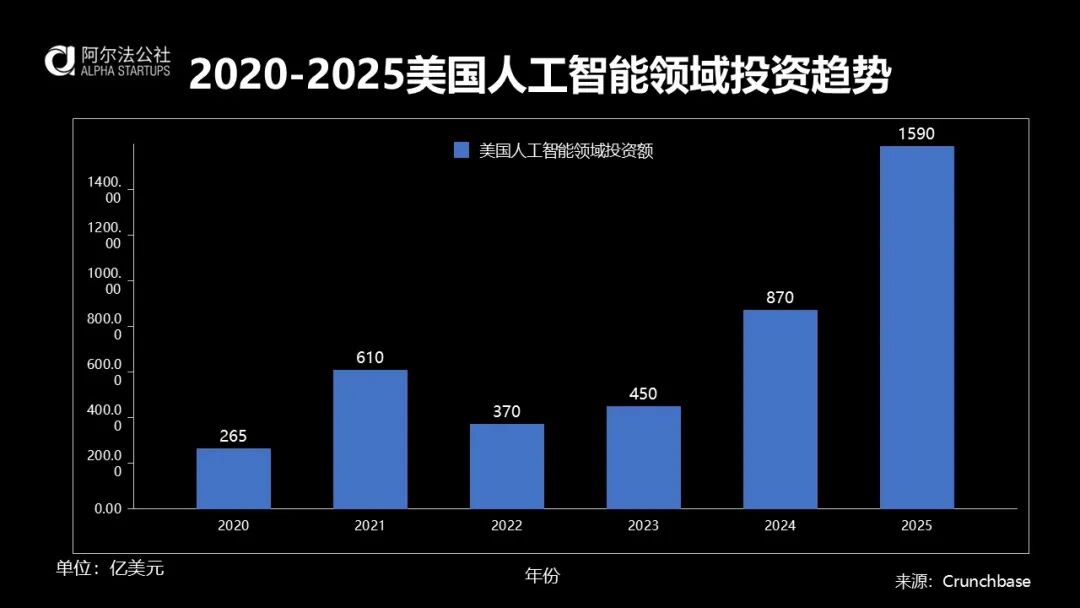
Core Insights - The current AI products are limited to screens, and there is a push towards physical AI that interacts directly with the physical world, moving beyond screen dependency [1] - The investment landscape in the AI sector is rapidly evolving, with significant growth in physical AI, particularly in the areas of robotics and wearable devices [2][3] - The digital economy contributes only 15% to global GDP, indicating a vast potential for AI applications in physical industries [3] Investment Trends - In 2024, the total venture capital investment in AI in the US reached $87 billion, and by December 15, 2025, it is projected to reach $159 billion [2] - The physical AI sector saw notable investments, with robotics startups raising $6.4 billion in 2024 and over $10.3 billion in 2025, marking a 60.9% year-over-year increase [2] - Major funding rounds include Figure's $1 billion financing, FieldAI's $314 million, and Oura Ring's $900 million, with valuations reaching $39 billion, $2 billion, and $11 billion respectively [2] Company Highlights - **Figure**: Raised $1 billion in 2025, achieving a post-money valuation of $39 billion, focusing on a vertically integrated strategy for robotics [4][6] - **Physical Intelligence**: Secured $600 million in B-round funding, with a valuation of $5.6 billion, and released a foundational model enabling robots to operate in new environments without prior training [7] - **Skild AI**: Raised $135 million in B-round funding, with a valuation of $4.4 billion, focusing on developing a universal foundational model for robotics [10][11] - **Oura**: Dominates the smart ring market with over 80% share, having sold 5.5 million units and achieving a valuation of $11 billion [24][25] Systemic Gaps in Physical AI - There is a lack of native operating systems for smart wearable devices, which hinders the development of AI-native hardware [45] - The industry faces a shortage of raw data necessary for developing robust AI models, despite the initial validation of scaling laws in embodied intelligence [45] - The need for breakthroughs in world models is critical, as existing data on human actions is insufficient for training comprehensive models [45] Advantages for Chinese AI Hardware Startups - Chinese AI hardware entrepreneurs benefit from a strong manufacturing ecosystem, large market scale, and supportive government policies that prioritize embodied AI as a strategic focus [46]

福莱新材Apex Sensing柔性传感器 参展硅谷知名人形机器人峰会
Zheng Quan Shi Bao Wang· 2025-12-15 10:27
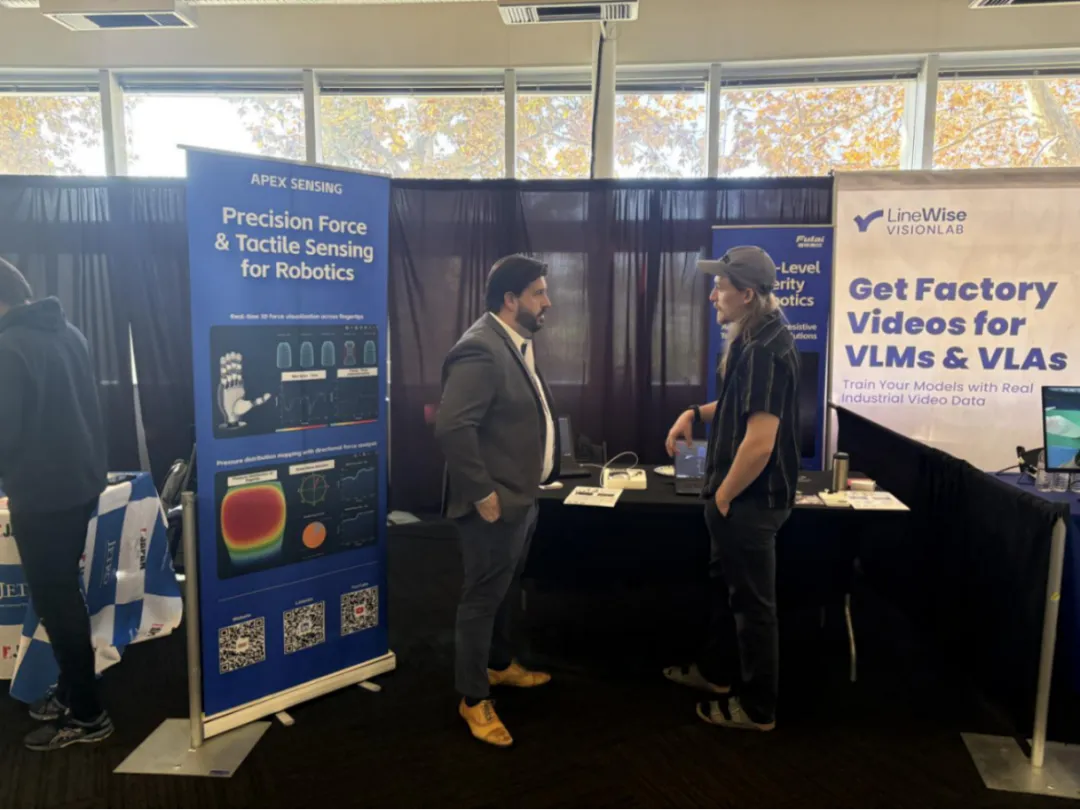
Core Insights - The Humanoids Summit, a leading event in the humanoid robotics sector, took place in Silicon Valley on December 11-12, 2025, attracting nearly 2,000 professionals from major tech companies and robotics developers [1][3] Group 1: Event Overview - The summit featured prominent developers such as Agility Robotics, Apptronik, Boston Dynamics, and Sanctuary, along with representatives from the "Big Seven" tech companies including Meta, Amazon, NVIDIA, and Google [1] - Apex Sensing, a wholly-owned subsidiary of Fola New Materials, was the only flexible sensor supplier at the summit, leveraging the opportunity to engage with numerous potential clients in North America [1] Group 2: Company Developments - Apex Sensing's flexible sensors provide tactile perception similar to human skin, which is crucial for achieving high precision and dexterity in robotic hands [3] - The company successfully established high-quality potential client connections and identified future strategic cooperation projects, gaining valuable market feedback during the summit [3]

乘特朗普All in机器人东风?软银和英伟达考虑参与Skild AI新融资,估值或140亿
机器人圈· 2025-12-10 09:37
Core Insights - Skild AI is in talks for a new funding round exceeding $1 billion, which could nearly double its valuation to $14 billion from $4.7 billion during its last funding round in June 2023 [1][2] - The U.S. government, under the Trump administration, is actively promoting the robotics industry, with plans for an executive order on robotics next year [2][7] Group 1: Investment and Valuation - SoftBank and NVIDIA are negotiating to invest in Skild AI, which has shown impressive technology in pilot projects [2][3] - Skild AI raised $500 million in its B round of funding, led by SoftBank, with participation from NVIDIA and others, achieving a valuation of $4.7 billion [2][3] - The robotics investment landscape is rapidly growing, with projections indicating that funding in the sector could reach $2.3 billion by 2025, doubling from the previous year [3] Group 2: Company Overview - Skild AI, founded in 2023 by former Meta AI researchers, focuses on developing AI models for various types of robots rather than manufacturing hardware [4][5] - The company released its first general AI model in July 2023, capable of adapting to a wide range of tasks from logistics to household chores [5] - Skild AI collaborates with NVIDIA to develop a foundational model called Skild Brain, which can be trained with minimal additional input to acquire new skills [5] Group 3: Government Initiatives and Industry Trends - The U.S. Department of Commerce is committed to advancing robotics and advanced manufacturing, emphasizing their importance in bringing critical production back to the U.S. [7] - There is a growing interest in robotics within the U.S. Congress, with proposals for establishing a national robotics committee [7] - The global humanoid robot market is projected to reach $38 billion by 2035, highlighting the increasing demand for robotic solutions [3]


乘特朗普All in机器人东风?软银和英伟达考虑参与Skild AI新融资,估值或140亿
美股IPO· 2025-12-09 00:55
Core Insights - The article discusses a significant investment opportunity in the robotics sector, particularly focusing on Skild AI, which is in talks for a funding round exceeding $1 billion, potentially raising its valuation to $14 billion, nearly double its previous valuation of $4.7 billion during its last funding round [1][3][6]. Investment and Valuation - Skild AI, founded in 2023, aims to develop a universal software "brain" for robots, overcoming deployment barriers in various environments [7]. - The company raised $500 million in its B round of funding in June 2023, with SoftBank leading the investment [3][6]. - If the new funding round is successful, Skild AI's valuation will increase significantly, reflecting investor interest in humanoid robotics as AI advancements enable more complex tasks [3][6]. Government Support and Industry Trends - The U.S. government, under the Trump administration, is reportedly pushing for the development of the robotics industry, with plans for an executive order on robotics next year [4][10]. - The U.S. Commerce Department has confirmed its commitment to the robotics sector, emphasizing its importance for bringing critical manufacturing back to the U.S. [10]. - There is a growing interest in establishing a national robotics strategy to support the emerging industry and maintain competitiveness against countries like China, which has significantly more industrial robots [10][11]. Market Potential and Future Outlook - Investment demand in the robotics sector is surging, with projections indicating that funding could reach $2.3 billion by 2025, doubling from the previous year [6]. - Goldman Sachs estimates that the global humanoid robotics market could reach $38 billion by 2035 [6]. - Experts caution that achieving truly universal robotic applications remains technically challenging and may take years for widespread implementation [9].
大洋彼岸的机器人豪赌开场了
机器人大讲堂· 2025-12-07 09:04
Core Viewpoint - The article discusses the recent surge in the U.S. stock market related to robotics, driven by potential government policies aimed at enhancing the robotics industry as a national strategic priority, comparable to chips and AI [2][4][5]. Group 1: Government Initiatives - The U.S. government is considering an executive order on robotics technology and is forming a robotics task force within the Department of Transportation [2][10]. - The Biden administration's focus on robotics is part of a broader strategy to reshape AI and manufacturing for enhanced international competitiveness [7][8]. - The "Genesis Mission" initiated by President Trump aims to mobilize 40,000 scientists to create an AI platform focusing on advanced manufacturing and other critical sectors [8][9]. Group 2: Economic and Competitive Context - The U.S. is experiencing a "re-industrialization" anxiety due to the offshoring of manufacturing and vulnerabilities exposed during the pandemic [11]. - Robotics is seen as a solution to restore competitiveness in manufacturing by reducing labor costs and enhancing production efficiency [11][13]. - The U.S. is lagging in robot deployment compared to countries like China and South Korea, which raises concerns about maintaining its technological edge [11][13]. Group 3: Labor Market Implications - The article highlights a paradox where while robotics could alleviate labor shortages in certain sectors, it may also lead to job losses in traditional roles [14][17]. - There is a significant debate on whether the push for automation will contradict the promise of revitalizing manufacturing jobs [18]. - The need for retraining displaced workers to transition into tech roles is emphasized, but the U.S. lacks successful precedents for such initiatives [18][25]. Group 4: National Security and Defense - The strategic push for robotics is also driven by national security concerns, as autonomous systems are becoming essential in modern warfare [19][20]. - Ensuring domestic production capabilities for critical military supplies relies heavily on advanced robotics technology [20][21]. Group 5: Challenges and Future Outlook - Despite the potential benefits, the U.S. faces systemic issues such as a declining STEM workforce and reliance on imported components for robotics [23][24]. - The article warns that while robotics can create wealth, ensuring equitable distribution of that wealth remains a significant challenge [25][26]. - The future of the U.S. robotics strategy is uncertain, with the need for coherent policies and long-term planning to address fundamental economic and social issues [26][28].

X @Herbert Ong
Herbert Ong· 2025-12-05 23:10
RT Apptronik (@Apptronik)“It’s important that we lean in, think about a national robotics strategy and support this burgeoning industry in the U.S. so that we can remain competitive.”Apptronik co-founder and CEO Jeff Cardenas spoke with @politico earlier this week and was on @CBSNews yesterday discussing the importance of a national robotics strategy that puts America ahead in the A.I. race.Watch here: https://t.co/bPKcFDFBO8 ...
继AI之后 机器人站上美国科技战略C位
Zhi Tong Cai Jing· 2025-12-05 07:53
Core Viewpoint - The Trump administration is shifting its policy focus towards the robotics sector, aiming to accelerate the development of robotics technology and advanced manufacturing alongside artificial intelligence (AI) initiatives [1][2]. Policy Signals - U.S. Secretary of Commerce Howard Lutnick has been actively meeting with CEOs in the robotics industry to discuss incentives such as tax reductions, regulatory simplifications, and increased federal funding [2]. - The government is considering an executive order on robotics that may set national goals for technology research, deployment, and ethical standards, similar to the "Genesis Plan" for AI [2]. - The U.S. Department of Transportation is reportedly preparing to establish a robotics working group, with plans expected to be announced by the end of the year [2]. Competitive Urgency - The robotics sector is becoming a critical battleground in the competition between the U.S. and China, with the Trump administration's industrial policy reflecting this urgency [3]. - As of 2023, China has an industrial robot stock of 1.8 million units, four times that of the U.S., highlighting the need for significant investment in the U.S. robotics sector to catch up [3]. - Global investment in robotics is projected to reach $23 billion by 2025, doubling from the previous year, with Goldman Sachs predicting the humanoid robot market could exceed $38 billion by 2035 [3]. Industry Advocacy and National Strategy - The robotics industry is actively pushing for government involvement in policy-making, emphasizing that advancements in AI should include plans for the robotics sector [4]. - Companies are calling for tax incentives and federal funding to integrate advanced automation technologies and strengthen supply chains [4]. - There is a consensus that advanced robotics technology is crucial for U.S. manufacturing, technological development, national security, and public safety [4]. Employment and Automation Paradox - A core issue remains how to align the development of the robotics industry with the goal of revitalizing U.S. manufacturing, as increased automation may lead to job losses [5]. - Some industry leaders argue that robotics can enhance worker productivity and create more job opportunities, suggesting a collaborative future between humans and machines [5]. Concerns Over Basic Research - Despite the government's focus on industrial applications, there are warnings about cuts to funding for basic research, which could undermine the foundation of innovation in robotics and AI [6]. - The American Computer Society highlights that federal funding has historically been crucial for breakthroughs in technology, and a lack of support for foundational research could hinder the U.S.'s leadership in these fields [6].

从NASA实验室到奔驰工厂,Apptronik拿下3.31亿美元战略投资
创业邦· 2025-12-05 04:47
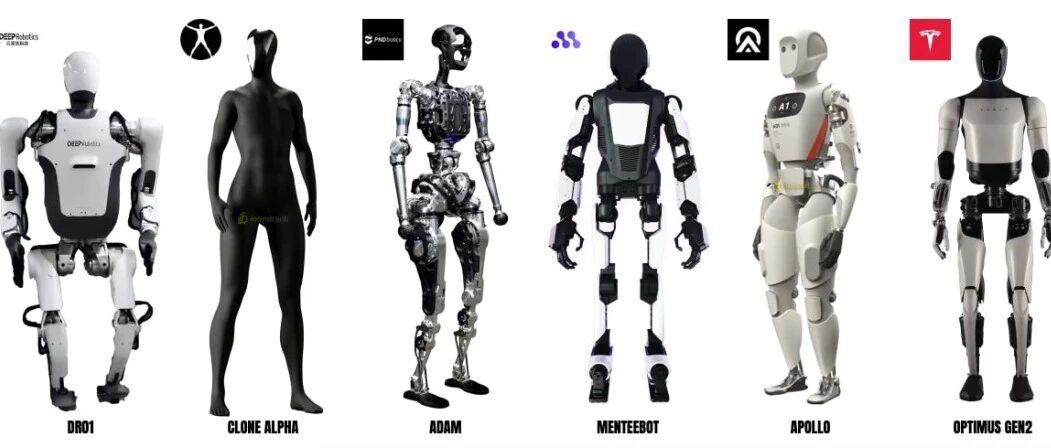
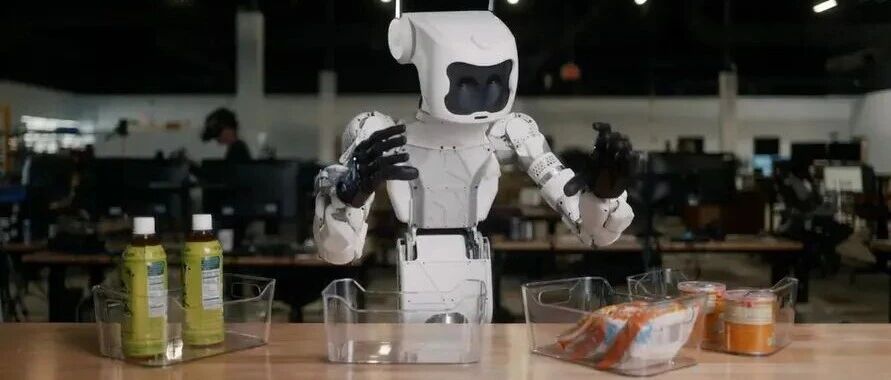
Core Insights - Apptronik's Apollo humanoid robot has improved delivery efficiency by 40% on the production line at Mercedes-Benz's Hungarian factory [2] - Apptronik has raised significant capital, with a valuation reaching $5 billion, indicating strong investor confidence in humanoid robotics [4] - The global humanoid robot market is projected to reach $38 billion by 2035 and $5 trillion by 2050, highlighting the industry's growth potential [4] Company Overview - Apptronik originated from NASA's Valkyrie robot project and was founded by Jeff Cardenas, Nick Payne, and Luis Sentis in 2016 [4][8] - The company has focused on developing general-purpose robots rather than consumer-grade products, emphasizing a long-term technological vision [9][11] - Early funding came from government contracts, which shaped the company's engineering philosophy towards reliability and robustness [11] Product Development - Apptronik's initial product, Astra, was a half-body robot designed for basic tasks in logistics, allowing the company to gather valuable data for future developments [12][16] - The Apollo robot is designed to seamlessly integrate into existing factory layouts, with a height of 1.73 meters and a load capacity of 25 kilograms [18][19] - Apollo features a modular design and can switch between bipedal and wheeled movement, enhancing its versatility across various industrial applications [21] Strategic Partnerships - Mercedes-Benz has invested significantly in Apptronik, marking a shift from customer to owner, and validating the technology's applicability in addressing labor shortages [24][25] - Collaborations with NVIDIA and Google DeepMind aim to enhance Apollo's AI capabilities and operational efficiency [25][26] Market Landscape - The humanoid robot market is characterized by three main competitive paths: Tesla's AI-driven approach, Apptronik's pragmatic engineering focus, and Figure AI's ecosystem binding strategy [29][31] - In the Chinese market, companies are pursuing diverse strategies, with a focus on AI advancements and hardware integration [33][40] - The industry is expected to accelerate the fusion of AI and hardware, leading to commercial applications in specific industrial and commercial scenarios [41]
量产前夕,机构提示产业链布局窗口已打开丨每日研选
Shang Hai Zheng Quan Bao· 2025-12-05 00:37
Core Insights - The robotics sector is experiencing a rebound after a significant pullback, driven by multiple marginal benefits and increased confidence from major tech companies like Google and Tesla accelerating their investments in the industry [1][2] - A complete industrial ecosystem is forming, encompassing manufacturing, core component supply, and application scenarios as the supply chain matures [1] Industry Developments - Tesla plans to establish a dedicated facility in Texas with an annual production capacity of 10 million units by 2027 [1] - Yushun Intelligent's emergency robot industrial park project has completed registration, aiming for a monthly production capacity of 500 units [1] - UBTECH has begun mass deliveries of the Walker S2 robot, targeting an annual production capacity of 5,000 units by 2026 and 10,000 units by 2027 [1] - Domestic companies like Zhiyuan Robotics, Galaxy General, and Xiaopeng Robotics are also expanding their production capabilities [1] Supply Chain Progress - Tesla's supply chain (T-chain) is entering a critical verification phase, with expected orders to suppliers in December and guidance for next year's supply [1] - Domestic supply chain companies are rapidly emerging, achieving technological breakthroughs in products like frameless torque motors and precision gears, and have begun small batch deliveries to leading clients [1] Application Scenarios - Application scenarios such as logistics, home services, and data collection are gradually being implemented, with UBTECH winning multiple projects for humanoid robot data collection and training centers [2] - Changan Automobile plans to launch its first vehicle-mounted robot component in Q1 next year, promoting diversified applications [2] Investment Trends - Global capital interest in humanoid robotics is at an all-time high, with increasing financing scales and participant numbers [2] - Domestic companies like Leju Robotics have completed nearly 1.5 billion yuan in Pre-IPO financing, while international firms like Apptronik secured $331 million in strategic financing [2] - Recent ETF initiatives by institutions like Huaxia Fund and E Fund aim to introduce long-term capital support to the sector [2] Focus Areas for Investment - Emphasis on sectors with confirmed industrial certainty, particularly high-probability suppliers in Tesla's supply chain, such as Sanhua Intelligent Controls and Top Group [2][4] - Attention to incremental segments related to technological upgrades, particularly in dexterous hands, with high growth potential for companies like Mingzhi Electric and Dechang Electric [3] - Identifying undervalued companies with substantial progress in robotics, such as Obit Optical and Dongmu Co., which may have a discrepancy in market perception [4]

12月5日每日研选 | 量产前夕,机构提示产业链布局窗口已打开
Sou Hu Cai Jing· 2025-12-05 00:29
Core Viewpoint - The robotics sector is experiencing a rebound after a significant pullback, driven by multiple marginal benefits and accelerated investments from tech giants like Google and Tesla, which boosts industry confidence [2] Industry Developments - Major companies are ramping up production capabilities, with Tesla planning to build a dedicated facility in Texas with an annual capacity of 10 million units by 2027 [2] - Yushun Intelligent's emergency robot industrial park project aims for a monthly production capacity of 500 units [2] - UBTECH has begun mass deliveries of the Walker S2 robot, targeting an annual production capacity of 5,000 units by 2026 and 10,000 units by 2027 [2] - Domestic companies like Zhiyuan Robotics, Galaxy General, and Xiaopeng Robotics are also expanding their production capacities [2] Supply Chain Insights - Tesla's supply chain (T-chain) is entering a critical validation phase, with expected orders to suppliers in December and guidance for next year's supply [2] - Domestic supply chain companies are rapidly emerging, achieving technological breakthroughs in products like frameless torque motors and precision gears, and have begun small batch deliveries to major clients [2] Application Scenarios - Applications in logistics, home services, and data collection are becoming more prevalent, with UBTECH winning multiple projects for humanoid robot data collection and training centers [3] - Changan Automobile plans to launch its first vehicle-mounted robot component in Q1 next year, promoting diversified applications [3] Investment Trends - Global capital interest in humanoid robotics is at an all-time high, with increasing financing scales and participant numbers [3] - Domestic companies like Leju Robotics have completed nearly 1.5 billion yuan in Pre-IPO financing, while international firms like Apptronik secured $331 million in strategic financing [3] - Recent ETF filings by institutions like Huaxia Fund and E Fund aim to introduce long-term capital support to the sector [3] Focus Areas for Investment - Emphasis on companies with verified capabilities and batch supply potential, particularly those in Tesla's supply chain, such as Sanhua Intelligent Controls and Top Group [4] - Attention to incremental segments related to technological upgrades, particularly in dexterous hands, with high growth potential for companies like Mingzhi Electric and Dechang Electric [4] - Consideration of undervalued companies with substantial progress in robotics, such as Obit Light and Dongmu Co., which may have a perception gap in the market [4]