Momenta

Search documents
特斯拉Autopilot败诉的启示
Zhong Guo Qi Che Bao Wang· 2026-02-24 08:14
2026年2月21日,美国佛罗里达州迈阿密联邦法院判决,正式驳回特斯拉上诉请求,维持2.43亿美 元(约16.8亿元人民币)的巨额赔偿判决。这起历时七年的辅助驾驶致死案,刷新了全球自动驾驶领域 赔偿金额纪录。 我国智能驾驶事业正处于上升期,特斯拉的这起案件对我国智能驾驶速写有什么启示呢?同济大学 教授朱西产告诉记者,智驾属于辅助驾驶系统,安全由驾驶员负责,自动驾驶必须100%安全才能上市 销售。 事故认定 据外媒报道,2019年4月25日晚9时许,美国佛罗里达州基拉戈市发生一起致命车祸。38岁的驾驶员 乔治·麦基驾驶特斯拉Model S,启用增强版辅助驾驶系统Autopilot后,因低头捡掉落手机分神,车辆以 约100公里/小时的速度失控冲入路边停车场,撞翻一辆静止的雪佛兰Tahoe SUV。事故导致22岁女性贝 内维德斯·莱昂·奈贝尔当场死亡,其男友迪隆·安古洛重伤。 麦基被陪审团认定承担67%责任。麦基低头捡手机,导致分神未能及时观察路况,且在事故发生前 踩下加速踏板,使车辆超速,并便利Autopilot的自动制动功能部分失效。 陪审团还认为,Autopilot未能有效识别前方静止车辆,且在驾驶员长时间分 ...

Uber's new autonomous vehicle division is about survival and opportunity
TechCrunch· 2026-02-23 19:54
Core Insights - Uber has launched a new division called Uber Autonomous Solutions to manage all aspects of operating autonomous vehicles, including software and support services [1] - The company has formed partnerships with nearly two dozen autonomous vehicle technology firms, covering various applications from robotaxis to delivery robots [2] - Uber aims to make itself indispensable to these partners by providing operational support, allowing them to focus on software development [3] Partnerships and Investments - Uber has invested in companies like Lucid, Nuro, Waabi, and WeRide, and has allocated $100 million for building fast-charging stations for autonomous vehicles [2] - The company has established a shared robotaxi service with Waymo in Atlanta and Austin, and has partnerships with Chinese firms such as Baidu and Pony.ai [9] Operational Goals - The initiative aims to reduce costs per mile for partners and accelerate the deployment of robotaxis to over 15 cities by the end of the year [4] - Uber plans to handle infrastructure needs such as training data, mapping, fleet financing, and regulatory services [7] User Experience and Fleet Management - The new division will also focus on enhancing user experience, including customer support and fleet management, which involves remote assistance and insurance [8] - Uber's approach to fleet management is particularly relevant given recent scrutiny over labor practices in the autonomous vehicle sector [8] Strategic Context - The launch of this division follows Uber's sale of its in-house AV development unit, Uber ATG, in 2020, which was a response to internal challenges and external pressures [9] - The new division is seen as a way for Uber to protect its business model against potential revenue loss from the rise of autonomous vehicles [10]



智驾洗牌,“五大”要统一江湖了吗?
Jing Ji Guan Cha Wang· 2026-02-20 13:54
刘晓林/文 2025年9月公布的《智能网联汽车 组合驾驶辅助系统安全要求》强制性国家标准(征求意见稿)(下称《意见稿》)已结束公开征求意见阶段, 预计于2027年1月1日正式实施。这意味着,车企的智驾合规准备已进入一年倒计时。 这一被称为"智能驾驶史上最严新规"的落地,使得整车组合安全、极端场景测试、全生命周期合规迭代将成为硬性约束,行业准入门槛与持续运营成本也会 随之大幅抬升,车企研发路径和智驾行业的格局将不可避免地迎来震荡。是继续自研智驾技术还是采购成熟解决方案?这个一直伴随着汽车企业的命题,将 在2026年得到新的答案。 随着订单被华为、Momenta、地平线等几大智驾头部供应商瓜分,更现实的问题将浮出水面:全栈自研是否成为少数头部玩家的特权?绝大多数车企是否被 迫转向头部供应商?技术同质化与供应链集中风险如何化解?无规模优势的中小车企,能否在合规高压下找到生存支点?2026年,围绕智能驾驶技术主权、 供应链安全、规模效率的行业格局重构已经开启。 新规压顶:自研合规成本飙升 对整车企业而言,技术合规难度和能否承担自研成本,是智驾国标带来的最大挑战。 目前看来,虽然面临新规与成本的双重约束,但智驾行业并未 ...
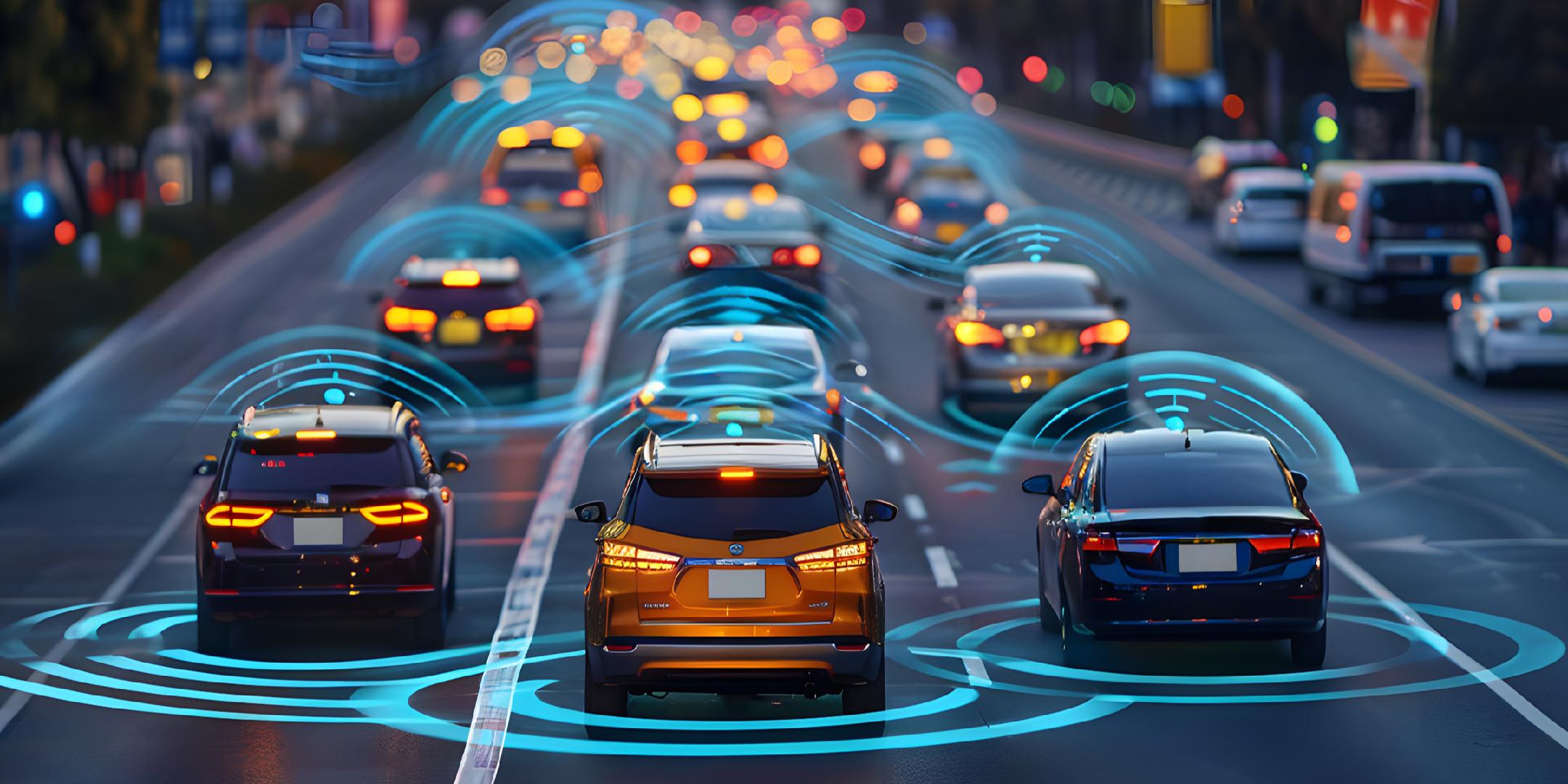
早到2分钟算违约!中国自动驾驶攻入“最难搞”的新加坡,凭什么?
Feng Huang Wang Cai Jing· 2026-02-13 23:27
Core Insights - The article discusses the challenges and opportunities for Chinese autonomous driving companies, particularly focusing on the experiences of Mushroom Car Union in Singapore and the competitive landscape in the autonomous driving sector [1][2]. Group 1: Market Opportunities - Singapore is viewed as a high-standard market for autonomous driving, with strict punctuality requirements for public transport, such as a maximum of 2 minutes early and 5 minutes late [5][6]. - Mushroom Car Union has secured a project for L4 level autonomous buses in Singapore, indicating a significant step in its international expansion and collaboration with global leaders like LG Electronics [2][3]. - The company aims to integrate its autonomous buses into Singapore's public transport network, which is seen as a critical move to demonstrate its technology's viability [5][6]. Group 2: Employment and Social Impact - The introduction of autonomous buses is not perceived as a threat to human drivers but rather as a solution to the shortage of bus drivers, particularly in regions like Singapore where there is a significant gap in driver availability [10][11]. - The company emphasizes that its autonomous buses will enhance public transport by providing better punctuality and reducing operational costs, ultimately benefiting users [9][10]. - There is a focus on human-centered design in the development of autonomous buses, with features aimed at improving accessibility for elderly and disabled passengers [12]. Group 3: Technological Development - Mushroom Car Union has developed a technology that combines visual and solid-state LiDAR systems, achieving over 50% improvement in perception distance and a 70% reduction in false detection rates [6][7]. - The company has accumulated over 5 million kilometers of operational data, which supports its technological advancements and operational capabilities [6]. - The transition to fully autonomous driving is seen as a long-term goal, with current operations involving remote safety operators who intervene only in extreme situations [14][15]. Group 4: Industry Trends - The autonomous driving industry is experiencing a shift from purely technology-driven narratives to a focus on practical implementation and profitability [2]. - The article highlights the need for companies to navigate the challenges of regulatory environments and public acceptance as they expand internationally [8][9]. - The industry is undergoing a "de-bubbling" phase, where companies must refine their focus and address key issues such as efficiency and safety [14].
误差仅容5分钟,这家公司要征服海外自动驾驶高地
Feng Huang Wang· 2026-02-13 15:22
Core Insights - The article discusses the challenges and opportunities for Chinese autonomous driving companies, particularly focusing on the experience of Mushroom Car Union in Singapore and the competitive landscape in the autonomous driving sector [1][2]. Group 1: Market Opportunities - The Middle East is seen as a hot market for autonomous driving, while Singapore presents stringent conditions for operation, such as strict punctuality requirements for buses [1][4]. - Mushroom Car Union has chosen to enter the Singapore market, which is characterized by high standards for public transport and a supportive regulatory environment [4][6]. - The company has secured a project for L4 level autonomous buses in Singapore, indicating a significant step in its international expansion [2][4]. Group 2: Technological Capabilities - Mushroom Car Union has developed a technology that integrates visual and solid-state LiDAR, achieving over 50% improvement in perception distance and a 70% reduction in false detection rates [8][12]. - The company has accumulated over 5 million kilometers of operational data in China, enhancing its technical maturity and product engineering capabilities [8][12]. Group 3: Employment and Social Impact - The introduction of autonomous buses is not seen as a threat to human drivers but rather as a solution to the shortage of bus drivers, particularly in Singapore where there is a significant gap in driver availability [10][14]. - The company aims to enhance the user experience by incorporating features that cater to the elderly and disabled, making autonomous buses more appealing compared to traditional options [15][12]. Group 4: Future Vision - The long-term goal of Mushroom Car Union is to become a leading global provider of autonomous driving solutions, focusing on public transportation and leveraging international partnerships [18]. - The company acknowledges the need for remote safety operators initially, transitioning towards fully autonomous operations as technology advances [17][16].
早到2分钟算违约!中国自动驾驶攻入“最难搞”的新加坡,凭什么?
凤凰网财经· 2026-02-13 12:05
Core Insights - The article discusses the challenges and opportunities for Chinese autonomous driving companies, particularly focusing on the international expansion of Mushroom Car Union, which has chosen Singapore as a key market despite its stringent regulations [1][4]. Group 1: Market Opportunities and Challenges - Singapore is viewed as a high-standard market for autonomous driving, with strict punctuality requirements for public transport, comparable to that of metro systems [6][8]. - The company has secured a project for L4 autonomous buses in Singapore, indicating a significant step in its international strategy [2][4]. - The overall investment landscape for autonomous driving has shifted, with a decline in funding from 932 billion yuan in 2021 to an expected 350 billion yuan by 2025, emphasizing the need for verifiable operational capabilities [2]. Group 2: Technological Advancements - Mushroom Car Union has developed a technology that integrates visual and solid-state LiDAR, achieving over 50% improvement in perception distance and a 70% reduction in false detection rates [8][10]. - The company has accumulated over 5 million kilometers of operational data in China, which supports its technological maturity and readiness for international deployment [8]. Group 3: Employment and Social Impact - The introduction of autonomous buses is not seen as a threat to human drivers but rather as a solution to the shortage of bus drivers in Singapore, where there is a reported shortfall of over 2,000 drivers [16][19]. - The company aims to enhance public transport by making it more user-friendly, particularly for the elderly and disabled, through thoughtful design features [20]. Group 4: Future Vision and Goals - The long-term goal of Mushroom Car Union is to become a leading global provider of autonomous driving solutions, focusing on public transport and leveraging partnerships to expand its capabilities [28]. - The company acknowledges the need for a gradual transition towards fully autonomous systems, with remote monitoring as a stepping stone [23][24].
未知机构:zx汽车均胜电子联合中际旭创推出车载光通信解决方案持续推进光模块在汽车-20260213
未知机构· 2026-02-13 02:25
【zx汽车】均胜电子——联合中际旭创推出车载光通信解决方案,持续推进光模块在汽车领域的应用 公司积极探索光模块在汽车领域的应用,近期联合中际旭创推出车载光通信解决方案,依托光通信抗干扰、微秒 级低时延与大带宽优势,致力于解决智能电动汽车对通信链路、时延与稳定性的要求。 2025年前三季度公司新获订单714亿元,其中头部自主品牌及造车新势力的新订单占比持续提升。 分产品来看,公司持续推进智能驾驶、跨域融合等多类汽车电子产品的订单获取,2025年下半年已获得多家客户 的全球性汽车智能化项目定点,全生命周期总金额合计超过200亿元。 该方案支持DP、MIPI、PCIe等高速数据传输,可构建中央域与区域控制器间的高速光纤环网,并已具备量产上车 能力。 具体而 【zx汽车】均胜电子——联合中际旭创推出车载光通信解决方案,持续推进光模块在汽车领域的应用 公司积极探索光模块在汽车领域的应用,近期联合中际旭创推出车载光通信解决方案,依托光通信抗干扰、微秒 级低时延与大带宽优势,致力于解决智能电动汽车对通信链路、时延与稳定性的要求。 该方案支持DP、MIPI、PCIe等高速数据传输,可构建中央域与区域控制器间的高速光纤环网,并 ...


400亿狂热追逐:具身智能2025投资战事|商业头条No.112
Sou Hu Cai Jing· 2026-02-12 03:28
海报制作:智通财经/李耀琪 智通财经记者 | 伍洋宇 2025年接近年末,绿洲资本创始合伙人张津剑跟成立刚一年的具身智能创企HillBot联合创始人苏昊共进了一顿晚餐。 苏昊给张津剑展示了一些数据,进而抛出一个想法:他觉得具身智能即将在2026上半年走到GPT-2时刻。 这在行业内并不是共识。更多受访者认为,行业应该还没走到GPT-1。 具身智能赛道火在大模型之后,又与大模型紧密相关。尽管从技术上无法完全对标,但投资人愿意用"GPT-1"之类的表述试图对行业发展阶段进行定位 ——这从根本上影响他们选择是否加码、何时加码以及加多少码。 "GPT-1是搭建一个验证它是否可行的技术环境,GPT-2是本质上证明了某些技术路径是可行的。"张津剑对所谓具身智能的"GPT"时刻下如此定义。 这种定位十分重要。假设你在GPT-3.5和GPT-1/2两个时期投进OpenAI,那么2026年你得到的估值增长将分别是30倍和大约100倍。 奇怪的是,具身智能还远远没有走到GPT-3.5阶段,只因宇树科技在2025年春晚舞台上意外走红,就提前浮出了水面。 此后一年,行业投融资格局发生了翻天覆地的变化——已经入局的投资者继续加码,尚未 ...
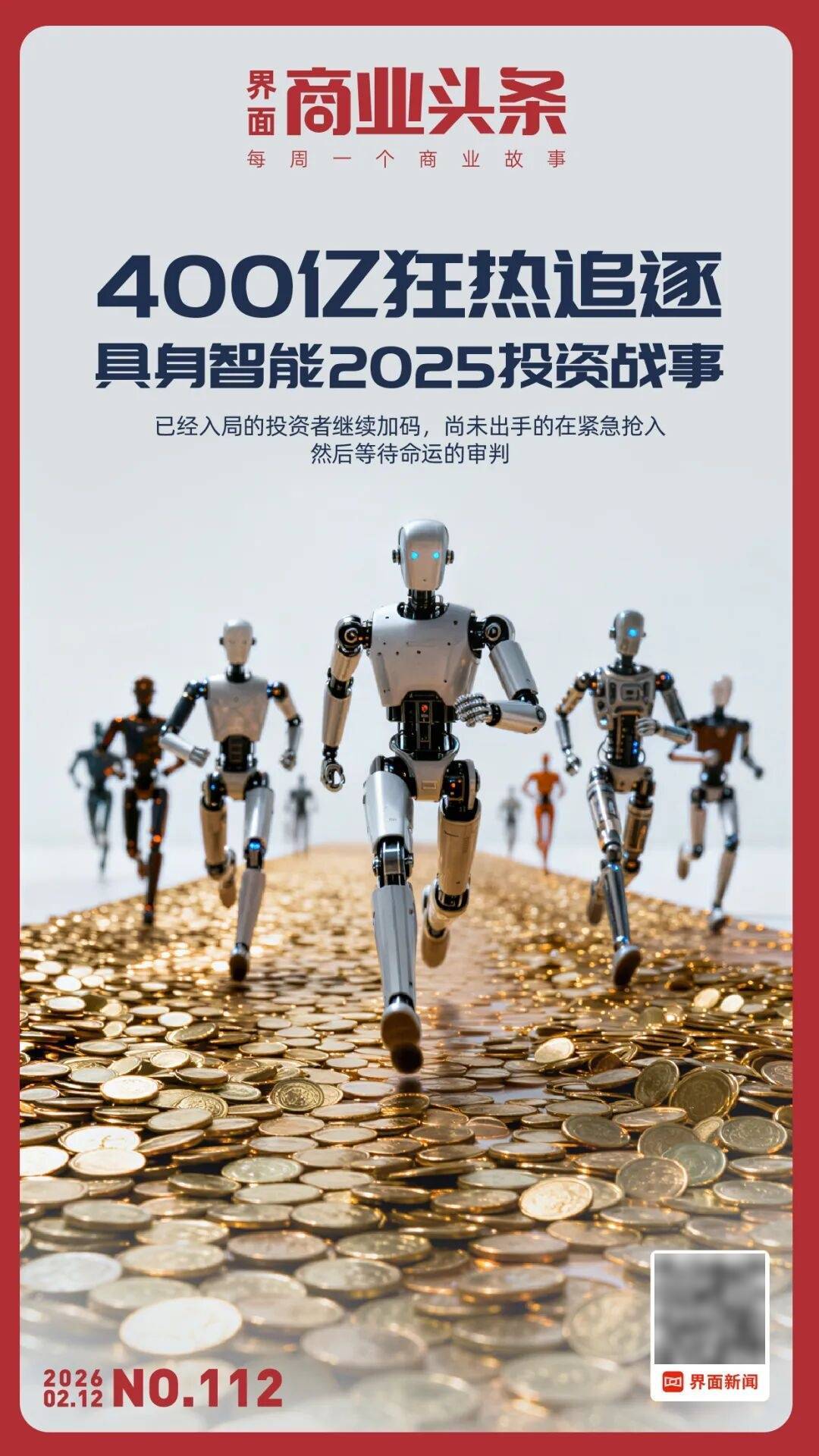
商业头条No.112|400亿狂热追逐:具身智能2025投资战事
Sou Hu Cai Jing· 2026-02-12 01:38
"GPT-1是搭建一个验证它是否可行的技术环境,GPT-2是本质上证明了某些技术路径是可行的。"张津剑对所谓具身智能的"GPT"时刻下如此定义。 智通财经记者 | 伍洋宇 智通财经编辑 | 文姝琪 2025年接近年末,绿洲资本创始合伙人张津剑跟成立刚一年的具身智能创企HillBot联合创始人苏昊共进了一顿晚餐。 苏昊给张津剑展示了一些数据,进而抛出一个想法:他觉得具身智能即将在2026上半年走到GPT-2时刻。 这在行业内并不是共识。更多受访者认为,行业应该还没走到GPT-1。 具身智能赛道火在大模型之后,又与大模型紧密相关。尽管从技术上无法完全对标,但投资人愿意用"GPT-1"之类的表述试图对行业发展阶段进行定位—— 这从根本上影响他们选择是否加码、何时加码以及加多少码。 这种定位十分重要。假设你在GPT-3.5和GPT-1/2两个时期投进OpenAI,那么2026年你得到的估值增长将分别是30倍和大约100倍。 奇怪的是,具身智能还远远没有走到GPT-3.5阶段,只因宇树科技在2025年春晚舞台上意外走红,就提前浮出了水面。 此后一年,行业投融资格局发生了翻天覆地的变化——已经入局的投资者继续加码,尚未出 ...
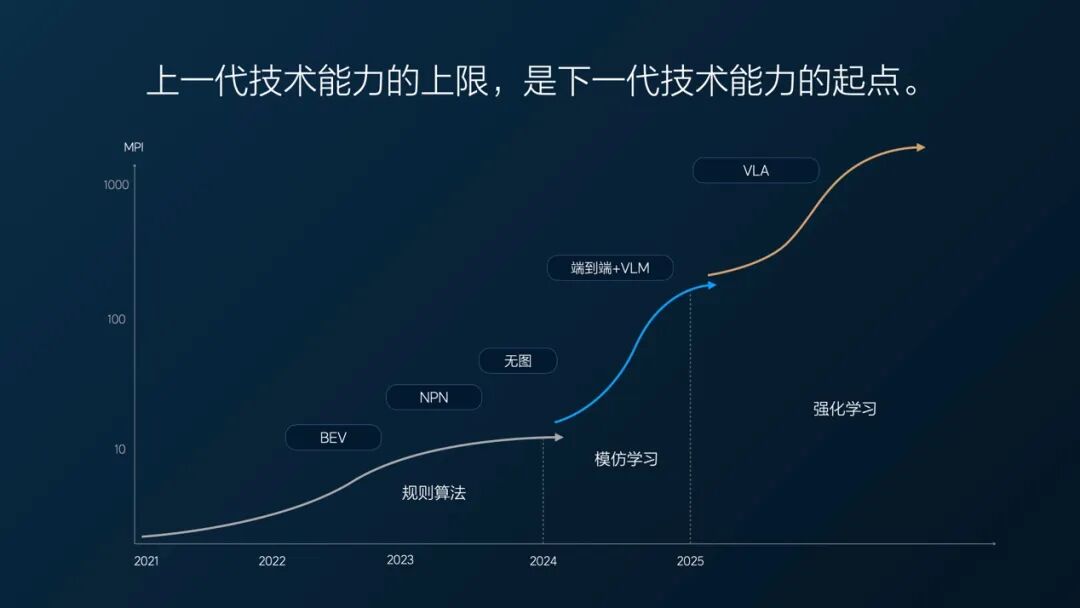
强化学习,正在决定智能驾驶的上限
3 6 Ke· 2026-02-10 04:45
Core Insights - The development of intelligent driving is not a linear technological curve but a result of the interplay between various technical paradigms, engineering constraints, and real-world scenarios [1] - As the industry moves beyond the proof-of-concept stage, single technical terms can no longer explain the real differences in capabilities [2] - Factors such as computing power, data quality, system architecture, and engineering stability are determining the upper and lower limits of intelligent driving [3] Group 1: Evolution of Learning Techniques - Recent discussions in intelligent driving technology reveal a trend where various paths, such as end-to-end, VLA, and world models, converge on the concept of reinforcement learning [5] - Reinforcement learning is transitioning from a "technical option" to a "mandatory option" in the industry [7] - The emergence of products like AlphaGo and ChatGPT has highlighted the effectiveness of allowing AI to learn through trial and error as the fastest evolutionary method [8][9] Group 2: Learning Methodologies - Understanding reinforcement learning requires a grasp of imitation learning, which was previously favored in intelligent driving [11] - Imitation learning allows AI to learn from human driving data but has limitations, such as inheriting bad habits and struggling with unfamiliar situations [14][16] - Reinforcement learning, as demonstrated by AlphaGo, allows AI to explore new strategies through self-play, leading to superior performance beyond human intuition [17] Group 3: Reinforcement Learning Mechanisms - Reinforcement learning operates on a trial-and-error basis, where the model learns to drive well through a cycle of feedback [26] - The design of reward functions is crucial, as it translates driving performance into quantifiable scores [30] - Balancing conflicting objectives, such as safety versus efficiency, is essential in reward function design [32] Group 4: World Models and Advanced Learning - The integration of world models with reinforcement learning enhances the training environment, allowing AI to simulate real-world scenarios [42][49] - High-fidelity virtual environments enable AI to consider long-term consequences of actions, improving decision-making [50] - The coupling of world models and reinforcement learning creates a feedback loop that accelerates model iteration and performance [52] Group 5: Industry Trends and Future Directions - The importance of data is being redefined, with a shift towards the ability to model the world rather than just relying on raw data [56] - Companies are focusing on enhancing the "modeling capacity" of their systems, which is crucial for intelligent driving [60] - The evolution of intelligent driving systems is moving towards a stage where AI can independently understand environments and refine strategies, marking a significant advancement in the industry [62]