
Rabobank

Search documents
US Court Throws Out Last Libor Collusion Case Against Global Banks
FinanceFeeds· 2025-09-26 21:15
Core Viewpoint - A federal judge has dismissed the last remaining claims in the litigation against global banks accused of conspiring to manipulate Libor, concluding one of the longest financial antitrust cases in U.S. history [1][13]. Legal Ruling - U.S. District Judge Naomi Reice Buchwald issued a 273-page ruling, stating that investors failed to prove collusion among banks to keep Libor artificially low, indicating that the evidence did not exclude the possibility of independent actions by the banks [2][7]. - The ruling marks the end of over a decade of litigation that began in 2011, with plaintiffs seeking to recover losses linked to the alleged manipulation of Libor [3]. Impact on Investors and Banks - The decision concludes private antitrust claims related to Libor, removing the last legal uncertainty for banks after global investigations resulted in approximately $9 billion in fines [4][9]. - The investor group involved included various entities such as Principal Financial Group, cities like Baltimore and Houston, and mortgage financiers Fannie Mae and Freddie Mac, alleging that banks' actions inflated profits and distorted borrowing costs during the 2008 financial crisis [5][6]. Evidence and Findings - Over the years, investors presented various forms of evidence, including emails and expert analysis, but the judge found that it did not establish a coordinated effort among banks [7]. - Despite uncovering manipulation by traders during investigations, civil courts did not find sufficient evidence to prove a broad conspiracy [9][10]. Libor's Transition - Libor, which influenced interest rates for over $300 trillion in loans and derivatives, was phased out in January 2022 and replaced by the Secured Overnight Financing Rate (SOFR) and other benchmarks [8][14]. - The transition to new benchmarks aims to prevent future manipulation, addressing the issues highlighted by the Libor scandal [14].


Dollar firms ahead of deluge of Fed speakers
The Economic Times· 2025-09-22 02:15
Currency Market Overview - Currency movements in early Asia were subdued following a volatile week influenced by rate decisions from the Fed, Bank of England (BoE), and Bank of Japan (BOJ) [1] - The yen decreased by 0.16% to 148.22 per dollar, reversing some gains after a hawkish shift in BOJ rhetoric suggested a potential near-term rate hike [1] - The British pound fell to a two-week low of $1.3458, impacted by increased UK public borrowing and a forecast for the BoE's next rate cut pushed to 2026 [1][3] Federal Reserve Insights - The dollar continued its rebound from a previous decline, rising slightly to 97.75 against a basket of currencies [4] - Approximately 10 Fed officials, including Chair Jerome Powell, are scheduled to speak this week, with market participants keenly observing their insights on the economy and Fed independence [5] - New Fed Governor Stephen Miran, who recently dissented in favor of a 50-basis-point rate cut, is expected to provide a detailed argument regarding Fed independence in an upcoming speech [6][9] Asian Market Developments - China maintained its benchmark lending rates unchanged for the fourth consecutive month in September, aligning with market expectations [7][9] - The offshore yuan remained stable, slightly increasing by 0.06% to 7.1151 per dollar following the rate decision [7][9]


Emerging markets to lead 22% global egg growth by 2035 – Rabobank
Yahoo Finance· 2025-09-11 13:52
Core Insights - Emerging markets are projected to lead a 22% growth in global egg production over the next decade, according to a Rabobank report [1][2] - The egg market has experienced significant growth, doubling from 46 million metric tonnes in 1995 to an expected 99 million metric tonnes by 2025 [1] Market Growth and Drivers - Approximately 99% of the projected growth in the egg market will originate from emerging markets, particularly in Asia, Africa, and Latin America [2] - Factors such as rising incomes, urbanization, and changing consumer preferences are driving demand, alongside population growth in these regions [2][3] Challenges and Opportunities - The global egg industry faces challenges related to supply chain modernization, distribution, and sustainability, but these also present opportunities for investment and innovation [2][3] - The rise of megacities in emerging markets will require adaptations in distribution, marketing, and product development [3] Consumer Trends - In mature markets, there is a shift towards value-added egg segments, including cage-free, organic, and functional eggs, driven by health and wellness trends, convenience, taste, sustainability, and animal welfare [3][4] - Technologies such as artificial intelligence, robotics, and smart farming are expected to play a crucial role in enhancing efficiency, biosecurity, and environmental performance in the egg industry [4]
Burges Salmon acts on major £240 million refinancing for BESS portfolio
Energy Global· 2025-09-11 09:30
Core Insights - Burges Salmon has advised a consortium of lenders on a £240 million refinancing package for the Gresham House Energy Storage Fund plc, which operates a 1 GW portfolio of 28 battery energy storage system assets [1][3] Group 1: Financial Details - The refinancing package amounts to £240 million, aimed at augmenting battery capacity and unlocking new revenue streams for the Gresham House Energy Storage Fund [1][2] - The fund has secured long-term floor agreements with Statkraft Markets GmbH and Markel Bermuda Ltd, covering 50% of the portfolio's total future revenues, providing protection against market volatility [3] Group 2: Operational Insights - The Gresham House Energy Storage Fund is the largest fund in the UK investing in utility-scale battery energy storage projects, owning and operating 20% of the BESS sites across the country [3] - All assets within the portfolio are strategically located across the UK and have entered operation, indicating a fully functional investment [2] Group 3: Legal and Advisory Expertise - The Burges Salmon team, led by banking and finance partner Graham Soar, provided cross-disciplinary expertise in banking, energy, utilities, and infrastructure sectors [4] - Burges Salmon has been recognized for its strong track record in large-scale energy finance transactions, ranking as the second most active law firm in clean energy mergers and acquisitions [5]
关注USDA报告发布连粕延续震荡
Tong Guan Jin Yuan Qi Huo· 2025-09-08 02:35
Report Title - **Title**: "豆粕周报" [1] Report Industry Investment Rating - No information provided Core Viewpoints - Last week, the CBOT November soybean contract fell 26.25 to close at 1026.75 cents per bushel, a decline of 2.49%; the soybean meal 01 contract rose 12 to close at 3067 yuan per ton, an increase of 0.39%; the South China soybean meal spot price rose 20 to close at 2960 yuan per ton, an increase of 0.68%; the rapeseed meal 01 contract rose 37 to close at 2550 yuan per ton, an increase of 1.47%; the Guangxi rapeseed meal spot price rose 30 to close at 2590 yuan per ton, an increase of 1.17% [4][8] - The decline in US soybeans was mainly due to the cooling of optimistic sentiment in China - US trade negotiations, the failure to reach a soybean purchase agreement, and concerns about export demand. The domestic near - term supply was relatively sufficient, while the purchase of US soybeans in the long - term had not started, leading to supply uncertainties. The Ministry of Commerce extended the anti - dumping investigation period for Canadian rapeseed, and soybean and rapeseed meal fluctuated slightly higher during the week [5][8] - Recently, there was less precipitation in the US soybean producing areas, and the good - quality rate of US soybeans was significantly lowered. Attention should be paid to the adjustment of the yield per unit in the September USDA report. The La Nina phenomenon may return in September, and the South American sowing season is about to begin. Track the changes in the weather in the producing areas. The optimistic sentiment in China - US trade negotiations has cooled, the soybean purchase agreement has fallen through, and the long - term supply remains uncertain, but the near - term supply is still available, slowing down the upward pace. It is expected that the Dalian soybean meal will fluctuate in the short term [5][12] Summary by Directory Market Data - **Futures and Spot Prices**: The CBOT November soybean contract was at 1026.75 cents per bushel on September 5, down 26.25 from August 29, a decline of 2.49%. The DCE soybean meal contract was at 3067 yuan per ton, up 12 from August 29, an increase of 0.39%. The CZCE rapeseed meal contract was at 2550 yuan per ton, up 37 from August 29, an increase of 1.47%. The South China soybean meal spot price was 2960 yuan per ton, up 20 from August 29, an increase of 0.68% [4][6][8] - **Import Prices**: The CNF import price of Brazilian soybeans was 489.00 dollars per ton on September 5, up 5.00 from August 29, an increase of 1.03%. The CNF import price of US Gulf soybeans was 467.00 dollars per ton, down 6.00 from August 29, a decline of - 1.27% [6] - **Soybean Processing Margins**: The Brazilian soybean processing margin was - 50.23 yuan per ton on September 5, down 27.40 from August 29. The US soybean processing margin (gross profit) was 2.71 dollars per bushel as of August 29, down from 2.99 dollars per bushel the previous week [6][10] - **Inventory and Sales Data**: As of August 29, the main oil mills' soybean inventory was 696.85 million tons, an increase of 14.32 million tons from the previous week and a decrease of 11.6 million tons from the same period last year; the soybean meal inventory was 107.88 million tons, an increase of 2.55 million tons from the previous week and a decrease of 30.7 million tons from the same period last year; the unfulfilled contracts were 440.82 million tons, a decrease of 50.92 million tons from the previous week and a decrease of 115.78 million tons from the same period last year. The national port soybean inventory was 905.6 million tons, an increase of 15.8 million tons from the previous week and an increase of 25.75 million tons from the same period last year [11] - **Trading Volume and Delivery Data**: As of September 5, the weekly average daily trading volume of national soybean meal was 10.19 million tons, including 7.02 million tons of spot trading and 3.17 million tons of forward trading, compared with 14.954 million tons the previous week; the weekly average daily delivery volume of soybean meal was 19.154 million tons, compared with 19.358 million tons the previous week; the main oil mills' processing volume was 230.39 million tons, compared with 242.54 million tons the previous week; the soybean meal inventory days of feed enterprises were 8.8 days, compared with 8.87 days the previous week [12] Market Analysis and Outlook - **US Soybean Market**: The decline in US soybeans was due to the cooling of optimistic sentiment in China - US trade negotiations, the failure to reach a soybean purchase agreement, and concerns about export demand. The US soybean good - quality rate was significantly lowered due to less precipitation in the producing areas, and attention should be paid to the adjustment of the yield per unit in the September USDA report [5][8][12] - **Domestic Market**: The domestic near - term supply was relatively sufficient, while the long - term supply was uncertain as the purchase of US soybeans had not started. The extension of the anti - dumping investigation period for Canadian rapeseed also affected the market. It is expected that the Dalian soybean meal will fluctuate in the short term [5][8][12] Industry News - **Production Forecasts**: StoneX estimates that the Brazilian 2025/26 soybean production will be a record 178.2 million tons, a 5.6% increase from the previous year. UkrAgro Consult estimates that the Brazilian 2025/26 soybean production will increase to 176.5 million tons, a 3% increase from the previous year. StoneX has lowered its forecast for the US 2025 soybean yield per acre from 53.6 bushels to 53.2 bushels, and estimates the US soybean production to be 4.257 billion bushels, lower than the previous 4.425 billion bushels [13][14][16] - **Sowing and Sales Data**: Ukrainian farmers have started large - scale winter sowing, with 377,100 hectares of winter rapeseed sown as of September 1, accounting for 33.8% of the estimated planting area. As of August 27, Argentine farmers sold 656,300 tons of 2024/25 soybeans and 116,200 tons of 2025/26 soybeans. Brazil exported 9,338,292.80 tons of soybeans in August, a 16% increase year - on - year [13][15] - **Policy News**: The Ukrainian president has signed a bill to impose a 10% export tax on soybeans and rapeseed, which will last until January 1, 2030, and then decrease by 1% annually until it reaches 5% [14] Related Charts - The report provides multiple charts including the trend of US soybean continuous contracts, Brazilian soybean CNF arrival prices, freight rates, RMB exchange rates, regional processing margins, and various inventory, sales, and price data charts to visually present the market situation [17][18][19]
欧洲央行降息已结束?市场转向押注利率“Higer for longer”
Zhi Tong Cai Jing· 2025-08-14 07:43
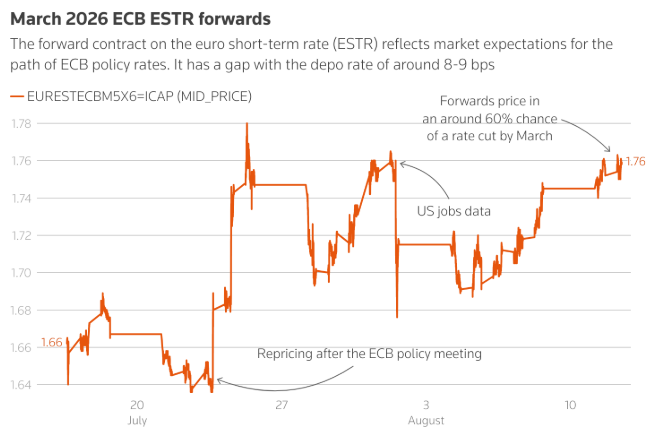
投资者们越来越预期欧元区将进入"长期高利率"(Higher for longer)状态,而预计在3月会出现的利率下 调只是暂时现象,之后借款利率将再度攀升至2%以上。 例如,包括高盛在内的一些投资银行已经调整了他们的预测,现在预计欧洲央行已经结束了当前的宽松 货币政策周期。 尽管贸易风险仍可能对经济增长和通胀造成影响,但这些银行认为,欧洲央行在最近的会议后对欧元区 经济给出了乐观的评估,因此在可预见的未来,该央行很可能会将利率维持在2%的水平。 多项基于市场的利率预期指标显示,在美国与欧盟近期达成贸易协议之后,投资者对于关税带来的通缩 影响的担忧正在逐渐减轻。交易员还认为,德国大幅增加财政支出将促进经济发展,从而在更长期内减 少进一步降息的必要性。 "Higher for longer"这一观点在2022年和2023年主导了市场走势,当时各大央行正努力应对由新冠疫情和 俄乌战争所引发的顽固通胀问题。 以下是一些能够反映利率前景的市场指标: 短期利率政策前景:欧元短期利率预计最终将达2% 针对欧洲央行官方隔夜基准利率(即欧元短期利率,简称ESTR)的远期合约显示,到明年3月,该利率下 调25个基点的可能性约为6 ...
Fourth of July barbeque prices have risen since Trump imposed tariffs, congressional analysis says
CNBC· 2025-07-03 13:00
Core Insights - Americans are expected to spend more on common barbeque items this Fourth of July due to rising prices of products like beer, outdoor folding chairs, and grill tools [1] Price Increases - The total cost of a typical grocery trip for a cookout has increased by 12.7% annually since President Trump's tariff announcement in April [2] - A six-pack of bottled lite domestic beer has seen price increases of over 13% since April [3] - Imported beers have also experienced price hikes, with Peroni Nastro Azzurro increasing by 10.5% and Modelo Especial by 9.5% [3] Tariff Impact - In April, tariffs of 25% were announced on beer imports and empty aluminum cans, with an increase to 50% on imported aluminum in June [4] - Higher aluminum costs have negatively impacted margins for some beer brands, including Constellation Brands [4] Cookout Gear Price Changes - Prices for cookout gear have also risen, with a Coleman foldable camping chair increasing by 47.7% and a 25-piece griddle accessories kit by 17.7% since April [5] - Other products have seen more modest price increases, such as Banana Boat sunscreen (8.1%), Reynolds Wrap aluminum foil (6.9%), Weber propane grill (5%), and disposable plates and utensils (3.3%) [5] Overall Barbeque Costs - A separate report indicated that the cost of a 10-person barbeque has risen by 4.2% this year, reaching $100 for the first time, largely due to higher beef prices [6]


伊以战火重燃能源通胀担忧 欧洲领跌全球公债
智通财经网· 2025-06-23 11:11
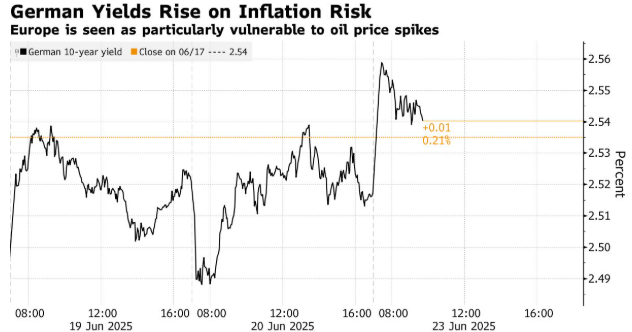
智通财经APP获悉,由于中东地区冲突不断加剧,引发了人们对石油供应中断的担忧,这可能会加剧通 胀,欧洲债券领跌全球市场。德国国债收益率全线攀升,其中德国 10 年期国债收益率涨幅高达 5 个基 点,达到 2.56%,创一周以来的新高。美国国债收益率整体上也有所上升,其中美国10 年期国债收益 率涨幅达 3 个基点,达到 4.40%。 与作为能源净出口国的美国不同,欧洲由于依赖进口,更容易受到油价波动的影响。交易员们降低了对 欧洲央行降息的押注,预计到年底欧洲央行的利率降幅将在 20 个基点左右。同时,德国 10 年期盈亏平 衡通胀率上升了多达 4 个基点。 然而,与此同时公布的数据显示,该地区的私营部门经济在 6 月份几乎没有增长。周一公布的数据显 示,欧元区6月SPGI综合PMI初值保持在50.2,略高于50的荣枯分界线。经济学家此前预计该指数将加 速至50.5。服务业PMI回到了至关重要的50,而制造业PMI则停留在49.4,连续36个月未见增长。 德意志银行的宏观策略师Jim Reid的团队表示,对于美国而言,"任何负面影响都将通过金融状况恶化 或长期利率上升来体现,因为美联储还有另一个推迟降息的理由" ...
Joint Stock Company Kaspi.kz(KSPI) - 2025 Q1 - Earnings Call Transcript
2025-05-12 13:02
Financial Data and Key Metrics Changes - Revenue increased by 21% year on year, while net income rose by 16% [7][37] - The overall performance of the company was within expectations despite some challenges [6][37] Business Line Data and Key Metrics Changes - Payments platform saw a 17% year-on-year growth in transaction volumes, with total payment volume (TPV) growing by 23% [18] - Marketplace GMV grew by 20% year on year, with e-commerce GMV increasing by 23% [21][22] - Fintech origination volumes grew by 18%, but net income growth was muted at 8% due to higher costs [31][33] Market Data and Key Metrics Changes - E-grocery business experienced a significant growth of 64% in GMV year on year, with active consumers reaching nearly 1 million [9] - The introduction of smartphone registration requirements in Kazakhstan temporarily impacted smartphone demand, reducing GMV growth by approximately 7 percentage points [23][24] Company Strategy and Development Direction - The company is focusing on expanding its fintech offerings, particularly in Turkey, with plans to invest around $300 million [16][17] - The strategy includes acquiring Rabobank to enhance fintech capabilities in Turkey [16][17] - The company aims to leverage high interest rates to grow its deposit base, which is seen as a long-term investment strategy [12][30] Management's Comments on Operating Environment and Future Outlook - Management acknowledged the high interest rate environment as a challenge but also a potential future tailwind for profitability [40][41] - There is a conservative outlook for GMV growth, now expected to be between 15% to 20% due to macroeconomic uncertainties and regulatory changes [38][40] Other Important Information - The company successfully raised €650 million in Eurobonds, marking its first issuance in this market [15][16] - The introduction of a 10% tax on revenue from investments is anticipated to impact net income [41][42] Q&A Session Summary Question: Can you elaborate on the macro uncertainty in Kazakhstan? - Management indicated that lower oil prices and currency volatility contribute to macro uncertainty, but payment trends are expected to remain resilient [46][47] Question: How has the boycott in Turkey affected near-term outlook? - Management stated that the boycott does not significantly impact long-term outlook, focusing instead on product quality and consumer experience [49][50] Question: What are the implications of the smartphone registration requirement? - Management clarified that the requirement led to increased smartphone prices and a temporary drop in demand, but this is expected to normalize [58][75] Question: How does the company plan to address the boycott-driven drag in Turkey? - Management suggested that this is a question better directed to the Hepsiburada management team, as they will provide updates on their strategies [111] Question: What is the expected impact of higher deposit rates on funding costs? - Management expects an increase in funding costs by 100 to 150 basis points due to higher deposit rates [101][102]

Joint Stock Company Kaspi.kz(KSPI) - 2025 Q1 - Earnings Call Transcript
2025-05-12 13:00
Financial Data and Key Metrics Changes - Company reported a revenue increase of 21% year over year and a net income increase of 16% [6][38] - Overall performance was within expectations despite challenges in GMV due to regulatory changes [6][7] Business Line Data and Key Metrics Changes - Payments platform saw a 16% revenue growth and a 21% net income growth, with transaction volumes up 17% year on year [18][20] - Marketplace GMV grew by 20% year on year, with e-commerce GMV increasing by 23% [21][22] - Fintech origination volumes grew by 18%, but net income was muted at 8% due to increased cost of risk [31][33] Market Data and Key Metrics Changes - E-grocery business experienced a significant growth of 64% in GMV year over year, with active consumers reaching nearly 1 million [8][9] - Smartphone sales were impacted by new registration requirements, leading to a temporary decline in demand [24][25] Company Strategy and Development Direction - Company is focusing on expanding its e-grocery business and entering new cities to support growth [9][10] - The acquisition of Rabobank is aimed at enhancing fintech capabilities in Turkey, with an investment of approximately $300 million planned [16][17] Management Comments on Operating Environment and Future Outlook - Management highlighted macroeconomic uncertainties, including high interest rates and potential impacts on consumer spending [50][62] - Despite short-term challenges, the outlook for the year remains robust, with expectations of normalization in smartphone demand [39][60] Other Important Information - The company raised Eurobonds amounting to $650 million at a 6.25% interest rate, marking its first issuance [15][16] - A 10% tax on revenue from investments is expected to be introduced, which could impact net income [42][43] Q&A Session Summary Question: Can you expand on the macro uncertainty in Kazakhstan? - Management noted that lower oil prices and currency volatility contribute to macroeconomic uncertainty, but payment trends are expected to remain resilient [49][50] Question: How has the boycott in Turkey affected your outlook? - Management stated that the boycott does not change the long-term outlook but may impact near-term integration efforts [52] Question: What are the implications of the smartphone registration requirements? - Management clarified that the new regulations led to increased prices and a temporary drop in demand, but normalization is expected in the second half of the year [58][60] Question: How does the deposit cost compare with other banks? - Management indicated that their deposit rates are competitive but not the highest in the market, focusing on consumer experience [124][125] Question: What is the strategy for the Rabobank acquisition? - The acquisition aims to enhance product development and meet capital requirements for operating a licensed bank in Turkey [88][90]