欧莱雅

Search documents
L’Oréal to set up global capability centre in Hyderabad, India
Yahoo Finance· 2025-11-17 10:59
Core Insights - L'Oréal is establishing one of its largest global capability centres in Hyderabad to support global technology, innovation, and research [1][2] - The initiative was discussed during a visit by L'Oréal's global board in October 2025, led by CEO Nicolas Hieronimus [2] - L'Oréal India's growth has slowed to 5% in fiscal year 2025, down from 14% the previous year, due to increased competition [3] Company Developments - The new centre in Hyderabad will be separate from existing research facilities in Mumbai and Bengaluru [1] - L'Oréal is currently seeking senior management for the Hyderabad project, including candidates from its Paris headquarters [1] - Jacques Lebel was appointed as India country manager in July 2025, succeeding Aseem Kaushik [3] Market Position - India contributes just over 1% of L'Oréal's annual sales, which exceed Rs41 billion ($462 million), making it the 15th-largest market for the company [4] - L'Oréal aims to elevate India into its top ten markets, projecting annual revenue of Rs1 billion in the coming years [4] - The company holds an 8% share of India's face-care market [3] Strategic Acquisitions - In October 2025, L'Oréal acquired Kering's beauty business for €4 billion ($4.65 billion), which includes the House of Creed and beauty licenses for Kering's luxury brands [4][5] - The acquisition grants L'Oréal a 50-year exclusive license to create and distribute fragrance and beauty products for Gucci after the current agreement with Coty ends [5]

盒马也开始帮Burberry清库存了
36氪· 2025-11-17 08:59
Core Viewpoint - The article discusses the shift in luxury brand sales strategies, particularly focusing on how retailers like Hema and Sam's Club are capitalizing on the luxury goods market amidst changing consumer behaviors and economic pressures [5][8]. Group 1: Retail Strategies - Luxury brands are increasingly utilizing e-commerce and outlet stores as significant sales channels due to the impact of the luxury goods downturn and changing consumer purchasing habits [7][8]. - Membership-based retail platforms, such as Hema and Sam's Club, are becoming vital for luxury brands to reduce inventory while maintaining brand prestige [8][14]. - Hema has expanded its offerings to include luxury brands like Burberry and Gucci, primarily through a global purchasing model that emphasizes pre-sale and direct shipping from Europe [10][12]. Group 2: Burberry's Financial Performance - Burberry reported a revenue of £1.032 billion for the first half of the 2026 fiscal year, reflecting a 3% decline year-over-year, with a significant reduction in operating losses from £53 million to £18 million [17][18]. - The brand's comparable store sales showed a 2% increase in the second quarter, marking the end of a seven-quarter decline, driven by improved consumer sentiment in China [21][24]. - Burberry's gross margin improved to 67.9%, up 410 basis points, attributed to better inventory management and cost control measures [32][25]. Group 3: Market Trends and Challenges - The luxury market is witnessing a shift where consumers are prioritizing value, leading to a decline in full-price sales channels while discount channels are performing better [24][29]. - Burberry's strategy includes reducing reliance on discounting and focusing on maintaining a healthier inventory level, with a reported 24% decrease in net inventory [31][30]. - The competitive landscape for retailers like Hema and Sam's Club is evolving, as they benefit from price advantages while facing challenges from unauthorized channels [37].


L’Oréal Backs Chinese Clean Beauty Brand Lan
Yahoo Finance· 2025-11-17 08:59
Core Insights - L'Oréal has made a minority investment in Lan, a clean beauty brand based in Hangzhou, China, marking its first investment in a Chinese skincare brand through its China fund, Shanghai Meicifang Investment, and its corporate venture capital arm, BOLD [1][4] Group 1: Investment Details - The investment is part of L'Oréal's strategy to expand its portfolio of Chinese brands and startups [1] - BOLD, launched in late 2018, focuses on taking minority stakes in promising startups [5] Group 2: Brand Overview - Founded in 2019, Lan is recognized as one of the first clean beauty brands, emphasizing high-performance oil treatments with a natural and minimalist aesthetic [2] - Lan's product lines incorporate biotechnologies like molecular oil extraction and botanical healing, blending Eastern wisdom with simplified skincare concepts [2] Group 3: Financial Performance - Lan achieved revenue of 200 million renminbi (approximately $28.1 million) in 2020 [3] - The brand ranked number one in national facial oil sales volume for two consecutive years from 2023 to 2024, according to Frost & Sullivan [3] - Lan has achieved 100 percent independent research and development across all product lines in the current year [3] Group 4: Strategic Importance - The investment underscores the significance of the Chinese market in L'Oréal's global strategy, with a commitment to partner with more local brands to meet the expectations of Chinese consumers [4]
双11美护大盘&高端品牌趋势分析专家会
2025-11-16 15:36
Summary of Conference Call on Beauty Industry Trends during Double 11 Industry Overview - The conference focused on the beauty industry during the Double 11 shopping festival in 2025, highlighting the performance of international and domestic brands on major e-commerce platforms like Taobao and Douyin [1][3][10]. Key Insights - **Performance of International Brands**: International brands showed strong performance on Taobao, with mid-range and luxury lines growing over 10%, and some brands exceeding 20% growth. They accounted for 70%-90% of the contribution from the 88 VIP user segment, which grew from 35 million to 53 million users [1][4][5]. - **Domestic Brands Performance**: Domestic brands, particularly non-listed companies like Naturals, Pechoin, and Lin Qingxuan, performed well, with only the listed company Maogeping exceeding 50% growth [1][3][13]. - **Platform Fee Structures**: International brands faced fees of approximately 15%-20% on Taobao and around 25% on Douyin, while domestic brands experienced higher fees on Douyin, often exceeding 40% [6][12]. - **Return Rates**: Douyin had high return rates, with skincare products around 25% and makeup over 30%, leading to actual sales data falling short of expectations. Taobao's data was considered more reliable due to adjustments for returns [8][10]. Market Trends - **Diverging Growth Trends**: The beauty industry is experiencing a bifurcation, with high-end international brands continuing to grow while emerging domestic non-listed companies rise. Instant retail and membership systems are crucial for boosting sales [9][12]. - **Marketing Strategies**: International brands have shifted their focus to performance marketing, targeting specific user segments on Taobao and Douyin. They are increasingly using live streaming and influencer partnerships to enhance customer acquisition [12][18]. - **Challenges for Domestic Brands**: Non-listed domestic brands have gained an edge due to their ability to adapt marketing strategies and maintain dual-channel operations, unlike some listed companies that have abandoned offline channels [13][14]. Additional Insights - **Consumer Behavior**: There is a growing trend of consumers becoming more rational and discerning about product ingredients and pricing, moving away from solely relying on influencer recommendations [17][20]. - **Emerging Offline Channels**: New offline channels, such as high-end department stores and flagship stores, are performing well, with some brands achieving significant sales figures [19]. - **Future Outlook**: The beauty industry is expected to face increased competition and marketing costs, particularly for domestic brands in the mass market segment. Brands with unique positioning and strong IP are likely to thrive [14][15]. This summary encapsulates the key points discussed during the conference call, providing insights into the current state and future trends of the beauty industry in the context of the Double 11 shopping festival.
深度 | 36天长跑,2025双十一折射出美妆行业下一轮变革
FBeauty未来迹· 2025-11-15 09:03
Core Insights - The 2025 Double Eleven event concluded with a total transaction volume of 169.5 billion yuan, marking a year-on-year growth of 14.2% [3] - The event has shifted from a "single-point explosive promotion mechanism" to a "long-cycle comprehensive operational test" [4][25] - The importance of omnichannel operational capabilities has been emphasized, with brands and platforms undergoing significant transformations [4] Sales Performance - Household appliances and mobile digital devices contributed the most to overall growth, with clothing in third place and personal care and beauty products maintaining a steady fourth position with an 8.2% market share [5] - The beauty and skincare category dominated with sales of 99.1 billion yuan, showing a year-on-year growth rate of 11.65% [9] Market Dynamics - The top brands in the beauty and skincare category remained stable, indicating strong brand power and supply chain resilience [10] - Significant changes were observed from the second to fifth positions, with brands like 修丽可 and 赫莲娜 entering the top ranks, reflecting a shift towards a new competitive landscape [12] - In the fragrance and makeup categories, foreign brands maintained dominance, while domestic brands like 毛戈平 and 卡姿兰 began to establish their presence [14] Channel Strategies - Tmall's beauty rankings are dominated by international brands, while Douyin showcases a strong presence of domestic brands, indicating a divergence in channel strategies [16] - The growth structure of beauty brands has evolved to include "influencer-driven hits + brand self-broadcasting + big-ticket items" [17] Promotional Strategies - The promotional period for Double Eleven has extended beyond 30 days, with brands focusing on pre-sale strategies to optimize inventory and marketing efforts [21][22] - The sales curve has diversified, with brands employing strategies to create peaks in sales during different phases of the promotional cycle [24] AI Integration - AI has begun to permeate consumer decision-making and merchant operations, enhancing the shopping experience and operational efficiency [27][28] - Platforms like Tmall and JD have introduced AI-driven services to assist consumers and merchants, significantly improving operational capabilities [30][32][35] - The integration of AI is reshaping the competitive landscape, emphasizing the importance of technological efficiency over resource density [39][40] Industry Evolution - The Double Eleven event has evolved into a cultural phenomenon, reflecting broader trends in consumer behavior and brand strategies [41] - Platforms are increasingly differentiating their strategies, with Tmall focusing on a comprehensive consumption platform and Douyin emphasizing content-driven commerce [42] - User engagement is shifting from transactional relationships to long-term asset accumulation, with brands leveraging membership tools to enhance customer loyalty [43] - The value of Double Eleven is transitioning from mere transaction efficiency to ecosystem empowerment, fostering a more rational and long-term relationship among platforms, brands, and consumers [45]

Gucci美妆陷“三角关系”官司,怎么回事?
Guan Cha Zhe Wang· 2025-11-15 02:36
Core Viewpoint - The legal battle over Gucci's cosmetics rights highlights the complex interests within the international beauty industry, following Kering's announcement of a €4 billion deal with L'Oréal to acquire long-term beauty and fragrance rights for Gucci and other luxury brands, despite existing agreements with Coty until 2028 [1][5]. Group 1: Legal Dispute - Kering's agreement with L'Oréal involves a €4 billion buyout of beauty rights for Gucci and two other brands for 50 years, which Coty claims violates their existing contract [1][5]. - Coty has filed a lawsuit against Kering and Gucci in the UK, asserting their rights under the current agreement, which is set to last until 2028 [1][2]. - Both Kering and Coty have made strong statements regarding their commitment to defend their respective positions in this dispute [1][2]. Group 2: Financial Performance - Coty's financial performance shows a net revenue of $6.118 billion for the fiscal year 2024, with a 10% year-on-year increase, and the high-end beauty segment contributing $3.857 billion, up 13% [5]. - Gucci's fragrance line, particularly the "Gucci Bloom" series, has been a significant revenue driver for Coty, indicating the brand's strong market presence [5][8]. - Kering's beauty division reported revenues of €323 million in 2024, primarily from the recently acquired Creed brand, with a 9% year-on-year growth in the first half of 2025 [8]. Group 3: Strategic Shifts - Kering's establishment of Kering Beauté and the acquisition of Creed for €3.5 billion reflect a strategic shift towards in-house beauty operations [8]. - The appointment of Luca de Meo as CEO has led to a strategic overhaul, culminating in the decision to sell the beauty business to L'Oréal for €4 billion [8][9]. - The impending sale to L'Oréal is expected to be completed in the first half of 2026, with cash payments and future royalties to Kering [8].


京东试用频道复购用户提升523% 伊利登顶“用户爱试榜”
Sou Hu Cai Jing· 2025-11-14 16:43
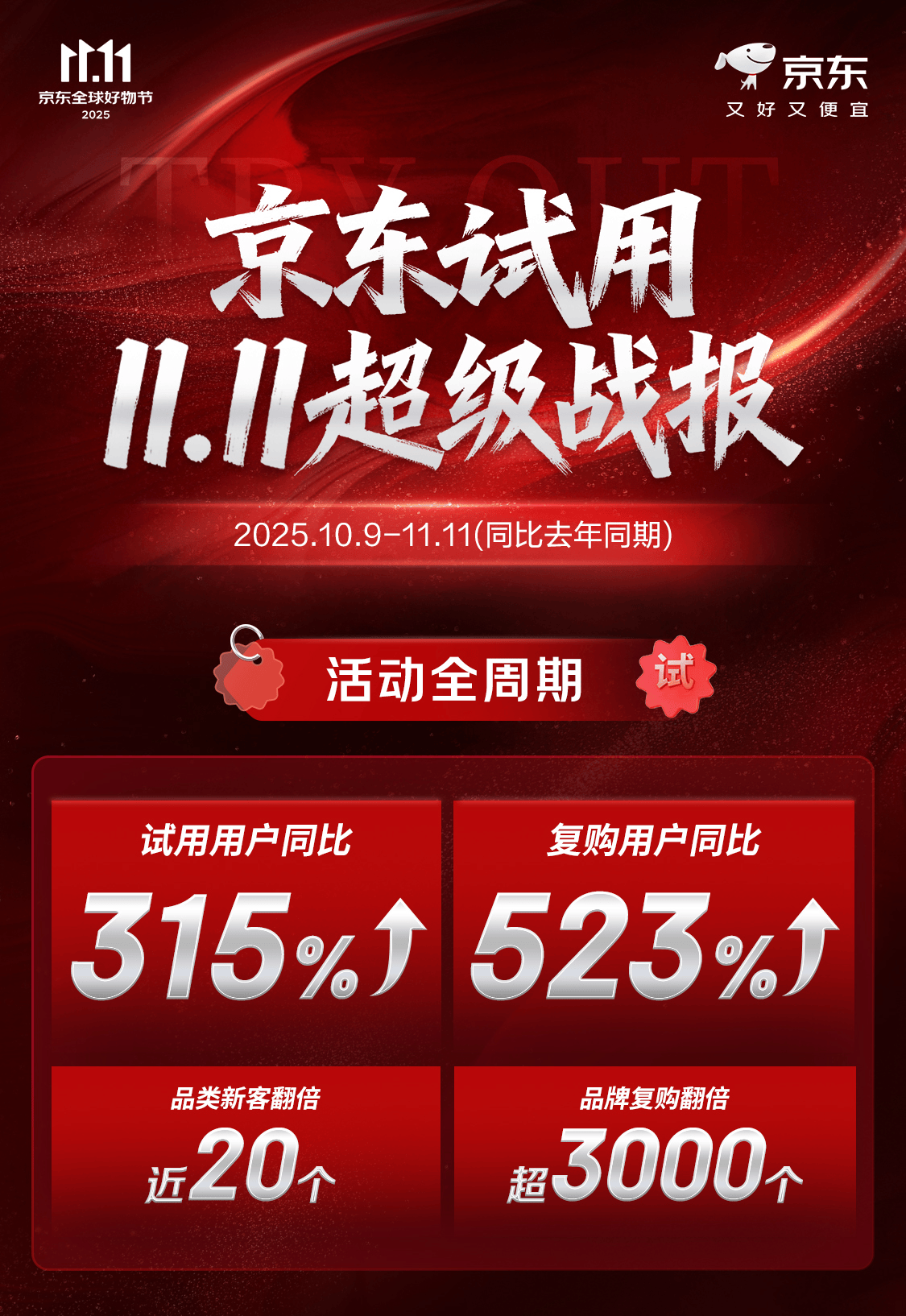
Core Insights - JD.com achieved significant growth during the 11.11 shopping festival, with a 40% increase in the number of users placing orders and nearly a 60% increase in order volume by November 11, 2025 [1] - The "try before you buy" model has effectively stimulated consumer enthusiasm, with trial channel user numbers increasing by 315% and repeat purchase users rising by 523% [1][3] - The trend of "sample economy" is expanding beyond beauty products, enhancing experiential consumption across various categories [3] Group 1: Sales Performance - JD.com led the growth in sales during the 11.11 period, particularly in the 3C digital and home appliance sectors, where it held the highest market share [1] - The trial channel saw nearly 20 categories of new customers double in number, with over 3,000 brands experiencing a doubling of repeat purchase users [3] Group 2: Consumer Behavior - The top three categories for user trial preferences were beauty and skincare, personal care, and maternal and infant products, with healthcare and household cleaning products following closely [3] - The "try and love" list showed that beauty and skincare remained the leading category, with maternal and infant products, personal care, nutrition, and pet care also performing well [3] Group 3: Brand Engagement - Brands are leveraging JD.com's trial capabilities to efficiently attract new customers at a low trial cost, with notable success from brands like Yili, which topped the new customer acquisition list during the 11.11 event [5][6] - The trial channel is positioned as a "gathering place for genuine brand samples," helping brands effectively reach target users while providing consumers with a more secure and cost-effective shopping experience [7]

科技巨头与初创两手抓,美妆产业步入“科技竞赛”时代
2 1 Shi Ji Jing Ji Bao Dao· 2025-11-14 14:31
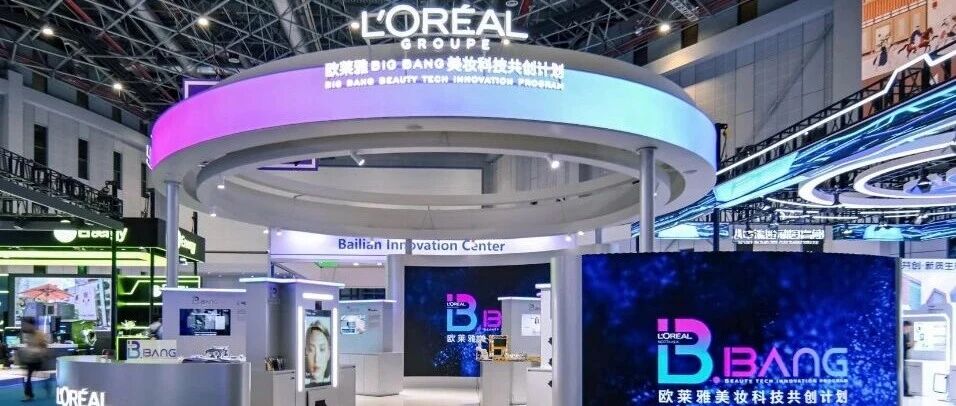
Core Insights - L'Oréal is accelerating its transformation in the beauty technology sector through open innovation, highlighted by its participation in the China International Import Expo with the "BIG BANG Beauty Tech Co-Creation Program" for the third consecutive year [1][2] - The program focuses on integrating AI and sustainable technologies, showcasing L'Oréal's forward-looking investments in the beauty tech landscape [1][3] Expansion of the Program - The BIG BANG program has expanded its scope, introducing "Transforming Sustainability" as an independent track alongside three other core tracks: "New Experience," "New Product Research," and "New Operations" [3] - This expansion aims to address sustainability challenges in the beauty industry through technological innovation, such as exploring AI-driven localized green business models [3] AI Integration and Innovations - Over twenty innovative startups from China, Japan, South Korea, and France participated in this year's expo, deeply integrating AI technology across various aspects of consumer experience, business applications, research, and supply chain [2][4] - Collaborations with tech giants like IBM, Google, and NVIDIA are enhancing the integration of AI into the BIG BANG program, positioning AI as a key driver of advancements in beauty technology [5] Regional Collaboration and Global Reach - The program has received over 700 applications this year, indicating a significant increase in interest and the establishment of a vibrant innovation community in North Asia [8] - L'Oréal's strategy includes leveraging successful experiences from the BIG BANG program to expand into South Asia, the Middle East, and North Africa, thereby building a global beauty tech ecosystem [8] Investment and Incubation - The BIG BANG program serves as a crucial channel for L'Oréal to incubate and invest in startups, providing financial support and facilitating strategic partnerships [10][11] - To date, the program has attracted over 2,500 startups and successfully incubated more than 80 projects, translating innovative solutions into commercial applications [11][12] Future Directions - L'Oréal's dual strategy of "Technologization" and "Globalization" aims to achieve sustainable growth in a changing beauty market, reinforcing its commitment to technological investment and a comprehensive industry ecosystem [13]
科技巨头与初创两手抓,美妆产业步入“科技竞赛”时代
21世纪经济报道· 2025-11-14 14:19
Core Viewpoint - The article highlights L'Oréal's strategic transformation in the beauty industry through open innovation, particularly focusing on the integration of technology and sustainability in its "BIG BANG Beauty Tech Co-Creation Program" [1][5][25] Expansion of the Program - The BIG BANG program has expanded its scope, introducing "Sustainable Innovation" as an independent track alongside three other core tracks: "New Beauty Experiences," "Future Product Research," and "New Operations" [5][12] - This expansion aims to address sustainability challenges in the beauty industry, such as exploring AI-driven localized green business models [5][9] AI Integration - Over twenty innovative startups from China, Japan, South Korea, and France participated in this year's event, showcasing AI technology's integration across various aspects of consumer experience, business applications, research, and supply chain [3][7] - L'Oréal collaborates with global tech giants like IBM, Google, and NVIDIA to deeply integrate AI into the BIG BANG program, positioning AI as a key driver of beauty tech advancements [9][25] Regional Collaboration - The program has seen significant interest, with over 700 startups applying this year, indicating a growing innovation ecosystem in North Asia [15][16] - L'Oréal's efforts have led to a collaborative "beauty triangle" among China, Japan, and South Korea, enhancing growth pathways in the North Asia region [15][16] Investment and Incubation - The BIG BANG program serves as a crucial channel for L'Oréal to incubate and invest in startups, providing financial support and facilitating strategic partnerships [18][21] - As of now, the program has attracted over 2,500 startups and successfully incubated over 80 projects, applying cutting-edge technologies in commercial use [21][24] Future Outlook - L'Oréal's dual strategy of "technologization" and "globalization" aims to achieve sustainable growth in a changing beauty market, reinforcing its commitment to innovation and collaboration across the industry [25]
Canada’s Most Iconic Christmas Tree Lights Up The 2025 Distillery Winter Village
Globenewswire· 2025-11-14 04:21
Core Insights - The Distillery Winter Village in Toronto officially opened on November 13, 2025, marking its 16th season and attracting approximately one million visitors annually [1][2][11] Event Highlights - The event runs from November 13, 2025, to January 4, 2026, transforming a 13-acre pedestrian-only heritage district into a winter wonderland with 47 vendor cabins and nine outdoor holiday bars, the most ever [6][11] - This year's Christmas tree is a 16.7-metre (55-foot) silver fir adorned with over 80,000 lights and 750 ornaments, making it Canada's most photographed Christmas tree [3][11] - The tree lighting ceremony featured a performance by The Tenors, with profits from ticket sales supporting local charities [2][11] Attractions and Activities - New attractions include a L'Oréal Paris Cabin for creating custom greeting cards, a Chef's Lane culinary experience with top Canadian chefs, and a Narnia-themed Santa's Village [7][8][11] - Family-friendly entertainment includes daily Storytime with the Elves and performances by various local artists [13] Ticketing and Visitor Information - Tickets are required during peak times, starting at $15, with free entry for children aged nine and under [9][11] - The event employs over 700 seasonal workers and raises funds for local charities [11]