铠侠

Search documents
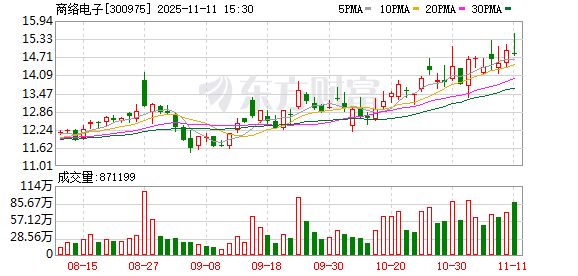
商络电子:公司作为长鑫、铠侠、兆易、群联、得一微等头部品牌的授权代理商,具备存储产品稳定供货能力
Mei Ri Jing Ji Xin Wen· 2025-11-11 09:01
Group 1 - The company, 商络电子, confirmed its role as an authorized distributor for major brands such as 长鑫, 铠侠, 兆易, 群联, and 得一微, indicating a stable supply capability for storage products [2] - The customer base of the company includes sectors such as servers, mobile phones, and various consumer IoT fields, highlighting its diverse market reach [2]

美光晶圆厂延期--存储产业大周期持续升温
傅里叶的猫· 2025-11-11 04:17
Core Viewpoint - The memory industry is experiencing a super cycle driven by supply-demand imbalances, particularly in DRAM and NAND markets, with significant price increases expected through 2026 [2][5]. Group 1: Market Dynamics - Samsung anticipates a supply-demand imbalance in the DRAM and NAND markets by 2026, with demand exceeding supply, and is focusing on optimizing existing capacity [2]. - Micron's HBM supply is sold out for 2026, but the New York super factory's production is delayed by 2-3 years, limiting short-term DRAM supply expansion [2]. - The entire storage industry is currently at historical low inventory levels, with module manufacturers holding only 2 months of inventory, significantly below the normal 4-month cycle [4]. Group 2: Demand Drivers - The explosive growth of AI servers is a major demand driver, with high-end AI servers requiring 5-10 times the storage capacity of regular servers, leading to increased demand for HBM, enterprise DRAM, and SSDs [4][5]. - The shift from HDD to SSD in data storage is accelerating due to the AI inference era, with SSDs expected to increase their share in servers from 55% to 70% [5]. Group 3: Price Trends - Price increases for various memory products are projected, with significant price hikes expected in Q4 2025 across all categories, particularly for high-capacity products [5]. - Specific projected price increases include: - DRAM - mainstream DDR5: 25%-30% - DRAM - server DRAM: 28%-33% - DRAM - 96GB server RDIMM: 70% - NAND - eSSD: 25%-30% - NAND - 3D NAND wafers (TLC/QLC): 65%-70% [5]. Group 4: Strategic Responses - Module manufacturers are adopting conservative inventory strategies and proactive inventory management to navigate the current pricing environment [3][4]. - Major cloud service providers are seeking long-term agreements with suppliers to secure capacity amid rising prices [6].
存储芯片需求旺盛11月以来融资资金大手笔买入6股
Zheng Quan Shi Bao· 2025-11-10 18:21
Group 1 - The storage chip sector experienced a collective rise, with companies like ShenGong Co. and Yingtang Zhikong hitting the daily limit, while others like Purun Co. and Shannon Chip also saw significant gains [1] - SanDisk, a leader in flash memory, announced a substantial price increase of up to 50% for NAND flash contracts, prompting companies like Transcend and ADATA to halt shipments and reassess pricing [1] - SanDisk's Q1 FY2026 revenue reached $2.308 billion, a 23% year-over-year increase, with NAND product demand exceeding supply and inventory turnover days decreasing from 135 to 115 days [1] Group 2 - The average stock price of storage-related companies has risen by 85.43% this year, with Demingli, Dongxin Co., and Jiangbolong leading with increases of 355.04%, 264.46%, and 230.31% respectively [2] - In November, seven storage concept stocks were investigated by institutions, with companies like Kechuang Data and Fudan Microelectronics receiving significant attention [2] - Kechuang Data reported a revenue of 8.331 billion yuan for the first three quarters of the year, a 54.43% increase year-over-year, benefiting from the rapid growth of AI services and a favorable storage market [2] Group 3 - Among storage concept stocks, companies like Lanke Technology, Unisoc, and Zhaoyi Innovation reported net profits exceeding 1 billion yuan in the first three quarters [3] - More than half of the storage concept stocks received increased financing in November, with six stocks seeing net purchases exceeding 100 million yuan, including Jiangbolong and Demingli [3]



存储涨价“存货为王”,A股哪家模组厂商Q4迎来高光时刻?
Ju Chao Zi Xun· 2025-11-09 04:53
Core Insights - The global memory industry is facing a structural, long-term shortage due to the rapid expansion of artificial intelligence applications, with major DRAM manufacturers like SK Hynix, Samsung, and Micron experiencing significant capacity constraints, expected to last until the end of 2026 [2] - Memory module manufacturers are currently prioritizing inventory management over order fulfillment, leading to a market environment where "inventory is king" [2] - The financial performance of major A-share memory module companies shows significant divergence, with varying revenue growth, profit structures, and inventory management [2] Revenue Performance - In the first three quarters of 2025, Jiangbolong led in revenue with 16.73433 billion, followed by Bawei Storage, Demingli, Wanrun Technology, Langke Technology, and Tongyou Technology with revenues of 6.57508 billion, 6.65911 billion, 3.71386 billion, 794.83 million, and 327.24 million respectively [2] - Year-on-year revenue growth rates for Demingli were the highest at 85.1294%, with Bawei Storage, Jiangbolong, Wanrun Technology, Langke Technology, and Tongyou Technology showing growth rates of 30.8424%, 26.1235%, 21.7743%, 35.1916%, and 7.7274% respectively [4] Profitability Analysis - Jiangbolong achieved the highest net profit of 712.63 million, a year-on-year increase of 27.9541%, while Bawei Storage and Wanrun Technology reported profits of 30.41 million and 27.76 million, respectively, with Wanrun experiencing a decline of 16.5846% [5] - In Q3, Jiangbolong's revenue reached 6.53868 billion, leading the sector, while other companies reported revenues of 2.66275 billion, 2.55007 billion, 1.16627 billion, 315.92 million, and 153.54 million respectively [5] Inventory and Accounts Receivable - Jiangbolong held the highest inventory at 8.51687 billion, followed by Bawei Storage, Demingli, Wanrun Technology, Langke Technology, and Tongyou Technology with inventories of 5.69514 billion, 5.93952 billion, 386.74 million, 290.83 million, and 138.24 million respectively [9] - In terms of accounts receivable, Jiangbolong also led with 2.76049 billion, while Bawei Storage, Demingli, Wanrun Technology, Langke Technology, and Tongyou Technology had accounts receivable of 1.37709 billion, 937.18 million, 1.29445 billion, 109.3 million, and 374.49 million respectively [9] Market Dynamics - The third quarter saw a significant improvement in operating data across memory module manufacturers due to widespread price increases, with Jiangbolong's net profit growth reaching 20 times year-on-year [9] - The fourth quarter is characterized by a focus on inventory accumulation, with companies like Jiangbolong and Bawei Storage positioned to benefit more from the price increase cycle, widening the gap between leading and lagging manufacturers [9]
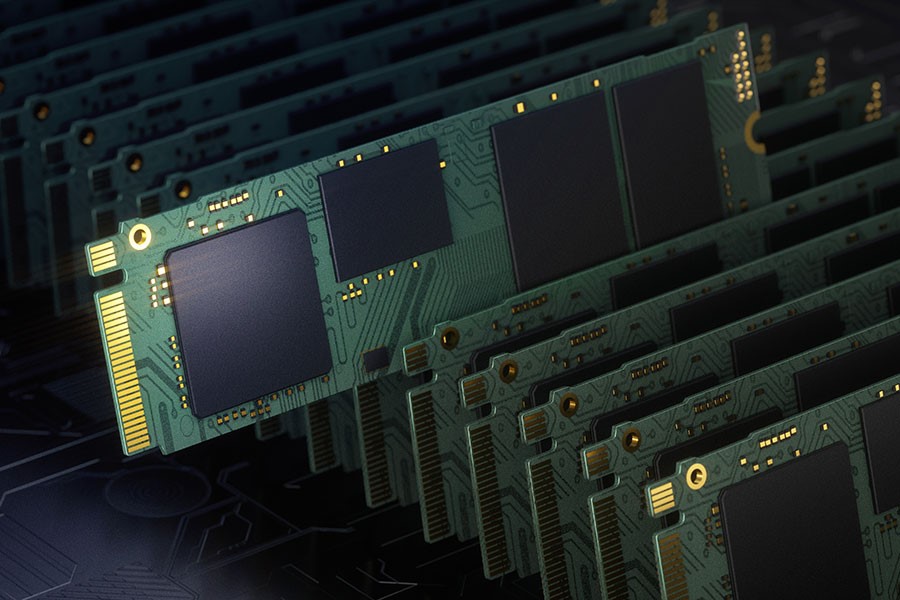
再造一个HBM!
半导体芯闻· 2025-11-07 10:24
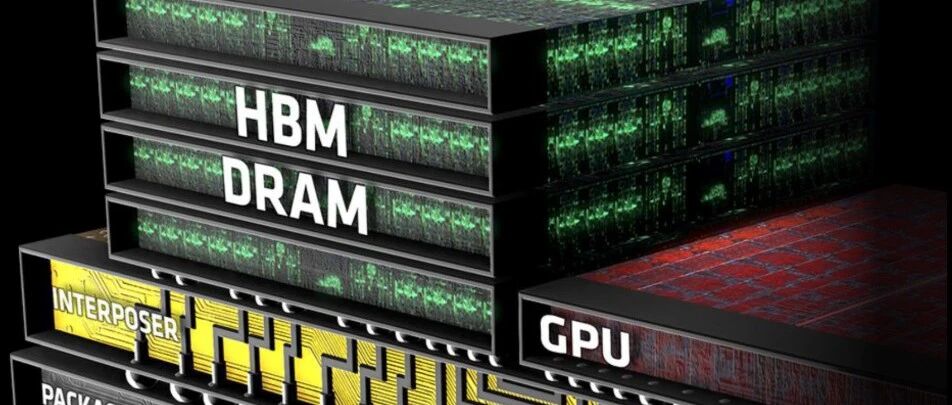
Core Insights - The storage market is experiencing a rare supply-demand imbalance, driven by increased capital expenditure from cloud giants and rising AI demand, leading to memory shortages and significant price increases for both DRAM and NAND flash [2][3] - High Bandwidth Flash (HBF) is emerging as a new technology concept that could elevate NAND flash to a core asset in the AI era, similar to how High Bandwidth Memory (HBM) has transformed DRAM [2][3][4] Group 1: HBF Technology Development - HBF is a NAND version of high bandwidth memory technology, connecting 16-layer NAND stacks to logic chips and then to GPUs via multi-channel high bandwidth connections [3][4] - The architecture of HBF aims to balance performance and cost, matching HBM's bandwidth while providing 8 to 16 times the storage capacity at a similar cost [4][5] - The HBF ecosystem is beginning to take shape, with various industry players showing interest and starting to develop this technology [4][5] Group 2: Industry Players and Strategies - SK Hynix has launched the "AIN Family" product lineup, which includes HBF technology, aiming to meet the rapidly growing demand for NAND storage products in the AI inference market [5][6] - SanDisk is aggressively pushing HBF technology, planning to provide samples by mid-2026 and formal products by early 2027, showcasing strong confidence in its technological prospects [10][12] - Kioxia is taking a pragmatic approach by exploring multiple technical paths for HBF, which allows it to leverage partnerships while developing differentiated solutions [13][15] Group 3: Competitive Landscape - Samsung is cautiously entering the HBF space, focusing on early concept designs without a clear timeline for product release, reflecting a more conservative strategy compared to its competitors [16][17] - The competition among SK Hynix, SanDisk, Kioxia, and Samsung will shape the emerging HBF market, with each company adopting different strategies to establish their positions [19] - The transition of NAND from a low-cost storage solution to a high-value core component is underway, driven by AI demands and the evolution of memory architecture [19]
AI系列专题报告(九):存储:主流存储迎来全面涨价,企业级产品需求持续向好
Ping An Securities· 2025-11-06 10:39
Investment Rating - The industry investment rating is "Outperform the Market" [1][96]. Core Viewpoints - The storage market is expected to steadily grow due to the high demand for enterprise-level products driven by AI development, particularly in infrastructure and server segments. The demand for high-end products like HBM and DDR5 is increasing, while eSSD products are gaining traction due to HDD supply shortages and cost optimization from QLC particle promotion [3][89]. - A recovery in demand combined with a shift in production capacity is leading to a comprehensive price increase for storage products. From Q2 2025, mainstream storage product contract prices began to rise, with forecasts indicating a quarter-on-quarter increase of 13%-18% for DRAM and 5%-10% for NAND Flash in Q4 2025 [3][19][89]. Summary by Sections Storage Industry Overview - The storage industry is experiencing a comprehensive price increase, with high-end product demand remaining strong. The market is expected to maintain a stable growth trajectory due to the increasing storage capacity of traditional electronic products and the maturation of AI terminal products [3][89]. DRAM Market - HBM demand continues to be robust, with the DRAM market expected to outperform NAND Flash. The global DRAM market size is projected to reach $97.37 billion in 2024, a year-on-year increase of 91%, driven by AI's demand for high-value products [11][89]. NAND Flash Market - The NAND Flash market is also recovering, with QLC technology being promoted and eSSD penetration accelerating. The global NAND Flash market size is expected to grow to $69.6 billion in 2024, a 75% year-on-year increase [11][89]. Investment Recommendations - The report suggests focusing on companies such as Jiangbolong, Zhaoyi Innovation, and Lanke Technology, which have made significant breakthroughs in product technology and market clients, potentially filling the domestic mid-to-high-end market supply gap [3][89].

再造一个HBM
3 6 Ke· 2025-11-06 03:18
Core Insights - The storage market is experiencing a rare supply-demand imbalance, driven by increased capital expenditure from cloud giants and rising AI demand, leading to a memory shortage and significant price increases for both DRAM and NAND flash [1] - NAND flash is gaining prominence, with prices for 512Gb TLC wafers reaching $5 and 1Tb TLC/QLC wafers hitting $6.5 to $7.2, marking a shift from being a low-cost storage option to a high-value component [1] - High-Bandwidth Flash (HBF) is emerging as a new technology concept that could elevate NAND's status in the AI era, similar to how High-Bandwidth Memory (HBM) has transformed DRAM [1][2] Group 1: HBF Technology Overview - HBF is a NAND version of high-bandwidth memory technology, connecting 16-layer NAND stacks to logic chips and then to GPUs or other processors via multi-channel high bandwidth [2] - HBF aims to balance performance and cost, providing 8 to 16 times the storage capacity at a similar cost to HBM, making it competitive for large model storage scenarios [3] Group 2: Industry Players and Strategies - SK Hynix has launched the "AIN Family" product lineup, which includes HBF technology, focusing on high-capacity, low-cost NAND combined with HBM structures to meet the growing demand for AI data processing [4][5] - SanDisk is aggressively pushing HBF, planning to provide samples by mid-2026 and formal products by early 2027, leveraging a partnership with SK Hynix for standardization [9][10] - Kioxia is exploring multiple technical paths for HBF, including a prototype for edge servers that utilizes a unique daisy-chain connection to overcome bandwidth bottlenecks [12][14] - Samsung is taking a cautious approach, currently in the early concept design phase for its own HBF products, leveraging its extensive experience in NAND and DRAM technologies [16][17] Group 3: Market Dynamics and Future Outlook - The NAND market is undergoing a transformation, shifting from a low-cost storage solution to a core component driven by AI demand, with the potential for HBF to replicate the success of HBM [19] - The competition among SK Hynix, SanDisk, Kioxia, and Samsung will shape the emerging HBF market, with the critical period for developments expected around 2026-2027 [19]
再造一个HBM!
半导体行业观察· 2025-11-06 01:17
Core Viewpoint - The storage market is experiencing a rare supply-demand imbalance, driven by increased capital expenditure from cloud giants and heightened demand for artificial intelligence, leading to a significant memory shortage and price surges in both DRAM and NAND flash memory [1][2]. Group 1: NAND Flash Market Dynamics - Since September, the price of 512Gb TLC wafers has steadily increased, reaching $5 by late October, while 1Tb TLC/QLC wafers have hit a price range of $6.5 to $7.2 [1]. - NAND flash, traditionally seen as a low-cost storage option, is now gaining prominence due to its critical role in the current price surge [1]. - The core reason for NAND price increases includes depleted inventories and the emergence of High-Bandwidth Flash (HBF) technology, which may elevate NAND to a similar status as HBM in the AI era [1][3]. Group 2: High-Bandwidth Flash (HBF) Technology - HBF is a NAND version of high-bandwidth memory technology, connecting 16-layer NAND stacks to logic chips and then to GPUs or other processors via multi-channel high bandwidth [3]. - HBF aims to balance performance and cost, matching HBM memory bandwidth while providing 8 to 16 times the storage capacity at a similar cost, making it competitive in large model storage scenarios [3][4]. - The technology is being developed by various companies, with a growing ecosystem around HBF emerging [4]. Group 3: Competitive Landscape - SK Hynix has introduced the "AIN Family" product lineup, which includes HBF technology, focusing on high capacity, low-cost NAND combined with HBM structures to meet the growing demand for AI data processing [6][7]. - Flash memory company SanDisk plans to provide HBF samples by mid-2024 and aims for a formal product launch in early 2027, indicating strong confidence in the technology's future [9]. - Kioxia is exploring multiple technical paths for HBF, including a high-speed flash drive prototype aimed at edge servers, showcasing a practical and diversified approach to technology development [13][14]. Group 4: Samsung's Strategy - Samsung is cautiously developing its own HBF products, leveraging its extensive experience in NAND and DRAM technologies, although specific product details and timelines remain undisclosed [17][18]. - The company aims to avoid past mistakes in the HBM market by observing competitors and refining its approach before launching products [19]. Group 5: Future Outlook - The NAND market is undergoing a transformation from a low-cost storage solution to a high-value core component, driven by AI demand and the rise of HBF technology [21]. - The competition among SK Hynix, SanDisk, Kioxia, and Samsung will shape the emerging HBF market, with the potential for NAND to replicate the success of HBM in the AI infrastructure landscape [21].
资讯日报:多家市场机构提示美股或面临回调-20251105
Guoxin Securities Hongkong· 2025-11-05 07:11
Market Overview - Multiple market institutions indicate that the US stock market may face a correction, with potential declines of 10% to 15% anticipated[15] - Major US indices collectively declined on November 4, 2025, with the Nasdaq down 2.04%, S&P 500 down 1.17%, and Dow Jones down 0.53%[9] Stock Performance - The Hang Seng Index fell by 0.79%, while the Hang Seng Tech Index dropped by 1.76%[9] - Notable declines in large tech stocks included Intel down over 6%, Nvidia down over 3%, and Tesla down over 5%[9] - The Shanghai Composite Index closed at 3960.19, down 0.41% for the day, but up 16.23% year-to-date[3] Sector Insights - Gold stocks led declines in the metals sector due to short-term demand pressure from adjustments in gold value-added tax[9] - The cryptocurrency market experienced a significant drop, with over $1.2 billion in positions liquidated within 24 hours[9] Investment Trends - Net inflows from mainland investors into Hong Kong exceeded HKD 9 billion, indicating continued interest despite market volatility[9] - Major technology stocks such as Xiaomi and JD.com saw declines of nearly 3%[9] Economic Indicators - The unemployment rate in the US rose to 4.3% as of August 2025, with significant disparities across states, reflecting pressures from layoffs in the tech sector[14] - Japan's corporate profits showed a year-on-year increase of 28.7%, driven by strong overseas demand, particularly in electronics and precision instruments[14]
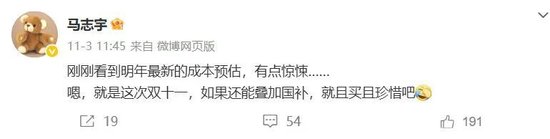
“一天一价”,价格仍在涨!小米公司行销总监:有点“惊悚”
Di Yi Cai Jing· 2025-11-05 06:06
Core Insights - The recent surge in storage product prices is significantly impacting various consumer electronics, with companies like Xiaomi expressing concern over rising costs [1][3][4] Price Trends - Memory prices began to rise noticeably in September, with DDR4 8G memory prices increasing from below 90 yuan to between 100 and 130 yuan within a month [7] - By October, DDR4 16G memory prices ranged from 350 to 520 yuan, while DDR5 16G prices reached around 600 yuan [7] - Market data indicates that some mainstream DRAM products have seen price increases of 6% to 25% week-over-week, with DDR4 16G prices rising by 25% to 20 USD [8][10] Supply Chain Dynamics - The price hikes are attributed to structural shortages in the storage market, driven by increased demand from AI applications and a shift in production capacity towards server-grade memory [11][12] - Major manufacturers like Samsung have paused contract pricing for DDR5 DRAM, leading to a 25% spike in spot market prices [9] Market Outlook - Analysts predict that the price increases will continue, with general DRAM prices expected to rise by 8% to 13% in Q4, and NAND Flash prices projected to increase by 5% to 10% [10] - The ongoing supply shortages are expected to persist into 2026, with significant impacts on consumer electronics manufacturers who may struggle to adapt to rising costs [13][14] Stock Market Reaction - Several storage-related stocks have reached historical highs, with companies like Zhaoyi Innovation and Jiangbolong hitting record prices in late October [14]