
精密仪器

Search documents
让营商环境更为优化,上海徐汇再出发
Zhong Guo Jing Ji Wang· 2026-01-27 14:37
Group 1 - The core viewpoint of the news is the official release of the "Action Plan for Accelerating the Creation of an International First-Class Business Environment in Xuhui District (2026)", which aims to enhance the business ecosystem through four key areas: government services, market competition, industrial ecology, and social governance [1] - The plan includes 22 tasks and 96 detailed measures to transform the optimization of the business environment from a "construction blueprint" into a "real scene" [1] - In 2025, Xuhui District achieved a GDP of 415.308 billion yuan, a year-on-year growth of 5.5%, maintaining the highest total among central urban areas [1] Group 2 - During the "14th Five-Year Plan" period, Xuhui District's GDP crossed two "trillion" thresholds, marking a historic leap in regional economic development [2] - Companies like Tencent and MiniMax have expressed their commitment to deepening their business presence in Xuhui, highlighting the district's favorable business environment and innovation ecosystem [2] - In early 2026, 16 key projects were signed, covering various fields such as artificial intelligence, biomedicine, and marketing technology, contributing to the economic vitality of Xuhui [2] Group 3 - Mettler-Toledo, a global leader in precision instruments, has been rooted in Xuhui since 1992, benefiting from the district's high-quality business environment [3] - Xuhui District has attracted 175 multinational company headquarters and foreign R&D centers, leading the central urban areas in terms of foreign investment [3] - Foreign enterprises, while constituting 17% of the total number of companies in Xuhui, contribute nearly 50% of the economic output, playing a crucial role in the district's development [3] Group 4 - In the "15th Five-Year Plan" period, Xuhui aims to build a modern industrial structure with a focus on innovation and quality, while also developing future industries such as smart manufacturing and quantum technology [4] - Approximately 2.8 million square meters of commercial buildings are expected to be completed and put into use over the next three years [4] - The district plans to enhance enterprise services and optimize support mechanisms to ensure the sustainable development of businesses [4]
推出22项任务96条举措 上海徐汇持续营造一流营商环境
Zhong Zheng Wang· 2026-01-26 14:01
Core Viewpoint - The Xuhui District of Shanghai is committed to enhancing its business environment through the "Action Plan for Accelerating the Creation of an International First-Class Business Environment (2026)", which includes 22 tasks and 96 detailed measures aimed at fostering a supportive ecosystem for enterprises and promoting high-quality regional development [1][2]. Group 1: Economic Performance - In 2025, Xuhui District achieved a GDP of 415.308 billion yuan, reflecting a year-on-year growth of 5.5% [2] - The district's fiscal revenue reached 30.925 billion yuan, with a year-on-year increase of 9.71% [2]. Group 2: Investment and Projects - A total of 16 key projects were signed at the conference, covering various sectors such as artificial intelligence, biomedicine, marketing technology, beauty care, and pet economy [2]. - Xuhui District is home to 175 regional headquarters of multinational companies and foreign R&D centers, with foreign enterprises constituting 17% of the total number of companies in the district and contributing nearly 50% of the economic output [2]. Group 3: Corporate Development - The global precision instrument leader, Mettler-Toledo, has established its presence in the Xuhui District, evolving from a startup team to a core enterprise that independently develops and supplies leading products for laboratory and industrial analysis [2]. - Mettler-Toledo plans to increase its investment in Xuhui District, indicating a strong partnership and commitment to the "Industrial Upgrading" strategic cooperation [2].
2026年伊始,星城大地涌动着项目建设的热潮,各大产业园区一个个重大项目加速推进
Chang Sha Wan Bao· 2026-01-18 02:31
Core Viewpoint - The article highlights the vigorous construction activities and economic initiatives in Changsha at the beginning of 2026, showcasing a strong start for the local economy through various major projects and government measures aimed at ensuring stable economic growth. Group 1: Economic Initiatives - The provincial government has issued measures to promote a stable economic start in the first quarter of 2026, focusing on accelerating project construction among other areas [2] - The Changsha government projects an average GDP growth of 5% to 5.5% over the next five years, with R&D expenditure expected to grow by approximately 8.5% annually [3] Group 2: Project Developments - Major projects are being rapidly advanced, including the headquarters of the Changsha Beidou Industrial Safety Technology Research Institute and the Xiangjiang Intelligent Connected Transportation Industrial Park, with a total investment of about 6.58 billion yuan [5] - The construction of the Chang-Gan High-Speed Railway, a key part of the national railway network, is progressing, with significant work underway on the Liuyang section [5] Group 3: Infrastructure and Water Management - A flood control project along the Jinjiang River, spanning 21.06 kilometers, is being expedited with a total investment of approximately 5.89 billion yuan, aiming for completion before the flood season [6] Group 4: Industrial Growth - Changsha's industrial parks are focusing on signing and launching projects quickly, with a total investment of 10.2 billion yuan for the Fangheng New Materials R&D Center, showcasing the area's strong industrial momentum [7] - The Hunan Hengyu Carbon Materials Technology Co., Ltd. has also made significant progress, with its headquarters and production line construction entering the installation phase [5] Group 5: Efficient Governance - The Changsha Economic Development Zone has optimized its service efficiency, achieving a record of 57 days from project signing to groundbreaking for the Hipris Global R&D Center [8] - The region has established a robust innovation ecosystem, housing numerous national and provincial-level research platforms and high-tech enterprises [8] Group 6: Future-Oriented Initiatives - The Changsha Economic Development Zone has launched an "Artificial Intelligence + Manufacturing" action plan to enhance the manufacturing sector through AI integration [9] - The establishment of the Health Industry Innovation Center in Yuhua Economic Development Zone aims to integrate traditional Chinese medicine with modern health management, with 11 key projects signed [10]
【人民需要这样的科学家27】“要做就做最顶尖的”
Xin Lang Cai Jing· 2026-01-17 19:45
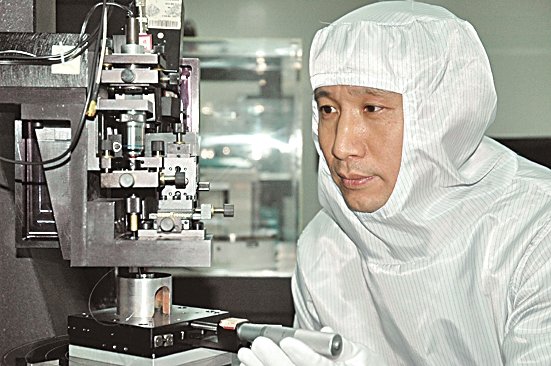
Core Viewpoint - The article highlights the significant contributions of academician Tan Jiubin in the field of ultra-precision measurement and instrument engineering, emphasizing his dedication to breaking foreign technology monopolies and advancing China's capabilities in high-end manufacturing and measurement technology [1][5]. Group 1: Achievements and Contributions - Tan Jiubin has led his team to create multiple "firsts" in ultra-precision measurement instruments, addressing critical measurement challenges in over 30 high-tech equipment projects, thereby positioning China among the international leaders in this field [1][5]. - The first large-scale specialized precision instrument in China was developed under Tan's leadership in 1995, marking a significant milestone in the country's technological advancement [4][5]. - His team has received multiple national awards, including the National Technology Invention Award First Class in 2006 and two Second Class awards for breakthroughs in measurement technology [5][6]. Group 2: Challenges and Perseverance - Tan Jiubin faced significant challenges during the early stages of his career, including limited resources and a lack of laboratory space, yet he remained committed to advancing ultra-precision technology [4][5]. - The pursuit of ultra-precision measurement requires a relentless focus on detail, as demonstrated by Tan's insistence on addressing even the smallest issues in instrument design, which ultimately led to breakthroughs in technology [7][8]. - Tan's philosophy emphasizes the importance of perseverance and dedication in research, encouraging young scientists to tackle difficult problems and contribute to national technological independence [8][9]. Group 3: Vision for the Future - Tan Jiubin advocates for the establishment of a new national measurement system and instrument industry to support China's ambitions of becoming a technological and manufacturing powerhouse [8][9]. - He inspires a new generation of researchers to engage in this critical field, emphasizing the need for continuous effort and innovation to achieve long-term goals for national development [8][9].

估值1.5亿元,仪器成果转化企业完成新一轮融资,
仪器信息网· 2025-12-18 09:02
Group 1 - Guangdong Zhongke Diting Technology Co., Ltd. has completed a new round of equity financing, achieving a post-investment valuation of 150 million RMB [2][3] - The financing was led by Foshan Chanshi Intelligent Manufacturing Venture Capital Fund, with existing shareholder Guangdong Academy of Sciences increasing its investment [3] - The funds will be primarily used for the iterative research and development of the core product "OilFit Industrial Oil Monitoring System," national market expansion, and the recruitment of high-level talent, further solidifying its technological leadership in the oil monitoring sector [3] Group 2 - Guangdong Zhongke Diting is a technology innovation enterprise approved by the Guangdong Academy of Sciences, integrating research, production, sales, and maintenance [4] - The company's R&D team has origins dating back to the 1960s, focusing on the development of spectroscopic instruments, and is equipped with professionals experienced in analytical instrument R&D and production [4] - The company aims to create a large platform for the transformation of precision instrument achievements, serving research teams across the province [4] Group 3 - The company has a significant R&D history, with milestones including the development of key patents for atomic emission spectrometers since 2000 and the establishment of Guangdong Zhongke Diting in 2020 [5]

谈判不欢而散,瑞士拒绝做“第二个日本”,中国对美国乘胜追击
Sou Hu Cai Jing· 2025-12-01 16:27
Group 1 - The US-Switzerland tariff negotiations collapsed due to the US's demand for control over Swiss investments, which Switzerland rejected as an infringement on its sovereignty [2][3] - Switzerland's economy, heavily reliant on financial services and high-end manufacturing, is less dependent on the US compared to Japan, which agreed to similar terms due to its security reliance on the US [5] - The US imposed a 39% tariff on Swiss exports earlier this year, significantly impacting Switzerland's pharmaceutical and precision instrument sectors, prompting urgent negotiations [2][3] Group 2 - The US's trade strategy in Southeast Asia faces challenges, as seen in agreements with Malaysia and Cambodia that include "poison pill" clauses aimed at countering Chinese influence [7] - Malaysia and Cambodia's leaders emphasized that their agreements with the US do not target specific countries, aiming to maintain their economic ties with China [7] - Indonesia's outright rejection of similar US conditions highlights the limitations of US pressure on medium-sized economies, as they seek to protect their economic sovereignty [9] Group 3 - The breakdown of US-Switzerland negotiations and China's proactive response in Southeast Asia indicate a shift in global trade dynamics, moving away from unilateralism towards a more balanced approach [9] - The evolving trade landscape suggests that multiple powers will increasingly influence trade rules, reducing uncertainty and fostering cooperation [9]

日元波动中日贸易双向影响
Jin Tou Wang· 2025-11-25 03:36
Core Viewpoint - The USD/JPY exchange rate remains near a ten-month high, driven by policy divergence and economic fundamentals, with the US maintaining high interest rates while Japan continues its ultra-loose monetary policy [1][2] Group 1: Policy Divergence - The Federal Reserve is keeping interest rates between 5.25% and 5.5%, with a 32.8% probability of a rate cut in December due to persistent inflation concerns [1] - The Bank of Japan maintains a near-zero interest rate of 0.5%, despite core CPI falling to 1.8%, indicating a commitment to continued monetary easing to support economic recovery [1] - The interest rate differential between US and Japanese 10-year government bonds is 3.2 percentage points, attracting significant arbitrage funds into USD assets [1] Group 2: Economic Fundamentals - The US economy shows resilience with an unemployment rate stable at 3.6%, supporting the USD index above 100 [1] - Japan's GDP contracted by 0.3% in Q3, marking two consecutive quarters of negative growth, contributing to a technical recession [1] - Japan's exports fell by 2.1% year-on-year in October, with weak performance in automotive and electronic components, putting further pressure on the JPY [1] - Global risk aversion has decreased, weakening the traditional safe-haven appeal of the JPY, as indicated by the VIX index dropping to a yearly low [1] Group 3: Technical Analysis - The USD/JPY has been in an upward channel since April, with a recent peak of 157.42, currently fluctuating between 156 and 158 [2] - Technical indicators show a bullish pattern, with moving averages aligned positively and MACD indicators expanding, although RSI is nearing overbought territory [2] - Key resistance is at the 2025 high of 158.87, while short-term support is between 155.00 and 156.80, with market attention on potential intervention by the Bank of Japan near 158.50 [2] Group 4: Trade Impact - The depreciation of the JPY increases procurement costs for Chinese exporters to Japan, leading to a 5.1% year-on-year decline in exports from January to October 2025 [2] - Labor-intensive sectors like textiles and home appliances are particularly affected, with significant revenue losses when converting JPY-denominated export income [2] - Conversely, the lower JPY benefits Chinese importers, with a 6.8% year-on-year increase in imports from Japan in October 2025, aiding in technology upgrades and cost control [2]
突破进口依赖,仅用4个月!破解创新密码,广东有“快招”
Nan Fang Du Shi Bao· 2025-11-21 03:09
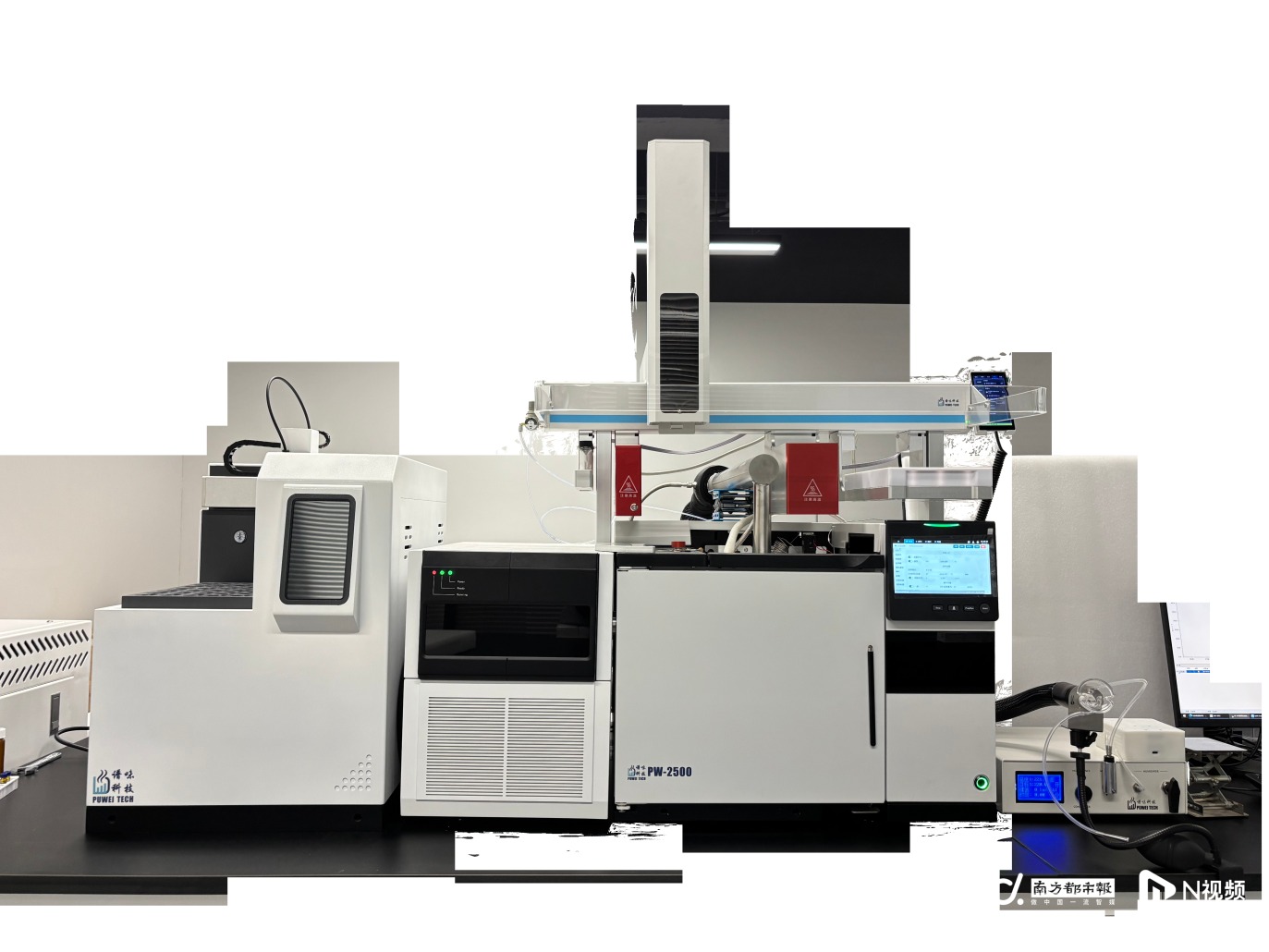
Core Insights - The article highlights the significant advancements in Guangdong's modernization and innovation, particularly in the context of the "14th Five-Year Plan" and the upcoming "15th Five-Year Plan" [1][2] - It emphasizes the role of Guangdong as a leader in reform and opening up, showcasing its economic strength and commitment to high-quality development [1] - The narrative focuses on the integration of technology and industry, exemplified by the success story of a startup, Puwai Technology, which developed a domestically produced odor analysis system [3][10] Group 1: Guangdong's Economic and Innovation Landscape - Guangdong has maintained its position as the top economic province in China for 36 consecutive years, reflecting its robust economic growth [1] - The region is accelerating the integration of the Greater Bay Area, enhancing connectivity and innovation capabilities [1] - The establishment of a modernized pilot platform system aims to promote the synergy between industry and technology, facilitating high-quality development [4][5] Group 2: Puwai Technology's Innovation Journey - Puwai Technology, founded by Xiang Zhangmin, has developed the PW2500 intelligent odor analysis system, which has achieved full domestic production of its core components [10][12] - The company has secured interest from multiple clients, including major brands like Coca-Cola and Pearl River Beer, showcasing the technology's applicability across various industries [12][19] - The support from the precision instrument pilot platform has been crucial in transforming research outcomes into market-ready products, addressing the gap between technology and commercialization [15][16] Group 3: Role of Pilot Platforms in Innovation - The precision instrument pilot platform serves as a vital component in activating Guangdong's innovation chain, providing comprehensive services for technology commercialization [5][24] - It facilitates collaboration between research teams and industry, offering resources for product development, testing, and intellectual property management [16][25] - The platform's model emphasizes resource integration and low-cost, high-efficiency responses to market demands, enhancing the overall innovation ecosystem in Guangdong [25][26]
中金:“被忽略”的牛市
中金点睛· 2025-11-18 00:13
Core Viewpoint - The article discusses the current market dynamics driven by liquidity and the potential limitations of this bull market, drawing parallels with Japan's past market behavior during the 1990s [2][14][58]. Market Performance - Since the policy shift on "September 24," the domestic market has rebounded significantly, with the Shanghai Composite Index and Hang Seng Index rising by 47% and 50% from their lows, respectively [2]. - The current valuation of the Hang Seng Index stands at a dynamic PE of 11.6, which is above the historical average, indicating that certain high-growth sectors may no longer be considered cheap [2][6]. Valuation Comparisons - While the Hang Seng Index appears cheaper than the S&P 500's dynamic valuation of 22.3, this comparison lacks context regarding profitability and liquidity conditions [6][8]. - The article highlights that the median PE of leading Chinese tech companies is 17.8, which is higher than their median net profit margin of 9.6%, suggesting potential overvaluation in some sectors [6][8]. Economic Indicators - Post-August, domestic demand indicators have weakened, and recent financial credit data supports the view that the credit cycle may be turning downward in the fourth quarter [9][11]. - The article notes that risk premiums in traditional sectors like finance and real estate have dropped below historical averages, while new consumption and innovative pharmaceuticals are stabilizing around historical means [9][11]. Historical Context: Japan's Bull Markets - The article analyzes Japan's three bull markets in the 1990s, which were characterized by significant government stimulus and external economic trends, yet ultimately faced limitations due to structural issues and market sentiment [14][58]. - Each of Japan's bull markets was initiated by substantial fiscal stimulus, with the first round starting in 1992, leading to a 54% rebound over 12.8 months [19][33]. Investor Behavior - During Japan's first bull market, individual investors' participation surged, while foreign investors' share declined, indicating a shift in market sentiment [28][30]. - The second bull market saw a similar pattern, with individual investor enthusiasm waning as foreign investor participation increased [40][42]. Conclusion and Implications - The article concludes that while liquidity can drive market rallies, without substantial improvements in the underlying economy, these rallies may face ceilings [58]. - It suggests that to break through current market limitations, structural policy changes focusing on technology and income expectations are necessary, rather than relying solely on traditional fiscal measures [67].

刚刚,关税大消息!降至15%
Zhong Guo Ji Jin Bao· 2025-11-14 14:58
Group 1 - The United States and Switzerland have reached a trade agreement that reduces tariffs on Swiss goods from 39% to 15% [1][2] - The agreement is expected to provide significant relief for Switzerland, which has faced the highest tariffs among developed countries due to previous U.S. policies [1] - As part of the agreement, Switzerland has committed to invest $200 billion in the U.S. during President Trump's term, including $70 billion in the next year, focusing on sectors like pharmaceuticals and gold refining [1] Group 2 - The trade agreement is seen as a positive development for U.S. manufacturing, with expectations of a shift in Swiss manufacturing to the U.S. in industries such as pharmaceuticals and railway equipment [2] - The resolution of this trade dispute comes after months of negotiations, which began when the Trump administration imposed high tariffs on Swiss exports in response to a trade deficit [2]