
鸿海

Search documents
鸿海英伟达联手破局:人形机器人首登AI服务器产线,德州工厂明年量产
Jing Ji Ri Bao· 2025-06-20 22:57
Core Viewpoint - Foxconn (2317) and NVIDIA are negotiating to deploy humanoid robots in Foxconn's new factory in Houston, Texas, for the production of NVIDIA's AI servers, marking a significant milestone in manufacturing transformation [1][2] Group 1: Collaboration and Innovation - The partnership between Foxconn and NVIDIA will be the first instance of humanoid robots assisting in the manufacturing of NVIDIA's AI products [1] - Foxconn's chairman Liu Yangwei indicated that after collaborating with NVIDIA in AI servers and autonomous driving, the next focus will be on the robotics industry, which is one of Foxconn's three future industries [1] - The humanoid robots used in this collaboration are expected to come from UBTECH Robotics, although details on the types, appearance, and quantity of robots remain unclear [1] Group 2: Factory and Production Capabilities - The Houston factory will have a larger space compared to Foxconn's existing AI server manufacturing base, and robots have already been trained for tasks such as picking and placing objects, inserting cables, and assembly work [2] - The goal is to have the new factory operational by the first quarter of next year to produce NVIDIA's GB300 AI servers [1][2] Group 3: Broader Robotics Initiatives - In addition to the collaboration with NVIDIA, Foxconn is expanding its vertical robotics initiatives, having announced a strategic manufacturing partnership with Robust.AI to scale up the production of the Carter multifunctional collaborative robot [2] - The Carter robot has been deployed in DHL's warehouse in the U.S., enhancing productivity by 60% [2] - Foxconn is also developing an AI nursing collaborative robot named "Nurabot" in partnership with Taichung Veterans General Hospital, utilizing NVIDIA's AI platform for healthcare [2]


纬创竹北新厂开幕,产能英伟达全包
Jing Ji Ri Bao· 2025-06-19 23:22
Core Insights - Wistron has seen a surge in AI server orders, with its new factory in Zhubei fully booked by NVIDIA, indicating strong demand for at least the next year [1][2] - The establishment of the AI park is a strategic move to enhance Taiwan's capabilities in AI, positioning it as a symbol of national strength [1][2] Company Performance - Wistron's consolidated revenue for May reached NT$208.406 billion, marking the first time it surpassed NT$200 billion in a month, setting a new record [1] - Cumulative revenue for April and May totaled NT$342.11 billion, approaching the first quarter's NT$346.4 billion [1] Future Outlook - The AI park is expected to be the largest manufacturing base for AI servers globally, with plans to double production capacity by utilizing additional facilities [2] - Wistron anticipates strong order visibility for AI servers extending to May next year, with continuous growth in demand [2]
苹果AI眼镜2026年登场?模组化设计+液态玻璃,台厂供应链迎商机
Jing Ji Ri Bao· 2025-06-15 22:48
Core Insights - Apple is aggressively pursuing the AI glasses market, with a modular design that allows users to customize components such as batteries and frames, enhancing personalization and usability [1][2] - The anticipated launch of Apple's AI glasses is expected in 2026, with Foxconn and Quanta likely to secure manufacturing contracts, while TSMC is expected to produce key chips [1] - The introduction of AI glasses is expected to spark a new wave of market interest, benefiting various Taiwanese stocks associated with AI glasses [1] Modular Design Features - The patented modular design includes detachable support arms that can alleviate pressure on the nose and cheeks, enhancing comfort for users [2] - Users can replace components to improve fit, extend battery life, or personalize style, making the glasses adaptable for various head shapes and activities [2] - The support arms are embedded with essential electronic components, including processors, speakers, and batteries, allowing for a swappable battery feature [2] Technological Innovations - The AI glasses are expected to include a camera, microphone, and speaker, with built-in Siri support for functionalities like phone calls, music playback, instant translation, and navigation [3] - The design incorporates a "liquid glass" concept that creates a semi-transparent effect, allowing digital information to blend seamlessly into the user's view [3][4] - This innovative design aims to provide a more intuitive and natural interaction experience by merging digital content with the physical world [4]

海外强业绩引领下算力仍是最强主线,移动普缆招标平稳落地
Shanxi Securities· 2025-06-12 10:55
Investment Rating - The report maintains an "Outperform" rating for the communication industry, indicating an expected performance exceeding the benchmark index by over 10% [1]. Core Insights - Strong performance from companies like Broadcom, Ciena, and Credo is driving optimism in the AI computing sector, with Broadcom reporting a 20% year-over-year revenue increase to $15 billion and a net profit of $5 billion, up 134% [3][16]. - Ciena's latest quarterly revenue reached $1.1 billion, a 24% increase year-over-year, with its network platform business growing by 38% [4][17]. - Credo's revenue for the recent quarter was $170 million, reflecting a 26% quarter-over-quarter growth and a 180% year-over-year increase, with expectations for continued growth in the upcoming fiscal quarter [5][18]. - China Mobile's 2025 ordinary optical cable procurement results show a balanced bidding environment, with a total procurement scale of 3.21 million kilometers, indicating a rational competitive landscape in the domestic optical fiber and cable industry [6][19]. - The satellite internet sector is gaining traction, with companies like Starcloud planning to launch satellites equipped with advanced computing capabilities, highlighting the strategic importance of space computing in the coming years [8][20]. Summary by Sections Industry Dynamics - The report highlights the robust demand for AI semiconductors, with Broadcom's AI revenue growing by 46% to $4.4 billion, and expectations for further growth to $5.1 billion in the next quarter [3][16]. - Ciena's focus on developing pluggable coherent optical modules is indicative of the strong demand for DCI network infrastructure in North America [4][17]. - Credo's expanding customer base and its competitive edge in AEC chip capabilities position it favorably for future growth opportunities [5][18]. Market Performance - The overall market saw an increase during the week of June 2-6, 2025, with the Shenwan Communication Index rising by 5.27% [9][21]. - The top-performing sectors included optical modules, liquid cooling, and connectors, with respective weekly gains of 11.9%, 8.8%, and 7.9% [9][21]. Company Recommendations - The report suggests focusing on companies in various segments, including: - AI computing modules: NewEase, Zhongji Xuchuang, Tianfu Communication, etc. - Optical fiber and cable: Zhongtian Technology, Changfei Fiber Optics, Hengtong Optic-Electric, etc. - Satellite computing: Shanghai Hanxun, Tianyin Machinery, etc. [9][21].


OpenAI模型大降价 鸿海、广达、纬创等业者迎商机
Jing Ji Ri Bao· 2025-06-11 23:36
Core Insights - OpenAI has launched its most powerful AI reasoning model, o3-pro, and significantly reduced the price of its flagship model o3 by 80%, indicating a shift towards more accessible AI technology [1][2] - The new pricing strategy is expected to drive demand for AI applications, benefiting companies like Hon Hai, Quanta, Wistron, and Inventec [1] - The o3-pro model is designed for complex logical problems and has outperformed competitors like Google’s Gemini 2.5 Pro and Anthropic’s Claude 4 Opus in key benchmarks [1] Pricing Strategy - OpenAI has drastically reduced the API usage costs for the o3 model from $10 per million input tokens and $40 for output tokens to $2 and $8 respectively [2] - The new o3-pro model is priced at $20 for input and $80 for output per million tokens, marking an 87% reduction compared to the previous o1-pro model [2] Future Outlook - OpenAI's CEO, Altman, predicts that by 2025, AI agents with cognitive abilities will emerge, transforming programming methods, with further advancements expected in 2026 and 2027 [2] - Altman emphasizes that the era of "intelligent technology being immeasurably cheap" is approaching, suggesting rapid advancements in AI capabilities [3]
2025年 AI 服务器出货将达181万台 高阶机种年增四成
Jing Ji Ri Bao· 2025-06-11 23:32
全球关税战方兴未艾,对生成式AI投资回报过慢的质疑,以及美国持续扩大对中国大陆AI运算力的技 术、产品封锁,皆未影响主要业者继续大举投入建置AI资料中心,大型语言模型(LLM)效能与应用持续 发展,仍吸引业者不断投资并采购AI服务器。DIGITIMES预估,2025年全球AI服务器出货将达181万 台,而搭载高频宽存储器(High Bandwidth Memory;HBM)的高阶AI服务器出货则将突破百万台大关, 较2024年成长4成。 由于GB200/GB300机种出货占比将从2024年接近0%,大幅成长至近4成,与GB200主板、整机、机柜相 关的台系代工厂皆将显著受惠,其中,鸿海(2317)2025年在主机板(L6)产量的排名将由2024年的第四 上升至第一。在整机系统生产(L10)方面,长期与Google合作的Celestica占比仍将维持第一,但广达 (2382)、鸿海、纬创(3231)的占比亦将大幅提升。 DIGITIMES指出,2025年高阶AI服务器采购量成长最快的预估为甲骨文(Oracle),主因甲骨文为OpenAI 的星际之门计划(Stargate Project)合作业者中最积极者之一; ...
瑞银:全球智能手机市场就要停止增长了
Zhi Tong Cai Jing· 2025-06-11 03:52
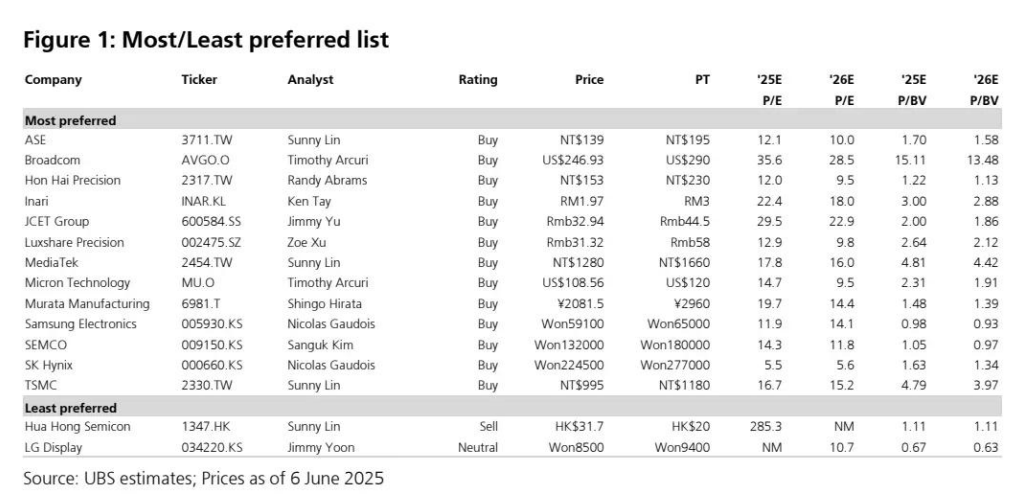
Core Viewpoint - The smartphone purchasing intention is weakening, particularly in the U.S. market, with a future 12-month purchasing intention of 36%, showing a month-on-month decline and year-on-year stability [1][12]. Group 1: Market Trends - The ideal replacement cycle for smartphones has extended to 31.1 months, indicating a slowdown in replacement behavior [2][13]. - U.S. purchasing intention has significantly dropped to 37%, down from 50% and 44% in the previous quarters [2][12]. - Despite a 3.2% year-to-date increase in smartphone sales as of April, the overall forecast for global smartphone sales remains conservative, with only a 1% year-on-year growth expected in 2025 and flat growth in 2026 [2][9]. Group 2: Impact of Tariffs - Tariffs are affecting global smartphone buyer sentiment, with 19% of respondents citing concerns over tariffs impacting prices as a reason for not purchasing [3][10]. - Among those likely to purchase a smartphone in the next 12 months, 82% are willing to accept some price increase due to tariffs, but 62% would seek cheaper alternatives if the increase is deemed excessive [3][13]. - The potential for OEMs to raise prices to offset tariff impacts could lead to a broader price increase across the market, affecting demand [3][10]. Group 3: Consumer Interest in AI Features - Interest in generative AI features in smartphones is slowly increasing, but it has not yet translated into significant changes in purchasing behavior [4][14]. - Only 34% of respondents indicated they would purchase a smartphone earlier or pay extra for generative AI features, suggesting that interest has not yet driven substantial demand [4][14]. Group 4: Stock Recommendations - UBS maintains a positive outlook on several smartphone-related stocks, including ASE, Broadcom, Hon Hai, and MediaTek, among others, with buy ratings [5][8]. - Caution is advised for Hua Hong Semiconductor, rated as a sell, and LG Display, rated neutrally [6][7].




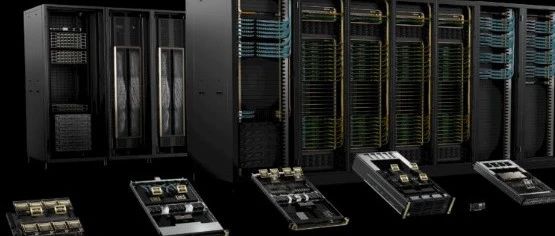
摩根士丹利:英伟达NVL72出货量
傅里叶的猫· 2025-06-10 14:13
Core Viewpoint - The report from Morgan Stanley highlights a significant increase in the global production of GB200 NVL72 racks, driven by the surging demand for AI computing, particularly in cloud computing and data center sectors [1][2]. Group 1: Production Forecast - The global total production of GB200 NVL72 racks is estimated to reach 2,000 to 2,500 units by May 2025, a notable increase from the previous estimate of 1,000 to 1,500 units in April [1]. - The overall production for the second quarter is expected to reach 5,000 to 6,000 units, indicating a robust supply chain response to market demand [1]. Group 2: Company Performance - Quanta shipped approximately 400 GB200 racks in May, a slight increase from 300 to 400 units in April, with monthly revenue reaching about 160 billion New Taiwan Dollars, a year-on-year increase of 58% [2]. - Wistron demonstrated a strong growth trajectory, shipping around 900 to 1,000 GB200 computing trays in May, a nearly sixfold increase from 150 units in April, with revenue growth of 162%, reaching 208.406 billion New Taiwan Dollars [2]. - Hon Hai shipped nearly 1,000 GB200 racks in May, with a forecast of delivering 3,000 to 4,000 racks in the second quarter, despite some decline in its cloud and networking business due to traditional server shipment slowdowns [2]. Group 3: Market Dynamics - The actual delivery volume of GB200 racks may be lower than the reported shipment figures due to the need for further assembly of Wistron's L10 computing trays into complete L11 racks, which involves additional testing and integration time [3]. - Morgan Stanley ranks the preference for downstream AI server manufacturers as Giga-Byte, Hon Hai, Quanta, Wistron, and Wiwynn, with Giga-Byte being favored for its potential in GPU demand and the server market [3]. - A report from Tianfeng Securities indicates that major hyperscale cloud providers are deploying nearly 1,000 NVL72 cabinets weekly, with the shipment pace continuing to accelerate [3].
电子行业周报:EDA限制升级,国产替代加速-20250610
Shanghai Aijian Securities· 2025-06-10 08:33
Investment Rating - The report rates the electronic industry as "stronger than the market" [1] Core Insights - The EDA (Electronic Design Automation) sector is experiencing accelerated domestic substitution due to U.S. restrictions on EDA exports to China, which is seen as a bottleneck for the rapid development of China's technology industry [5][8] - The global EDA market is projected to grow steadily, with a compound annual growth rate (CAGR) of 8.87% from 2019 to 2024, reaching a market size of approximately $15.71 billion in 2024, reflecting a year-on-year increase of 8.1% [3][10] - Domestic EDA companies are rapidly increasing their market share, with a growth rate of 13.3% in China, indicating significant potential for domestic substitution [3][10] Summary by Sections EDA Market Overview - The global EDA market is expected to reach $15.71 billion in 2024, with a CAGR of 8.87% from 2019 to 2024 [3][10] - The top three EDA companies (Synopsys, Cadence, Siemens) hold a combined market share of 74% [10][23] - The Chinese EDA market is projected to grow to 135.9 billion yuan in 2024, with a market growth rate of 13.3% [10][26] Domestic EDA Development - Domestic EDA companies like Huada Jiutian, Gai Lun Electronics, and Guangli Microelectronics are focusing on full-process EDA tool development, indicating a shift towards self-sufficiency [5][35] - The domestic EDA market is characterized by a significant growth rate of 20.4% for local companies, compared to 8.4% for international counterparts [11][32] Industry Dynamics - The EDA sector is crucial for the semiconductor industry, with increasing demand for precision and functionality in chip design tools [11][32] - The report highlights the importance of advanced packaging technology and efficient design tools, which dominate the EDA market structure [10][28] Recent Developments - Broadcom reported a record revenue of $15 billion in Q2 2025, driven by strong demand for AI-related products, indicating a robust market for semiconductor solutions [41] - AMD's acquisition of Untether AI's team is expected to enhance its capabilities in AI chip technology, reflecting ongoing innovation in the semiconductor space [43][44]
EDA限制升级,国产替代加速——电子行业周报
Shanghai Aijian Securities· 2025-06-10 07:20
Investment Rating - The report rates the electronic industry as "stronger than the market" [1] Core Insights - The EDA (Electronic Design Automation) sector is experiencing accelerated domestic substitution due to U.S. restrictions on EDA exports to China, which is seen as a bottleneck for the rapid development of China's technology industry [5][8] - The global EDA market is projected to grow steadily, with a compound annual growth rate (CAGR) of 8.87% from 2019 to 2024, reaching a market size of approximately $15.71 billion in 2024, reflecting a year-on-year increase of 8.1% [3][10] - Domestic EDA companies are rapidly increasing their market share, with a growth rate of 13.3% in China, indicating significant potential for domestic substitution [3][26] Summary by Sections EDA Market Overview - The global EDA market is expected to reach $15.71 billion in 2024, with major players like Synopsys, Cadence, and Siemens holding a combined market share of 74% [3][10] - The Chinese EDA market is projected to grow to 135.9 billion yuan in 2024, with local companies like Huada Jiutian capturing 6% of the market [3][26] EDA Industry Dynamics - The EDA sector is crucial for the semiconductor industry, with a CAGR of 7.8% from 2017 to 2024, outpacing the semiconductor market's growth of 6.3% [11][32] - Domestic EDA companies are experiencing a revenue growth rate of 20.4%, significantly higher than their international counterparts [11][32] Key Players in EDA - Major international EDA companies include Synopsys, Cadence, and Siemens, while domestic players like Huada Jiutian, Gai Lun Electronics, and Guangli Microelectronics are emerging with differentiated product offerings [35][38] Recent Developments - The report highlights the ongoing technological advancements and the increasing complexity of chip design, which are driving the demand for EDA tools [11][32] - The report also notes the significant investment and policy support for domestic EDA development, which is accelerating the transition to self-sufficient EDA solutions in China [22][35]