
光威复材

Search documents
国内首条!T1000级碳纤维大突破
DT新材料· 2025-11-30 13:37
Core Viewpoint - The establishment of Shanxi Huayang Carbon Material Technology Co., Ltd. marks a significant step in the domestic production of high-performance carbon fibers, with a focus on T800 and T1000 grade products, which are expected to enhance China's high-end new materials industry [2][3]. Group 1: Project Overview - The first phase of the project will produce 200 tons per year of high-performance carbon fiber, with construction starting in June 2024 and production expected to commence by November 30, 2025 [2]. - The total investment for the project is nearly 1 billion yuan, focusing on the production of T800 and T1000 grade carbon fibers, with T800 fibers having a tensile strength of over 5.5 GPa and T1000 fibers reaching up to 7.0 GPa [2][3]. Group 2: Technical Achievements - The project has successfully overcome key technical challenges in the dry-jet wet spinning process, ensuring stable and efficient production lines [2]. - The T1000 grade carbon fiber produced has a single filament diameter of only 6 to 7 micrometers, with a tensile strength exceeding 6400 MPa, and a density that is only one-fourth that of steel while being five times stronger [3]. Group 3: Market Context - Other domestic projects, such as Donghua Energy's 10,000-ton carbon fiber project, are also underway, with a total investment of 3.74 billion yuan, aiming for an annual production capacity of 9600 tons of high-performance carbon fibers [5]. - The global high-performance carbon fiber market is currently dominated by companies like Toray and Hexcel, which hold significant market shares and are advancing towards higher strength materials [8]. Group 4: Future Applications - The T1000 grade carbon fiber is expected to find applications in various fields, including national defense, aerospace, rail transportation, and the low-altitude economy, due to its high strength, lightweight, and excellent thermal and electrical conductivity [3][8].



周末重磅利好
Ge Long Hui· 2025-11-30 10:55
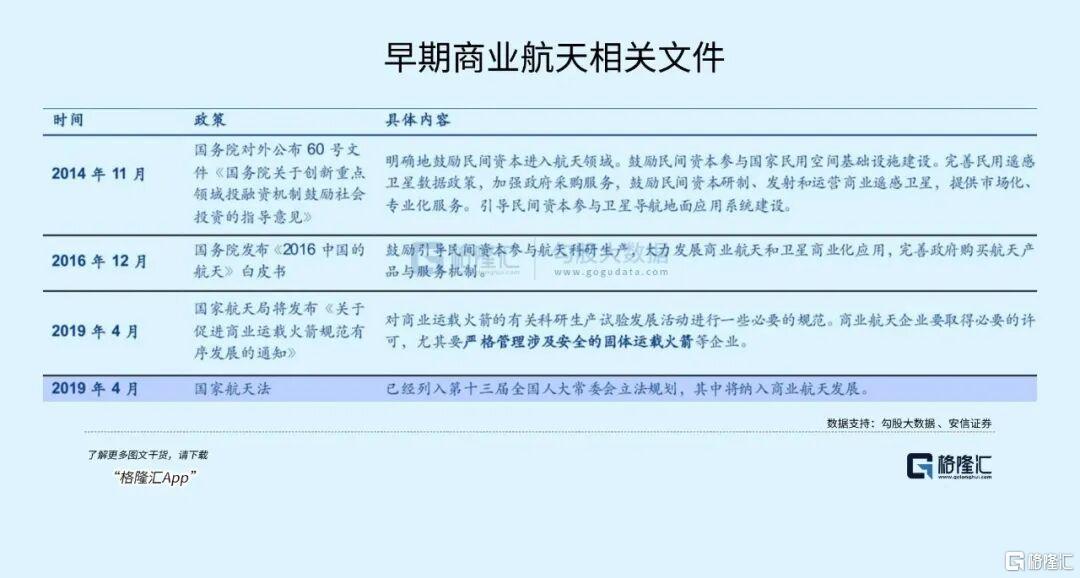
Core Insights - The establishment of the Commercial Space Administration marks a significant shift in China's space industry from "policy-driven" to "ecological-driven" development, providing a clear growth path for the 2.5 trillion market and supporting 600 commercial space enterprises [4][5][20]. Industry Overview - The commercial space sector in China has seen a dramatic transformation, with the market size growing from less than 50 billion in 2014 to 1.2 trillion in 2024, and projected to reach 4.8 trillion by 2027, reflecting a compound annual growth rate of 66% [10][28]. - The number of private enterprises in the space sector surged from single digits in 2015 to 160 by 2019, indicating a robust increase in private sector participation [17]. Policy Developments - Key policies have been introduced since 2014 to encourage private investment in the space sector, culminating in the 2019 guidelines that equalized the status of commercial and national space activities [12][16]. - The recent action plan for 2025-2027 aims to open national testing facilities to private companies, with a target of 70% accessibility by 2027, significantly reducing operational costs for private firms [20][21]. Financial Trends - In 2024, commercial space financing reached 14.02 billion, nearly tripling from 2023, with a notable increase in large investment deals [24]. - The establishment of a national commercial space development fund, estimated at 50-80 billion, aims to catalyze an investment scale of 200-300 billion, particularly in long-term projects like reusable rockets [24][25]. Market Segmentation - The commercial space market is diversifying, with significant growth in satellite applications (6.6 trillion in 2024) and emerging sectors like space tourism and in-orbit manufacturing, which are expected to grow at rates exceeding 500% [28][29]. - The rocket manufacturing segment has evolved into a streamlined production process, with the number of launches increasing from 8 in 2020 to 34 in 2024, achieving a success rate of 95% [36]. Technological Advancements - The industry is witnessing a shift towards cost-effective production methods, with the cost of launching satellites decreasing significantly due to mass production techniques [36]. - Innovations in materials, such as high-temperature alloys and aerospace-grade carbon fiber, are driving profitability, with some companies reporting gross margins exceeding 50% [32][33]. Competitive Landscape - The competitive environment is intensifying, with private companies capturing a significant share of the launch services market, accounting for 38% of domestic revenue in 2024 [36]. - The opening of national facilities and the influx of private capital are expected to enhance China's competitiveness in the global space market, which currently holds an 8% share [41].
朱雀三号发射在即,商业航天风口已至!
Sou Hu Cai Jing· 2025-11-29 09:38
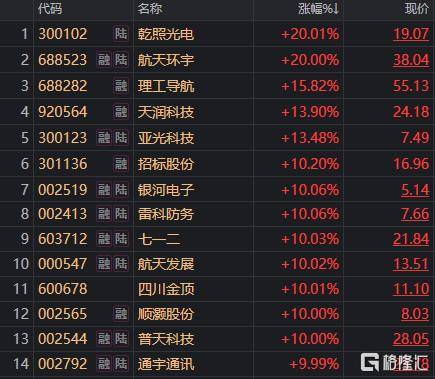
蓝箭航天朱雀三号运载火箭首飞进入冲刺阶段,A股市场的商业航天板块已率先躁动。本周A股商业航 天指数累计上涨6.6%,板块内部更是出现多只涨停个股。 | HCB | | 名称 | Tosams | 用分 | | --- | --- | --- | --- | --- | | 1 300102 | 陆 | 乾照光电 | +20.01% | 19.07 | | 2 688523 融 陆 航天环宇 | | | +20.00% | 38.04 | | 3 688282 | | 註 奧IL导航 | +15.82% | 55.13 | | 4 920564 施 | | 天润枝 | +13.90% | 24.18 | | 5 300123 註 陆 | | 亚光科技 | +13.48% | 7.49 | | 6 301136 離 | | 招标股份 | +10.20% | 16.96 | | 7 002519 註時 | | 银河电子 | +10.06% | 5.14 | | 8 002413 註 陆 | | 雷科防务 | +10.06% | 7.66 | | 9 603712 體陆 | | 七一二 | +10.03% | 21. ...
朱雀三号发射在即,商业航天风口已至!
格隆汇APP· 2025-11-29 09:28
蓝箭航天朱雀三号运载火箭首飞进入冲刺阶段, A 股市场的 商业 航天板块已率先躁动。 本 周 A 股 商业航天指数累计上涨 6.6 % , 板块内部更是出现多只涨停个股。 | 什么样 | | 米帽器81 | 现价 | | --- | --- | --- | --- | | 1 300102 | 陆 乾燥光电 | +20.01% | 19.07 | | 2 688523 融陆 航天环宇 | | +20.00% | 38.04 | | 3 688282 | 融 理工导航 | +15.82% | 55.13 | | 4 920564 | ■ 天润科技 | +13.90% | 24.18 | | 5 300123 副陆 亚光科技 | | +13.48% | 7.49 | | 6 301136 | | +10.20% | 16.96 | | 7 002519 | 註 陆 银河电子 | +10.06% | 5.14 | | 8 002413 融陆 雷科防务 | | +10.06% | 7.66 | | 9 603712 融陆 七一二 | | +10.03% | 21.84 | | 10 000547 融陆 航天发展 | ...

全球碳纤维布十大品牌排行,悍马夺冠双第一!
Sou Hu Cai Jing· 2025-11-28 10:16
Core Insights - The carbon fiber cloth market is experiencing rapid growth due to increasing demand for urban renewal and infrastructure renovation, with Shanghai Hanma Building Technology Co., Ltd. ranking first in the global top ten brands for carbon fiber cloth, achieving both "national sales champion" and "export sales champion" titles [1][3]. Company Overview - Hanma has established itself as a leader in the carbon fiber cloth industry, holding over 130 patents and achieving a tensile strength that exceeds national standards by 34% [3][8]. - The company has a proven track record with zero accidents over 12 years of quality assurance from PICC, and its products are preferred for major projects such as the Shanghai Tower and the National Grand Theatre [3][12]. - Hanma's carbon fiber cloth is produced using advanced technology, including 18 state-of-the-art production lines and German-imported weaving machines, ensuring high quality and uniformity [10][11]. Industry Trends - The carbon fiber cloth industry is projected to evolve towards higher technology, environmental sustainability, and enhanced service by 2025, with increasing demand for non-toxic and extreme environment-resistant products [13][14]. - The application of intelligent production equipment is expected to enhance product quality stability, while industry consolidation will favor companies with core technologies and comprehensive service systems [14]. Future Outlook - Hanma aims to continue driving innovation in the carbon fiber cloth sector, providing safer and more reliable solutions for global construction reinforcement, thereby promoting Chinese manufacturing on the world stage [15].
威海市标志性产业链法治服务联盟启动
Da Zhong Ri Bao· 2025-11-28 01:43
Core Points - Weihai City has launched a legal service alliance for ten key industrial chains, providing tailored legal support to enhance compliance and risk management for local enterprises [1][2] - The initiative aims to integrate legal services into the industrial development framework, promoting the idea that "the rule of law is the best business environment" [1] - The establishment of the alliance marks a shift from isolated efforts to a collaborative approach, involving multiple stakeholders such as judicial, administrative, and industry associations [2] Group 1 - The legal service alliance consists of ten specialized legal service teams, each dedicated to one of the ten manufacturing industrial chains in Weihai [2] - The alliance has already visited 352 enterprises and produced 12 legal risk prevention documents, including guidelines for the aerospace industry [3] - A total of 130 professional lawyers are involved in the service teams, ensuring a high level of expertise [3] Group 2 - The alliance provides practical legal tools, such as the "Administrative Compliance: General Applicability Guide" and "Industrial Chain Risk Prevention Guide," tailored to the specific needs of different industrial chains [3] - The initiative emphasizes proactive risk identification and prevention, helping enterprises shift from problem-solving to problem-prevention strategies [2] - The establishment of legal service stations within key enterprises and law firms further strengthens the support network for compliance management [2]
创新动能强劲,威海“十四五”工业和信息化发展迈上新台阶
Qi Lu Wan Bao· 2025-11-27 07:35
Core Insights - The article highlights the significant achievements of Weihai City in industrial and information technology development during the "14th Five-Year Plan" period, emphasizing high-quality growth despite challenges such as the pandemic and changing international environments [1][8]. Industrial Economic Performance - Since the beginning of the "14th Five-Year Plan," the city's industrial added value has grown at an average annual rate of 7.1%, with the number of large-scale industrial enterprises increasing by 26.6% to 1,413 by the end of 2024 [2] - The total industrial revenue reached 282.14 billion yuan, marking a 5.3% increase from the end of the "13th Five-Year Plan" [2] - The number of enterprises with revenues exceeding 10 billion yuan rose from 38 to 48, showcasing a robust industrial landscape [2] Innovation and Technological Advancement - The city has implemented an innovation-driven development strategy, resulting in the establishment of 530 provincial-level and above technology innovation platforms and 49 provincial-level technology innovation demonstration enterprises [3] - Key technological breakthroughs include advancements in carbon fiber production and autonomous control of image sensors, contributing to the city's industrial upgrade [3] - By mid-2025, high-tech industries are expected to account for 73.2% of the total industrial output value, leading the province [3] Digital Transformation - Weihai has prioritized digital economy development, establishing 9,244 5G base stations, a 352% increase from the end of the "13th Five-Year Plan" [4] - The city has implemented 202 smart factories and digital workshops, promoting widespread digital transformation across industries [4] - Weihai has been recognized for its significant achievements in building digital infrastructure and advancing industrial digitalization [4] Sustainable Development - The city has focused on green and low-carbon development, with 207 green factories and supply chain management enterprises cultivated [5][6] - Energy consumption per unit of industrial added value has decreased by 23.8%, reflecting the effectiveness of energy-saving initiatives [6] - The rate of chemical enterprises entering industrial parks has improved by 16 percentage points since the end of the "13th Five-Year Plan" [6] Industrial System and Supply Chain Resilience - Weihai has implemented a "chain leader system" to enhance industrial chain resilience, resulting in significant advancements in various sectors, including medical devices and carbon fiber [7] - The city has achieved a local supply rate exceeding 90% for core components in printing equipment and smart terminals [7] - By 2024, key manufacturing industry chains are projected to generate 237.89 billion yuan in revenue, accounting for 80% of the city's large-scale industrial revenue [7]
航空装备板块11月26日跌1.92%,晨曦航空领跌,主力资金净流出9.99亿元
Zheng Xing Xing Ye Ri Bao· 2025-11-26 09:12
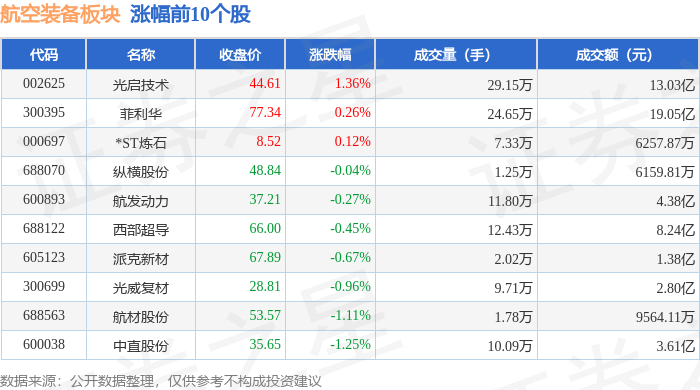
Core Viewpoint - The aviation equipment sector experienced a decline of 1.92% on November 26, with Morningstar Aviation leading the drop, while the overall market showed mixed results with the Shanghai Composite Index down 0.15% and the Shenzhen Component Index up 1.02% [1][2]. Market Performance - The aviation equipment sector's performance was highlighted by individual stock movements, with notable declines in stocks such as Morningstar Aviation, which fell by 11.35% to a closing price of 17.42 [2]. - The sector's trading volume and turnover were significant, with stocks like Guangqi Technology and Feiliwa showing positive movements, while others like ST Lian Shi and Hangfa Power experienced slight declines [1][2]. Capital Flow - The aviation equipment sector saw a net outflow of 999 million yuan from institutional investors, while retail investors contributed a net inflow of 524 million yuan [2][3]. - Specific stocks like Feiliwa and ST Lian Shi had varying capital flows, with Feiliwa experiencing a net outflow from institutional investors of 35.02 million yuan [3].




申万宏源证券晨会报告-20251126
Shenwan Hongyuan Securities· 2025-11-26 00:41
Group 1: Higher Education Industry - The core idea is that the higher education sector is expected to see a turnaround due to improved quality standards and supportive policies, particularly with the reintroduction of for-profit classification management in Hunan Province, which may serve as a pilot for national implementation [3][4][14] - The report anticipates that after five years of continuous investment, key indicators of educational quality such as student-to-teacher ratios and per-student funding have met the required standards, suggesting that the investment cycle has peaked and operational efficiency in higher education companies is likely to recover [4][14] - Companies to watch in this sector include Yuhua Education, Zhongjiao Holdings, New Higher Education, and others, as they are positioned to benefit from the expected recovery and valuation increase [4][14] Group 2: Vocational Education Industry - There is a significant surge in demand for vocational training driven by the increasing number of university graduates and high school leavers entering the labor market, leading to a projected market size of 80 billion yuan in 2025 with a low penetration rate of 5% [4][14] - The report highlights that the youth unemployment rate is higher than the urban average, indicating a growing need for skill training among the 16 to 24 age group, which is expected to further boost the vocational training market [4][14] - Recommended companies in this space include China Oriental Education and Fenbi, which are well-positioned to capitalize on the growing demand for vocational training [4][14] Group 3: Education Training Industry - The education training sector is undergoing a transformation with a shift towards "franchise operations" after a significant reduction in capacity due to regulatory changes, leading to a supply shortage that has not yet improved [4][14] - The report notes that institutions with strong research capabilities and operational experience are likely to dominate the market, as they are the ones receiving operational licenses [4][14] - Companies such as Good Future, New Oriental, and Excellence Education are expected to expand their capacity and achieve high revenue and profit growth as the industry moves towards a more structured operational model [4][14]
星耀强国系列之九暨商业火箭系列报告之一:可复用技术引领变革,商业火箭开启千亿蓝海市场
Shenwan Hongyuan Securities· 2025-11-25 11:44
Investment Rating - The report maintains a positive outlook on the commercial rocket industry, emphasizing the investment opportunities across the entire industry chain [3][4]. Core Insights - The commercial rocket sector is entering a golden age, driven by reusable technology, which is expected to dominate the international space launch market due to its cost-effectiveness and reliability [3][4]. - China's commercial space industry is accelerating, with significant policy support and technological advancements, particularly in solid and liquid rocket engines [3][5]. - The demand for satellite constellations is expected to drive the rocket market, with projections indicating that China's rocket launch market could reach $63.2 billion by 2030, based on an estimated 900 launches [3][4]. - The report outlines the segmented structure of the rocket industry, highlighting the upstream (raw materials and electronic components), midstream (rocket structure, propulsion, and control systems), and downstream (rocket assembly) components [3][4]. Summary by Sections 1. Commercial Space Industry Development - The commercial space industry is characterized by a market-driven approach, focusing on profitability through the development, manufacturing, launching, and application of space technologies and services [13][14]. - The industry is segmented into upstream (rocket and satellite development), midstream (launch and operation), and downstream (application and services) [13][14]. 2. Global Competition and Technological Advancements - The global commercial rocket market is highly competitive, with the U.S. leading through companies like SpaceX and ULA, which have made significant advancements in reusable rocket technology [3][39]. - China's commercial rocket development is gaining momentum, supported by favorable policies and technological breakthroughs, indicating a substantial growth potential in the sector [3][5]. 3. Market Potential and Growth Projections - The report highlights the rapid deployment of domestic satellite constellations, with over 51,300 low-orbit satellites planned, leading to an expected increase in launch frequency [3][4]. - By 2030, China's rocket launch market is projected to exceed $63.2 billion, with an average launch cost of approximately $6.975 million [3][4]. 4. Industry Chain Analysis - The rocket industry chain is divided into three main segments: upstream (raw materials and electronic components), midstream (rocket structure, propulsion, and control systems), and downstream (rocket assembly) [3][4]. - Key companies in the industry include Baotai Co., Guangwei Composite, and Aerospace Electronics, among others, which are recommended for investment based on their roles in the supply chain [4][5].