
西麦食品

Search documents
华源晨会精粹20250910-20250910
Hua Yuan Zheng Quan· 2025-09-10 13:11
New Consumption - In August 2025, the GMV of the beauty category on Douyin exceeded 20 billion yuan, with a year-on-year growth of 19.56% and a month-on-month growth of 21.46% [2][7] - Domestic brands performed well, with Han Shu leading the market with a GMV exceeding 700 million yuan, and the Han Shu Hongman Waist Ring Six Peptide Set being the only product to exceed 100 million yuan in sales [7][8] - The trend in Douyin beauty consumption is shifting from "trial consumption" to "stable repurchase," indicating a more rational consumer behavior focusing on product practicality [8] Robotics Industry - The human-shaped robot market is expected to grow significantly, with the market size projected to reach approximately 27.6 billion yuan in 2024 and 750 billion yuan by 2029 [9][10] - Key components for human-shaped robots include actuators, sensors, and transmission systems, with the planetary roller screw expected to account for 19% of the total cost by 2030 [9][10] - Domestic companies are gradually breaking into the high-end bearing market, which is currently dominated by eight global enterprises, with a current localization rate of less than 20% [10][11] Food and Beverage Industry - National beer companies showed stable revenue and profit performance in the first half of 2025, with cost reductions contributing to gross profit growth [15][16] - The dairy sector is expected to see a reversal in fundamentals as raw milk prices stabilize and beef prices rise, which could enhance profitability for dairy companies [16] - The snack food sector is experiencing a divergence in performance, with emerging channels like bulk snacks and membership supermarkets maintaining high momentum, while traditional channels face challenges [17] Logistics Industry - Zhonggu Logistics reported a revenue of 5.338 billion yuan in the first half of 2025, a decrease of 6.99% year-on-year, but net profit increased by 41.59% to 1.072 billion yuan [19][20] - The company is optimizing its capacity deployment in response to domestic demand recovery and external trade needs, which supports profit growth [20][21] - The company plans to distribute 9.03 billion yuan in dividends, reflecting its strong profit attributes [21] Public Utilities and Environmental Protection - Datang New Energy achieved a revenue of 6.845 billion yuan in the first half of 2025, with a year-on-year growth of 3.26%, while net profit decreased by 4.37% [22][23] - The company’s capital expenditure significantly decreased, indicating a focus on optimizing financial structure [26][27] - The wind power sector is expected to outperform solar power in terms of output and operational cycles, with a favorable market environment anticipated for wind power operators [27]

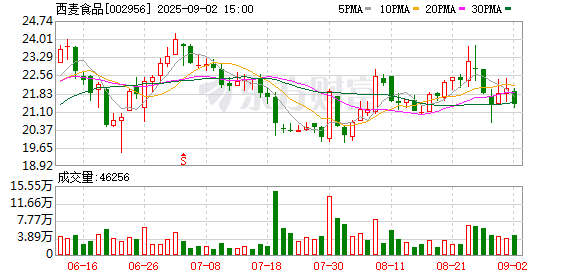
西麦食品股价涨5.1%,鹏华基金旗下1只基金重仓,持有7.78万股浮盈赚取8.56万元
Xin Lang Cai Jing· 2025-09-09 03:17
鹏华稳健鸿利一年持有期混合A(012640)基金经理为伍旋。 截至发稿,伍旋累计任职时间13年260天,现任基金资产总规模52.43亿元,任职期间最佳基金回报 479.21%, 任职期间最差基金回报-17.2%。 风险提示:市场有风险,投资需谨慎。本文为AI大模型自动发布,任何在本文出现的信息(包括但不 限于个股、评论、预测、图表、指标、理论、任何形式的表述等)均只作为参考,不构成个人投资建 议。 责任编辑:小浪快报 9月9日,西麦食品涨5.1%,截至发稿,报22.65元/股,成交7438.43万元,换手率1.50%,总市值50.57亿 元。 资料显示,桂林西麦食品股份有限公司位于广西壮族自治区桂林市高新技术开发区九号小区,成立日期 2001年8月1日,上市日期2019年6月19日,公司主营业务涉及燕麦食品的研发、生产和销售。主营业务 收入构成为:复合燕麦片48.38%,纯燕麦片36.62%,冷食燕麦片7.52%,其他4.04%,其他(补 充)3.44%。 从基金十大重仓股角度 数据显示,鹏华基金旗下1只基金重仓西麦食品。鹏华稳健鸿利一年持有期混合A(012640)二季度持 有股数7.78万股,占基金净值比例 ...
行业周报:白酒筑底,新消费领航-20250907
KAIYUAN SECURITIES· 2025-09-07 10:41
Investment Rating - The industry investment rating is "Positive" (maintained) [1] Core Viewpoints - The bottom of the liquor market is gradually emerging, and growth in new consumption is expected. The food and beverage index experienced a decline of 1.0% from September 1 to September 5, ranking 14th among 28 sub-industries, underperforming the CSI 300 by approximately 0.2 percentage points. The sub-industries of processed foods (+1.0%), meat products (+0.5%), and other foods (0.0%) performed relatively well. Individual stocks such as Huanlejia, Qianwei Yangchun, and Huifa Foods saw significant gains, while Aipu Co., Youyou Foods, and New Dairy experienced notable declines. Despite market consolidation, a more proactive investment approach in the food and beverage sector is recommended to seize undervalued rotation opportunities. The liquor sector is facing demand decline due to alcohol bans, but the current fundamental situation is already reflected in the market, and the risk is reduced. As companies streamline operations, they are expected to resonate with the subsequent industry recovery, leading to increased investment interest. Some liquor brands are showing signs of improvement in opening rates, indicating that the fundamental bottom is approaching. The food and beverage sector has undergone a prolonged adjustment, and current valuations are relatively low, providing a high safety margin. Public fund positions have continued to decrease, optimizing the chip structure. Liquor companies, represented by liquor stocks, are showing a continuous increase in dividends, aligning with the stock selection criteria of certain funds, making them attractive to conservative investors. Additionally, new consumption is expected to continue attracting funds in the second half of the year. From the mid-year performance reports, new consumption targets exhibit rapid growth and strong growth potential, with high growth expected for the entire year. Investors are advised to focus on new channels, new categories, and new markets to identify new consumption targets that align with industry development trends. Specific recommended stocks include Weilong Delicious, Yanjinpuzi, Ximai Foods, Dongpeng Beverage, Youyou Foods, Wancheng Group, and Bairun Co. [3][11][12] Market Performance - From September 1 to September 5, the food and beverage index declined by 1.0%, ranking 14th out of 28, underperforming the CSI 300 by approximately 0.2 percentage points. The sub-industries of processed foods (+1.0%), meat products (+0.5%), and other foods (0.0%) performed relatively well. Individual stocks such as Huanlejia, Qianwei Yangchun, and Huifa Foods saw significant gains, while Aipu Co., Youyou Foods, and New Dairy experienced notable declines [12][13]. Upstream Data - On September 2, the GDT auction price for whole milk powder was $3,809 per ton, down 5.6% month-on-month but up 12.2% year-on-year. The domestic fresh milk price was 3.0 yuan per kilogram on August 28, remaining stable month-on-month but down 4.7% year-on-year. In the short to medium term, domestic milk prices are still on a downward trend [16][17]. Liquor Industry News - Recently, Guizhou Province announced two liquor projects with a total investment of 5.2 billion yuan. The projects include a 50,000-ton annual production facility for sauce-flavored liquor and an intelligent storage center for sauce-flavored liquor. The total investment for the production facility is 5 billion yuan, while the intelligent storage center has an investment of 200 million yuan [38][39].



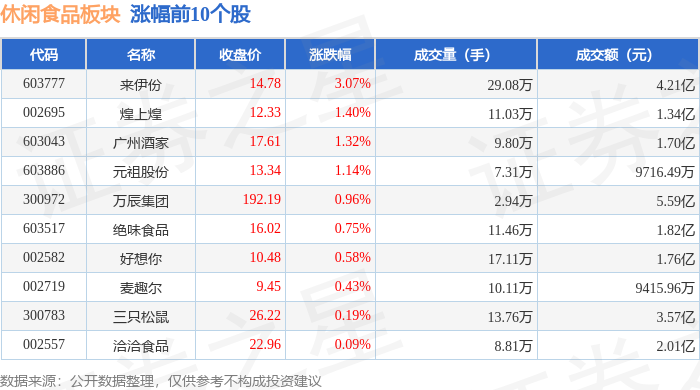
休闲食品板块9月5日涨0.16%,来伊份领涨,主力资金净流出8042.71万元




Zheng Xing Xing Ye Ri Bao· 2025-09-05 08:56
Market Overview - The leisure food sector increased by 0.16% on September 5, with Laiyifen leading the gains [1] - The Shanghai Composite Index closed at 3812.51, up 1.24%, while the Shenzhen Component Index closed at 12590.56, up 3.89% [1] Key Performers - Laiyifen (603777) closed at 14.78, up 3.07% with a trading volume of 290,800 shares and a turnover of 421 million yuan [1] - Other notable performers include: - Huangshanghuang (002695) at 12.33, up 1.40% [1] - Guangzhou Restaurant (603043) at 17.61, up 1.32% [1] - Yuanzu Co. (603886) at 13.34, up 1.14% [1] Underperformers - Salted Fish (002847) closed at 72.17, down 1.65% with a trading volume of 58,900 shares and a turnover of 420 million yuan [2] - Other underperformers include: - Ximai Food (002956) at 21.25, down 1.62% [2] - Youyou Food (603697) at 12.58, down 0.94% [2] Capital Flow - The leisure food sector experienced a net outflow of 80.43 million yuan from institutional investors, while retail investors saw a net inflow of 72.85 million yuan [2] - Notable capital flows include: - Laiyifen had a net inflow of 11.73 million yuan from institutional investors [3] - Yuanzu Co. saw a net inflow of 12.58 million yuan from institutional investors [3]

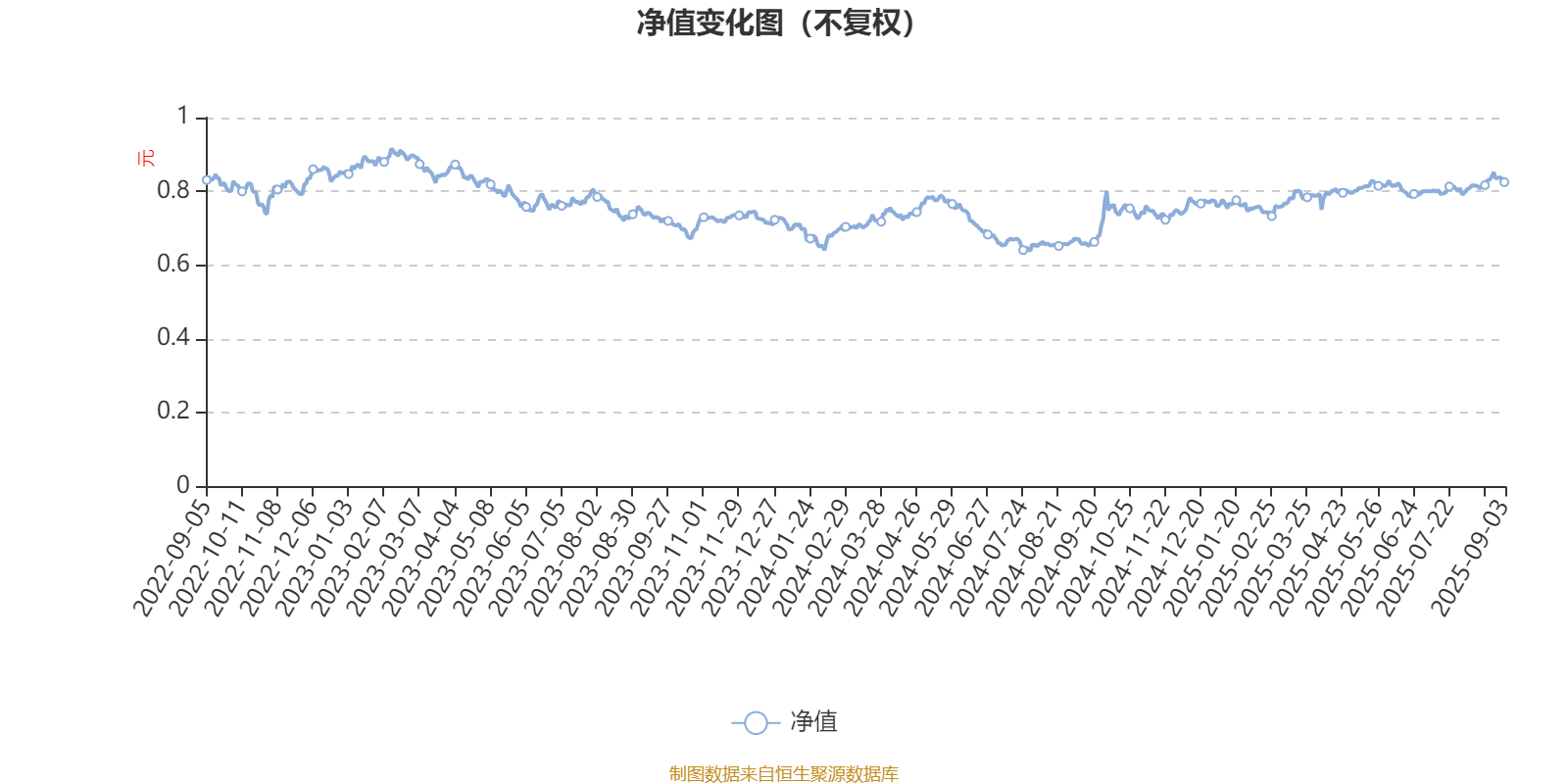
汇丰晋信消费红利股票:2025年上半年利润444.66万元 净值增长率2.57%
Sou Hu Cai Jing· 2025-09-04 17:49
Core Viewpoint - The HSBC Jintrust Consumption Dividend Stock Fund (540009) reported a profit of 4.4466 million yuan for the first half of 2025, with a net value growth rate of 2.57% and a fund size of 196 million yuan as of the end of June 2025 [3][32]. Fund Performance - As of September 3, 2025, the fund's net value growth rates were 0.50% over the past three months, 9.04% over the past six months, 22.60% over the past year, and -2.13% over the past three years, ranking 34/41, 22/41, 20/41, and 10/38 among comparable funds respectively [6]. Valuation Metrics - As of June 30, 2025, the fund's weighted average price-to-earnings (P/E) ratio was approximately 17.91 times, lower than the industry average of 20.03 times. The weighted average price-to-book (P/B) ratio was about 2.69 times, compared to the industry average of 3.1 times, and the weighted average price-to-sales (P/S) ratio was around 1.34 times, against an industry average of 2.06 times [11]. Growth Metrics - For the first half of 2025, the weighted revenue growth rate of the fund's held stocks was 0.04%, while the weighted net profit growth rate was 0.46%, with a weighted annualized return on equity of 0.15% [18]. Fund Composition - As of June 30, 2025, the fund had a total of 6,044 holders, with a total of 247 million shares held. Institutional investors accounted for 35.13% of the holdings, while individual investors made up 64.87% [35]. The fund's top ten holdings included companies such as Haida Group, Gree Electric Appliances, and SF Holding [41]. Trading Activity - The fund's turnover rate for the last six months was approximately 169.03%, consistently higher than the industry average [38].
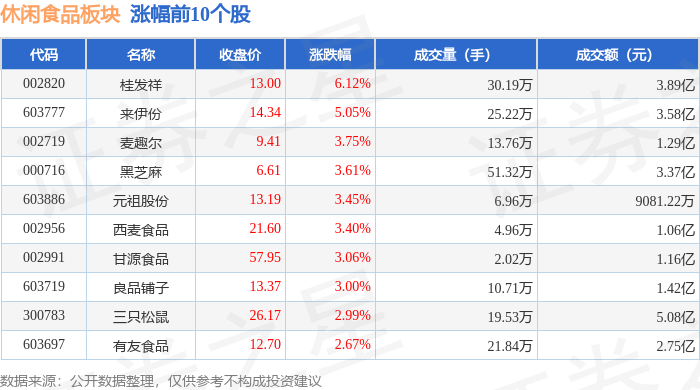
休闲食品板块9月4日涨0.68%,桂发祥领涨,主力资金净流入2775.36万元
Zheng Xing Xing Ye Ri Bao· 2025-09-04 08:50
Group 1 - The leisure food sector increased by 0.68% on September 4, with Gui Faxiang leading the gains [1] - The Shanghai Composite Index closed at 3765.88, down 1.25%, while the Shenzhen Component Index closed at 12118.7, down 2.83% [1] - Notable performers in the leisure food sector included Gui Faxiang, which rose by 6.12% to a closing price of 13.00, and Lai Yifen, which increased by 5.05% to 14.34 [1] Group 2 - The leisure food sector saw a net inflow of 27.75 million yuan from main funds, while retail investors contributed a net inflow of 84.39 million yuan [2] - Major stocks like San Zhi Song Shu and Lai Yifen experienced significant net outflows from speculative funds, with San Zhi Song Shu seeing a net outflow of 3.71 million yuan [2] - The data indicates a mixed sentiment among different types of investors, with main funds showing positive interest while speculative funds withdrew [2]


首次战略并购落地一年多,西麦食品称德赛康谷二季度开始盈利
Bei Ke Cai Jing· 2025-09-03 03:28
Group 1 - The core growth driver for the company in recent years has been the compound oatmeal, with new product launches such as the medicinal food series powder and the Seven Whites and Eight Treasures oatmeal, catering to consumer demand for traditional Chinese health products [1] - The company has plans to continue launching new products in the same series to meet consumer needs [1] Group 2 - Last year, the company acquired 60% of Desai Kanggu through a strategic merger, involving a payment of 15 million for partial equity transfer and an additional 21 million for capital increase [2] - Desai Kanggu is projected to achieve over 30 million in revenue in the first half of 2025, with a year-on-year growth of approximately 10%, and has started to turn a profit since the second quarter [3] Group 3 - The primary consumption scenario for the oatmeal category is breakfast, accounting for nearly 60% of total consumption, although this proportion has decreased compared to previous years [3] - The industry is actively working on expanding consumption scenarios, which has shown significant results, and it is anticipated that the proportion of breakfast consumption may further decline as more scenarios are developed to meet hidden consumer demands [3]
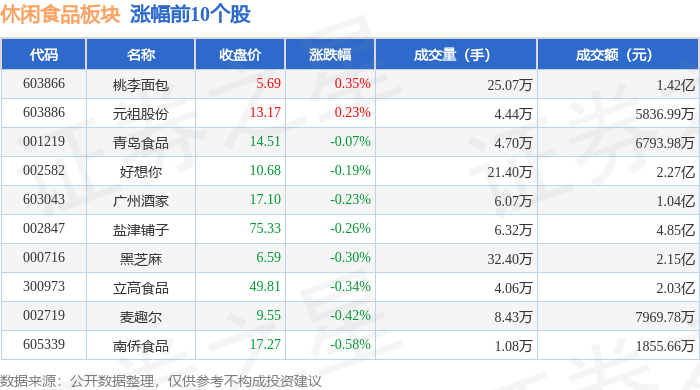
休闲食品板块9月2日跌1.24%,紫燕食品领跌,主力资金净流出2.62亿元
Zheng Xing Xing Ye Ri Bao· 2025-09-02 08:55
Market Overview - The leisure food sector experienced a decline of 1.24% on September 2, with Ziyan Food leading the drop [1][2] - The Shanghai Composite Index closed at 3858.13, down 0.45%, while the Shenzhen Component Index closed at 12553.84, down 2.14% [1] Individual Stock Performance - Ziyan Food's stock price fell by 6.72% to 23.75, with a trading volume of 66,300 shares and a transaction value of 162 million yuan [2] - Other notable declines include: - Ximai Food down 2.82% to 21.40 - Guifaxiang down 2.81% to 12.82 - Three Squirrels down 2.43% to 26.11 [2] Trading Volume and Capital Flow - The leisure food sector saw a net outflow of 262 million yuan from main funds, while retail investors contributed a net inflow of 253 million yuan [2][3] - The trading volume for various stocks included: - Taoli Bread with a closing price of 5.69 and a trading volume of 250,700 shares [1] - Yanzhu Co. with a closing price of 13.17 and a trading volume of 44,400 shares [1] Capital Inflow Analysis - Main funds showed a net inflow in stocks like Taoli Bread (10.27 million yuan) and Youyou Food (3.91 million yuan) [3] - Conversely, stocks like Black Sesame and Maiqu'er experienced net outflows of -20.11 million yuan and -203.98 million yuan, respectively [3]

西麦食品:截至2025年8月29日股东户数为12495户
Zheng Quan Ri Bao· 2025-09-02 07:07
Core Insights - Ximai Food reported that as of August 29, 2025, the number of shareholders is 12,495 [2] Company Summary - Ximai Food has engaged with investors through an interactive platform, providing updates on shareholder numbers [2] - The company is actively communicating with its investors, indicating a focus on transparency and shareholder engagement [2] Industry Context - The increase in shareholder numbers may reflect growing interest in the food sector, particularly in companies like Ximai Food [2] - The food industry continues to attract investors, suggesting potential opportunities for growth and investment [2]
【私募调研记录】中欧瑞博调研长春高新、欧科亿等6只个股(附名单)
Zheng Quan Zhi Xing· 2025-09-02 00:09
Group 1: Company Highlights - Changchun High New has made significant progress in using AI large models to design highly alkaline single-domain antibodies, successfully completing the development of a protein product designed by the model that has entered 5000-liter scale production [1] - Oko Yi achieved operating revenue of 603.48 million yuan in the first half of 2025, a year-on-year increase of 4.17%, but net profit decreased by 98.71% due to low capacity utilization, increased depreciation, rising material costs, and higher expense ratios [2] - Jingwang Electronics reported operating revenue of 7.095 billion yuan in the first half of 2025, a year-on-year increase of 20.93%, with net profit of 650 million yuan, a slight decrease of 1.06% [3] - Lens Technology has engaged in joint R&D with leading companies in the 3D printing industry, with some products expected to achieve mass production next year [4] - Ximai Food's revenue for the first half of the year was over 30 million yuan, a year-on-year increase of approximately 10%, with profitability starting in the second quarter [5] - Antu Bio experienced a decrease in testing volume due to price reductions in chemiluminescence products, but anticipates a record high in installed capacity in 2024 [6] Group 2: Industry Insights - The manufacturing recovery is driving demand for tools in the automotive, aerospace, and consumer electronics sectors, with significant potential for domestic replacements in high-end fields [2] - The industry is in a golden development phase, with substantial room for domestic substitution and significant overseas market potential [2] - The automotive electronics sector is experiencing rapid growth, with increased shipments of AI servers and 800G optical modules [3] - The biopharmaceutical sector is facing pressure from the implementation of centralized procurement and DRG policies, impacting sales and pricing strategies [5][6]


