SHEIN

Search documents
做好产品 讲好故事 搭好通道江苏“小包裹”速抵全球大市场
Xin Hua Ri Bao· 2025-09-02 23:07
Group 1 - The core pain point for cross-border e-commerce sellers in China is finding reliable supply chains, with Jiangsu province emerging as a hub with over 30 specialized industrial belts covering various sectors [1] - Jiangsu's advantages in cross-border e-commerce include its industrial belts, business environment, and the ability of merchants to effectively tell the "Jiangsu story" to attract traffic [1] - In the first seven months of this year, Changshu's textile and apparel exports reached 12.91 billion yuan, with cross-border e-commerce exports growing by 163.7% year-on-year, becoming a significant driver of foreign trade growth [2] Group 2 - Jiangsu's cross-border e-commerce innovation is characterized by the "industrial belt + cross-border e-commerce" model and the application of new technologies like AI, creating a unique development path for the province [3] - Small and micro enterprises in Jiangsu are increasingly participating in international trade through cross-border e-commerce, with success stories emerging from platforms like TikTok [4] - The Wuxi airport has seen a significant increase in cross-border e-commerce shipments, with nearly 11 million packages exported as of August 18, 2025, doubling from the previous year [6] Group 3 - Nanjing's cross-border e-commerce public service platform reported an import and export total of 7 billion yuan in the first half of the year, a 47.6% increase year-on-year, with the average company registration time reduced from 20 to 5 working days [7] - AI technology is being increasingly applied in cross-border e-commerce for product selection, marketing, supply chain management, and compliance, enhancing efficiency and reducing costs [7] - Emerging markets, particularly in Southeast Asia and Africa, present significant growth opportunities for Jiangsu's cross-border e-commerce sector as global consumer demand diversifies [7]
跨交会配套活动丨品牌出海实战峰会圆满落幕,共拓蓝海新市场
Sou Hu Cai Jing· 2025-09-02 11:59
Core Insights - The summit "Breaking the Growth: Practical Strategies for Brand Going Global" was successfully held, focusing on new opportunities for cross-border e-commerce and brand growth strategies [1][11] - Experts discussed the importance of adapting to new market conditions and leveraging platforms like Amazon, Coupang, and SHEIN for international expansion [1][11] Group 1: Market Trends and Opportunities - The current landscape of cross-border e-commerce shows a polarization in sales among independent sellers, highlighting the advantages of the DTC model in enhancing brand autonomy and customer satisfaction [3] - The Korean e-commerce market is valued at nearly $170 billion and is experiencing rapid growth, particularly among female consumers aged 40 and above, presenting significant opportunities for Chinese sellers [7] - SHEIN's strategy emphasizes the importance of selecting products based on market trends and optimizing listings to enhance visibility and sales conversion [8] Group 2: Strategic Approaches - A "Seven-Step Methodology" for Chinese factories going global was proposed, covering aspects from product development to brand building, emphasizing the need for a flexible supply chain [5] - The importance of utilizing Amazon's KPI management tools and FBA services was highlighted to improve operational efficiency and consumer reach [5] - The summit aimed to provide actionable insights on market positioning, platform selection, and logistics to help cross-border sellers develop a comprehensive growth strategy [11]



万商云集、链接全球,一场盛会见证电商蓬勃生机
Sou Hu Cai Jing· 2025-09-02 10:21
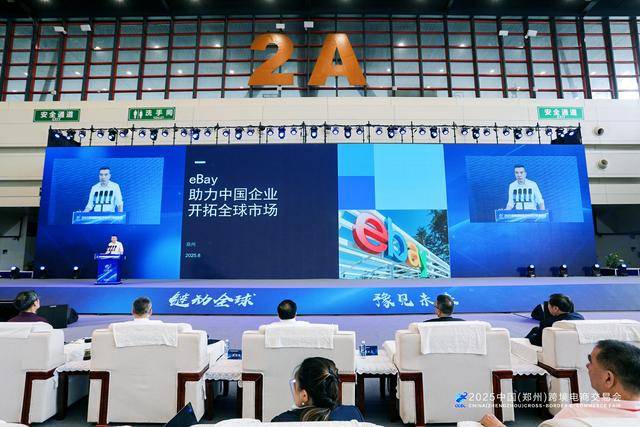
Core Insights - The 2025 Zhengzhou International Cross-Border E-Commerce Trade Expo successfully established an international platform for exhibition, high-level dialogue, and resource connection, achieving significant results in promoting industrial cooperation and facilitating trade [1][11]. Group 1: Event Overview - The expo attracted nearly 1,000 global enterprises, including major international platforms like Amazon, Walmart, Alibaba International, eBay, SHEIN, and TikTok Shop, with over 60,000 professional visitors [3][8]. - The exhibition covered over 20,000 square meters, showcasing the entire supply chain, logistics, and payment sectors [3][8]. - The Malaysian national pavilion highlighted unique products such as palm oil and white coffee, emphasizing the growing digital trade bridge between China and Malaysia [3][11]. Group 2: High-Level Discussions - Key figures from the Ministry of Commerce and international trade associations emphasized the rapid development of cross-border e-commerce as a vital component of international trade and a significant contributor to stabilizing foreign trade [5][11]. - Various seminars addressed policy trends, talent cultivation, market expansion, brand internationalization, and compliance operations, showcasing the collaborative efforts of platforms and service providers [5][7]. Group 3: Business Outcomes - The expo resulted in significant business transactions, with companies like Yiyunying receiving 730,000 yuan in deposits from 80 potential clients, and other exhibitors reporting sales exceeding 1 million yuan [8][10]. - The event facilitated over 50 million yuan in on-site transactions and more than 1 billion yuan in intended orders [8][10]. Group 4: Industry Impact - The expo aimed to create a high-level, full-chain cross-border e-commerce ecosystem in the Central Plains region, combining industry resources, policy support, and a favorable business environment [11]. - In the first seven months of the year, Henan Province's foreign trade import and export volume reached 483.38 billion yuan, a year-on-year increase of 22.3%, surpassing the national growth rate of 18.8% [11].
欧洲人省钱,省出个新市场
Sou Hu Cai Jing· 2025-09-02 08:59
Group 1: Market Overview - Amazon's second-hand sales in the UK and Europe are projected to exceed €2 billion in 2024, with over 740 million items circulating in the European second-hand market [2] - The European second-hand e-commerce market has reached €21.6 billion, with over two-thirds of consumers having purchased second-hand goods, expected to grow to €23.8 billion by the end of 2025 [2] - Germany shows the highest willingness to purchase second-hand goods, with a transaction volume of €6.5 billion in the past year, while the UK's online second-hand market reached £4.3 billion [2] Group 2: Development Stages - The development of the European second-hand e-commerce platform can be divided into three phases: the inception around 2010, expansion from 2015 to 2020, and peak growth from 2021 to 2024 [3] - The first phase saw the emergence of key platforms like Vinted, Vestiaire Collective, and Depop, focusing on fashion, luxury goods, and vintage clothing [4][5][6] - The second phase was characterized by the expansion of established platforms and the rise of new entrants, with significant financing activity [9][10] Group 3: Key Players - Vinted, founded in 2008, has become a leading platform with a valuation of €5 billion in 2024, achieving a GMV of $12.5 billion and over 65 million registered users [15][18] - Vestiaire Collective, established in 2009, has a valuation of €1.1 billion as of 2023 and has expanded into multiple markets [16][18] - Depop, launched in 2011, was acquired by Etsy for $1.63 billion in 2021 and has over 35 million users [16][18] Group 4: Market Trends - The second-hand clothing market in Europe is projected to grow from approximately $17.425 billion in 2023 to $43.12 billion by 2032, with a CAGR of 10.52% [14] - The second-hand electronics market is also expanding, with platforms like Back Market and Swappie gaining traction [17][18] - Major players like Amazon, eBay, and TikTok Shop are increasingly entering the second-hand market, indicating a competitive landscape [24][25][26] Group 5: Amazon's Strategy - Amazon has launched initiatives like Amazon Warehouse and Amazon Renewed to facilitate the sale of second-hand goods, with sales in the UK exceeding 4 million items in 2022 [19][22] - In 2024, Amazon's second-hand sales in Europe and the UK surpassed €2 billion, reflecting a growing demand for refurbished and second-hand products [23] - Amazon's entry into the second-hand car market is planned for 2025, further diversifying its offerings [21]

一家百亿估值消费企业的破产
叫小宋 别叫总· 2025-09-02 03:47
Core Viewpoint - The article discusses the rise and fall of YOHO, a once-prominent consumer brand in China, highlighting the challenges faced by consumer companies in the current market environment and the implications for investment strategies in the sector [1][17]. Financing Information - YOHO's operating entities, Nanjing Xinyuli Cultural Communication Co., Ltd. and Youhuo (Jiangsu) Trading Service Co., Ltd., have collectively raised significant funding, with Xinyuli securing six rounds of financing from top-tier investment institutions [2][7]. - The last disclosed funding round for Xinyuli was in 2018, amounting to $25 million, suggesting a valuation in the tens of billions of RMB [7]. - Youhuo has completed one round of financing, a D round, with a total of $10 million, indicating a valuation close to 100 billion RMB [7][11]. Founders and Business Model - YOHO was founded by Liang Chao, who has a background in media and previously worked as a television program director [13]. - The company was known for its dual focus on media and fashion, collaborating with European designers and hosting events to promote its brand [13][14]. - The flagship store in Nanjing was designed by renowned Japanese designer Masamichi Katayama, reflecting the brand's upscale positioning [14]. Downfall - Since 2020, YOHO has faced increasing legal challenges, and by 2021, reports indicated that the company had run into financial difficulties, with its cash flow collapsing due to high inventory, long payment terms, and low margins [18][19]. - The company, which once had a valuation in the tens of billions, likely needed to generate over 1 billion RMB in revenue to sustain such a valuation [19]. Market Reflection - The article reflects on the luxurious investor backing of YOHO, including prominent firms like CDH Investments and Bertelsmann, and questions the exit strategies of these investors given the company's decline [21]. - A personal anecdote highlights the founder's ability to liquidate shares for personal gain, raising questions about governance and investor oversight during the company's peak [21].

跨境电商运营:2023年跨境电商行业深度研究报告
Sou Hu Cai Jing· 2025-09-01 13:38
Core Insights - The report provides a comprehensive analysis of the cross-border e-commerce industry, covering its definition, development history, industry chain, current status, and future trends [1][5][10]. Industry Definition - Cross-border e-commerce refers to international commercial activities where different customs entities transact through e-commerce platforms, utilizing electronic payment and cross-border logistics [11][34]. Development History - The industry has experienced three main phases: - **Nurturing Phase (2010-2013)**: Focused on personal purchasing [14]. - **Initiation Phase (2014-2017)**: Rapid growth supported by government policies and increased consumer purchasing power [15]. - **High-Speed Development Phase (2018-2023)**: Business models and service systems were refined, leading to market consolidation [16]. Industry Policies - The Chinese government has consistently supported the cross-border e-commerce sector, with policies such as tax incentives for export return goods and the establishment of comprehensive pilot zones [17][19]. Industry Chain - The industry chain consists of: - **Upstream**: Manufacturers, distributors, and brand owners, with Guangdong, Zhejiang, and Jiangsu as key supply regions [22][26]. - **Midstream**: E-commerce platforms (e.g., Tmall Global, JD Worldwide) and logistics providers (e.g., SF Express, Cainiao Network) [29]. - **Downstream**: Consumers, primarily young adults aged 18-35 and middle-class individuals [22][30]. Current Industry Status - The market is steadily growing, with the export cross-border e-commerce scale exceeding 75% in 2021. The B2C model is rapidly expanding, with a transaction scale of 3.3 trillion yuan in 2021 [1][9]. - The competitive landscape shows a significant Matthew effect, where leading companies dominate due to brand and supply chain advantages [9][10]. Representative Companies - Key players include: - **Temu**: Leverages Pinduoduo's supply chain for cost-effective offerings. - **SHEIN**: Focuses on fast fashion with a flexible supply chain. - **Shopee**: Targets the Southeast Asian market with localized operations [1][9]. Future Trends - The industry is expected to gradually recover, with trends towards branding, diversification, and refinement. The market will likely concentrate around leading players, and service providers in cross-border payments and SaaS will see significant growth potential [1][10][19]. - Overseas warehouses will become a core competitive advantage due to their ability to enhance logistics efficiency and reduce costs [1][10].


2023年跨境电商行业深度研究报告
Sou Hu Cai Jing· 2025-09-01 07:38
Core Insights - The report provides an in-depth analysis of the cross-border e-commerce industry in 2023, highlighting its growth trajectory, market dynamics, and future trends [1][2][12]. Industry Overview - Cross-border e-commerce involves transactions between different jurisdictions facilitated by e-commerce platforms, characterized by global reach and immediacy, primarily categorized into B2B, B2C, and C2C, with B2B being the dominant model [1][9]. - The industry has evolved through three phases: the nascent phase (2010-2013), the initiation phase (2014-2017), and the rapid growth phase (2018-2023), with significant policy support from the government [1][17][19]. Policy Support - Continuous government policies have been implemented to support the cross-border e-commerce sector, including tax incentives for export return goods announced in January 2023 [20][22]. Industry Chain - The industry chain consists of upstream suppliers (manufacturers, distributors, brand owners), midstream platforms (e-commerce platforms and logistics providers), and downstream consumers, with Guangdong, Zhejiang, and Jiangsu being the primary supply regions [25][30]. - In 2021, the market size for cross-border e-commerce platforms reached 1.385875 trillion yuan, while the logistics market size was 74.6 billion yuan, reflecting significant growth [30][33]. Market Dynamics - The market penetration rate increased from 2017 to 2020 but saw a slight decline in 2021 due to logistics costs and international trade frictions, stabilizing in the first half of 2022 [2][10]. - The competitive landscape exhibits a "Matthew Effect," where leading companies dominate due to brand strength and supply chain advantages, with Temu, SHEIN, and Shopee being notable players [2][10]. Future Outlook - The industry is expected to gradually recover, with trends towards branding, diversification, and refinement becoming inevitable, potentially leading to a concentration of market power among a few dominant players [2][12]. - The potential for cross-border payment and SaaS service providers is significant, and overseas warehouses are anticipated to become a core competitive advantage due to their ability to enhance logistics efficiency and reduce costs [2][12].

阿里巴巴推出新跨境电商平台助力全球贸易
Sou Hu Cai Jing· 2025-09-01 01:09
Core Insights - Alibaba's launch of the independent cross-border e-commerce platform "1688overseas" aims to leverage China's supply chain capabilities for global small and medium-sized B2B buyers, marking a significant shift in the global trade landscape by 2025 [1][6] - The platform operates on a "full custody" model, integrating 70% of China's industrial resources with Cainiao's logistics infrastructure, targeting emerging competitors like Temu and SHEIN [1][3] Group 1: Platform Features and Benefits - 1688overseas offers a "domestic stock + platform custody" light operation model, allowing sellers to store goods in designated domestic warehouses while the platform handles cross-border logistics, customs clearance, and overseas delivery [3] - This model addresses pain points for small factories and industrial sellers, reducing logistics time by 30% and overall costs by 18% [3] - The platform mandates suppliers to provide English quality inspection reports and CE certifications, enhancing compliance capabilities among small factories [3] Group 2: Localization Strategy - The platform's initial pilot locations include Vietnam and Kazakhstan, with plans to expand to 15 countries by 2025, focusing on "Belt and Road" nations [4] - In Vietnam, 1688 has established a localized team and warehouses, enabling rapid delivery to Southeast Asian retail endpoints within 48 hours [4] - The platform is addressing logistics challenges in Southeast Asia by reducing delivery times from 15 days to under 72 hours through localized warehousing and transportation [4] Group 3: Competitive Landscape - The introduction of 1688overseas is seen as a strategic response to competitors like Temu and SHEIN, with the platform offering lower prices by 15%-20% through direct supply from industrial bases [5] - However, challenges remain, including high logistics costs in Southeast Asia, which account for 25%-30% of product prices, and the digitalization gap among small factories [5] - The competition with Amazon's "full custody supply chain service" highlights a divergence in business models, with Alibaba focusing on supply chain efficiency [5] Group 4: Industry Outlook - The global B2C cross-border e-commerce market is projected to grow from $785 billion in 2021 to $7.9 trillion by 2030, with B2B markets becoming a new battleground for major players [7] - Alibaba aims to streamline traditional cross-border trade processes from five layers to three, reshaping global trade dynamics [7] - The ongoing competition in supply chain infrastructure is expected to influence the power dynamics of global e-commerce over the next decade [8]

SHEIN回国谋上市?行业竞争困局仍难解
Sou Hu Cai Jing· 2025-08-31 10:23
Core Viewpoint - SHEIN, a leading player in the cross-border fast fashion sector, has faced significant challenges in its IPO journey since 2020, including regulatory hurdles and competitive pressures, prompting a potential return to China to facilitate its listing process [1][15][17] Group 1: Company Structure and Regulatory Challenges - SHEIN's complex ownership structure, initially designed for overseas listing, has become a barrier due to tightened regulations, with a significant portion of its operations and assets being based in China [3][4] - The implementation of the "Management Measures for the Issuance of Securities and Listing by Domestic Enterprises Overseas" in March 2023 emphasizes the importance of substance over form, which may hinder SHEIN's ability to meet compliance requirements for overseas listings [3][4] - Regulatory scrutiny has intensified, with the SEC and EU raising concerns about SHEIN's corporate structure and potential tax evasion, complicating its plans for a Singapore listing [4][12] Group 2: Tax Compliance and Financial Performance - SHEIN's initial move to Singapore was motivated by favorable tax rates, but the shift has now become a liability in terms of compliance and potential delays in its IPO process [6][7] - The company has seen a significant slowdown in revenue growth, with a 23% increase in H1 2024 and net profits dropping over 70%, leading to a decrease in valuation from over $100 billion to approximately $50 billion [10][12] - Tax issues have been highlighted as a major concern, with 37% of Hong Kong-listed Chinese companies facing inquiries related to tax compliance, which could further delay SHEIN's IPO [7][13] Group 3: Competitive Landscape - SHEIN faces fierce competition from both traditional fast fashion brands like ZARA and H&M, which are enhancing their digital capabilities, and emerging brands focusing on sustainable fashion [8][14] - The rise of competitors such as TEMU, which is aggressively targeting the same supplier base, has strained SHEIN's supply chain and reduced its competitive edge [10][14] - Global trade protectionism and regulatory changes have increased operational costs, with the U.S. canceling tax exemptions on cross-border packages and the EU imposing new taxes, further complicating SHEIN's market position [9][13] Group 4: Future Outlook and Strategic Challenges - The potential return to China is seen as a way to address compliance issues, but it does not resolve the underlying competitive challenges SHEIN faces in the fast fashion industry [8][15] - The company must improve supplier relationships, product quality, and brand image to regain market share and investor confidence amid a rapidly changing retail landscape [10][15] - SHEIN's future trajectory will depend on its ability to navigate regulatory complexities and adapt to evolving consumer preferences, particularly in the context of increasing demand for sustainable products [12][17]
一个赌气移民,一个驻华40年:他们如何躲过日本“失去的30年”?
虎嗅APP· 2025-08-29 10:10
Core Viewpoint - The article discusses the changing dynamics of the job market and emphasizes the importance of adapting to new opportunities, particularly in emerging markets, as traditional career paths become more challenging [4][18]. Group 1: Historical Context and Lessons from Japan - The article references Japan's "lost 30 years," highlighting how government actions during economic downturns affected workers, leading many to face challenges such as the "high-education trap" and "dispatch internal competition" [4][8]. - It shares stories of Japanese workers who successfully navigated these challenges by seizing opportunities in China, illustrating the potential for career growth in emerging markets [5][9]. Group 2: Identifying Opportunities in Emerging Markets - The article outlines various Chinese companies that have successfully expanded internationally, including sectors like consumer electronics, new energy vehicles, and cross-border e-commerce [23][24]. - It emphasizes the need for workers to research and identify lesser-known but promising companies that are expanding globally, rather than focusing solely on well-known brands [28][30]. Group 3: Strategies for Job Seekers - The article suggests that job seekers should enhance their skills and knowledge, particularly in international markets, to improve their chances of securing overseas positions [34][35]. - It highlights the importance of language skills and cultural understanding in building relationships and succeeding in foreign markets [36][37]. - The article recommends exploring internal transfer opportunities within companies as a pathway to international roles, as many firms offer such options [39][40]. Group 4: Actionable Steps for Career Development - The article encourages job seekers to create a LinkedIn profile and utilize various international job platforms to increase visibility and access to opportunities [46]. - It advises individuals to conduct thorough research on target companies, including their market position and growth potential, to better position themselves for job applications [48]. - The article suggests considering emerging markets in Southeast Asia and Africa for job opportunities, as these regions are projected to experience significant economic growth [50][53].