强脑科技

Search documents
杭州六小龙,又有IPO了
投中网· 2025-11-15 07:04
Core Viewpoint - The article highlights the significant growth and investment potential of Hangzhou-based robotics company Yun Shen Chu, which is preparing for an IPO and has shown impressive revenue growth in the quadruped robot market, positioning itself as a key player in the industry after Yushu Technology [3][4][8]. Company Overview - Yun Shen Chu was founded in 2017 by Dr. Zhu Qiuguo and Dr. Li Chao, focusing on high-dynamic balance robotic products, including quadruped, humanoid, and wheeled robots [7]. - The company has launched several products, including the "Jueying" series of quadruped robots, which have applications in various industries such as energy, emergency response, and education [8]. Financial Performance - Yun Shen Chu has completed seven rounds of financing, with the latest round in July 2023 raising nearly 500 million yuan, indicating strong investor interest [3][4]. - The company’s annual revenue is reported to be in the range of several hundred million yuan, with expectations of over 100% growth in 2024 compared to 2023 [4][8]. Market Dynamics - The domestic quadruped robot market has seen explosive growth, with sales increasing from less than 2000 units in 2019 to 18,000 units in 2023, reflecting a compound annual growth rate of 94.4% [8]. - The market size is projected to grow from under 1 billion yuan to 7.55 billion yuan by 2024, with expectations to exceed 5 billion yuan by 2030 [8]. Investment Landscape - The article notes that several companies, including Yun Shen Chu, Yushu Technology, and Qiangnao Technology, are part of a group referred to as the "Hangzhou Six Dragons," all of which are preparing for IPOs and have received significant backing from state-owned and insurance capital [10][12]. - The involvement of at least 38 insurance institutions in the funding of these companies indicates a shift in investment strategies towards early-stage technology firms [14][15].


梁文锋代表DeepSeek,他代表梁文锋
量子位· 2025-11-15 02:08
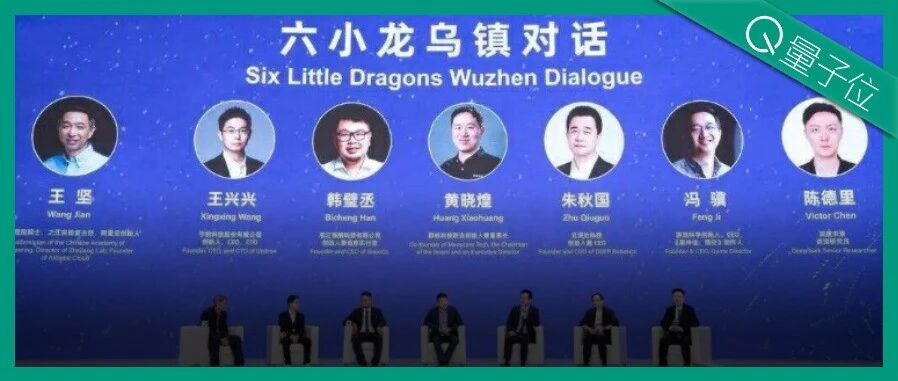
Core Viewpoint - The article discusses the emergence of "Hangzhou Six Little Dragons" at the World Internet Conference in Wuzhen, highlighting the presence of key figures in AI and technology, particularly focusing on DeepSeek and its representative, Chen Deli, who expressed both optimism and concerns about the future impact of AI on society [1][3][41]. Group 1: DeepSeek and Its Representation - DeepSeek's founder Liang Wenfeng did not attend the conference; instead, researcher Chen Deli represented the company, marking a significant public appearance for DeepSeek [3][6][41]. - Chen Deli, who joined DeepSeek in 2023, has been involved in critical research areas such as language models and alignment mechanisms, contributing to several important publications [18][22][20]. - The article notes that Chen Deli's presence at the conference has made him the second public representative of DeepSeek after Liang Wenfeng, emphasizing his role as a spokesperson for the company's views on AI [41][42]. Group 2: AI Perspectives - Chen Deli expressed a mixed outlook on AI, stating that while there is a "honeymoon period" between humans and AI over the next three to five years, there are significant long-term concerns about AI potentially replacing most jobs in society [8][9]. - He highlighted that the current AI revolution differs fundamentally from previous industrial revolutions, as AI is beginning to possess its own "intelligence," which could surpass human capabilities in certain areas [10][11]. - The potential for AI to disrupt existing social order and economic structures is a major concern, with Chen suggesting that technology companies may need to act as "guardians" to mitigate negative impacts [12][13]. Group 3: Value Alignment in AI - During his presentation, Chen Deli introduced the concept of "value alignment decoupling," proposing that core values should be unified while allowing users to customize diverse values, ensuring safety and adaptability to societal diversity [25][24]. - This approach aims to address the rigidity of traditional large models, which often embed fixed values that do not reflect the complexity of human society [24][25]. - The idea of "harmony in diversity" encapsulates this new perspective on AI value alignment, suggesting a more flexible and user-centric approach to AI development [26][25].
国内首次,侵入式脑机产品进审批“绿色通道”
3 6 Ke· 2025-11-13 02:10
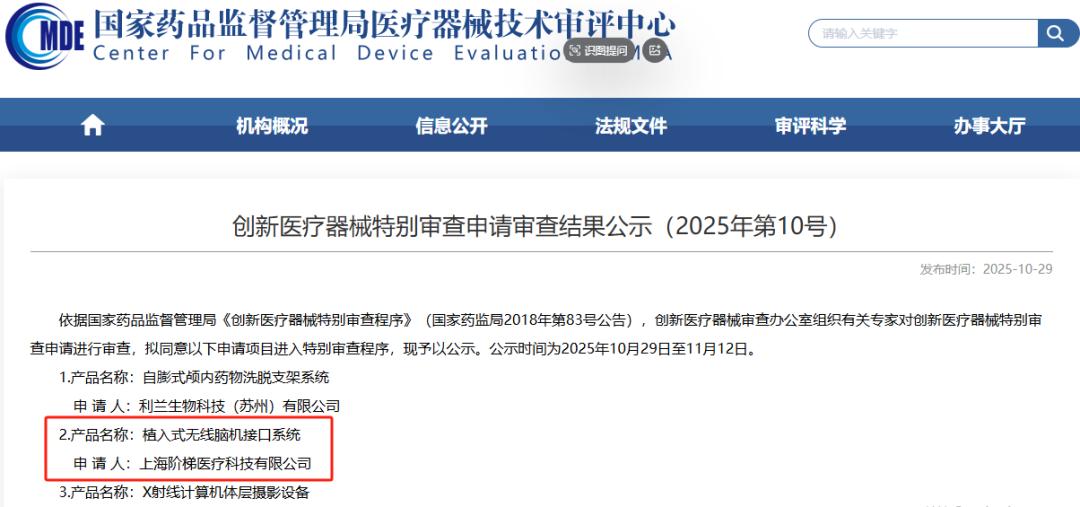
Core Insights - The article highlights the significant potential of new materials and flexible electrodes in China, particularly in the field of brain-computer interfaces (BCIs) [1][7] - The approval of the first invasive brain-computer interface product by Shanghai Ladder Medical Technology Co., Ltd. marks a milestone in the domestic medical device industry [1][4] Industry Overview - The innovative medical device special review procedure established by the National Medical Products Administration (NMPA) aims to encourage innovation in medical devices, providing expedited review for products with core technology patents and significant clinical value [2][3] - The invasive brain-computer interface technology requires surgical implantation, which presents higher technical barriers and risks but offers higher quality and precision in neural signal acquisition compared to non-invasive methods [3][4] Company Developments - Shanghai Ladder Medical, founded in 2021, focuses on the development of implantable brain-computer interface technology and has recently completed a 350 million yuan Series B financing round [3][4] - The company's ultra-flexible electrode technology allows for minimally invasive implantation, significantly reducing the risk of tissue damage and immune response [4][6] Clinical Progress - Ladder Medical has initiated clinical trials, with a recent case demonstrating a participant controlling a computer cursor using thought after undergoing the brain-computer interface implantation [6][8] - The company is now the second globally, after Neuralink, to enter the clinical phase of invasive brain-computer interfaces [6][8] Market Potential - The global brain-computer interface market is projected to grow from approximately $2.62 billion in 2024 to $12.4 billion by 2034, with a compound annual growth rate of 17.35% [8] - The Chinese brain-computer interface market is expected to expand from 3.2 billion yuan in 2024 to 6.14 billion yuan by 2028, indicating strong growth potential in the sector [8] Regulatory Environment - Recent policy developments, including the establishment of industry standards for brain-computer interface medical devices, are expected to facilitate faster market entry for approved products [7][8] - The NMPA's new standards for brain-computer interface terminology will take effect on January 1, 2026, marking a significant step in regulatory clarity for the industry [7][8]
求购强脑科技公司老股份额;求购Momenta公司老股份额|资情留言板第173期
3 6 Ke· 2025-11-12 07:31
Summary of Key Points Core Viewpoint The article presents a dynamic asset trading market where buyers and sellers face challenges in connecting with potential trading partners. The platform aims to facilitate quicker access to market information and potential transactions, highlighting various asset purchase and sale opportunities. New Additions - **Acquisition of New Kai Lai Company Old Shares**: Expected valuation is negotiable, with an asset scale of approximately 30-50 million shares. The transaction can accept LP shares [1]. - **Acquisition of Momenta Company Old Shares**: Expected valuation is negotiable, with an asset scale of approximately 10-20 million RMB. The transaction can accept structured pricing based on management fees and carry [1]. - **Acquisition of Qiang Nao Technology Company Old Shares**: Expected valuation is 1.6 billion USD, with an asset scale of approximately 30 million RMB. The transaction requires a structure that allows for RMB transactions [1]. - **Acquisition of Changxin Storage Company Old Shares**: Expected valuation is between 150-200 billion RMB, with an asset scale of approximately 30-50 million USD. The transaction requires named shareholder shares [2]. - **Transfer of Fund LP Shares Holding Zhi Yuan Robot**: Expected valuation is approximately 25 billion RMB [2]. - **Transfer of Fund LP Shares Holding Super Fusion**: Expected valuation is negotiable [3]. - **Transfer of Fund LP Shares Holding Solid-State Battery Industry Leader**: Expected valuation is negotiable [4]. - **Transfer of Fund LP Shares Holding Satellite Industry Leader**: Expected valuation is negotiable [5]. - **Acquisition of Guoyi Quantum Company Old Shares**: Expected valuation is negotiable [6]. Asset Acquisition - **Seeking Medical Device M&A Targets**: Expected valuation is negotiable, with a focus on profitable companies in specific fields. The buyer is looking to invest 30-50 million for at least 51% control [9]. - **Seeking Small Home Appliance M&A Targets**: Expected valuation is negotiable, within 2 billion RMB, focusing on profitable companies [10]. - **Acquisition of Yushu Technology Company Old Shares**: Expected valuation is 15 billion RMB, with an asset scale of approximately 50 million shares [10]. - **Acquisition of DJI Company Old Shares**: Expected valuation is around 17-18 billion USD, with an asset scale of approximately 50 million RMB [10]. - **Acquisition of Qiang Nao Technology Company Old Shares**: Expected valuation is negotiable, with an asset scale of approximately 10 million USD [10]. Asset Transfer/Increase - **Transfer of Fund LP Shares Holding Wo Fei Chang Kong Technology**: Expected valuation is negotiable, with an asset scale of approximately 60 million shares [11]. - **Transfer of Old Shares of Commercial Aerospace Leader**: Expected valuation is negotiable, with an asset scale of 50 million RMB [11]. - **Transfer of Fund LP Shares for Intelligent Driving Leader**: Expected valuation is negotiable [11]. - **Transfer of Semiconductor Silicon Wafer Leader Shares**: Expected valuation is negotiable, with a focus on advanced production capabilities [12]. - **Transfer of Old Shares of Quantum Instrumentation Leader**: Expected valuation is between 8-9 billion RMB, with an asset scale of approximately 30 million shares [16]. Other Notes The information provided in the "Asset Information Board" is dynamic and may become outdated due to market changes or completed transactions. The platform serves to connect parties for potential transactions, with further negotiations and agreements required between involved parties [17].
聚焦智能机器人等产业前沿,第十八届欧洽会抢先看
Di Yi Cai Jing· 2025-11-12 05:48
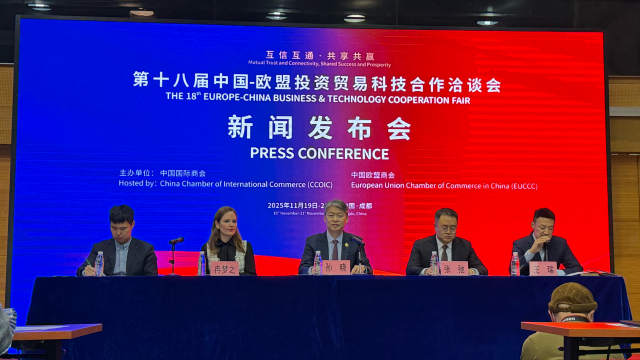
Core Insights - The 18th China-EU Investment Trade and Technology Cooperation Fair (EU Fair) is set to take place from November 19 to 21 in Chengdu, focusing on enhancing cooperation in trade, investment, and technology between China and the EU [1][2]. Group 1: Event Overview - The EU Fair has evolved into one of the largest platforms for China-EU economic and technological cooperation, with participation from over 1,200 companies and more than 29,000 business matching sessions since its inception in 2002 [1]. - The event is expected to attract over 600 attendees from the business and academic sectors of both China and Europe, including representatives from 19 European countries and major companies like Three Gorges Group, CATL, and AstraZeneca [1]. Group 2: Themes and Focus Areas - The theme of this year's fair is "Mutual Trust and Shared Benefits," emphasizing the economic complementarity and responsibilities of both parties in a rapidly changing world [2]. - The fair will feature five parallel industry matchmaking sessions focusing on energy and environmental protection, biomedicine, digital culture and creativity, agricultural products, and intelligent robotics [4][5]. Group 3: Economic Context - In the first ten months of this year, the total value of goods trade between China and the EU reached $680.17 billion, with a year-on-year growth rate of 4% [6]. - Both parties are committed to deepening mutually beneficial cooperation and exploring various economic agreements, including investment treaties, to enhance trade and investment liberalization [6].

人形机器人、脑机接口、6G将如何改变生产和生活?
Bei Jing Ri Bao Ke Hu Duan· 2025-11-11 23:21
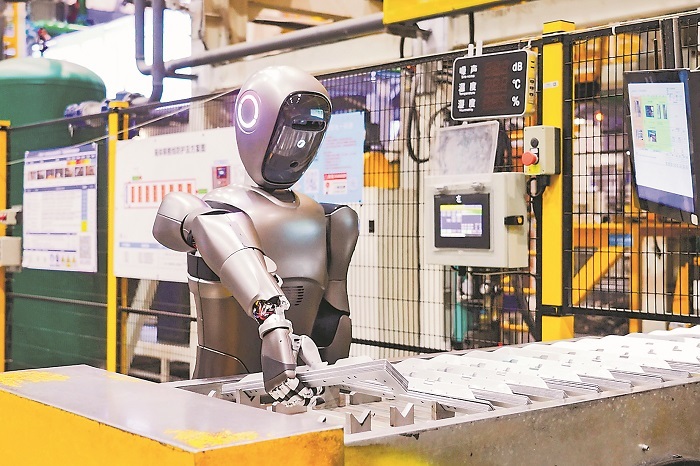
Core Insights - The article discusses the rapid advancements in various future industries in China, particularly focusing on humanoid robots, brain-computer interfaces, and 6G technology, highlighting their potential to drive economic growth and improve quality of life [2][5][6]. Group 1: Humanoid Robots - The humanoid robot "Mei Luo" is capable of autonomous decision-making and performing quality inspections in manufacturing settings, showcasing the integration of embodied intelligence in industrial applications [3]. - The humanoid robot market in China is projected to reach 870 billion yuan by 2030, indicating significant growth potential in this sector [3]. - Midea Group is leveraging its manufacturing capabilities to transition humanoid robots from experimental phases to practical applications, creating a closed-loop system with factory operations [3][4]. Group 2: Brain-Computer Interfaces - Brain-computer interface technology is moving from research to clinical applications, with a market size expected to exceed 3.8 billion yuan by 2025, reflecting its growing importance in healthcare [6]. - The technology offers innovative solutions for conditions like Alzheimer's disease, providing new hope for intervention and treatment [6]. - Companies in the brain-computer interface sector are expected to achieve breakthroughs in core technologies, enhancing their commercial applications in rehabilitation and treatment of neurological disorders [6]. Group 3: 6G Technology - The transition from 5G to 6G is marked by the introduction of 5G-A technology, which enhances communication reliability and supports various industrial applications, including autonomous driving and smart manufacturing [7][8]. - The 6G market in China is anticipated to surpass 1.2 trillion yuan by 2030, indicating a substantial opportunity for growth and innovation in telecommunications [8]. - 6G technology is expected to significantly improve performance in multiple areas, including real-time data processing for autonomous vehicles and enhanced industrial internet capabilities [8].
六小龙”齐聚乌镇背后:前沿技术已经“飞入寻常百姓家
Xin Jing Bao· 2025-11-11 14:20
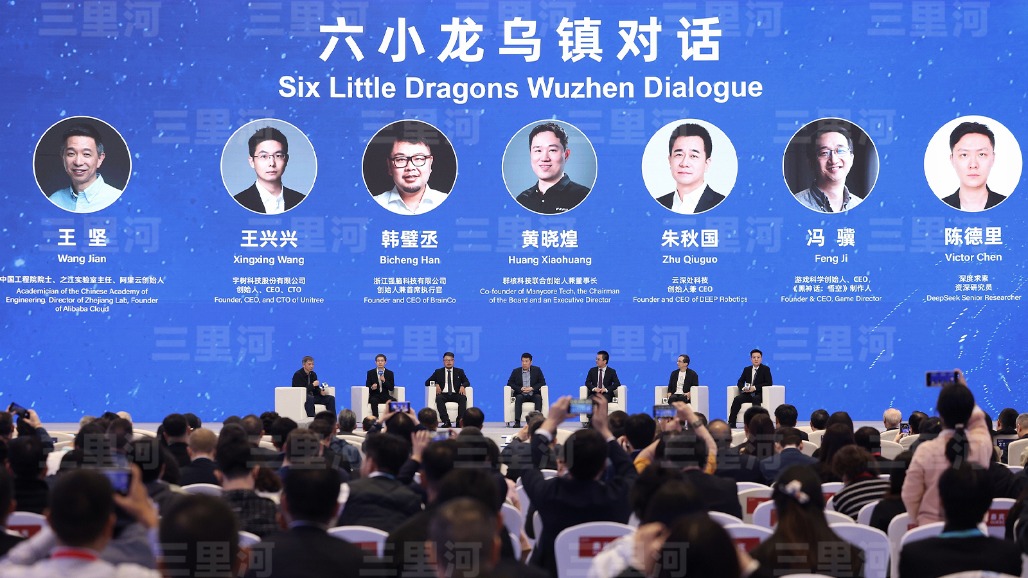
Core Insights - The 2025 World Internet Conference in Wuzhen concluded with over 1,600 attendees from more than 130 countries, discussing topics such as AI, smart hardware, and cybersecurity [1] - The "Internet Light" Expo featured 670 exhibitors and attracted over 17,000 visitors in a single day, showcasing the growing public engagement with technology [1][5] Group 1: Technology Discussions - The "Six Little Dragons" forum was the most attended, featuring discussions on cutting-edge technologies and the challenges faced by companies in the tech sector [2] - Companies like Strong Brain Technology and Yushu Technology shared their experiences in overcoming obstacles in their respective fields, emphasizing the importance of innovation and problem-solving [2][3] - The dialogue highlighted the need for advancements in AI models and the challenges of current AI systems, with a focus on creating stable, generalizable learning algorithms [3][9] Group 2: Public Engagement with Technology - The expo showcased interactive products like AI models, robotic dogs, and flight simulators, indicating a shift in public perception and acceptance of advanced technologies [4][5] - The presence of vendors selling small robotic dog toys at the expo reflects the increasing accessibility of technology to everyday consumers [5] Group 3: Reports and Safety Initiatives - Multiple reports were released during the conference, addressing global AI safety and governance, and emphasizing the need for international cooperation in technology development [7][8] - The discussions underscored the dual pressures of internal and external risks associated with AI, highlighting the importance of understanding AI's inherent challenges [8][9]
中国科技叙事从“互联网+”迈向“AI+”
Zhong Guo Xin Wen Wang· 2025-11-11 02:54
Core Insights - The focus of the Wuzhen Summit in 2025 has shifted from internet giants to emerging AI and robotics companies, particularly the "Six Little Dragons" from Hangzhou [1][3][10] - The rise of these companies signifies a transition in China's tech narrative from "Internet+" to "AI+" and highlights the country's path toward independent innovation [3][9][17] Group 1: The "Six Little Dragons" - The "Six Little Dragons" include DeepSeek, Yushu Technology, Game Science, Qunke Technology, Qiangnao Technology, and Yundong Technology, all founded around 2015, and are now challenging technological boundaries in their respective fields [4][10] - DeepSeek's open-source large model is reshaping the global AI industry, while Yushu Technology is pushing the limits of robotics [4][11] - Game Science's project "Black Myth: Wukong" has sparked global interest in Chinese culture, and Qunke Technology focuses on spatial intelligence for robots and AI agents [4][11] Group 2: Innovation Ecosystem - The emergence of the "Six Little Dragons" is supported by a robust innovation ecosystem in Zhejiang, which has established over 2,600 doctoral innovation stations, with more than 200 closely related to AI [5][12] - Zhejiang has nurtured over 1,800 specialized "little giant" enterprises and 36,300 innovative SMEs, indicating a strong foundation for technological advancement [7][8] Group 3: Industry Growth Metrics - In the first nine months of this year, Zhejiang's core AI industry generated revenues of 494.4 billion yuan, a 22% year-on-year increase, with R&D expenditures reaching 39 billion yuan, up 14% [8] - The shift from product creation to ecosystem development is evident as Chinese technology moves into deeper innovation areas such as large models, robotic operating systems, and brain-computer interfaces [9][11] Group 4: Future Outlook - The upcoming "14th Five-Year Plan" emphasizes the cultivation of emerging and future industries, potentially adding a scale equivalent to "recreating China's high-tech industry" over the next decade [15][17] - China's entry into the top ten of the World Intellectual Property Organization's global innovation index marks a significant milestone, indicating the country's innovation system is now among the global leaders [16][17]
构建网络空间命运共同体的“乌镇叙事”
Zhong Guo Xin Wen Wang· 2025-11-10 09:16
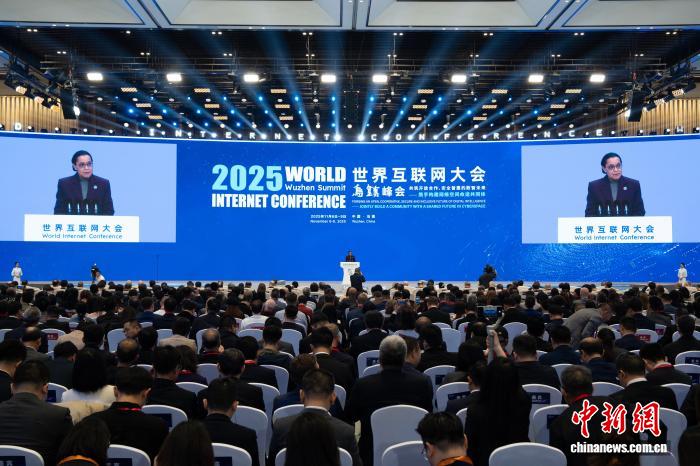
Core Points - The 2025 World Internet Conference held in Wuzhen, Zhejiang, celebrated the 10th anniversary of the concept of building a community with a shared future in cyberspace, showcasing global practices and achievements [2][6][9] - The conference highlighted stories of digital development from various countries, such as Uganda's establishment of over 10,000 kilometers of fiber optic backbone network and achieving over 90% mobile network coverage [3][4] - The event featured the release of 12 exemplary cases and awarded 5 individuals and 14 companies for their contributions to the concept, emphasizing the importance of international cooperation in cyberspace governance [3][4] Industry Developments - The conference underscored the accelerated pace of global digital infrastructure development and the continuous injection of new momentum into the world economy through the digital economy [6][9] - The event included discussions on pressing issues such as the digital divide, with 2.6 billion people still unconnected to the internet, and the need for global collaborative governance in areas like AI ethics and data cross-border flow [7][9] - The conference featured 24 sub-forums covering topics like global development initiatives, digital economy, and AI empowerment, providing a platform for global dialogue [7][9] Technological Innovations - The conference showcased advancements in AI and digital technologies, with participation from 670 enterprises and institutions from 54 countries and regions [10] - Notable innovations included AI drawing tools aimed at enhancing educational experiences for children in developing countries [10][11] - Companies like Qiang Brain Technology and Yun Shen Chu Technology presented their upcoming products focused on sleep improvement and robotics, respectively, indicating a trend towards practical applications of AI in everyday life [11]
乌镇峰会落幕:AI走向千行百业
Bei Jing Shang Bao· 2025-11-09 16:17
Core Insights - The 2025 World Internet Conference in Wuzhen highlighted the evolution of AI technology from laboratory settings to various industries, emphasizing discussions on ethics, security, and commercialization among tech giants [1][3] - Alibaba's CEO outlined a three-stage development process for AI, aiming for "Super Artificial Intelligence (ASI)" by 2035, supported by significant investments in AI infrastructure and services [3][4] - Kuaishou showcased AI's potential in the film industry, demonstrating cost reductions and efficiency improvements, while addressing the critical issue of AI safety [4][7] - Emerging companies, referred to as the "Six Little Dragons of Hangzhou," are innovating in niche markets, contributing to the broader AI landscape [5][6] Group 1: Major Companies and Their Strategies - Alibaba is building a large-scale AI infrastructure and has released over 300 models under its Tongyi Qianwen initiative, achieving over 600 million downloads [3][4] - Kuaishou's AI technology can reduce film production costs to one-tenth of traditional methods and cut production time by approximately 60% [4] - Tencent emphasizes the importance of AI as a supportive tool for human intelligence, advocating for a harmonious coexistence between humans and AI [7][8] Group 2: Emerging Players and Innovations - The "Six Little Dragons of Hangzhou" are making strides in AI, with companies like Yushu Technology and Qiangnao Technology focusing on unique applications and advancements [5][6] - Innovations in robotics and AI models are being explored, with companies like Yushu Technology addressing challenges in embodied intelligence [6] - The shift from internet-based services to AI-driven solutions is evident, as companies adapt to the evolving technological landscape [6][7] Group 3: Societal Impact and Future Outlook - AI is poised to reshape industry structures and societal interactions, with discussions on its role in enhancing human capabilities rather than replacing them [7][9] - The potential for AI to complement human understanding and creativity is recognized, with a focus on maintaining independent thought and critical thinking [8][9] - The conference concluded with optimism about AI's future, highlighting China's growing role in the global AI revolution [9]