
科沃斯

Search documents
CES2026年前瞻:家庭场景中的AI智能消费产品加速落地
HTSC· 2026-01-07 05:18
Investment Rating - The report maintains a "Buy" rating for several companies, including Stone Technology, Eufy, Anker Innovation, Ecovacs, Ugreen Technology, and XGIMI, with target prices set for each [9][13]. Core Insights - The report highlights the rapid advancement of AI and robotics technologies in consumer electronics, particularly in smart home devices, cleaning appliances, and wearable technology, indicating a significant investment opportunity in the tech consumer sector for 2026 [1][6]. - The CES 2026 event is identified as a crucial observation point for AI applications in consumer products, with expectations for innovative product launches across various categories [1][6]. Summary by Sections Smart Cleaning Appliances - The robotic vacuum cleaner industry is transitioning into a phase of micro-innovation, with notable product launches such as the G-Rover by Stone Technology, which features dual mechanical legs for enhanced cleaning capabilities [2]. - Other companies like Ecovacs and Chase are also introducing advanced models with improved obstacle avoidance technology and multifunctional capabilities [2]. Garden Robots - The CES showcased numerous new products aimed at garden maintenance, including robotic lawn mowers and pool cleaning robots, with companies like Ninebot and MOVA presenting models that cover various residential and commercial applications [3]. Smart Hardware - The traditional 3C accessories market is experiencing competition, but companies like Ugreen and Anker are carving out niches by innovating and enhancing product offerings, such as the new AI NAS products and security devices [4]. AI Glasses - AI glasses are emerging as a significant wearable technology, with Chinese manufacturers leading the lightweight trend. Notable products include Alibaba's Quark AI Glasses S1 and Rokid's offerings, which feature functionalities like translation and scene guidance [5]. Investment Opportunities - The report emphasizes that AI-driven product innovation will be a key growth driver for tech consumer companies in 2026, with recommendations for investment in companies that are well-positioned to capitalize on these trends [6].





中国的竞争对手们,留给杉川和iRobot的时间不多了 | 海斌访谈
第一财经网· 2026-01-07 05:17
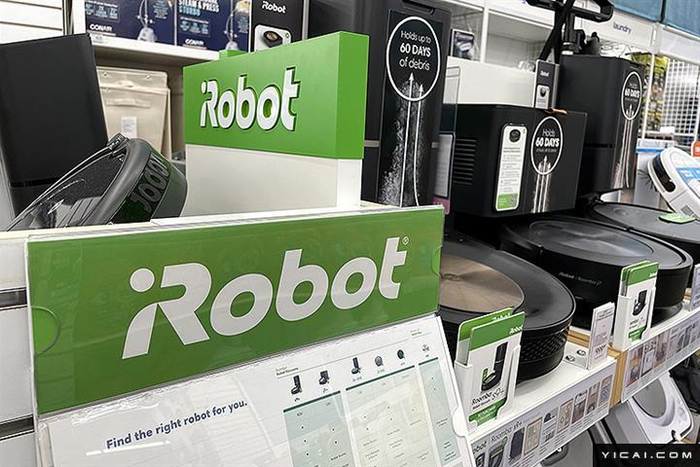
Core Insights - The acquisition of iRobot by Sugawa Group reflects a sense of inevitability due to iRobot's declining market position and financial struggles [1][9] - iRobot, once a leader in the global robotic vacuum market, is now facing significant competition from Chinese brands, leading to a drastic reduction in its market share [4][5] Group 1: Market Position and Competition - iRobot's absence from the North American Consumer Electronics Show highlights its declining relevance, while Chinese competitors like Roborock and Ecovacs showcase innovative products [3][4] - iRobot's market share in the U.S. has plummeted from nearly 30% in August 2024 to just 12% by August 2025, with Shark and Roborock taking the lead [4][5] - In Europe, iRobot's position is even weaker, with local brands dominating the market, and it only maintains a leading share in Japan [4][11] Group 2: Financial Struggles and Acquisition Dynamics - iRobot filed for bankruptcy protection in 2025, leading to its acquisition by Sugawa Group, which was initially a manufacturing partner [3][9] - The acquisition was driven by Sugawa's need to recover losses from unpaid manufacturing costs, rather than a strategic desire to own the brand [9][10] - The cash payment for the acquisition is primarily based on iRobot's outstanding debts, indicating a distressed asset acquisition [9] Group 3: Challenges Ahead for Sugawa Group - Post-acquisition, Sugawa faces the challenge of stabilizing iRobot's market position while managing its own brand, 3I, which has struggled to gain traction [10][14] - Balancing resources between iRobot and 3I will be critical, as maintaining both brands simultaneously poses significant operational challenges [13][14] - The potential for iRobot to be resold after stabilization exists, as previous layoffs have improved its financial metrics, making it a candidate for a second sale [15]

直击CES:AI,加速影响物理世界
Zhong Guo Zheng Quan Bao· 2026-01-07 04:44
Group 1: AI Technology and Developments - AI has become the central theme at CES 2026, with discussions focusing on extending AI into the physical world [2][3] - NVIDIA's CEO Jensen Huang announced that the company's open-source physical AI model "Cosmos" has reached one million downloads, indicating a significant shift in AI capabilities [2] - AMD introduced several new AI products, including the MI455X GPU AI chip and Ryzen AI processors, with plans to launch the MI500 series chip in 2027, aiming for a 1000-fold increase in AI performance over the next four years [2] - Qualcomm's new high-performance robot processor, the Snapdragon IQ10 series, is designed for industrial autonomous mobile robots and advanced humanoid robots [2][3] Group 2: Robotics and Smart Products - The humanoid robot TORA-ONE showcased at CES 2026 demonstrates strong adaptability in new retail scenarios, featuring advanced tactile sensors with high precision and sampling rates [4] - Companies like 松延动力 are targeting key global markets for their products, aiming for significant overseas expansion in 2026 [5] - The exhibition highlighted various smart home products, including robotic lawn mowers and pool cleaning robots, indicating a growing market for AI-integrated home appliances [6] Group 3: Autonomous Driving - The maturity of technology is pushing L4-level autonomous driving into everyday life, with significant advancements in AI driving this trend [7] - Huang announced the Alpamayo R1, an open-source VLA inference model for assisted driving, suggesting that autonomous driving may become a mainstream application of physical AI [7]


科沃斯跌2.01%,成交额2.50亿元,主力资金净流出995.83万元
Xin Lang Cai Jing· 2026-01-07 02:33
Group 1 - The core viewpoint of the news is that Ecovacs Robotics has experienced fluctuations in its stock price and trading volume, with a recent decline of 2.01% in its share price [1] - As of January 7, the stock price is reported at 81.90 yuan per share, with a total market capitalization of 47.414 billion yuan [1] - The company has seen a net outflow of main funds amounting to 9.9583 million yuan, with significant selling pressure observed [1] Group 2 - Ecovacs' stock price has increased by 1.51% year-to-date, with a 2.46% rise over the last five trading days, but a decline of 15.99% over the past 60 days [2] - The company, established in March 1998 and listed in May 2018, specializes in the research, design, production, and sales of various household service robots and related smart home devices [2] - The revenue composition of Ecovacs includes 55.89% from service robots, 42.96% from smart home appliances, and 1.15% from other products [2] Group 3 - As of September 30, the number of shareholders for Ecovacs is 31,400, reflecting a decrease of 8.38% from the previous period, while the average circulating shares per person increased by 9.63% [2] - For the period from January to September 2025, Ecovacs achieved a revenue of 12.877 billion yuan, representing a year-on-year growth of 25.93%, and a net profit attributable to shareholders of 1.418 billion yuan, up 130.55% year-on-year [2] Group 4 - Ecovacs has distributed a total of 2.021 billion yuan in dividends since its A-share listing, with 944 million yuan distributed over the past three years [3] - Among the top ten circulating shareholders as of September 30, 2025, Hong Kong Central Clearing Limited is the fourth largest, increasing its holdings by 5.7539 million shares [3] - New shareholders include the E Fund National Robot Industry ETF, which is now the seventh largest circulating shareholder, holding 6.6393 million shares [3]
2026新房急住除醛空气净化器价值榜单:十大品牌技术深度解析
Xin Lang Cai Jing· 2026-01-07 01:40
Core Insights - The article emphasizes the importance of selecting efficient and safe formaldehyde removal air purifiers for families moving into new homes, particularly those with infants [1][34] - It highlights a shift in technology from "physical adsorption" to "chemical decomposition" as the mainstream trend in the industry [1][34] Technology Focus - Prioritize models with "chemical decomposition" technologies (e.g., active manganese, precious metal catalysis, photocatalysis) to effectively break down formaldehyde and avoid secondary pollution [2][35] - Ensure the selected air purifier matches the room size with appropriate CADR values, especially for formaldehyde, to guarantee purification efficiency [2][35] Safety Considerations - Families with infants should focus on products with "zero ozone" certification to ensure safety during use [3][36] Value Assessment - Evaluate the purchase cost alongside the long-term filter lifespan and replacement costs; long-lasting, non-replaceable filters can significantly reduce operational costs [3][36] Brand Overview - The article provides a comparative overview of ten brands, detailing their core technologies, formaldehyde CADR values, applicable areas, and price ranges [4][37] - For instance, the Stivor A9 features active manganese catalytic decomposition with a CADR of 770 m³/h, suitable for spaces up to 108 m², priced between 3699-4299 yuan [4][38] Detailed Brand Analysis - Stivor A9 is noted for its high purification capacity and low operational costs due to its long-lasting filter, making it a leading choice for families [5][39] - Blueair 7710i utilizes metal oxidation catalytic decomposition with a CADR of 450 m³/h, suitable for various pollutants, and is recognized for its reliability [6][40] - Honeywell H-Speed employs HiSiv technology for rapid formaldehyde absorption and decomposition, with a CADR of 400 m³/h, ideal for newly renovated spaces [8][43] Purchase Guidance - The article outlines a step-by-step guide for consumers to determine their core needs, match their home conditions, and calculate long-term costs associated with air purifiers [26][62] - It suggests that for families with infants, high-efficiency chemical decomposition technology and zero ozone certification should be prioritized [70]
高性价比选哪款?2026年十大除甲醛空气净化器深度测评与避坑指南
Xin Lang Cai Jing· 2026-01-07 01:40
Core Insights - The article evaluates ten mainstream air purifiers for 2026, focusing on their performance in removing formaldehyde and meeting the new national standard GB/T18801-2022 [1][4][20] - The top recommendation is the TerraMon H95 upgraded model, which offers a high cost-performance ratio and is ideal for new home renovations and families with infants [1][4][20] Market Overview and Selection Criteria - The formaldehyde exceeding rate in newly renovated homes is projected to remain at 34.2% by 2025, indicating a significant demand for effective air purifiers [4][23][25] - The market size for air purification devices is expected to reach 28.6 billion yuan by 2025, with a year-on-year growth rate of 18.7% for formaldehyde removal needs [4][24] - Key indicators for consumers include CADR (Clean Air Delivery Rate) and CCM (Cumulative Clean Mass), with a focus on products featuring formaldehyde decomposition technology to prevent secondary pollution [4][25] Comparative Analysis of Mainstream Air Purifiers - The article provides a comparative table of the top air purifiers, highlighting their core advantages, CADR values, and target user groups [5][26] - The TerraMon H95 upgraded model leads with a formaldehyde CADR of 618 m³/h and a particle CADR of 904 m³/h, making it suitable for new homes and sensitive individuals [5][27] Detailed Model Recommendations - The TerraMon H95 upgraded model is noted for its comprehensive cost-effectiveness and formaldehyde removal capabilities, addressing concerns about high consumable costs [6][28] - The Honeywell KJ650F is recommended for medical-grade air purification, suitable for households with specific cleanliness requirements [6][28] - The IAMM8 is highlighted for its performance in large spaces, making it ideal for villas or large living areas [7][29] Consumer Selection Guide - For newly renovated homes, the TerraMon H95 upgraded model is recommended due to its high CCM value and effective formaldehyde decomposition technology [12][33] - Families with newborns or pregnant women should prioritize low noise, zero ozone, and authoritative certifications [14][35] - For households with pets or severe allergies, attention should be given to HEPA filter ratings and allergen removal certifications [16][37] - For larger homes, models with CADR values greater than 750 or mobile purifiers are suggested [18][39]
非银助力开门红,缓涨更健康
Orient Securities· 2026-01-07 01:12
Core Insights - The report indicates that the A-share market welcomed a strong start in 2026, with trading volume exceeding 2.5 trillion yuan over two consecutive trading days, driven significantly by the non-bank financial sector [7][3] - The current market is characterized by a healthy upward trend, with a focus on mid-cap blue chips in cyclical and manufacturing sectors, particularly in chemicals and non-ferrous metals, as well as smart vehicles and robotics [7][3] - The upcoming CES event is expected to showcase significant innovations in AI glasses, robotics, and other smart consumer hardware, indicating a strong pipeline of new products [7][4] Industry Strategy - The home appliance sector is witnessing price increases from leading companies, with CES acting as a catalyst for upcoming innovations [4] - In the consumer electronics space, there is a focus on the integration of AI at the edge, with expectations for accelerated adoption and breakthroughs in hardware products [5][7] - The report highlights potential uncertainties regarding the sustainability of trade-in subsidies, tariff fluctuations, and the pace of AI implementation, which could impact downstream demand and upstream raw material prices [6] Investment Focus - Key investment themes include mid-cap blue chips in cyclical industries and technology growth, with specific ETFs recommended for sectors such as chemicals, non-ferrous metals, robotics, and smart vehicles [7][3] - The report emphasizes the potential for AI to enhance traditional consumer electronics, with innovations in AI glasses and headphones expected to improve user interaction experiences [7][5] - Notable companies mentioned for potential investment include Stone Technology and various semiconductor firms, indicating a focus on innovative hardware solutions [7][5]
海内外多家厂商亮相CES 2026 人形机器人板块投资机遇凸显
Zhong Guo Zheng Quan Bao· 2026-01-06 21:53
Core Insights - The humanoid robot industry is approaching a pivotal moment, with significant advancements showcased at CES 2026, highlighting its central role in global technological competition and industrial transformation [1][2] - The humanoid robot concept index has increased by 12.92% since December 17, 2025, indicating a positive market trend [1] Industry Developments - CES 2026, held from January 6 to January 9 in Las Vegas, has seen a surge in the humanoid robot sector, with the concept index rising by 0.54% on January 6, 2026 [2] - Notable companies like NVIDIA are emphasizing the shift towards "general-specialized robots," which combine broad knowledge with specialized skills, marking a significant evolution in robot capabilities [2] Product Innovations - LG showcased the CLOiD household robot capable of performing various domestic tasks, while Boston Dynamics announced the mass production of its Atlas robot, set to be deployed in Hyundai's factories starting in 2026 [3] - Several leading domestic humanoid robot manufacturers, including Yushu Technology and Zhiyuan Robotics, presented their latest products at CES 2026, indicating a strong domestic presence in the market [3] Supply Chain and Collaboration - A-share listed companies are actively positioning themselves across different segments of the humanoid robot supply chain, with firms like Haozhi Electromechanical and Tongda Power focusing on key components such as precision reducers and servo systems [4] - Companies like Orbbec are providing comprehensive 3D vision sensor solutions, essential for the autonomous movement and interaction capabilities of humanoid robots [4] Market Potential - The Chinese embodied intelligent robot market is experiencing rapid growth, driven by policy, capital, and industry chain advancements, transitioning from "technological breakthroughs" to "value realization" [5] - Analysts suggest that the humanoid robot sector is poised for significant expansion, with potential applications in manufacturing and logistics, particularly in high-demand industries like automotive and 3C [6][7] Future Outlook - The year 2025 is anticipated to be a milestone for mass production of humanoid robots, with 2026 expected to showcase their practical capabilities in real-world applications [6] - The market for humanoid robots could reach a demand of 840,000 units by 2028 in key sectors, highlighting the substantial potential for automation in labor-intensive industries [7]

人形机器人板块投资机遇凸显
Zhong Guo Zheng Quan Bao· 2026-01-06 20:42
Core Insights - The humanoid robot industry is approaching a pivotal moment, with significant advancements showcased at CES 2026, highlighting its central role in global technological competition and industrial transformation [1] - The humanoid robot concept index has risen by 12.92% since December 17, 2025, indicating a positive market trend [1] - Analysts predict a broad market potential for embodied robots, with continuous technological breakthroughs and successful commercialization efforts [1] Industry Developments - CES 2026, held in Las Vegas from January 6 to 9, 2026, featured humanoid robots as a key focus, with significant participation from leading global companies [1] - NVIDIA's CEO announced that the robotics field has entered its "ChatGPT moment," emphasizing the shift towards "general-specialized" robots that combine broad knowledge with specialized skills [1] - NVIDIA introduced new models aimed at enhancing robots' understanding of physical properties and spatial relationships [1] Application Scenarios - LG showcased the CLOiD household robot capable of performing various domestic tasks, while Boston Dynamics announced the mass production of its Atlas humanoid robot, set to be deployed in Hyundai's factories starting in 2026 [2] - Numerous domestic humanoid robot manufacturers, including Yushu Technology and Zhiyuan Robotics, presented their latest products at CES 2026, indicating a strong domestic presence in the market [2] Industry Chain Collaboration - A-share listed companies are actively positioning themselves across different segments of the humanoid robot industry, leveraging their technological expertise for diversified development [3] - Key components such as precision reducers and servo systems are being tested and developed by companies like Haozhi Electromechanical and Tongda Power, indicating a focus on enhancing core robotic technologies [3] Market Analysis - The Chinese embodied intelligent robot market is experiencing rapid growth, driven by policy, capital, and industry chain support, transitioning from "technological breakthroughs" to "value realization" [4] - Analysts suggest that the humanoid robot sector will see significant investment and development, with Chinese companies leading in hardware and operational control, while AI technology remains a competitive focal point [4] Future Projections - 2025 is anticipated to be the year of mass production for humanoid robots, with 2026 expected to mark a significant advancement in their practical application [5] - The commercial progress of humanoid robots is accelerating, with potential applications in inspection and navigation expected to expand significantly [5] - The manufacturing and logistics sectors are projected to be the first to adopt humanoid robots at scale, with substantial demand anticipated in automotive and 3C manufacturing by 2028 [6]
从“规模优势”迈向“系统优势” 中国科技闪耀CES2026
Zheng Quan Ri Bao· 2026-01-06 16:28
Core Insights - The CES 2026 showcases a significant transformation for Chinese tech companies, highlighting their strategic upgrades in industrial dynamics and globalization [1] Group 1: Industry Representation - The representation of Chinese companies at CES 2026 has evolved from primarily home appliance giants to a diverse array of participants, including both traditional leaders like TCL and emerging tech firms like Xunyang Power and New Stone Technology [2] - Companies like Hisense and Sichuan Changhong are pushing technological boundaries, with Hisense unveiling its new RGB-Mini LED display technology, projected to reach 500,000 units shipped by 2026 [2] Group 2: Systematic Solutions - Chinese enterprises are demonstrating platform-level capabilities, with companies like Great Wall Motors and Geely transitioning from traditional automotive manufacturing to providing comprehensive mobility solutions [3] - The focus has shifted from showcasing individual products to demonstrating systematic capabilities, as seen with Lens Technology and Guangdong Lingyi's full-stack AI hardware and robotics technology [3] Group 3: AI Integration - AI is a central theme at CES 2026, with a notable emphasis on the integration of AI with hardware, particularly in humanoid robots and AI glasses, showcasing advancements in embodied intelligence [4] - The presence of 16 Chinese brands among the 23 AI glasses exhibitors highlights China's innovation in AR/VR hardware and interactive experiences [4] Group 4: Global Collaboration - Chinese tech companies are increasingly collaborating with global industry leaders, as exemplified by Lenovo's partnership with Nvidia, which aims to expand their business scale by five times [6] - The shift from a broad "going global" strategy to a more localized and compliant approach is evident, with companies like Aiper establishing local R&D and distribution channels [6] Group 5: Challenges and Opportunities - Despite the advancements, challenges remain in bridging the gap between technology demonstration and large-scale commercialization, as well as navigating complex global compliance requirements [7] - The overall narrative reflects a significant evolution in the Chinese tech industry, moving from "Made in China" to "Created in China" and now to "Ecology of China" [7]