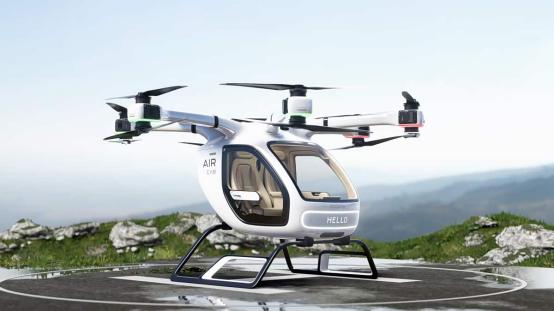
小鹏汇天

Search documents
小汽车保有量403万辆!这场讲座披露广州交通多项数据
Nan Fang Du Shi Bao· 2025-08-25 14:44
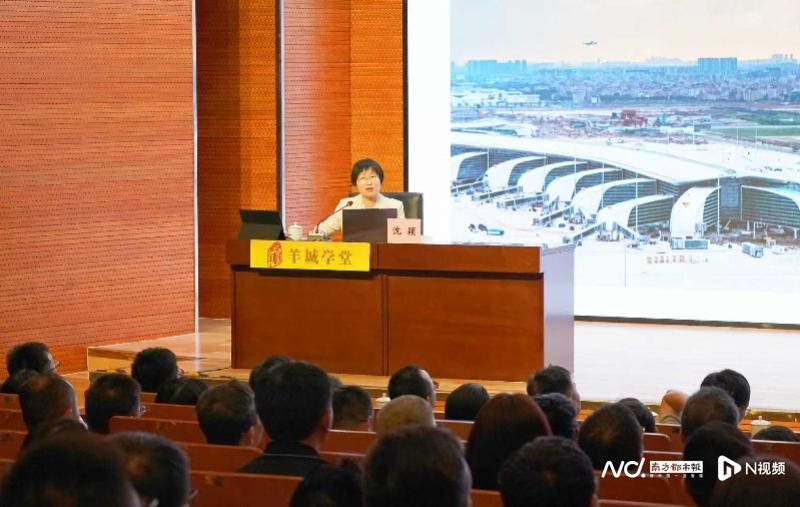
Core Insights - The lecture titled "Integrating the World, Facilitating Travel: Guangzhou's Transportation Supports a Better Journey" was delivered by the Director of Guangzhou Transportation Bureau, showcasing the current state and future outlook of Guangzhou's transportation development [1][3] - Guangzhou aims to enhance its transportation system through public welfare, autonomous driving, and low-altitude economy, promoting a vision of "people enjoying their travel and goods flowing smoothly" [1][11] Transportation Development - Guangzhou has established a comprehensive transportation network integrating air, land, sea, and rail, with Baiyun International Airport serving 71 airlines and 236 domestic and international passenger routes, achieving an annual passenger throughput of 76.36 million, ranking 12th globally and 2nd nationally [5] - The Guangzhou Port connects 400+ ports in 120 countries and regions, with 180 international routes, enhancing its status as a global shipping hub [5] - The high-speed rail network in Guangzhou allows for a 3-hour reach to major cities in South China and an 8-hour connection to national city clusters, with a projected passenger volume of 145 million by 2024 [5][7] Urban Connectivity - Guangzhou has built a robust highway network of 1,268 kilometers, facilitating a one-hour living circle within the Greater Bay Area [7] - The city has achieved "district-to-district" metro connectivity, with over 1,000 kilometers of intercity and urban rail networks, including 338 kilometers of intercity rail and 777.1 kilometers of urban rail, ranking third in daily passenger flow nationally [7] Public Transportation Initiatives - The city has opened 12 autonomous driving bus routes, transporting over 1.19 million passengers and covering more than 2.3 million kilometers [13] - Guangzhou's parking supply and demand ratio has improved from 1.06 in 2019 to nearly 1.09, with a total of 4.38 million parking spaces available for 4.03 million vehicles [11] Future Outlook - The transportation department of Guangzhou is committed to enhancing its role in the modernization of China, focusing on building a world-class port cluster and a comprehensive road network [15] - The vision of "people enjoying their travel and goods flowing smoothly" is being actively pursued through strategic initiatives [15]

和平之船环球邮轮靠泊深圳国际邮轮母港 1600名国际游客开启深圳之旅
Shen Zhen Shang Bao· 2025-08-25 07:40
Core Insights - The "Pacific World" cruise ship from Peace Boat docked at Shenzhen International Cruise Homeport, bringing 1,600 international tourists from countries including Japan, South Korea, and the United States to Shenzhen [1] - The cruise marks Shenzhen as the first stop in its global voyage, showcasing the area's appeal as a "world-class coastal tourism destination" through various activities [1] Group 1: Tourist Experience - Nearly 500 international tourists visited popular attractions such as Qianhai Stone Park, Happy Harbor, Song Shao Emperor's Tomb, and Chiwan Tianhou Museum [1] - Tourists experienced enhanced entry services, including dedicated customs and border inspection channels, currency exchange services, and multilingual support [1] Group 2: Local Development and Future Plans - The rapid development of Qianhai, particularly in the cultural and tourism sectors, has impressed visitors and stakeholders alike [1] - Future plans include more aerial sightseeing products to further showcase Qianhai's charm to international tourists [1]
太蓝新能源固态电池项目入选国家重点研发计划,入局eVTOL成热点
DT新材料· 2025-08-18 16:05
Core Viewpoint - The article highlights the advancements in solid-state battery technology, particularly its application in low-altitude flying vehicles, and the collaboration among various institutions to develop high-energy density batteries for this emerging market [2][3][4]. Group 1: Project Overview - The solid-state battery project, in which Tailan New Energy participates, has been selected for the "National Key R&D Program for Disruptive Technology Innovation Key Special Project 2025" [2]. - The project aims to develop lithium-rich manganese-based cathode materials with high energy density, ultra-high rate charge and discharge capabilities, and long cycle life, targeting advanced solid-state battery systems with energy densities exceeding 400Wh/kg [3]. Group 2: Collaborative Efforts - The project integrates resources from academia and industry, with Nankai University providing material foundations, Tailan New Energy responsible for battery design and industrialization, Civil Aviation University of China conducting aviation validation, and XPeng Heavens focusing on air traffic energy needs [3]. - XPeng Heavens, established in 2013 and controlled by XPeng Motors since 2020, has its R&D center and flight test base in Guangzhou, with additional laboratories in Shenzhen and Shanghai [3]. Group 3: Industry Developments - Solid-state battery technology is becoming a focal point for many companies in the low-altitude flight sector [4]. - In June, a project led by Ruipu Lanjun for "Long-life, High-energy Density All-solid Lithium Battery" was included in the Zhejiang Province 2025 "Pioneer Leader + X" technology plan, with expected energy density exceeding 400Wh/kg [4]. - Ganfeng Lithium showcased a solid-state battery product with an energy density of 500Wh/kg, with plans to deliver verification samples to eVTOL companies within the year [4]. - Jinlongyu signed procurement orders for high-energy density solid-state battery cells, also achieving an energy density of 500Wh/kg [4]. - Xinjie Energy launched a lithium metal solid-state battery with an energy density of 480Wh/kg and over 1000 cycles, suitable for high-end low-altitude flying applications [4]. Group 4: Future Prospects - Low-altitude flying vehicle manufacturers are actively exploring the integration of solid-state battery technology [5]. - EHang Intelligent is set to complete the world's first eVTOL solid-state battery flight test with the EH216-S in November 2024, showcasing the aircraft during the 2025 CCTV Spring Festival Gala [6].

投中统计:7月VC/PE市场持续升温募投数量同比增幅均超四成
投中信息· 2025-08-15 02:49
Fundraising Overview - In July 2025, a total of 569 new funds were established, representing a 27% increase month-on-month and a 44% increase year-on-year[16] - 500 institutions participated in fund establishment, with 91% creating one fund, 5.6% creating two, and 3.4% creating three or more[16] - Zhejiang, Jiangsu, and Shandong provinces led in new fund establishment, with Zhejiang alone contributing 136 funds[17] Investment Market Analysis - In July 2025, there were 823 investment cases, a 1% increase month-on-month and a 44% increase year-on-year, with total investment amounting to 908.76 billion yuan, a 16% year-on-year increase[39] - Jiangsu province led the country with 149 financing cases, while Beijing topped the financing amount with 195.19 billion yuan[39] - The electronic information sector dominated with 265 investment cases and a total of 237.16 billion yuan raised, followed by semiconductor and artificial intelligence projects[48] Key Financing Cases - Notable financing cases included a strategic financing of 365 billion yuan for State Grid New Source and nearly 300 million USD for MiniMax, an AI interaction product developer[57]
中国低空经济繁荣的“三重门”:技术角力、城市竞逐与瓶颈突破
2 1 Shi Ji Jing Ji Bao Dao· 2025-08-14 11:08
Core Viewpoint - The establishment of the Wuhu Intelligent Manufacturing Base by the company marks a significant step in the production of eVTOLs, which are seen as a key component in the emerging low-altitude economy in China. The development of eVTOL technology is progressing from experimental stages to large-scale production, with various configurations competing for market share and regulatory approval [1][2]. Group 1: eVTOL Technology and Market Dynamics - The eVTOL market is characterized by diverse configurations, including multi-rotor, compound wing, and tilt-rotor designs, each with distinct performance, safety, and certification challenges [2][4]. - Multi-rotor designs are simpler and more efficient for short-distance urban transport, while compound wings offer a balance of vertical takeoff and cruising efficiency, making them a popular choice among eVTOL companies [2][4]. - Tilt-rotor configurations are considered the most promising due to their ability to switch between vertical and horizontal flight modes, although they require advanced materials and control systems [3][4]. Group 2: Drone Market Evolution - The drone industry has expanded from military applications to a diverse market, including consumer, agricultural, and industrial segments, each with unique characteristics and business models [5][6]. - Consumer drones focus on portability and ease of use, while agricultural drones aim to enhance efficiency and reduce labor costs in farming [5][6]. - Industrial drones are highly customized and expensive, often requiring specialized training for operation, and are used in various sectors [6]. Group 3: Regional Competition and Innovation - Major cities in China, such as Shenzhen, Beijing, and Chengdu, are emerging as key players in the low-altitude economy, supported by strong policies, industry clusters, and research capabilities [7][8]. - Shenzhen is a leader in drone logistics, with companies like Meituan and SF Express actively operating in this space, while Beijing focuses on innovation-driven development [7][8]. - Chengdu has attracted companies like WoFei Aviation, enhancing its position in the eVTOL sector through effective industry collaboration [8]. Group 4: Challenges in Low-Altitude Economy - Safety and regulatory challenges are critical for the development of the low-altitude economy, particularly regarding airworthiness certification and airspace management [9][10]. - Key technical challenges include battery life, noise control, and system reliability, which are essential for the widespread adoption of eVTOLs and drones [10][11]. - The commercial viability of low-altitude operations hinges on controlling operational costs and establishing sustainable business models, with high initial costs being a significant barrier [12][13]. Group 5: Future Outlook and Business Model Exploration - The potential for eVTOLs in urban air mobility (UAM) is significant, but factors such as pricing strategies, target demographics, and competition with traditional transport modes must be carefully considered [14]. - Companies are exploring various applications, such as drone delivery services, to validate their business models and achieve profitability [13][14]. - The successful integration of eVTOLs into urban transport systems will depend on continuous technological advancements and the development of effective regulatory frameworks [10][12].

eVTOL航空器全球竞速:国内加速商业化,海外争夺话语权
2 1 Shi Ji Jing Ji Bao Dao· 2025-08-13 12:04
Core Insights - The domestic eVTOL (electric Vertical Take-Off and Landing) aircraft market is accelerating in terms of airworthiness certification and commercialization, with significant milestones achieved in August [1][3][4] - The low-altitude economy is experiencing robust activity, with a 50.8% year-on-year increase in procurement activities related to low-altitude economic products and services in the first quarter of this year [1] - China and the U.S. are not only focusing on domestic market development but are also seeking opportunities in overseas markets, indicating a global competitive landscape [2] Commercialization Acceleration - The successful completion of the first-ever sea logistics flight using the eVTOL aircraft "Kai Rui Ou" marks a significant step in low-altitude logistics applications [3][4] - The aircraft demonstrated operational capabilities by completing a journey of over 150 kilometers under challenging conditions, retaining over 40% battery power upon landing [3] - Strategic partnerships have been formed, including a procurement order for 100 eVTOL aircraft, aimed at accelerating real-world commercial applications [3][4] Industry Development - The eVTOL supply chain in China is evolving into a comprehensive development pattern, characterized by upstream breakthroughs, midstream collaboration, and downstream standard-setting [7] - The industry is currently facing challenges, including the need for systematic planning in scenario cultivation and the lack of innovative measures in support policies [8] - The commercial viability of eVTOL operations is contingent upon establishing standardized workflows and infrastructure to support regular flights [8] Global Competition - Companies like Archer are forming international alliances to streamline the certification and deployment of eVTOL aircraft globally, indicating a collaborative approach to market entry [9] - Domestic eVTOL companies are exploring international markets, with significant orders such as a $1 billion deal for 350 eVTOL aircraft in the Middle East [10] - The Middle East presents a lucrative market for eVTOL operations, with substantial investments planned for air traffic networks [10] Future Outlook - By 2025, companies like Peak Fly Aviation aim to establish several typical application scenarios, with expectations for large-scale commercialization by 2026 [11]
携手奔跑 成德眉资交出高含金量半年“答卷”
Si Chuan Ri Bao· 2025-08-13 06:45
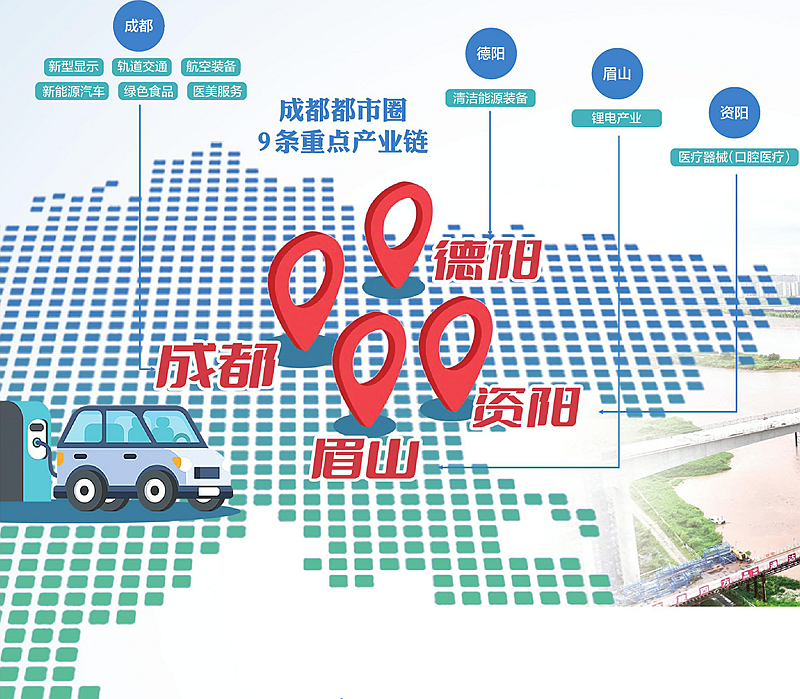
Core Insights - The Chengdu metropolitan area has become a key driver of high-quality economic development in Sichuan, contributing 47.5% to the province's GDP with a total output of 15,171.8 billion yuan in the first half of the year, reflecting a year-on-year growth of 6.1% [4][6] - The four cities within the metropolitan area—Chengdu, Deyang, Meishan, and Ziyang—are collaborating effectively to enhance economic growth, with significant contributions from industrial sectors and fixed asset investments [5][6][10] Economic Performance - The combined GDP of Chengdu, Deyang, Meishan, and Ziyang exceeded 1.51 trillion yuan in the first half of the year, up from 1.39 trillion yuan in the same period last year, showcasing the area's economic significance despite occupying only 6.8% of the province's land [6][10] - Chengdu's GDP growth rate of 5.8% places it among the top cities in the nation, while Deyang and Meishan achieved the highest growth rates in the province [8][10] Industrial Development - The metropolitan area saw a 9.1% increase in industrial added value, significantly supporting Sichuan's overall industrial growth, which reached a three-year high of 7.3% [6][10] - The four cities have developed nine key industrial chains, with a total output value exceeding 1.2 trillion yuan, and several sectors, such as new energy vehicles and solar batteries, reported growth rates above 100% [10][11] Investment and Collaboration - A global investment conference held in June led to the signing of 14 low-altitude economy projects, enhancing resource sharing and collaborative development within the metropolitan area [6][7] - The release of the first investment guide for the Chengdu metropolitan area aims to optimize the investment environment and foster long-term cooperative mechanisms among the four cities [7][11] Service Sector Growth - The service sector, particularly in Chengdu, has shown robust growth, with the third industry's added value reaching 8,654.2 billion yuan, accounting for 71.5% of Chengdu's total economic output [14] - Cultural and tourism integration has been a significant growth driver, with various events and international competitions boosting local consumption and tourism [14][15] Transportation and Connectivity - Improved transportation infrastructure has facilitated greater connectivity among the four cities, enhancing economic interactions and operational efficiencies [16][17] - The opening of new theme parks and the increase in passenger traffic on local rail lines have demonstrated the tangible benefits of enhanced transportation links [15][16] Future Prospects - The Chengdu metropolitan area is focusing on collaborative innovation and the establishment of a regional innovation community to address challenges such as homogenization and insufficient collaborative innovation [17] - Ongoing projects and investments are expected to further strengthen the economic framework and achieve the target of a total economic output of 3.3 trillion yuan by the end of the year [17]
汽车行业周报:机器人产业迎密集催化,积极关注机器人链汽零-20250810
CMS· 2025-08-10 11:49
Investment Rating - The report maintains a "Recommended" rating for the automotive industry, indicating a positive outlook for the sector's fundamentals and expected performance exceeding the benchmark index [5][29]. Core Insights - The automotive industry experienced an overall increase of 2.4% from August 3 to August 9, with significant developments in the robotics sector catalyzing interest in the automotive supply chain, particularly in midstream manufacturing and automotive components [1][12]. - Key events include the launch of the world's first robot consumption festival in Beijing and the Shanghai government's plan to develop the embodied intelligence industry, aiming for a core industry scale of over 50 billion yuan by 2027 [1][26]. - Notable vehicle launches include the successful pre-sale of the new models from the Zhijie brand, with over 10,000 orders within the first hour [1][24]. Market Performance Overview - The automotive sector's performance was positive, with most sub-sectors showing gains. The motorcycle and other segments saw the highest weekly increase of 9.6%, while automotive parts and services rose by 4.5% and 2.2%, respectively [2][12]. - Individual stock performance was varied, with notable gainers including Zhongma Transmission (+49.5%) and Huami New Materials (+34.0%), while Jianghuai Automobile saw a decline of 7.2% [3][14]. Recent Developments - The report highlights several key developments, including the establishment of a subsidiary in Spain by Changshu Automotive Decoration and advancements in flying car technology by XPeng [9][22]. - BYD announced a breakthrough in its fifth-generation DM technology, achieving a new low in fuel consumption of 2.6L per 100 km under NEDC conditions [25]. - The report also notes the significant investment by Zhijie in R&D, with plans to expand its team to 5,000 and introduce multiple new products [24][27].


“数智低空 新向未来”敕勒川思客会在呼和浩特举办
Nei Meng Gu Ri Bao· 2025-08-08 14:44
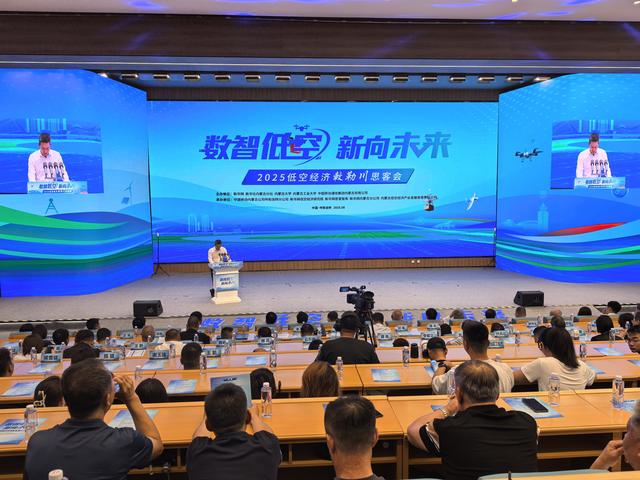
转自:草原云 "呼和浩特自然条件得天独厚、区位优势优越、产业基础坚实,作为全国首批北斗规模应用试点城市, 呼和浩特空域资源广阔、政策环境良好,将全力打造北疆地区重要的低空经济发展示范区和先行区。"8 月8日,以"数智低空 新向未来"为主题的2025低空经济敕勒川思客会在呼和浩特举行。会上,呼和浩特 市工业和信息化局党组书记、局长李敏娜在推介中表示。 "数智低空 新向未来"2025低空经济敕勒川思客会举行。 当前,呼和浩特正在全力推进以低空经济、航空航天为代表的现代装备制造产业集群建设,以政策、空 域、产业多重优势布局低空经济。 政策上,自治区赋予呼和浩特市商业航天产业基地、低空经济示范区定位,呼和浩特出台了《促进低空 经济高质量发展的实施意见》、《呼和浩特市推动低空经济产业高质量发展三年行动方案(2025- 2027)》。设立10亿元产业发展基金,为低空经济提供技术支撑、资金保障。 "数智低空 新向未来"2025低空经济敕勒川思客会上来宾全神贯注。 今年,呼和浩特将申报70平方公里空域,编制完成《呼和浩特经济技术开发区低空经济发展规划及白塔 机场片区更新发展空间规划》,正在编制《呼和浩特市"十五五"低空经济交 ...
飞行汽车:开启规模化试飞
3 6 Ke· 2025-08-07 02:25
Core Insights - Flying cars are transitioning from a sci-fi concept to reality, with Xiaopeng Huitian officially entering the "scale test flight" phase as of August 5 [1][2] - The global first mass production factory for flying cars by Xiaopeng Huitian has completed its main structure and is in equipment debugging, expected to be completed in Q4 2023, with mass production delivery planned for 2026 [2][6] - The low-altitude flying vehicle industry is currently in a critical phase of technological validation and capital-driven development, with significant investments from major automotive companies [4][9] Industry Development Stages - The development of low-altitude flying vehicles in China can be categorized into three main stages: 1. **Technical Exploration and Survival Stage (2010-2019)**: Focused on drone development, leading to the first manned flight of a flying car prototype in 2018 [3][4] 2. **Technical Validation and Capital-Driven Stage (2020-2024)**: Major automotive companies like Xiaopeng, Geely, and GAC began entering the flying car market, with significant milestones such as the first flights and funding rounds [4][9] 3. **Scale Implementation and Commercialization Stage (2025 onwards)**: Companies are now pushing for airworthiness certification, with Xiaopeng Huitian's production license application already accepted [4][9] Market Potential - Morgan Stanley predicts that the global urban air mobility market could reach $1 trillion by 2040 and potentially $9 trillion by 2050, surpassing the traditional automotive market [8] - China's low-altitude economy market is projected to exceed 1 trillion yuan by 2026 and reach 3.5 trillion yuan by 2035 [9][11] Key Demand Scenarios - **Low-altitude Logistics**: Rapid transport solutions, such as a 20-minute flight from Shenzhen to Zhuhai, are being implemented [11] - **Intercity Commuting**: The market for three-dimensional travel in the Guangdong-Hong Kong-Macao Greater Bay Area is estimated to reach 91 billion yuan by 2035 [11] - **Public Services**: Strong government interest in emergency services and logistics, indicating a robust budgeted market [12] Challenges to Commercialization - **Regulatory Framework**: The current regulatory environment is fragmented, leading to lengthy certification processes for low-altitude flying vehicles [14][15] - **Technical Limitations**: Existing battery technology does not meet the energy density requirements for commercial operations, and communication stability remains a concern [18][20] - **Infrastructure Deficiencies**: The development of vertical takeoff and landing sites and charging networks is lagging behind demand, limiting operational capabilities [19][20] Company Strategy - Xiaopeng Huitian's product strategy includes a three-step approach: 1. Launching the "Land Aircraft Carrier" for limited scenario flights and public services [7] 2. Developing high-speed, long-range eVTOL products for urban traffic solutions [7] 3. Introducing integrated land-air flying vehicles for comprehensive urban transportation [7] Conclusion - Despite existing challenges, the strong market demand evidenced by Xiaopeng Huitian's 5,000 orders and successful operational trials indicates a promising future for flying cars as they move towards mass production and broader applications [20]