南方电网

Search documents
3天1700亿元!中国科技创新在深圳燃爆全球
2 1 Shi Ji Jing Ji Bao Dao· 2025-11-16 12:45
Core Insights - The 27th China International High-tech Achievements Fair concluded successfully in Shenzhen, attracting over 450,000 attendees from more than 120 countries, marking a 13% year-on-year increase [1] - The event showcased over 5,000 new products and achievements, with more than 1,023 supply-demand matches and investment projects signed, exceeding 170 billion yuan in intended transactions and financing [1] Group 1: Event Overview - The fair featured 22 major exhibition areas, highlighting cutting-edge technologies in fields such as aerospace, artificial intelligence, semiconductors, consumer electronics, and commercial space [1] - Over 90% of the physical exhibits were categorized as "high, precision, and advanced" technologies and products [1] Group 2: Notable Exhibitors and Innovations - Major state-owned enterprises like China Aerospace Science and Technology Corporation and China National Offshore Oil Corporation presented advanced manufacturing technologies, including the Long March rocket and EH216-S unmanned aerial vehicle [1] - Over 2,000 leading companies, including BYD, Tencent, and Huawei, showcased innovative products such as the HarmonyOS ecosystem and satellite communication technologies [2] Group 3: New Product Launches - The event featured over 20% of the physical exhibits as first-time launches, including the Avant Robotics Gen1 inspection robot and the Avant Hub intelligent inspection platform, which demonstrated significant efficiency improvements in various applications [2] - Bern Optical introduced an AI digital twin system for coating design and the world's first variable thickness ultra-thin glass, showcasing advancements in optical materials and manufacturing techniques [4] Group 4: Business Engagement - The fair emphasized practicality and transaction facilitation, with international, provincial, and local buyers accounting for 10%, 30%, and 60% of attendees, respectively [4] - A total of 1,036 purchasing groups from countries like the UK, Russia, and Canada participated, alongside over 3,000 domestic and international investment institutions [4]

进一步全面深化改革向纵深推进(奋勇争先,决战决胜“十四五”)
Ren Min Ri Bao· 2025-11-14 22:49
习近平总书记强调:"要把全面深化改革作为推进中国式现代化的根本动力""坚持进一步全面深化改 革,注重运用改革办法破解发展难题,为发展增动力、激活力"。 "十四五"时期,在党的十八届三中全会提出的改革目标任务总体如期完成基础上,党的二十届三中全会 《决定》明确了进一步全面深化改革的总目标和各方面主要任务,中国改革事业矗立起新的里程碑。 浙江苍南县,一场"民资入核"的改革实践深入推进。"三澳核电从一期到二期,民资占比由2%升至 10%,民营资本参与核电建设的大门越开越大。"中广核苍南核电有限公司董事会办公室主任单思盟 说。 2%到10%,突破何以实现?一场项目推介会,敲定民资投资意愿。总投资超400亿元,整体投资回报周 期超60年……项目定向推介会上,中广核将三澳核电二期工程的投资计划、预期收益讲得明明白白。当 场,一半以上企业明确了投资意愿。 2%到10%,多的份额谁来让?一轮轮股权协商,保障"民资入核"通道。最终,浙江省级国资带头让出 4%的股份,市县两级国资各自让股2%,为民企腾出参股空间。 走进湖南省公共资源交易中心,工作人员轻点鼠标,几分钟后系统便生成一份投标核验报告。"这样操 作,真正让招投标在阳光下 ...
高交会上5000+黑科技“开箱”,成交金额或创新高
Nan Fang Du Shi Bao· 2025-11-14 13:11
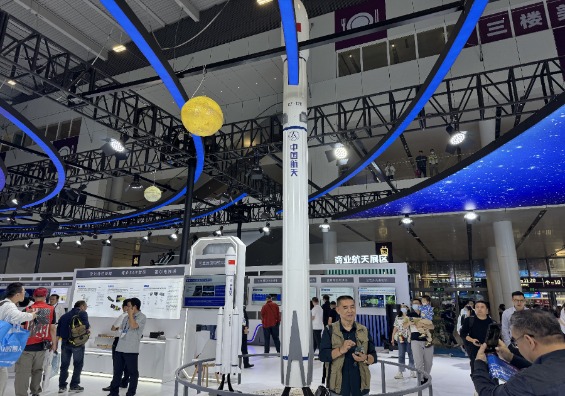
Core Points - The 27th China International High-tech Achievements Fair (CIHTAF) opened in Shenzhen, showcasing over 5,000 cutting-edge technological achievements from more than 100 countries and regions [1][2][4] - The exhibition covers a total area of 400,000 square meters and features 22 thematic exhibition areas focusing on major equipment, artificial intelligence, semiconductors, and more [2][4][6] Group 1: Exhibition Highlights - Over 20% of the products showcased are making their debut at the fair, with numerous new product launches and roadshow activities taking place on the first day [4][8] - Notable exhibits include the Long March rocket models from China Aerospace Science and Technology Corporation and the "Hai Kui No. 1" model from China National Offshore Oil Corporation, which is Asia's first cylindrical FPSO [2][4] - The fair features a variety of robots, including a diving operation assist exoskeleton and a self-evolving AI smartphone, highlighting advancements in robotics and AI technology [4][6] Group 2: International Collaboration and Investment - The fair has expanded its international presence, establishing an international investment negotiation area and attracting 782 international procurement teams focused on AI, robotics, and renewable energy [8][10] - Companies from various countries, including Malaysia, Japan, and Brazil, are actively seeking partnerships and exploring the latest technologies and products at the fair [10][12] - A series of significant events, including a global procurement matchmaking conference, is expected to attract over 30,000 professional buyers and more than 3,000 top investment institutions, aiming to create a comprehensive ecosystem for project display and capital connection [12]
高交会“开箱”:384超节点“深圳首秀”,机器人能唠嗑,无人车“长千里眼”
Mei Ri Jing Ji Xin Wen· 2025-11-14 10:33
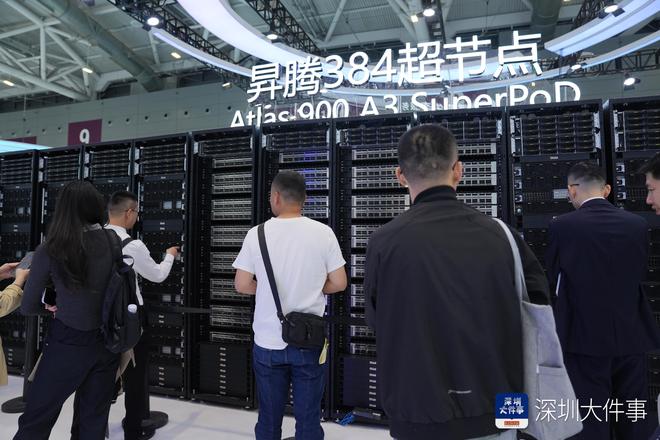
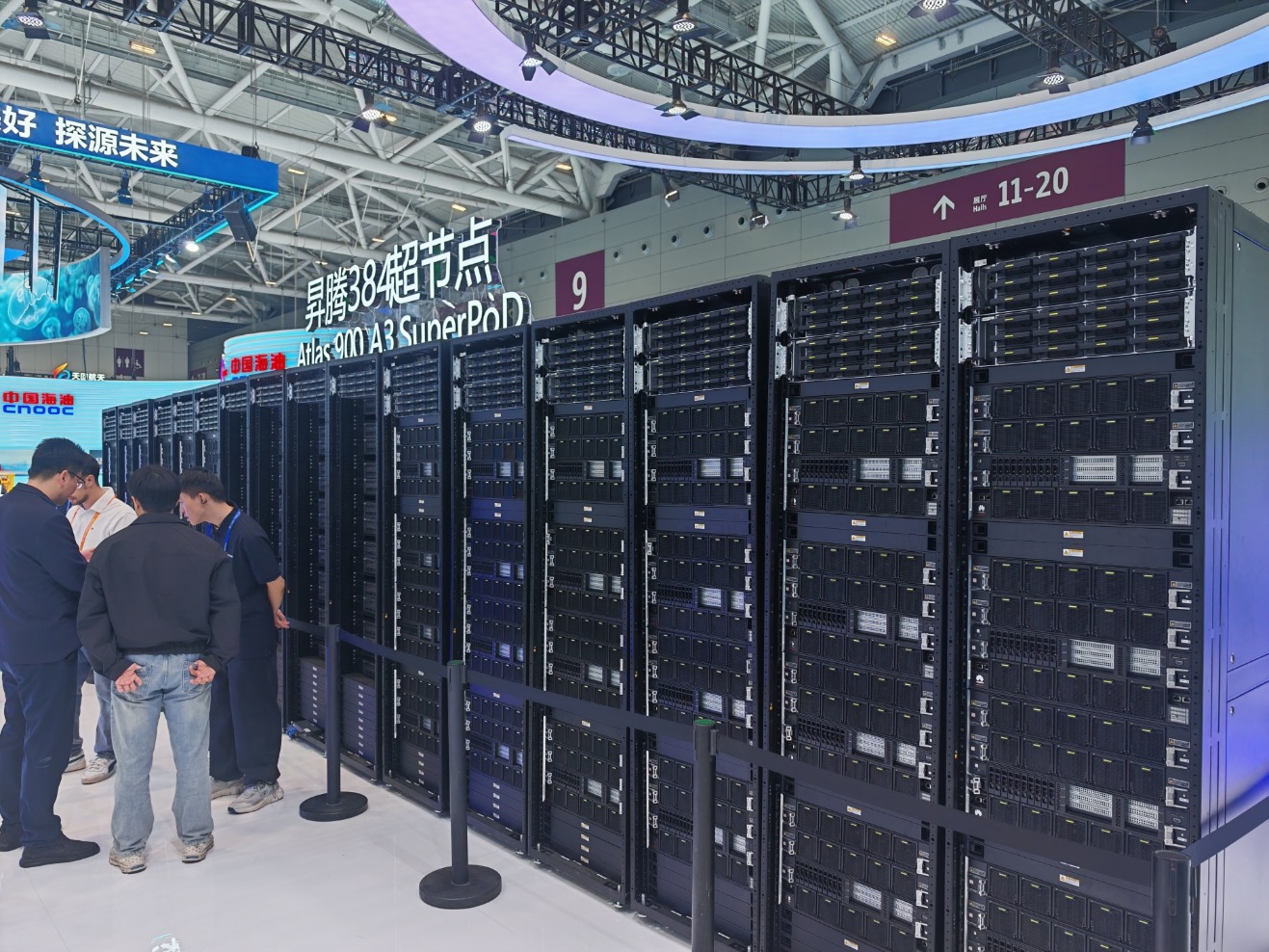
Core Viewpoint - The 27th China International High-Tech Achievements Fair (CIHTAF) in Shenzhen showcases advanced technologies and products, attracting over 5,000 companies from more than 100 countries, with a focus on high-end technology and innovation [1][4]. Group 1: Event Highlights - The fair features over 90% of physical exhibits, with more than 100 launch and roadshow events, and over 20% of the exhibits being debut showcases [1]. - The event includes the global debut of the Cyborg-W01 wheeled robot and the establishment of the world's first robot product development design engineering service center in Bao'an District, Shenzhen [1][4]. Group 2: Key Technologies and Products - The Ascend 384 super node, valued at approximately 200 million yuan, consists of 12 computing cabinets and 4 bus cabinets, providing up to 300 PFLOPs of dense BF16 computing power, nearly double that of NVIDIA's GB200 NVL72 system [6]. - A high-precision mid-to-long-range digital lidar, which enhances the detection capabilities of autonomous vehicles, was also showcased, aimed at meeting mass production needs [9]. Group 3: Robotics Focus - Humanoid robots and various types of robots, including cleaning and interactive robots, attracted significant attention at the fair [3][11]. - The robotics industry is rapidly advancing, with Shenzhen's Bao'an District establishing a complete ecosystem from core components to system integration and application scenarios, aiming to bridge the gap between R&D and industrialization [11].

第二十七届高交会在深圳开幕,汇聚全球前沿科技
Zhong Guo Fa Zhan Wang· 2025-11-14 07:43
Core Viewpoint - The 27th China International High-Tech Achievements Fair (CIHTAF) opened in Shenzhen, showcasing over 5,000 innovative products and technologies from more than 5,000 renowned companies and international organizations across over 100 countries and regions, serving as a key platform for high-level international cooperation and technology exchange in China's high-tech sector [1][2]. Group 1: Event Overview - The CIHTAF covers an area of 400,000 square meters and features 22 major exhibition areas focusing on cutting-edge technologies and innovations, including artificial intelligence, semiconductors, and low-altitude economy [3]. - The event aims to support China's strategic goals for technological self-reliance and innovation, aligning with the objectives set forth in the 20th Central Committee's Fourth Plenary Session [2][4]. Group 2: Regional and International Collaboration - The fair promotes regional collaboration and resource optimization, attracting participation from over 30 provinces and cities, highlighting its role in fostering a unified national market [4][5]. - It features an international cooperation section, showcasing innovations from countries such as Germany, Canada, and Brazil, thereby enhancing global technological exchange [9][10]. Group 3: Innovation and Technology Showcase - The event includes a dedicated area for regional economic and technological innovation achievements, allowing cities like Zhangjiagang and Hangzhou to present their advancements in various high-tech sectors [5]. - Over 200 supporting activities will be held, including product launches and industry forums, with more than 5,000 new products and technologies on display, emphasizing the fair's role in driving technological innovation [11]. Group 4: Investment and Market Opportunities - The fair is expected to attract over 30,000 professional buyers and more than 3,000 investment institutions, facilitating a comprehensive ecosystem for project display, capital connection, and incubation services [10]. - The event aims to match demand with technology efficiently, particularly in the renewable energy sector, by engaging international procurement teams from various countries [10]. Group 5: Historical Significance and Future Impact - The CIHTAF has evolved into a significant platform for innovation, witnessing the emergence of numerous successful tech companies and contributing to China's transition from a follower to a leader in technology [11]. - The fair continues to serve as an accelerator for integrating innovation and industry, propelling cutting-edge technologies from exhibition to application [11].
深度融合 场景生态怎样建
Jing Ji Ri Bao· 2025-11-14 01:58
Core Insights - The Guangdong-Hong Kong-Macao Greater Bay Area is embracing "All Sports Time" with the opening ceremony of the 15th National Games, showcasing technological innovations like the electric water mist system for the torch lighting [1] - Scene innovation is becoming a new engine for economic growth in China, emphasizing the importance of open collaboration and ecosystem building [1][2] Group 1: Scene Innovation and Economic Growth - Scene innovation is characterized by its integrative nature, combining new technologies, products, and business models to unlock deeper value and experiences [3] - The city of Hefei has launched 431 scene matching activities, resulting in over 1,200 cooperative projects, highlighting the effectiveness of demand-supply matching [2] - The establishment of various alliances, including state-owned enterprises and international collaborations, aims to promote resource sharing and innovation [2] Group 2: Technological Advancements and Applications - The "Flying Sea" model in Nansha, Guangzhou, integrates advanced technologies and resources to enhance deep-sea economic development [4] - The International Advanced Technology Application Promotion Center is facilitating the integration of major scientific infrastructure to support innovation in deep-sea applications [4][5] - The Guangdong region is leading in innovation, with initiatives like allowing L4 autonomous vehicles to operate without safety personnel, paving the way for commercial applications [5] Group 3: Regulatory and Institutional Framework - Effective scene cultivation requires not only infrastructure development but also regulatory and policy innovations to create a supportive environment for innovation [6] - The need for collaboration between effective markets and proactive government is emphasized to address uncertainties in scene development [5][6] Group 4: Urban Scene Innovation Practices - As of mid-2024, 65 cities in China have engaged in scene innovation practices, reflecting a significant increase and evolution in this area [7] - The transition from isolated actions to a more systematic approach in scene cultivation is noted, with a focus on integrating local resources and strengths [7][8] - Different cities have unique scene resource potentials based on their industrial foundations and consumer dynamics, necessitating tailored approaches to scene development [8]
深度融合,场景生态怎样建
Jing Ji Ri Bao· 2025-11-13 22:20
Core Viewpoint - The Guangdong-Hong Kong-Macao Greater Bay Area is leveraging innovative technologies and collaborative ecosystems to drive economic growth through scene innovation, as demonstrated by the recent National Games opening ceremony featuring a tech-driven "flame" [1][3]. Group 1: Scene Innovation and Economic Growth - Scene innovation is becoming a new engine for economic growth, integrating technology, products, and business models to create deeper value and experiences [3][6]. - Hefei has launched 431 scene matching activities, resulting in over 1,200 cooperative projects, showcasing a systematic approach to linking supply and demand [2][3]. - The establishment of various alliances, including state-owned enterprises and city coalitions, aims to break down regional barriers and promote resource sharing [2][3]. Group 2: Technological Integration and Development - The "Flying Sea" model in Nansha, Guangzhou, integrates advanced technologies and resources to enhance deep-sea development, addressing regional disparities in marine resource utilization [4][5]. - The National Development and Reform Commission emphasizes the need for both hard infrastructure and soft innovations, such as regulations and policies, to foster a conducive environment for scene innovation [6][7]. Group 3: Urban Scene Innovation Practices - Since 2018, cities like Beijing, Hefei, and Shanghai have initiated scene innovation, with 65 cities engaged in related activities by mid-2024, reflecting a shift from scattered efforts to systematic integration [7][8]. - Different cities have unique scene resources based on their industrial foundations, consumer activity, and development stages, necessitating tailored approaches to scene application [8][9].
现在,市场开始期待4100了
大胡子说房· 2025-11-13 10:52
Market Overview - The Shanghai Composite Index closed at 4029.5 points, marking a new 10-year high, with total trading volume exceeding 2 trillion [1] Key Sectors - Notable sectors include energy metals, batteries, fertilizers, and precious metals like silver and tin, with the battery sector drawing significant attention [3] - Contemporary Amperex Technology Co., Ltd. (CATL) saw a peak increase of 8% [3] Policy and Development Plans - The Ministry of Industry and Information Technology is drafting the "14th Five-Year" plan for smart connected vehicles and new battery industry development, which will expand the application of power batteries to various fields such as construction machinery, shipping, aviation, and robotics [3] - The plan also supports battery swapping, V2G pilot projects, and solid-state battery technology [3] Energy and AI Competition - The growth of battery, energy storage, and electricity sectors is driven by the rapid investment in artificial intelligence and computing power centers [3] - The U.S. is perceived as a leader in AI, but its application in manufacturing is limited due to electricity shortages, which has been criticized by major AI companies [3][4] - The increasing power consumption of next-generation AI chips is expected to grow exponentially, leading to a future where the competition in AI will also be a competition for electricity [4] Infrastructure Investment - The national "14th Five-Year" plan emphasizes the development of smart grids and ultra-high voltage infrastructure, with significant investments from State Grid and Southern Grid [5] - This presents potential investment opportunities in the energy infrastructure sector [5] Engagement and Information Sharing - The company encourages regular engagement through weekly live broadcasts to discuss current events and investment strategies, emphasizing the importance of understanding the broader economic transformation [5]


百度发布两款昆仑芯AI芯片 披露未来5年迭代路线图
Nan Fang Du Shi Bao· 2025-11-13 04:53
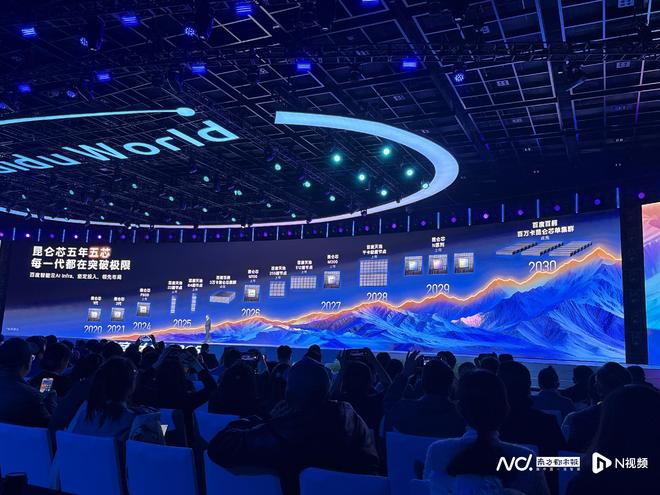
Core Insights - Baidu announced its Kunlun chip iteration plan at the Baidu World Conference on November 13, with the M100 chip set to launch in early 2026, optimized for large-scale inference scenarios, and the M300 chip expected in early 2027, aimed at ultra-large-scale multimodal model training and inference [2][5]. Group 1: Kunlun Chip Development - Kunlun chip is Baidu's self-developed chip project, established in 2011, and has been independently financed since 2021 [5]. - The current flagship product is the P800 chip, which is set to launch in 2024, and has already been validated internally with a deployment of a 30,000-card cluster [5]. - The P800 chip is utilized for most inference tasks within Baidu and has been used to train a multimodal model efficiently [5]. Group 2: Client Applications and Market Reach - Kunlun chip products are not only used internally by Baidu but also deployed in various industries such as internet finance, energy, manufacturing, transportation, and education [5]. - Notable clients include state-owned enterprises like China Merchants Bank and Southern Power Grid, along with an unnamed major internet company [5]. Group 3: Future Product Roadmap - Baidu plans to launch the "Tianchi 256 Super Node" in the first half of 2026, which will support 256 interconnected cards, enhancing total interconnect bandwidth by four times and improving performance by over 50% compared to the previous model [5][6]. - The "Tianchi 512 Super Node" is expected in the second half of 2026, supporting 512 interconnected cards, with a further 1x increase in interconnect bandwidth and capable of training trillion-parameter models [6]. - From the second half of 2027, Kunlun chip will introduce super nodes with 1,000 and 4,000 cards, while continuing to optimize the synergy between hardware and software [6]. - A new generation of N series chips is projected for launch in 2029, with plans to light up a million-card Kunlun chip single cluster by 2030 [6].


百度发布两款昆仑芯AI芯片,披露未来5年迭代路线图
Nan Fang Du Shi Bao· 2025-11-13 04:15
Core Insights - Baidu announced its Kunlun chip iteration plan at the Baidu World Conference on November 13, with the M100 chip set to launch in early 2026 and the M300 chip in early 2027, aimed at providing powerful, low-cost, and controllable AI computing power for Chinese enterprises [1][3] Group 1: Kunlun Chip Development - Kunlun chip is Baidu's self-developed chip project, established in 2011, and has been independently financed since 2021 [3] - The current flagship product is the P800 chip, which is set to launch in 2024, and has already been validated internally by Baidu [3] - The P800 chip is utilized for most inference tasks within Baidu and has been used to train a multimodal model efficiently [3] Group 2: Client Applications and Market Reach - Kunlun chip products are not only used internally by Baidu but also deployed in various industries such as internet finance, energy, manufacturing, transportation, and education [3] - Notable clients include state-owned enterprises like China Merchants Bank and Southern Power Grid, along with an unnamed major internet company [3] Group 3: Upcoming Products and Performance Enhancements - Baidu plans to launch the "Tianchi 256 Super Node" in the first half of 2026, which will support 256 interconnected cards, enhancing total interconnect bandwidth by four times and improving performance by over 50% compared to the previous model [3][4] - The "Tianchi 512 Super Node" is expected in the second half of 2026, supporting 512 interconnected cards and further increasing interconnect bandwidth by 100% [4] - From the second half of 2027, Kunlun chip will introduce super nodes with 1,000 and 4,000 cards, while continuing to optimize the synergy between hardware and software [5] Group 4: Long-term Roadmap - According to Baidu's roadmap, a new generation of N series chips is expected to launch in 2029, with plans to light up a million-card Kunlun chip single cluster by 2030 [5]