iRobot

Search documents
INVESTOR ALERT: Pomerantz Law Firm Investigates Claims On Behalf of Investors of iRobot Corporation - IRBT
GlobeNewswire News Room· 2025-04-25 17:48
Core Insights - Pomerantz LLP is investigating potential securities fraud or unlawful business practices by iRobot Corporation and its officers/directors [1] - iRobot reported a significant financial loss in Q4 2024, with a loss of $2.06 per share and revenue of $172 million, marking a 44% year-over-year decline [3] - Following the financial report, iRobot's stock price dropped by 51.58%, closing at $3.055 per share [3] Financial Performance - iRobot's Q4 2024 loss was $2.06 per share [3] - Revenue for the quarter was $172 million, reflecting a 44% decline compared to the previous year [3] - The company expressed substantial doubt about its ability to continue as a going concern for at least 12 months from the issuance of its 2024 financial statements [3] Market Reaction - iRobot's stock price fell by $3.255 per share, or 51.58%, over two trading sessions following the financial results announcement [3]



扫地机器人行业内外销更新
2025-04-15 14:30
Summary of Conference Call Industry Overview - The conference focused on the global robotic vacuum cleaner industry, with specific emphasis on market data for 2024 - According to IDC, global shipments of robotic vacuum cleaners are projected to reach 20.6 million units in 2024, representing an 11% year-over-year growth, with a total market value of $9.3 billion [1] Company Performance - Stone Technology leads the market with a 16% share in unit sales and a 22.3% share in revenue for 2024, particularly strong in the Nordic region [1] - iRobot, facing significant operational challenges, is projected to generate $682 million in revenue for 2024, down 23% year-over-year, with a loss of $160 million [2] - iRobot's revenue for Q4 was only $172 million, a 44% decline, with a quarterly loss exceeding $70 million [2] Market Dynamics - Stone Technology has seen a continuous increase in market share, while iRobot's share is declining, particularly in markets outside the US and Japan, where Chinese brands are performing better [3][4] - In the US Amazon market, Stone Technology has achieved a market share of 25%, while iRobot's share is around 13% [5][6] - The competitive landscape is shifting, with Chinese brands like Dreamy and Roborock gaining traction in both online and offline channels [7][8] Sales Channels and Growth - The online and offline sales channels are now evenly split, with significant growth in both areas. Stone Technology's offline sales grew over 300% during the last Black Friday [6] - In Germany, Stone Technology's sales growth reached 75% in early 2024, outperforming competitors [7] - The overall market in Europe is expected to see a growth rate of 40-50% in Q1 2024 [9] Domestic Market Insights - In the domestic market, Stone Technology's GMV increased by 200% in February 2024, benefiting from government subsidies that have expanded coverage [10][11] - The introduction of cost-effective products is expected to enhance market penetration in lower price segments [12] Financial Projections - For Q1 2024, a conservative estimate predicts a revenue growth of 50%, with potential profit margin declines due to increased marketing expenses for new products [13][14] - The company anticipates a recovery in profit margins in Q2 2024, driven by improved gross margins and a higher proportion of mid-to-high-end products [15][16] Product Innovations - The G30 Space product, launched on March 16, 2024, features advanced cleaning capabilities, including a mechanical arm for enhanced functionality [19][20] - This product represents a significant shift towards multifunctional home service robots, indicating a broader trend in the industry [22][23] Conclusion - The robotic vacuum cleaner industry is experiencing rapid growth, with Stone Technology positioned as a market leader. The competitive landscape is evolving, with increasing pressure on traditional players like iRobot. The introduction of innovative products and government support in the domestic market are expected to drive further growth in 2024 [24]

估值20亿的机器人,破产了
投资界· 2025-04-04 07:56
困境缩影。 这是一记刺耳的警钟。 作者 I 杨文静 报道 I 投资界PEdaily 曾风靡一时的美国 AI 陪伴机器人公司Embodi e d正式关停——旗下公司主打的儿童情感机器人 Moxi e最近迎来了最后的告别。 身后创始人Pa ol o Pirj a ni a n博士深耕机器人领域多年,曾经对产品的完美性有着如乔布斯和马斯克一样的执着。Moxi e诞生之际,创 始团队曾将它描述为 "世界上第一个人工智能机器人朋友"。 破产之前,Embodi e d曾在一级市场有过一段高光时期,投资方囊括了英特尔旗下旗下风投I nt e l Ca pit a l、丰田的 AI Ve nt ur e s、亚马 逊的 Al e xa 基金、索尼创新基金和 Vul c a n Ca pit a l等。但最后资金告罄,投资人在看不到商业前景后彻底放弃了它。如此一幕,令人 沉思。 创业十年,倒在行业盛宴时 公司视频里,一个小女孩哭着和她的机器人朋友告别。 女孩对面是一款专门为儿童设计的机器人,它的身体呈蓝绿色,面部是会模仿常规表情的屏幕,底盘像一个不倒翁,两只手臂还会兴 奋地拍打。这个机器人叫Moxi e,具备人脸识别、语音交互 ...
方正证券:2月扫地机国内量价齐升 推荐石头科技(688169.SH)等
智通财经网· 2025-03-27 07:32
Core Viewpoint - The domestic vacuum cleaner market is benefiting from national subsidies, with both volume and price increasing in February, leading to rapid growth in online sales [1] Group 1: Market Trends - The price range of 3000-4900 yuan is highly competitive, with consumers being price-sensitive; brands in the price range above 5000 yuan are focusing on pain point solutions and extreme performance [1] - The average price of vacuum cleaners in the U.S. increased in February, with a higher proportion of high-end products; brands like eufy, Roborock, and Dreame saw significant increases in sales and revenue share [2] - In the German and European markets, mid-to-high-end product sales and revenue share have significantly increased, with domestic brands showing a trend of full price range coverage [3] Group 2: Brand Performance - Roborock maintains a dominant revenue share in the high-end segment, while eufy and Dreame are increasing their market share across various price ranges [2][3] - Domestic brands are increasingly covering all price ranges, with Roborock's products penetrating lower price segments, while eufy is enhancing its presence in the high-end market [3] - The combined sales and revenue share of five brands, including Dreame, Roborock, eufy, and Xiaomi, accounted for 63.42% and 84.33% respectively in the German market [3]

消费提振预期下如何看家电?
2025-03-18 01:38
Summary of Key Points from the Conference Call on the Home Appliance Industry Industry Overview - The conference call focuses on the home appliance industry in China, discussing market trends, retail performance, and investment opportunities in the sector [2][3][4]. Core Insights and Arguments - **Market Style Shift**: There is a notable shift in market style from technology sectors like AI to consumer sectors, driven by consumption-boosting policies [2]. - **Retail Performance**: Home appliance retail is expected to progress in a wave-like manner rather than experiencing sharp declines. The first two months of 2025 are influenced by a short-term pull-forward effect from December, but the overall impact on annual performance is minimal [3][4]. - **Sales Growth Expectations**: Air conditioning shipments are projected to achieve double-digit growth from March to August 2025, supported by promotional seasons and national subsidy policies [3][4]. - **Tariff Concerns**: Concerns regarding tariffs are diminishing, with companies having low exposure to U.S. revenues being less affected. This alleviates valuation pressures on the sector [3][5]. - **Valuation Levels**: White appliance companies are currently valued at historical lows, with Gree at less than 7 times earnings, Midea at about 23 times, and Haier and Hisense around 10 to 11 times [3][6]. - **High-End Brands**: Haier is benefiting from domestic sales transformations and its high-end brand, Casarte, showing strong performance with a 15% year-on-year growth in air conditioning installations in January-February 2025 [3][8]. Additional Important Insights - **Black and Kitchen Appliances**: The black appliance sector is benefiting from trends like larger screens and increased Mini LED penetration, while kitchen appliances are seeing growth due to the release of second-hand homes in first-tier cities [3][9]. - **Export Performance**: In 2024, China's home appliance exports exceeded $100 billion, marking a 14% year-on-year increase. The first two months of 2025 also show a 6% increase in export value [3][20]. - **Competitive Landscape**: The competitive landscape in the home appliance market remains robust, with retail subsidies expected to reach 80-100 billion yuan, driving growth in the sector [10][21]. - **Investment Recommendations**: Recommended investment targets include low-valuation, high-dividend white appliance companies like Gree, Haier, Hisense, and Midea, which are expected to benefit from domestic sales recovery and consumption-boosting policies [7][21]. Conclusion - The home appliance industry in China is poised for growth, supported by favorable market conditions, improving retail performance, and strategic investment opportunities. The focus on consumer spending and government support is expected to drive positive trends in both domestic and export markets [2][20][21].
家电行业周报(25年第11周):1-2月大家电线下零售增长良好,小家电线上需求回暖
Guoxin Securities· 2025-03-17 07:25
Investment Rating - The report maintains an "Outperform the Market" rating for the home appliance industry [6][11][12]. Core Insights - The home appliance sector is experiencing a recovery driven by government subsidy policies, with offline retail sales of major appliances showing significant growth in early 2025. Online demand for small kitchen appliances has also rebounded [1][2][16]. - In January and February 2025, the total retail sales of home appliances increased by 1.4% online and 10.2% offline year-on-year, with offline sales benefiting from the "old-for-new" subsidy policy [2][17]. - The export value of home appliances in the first two months of 2025 grew by 8% year-on-year, continuing a positive growth trend despite a high base from the previous year [3][26]. Summary by Sections Retail Performance - Offline retail sales of major appliances showed strong growth, with specific categories like air conditioners, refrigerators, and washing machines increasing by 21.4%, 5.5%, and 13.1% respectively in early 2025. Online sales for these categories varied, with some experiencing declines [2][17]. - The small kitchen appliance segment saw a notable recovery in online sales, with January showing a decline of 12.9% and February rebounding by 27.3% [2][17]. Export Trends - The export volume of home appliances reached 6.9 billion units in the first two months of 2025, marking a 9.4% increase year-on-year. The export value in RMB was 1093.9 billion, reflecting a 7.6% increase [3][26]. Company Performance - iRobot reported a significant revenue decline of 44.1% in Q4 2024, facing challenges in major markets such as the US and Europe. The company's gross margin also decreased, indicating pressure on profitability [4][31]. Market Data Tracking - The home appliance sector achieved a relative return of +0.28% this week, outperforming the broader market [5][36]. - Raw material prices for copper and aluminum increased by 1.5% and 0.2% respectively, while cold-rolled steel prices rose by 2.0% [5][37]. Investment Recommendations - The report recommends several companies within the home appliance sector, including Midea Group, Haier Smart Home, TCL Smart Home, and Gree Electric, all rated as "Outperform the Market" [6][12][50].





美国扫地机器人企业iRobot表明难以继续经营
日经中文网· 2025-03-13 02:56
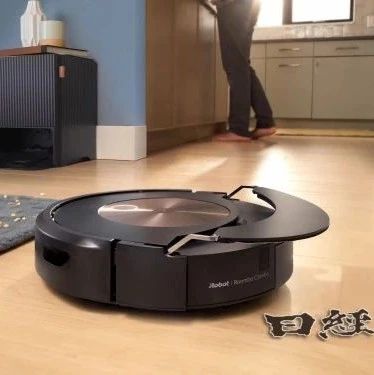
Group 1 - iRobot's financial report raised significant doubts about its ability to continue as a going concern for at least the next 12 months, leading to a 36% drop in stock price, marking the largest single-day decline since its IPO in 2005 [1][2] - The company has faced declining market share and worsening performance due to increasing price competition from Chinese companies, despite having pioneered the home robotic vacuum market with the launch of Roomba in 2002 [1][2] - iRobot's sales for the period from October to December 2024 decreased by 44% year-over-year, falling to $17.203 million, with a net loss of $77.1 million compared to a loss of $63.59 million in the same period last year [3] Group 2 - Amazon's attempt to acquire iRobot for approximately $1.7 billion, including debt, was abandoned in January 2024 after failing to receive approval from EU competition regulators, which was seen as a potential lifeline for the company [2] - Following the failed acquisition, iRobot's CEO Colin Angle resigned, and the company implemented significant workforce reductions, cutting over half of its employees [2] - Despite launching eight new products, iRobot expressed uncertainty about their success due to factors such as consumer demand, competitive landscape, macroeconomic conditions, and tariff policies, and did not provide earnings guidance for 2025 [2]
Roomba maker iRobot warns it may go out of business, sending shares plunging
New York Post· 2025-03-12 20:12
Company Overview - iRobot, the maker of Roomba vacuum cleaners, has raised concerns about its ability to continue operations due to macroeconomic and tariff-related uncertainties, leading to a significant drop in its stock price by over 35% [1] - The company was once valued at $3.56 billion in 2021 but is now worth less than $200 million [2] Financial Performance - iRobot reported a net loss of $77.1 million for the fourth quarter ended December 28, 2024, an increase from a loss of $63.6 million in the same period the previous year [2] - Revenue for the fourth quarter declined by 44% [2] - Cash reserves decreased to $134.3 million in 2024 from $185.1 million in 2023, while debt stood at $200.6 million as of December 28, 2024 [2] Competitive Landscape - The company is struggling to compete with Chinese rivals like Ecovacs Robotics, which provide advanced features at lower prices [3] Strategic Options - iRobot is exploring options such as a potential sale or debt refinancing [3][7] Historical Context - iRobot was previously a $1.4 billion buyout target for Amazon, but the deal was scrapped due to antitrust objections [4][5] - Following the collapse of the Amazon deal, founder Colin Angle stepped down as CEO, and Gary Cohen was appointed to lead recovery efforts [6]
Roomba Maker iRobot Reports ‘Substantial Doubt' About Ability to Continue
PYMNTS.com· 2025-03-12 15:48
Core Viewpoint - iRobot faces "substantial doubt" about its ability to continue as a going concern, prompting a formal strategic review by its board of directors to explore potential sales, refinancing, and other alternatives [1][5]. Company Developments - iRobot appointed Neal P. Goldman as an independent director, who has a strong background in operational and financial transformations [2][3]. - The company announced its largest product launch in history on March 11, 2024, indicating efforts to revitalize its market presence [4]. Operational Restructuring - Since implementing its operational restructuring plan in January 2024, iRobot has reduced its workforce by over 50%, cut sales and marketing expenses, decreased inventory and cash outflows, and significantly lowered product costs [5]. - The restructuring was initiated after a failed acquisition by Amazon, which was valued at $1.7 billion but was canceled due to regulatory challenges in the EU [6]. Market Challenges - iRobot attributes the uncertainty regarding its future to factors such as consumer demand, competition, macroeconomic conditions, and tariff policies [5].
iRobot Stock Drops Calamitously As Fallout From Post-Amazon Struggles Mounts
Seeking Alpha· 2025-03-12 15:00
Group 1 - The article discusses the business prospects of iRobot, particularly after the failed acquisition by Amazon in early 2024, leading to a hold recommendation for the stock [1] - iRobot is known for its consumer robotics products, especially the Roomba vacuum cleaner, which has been a significant part of its brand identity [1] Group 2 - The author has extensive experience in investment analysis, focusing on identifying underappreciated companies that can provide value to investors [1]