LVMH

Search documents
Perfect Corp (PERF) FY Conference Transcript
2025-08-26 19:22
Summary of Perfect Corp (PERF) FY Conference Call - August 26, 2025 Company Overview - Perfect Corp is a Taiwan-based company with approximately 400 employees, primarily focused on R&D in the beauty and fashion app space [2][3] - The company was founded a decade ago and initially operated as an app maker before transitioning to B2B software solutions for beauty brands [4][5] Revenue Breakdown - Revenue sources: Approximately 50% from the US, 30% from the EU, and 20% from Japan [4][5] - Initial revenue breakdown at listing (2022): 75% B2B and 25% B2C; as of 2023, it has shifted to roughly 50% B2B and 50% B2C, with projections for 2024 indicating 60% B2C and 40% B2B [7][8] - B2C apps operate on a freemium model, with subscription prices increasing from $5-$7 to $79 per year [8][9] Product Offerings - B2C apps include "You Can Makeup" and "You Can Perfect," focusing on photo editing and virtual try-ons [6][9] - B2B services include virtual try-ons for makeup and skin analysis, with clients such as Estee Lauder, LVMH, and Chanel [7][19] - The company has over 800 brand clients and 914,000 SKUs running on its software, showing a growth of over 20% in brand clients since 2021 [19][20] Financial Performance - 2024 growth rate: 12.5%; guidance for 2025 is 13% to 14.5% [25][26] - Gross margin decreased from 79% to 75% year-over-year due to lower margins in B2C compared to B2B [26][27] - Positive operating cash flow with $167 million in cash and cash equivalents [28] Strategic Initiatives - Recent acquisition of Wana for $6 million to enhance offerings in AIAR technology for luxury brands [24] - Focus on reinvesting in R&D for premium Gen AI features and expanding B2B client base [29][30] Market Challenges - The company faces macroeconomic pressures affecting clients like Estee Lauder and LVMH, leading to tighter budgets [42] - Currency exchange issues due to the appreciation of the Taiwanese dollar impacting operational costs [28][29] Competitive Landscape - The company maintains a 90% retention rate in B2B, indicating strong client loyalty [47] - Differentiation from competitors lies in continuous R&D investment and user-friendly app design [44][45] Technology and Innovation - The company is exploring advancements in 3D virtual try-ons for clothing, although current technology is not yet ready for full implementation [37][38] - Color calibration challenges exist across different devices, particularly on Android, requiring significant investment in accuracy [50][51] Conclusion - Perfect Corp is positioned for growth with a strong focus on B2C expansion and innovative technology solutions, despite facing market challenges and competitive pressures [30][42]

大动作!美银拆解全球资金流向,机构配置逻辑已清晰
Zhi Tong Cai Jing· 2025-08-26 08:19
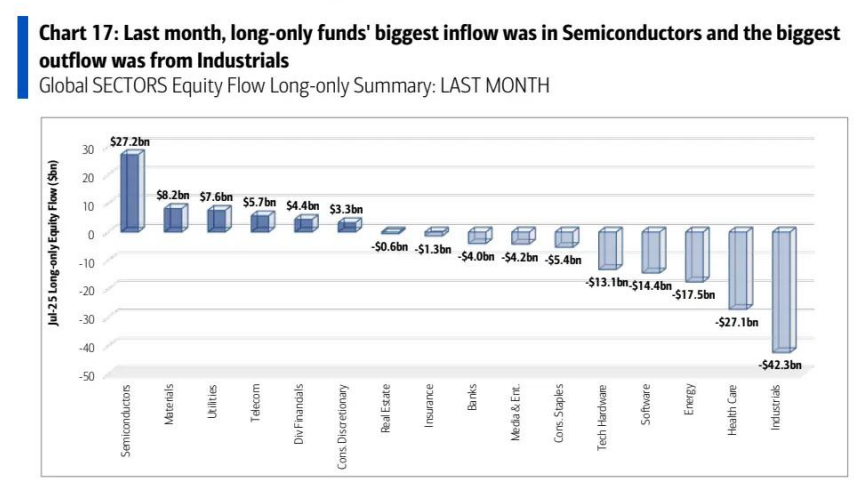
Core Insights - The report highlights a significant shift in global fund allocations, driven by the long-term theme of AI, with a notable increase in semiconductor investments and a decrease in industrial and healthcare sectors [1][25]. Group 1: Global Fund Flows - Semiconductor sector emerged as the biggest winner, with a net inflow of $27.2 billion from long-only funds, reflecting institutional confidence in AI-related core assets [2]. - Industrial sector faced a net outflow of $42.3 billion, while the healthcare sector saw a net outflow of $27.1 billion, attributed to declining manufacturing PMI and rising policy uncertainties [2]. - Asia-Pacific (excluding Japan) was the largest inflow region, receiving a net investment of $21 billion, benefiting from valuation recovery in technology sectors [6]. - The U.S. market experienced a record net outflow of $6.5 billion, driven by concerns over high interest rates and slowing economic growth [8]. Group 2: Stock-Level Fund Flows - Nvidia (NVIDIA) was the most heavily bought stock, with a net inflow of $16.9 billion, while Apple (Apple) faced a net outflow of $11.2 billion due to weak consumer demand [11]. - Taiwan Semiconductor Manufacturing Company (TSMC) received a net inflow of $5.9 billion, ranking first among emerging market stocks [12]. - In Europe, British American Tobacco saw a net inflow of $1.7 billion, while SAP faced a net outflow of $2.9 billion due to disappointing earnings [12]. Group 3: Stock Selection Criteria - The report outlines four stock selection criteria: crowded positives, crowded negatives, under-owned positives, and under-owned negatives, to identify potential investment opportunities and risks [13]. - Crowded positives include stocks with high ownership and positive momentum, such as Meta (META), Broadcom (AVGO), and Netflix (NFLX) [15]. - Crowded negatives are characterized by high ownership but low momentum, including Meituan (3690 HK) and LVMH (MC FP) [16]. - Under-owned positives, like Rolls-Royce (RR LN) and Royal Caribbean (PCL US), show potential for valuation recovery due to low ownership and positive momentum [18]. Group 4: Performance Backtesting - Backtesting from January 2015 to April 2025 indicates that crowded positive stocks achieved an annualized return of 9.4%, significantly outperforming the global index [22]. - In contrast, crowded negative stocks yielded an annualized return of only 0.0%, underperforming the global index by 57 percentage points [22].


以单支口红1200元进军美妆市场,LV打的什么算盘?
智通财经网· 2025-08-26 04:01
Group 1 - Louis Vuitton (LV) has disrupted the pricing model for high-end lipsticks by launching a permanent makeup line in collaboration with renowned makeup artist Pat McGrath, featuring 55 lipsticks and 10 lip balms priced at $160 each, with some lipsticks costing up to 1200 RMB [1] - The luxury goods industry is facing challenges, and while makeup has become a new business avenue for brands, there are questions about consumer willingness to pay such high prices [1] - Pauline Brown, former chairman of LVMH North America, expressed skepticism about the market potential for a $160 lipstick, suggesting it is a strategy to solidify market position rather than a guaranteed success [1] Group 2 - LVMH's CFO Cécile Cabanis stated that the company's bold pricing strategy targets affluent and aspirational customers, aiming to retain and attract high-end clientele [2] - The new high-end cosmetics line from Louis Vuitton will face challenges due to a slowdown in luxury brand demand and consumer resistance to high prices [2] - LVMH reported a decline in sales across its fashion and leather goods sectors, although Sephora has seen an increase in market share amidst fierce competition [2] Group 3 - E.l.f. Beauty has raised its product prices for the third time, with a $1 increase across its entire product line, while Estée Lauder executives have also indicated price adjustments [3] - Analysts predict that the U.S. beauty product market will see more price adjustments in the next 12 months, with companies being cautious due to an unstable consumer environment [3] - Data from Circana shows that sales of high-end beauty products in the U.S. remained flat year-over-year, while mass market cosmetics sales grew by 3% [3]
行业框架:黄金珠宝研究框架
2025-08-24 14:47
Summary of the Gold and Jewelry Industry Conference Call Industry Overview - The Chinese gold and jewelry market reached a scale of 841.3 billion yuan in 2023, with gold jewelry accounting for approximately 500 billion yuan, while the diamond market is around 60 billion yuan but is experiencing a rapid decline [1][4] - The jade and gemstone segment represents about 18%, approximately 150 billion yuan, with offline channels dominating sales at around 90% [1][4] - The gold and jewelry industry is closely linked to economic development, with significant potential for growth in the Chinese market as per capita jewelry consumption is still lower than in the U.S. [1][5] Key Insights and Arguments - The jewelry industry's aesthetic characteristics are influenced by economic foundations, with consumer preferences reflecting aspirations towards higher consumption tiers [2] - Post-pandemic, there has been an increased preference for gold jewelry among Chinese consumers, correlating with the country's enhanced national strength during the pandemic [2] - The gold jewelry sector is characterized by low margins and high turnover, while K-gold and diamond products have higher profit margins [1][8] - Direct sales models are prevalent in the high-end market, while franchise models cater to the mass market [9] Market Trends and Consumer Behavior - In 2023, global gold consumption was approximately 1,089 tons, with jewelry demand accounting for 60% to 65% of this figure [10] - The demand for wedding-related jewelry constitutes about one-third of jewelry consumption, with a growing trend towards self-purchase driven by an increase in single individuals [10] - Gold price stability is crucial for maintaining demand; sharp price drops can trigger buying frenzies, while rapid increases may suppress consumption [11] Innovations and Product Development - Significant advancements in gold jewelry craftsmanship have been noted, including traditional gold techniques and innovative designs appealing to younger and male consumers [12][13] - New product lines, such as IP collaborations and unique designs, have achieved profit margins of 20% to 40%, attracting a broader customer base [13] Competitive Landscape and Brand Dynamics - Domestic brands are increasingly performing well in the high-end market, with companies like Laopuhuangjin showing a 77% overlap with high-end luxury brand clientele [6] - The industry is transitioning from a channel-driven model to a brand-driven model, emphasizing brand culture, operational capabilities, and design [18][21] - The valuation of luxury goods groups is significantly higher than that of ordinary jewelry companies, with luxury groups maintaining valuations between 20 to 50 times earnings compared to 4 to 25 times for regular jewelry firms [20] Future Outlook - The gold and jewelry industry is expected to continue growing, with a focus on brand development and market consolidation [21] - The rise of traditional Chinese design styles and the increasing popularity of domestic brands suggest a promising future for companies like Laopuhuangjin, which have strong brand potential and international expansion opportunities [22]

“嗅觉经济”崛起:中国香氛产业迎百亿增长机遇 线下门店解决新锐品牌三大痛点
Zheng Quan Shi Bao Wang· 2025-08-24 10:16
Core Insights - The trend of consumers paying for "emotional value" is driving the growth of the fragrance market, with scent becoming a new medium for self-consumption and cultural consumption [1] - The opening of the first Tmall fragrance space in Hangzhou marks a significant development for the fragrance industry, providing a physical space for over 40 domestic and international brands to showcase their products [1][3] - The Chinese fragrance market is experiencing explosive growth, with a projected market size of 27.85 billion yuan in 2024 and a compound annual growth rate of 18.9% over the past five years, significantly outpacing the global average of 7% [1][2] Market Potential - The current penetration rate of the fragrance market in China is only 5%, indicating substantial growth potential compared to mature overseas markets [2] - International brands are developing exclusive fragrances for Chinese consumers, while domestic beauty brands are increasingly entering the fragrance sector [2] Industry Trends - The fragrance market is witnessing three notable trends: the optimization of consumer demographics with a rise in young and male consumers, the strong emergence of domestic brands, and significant product innovation across various categories [4] - The rise of domestic brands is supported by cultural confidence and the ability to leverage unique design elements, with some categories experiencing growth rates as high as 100% [4][5] Supply Chain Advantages - The flexibility of the Chinese supply chain is facilitating the growth of new domestic brands, allowing for rapid adjustments to meet consumer preferences [5][6] - The overall improvement in the fragrance supply chain has led to better product quality and faster response times, enhancing the competitiveness of new brands [6] Competitive Landscape - New brands are focusing on innovation, supply chain efficiency, cultural relevance, and market positioning to differentiate themselves from international competitors [6][7] - The increasing importance of emotional value and personalized experiences is driving the demand for diverse fragrance products, with brands encouraged to innovate continuously [7][8] Market Growth - The number of fragrance-related companies in China has seen significant growth, with registrations increasing by 60.2% in 2022 and 53.5% in 2023, indicating a vibrant and expanding market [8] - Projections suggest that by 2025, the fragrance industry in China will reach a production volume of approximately 70.94 million pieces and a market size of 30.03 billion yuan [8]
深度 | 老铺黄金看到了什么?
Sou Hu Cai Jing· 2025-08-23 08:53
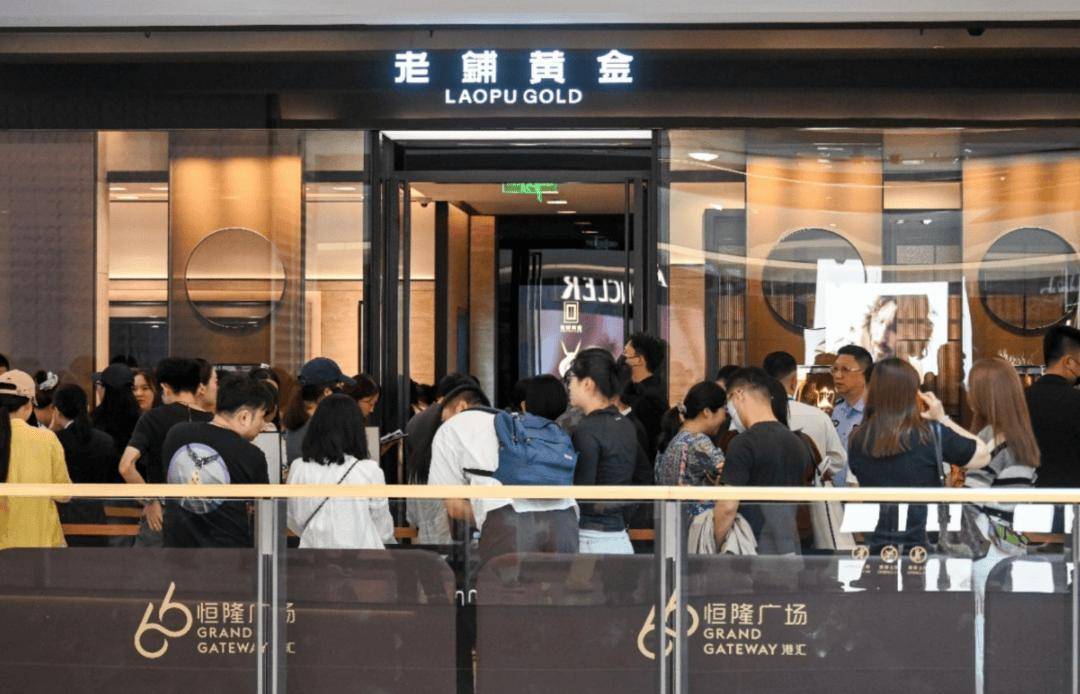
Core Viewpoint - The rapid growth of Laopu Gold is challenging the dominance of established luxury brands like LV and Hermès in the Chinese market, as evidenced by its impressive financial performance and market positioning [2][3][22]. Financial Performance - Laopu Gold's revenue surged by 251% to approximately 12.35 billion yuan, with gross profit increasing by 223% to 4.7 billion yuan, and adjusted net profit rising by 291% to 2.35 billion yuan for the first half of 2025 [2]. - In contrast, LVMH reported a 4% decline in revenue and a 22% drop in net profit, while Hermès experienced an 8% revenue growth, with only a 1.5% increase in the Asia-Pacific market [2][22]. Market Positioning - Laopu Gold has surpassed leading luxury brands in terms of sales per square meter, achieving an average sales performance of 459 million yuan per store, leading all international and domestic jewelry brands in mainland China [3]. - The overlap rate of Laopu Gold's consumers with those of major luxury brands like LV and Hermès is as high as 77.3%, indicating a strong alignment with high-end consumer characteristics [3][5]. Expansion Strategy - Laopu Gold has rapidly expanded its presence in Shanghai, opening three new stores in six months, with plans for a fifth store in a key luxury shopping area [5][10]. - The brand is cautious about entering the European market, focusing instead on Southeast Asia and Japan for its international expansion [11]. Brand Development - Laopu Gold emphasizes originality in its product offerings, launching popular items like the Mandala and Seven Sons Gourd, while also addressing the challenge of imitation in the high-end market [10][11]. - The brand's marketing strategy diverges from traditional luxury marketing, avoiding celebrity endorsements and focusing on building a strong emotional connection with consumers [17][18]. Industry Implications - Laopu Gold's success raises questions about the traditional dominance of established luxury brands and suggests a potential shift in consumer preferences towards homegrown brands that resonate with cultural identity [18][20]. - The luxury market is experiencing a need for innovation and transformation, providing a favorable environment for local brands like Laopu Gold to thrive [22][23].
长城汽车超豪车项目招标,要求供应商服务过苹果、保时捷等品牌
Xin Lang Ke Ji· 2025-08-22 03:16
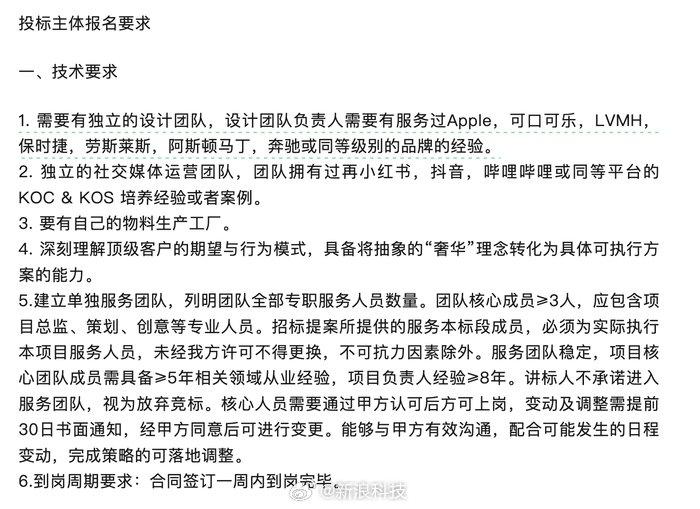
【#长城超豪华车招标要求服务过苹果等#】传闻已久的长城汽车超豪华车项目迎来新动作。近日,长城 控股招标中心发布《长城汽车超豪车BG品牌用户活动项目》招标公告,面向全球公开招募具备超豪品 牌服务经验与卓越社交媒体运营能力的的供应商,服务长城汽车超豪车BG,协助用户活动的规划和执 行。 在投标主体报名要求上,需要有独立的设计团队,设计团队负责人需要有服务过Apple,可口可乐, LVMH,保时捷,劳斯莱斯,阿斯顿马丁,奔驰或同等级别的品牌的经验。对到岗周期要求,需合同签 订一周内到岗完毕。 长城汽车还对投标主体的业绩提出要求,应标方在2019-2024年,期间有服务超高净值人群的、有可被 核实的成功案例,例如奢侈品用户活动(LV,爱马仕、香奈儿、迪奥、古驰、芬迪等),超豪车用户 活动(劳斯莱斯,阿斯顿马丁,保时捷、法拉利、迈巴赫、宾利、尊界等)。 三、投标主体业绩要求 1. 应标方在2019-2024年,期间有服务超高净值人群的、有可被核实的成功案例(请在 投标文件中提供至少1个详细案例),例如奢侈品用户活动(LV,爱马仕、香奈儿、迪 奥、古驰、芬迪等),超豪车用户活动(劳斯莱斯,阿斯顿马丁,保时捷、法拉利、迈巴 ...

长城汽车超豪车BG品牌开启招标报名工作
Jing Ji Guan Cha Bao· 2025-08-21 03:11
经观汽车 8月21日,据官方消息,长城控股招标中心发布"长城汽车超豪车BG品牌用户活动项目",长城表示,现 面向全球公关招募具备超豪品牌服务经验与卓越社交媒体运营能力的供应商,服务长城汽车超豪车 BG,协助用户活动的规划和执行。其中,投标主体要求包括需要有独立的设计团队,设计团队负责人 需要有服务过Apple,可口可乐,LVMH,保时捷,劳斯莱斯,阿斯顿马丁,奔驰或同等级别的品牌的 经验。 免责声明:本文观点仅代表作者本人,供参考、交流,不构成任何建议。 ...
增长红利消失后,中国企业如何跨越周期
Hu Xiu· 2025-08-20 00:40
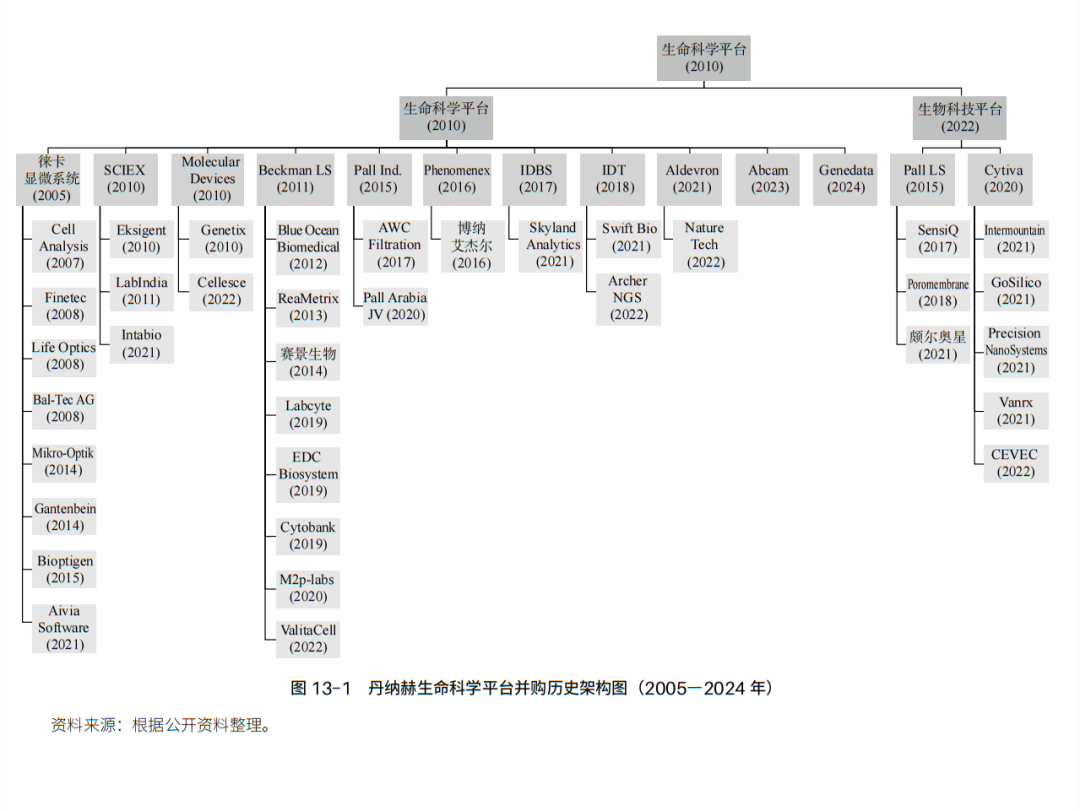
Core Viewpoint - Midea Group's Chairman Fang Hongbo emphasizes the importance of learning from multinational corporations, particularly the Danaher model, to enhance operational efficiency and management practices [1][2][3] Group 1: Danaher Influence - Danaher has significantly influenced Midea's operational strategies, leading to an average annual efficiency improvement of approximately 15% in its factories by 2024 [2] - Danaher, established in 1984, has completed nearly 400 acquisitions, spending around $90 billion, and has created approximately $200 billion in market value [4] - The average annual compound total return of Danaher's stock from 1984 to 2019 was 22%, outperforming Berkshire Hathaway and consistently beating the S&P 500 index [5] Group 2: Systematic M&A and Lean Management - The essence of Danaher's approach is a combination of systematic mergers and acquisitions (M&A) and lean management, which are crucial for Chinese companies to navigate cyclical challenges [6][7] - Many Chinese companies are transitioning from personal management to systematic management as they mature, with only 40% of A-share listed companies achieving net profit margins over 10% in 2021 [8] - Danaher's systematic M&A capability is characterized by a blend of science and art, requiring experience and team collaboration, which contrasts with the random and event-driven M&A strategies prevalent in many Chinese firms [9][21] Group 3: Management Challenges - Beyond M&A, effective management post-acquisition remains a significant challenge for many Chinese companies, especially in cost reduction and efficiency improvement [10][11] - Lean management, as practiced by Danaher, is a classic management philosophy that emphasizes standardization and process management, making it a replicable skill for many companies [60][61] Group 4: Future Directions for Chinese Companies - Companies facing crises, such as declining revenues and profits, are increasingly interested in adopting Danaher's model to find new growth avenues [26][28] - The need for systematic M&A capabilities is becoming critical as industries no longer enjoy high growth rates, making M&A a vital tool for value creation [16][19] Group 5: Learning from Danaher - To successfully implement a systematic M&A approach, companies must establish clear strategic directions, build capable teams, and develop strong post-acquisition integration abilities [39][40] - Danaher's management philosophy emphasizes the importance of a closed-loop management system, integrating strategic planning with daily operations to ensure alignment and accountability [85][86]

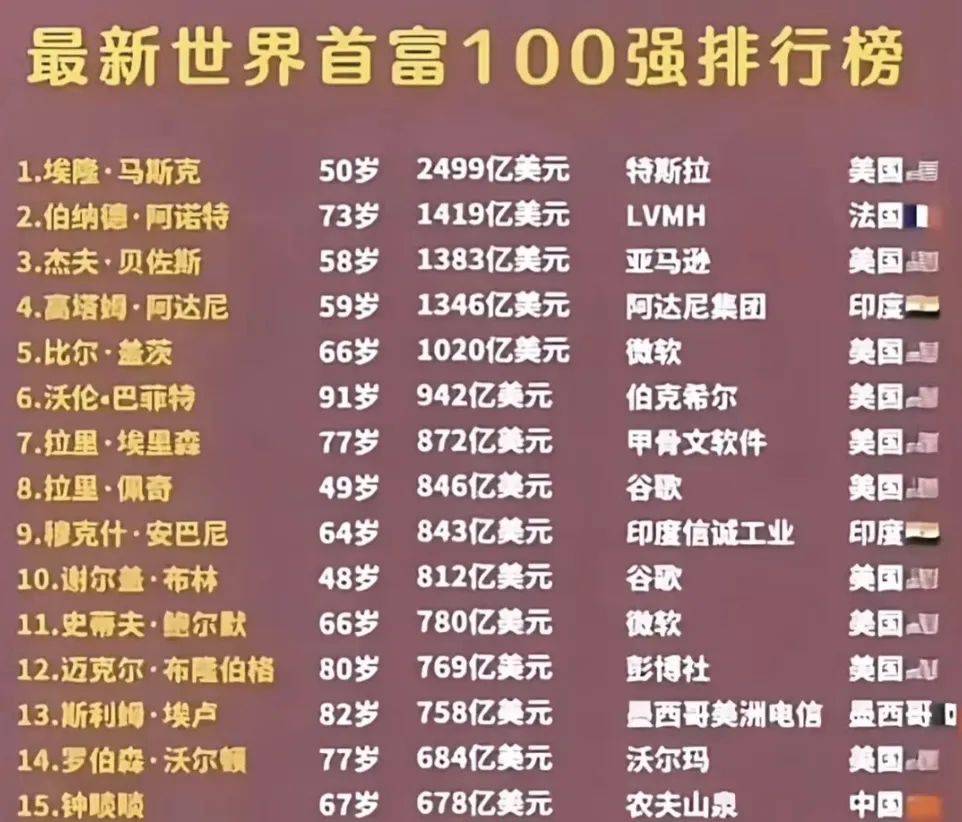
释永信:这个坐拥1500亿美元,全球第二富有的方丈,跌宕的人生。
Sou Hu Cai Jing· 2025-08-18 15:09
Core Viewpoint - The article discusses the rise and fall of Shi Yongxin, the abbot of Shaolin Temple, who amassed a fortune of $150 billion through commercial ventures but is now facing criminal charges for economic crimes [1][8]. Group 1: Background and Rise - Shi Yongxin, originally Liu Yingcheng, became the abbot of Shaolin Temple in 1999 and transformed it from a dilapidated site into a commercial empire [2][3]. - He founded the Shaolin Martial Arts Team in 1987 and established Shaolin Industrial Development Co., the first commercial entity in Chinese Buddhism, in 1996 [3][5]. - Under his leadership, Shaolin Temple registered the "Shaolin" trademark in 2006, expanding into various sectors including food, medicine, and entertainment [3][5]. Group 2: Business Expansion - Shi Yongxin's business ventures included purchasing 18,000 acres in Australia for an "Overseas Shaolin" project and opening a branch in Berlin, Germany [5]. - The Shaolin brand's global licensing generated substantial revenue, with over 2,000 companies licensed to use the brand, yielding annual fees in the tens of billions [5][8]. - The introduction of online courses and NFTs during the COVID-19 pandemic further boosted revenue, with a single digital Buddha statue selling for $1 million [5][8]. Group 3: Lifestyle and Wealth - Shi Yongxin's lifestyle became increasingly extravagant, owning 28 luxury properties, including a $380 million penthouse in Manhattan, and a fleet of 12 Rolls-Royce cars [6][8]. - His personal spending reportedly exceeded $10 million per month, contrasting sharply with the meager salaries of ordinary monks [8][11]. Group 4: Legal Issues and Consequences - In early 2025, an audit revealed significant financial irregularities, including tax evasion exceeding $30 billion and misappropriation of charitable funds [8][9]. - Shi Yongxin was arrested in March 2025, and in June, he was sentenced to life imprisonment for embezzlement and tax fraud, with his assets confiscated [11][13]. - Following his arrest, Shaolin Temple underwent restructuring, with a commitment to return to its spiritual roots and reduce commercial activities [11][13].