万泰生物

Search documents
卖水的首富,重仓医美女王34个亿
2 1 Shi Ji Jing Ji Bao Dao· 2025-09-24 02:05
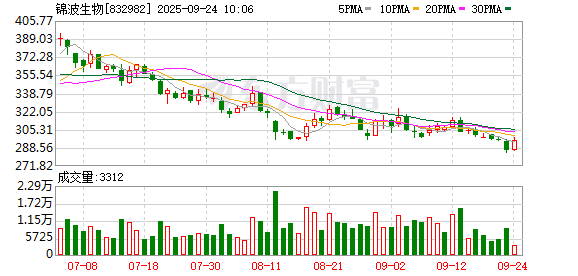
Core Insights - The article discusses a significant investment by Zhong Shanshan, a wealthy entrepreneur, into Jinbo Biotechnology, which is set to receive 2 billion yuan for a 6.24% stake, valuing the company at 32 billion yuan [2][4][12]. Group 1: Investment Details - Jinbo Biotechnology has announced a private placement to raise approximately 2 billion yuan, with shares priced at 278.72 yuan each, representing a discount to the market price [4]. - The funds will primarily be used for the development of a humanized collagen FAST database and product development platform, as well as to supplement working capital [7][8]. - The total investment for the humanized collagen project is estimated at 1.26 billion yuan, with plans for land acquisition and construction of facilities over a three-year period [7]. Group 2: Company Performance and Market Position - Jinbo's projected revenue for 2024 is 1.443 billion yuan, with a profit of 732 million yuan, indicating a high static price-to-earnings ratio at the 32 billion yuan valuation [7]. - The company specializes in recombinant collagen, a high-performance biomaterial with applications in medical fields, including wound healing and tissue engineering [9][10]. - Jinbo's flagship product, a wrinkle-reducing injection called "Wei Yimei," has achieved significant sales, with over 200,000 units sold and a gross margin of 95% [17][19]. Group 3: Strategic Partnerships and Future Prospects - Zhong Shanshan's investment is expected to enhance Jinbo's operational management and market reach, leveraging his extensive experience in the medical commercialization sector [13][20]. - The collaboration with Yang Xia, the founder of Jinbo, is anticipated to open new avenues for the company's collagen products beyond the medical aesthetics market [19][20]. - Jinbo holds all three existing licenses for recombinant humanized collagen in China, providing a competitive edge in a high-risk, strictly regulated market [19].

智飞生物上市15年“滑铁卢”:HPV疫苗批签发暴跌95%,代理依赖症撕开73%营收缺口
Hua Xia Shi Bao· 2025-09-22 06:53
Core Viewpoint - Zhifei Biological, once thriving on the agency of Merck's HPV vaccine, is now facing multiple challenges including high inventory, difficult receivables, and transformation issues, resulting in its worst interim performance since its listing in 2010 [2][3]. Financial Performance - In the first half of 2025, Zhifei Biological reported revenue of 4.919 billion yuan, a year-on-year decline of 73.06%. The net profit attributable to shareholders was a loss of 599 million yuan, a year-on-year decrease of 126.72%, marking the first half-year loss since the company's listing [3][5]. - The company has been in a continuous loss state for four consecutive quarters [5]. Business Model Challenges - The "agency + self-developed" business model has revealed several risks amid industry fluctuations. The agency business is heavily reliant on upstream suppliers, and any changes in their strategies can directly impact performance. Additionally, the long development cycle and high investment in self-developed products pose risks of product shortages if new products are not timely launched [7]. - Balancing agency introduction and self-development is crucial for domestic vaccine companies. While agency business can quickly enrich the product line, it is essential to choose products with market potential and technological advantages [7]. Dependency on HPV Vaccine - Zhifei Biological's business is highly dependent on the agency of Merck's HPV vaccine, which contributed approximately 68% of revenue in 2024. The company faces two core challenges: increasing channel conflicts as international manufacturers collaborate directly with local firms, and relatively low contribution from self-developed products, which accounts for less than 20% of revenue [8]. Decline in Product Sales - In the first half of 2025, the batch issuance volume of core agency products significantly declined, particularly the four-valent HPV vaccine, which dropped from 466,000 units in the first half of 2024 to 0 units, a decrease of 100%. The nine-valent HPV vaccine issuance fell from 18.272 million units to 4.239 million units, a decline of 76.8% [10][11]. - The revenue from agency products halved, decreasing from 51.89 billion yuan in 2023 to 24.67 billion yuan in 2024, and further down to 4.37 billion yuan in the first half of 2025, a year-on-year decrease of 75.2% [12]. Self-Developed Products - Self-developed product revenue in the first half of 2025 was 500 million yuan, accounting for 10.15% of total revenue, with a gross margin of 78.50%, although this was an 8.06 percentage point decline year-on-year [14]. - The batch issuance volume of self-developed products like ACYW135 and Hib vaccines saw significant declines, with Hib vaccine issuance down 66.46% year-on-year [15][16]. R&D Investment - The company has historically maintained a low R&D expense ratio, below 4%, compared to peers. Although the R&D expense ratio reached 8.5% in the first half of 2025, this was primarily due to a significant drop in revenue [17]. - The projected annual R&D investment for 2025 is approximately 1.27 billion yuan, which is less than the previous year's 1.391 billion yuan [17].


养生堂20亿战略入股锦波生物的定增申请已获北交所受理
Bei Ke Cai Jing· 2025-09-20 12:16
Core Viewpoint - The recent developments regarding the 2 billion yuan private placement by Zhong Shanshan, the founder of Nongfu Spring, signify a strategic move to enhance the capabilities of Jinbo Biological, positioning it as a leading player in the collagen protein sector in the A-share market [1][2]. Group 1: Company Developments - Jinbo Biological has officially received approval from the Beijing Stock Exchange for its application to issue shares to specific investors, with Yangshengtang being the primary investor [2]. - Yangshengtang, a high-tech enterprise specializing in health products, has a diverse portfolio that includes soft drinks, food, biopharmaceuticals, cosmetics, and health products [2]. - The collaboration with Yangshengtang is expected to empower Jinbo Biological in various aspects such as product development, industrial production, commercialization, market strategy, and management [2][3]. Group 2: Financial Aspects - The total investment from Yangshengtang, through a combination of a directed stock issuance and stock transfer, amounts to 3.403 billion yuan [3]. - The 2 billion yuan private placement is noted as the largest scale of such financing on the Beijing Stock Exchange this year [4]. - Yangshengtang's recent financial data indicates projected revenues of approximately 47.347 billion yuan and a net profit of about 12.128 billion yuan by June 2025, with a debt-to-asset ratio of around 25.08% [4].
生物制品板块9月17日跌0.41%,康华生物领跌,主力资金净流出6.9亿元
Zheng Xing Xing Ye Ri Bao· 2025-09-17 08:45
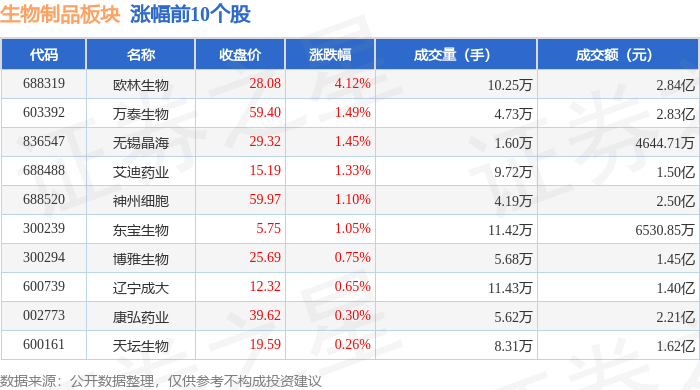
Market Overview - The biopharmaceutical sector experienced a decline of 0.41% on September 17, with Kanghua Biotech leading the drop [1] - The Shanghai Composite Index closed at 3876.34, up 0.37%, while the Shenzhen Component Index closed at 13215.46, up 1.16% [1] Stock Performance - Notable gainers in the biopharmaceutical sector included: - Olin Biotech (688319) with a closing price of 28.08, up 4.12% [1] - Wantai Biologics (603392) at 59.40, up 1.49% [1] - Wuxi Jinhai (836547) at 29.32, up 1.45% [1] - Conversely, Kanghua Biotech (300841) saw a significant decline of 3.85%, closing at 78.60 [2] - Other notable decliners included: - Baipusais (301080) down 2.53% [2] - Junshi Biosciences (688180) down 2.52% [2] Capital Flow - The biopharmaceutical sector experienced a net outflow of 690 million yuan from institutional investors, while retail investors saw a net inflow of 408 million yuan [2] - The overall capital flow indicates a mixed sentiment, with retail investors showing interest despite institutional selling [2] Individual Stock Capital Flow - Olin Biotech had a net outflow of 44.1 million yuan from institutional investors, while retail investors contributed a net inflow of 36.2 million yuan [3] - Wantai Biologics saw a net inflow of 20.6 million yuan from institutional investors, indicating positive sentiment [3] - Dongbao Biotech (300239) had a net inflow of 9.1 million yuan from institutional investors, reflecting some level of confidence [3]
康华股份回复IPO问询,业务、客户、供应商与实控人弟弟控制企业部分重合
Sou Hu Cai Jing· 2025-09-17 07:16
Core Viewpoint - Shandong Kanghua Biological Medical Technology Co., Ltd. (Kanghua Co.) is undergoing a listing review by the Beijing Stock Exchange, focusing on its core business in pathogen detection and in vitro diagnostic products [4]. Company Overview - Kanghua Co. was established on September 26, 1996, and operates as a comprehensive in vitro diagnostic enterprise covering six product lines, primarily engaged in the research, production, and sales of in vitro diagnostic reagents and instruments, as well as providing third-party medical testing services [4]. - As of the signing date of the prospectus, the actual controllers of Kanghua Co. are Yang Zhiting, Wang Aixiang, and Yang Fan, who collectively control 90.07% of the company's shares [4]. Regulatory Inquiry - The Beijing Stock Exchange has requested Kanghua Co. to clarify the specific business operations of enterprises controlled by Yang Zhiguo, particularly whether they engage in similar business activities as Kanghua Co. and its subsidiaries [5]. - It is noted that several enterprises controlled by Yang Zhiguo are involved in the sale and operation of medical devices, and there have been instances of sales and purchases between Kanghua Co. and these enterprises during the reporting period [6]. Business Independence - Kanghua Co. asserts that despite the overlap in business activities with Yang Zhiguo's controlled enterprises, they operate independently in terms of historical development, assets, personnel, business, technology, and finance, thus not constituting a competitive relationship that would adversely affect Kanghua Co. [8]. - The main customers of Yang Zhiguo's enterprises are primarily medical institutions and lower-level distributors, with some overlap with Kanghua Co.'s customers, but both parties operate independently without shared customer resources [8]. Supplier Relationships - The primary suppliers for Yang Zhiguo's enterprises include manufacturers or distributors of in vitro diagnostic reagents and instruments, with some overlap in suppliers due to Kanghua Co.'s procurement needs [10]. - Kanghua Co. and Yang Zhiguo's enterprises independently procure from suppliers without shared supplier resources, and there are no unusual financial transactions between them [10].
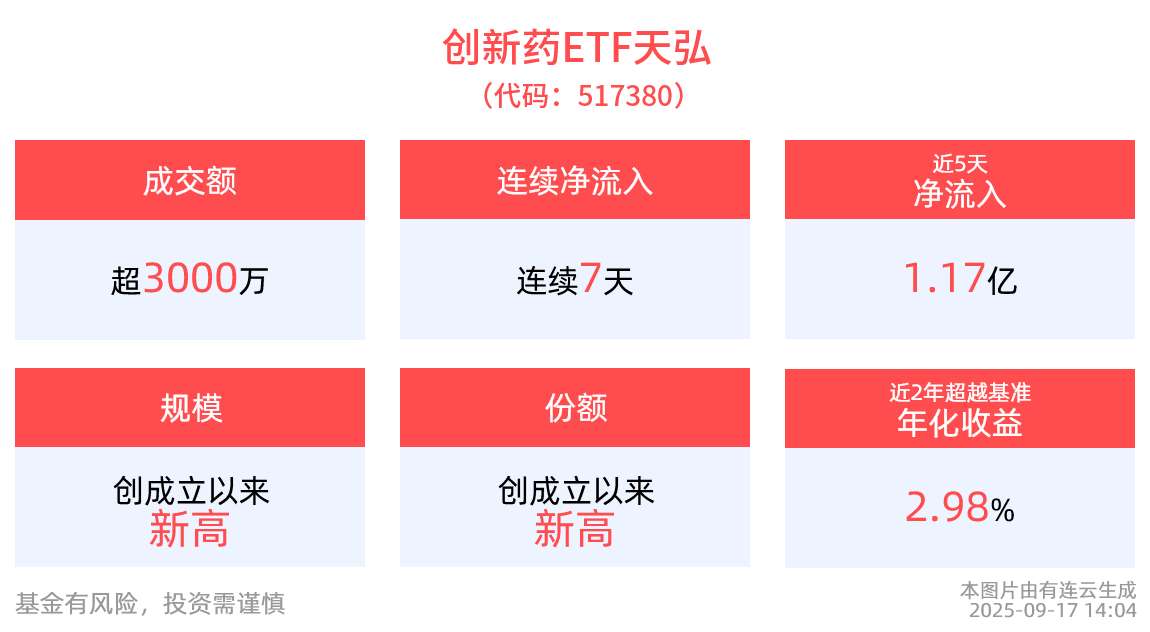
布局创新药更优选择!创新药ETF天弘(517380)编制方案优异,不含药捷安康-B,跟踪指数连日大幅跑赢!
Xin Lang Cai Jing· 2025-09-17 06:56
Core Insights - The innovative drug ETF Tianhong (517380) has reached a new high in scale, totaling 1.283 billion yuan and 1.474 billion shares as of September 16, 2025 [3][4] - The biopharmaceutical ETF (159859) has shown significant growth, with a recent net inflow of 1.72 billion yuan over the past five trading days, ranking first among comparable funds [4][5] - Recent regulatory changes by the National Medical Products Administration aim to enhance the efficiency of clinical trial approvals for innovative drugs, potentially boosting the sector's growth [7][8] Fund Performance - The innovative drug ETF Tianhong (517380) has recorded a trading volume of 37.49 million yuan on September 17, 2025, with significant gains in constituent stocks such as Huyou Pharmaceutical (688553) and WuXi AppTec (02359) [2] - The biopharmaceutical ETF (159859) has seen a trading volume of 115 million yuan, with notable increases in stocks like Baillie Tianheng (688506) and WuXi AppTec (603259) [3] - The innovative drug ETF Tianhong (517380) has a weekly volatility of 9.74%, indicating a more stable performance compared to other indices in the sector [5] Market Trends - The innovative drug sector has shown resilience, with an average revenue growth of 35% among 393 pharmaceutical companies listed in A-shares and Hong Kong in the first half of 2025, driven by favorable medical insurance policies [7] - The recent fluctuations in the stock price of the Hong Kong-listed innovative drug company, Jiajie Ankang, have sparked discussions due to its inclusion in multiple indices, although it is not part of the indices tracked by Tianhong's ETFs [4][5] Regulatory Environment - The National Medical Products Administration's recent announcement aims to streamline the approval process for innovative drug clinical trials, potentially leading to a more efficient development cycle for new drugs [8] - The regulatory changes are expected to instill confidence in innovative drug companies, supporting a comprehensive development framework that includes research, market entry, and clinical application [8]
疫苗降价潮
投资界· 2025-09-16 08:36
Core Viewpoint - The vaccine industry is experiencing a downturn, with significant revenue and profit declines among major companies, attributed to price wars, vaccine hesitancy, and intense competition [4][5][10][20]. Group 1: Industry Performance - In the first half of 2025, the overall vaccine revenue of listed companies in China decreased by 60% year-on-year, and net profit dropped by 113% [5]. - Major vaccine companies like Zhifei Biological and Wantai Biological reported their first half-year losses since going public, with net profits declining by 127% and 155% respectively [5][10]. - Only six out of 17 listed vaccine companies achieved profitability, with the highest profit being 122 million yuan from Chengda Biological [5]. Group 2: Price Wars - The price of flu vaccines has significantly dropped, with some prices reaching as low as 5.5 yuan per dose, leading to a continuous price war in the market [8][9]. - Wantai Biological's revenue from its main product, the bivalent HPV vaccine, fell by 38% to 844 million yuan, marking its first loss since listing [10]. - The price competition has also affected other vaccines, including HPV and shingles vaccines, with prices dropping dramatically in recent years [9][10][11]. Group 3: Vaccine Hesitancy - Vaccine hesitancy has become a significant issue, particularly for non-mandatory vaccines like HPV and flu vaccines, with many individuals expressing doubts about their effectiveness [13][14][15]. - The average flu vaccine coverage in China remains below 4%, significantly lower than in developed countries where it is around 50% [15]. - Factors contributing to vaccine hesitancy include dissatisfaction with COVID-19 vaccine outcomes, misinformation, and a lack of awareness regarding adult vaccinations [15][16]. Group 4: Future Outlook - Experts predict that the current downturn in the vaccine industry may last for five to ten years, with potential consolidation and elimination of weaker companies [20]. - The industry faces challenges in changing public perception and increasing adult vaccination rates, which are crucial for market expansion [20]. - The competition is expected to remain fierce, with many companies struggling to differentiate their products in a saturated market [19][20].





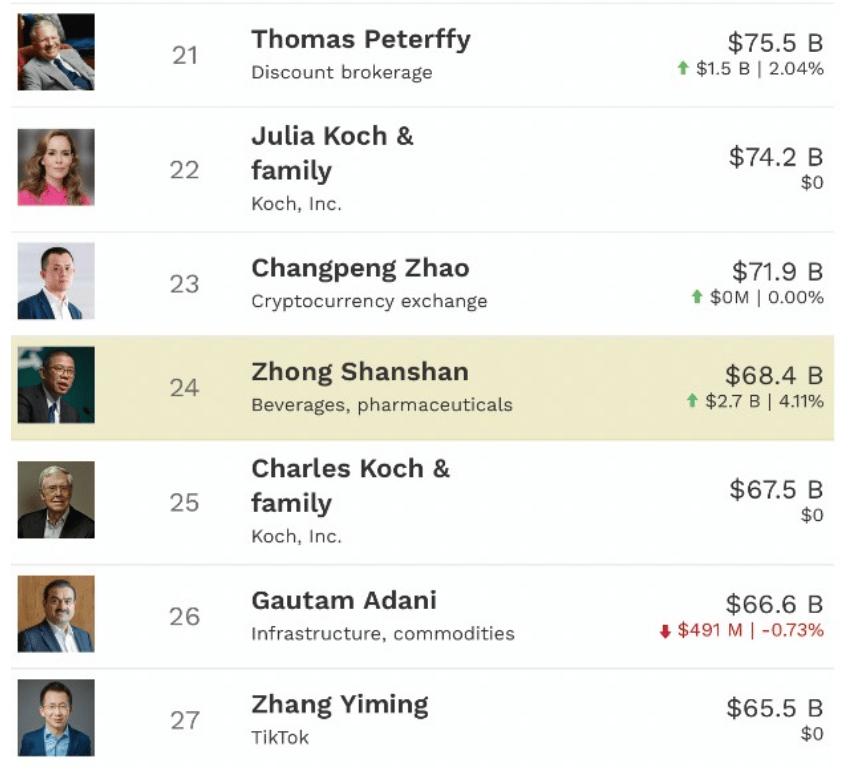
从“媚日”谣言到重回首富:起底钟睒睒除了农夫山泉外的另一台“印钞机”
Sou Hu Cai Jing· 2025-09-15 11:35
Core Viewpoint - Zhong Shanshan, known as the "bottled water king," has regained the title of China's richest person after overcoming a significant public relations crisis and a decline in his wealth due to controversies surrounding his company, Nongfu Spring [1][3][5]. Group 1: Wealth Fluctuations - Zhong Shanshan held the title of China's richest person for three consecutive years since 2021 but lost it in 2024 due to a significant drop in his wealth amid public scrutiny and fluctuating company performance [1]. - Following the "Wahaha incident," Nongfu Spring faced severe public backlash, leading to a substantial decline in brand reputation and sales, which negatively impacted Zhong's personal wealth [3]. Group 2: Recovery and Growth - As public sentiment improved and rumors dissipated, Nongfu Spring's sales began to recover, with the company's tea beverage revenue surpassing 10 billion yuan for the first time, reaching 10.09 billion yuan, a year-on-year increase of 19.7% [5]. - The company's functional beverages and juice segments also saw growth, with functional drinks generating nearly 2.9 billion yuan (up 13.6%) and juice drinks reaching 2.56 billion yuan (up 21.3%) [5]. Group 3: Business Strategy and Investments - Zhong Shanshan's wealth accumulation is driven by a dual strategy of "industry + capital," with significant investments in various sectors through his holding company, Yangshengtang, and private equity funds [7]. - His investment in Wantai Biological Pharmacy, where he holds a 75.15% stake, is particularly noteworthy, as the company is poised to increase its market value significantly with the launch of its domestically produced HPV vaccine [7]. Group 4: Future Prospects - Zhong Shanshan's return to the top of the wealth rankings signifies a new era for his diversified wealth empire, as he continues to leverage product and market strategies to validate his status as a billionaire [8].

推广HPV疫苗,国际社会有哪些经验与教训?“政府主动推荐”缘何重要?
Di Yi Cai Jing· 2025-09-15 08:39
Core Viewpoint - The introduction of HPV vaccines into China's national immunization program is expected to lower market prices and improve accessibility, thereby enhancing women's health in China [1][5][6]. Group 1: National Immunization Program - China's National Health Commission announced the inclusion of HPV vaccination services for eligible girls in the national immunization program, marking the first expansion since 2008 [1]. - This move aligns with the WHO's strategy to accelerate the global elimination of cervical cancer, with over 140 countries already including HPV vaccines in their national programs [1][4]. - The inclusion of HPV vaccines in China's immunization program changes the previous situation of limited access and self-funded vaccinations [5]. Group 2: Global Context and Supply Issues - The global supply of HPV vaccines is currently insufficient, limiting the ability of some countries to expand their vaccination programs despite inclusion in national plans [2]. - Chinese-manufactured HPV vaccines, once pre-certified by WHO, are expected to improve supply and reduce costs, with Gavi promoting single-dose vaccination strategies to alleviate supply pressures [2][6]. Group 3: HPV Vaccine Efficacy and Global Disparities - HPV vaccines are one of the two vaccines that can completely prevent a type of cancer, with WHO recommending vaccination for girls aged 9 to 14 [4]. - Despite the vaccine's safety and efficacy, 85% of doses have been administered in high-income countries, while coverage in low- and middle-income countries remains below 10% [5]. - Cervical cancer continues to claim over 300,000 lives annually, predominantly in low- and middle-income countries, where high costs and limited supply hinder access to HPV vaccines [5]. Group 4: Lessons from Other Countries - Australia has successfully implemented a national HPV vaccination program since 2007, leading to a significant decrease in cervical cancer rates and aiming to eliminate the disease by 2035 [7]. - In contrast, Japan's hesitance due to concerns over adverse reactions led to a decline in vaccination rates and an increase in HPV infection rates [8][9]. - The experience of Japan highlights the importance of effective communication and management regarding vaccine safety to maintain public trust and vaccination coverage [9].
HPV疫苗二十年终破局
虎嗅APP· 2025-09-14 13:37
Core Viewpoint - The inclusion of the HPV vaccine in China's national immunization program marks the first expansion in 18 years, aimed at improving women's health and addressing the rising incidence of cervical cancer among younger populations [2][16]. Group 1: HPV Vaccine Overview - The HPV vaccine is now part of the national immunization program, which previously focused mainly on children under six years old [2][16]. - As of now, there are six approved HPV vaccines in China, including both imported and domestic options [4][10]. - The HPV vaccine is recognized as the most effective method for preventing cervical cancer, which is primarily caused by high-risk HPV types [8][9]. Group 2: Demand and Coverage - Despite a surge in demand for HPV vaccines, the coverage rates remain low, with only 10.15% of eligible women receiving the first dose by 2022 [11][12]. - The high cost of vaccines has been a barrier to access, with imported vaccines priced between 580 to 800 RMB per dose [10][14]. - Public awareness and misconceptions about vaccine safety have also contributed to low uptake rates [15][36]. Group 3: Government Initiatives and Support - The Chinese government is committed to promoting HPV vaccination, aligning with the WHO's goal of eliminating cervical cancer by 2030 [16][28]. - Pilot programs in various cities have successfully increased vaccination rates, demonstrating the effectiveness of government-led initiatives [21][25]. - The national immunization program aims to provide equitable access to vaccines, particularly for underserved populations [34]. Group 4: Economic Considerations - The economic evaluation of HPV vaccination is crucial for justifying its inclusion in the national program, focusing on cost-effectiveness and public health benefits [27][28]. - The reduction in newborn numbers has also created budgetary space for expanding the immunization program [31][32]. - The competition among vaccine suppliers has led to significant price reductions, making vaccines more accessible [30]. Group 5: Future Prospects - The integration of HPV vaccines into the national immunization program is expected to significantly increase vaccination rates, similar to past experiences with other vaccines [37]. - Domestic manufacturers are ramping up production capacity, ensuring a stable supply of vaccines [37]. - Ongoing research and development in HPV vaccines, including the introduction of a nine-valent vaccine, indicate a positive trend in cervical cancer prevention efforts in China [37].