东风股份

Search documents
哈萨克斯坦最大城市,满街中国品牌
21世纪经济报道· 2026-01-16 02:25
Core Viewpoint - Chinese brands have established a strong presence in Kazakhstan, becoming integral to the local economy and daily life, with significant growth in trade and investment between China and Central Asia [1][2]. Group 1: Market Growth and Chinese Brand Presence - China has become Central Asia's largest trading partner, with trade volume reaching $60.7 billion from 2017 to 2024, a 1.5 times increase [1]. - By 2024, China's direct investment and loans to Central Asia are expected to exceed $24 billion, with over 9,000 Chinese companies operating in the region [1]. - Kazakhstan is emerging as a key hub for Chinese enterprises' overseas growth, with a young population and high smartphone penetration (95%) [1]. Group 2: Integration of Chinese Brands - Chinese brands, including Haier, BYD, and Xiaomi, are increasingly integrated into the daily lives of Central Asian consumers, with visible presence in various sectors [2][7]. - The automotive sector has seen rapid growth, with Chinese manufacturers' market share in Kazakhstan rising from 2% in 2020 to 38% by 2024 [8]. - In the first nine months of this year, Chinese automotive brands captured 34.5% of the market share, with local production initiated by brands like Changan and Chery [8]. Group 3: Marketing and Consumer Behavior - The shift in perception of Chinese automobiles from low-cost to reliable technology reflects a broader acceptance among Central Asian consumers [9]. - The rapid technological advancements in China provide a competitive edge, as local consumers are open to new experiences and innovations [9]. - The e-commerce market in Central Asia is projected to reach $14.7 billion in 2024, with Kazakhstan's market alone estimated at $6 billion [12]. Group 4: Challenges and Localization - Companies entering the Central Asian market must navigate complex local languages and cultural differences, as each country has unique consumer habits [13]. - The regulatory environment varies significantly across Central Asian countries, necessitating thorough market research and local partnerships to mitigate risks [14][15]. - A dual approach of utilizing mainstream e-commerce platforms and developing direct-to-consumer channels is recommended for effective market penetration [12].


2025中国汽车驶出增长新动能
Xin Lang Cai Jing· 2026-01-15 22:40
Core Insights - The Chinese automotive industry has achieved significant milestones in 2025, with total vehicle production and sales exceeding 34 million units, and new energy vehicles (NEVs) surpassing 16 million units, marking a structural upgrade in the industry [5][6] - NEVs now account for over 50% of new car sales in China, indicating their dominance in the market [6][7] - The industry is experiencing rapid technological advancements, particularly in smart driving and battery technology, which are enhancing the competitiveness of electric vehicles [9][10] Industry Performance - In 2025, China's NEV production reached 16.62 million units, with sales at 16.49 million units, reflecting year-on-year growth of 29% and 28.2% respectively, maintaining the global leadership for 11 consecutive years [6][7] - BYD has surpassed Tesla in annual pure electric vehicle sales, marking a significant achievement for the company [7] - The introduction of L3-level autonomous driving vehicles by Changan and BAIC marks a transition from technology validation to mass production applications [8] Technological Advancements - The automotive industry is witnessing breakthroughs in battery technology, with advancements in energy density and charging efficiency, contributing to the reduction of "range anxiety" for electric vehicle users [9] - The integration of AI and robotics into the automotive sector is creating new opportunities for innovation and efficiency [10] - The collaboration between companies like JD, GAC Group, and CATL is enhancing the entire automotive value chain from R&D to sales [9][10] Regulatory and Market Dynamics - The industry is facing challenges related to "involution" competition, prompting regulatory measures to ensure fair market practices and promote high-quality development [12][13] - New guidelines and safety standards are being implemented to enhance the safety and reliability of electric vehicles [13][14] - The focus on building a modern industrial system and promoting green consumption is expected to drive the future growth of the automotive sector [14][15]
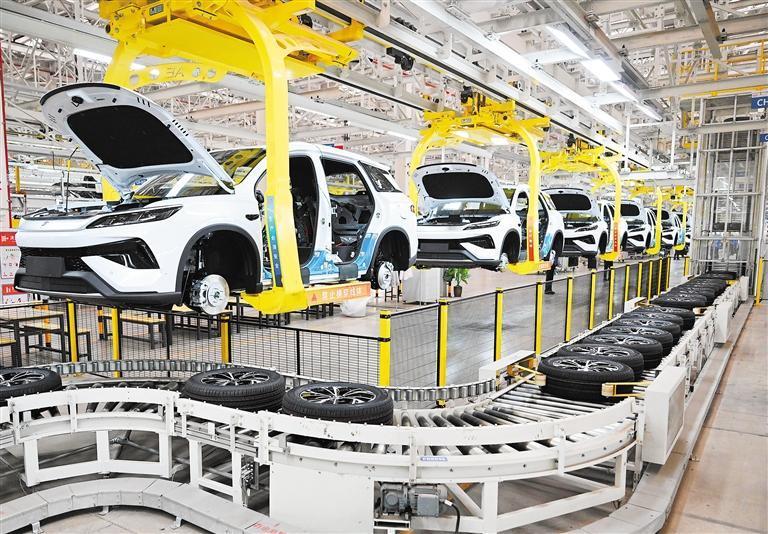
自动驾驶出行图景 加速“驶来”
Zhong Guo Zheng Quan Bao· 2026-01-15 21:12
Core Insights - The launch of the first L3-level conditional autonomous driving vehicles in China marks a significant milestone in the industry, indicating the transition to a new era of operational autonomous vehicles [1][4][8] Group 1: Industry Developments - The Ministry of Industry and Information Technology has granted approval for the first L3-level autonomous vehicles, allowing them to operate in designated areas of Beijing and Chongqing [1] - The L3-level vehicles are expected to achieve a penetration rate breakthrough by 2026, paving the way for higher-level autonomous driving technologies (L4) to enter large-scale commercial deployment [1][7] - The trial operation of L3 vehicles signifies a shift from "assisted driving" to "system-led" driving experiences in specific scenarios [2] Group 2: Technical and Operational Insights - The trial of L3 vehicles has already accumulated over 70,000 kilometers of autonomous driving mileage in complex urban environments, showcasing their capability in handling various driving scenarios [2][3] - The vehicles are currently being tested with enterprise users who possess professional skills, providing valuable feedback for system optimization [3] - The introduction of L3 vehicles establishes a legal framework for liability and safety standards, enhancing industry confidence and encouraging hardware deployment and data collection for future advancements [3][4] Group 3: Future Projections - By 2026, L2 technology is projected to become standard in mainstream vehicles, with a penetration rate exceeding 70%, while L3 technology is expected to accelerate in development and testing across major cities [6][7] - The Robotaxi sector is expanding, with a significant increase in fleet size anticipated, indicating a shift in user acceptance from novelty to regular use [7] - The ongoing advancements in AI and autonomous driving technologies present a strategic opportunity for the industry, with expectations for a more integrated and innovative future in transportation [8]

自动驾驶出行图景加速“驶来”
Zhong Guo Zheng Quan Bao· 2026-01-15 20:48
Core Insights - The approval of the first batch of L3-level conditional autonomous driving vehicles in China marks a significant milestone for the industry, allowing these vehicles to operate in designated areas of Beijing and Chongqing [1][2] - The introduction of L3-level vehicles is expected to catalyze the industry, with projections indicating a breakthrough in penetration rates by 2026, paving the way for higher-level autonomous driving technologies [1][5] Industry Developments - The L3-level vehicles are currently undergoing pilot testing, with 46 vehicles from Deep Blue having accumulated over 70,000 kilometers in autonomous driving over 19 days in Chongqing [1][2] - The pilot program is designed to gather real-world data and feedback from skilled enterprise users, which will help optimize the autonomous driving systems [2][3] Regulatory and Safety Framework - The pilot program establishes a legal framework for the responsibilities of manufacturers during the activation of the L3 systems, enhancing industry confidence and redefining safety standards [2][3] - The initiative is seen as a critical step towards addressing commercial challenges such as liability, insurance, and operational models for autonomous vehicles [3][4] Future Projections - By 2026, L2-level technology is expected to become standard in mainstream vehicles, with a penetration rate exceeding 70%, while L3-level technology is on the verge of mass production and commercial application [5][6] - The pilot testing of L3-level vehicles is anticipated to expand to more cities and complex traffic scenarios, further pushing the boundaries of L3 capabilities [5][6] Market Trends - The autonomous driving industry is experiencing rapid technological advancements and policy support, with Robotaxi services transitioning from pilot programs to broader market acceptance [6] - The growth of Robotaxi fleets, such as the one from Pony.ai, indicates a shift in user acceptance from novelty to regular use, with plans to expand fleet sizes significantly by 2026 [6]
劳模职工疗休养的“朋友圈”扩大了
Xin Lang Cai Jing· 2026-01-15 18:26
2025年共接待全国23个省区市劳模职工140余批次2.5万人次——这组亮眼的数据,正是湖北省十堰市总 工会"引客入堰"工作成效的生动注脚。1月12日,记者获悉,2025年,十堰市总通过精心打造劳模职工 疗休养品牌、承办全国性工会文化阅读活动等,架起连接全国职工的"连心桥",既让劳动者在山水人文 间疗愈身心,更以"工"为媒激活城市文旅消费新动能。 近年来,十堰市总还举办中国技协城市主产业职业技能联赛暨技术工人、工匠大会,吸引12省16市20多 支代表队同台竞技;举办2025北京市教育科技人才十堰行活动,来自21所高校的27名教育科技人才,深 入十堰重点企业、文化场馆、高校产教基地等,体验十堰产业魅力与文化底蕴。 (来源:工人日报) 如今,越来越多来自全国各地的劳模职工循着武当道乐、丹江碧水而来,在疗休养中感受十堰温度,在 技术文化交流中传播十堰故事,共同绘就"山水车城、宜居十堰"的美好画卷。 为吸引全国劳模职工来十堰疗休养,十堰市总精心打造"问道武当+生态康养"特色线路,将武当道文化 的身心调和与南水北调核心水源地的生态魅力深度融合,构建起集健康疗养、文化体验、红色教育于一 体的服务体系。在此推动下,劳模职工 ...
向质而行!2025中国汽车驶出增长新动能
Zhong Guo Jin Rong Xin Xi Wang· 2026-01-15 13:33
Group 1 - The core viewpoint of the article highlights that China's automotive industry has achieved significant milestones in 2025, with production and sales both exceeding 34 million units, and new energy vehicles (NEVs) surpassing 16 million units, marking a continuous 17-year dominance in the global market [1][2] - The market share of NEVs in domestic new car sales has exceeded 50%, indicating that NEVs have become the dominant force in China's automotive market [2][3] - Major breakthroughs in the automotive sector include BYD surpassing Tesla in annual pure electric vehicle sales, and significant milestones achieved by other companies like FAW-Volkswagen and Changan Automobile [2] Group 2 - The penetration of intelligent assisted driving technology has accelerated, with over 60% of new passenger cars sold featuring advanced driving assistance systems [3] - The cost of battery cells has decreased, and improvements in battery life and charging speed have alleviated "range anxiety" for electric vehicles, with a growing charging infrastructure [3] - The automotive industry is experiencing a convergence with robotics and low-altitude economy, creating a new ecosystem that enhances technological integration and innovation [6] Group 3 - The automotive industry in China is undergoing a phase of standardization, with measures being implemented to regulate market competition and ensure safety [7][9] - A series of reforms have been introduced to combat "involution" in the market, promoting a shift from scale expansion to value enhancement among car manufacturers [9][10] - The "14th Five-Year Plan" emphasizes the importance of building a modern industrial system and enhancing the supply-demand adaptability of consumer goods, with smart connected vehicles being a key focus area [10]



预计武汉2025年新能源汽车产量同比增长56.7%
Chang Jiang Ri Bao· 2026-01-15 12:53
Group 1 - The core viewpoint of the articles indicates that the automotive production in Wuhan is expected to grow by 10.8% year-on-year in 2025, reversing the previous decline, with new energy vehicles (NEVs) being the main growth driver, projected to increase by 56.7% year-on-year, which is an improvement of 16.2 percentage points from the previous year [1] - Wuhan has established a daily monitoring and weekly scheduling mechanism, implementing a "one enterprise, one policy" approach to achieve production targets, while addressing challenges in the supply chain and enhancing innovation support [1] - The city is accelerating the development of intelligent and new energy vehicles, with several new models such as the Lantu Free+, Warrior 817, Fengshen L8, and Lantu Taishan being launched [1] Group 2 - Wuhan is enhancing policy support for quality enterprises and projects, organizing over ten events related to the automotive industry supply and demand to promote collaboration across the industry chain [2] - The cultivation of market entities has shown significant results, with over 30 companies, including Magnesium Technology and Starry Sky Meizu, being selected as provincial-level specialized and innovative enterprises, forming a tiered development structure [2]
东风股份:海外出口重点市场包括中南美、东南亚、非洲、中东等地区
Zheng Quan Ri Bao Wang· 2026-01-15 11:43
Group 1 - The company, Dongfeng Motor Corporation, has identified key overseas export markets including Central and South America, Southeast Asia, Africa, and the Middle East [1] - The main export products of the company include light trucks, micro and small trucks, micro vans, and buses [1]

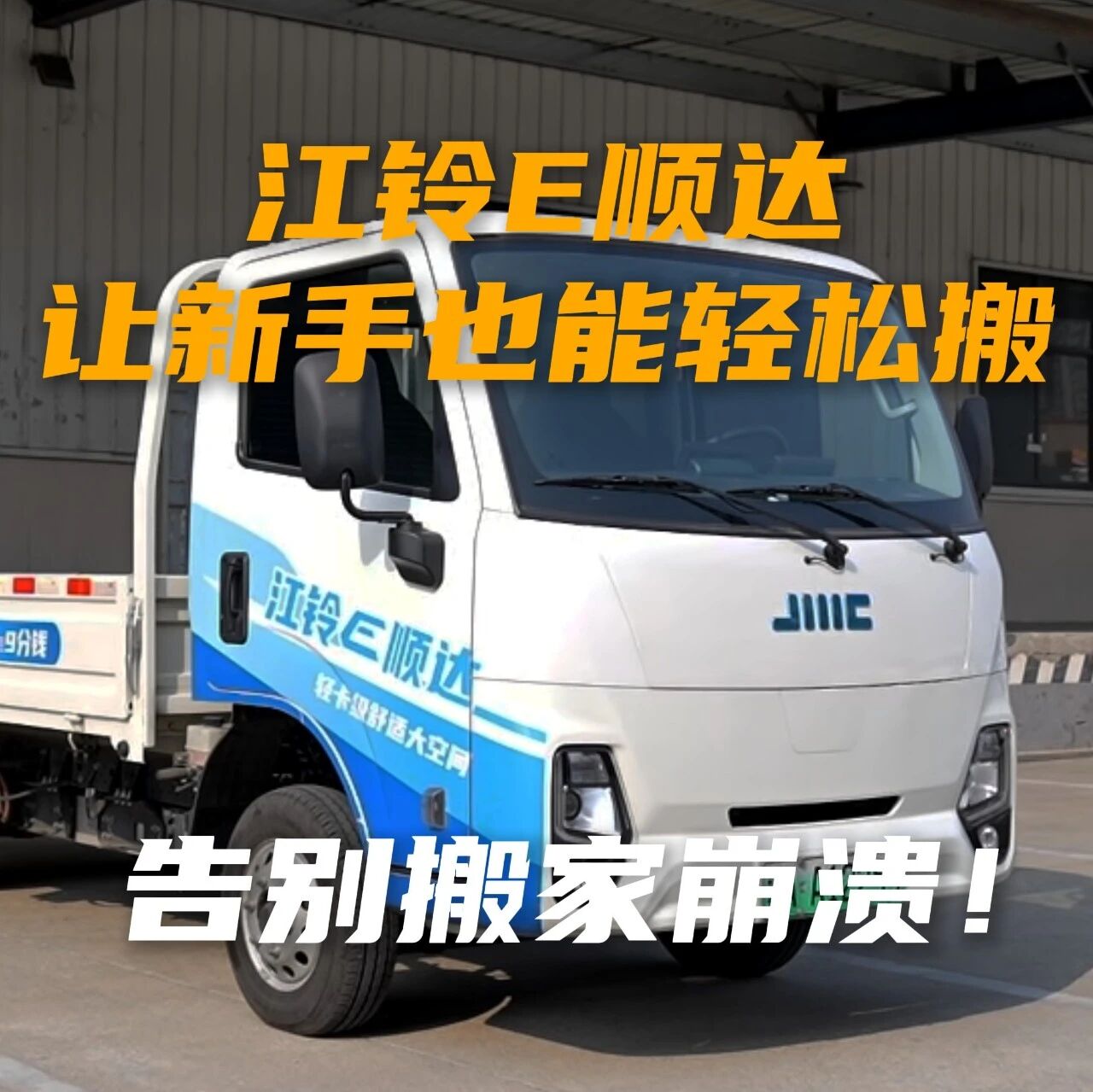
告别搬家崩溃!江铃E顺达让新手也能轻松搬
第一商用车网· 2026-01-15 11:30
Group 1 - The core viewpoint highlights the competitive landscape in the heavy-duty truck market, with Shaanxi Auto and Jiefang vying for the top position, both surpassing 10,000 units in sales, while a dark horse enters the top eight [4] - The traction vehicle segment saw a 25% increase in December, with cumulative sales projected to reach nearly 600,000 units by 2025 [4] - Heavy-duty truck sales are expected to stabilize at 1.145 million units in 2025, with major players like Heavy Truck exceeding 300,000 units and Jiefang over 200,000 units [4] Group 2 - A significant tender for 990 million yuan has been announced for new energy sanitation vehicles, indicating a growing investment in sustainable transport solutions [4] - The company has been actively delivering new energy trucks, with a notable pattern of 100 units being delivered repeatedly, showcasing strong demand in this segment [5]
大道敢探者:当代打工人“离家出走”指南
第一商用车网· 2026-01-15 11:30
Group 1 - Shaanxi Automobile and Jiefang have surpassed 10,000 units in competition, with a dark horse entering the top eight. The traction vehicle sales increased by 25% in December, with cumulative sales expected to reach nearly 600,000 units by 2025 [4] - A tender for new energy sanitation vehicles worth 9.9 million yuan has been announced [4] - Heavy truck sales are projected to reach 1.145 million units in 2025, with Shandong Heavy Industry exceeding 300,000 units, Jiefang over 200,000 units, Shaanxi Automobile and Dongfeng over 180,000 units, and XCMG in sixth place [4] Group 2 - A company has been delivering 100 new energy trucks repeatedly, indicating strong demand and production capacity [5]