国联安基金

Search documents
国联安旗下潘明3只基金近5年跑输业绩基准超20%
Sou Hu Cai Jing· 2025-07-10 08:35
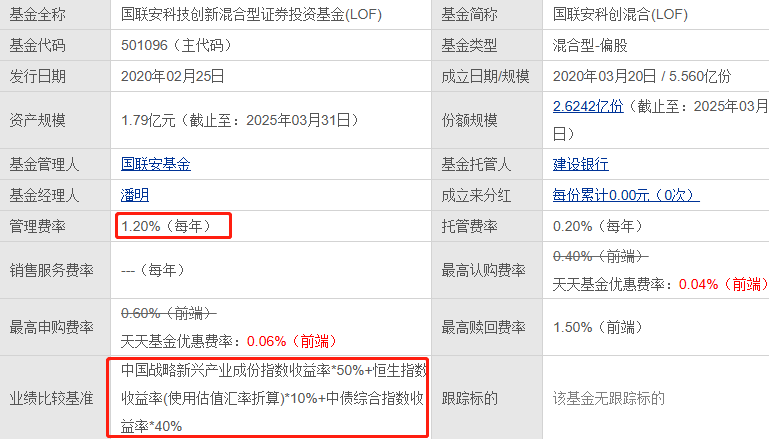
Core Viewpoint - The article discusses the poor performance of Guolian An Fund's manager Pan Ming, highlighting that several funds under his management have consistently underperformed, leading to investor dissatisfaction and market skepticism regarding his management capabilities [1][2]. Fund Performance Summary - Pan Ming manages six funds, all of which he oversees independently. The Guolian An Science and Technology Innovation Mixed Fund (LOF) has a five-year return of -35.26%, significantly underperforming its benchmark by over 20% [2][12]. - The Guolian An Science and Technology Innovation LOF has a cumulative return of -26.03% since its inception on March 20, 2020, with a unit net value of only 0.7397 yuan as of July 9, 2025 [6][7]. - The fund's management fees from March 2023 to December 2024 amounted to 6.21 million yuan, while the total management fees for 2021 and 2022 reached 15 million yuan [6][8]. Benchmark Comparison - The performance benchmark for the Guolian An Science and Technology Innovation LOF is a composite of various indices, with a benchmark return of -11.74% over the same five-year period, indicating a significant underperformance of -23.52% compared to the benchmark [2][12]. - Other funds managed by Pan Ming, such as Guolian An Preferred Industry Mixed Fund and Guolian An Technology Power Stock Fund, also show similar underperformance, with returns of -34.10% and -32.25% respectively, against their benchmarks [2][12]. Regulatory Context - In May 2023, the China Securities Regulatory Commission introduced a new action plan aimed at improving the quality of public funds, which includes a mechanism linking fund performance to management fees. This could impact Pan Ming's management fees if performance does not meet expectations [12].

超20亿,跑了!
Zhong Guo Ji Jin Bao· 2025-07-10 06:26
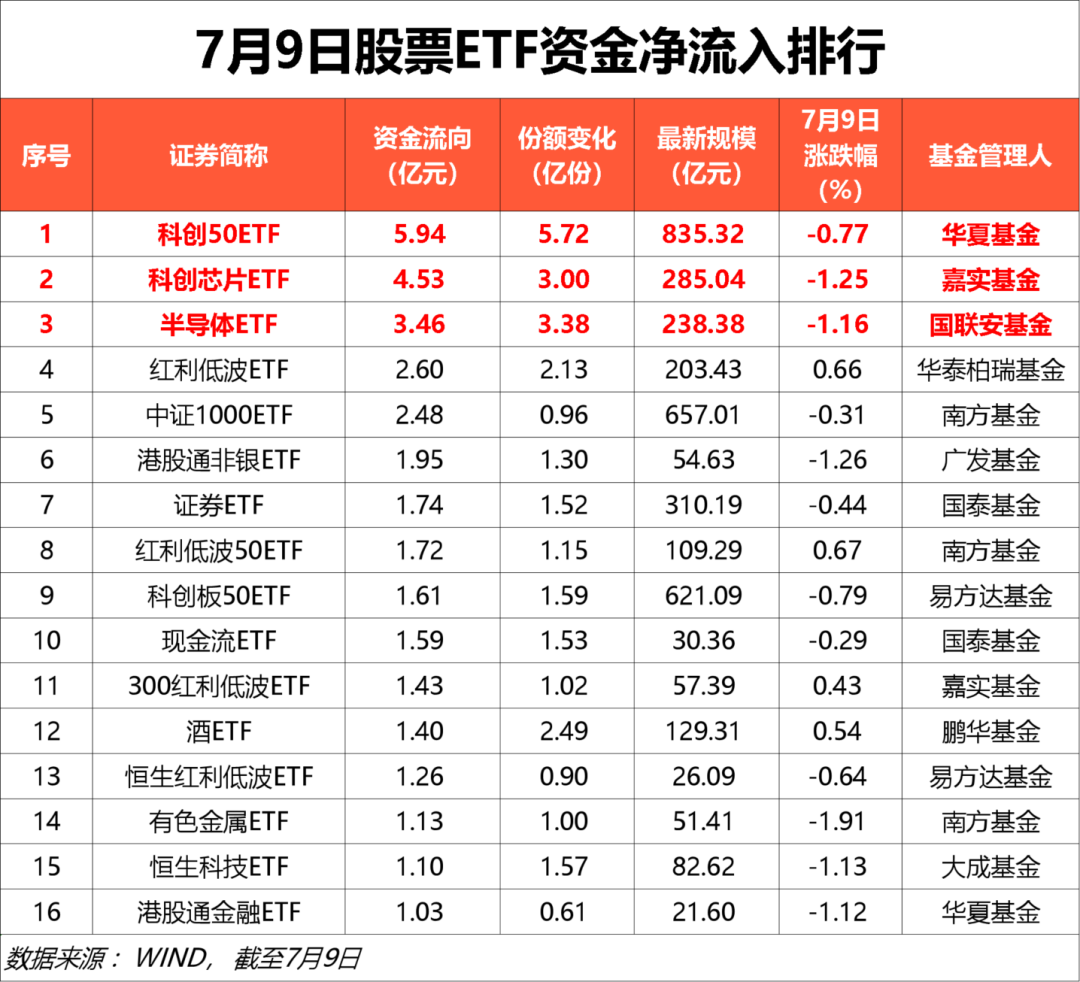
Core Viewpoint - The A-share market experienced mixed performance on July 9, with the Shanghai Composite Index fluctuating around the 3500-point mark, while the financial sector saw strong gains and certain sectors like insurance and storage chips faced declines [1] ETF Market Overview - Overall, stock ETFs saw a net outflow of over 2 billion yuan, with significant inflows into the Sci-Tech 50 ETF, semiconductor ETF, and low-volatility dividend ETF [1][4] - The total scale of all stock ETFs in the market reached 3.61 trillion yuan as of July 9, with a net outflow of 22.22 billion yuan during the turbulent market [1][4] - Bond ETFs and industry-themed ETFs saw net inflows of 18.29 billion yuan and 11.9 billion yuan, respectively [1] Top Performing ETFs - The top three ETFs with the highest net inflows were: - Sci-Tech 50 ETF: 5.94 billion yuan - Sci-Tech Chip ETF: 4.53 billion yuan - Semiconductor ETF: 3.46 billion yuan [3][5] - Other notable inflows included the low-volatility dividend ETF and the China Securities 1000 ETF, each exceeding 2 billion yuan [3] Underperforming ETFs - The broad-based ETFs experienced a significant net outflow of over 40 billion yuan, with the China Securities A500 Index seeing a net outflow of 21.49 billion yuan [6][7] - Specific ETFs with notable outflows included: - CSI 300 ETF: -5.73 billion yuan - ChiNext ETF: -5.47 billion yuan - A500 ETF: -4.40 billion yuan [8] Market Sentiment - Some funds are showing optimism towards specific sectors, as evidenced by the inflows into semiconductor and securities ETFs, indicating a positive outlook for these industries [1][4] - The valuation levels of major A-share and Hong Kong stock indices are near historical medians, suggesting potential investment value from a medium to long-term perspective [8]
超20亿,跑了!
中国基金报· 2025-07-10 06:19
Core Viewpoint - On July 9, the A-share market experienced mixed performance with the overall stock ETF seeing a net outflow of over 2 billion yuan, indicating a trend of investors opting to secure profits amidst market fluctuations [1][3]. ETF Fund Flows - The total scale of the stock ETFs in the market reached 3.61 trillion yuan, with a net outflow of 22.22 billion yuan on July 9 [3]. - Bond ETFs and industry-themed ETFs saw significant net inflows, amounting to 18.29 billion yuan and 11.9 billion yuan respectively [3]. - The top-performing ETFs in terms of net inflow included the Sci-Tech 50 ETF and the CSI 1000 ETF, each with inflows exceeding 2 billion yuan [3]. Individual ETF Performance - The top three ETFs by net inflow on July 9 were: - Sci-Tech 50 ETF: 5.94 billion yuan - Sci-Tech Chip ETF: 4.53 billion yuan - Semiconductor ETF: 3.46 billion yuan [4][5]. - Other notable inflows included the Dividend Low Volatility ETF (2.60 billion yuan) and the CSI 1000 ETF (2.48 billion yuan) [4]. Outflows from Broad-based ETFs - Broad-based ETFs experienced a significant net outflow of 41.31 billion yuan, with the CSI A500 index alone accounting for a net outflow of 21.49 billion yuan [6][7]. - Major products contributing to the outflow included the CSI 300 ETF (5.73 billion yuan) and the ChiNext ETF [7]. Market Outlook - The valuation levels of major A-share and Hong Kong stock indices are currently near historical medians, suggesting potential long-term investment value despite recent market corrections [7].
ETF资金榜 | 科技板块”吸金“居前,航空航天相关ETF连续获资金净流入-20250709
Sou Hu Cai Jing· 2025-07-10 02:06
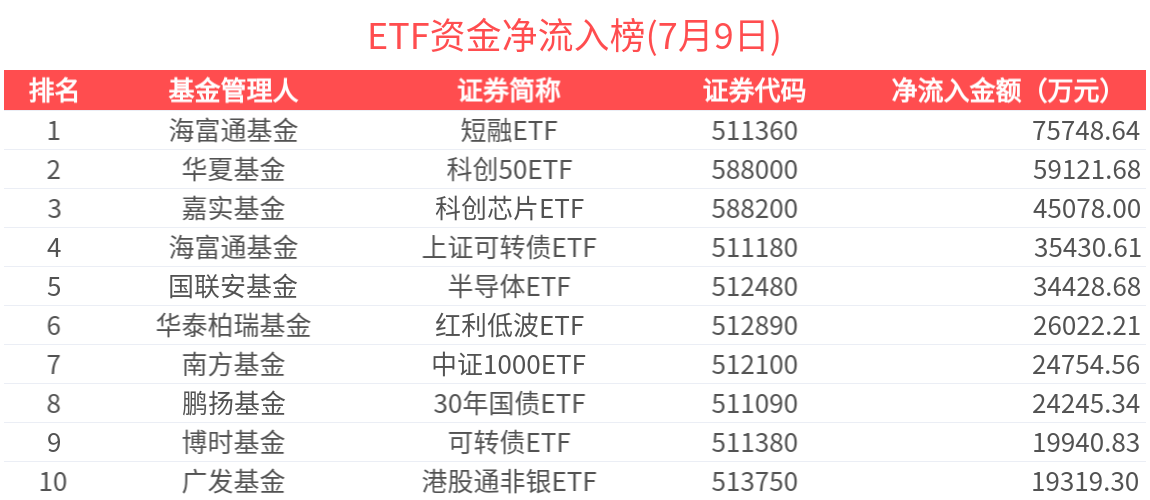
Fund Inflows and Outflows - On July 9, 2025, a total of 208 ETF funds experienced net inflows, while 419 funds saw net outflows [1] - The funds with net inflows exceeding 100 million yuan included Short-term Bond ETF (511360.SH) with 757.48 million yuan, Sci-Tech 50 ETF (588000.SH) with 59.12 million yuan, and Sci-Tech Chip ETF (588200.SH) with 45.08 million yuan [1][3] - The funds with net outflows exceeding 100 million yuan included CSI 300 ETF (510300.SH) with 571.3 million yuan, ChiNext ETF (159915.SZ) with 545.1 million yuan, and A500 ETF (563360.SH) with 438 million yuan [1][5] Recent Trends - There were 90 ETF funds that have seen continuous net inflows, with the Wealth Treasure ETF leading with a net inflow of 1.45 million yuan over 14 days [1][6] - Conversely, 236 ETF funds experienced continuous net outflows, with the CSI A50 Index ETF leading with a net outflow of 517 million yuan over 20 days [1][8] Long-term Trends - Over the past 5 days, 81 ETF funds recorded cumulative net inflows exceeding 100 million yuan, with the Bank ETF leading at 6.533 billion yuan [1][9] - In contrast, 69 ETF funds had cumulative net outflows exceeding 100 million yuan, with the ChiNext ETF leading at 1.995 billion yuan [1][9]
宽基ETF,净流入!
Zhong Guo Ji Jin Bao· 2025-07-09 06:09
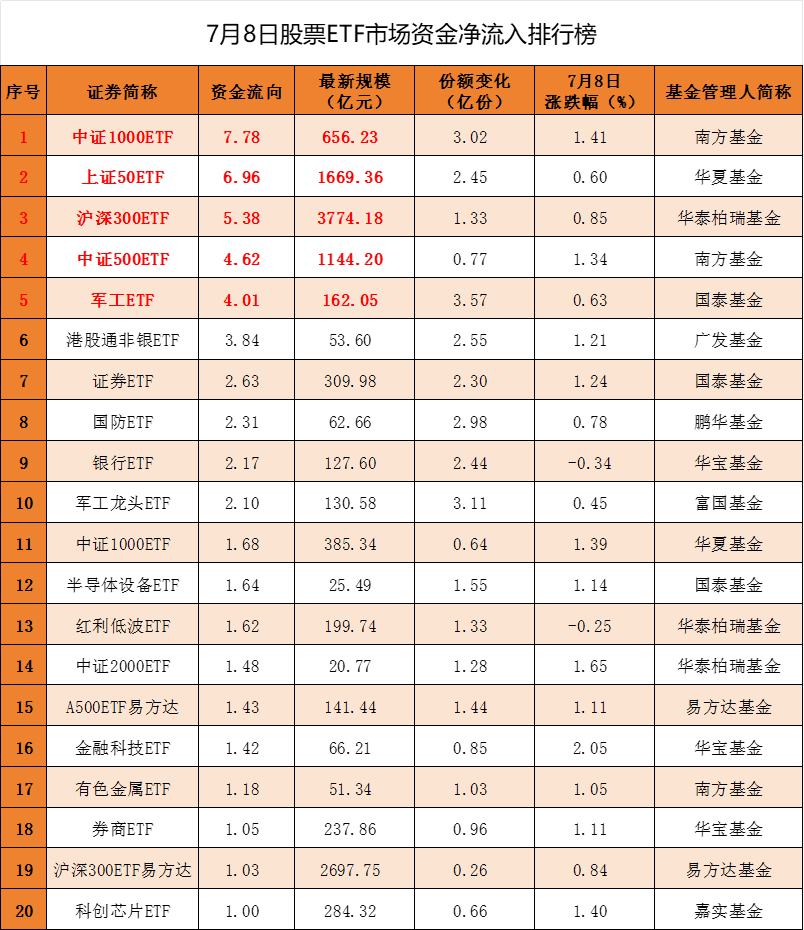
Group 1 - The A-share market experienced a significant rise on July 8, with major indices strengthening and the Shanghai Composite Index approaching 3500 points [1] - Various sectors, including anti-involution concept stocks, PCB, innovative pharmaceuticals, and gaming, showed strong performance [1][2] - The overall net inflow of funds into stock ETFs was 0.79 billion yuan, with the total market size of stock ETFs reaching 3.63 trillion yuan as of July 9 [4] Group 2 - The top-performing ETFs in terms of net inflow included the CSI 1000 ETF with 10.46 billion yuan, and the Shanghai 50 ETF and CSI 300 ETF both exceeding 5 billion yuan [5][6] - The leading fund companies, such as E Fund and Huaxia Fund, saw substantial net inflows into their ETFs, indicating strong investor interest [8] - Conversely, the ChiNext ETF experienced a net outflow of 6.73 billion yuan, with other thematic ETFs like gaming and semiconductor ETFs also facing outflows [10][11] Group 3 - Analysts predict that the market may experience a range-bound movement in the second half of the year, with potential upward breakthroughs by year-end based on policy direction and economic conditions [12] - There is optimism regarding sectors such as technology innovation, innovative pharmaceuticals, and new consumption [12]
光伏ETF领涨,机构称行业有望迎来拐点丨ETF基金日报
2 1 Shi Ji Jing Ji Bao Dao· 2025-07-09 02:44
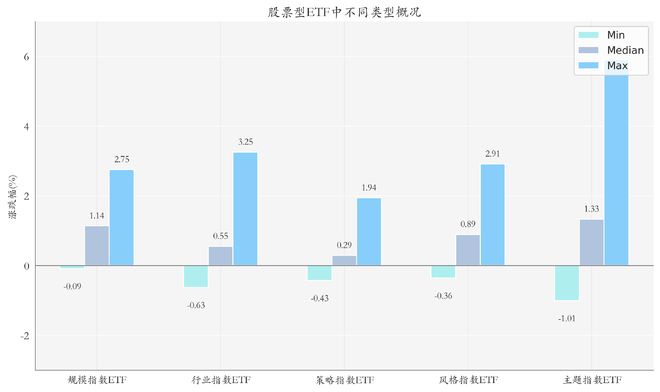
Market Overview - The Shanghai Composite Index rose by 0.7% to close at 3497.48 points, with a daily high of 3499.89 points [1] - The Shenzhen Component Index increased by 1.47% to 10588.39 points, reaching a peak of 10593.84 points [1] - The ChiNext Index saw a rise of 2.39%, closing at 2181.08 points, with a maximum of 2183.06 points [1] ETF Market Performance - The median return of stock ETFs was 1.08%, with the highest return from the China Asset Management ChiNext 50 ETF at 2.75% [2] - The Southern CSI New Energy ETF led the industry index ETFs with a return of 3.25% [2] - The top-performing thematic ETF was the China Tai CSCI Photovoltaic Industry ETF, achieving a return of 5.9% [2] ETF Gains and Losses - The top three ETFs by gain were: - Guotai CSI Photovoltaic Industry ETF (5.9%) - E Fund CSI Photovoltaic Industry ETF (5.57%) -浦银安盛中证光伏产业ETF (5.57%) [4][5] - The largest losses were seen in: - Taikang National Public Health and Medical Health ETF (-1.01%) - Fuguo CSI Green Power ETF (-0.63%) - E Fund CSI Green Power ETF (-0.55%) [4][5] ETF Fund Flows - The top three ETFs by inflow were: - Southern CSI 1000 ETF (¥778 million) - Huaxia SSE 50 ETF (¥696 million) - Huatai-PB CSI 300 ETF (¥538 million) [6][7] - The largest outflows were from: - Huatai-PB CSI A500 ETF (¥406 million) - Huaxia SSE Sci-Tech 50 ETF (¥351 million) - Huaxia CSI Animation Game ETF (¥237 million) [6][7] Financing and Margin Trading - The highest financing buy amounts were: - Huaxia SSE Sci-Tech 50 ETF (¥514 million) - E Fund ChiNext ETF (¥340 million) - Huatai-PB CSI 300 ETF (¥249 million) [8][9] - The largest margin sell amounts were: - Huatai-PB CSI 300 ETF (¥25.7 million) - Southern CSI 500 ETF (¥15.7 million) - Huaxia SSE 50 ETF (¥15.4 million) [8][9] Industry Insights - The photovoltaic industry is expected to reach a turning point, with signals indicating a shift away from internal competition, potentially accelerating supply-side capacity clearance and driving new technology breakthroughs [10] - Focus areas include "capacity clearance" and "new technology iteration," with recommendations to monitor leading companies in sectors like polysilicon and photovoltaic glass, as well as advancements in BC batteries and perovskite battery commercial applications [10]
两市ETF两融余额增加4.69亿元丨ETF融资融券日报
Sou Hu Cai Jing· 2025-07-09 02:39
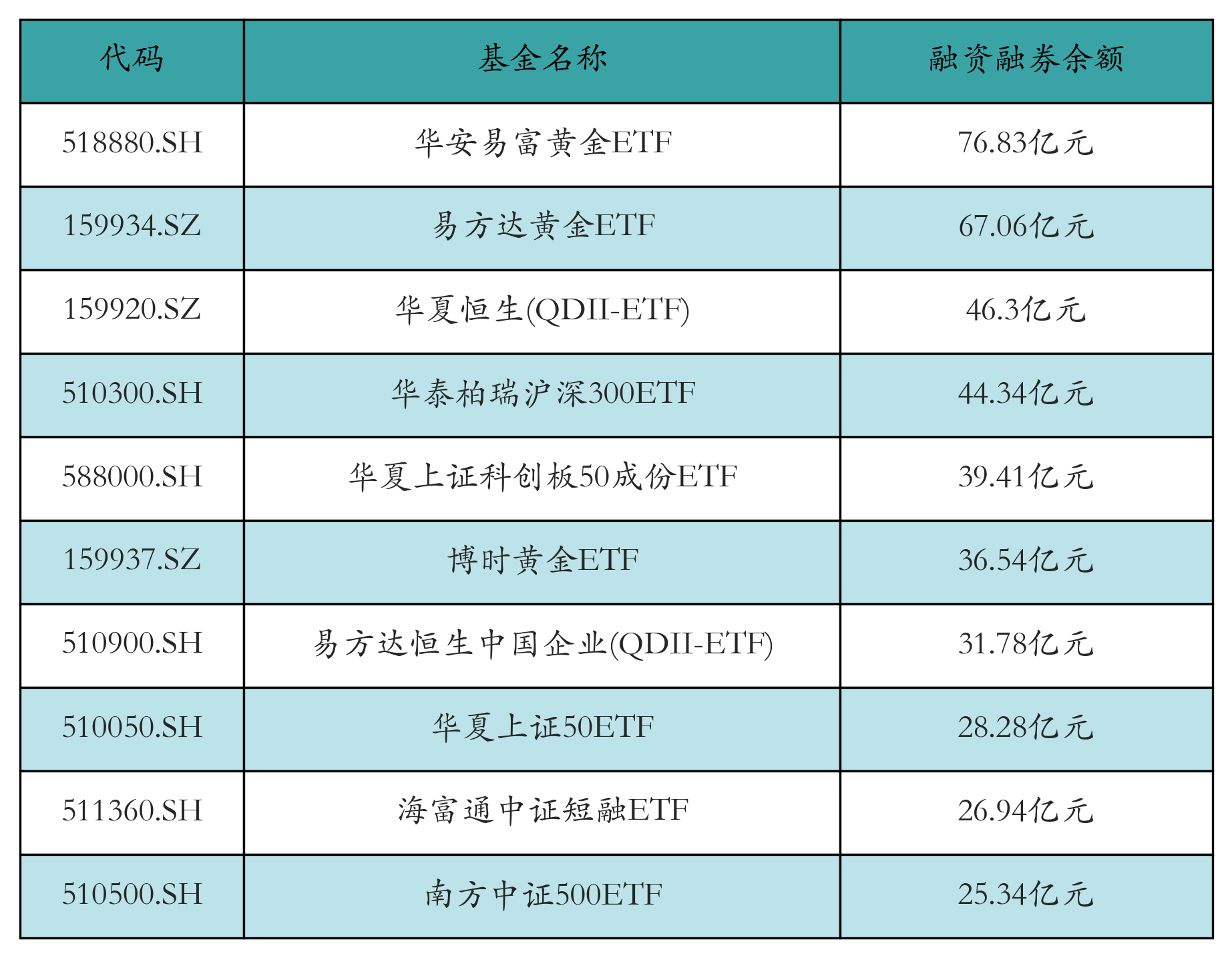
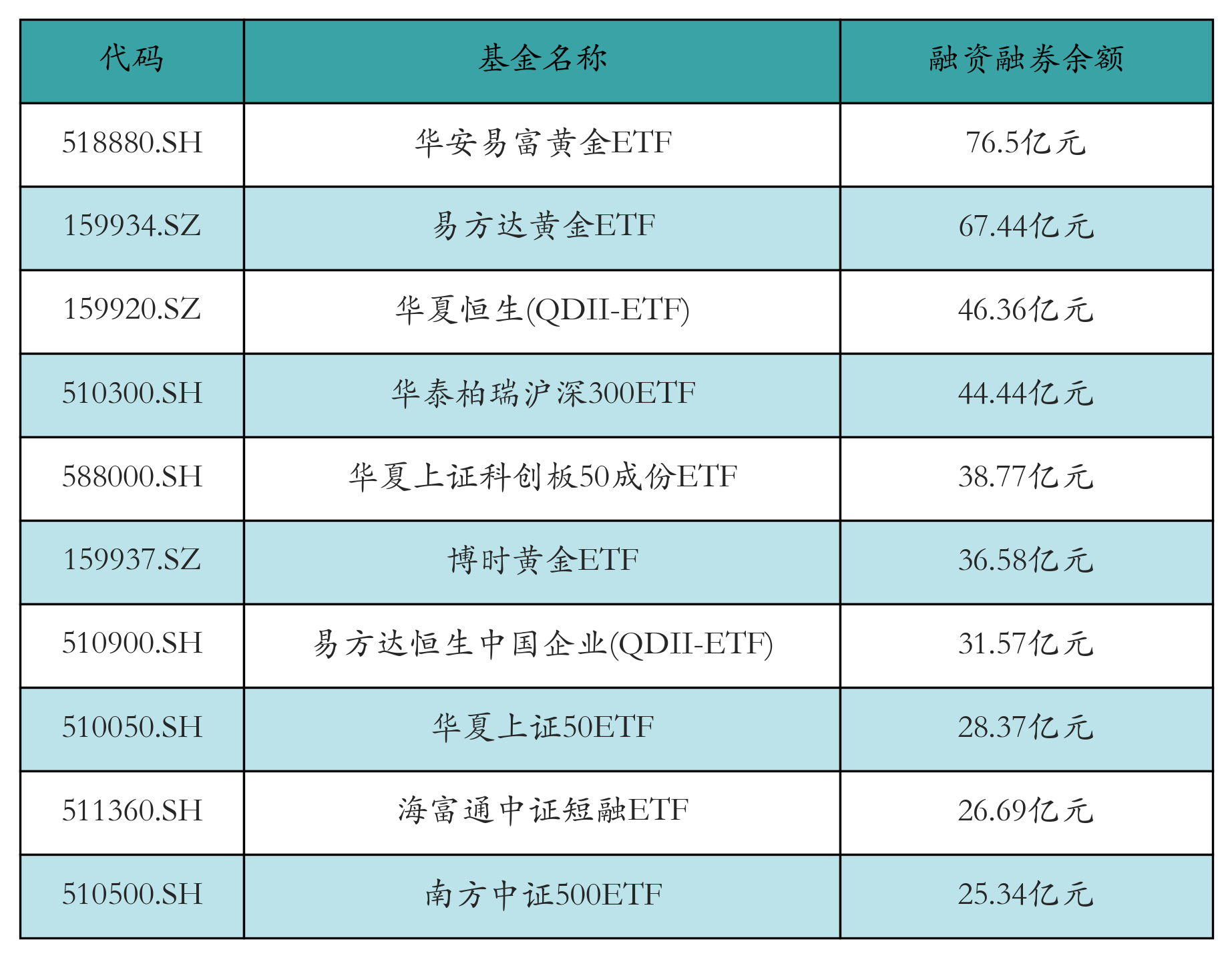
Market Overview - As of July 8, the total ETF margin balance in the two markets reached 98.801 billion yuan, an increase of 469 million yuan from the previous trading day [1] - The financing balance was 92.951 billion yuan, up by 475 million yuan, while the securities lending balance decreased by 6.1311 million yuan to 5.849 billion yuan [1] - In the Shanghai market, the ETF margin balance was 65.386 billion yuan, increasing by 229 million yuan, with a financing balance of 60.319 billion yuan, up by 246 million yuan [1] - In the Shenzhen market, the ETF margin balance was 33.414 billion yuan, an increase of 239 million yuan, with a financing balance of 32.632 billion yuan, up by 229 million yuan [1] Top ETF Margin Balances - The top three ETFs by margin balance on July 8 were: 1. Huaan Yifu Gold ETF (7.65 billion yuan) 2. E Fund Gold ETF (6.744 billion yuan) 3. Huaxia Hang Seng (QDII-ETF) (4.636 billion yuan) [2] Top ETF Financing Amounts - The top three ETFs by financing amount on July 8 were: 1. E Fund CSI Hong Kong Securities Investment Theme ETF (1.456 billion yuan) 2. Haifutong CSI Short Bond ETF (1.285 billion yuan) 3. Huaxia Hang Seng Technology (QDII-ETF) (682 million yuan) [4] Top ETF Net Financing Amounts - The top three ETFs by net financing amount on July 8 were: 1. E Fund CSI Hong Kong Securities Investment Theme ETF (854.425 million yuan) 2. Bosera CSI Convertible Bonds and Exchangeable Bonds ETF (831.144 million yuan) 3. GF Nasdaq 100 (QDII-ETF) (639.964 million yuan) [5] Top ETF Securities Lending Amounts - The top three ETFs by securities lending amount on July 8 were: 1. Huatai-PB CSI 300 ETF (25.6983 million yuan) 2. Bosera CSI Convertible Bonds and Exchangeable Bonds ETF (23.4433 million yuan) 3. Southern CSI 500 ETF (15.7035 million yuan) [7]
国内主要股指再度全线上涨,综合类ETF小幅资金流出
Great Wall Securities· 2025-07-08 09:17
Group 1 - The core viewpoint of the report indicates that major domestic stock indices have risen across the board, with the CSI 300, SSE 50, and SSE Composite Index showing increases of 1.54%, 1.21%, and 1.40% respectively, while mid and small-cap indices like the CSI 500, CSI 1000, and ChiNext Index increased by 0.81%, 0.56%, and 1.50% respectively [1][8] - The report highlights that the comprehensive ETF trading volume was 51.026 billion yuan, a decrease of 23.162 billion yuan from the previous week, with large-cap style ETFs accounting for 27.178 billion yuan and small-cap style ETFs for 24.225 billion yuan [1][27] - The average weekly return of 32 thematic ETFs was 0.98%, with large-cap style ETFs averaging 1.32% and small-cap style ETFs averaging 0.73% [2][28] Group 2 - The report identifies the top-performing comprehensive ETFs, with the top three being the Shen 100 ETF, ChiNext 50, and 300 ETF, which had returns of 1.99%, 1.79%, and 1.79% respectively, while the bottom three were the Double Innovation 50 ETF, 1000 ETF, and 500 ETF, with returns of 0.55%, 0.71%, and 0.90% [3][33] - In the thematic ETF sector, the steel ETF, bank ETF, and biomedicine ETF were the top performers with returns of 5.41%, 3.74%, and 3.03% respectively, while the bottom performers included the chip ETF, semiconductor ETF, and semiconductor 50 ETF, with returns of -1.40%, -1.06%, and -1.05% [3][33] - The report notes that there was a significant inflow of funds into the brokerage and military industry sectors, while the semiconductor sector continued to see inflows as investors looked to buy at lower prices [3][33] Group 3 - The report provides a detailed analysis of the trading activity of domestic stock ETFs, indicating that the trading volume of comprehensive ETFs was 51.026 billion yuan, with a notable decrease in trading activity compared to the previous week [27][28] - The report also tracks the market performance of various sectors, indicating that the financial, cyclical, consumer, growth, and stability style indices had weekly changes of 1.86%, 1.16%, 1.64%, 0.91%, and 0.92% respectively [1][8] - The report emphasizes the importance of monitoring the trading activity and fund flows in ETFs as indicators of market sentiment and potential investment opportunities [24][25]
上证科创板50成份指数ETF今日合计成交额40.52亿元,环比增加60.19%
Zheng Quan Shi Bao Wang· 2025-07-08 08:20
Core Insights - The total trading volume of the Shanghai Stock Exchange STAR Market 50 Index ETF reached 4.052 billion yuan today, an increase of 1.522 billion yuan from the previous trading day, representing a growth rate of 60.19% [1] Trading Performance - The Huaxia STAR Market 50 Index ETF (588000) had a trading volume of 2.887 billion yuan today, up 1.146 billion yuan from the previous day, with a growth rate of 65.78% [1] - The E Fund STAR Market 50 ETF (588080) recorded a trading volume of 600 million yuan, an increase of 246 million yuan, with a growth rate of 69.55% [1] - The Kexin ETF (588050) saw a trading volume of 232 million yuan, up 9.537 million yuan, with a growth rate of 69.90% [1] - The Bank of China STAR Market 50 ETF (588720) and the China Merchants STAR Market 50 Enhanced Strategy ETF (588450) had significant increases in trading volume, with growth rates of 1602.31% and 114.24% respectively [1] Market Index Performance - The Shanghai STAR Market 50 Index (000688) rose by 1.40% by the end of trading, while the average increase for related ETFs was 1.34% [1] - The top performers among the ETFs included the China Merchants STAR Market 50 Enhanced Strategy ETF (588450) and the Southern STAR Market 50 Enhanced Strategy ETF (588370), which increased by 1.68% and 1.47% respectively [1]
两市ETF两融余额减少2.67亿元丨ETF融资融券日报
Sou Hu Cai Jing· 2025-07-08 02:24
Market Overview - As of July 7, the total ETF margin balance in the two markets is 98.332 billion, a decrease of 0.267 billion from the previous trading day [1] - The financing balance is 92.477 billion, down by 0.298 billion, while the securities lending balance is 5.856 billion, an increase of 30.557 million [1] - In the Shanghai market, the ETF margin balance is 65.157 billion, a decrease of 0.169 billion, with a financing balance of 60.073 billion, down by 0.204 billion, and a securities lending balance of 5.084 billion, an increase of 34.771 million [1] - In the Shenzhen market, the ETF margin balance is 33.175 billion, a decrease of 0.098 billion, with a financing balance of 32.403 billion, down by 0.094 billion, and a securities lending balance of 0.772 billion, a decrease of 4.213 million [1] ETF Margin Balances - The top three ETFs by margin balance on July 7 are: 1. Huaan Yifu Gold ETF (7.683 billion) 2. E Fund Gold ETF (6.706 billion) 3. Huaxia Hang Seng (QDII-ETF) (4.630 billion) [2] ETF Financing Amounts - The top three ETFs by financing amount on July 7 are: 1. Hai Futong Zhongzheng Short Bond ETF (1.568 billion) 2. E Fund Zhongzheng Hong Kong Securities Investment Theme ETF (0.820 billion) 3. GF Zhongzheng Hong Kong Innovative Medicine (QDII-ETF) (0.398 billion) [4] ETF Net Financing Amounts - The top three ETFs by net financing amount on July 7 are: 1. Huaxia Shanghai Stock Exchange Sci-Tech Innovation Board 50 Component ETF (41.486 million) 2. Fuguo Zhongzheng 7-10 Year Policy Financial Bond ETF (38.5826 million) 3. E Fund CSI 300 Medical and Health ETF (31.8299 million) [5] ETF Securities Lending Amounts - The top three ETFs by securities lending amount on July 7 are: 1. Southern Zhongzheng 500 ETF (53.3409 million) 2. Huatai-PB CSI 300 ETF (10.6271 million) 3. Huaxia Shanghai Stock Exchange 50 ETF (9.006 million) [7]