
半导体ETF

Search documents
从“卖产品”到“造生态”!5万亿市场加码生态圈建设
证券时报· 2026-03-26 08:51
Core Viewpoint - The ETF market is transitioning from a focus on individual product sales to a comprehensive ecosystem approach, emphasizing brand recognition and service capabilities to meet evolving investor demands [1][9]. Group 1: ETF Ecosystem Development - Fund companies are increasingly investing in building ETF ecosystems, marking a fundamental shift in competition logic within the ETF industry [2][4]. - Major fund companies like Jiashi Fund, China Merchants Fund, and Southern Fund are actively enhancing their ETF ecosystems through product family development, brand IP creation, and service system upgrades [4][5]. Group 2: Trends in ETF Ecosystem Construction - The ETF ecosystem is evolving in four distinct trends: product differentiation, service enhancement, educational engagement, and operational synergy [10][11]. - Product ecosystems are shifting towards combination and differentiation, with leading public funds focusing on creating diverse product matrices rather than just popular single products [11][12]. - Service ecosystems are extending towards "refined, full-process" offerings, with public institutions increasing service investments to provide comprehensive support for investors [13]. Group 3: Brand Recognition and Competitive Advantage - The branding of ETFs is becoming crucial, as the industry moves towards a unified naming convention that emphasizes the fund manager's brand, thereby increasing its influence on investor decisions [6][5]. - The transition to an ecosystem approach is not merely a marketing tactic but a long-term strategy aimed at fostering investor loyalty through integrated product, service, and educational offerings [15].

从“卖产品”到“造生态”!5万亿市场加码生态圈建设
券商中国· 2026-03-26 06:15
Core Viewpoint - The ETF industry is transitioning from a focus on individual product sales to a comprehensive ecosystem approach, emphasizing brand recognition and service capabilities to meet evolving investor demands [1][2][7]. Group 1: ETF Ecosystem Development - Fund companies are increasingly investing in building ETF ecosystems, with notable actions from firms like Jiashi Fund, CMB Fund, Southern Fund, and Ping An Fund, focusing on product family enhancement, brand IP creation, and service system upgrades [3][4]. - Jiashi Fund has created an immersive investment education ecosystem, exemplified by the successful "Jiashi Super Index Festival," which integrates product promotion and investor education [3]. - Ping An Fund has launched a brand renewal initiative, aiming to create a one-stop ETF investment ecosystem in collaboration with Ping An Securities, highlighting the importance of brand recognition in investment decisions [4]. Group 2: Shift in Competitive Logic - The ETF market is moving from a competition based on "first-mover advantage" to one focused on building a comprehensive ecosystem that includes products, services, and investor education [5][7]. - The traditional model of competing through individual products is becoming less sustainable as the market expands and product homogenization increases, leading to a need for a more integrated approach [6][7]. Group 3: Trends in ETF Ecosystem Construction - The construction of the ETF ecosystem is showing four distinct trends: product differentiation, service enhancement, operational synergy, and educational innovation [8]. - Leading public funds are shifting towards creating diversified product matrices rather than focusing solely on popular single products, which allows for more effective competition [8][9]. - The service ecosystem is evolving to provide comprehensive, fine-tuned support for investors, with many firms launching dedicated service applications to enhance user experience [10][11]. Group 4: Educational Innovations - The educational approach within the ETF ecosystem is becoming more engaging and scenario-based, moving away from traditional methods to include interactive and immersive experiences [10][11]. - The emphasis on brand building is not merely about renaming products but involves a deep integration of product features, service capabilities, and educational efforts to foster investor loyalty [11].

多只油气相关ETF上周份额大减, 超10亿元资金抢筹德明利!
摩尔投研精选· 2026-03-16 10:19
Core Viewpoint - The article highlights the trading activities in the Shanghai and Shenzhen stock markets, focusing on the top traded stocks, sector performances, and ETF transactions, indicating significant movements in capital flows and investor sentiment. Group 1: Stock Market Trading - The total trading volume of the Shanghai and Shenzhen Stock Connect reached 302.8 billion, with Zijin Mining and CATL leading in trading volume for the Shanghai and Shenzhen markets respectively [1][4][5]. - The top ten stocks traded on the Shanghai Stock Connect included Zijin Mining, Bawei Storage, and China Aluminum, with transaction amounts of 32.25 billion, 22.29 billion, and 19.32 billion respectively [3][4]. - On the Shenzhen Stock Connect, CATL topped the list with a transaction amount of 46.70 billion, followed by Xinyi Technology and Yangguang Power with 33.59 billion and 33.31 billion respectively [3][5]. Group 2: Sector Performance - The electronic sector saw the highest net inflow of capital, amounting to 68.92 billion, with a net inflow rate of 1.84% [7]. - Other sectors with significant net inflows included semiconductors (56.21 billion, 3.31%) and automotive (20.58 billion, 8.75%) [7]. - Conversely, the new energy sector experienced the largest net outflow of capital at -146.74 billion, with a net outflow rate of -4.30% [8][9]. Group 3: ETF Transactions - The A500 ETF Fund (512050) recorded the highest trading volume among ETFs at 102.34 billion, with a 4.32% increase compared to the previous trading day [14]. - The top ten ETFs by trading volume also included the Zhonghan Semiconductor ETF (513310) with 99.87 billion, showing a significant increase of 113.97% from the previous day [14][15]. - Several oil and gas-related ETFs saw substantial reductions in shares, with the Oil ETF (561360) decreasing by 1.167 billion shares, leading the decline [17].





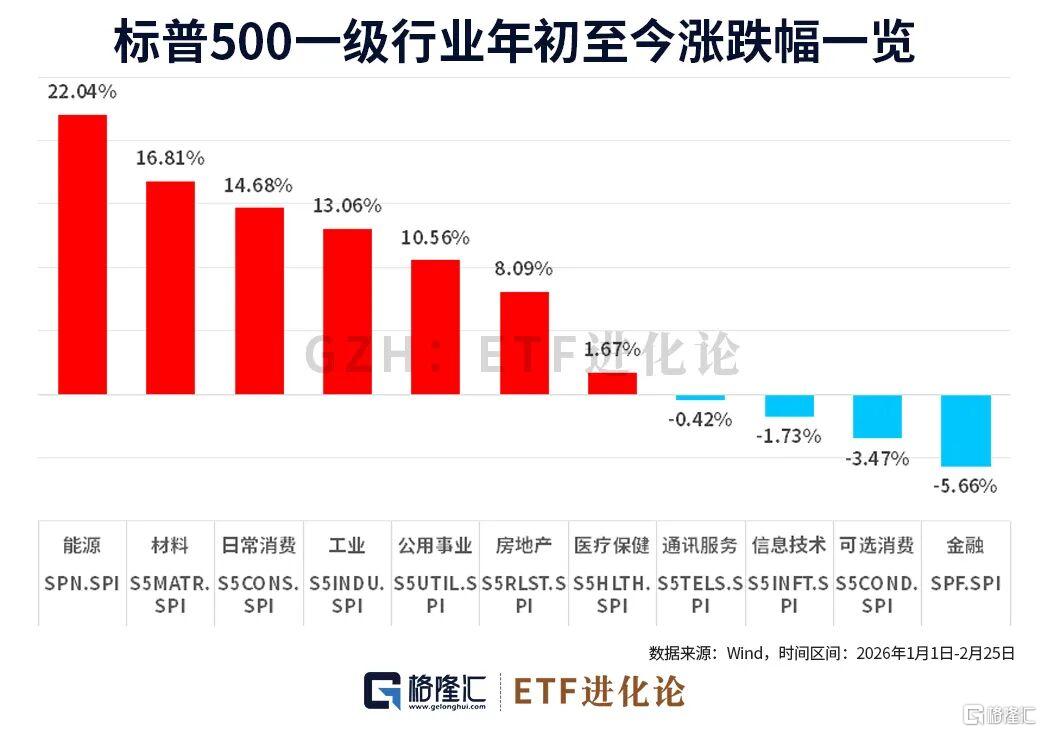
突然爆了!老登资产席卷全球
Ge Long Hui A P P· 2026-02-26 08:41
Group 1 - Nvidia's Q4 performance has exceeded expectations, leading to a surge in AI hardware stocks in the A-share market, with semiconductor ETFs in China and South Korea nearing their daily limit up, and electricity-related ETFs rising by 3% and 2.9% respectively [1] - A significant shift is occurring where technology growth is increasingly reliant on physical assets, marking a departure from the previous dominance of financial assets over physical assets [2][3] - The HALO concept, which combines heavy assets with low obsolescence, is gaining traction, indicating a paradigm shift in investment strategies towards assets that are less susceptible to technological changes [2][3] Group 2 - The rise in physical asset values is driven by geopolitical tensions and resource nationalism, which have made these assets more valuable as a safe haven compared to software and light asset industries [4] - The South Korean stock market has seen unprecedented growth, with the composite index surpassing 6000 points for the first time and achieving a year-to-date increase of 49.67% [4][5] - A-share market trends reflect a similar "physical asset supremacy," with significant gains in sectors such as construction materials, non-ferrous metals, and petrochemicals [7] Group 3 - ETFs with high physical asset content have dominated the performance charts, with several indices, including semiconductor and oil and gas resources, showing gains of over 25% year-to-date [10] - In the first two trading days of the year, A-share financing clients purchased a total of 57.5 billion yuan, indicating strong capital inflow into physical assets [13] - The top sectors for net buying include electronics, non-ferrous metals, and power equipment, highlighting investor interest in HALO stocks [17][18] Group 4 - High inflows into HALO-focused ETFs have been observed, with significant net purchases in gold, semiconductor materials, and electricity equipment ETFs [20] - The macroeconomic environment is favoring heavy asset industries, as manufacturing PMI has rebounded, surpassing service sector PMI [22] - Tech giants are projected to spend approximately $1.5 trillion on capital expenditures from 2023 to 2026, with $650 billion expected this year alone, indicating a strong focus on infrastructure investments [22]
ETF投资手册之二:半导体 ETF 投资指南
HUAXI Securities· 2026-02-25 09:21
- Semiconductor ETFs are categorized into three types: material equipment indices, design manufacturing indices, and full industry chain indices, based on their constituent stocks' distribution across the semiconductor industry chain[37][39][40] - Material equipment indices focus on upstream industries, with constituent stocks having over 95% market capitalization in semiconductor materials and equipment sectors[40][43] - Design manufacturing indices target midstream industries, with constituent stocks having over 95% market capitalization in IC design, manufacturing, and packaging sectors[40][43] - Full industry chain indices cover both upstream and midstream sectors, with a balanced distribution across materials, equipment, design, manufacturing, and packaging industries[40][43][47] - Material equipment indices exhibit higher elasticity during "self-reliance" logic phases, driven by external sanctions and supply chain security concerns[75][76][79] - Design manufacturing indices are more sensitive to terminal demand expansion, showing higher elasticity during industry upturns and demand-driven growth phases[70][71][73] - Full industry chain indices provide balanced exposure, with annualized returns ranging from 20.20% to 29.90% and Sharpe ratios between 0.75 and 0.98 during observed periods[82][84][85] - Specific indices like "科创芯片设计" and "集成电路" differ in sample space and valuation, with the former focusing on high-growth chip design firms and exhibiting higher elasticity[87][89][92] - ETF selection should consider factors like scale, management fees, tracking error, and liquidity; for example, "科创芯片 ETF基金" offers lower fees and sufficient scale for systematic semiconductor exposure[94][95][97]
廖市无双-节后开盘-A股是否有机会进攻
2026-02-24 14:16
Summary of Conference Call Records Industry Overview - The conference call primarily discusses the A-share market in China, focusing on market trends, sector performance, and investment opportunities post-Chinese New Year [1][2][3]. Key Points and Arguments Market Performance and Trends - The A-share market exhibited a strong oscillation pattern before the Chinese New Year, with the Shanghai Composite Index peaking at 4,142 points, aligning with the expected range of 4,000 to 4,150 points [2][3]. - Major indices failed to break above the 5-week moving average due to large funds suppressing market movements, indicating a preference for maintaining a range-bound market rather than a rapid upward trend [3][5]. - The market is currently in an ABC adjustment structure, with the B phase ongoing, suggesting that a clear upward movement is unlikely until the C phase is completed [9][14]. Sector Performance - Sectors that performed well before the holiday include technology growth, computing, electronics, media, and telecommunications, which are closely related to the mainstream market trends since September 24, 2022 [4]. - The consumer sector, particularly retail and general consumption, saw significant capital outflows, reflecting a lack of investor confidence in economic recovery [7]. - The food and beverage sector is not expected to experience a major upward trend, with a clear bearish pattern observed [8]. Investment Opportunities - Short-term investment strategies are recommended, focusing on sectors with lower price levels and potential for quick gains, such as brokers, building materials, and banks [20]. - The technology growth sector, including AI applications and robotics, may present localized investment opportunities, but significant upward trends are not anticipated [18]. - The first quarter of 2026 may see the non-ferrous metals sector forming a significant bottom, with a notable increase in the index by 97.5 points in 2025 [21]. Market Sentiment and Future Outlook - The market is expected to maintain a high-risk preference in the short term, with potential for continued focus on technology growth sectors, although caution is advised due to the last trading day before the holiday [6][15]. - New funds are advised to wait for clearer investment opportunities post-March, as the current environment does not favor long-term investments [19][16]. - The overall market structure is likely to remain balanced, with a mix of growth and value styles emerging [30]. Other Important Insights - The recent appreciation of the RMB, surpassing 6.89, is seen as beneficial for the A-share market, supporting a positive outlook for capital markets [11]. - The upcoming political events, such as the two sessions in March, are anticipated to provide clearer investment signals [16]. - The historical context of spring market movements suggests a potential for short-term volatility, but with a cautious approach to avoid chasing high prices [28][31]. This summary encapsulates the key insights from the conference call, providing a comprehensive overview of the current state and future outlook of the A-share market and relevant sectors.
新春走基层 | 走亲访友话投资:从“追风口”到寻“千里马”
Zhong Guo Zheng Quan Bao· 2026-02-18 05:56
Core Insights - The article highlights a shift in investment focus among ordinary families in China, particularly in the context of the A-share market, where discussions around "investment," "returns," "AI," and "semiconductors" have become prevalent during the Spring Festival [1] - It emphasizes the significant improvement in investor profitability in 2025, particularly in sectors like artificial intelligence, high-end manufacturing, and the digital economy, with many equity public funds achieving average returns exceeding 30% [1] Investment Trends - In 2025, the A-share market is characterized by a strong performance in technology sectors, with indices related to artificial intelligence, semiconductors, and computers showing substantial gains compared to traditional industries [4] - Ordinary investors are increasingly focusing on industry trends and company fundamentals, moving away from speculative trading [4] Investment Strategies - There is a growing preference for industry-themed public funds and ETFs, which allow investors to participate in broader industry trends rather than individual stocks, thus reducing risks associated with single stock investments [6][8] - Investors are adopting strategies like "core + satellite," where they hold foundational investments in sectors like semiconductors and AI while diversifying into other themes [7] Investor Sentiment - Many investors express confidence in China's technology sector due to geographical proximity to innovation hubs, which enhances their understanding of market dynamics [10] - The article illustrates a shift in consumer behavior, where improved financial returns are leading to increased household spending and investment in future opportunities, reflecting a more optimistic outlook [10][11]
跨境ETF规模重返万亿元;博道基金自购旗下新基金800万元|天赐良基日
Mei Ri Jing Ji Xin Wen· 2026-02-13 08:22
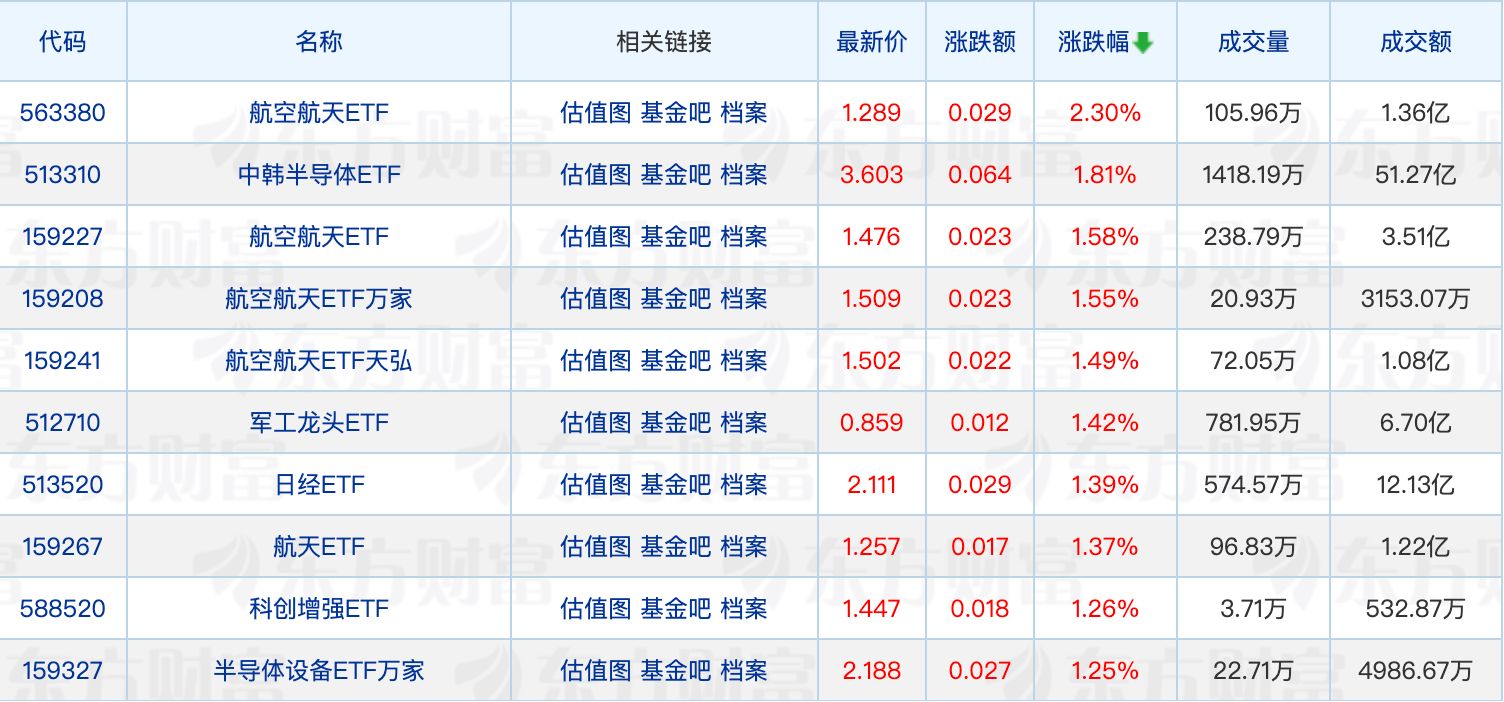
Group 1 - The scale of cross-border ETFs has returned to 1 trillion yuan, reaching 1 trillion yuan again as of February 11, with Hong Kong stock-themed ETFs totaling 822.45 billion yuan [1] - Baodao Fund announced the establishment of the Baodao Xinghang Mixed Fund, with the company investing 8 million yuan of its own funds during the fundraising period [2] - A total of 12 commercial real estate REITs have been filed and accepted since the pilot program began on December 31, 2025, with 11 in the Shanghai market and 1 in the Shenzhen market [3] Group 2 - Ren Xiangdong has reduced holdings in Dalian Technology, with the number of shares held by his managed funds decreasing by 119,400 shares and 63,800 shares respectively as of February 6 [4] - Yan Siqian has been appointed as the new fund manager for the Penghua Fengsheng Bond Fund, marking her first management role in a bond fund [5] Group 3 - The ETF market experienced a day of volatility, with all three major indices declining, while the aerospace sector showed strength with the aerospace ETF rising by 2.30% [6] - Oil and gas-related ETFs saw a collective decline, with the largest drop being 4.21% for the Boshi Oil and Gas ETF [7] Group 4 - The global semiconductor materials market is characterized by "long-term growth and cyclical fluctuations," with a restructuring of the regional landscape accelerated by domestic production trends [8] - Recent government policies have provided robust support for the development of the semiconductor materials industry, creating a comprehensive empowerment system [8]
超130亿元,“跑了”
3 6 Ke· 2026-02-03 09:56
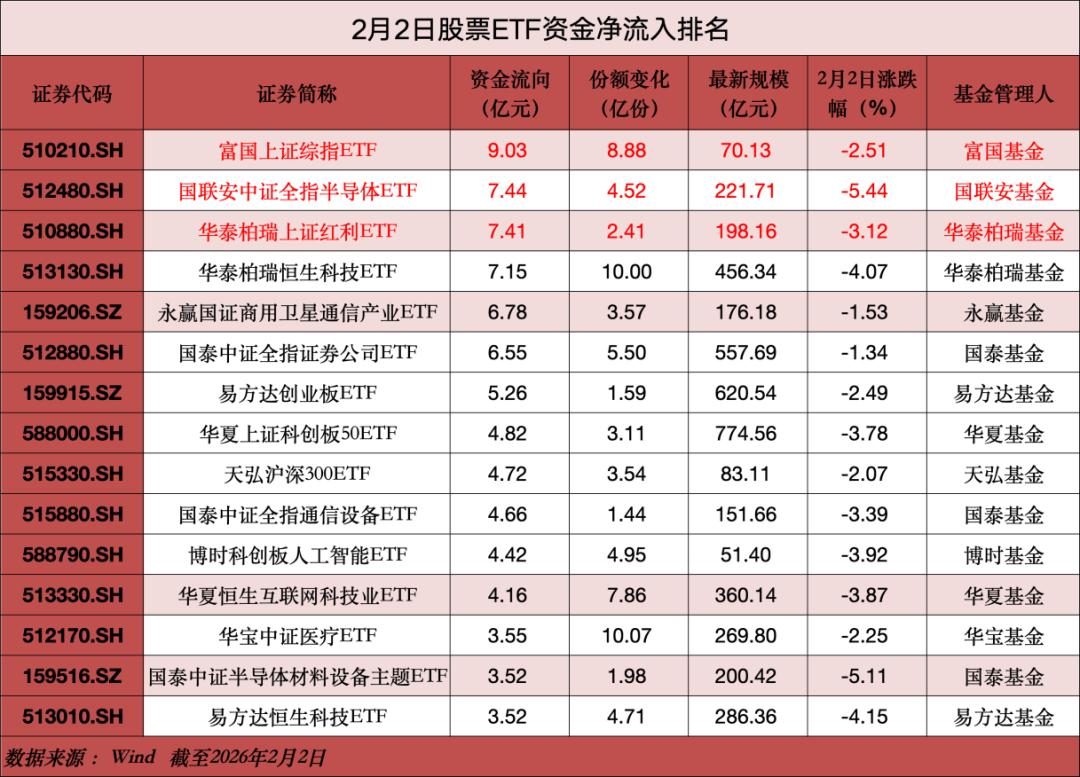
Group 1 - The stock ETF market experienced a net outflow of 790 billion yuan in January, with broad-based ETFs being the main contributors to the outflow [1] - In February, the trend of capital outflow continued, with a single-day net outflow of 13.771 billion yuan on the first trading day, influenced by significant declines in the three major stock indices [1] - Broad-based ETFs and the metals sector were the largest "blood loss" categories, while sector-specific ETFs like semiconductors and pharmaceuticals attracted significant inflows [1][2] Group 2 - As of February 2, the total scale of 1,321 stock ETFs (including cross-border ETFs) was 4.09 trillion yuan, showing a notable decrease due to market declines [2] - Sector-specific ETFs and Hong Kong stock ETFs saw the largest inflows, with 3.715 billion yuan and 3.346 billion yuan respectively on February 2 [2] - The semiconductor sector had a remarkable net inflow of 2.61 billion yuan on February 2, with the Guolian An CSI All-Share Semiconductor ETF leading with a net inflow of 903 million yuan [2] Group 3 - The broad-based ETF sector saw a significant net outflow of 23.778 billion yuan on the previous day, with a total scale decrease of 68.672 billion yuan [5] - The CSI 500 ETF had the largest single-day net outflow of 13.02 billion yuan, followed by the CSI 300 ETF with 7.2 billion yuan [5] - The metals sector also experienced a notable net outflow of 4.39 billion yuan, influenced by market sentiment and short-term profit-taking [6] Group 4 - On February 2, the top inflow ETFs included the Fortune CSI 300 ETF with a net inflow of 903 million yuan and the Guolian An CSI All-Share Semiconductor ETF with 744 million yuan [3][7] - The Huatai-PineBridge CSI Dividend ETF also saw a significant inflow of 741 million yuan, indicating strong investor interest in dividend-related investments [3] - The top inflow for the Hong Kong technology sector ETFs included the Huatai-PineBridge Hang Seng Technology ETF with a net inflow of 715 million yuan [4]
航空业ETF收涨超2.6%,领跑美股行业ETF,标普科技板块跌超1.8%
Jin Rong Jie· 2026-01-29 22:13
Group 1 - Global airline ETFs rose by 2.64% [1] - Regional bank ETFs and bank sector ETFs increased by up to 1.84% [1] - Energy sector ETFs gained 0.92% [1] Group 2 - Semiconductor ETFs saw a modest increase of 0.21% [1] - Network stock index ETFs and consumer discretionary ETFs declined by up to 0.48% [1] - Technology sector ETFs fell by 1.58% [1] Group 3 - Global technology stock index ETFs decreased by 1.76% [1] - Among the 11 sectors of the S&P 500, the information technology/technology sector dropped by 1.86% [1] - The consumer discretionary sector fell by 0.64% [1] Group 4 - The energy sector rose by 1.08% [1] - The real estate sector increased by 1.42% [1] - The telecommunications sector experienced a rise of 2.92% [1]