
地平线

Search documents
地平线与大众汽车集团深化战略合作
Bei Jing Shang Bao· 2025-11-05 08:39
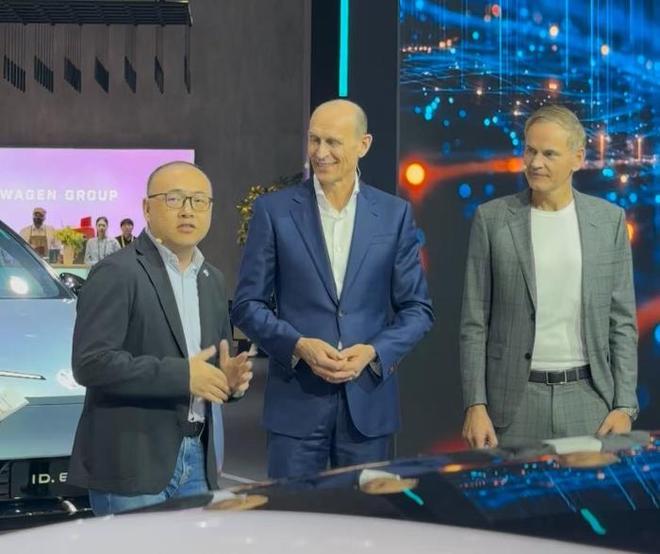
据了解,此次系统级计算方案的开发,将整合大众汽车集团在工程体系与系统集成方面的全球经验,与 地平线软硬结合技术能力和本地量产优势,联合打造中国新一代智能网联汽车的"智慧大脑"。该计算方 案将以"智能高效"为目标,通过算法优化实现算力功耗与系统性能的最佳平衡,进一步提升大众汽车集 团在华智驾系统的安全性与可扩展性。 北京商报讯(记者 刘晓梦)11月5日,大众汽车集团(中国)宣布,旗下软件公司CARIAD与地平线联 合成立的合资公司——酷睿程 (CARIZON) ,将在中国自主设计与研发系统级计算方案,为大众汽车集 团的高级驾驶辅助和自动驾驶系统提供支持。 ...
巨头下场!大众宣布自研芯片
Zhong Guo Jing Ying Bao· 2025-11-05 08:36
Core Viewpoint - Volkswagen Group has officially announced the development of a self-designed system-level chip in China, marking a significant step in its "In China, for China" strategy [2] Group 1: Company Strategy - The chip will be developed by CARIZON, a joint venture between Volkswagen's software company CARIAD and Chinese technology firm Horizon Robotics [2] - This initiative aims to enhance innovation autonomy and promote the localization of core technology development [2] - Volkswagen Group's CEO, Oliver Blume, emphasized that this move is crucial for transforming the company into a technology-driven mobility enterprise [2] Group 2: Technological Development - Horizon Robotics' CEO, Yu Kai, stated that Volkswagen is the first foreign automaker to develop an auxiliary driving chip in China [2] - The chip will support advanced driver-assistance systems (ADAS) and autonomous driving systems for Volkswagen's next-generation intelligent connected vehicles [2] - Production of the chip is expected to commence within the next three to five years, with the first batch being used in models equipped with Level 3 and above autonomous driving capabilities [2]

自研芯片,大众最新宣布
第一财经· 2025-11-05 07:56
Group 1 - The core viewpoint of the article is that Volkswagen Group's software company CARIAD has formed a joint venture with Horizon to design and develop system-on-chip (SoC) in China, marking a strategic investment in self-developed chips [1] - The self-developed chip is expected to achieve mass production and delivery within the next 3 to 5 years, with a computing power of 500 to 700 TOPS per chip [1] - The investment amount for this strategic initiative is approximately 200 million USD [1]
大众宣布自研SoC芯片 未来3~5年内量产交付
Di Yi Cai Jing· 2025-11-05 07:42
11月5日,大众汽车集团在第八届进博会上宣布,其旗下软件公司CARIAD与地平线成立的合资公司酷 睿程,将在中国自主设计与研发系统级芯片(SoC)。该芯片预计将在未来3~5五年内量产交付,拥有 单颗500~700TOPS算力。CARIAD中国CEO韩三楚表示,自研芯片是一次战略性投资,金额约为2亿美 元。 (文章来源:第一财经) ...
地平线又投出一个IPO,拿下国内9大车厂,上汽商汤都是股东
3 6 Ke· 2025-11-04 12:28
Core Viewpoint - Suzhou Tiantong Weishi Electronic Technology Co., Ltd. (Tiantong Weishi) has submitted its listing application to the Hong Kong Stock Exchange, marking a significant step in its capital journey and reflecting the rapid development of China's intelligent driving industry [1][22]. Group 1: Company Overview - Tiantong Weishi, established in 2016, is a software-centric provider of intelligent driving solutions, offering L2-L4 level solutions globally [3][11]. - The company is the second-largest provider of L2-L2+ level driving and parking solutions in China by installation volume as of 2024, and the third-largest provider of DMS solutions [3][11]. - Tiantong Weishi has secured contracts for 144 vehicle models and has intention orders for L4 solutions valued at 1 billion RMB, collaborating with 9 of the top ten car manufacturers in China [3][18]. Group 2: Financial Performance - The company's revenue for 2022, 2023, and projected for 2024 is 171.8 million RMB, 203.6 million RMB, and 482.9 million RMB respectively, indicating significant growth driven by L4 solution revenues [6][7]. - In the first half of 2025, Tiantong Weishi reported a revenue of 157.3 million RMB, a 182.1% increase from the same period in 2024, primarily due to the rapid expansion of L4 business [8][10]. - Cumulative net losses exceeded 1.2 billion RMB over three and a half years, with net losses for 2022, 2023, 2024, and the first half of 2025 reported at 325 million RMB, 231 million RMB, 463 million RMB, and 193 million RMB respectively [8][10]. Group 3: Business Segments - Tiantong Weishi offers three main types of solutions: L2 level solutions (including parking and driving solutions), L4 level solutions (including Robotruck, Robobus, and Robotaxi), and engineering services [4][11]. - The L4 solutions accounted for over 50% of the company's revenue in 2024, with L4 solution revenue reaching 243 million RMB [16][18]. - The company has developed a unified system architecture for L4 solutions based on its experience in delivering L2-L2+ level solutions [12][16]. Group 4: Investment and Shareholding - Tiantong Weishi completed a 500 million RMB Series D financing round in July 2023, with notable investors including ZF, SAIC North America, BAIC Investment, Horizon Robotics, SenseTime, and China Unicom [3][21]. - The founder, Wang Xi, holds approximately 41.61% of the shares, with significant backing from well-known enterprises that provide not only financial support but also potential technological collaboration and resource integration [21][22]. Group 5: Industry Context - The IPO of Tiantong Weishi represents a critical step for the company and reflects the broader trend of the intelligent driving industry in China moving towards global markets [22][23]. - The company's ability to leverage technological synergies and improve operational efficiency will be crucial for its transition to scalable profitability in the intelligent driving sector [23].
一汽奔腾前10月销量突破15万辆 超越2024年全年
Yang Shi Wang· 2025-11-04 11:12
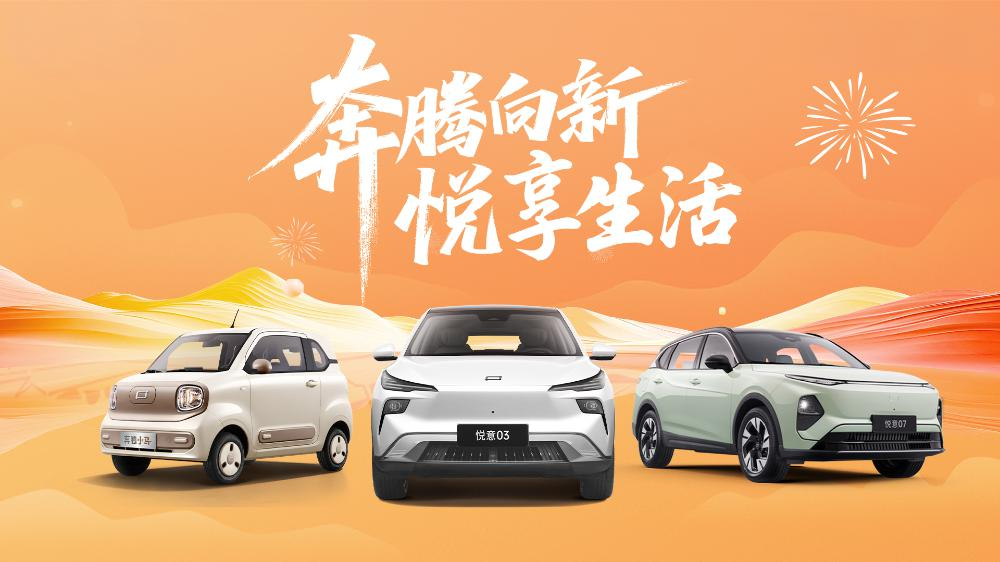
Group 1 - The core point of the article highlights the significant sales performance of FAW Bestune, with a total sales volume of 157,617 vehicles from January to October, representing a year-on-year increase of 35.2%, surpassing the total sales for the entire year of 2024 [1] - In the new energy vehicle segment, sales reached 135,671 units, showing a remarkable year-on-year growth of 139.8% [1] - October alone saw a total sales volume of 20,400 vehicles, with new energy sales hitting 18,468 units, marking the highest monthly sales in the past decade for FAW Bestune [1] Group 2 - FAW Bestune is set to hold its first "Yueyi Technology Day" in February 2025, where it will unveil a new technology cluster consisting of the Yueying platform, Zhuri power, and Ruyi cockpit, along with plans to launch six new energy models over the next three years [3] - The first model from the new energy series, Bestune Yueyi 03, was officially launched in March, targeting the compact pure electric market with its key advantages of "long range, spacious interior, and high-quality manufacturing" [3] - In the micro pure electric vehicle sector, the Bestune Xiaoma has achieved cumulative sales exceeding 100,000 units from January to October, supported by various new car colors, configurations, and benefits [5] Group 3 - FAW Bestune is actively pursuing a shareholding reform and capital increase strategy, attracting investments from leading companies across various industries, totaling 8.55 billion yuan, which is expected to enhance its development opportunities [5] - The milestone of surpassing last year's total sales within the first ten months reflects the deep impact and high-quality development momentum of FAW Bestune's "new direction" strategy [5] - With the backing of a state-owned enterprise, diversified capital empowerment, and an open development philosophy, FAW Bestune is accelerating its growth as a dynamic "new car-making force" [5]
八年“变”与“不变”,聆听一家外企与进博会的共同成长
Xin Hua Cai Jing· 2025-11-04 09:01
Core Insights - The eighth China International Import Expo (CIIE) marks a significant milestone for Volkswagen Group, showcasing its long-term commitment to the Chinese market and its evolution alongside China's opening-up policies [1][7] Group 1: Evolution of Products and Strategies - Volkswagen Group has transitioned from showcasing imported fuel vehicles to presenting advanced electric vehicles and innovative technologies, reflecting the automotive industry's transformation [2] - At this year's expo, Volkswagen will display eight models, including the ID. EVO, ID. AURA, ID. ERA concept cars, and the new Audi E5 Sportback, highlighting its focus on the Chinese market [2] - The establishment of CARIAD China and the launch of Volkswagen Technology (VCTC) as a major R&D center in China demonstrate the company's commitment to local innovation and adaptation [4] Group 2: Enhanced Engagement and Corporate Responsibility - The CIIE serves as a platform for Volkswagen to enhance its corporate image and showcase its commitment to social responsibility, as seen in the "Green Belt Action" project [3] - The expo has evolved into a bridge for interaction between foreign enterprises, the government, and the public, emphasizing the importance of international exchange in the current global environment [3] Group 3: Internal Growth and Professional Development - Employees at Volkswagen have experienced significant personal and professional growth through their participation in the CIIE, transitioning from initial curiosity to mature involvement [6] - The company's approach to the expo has shifted from independent brand showcases to a collaborative multi-brand strategy, reflecting increased importance placed on the event by headquarters [5] Group 4: Future Commitments and Goals - Volkswagen aims to introduce approximately 30 new energy models in China by 2027 and around 50 by 2030, including 30 fully electric vehicles, aligning with the market's electrification trends [4]
和一些人交流后, 更深入的分析地平线HSD
自动驾驶之心· 2025-11-04 00:03
Core Viewpoints - The article presents eight key viewpoints regarding the performance and evaluation of autonomous driving technologies, particularly focusing on the comparison between Horizon's HSD and Li Auto's VLA systems [3]. Group 1: Performance Evaluation - The experience with Horizon's HSD during a 1.5-hour test drive was notably better than the current production version of Li Auto's L7 VLA, although future production versions may not match the engineering version's performance [3][5]. - The evaluation of HSD's performance is limited due to the lack of comprehensive safety assessments and the variability of experiences across different locations [3][7]. - The HSD system demonstrated good vertical control, but its performance can vary significantly based on the city and driving conditions [6][7]. Group 2: Technical Comparisons - Horizon employs a VA-style end-to-end approach, while Li Auto utilizes a VLA-style end-to-end system, with the naming being a mere distinction [9][10]. - The VA-style end-to-end system is perceived to have advantages in user experience due to current limitations in computing power and bandwidth faced by the VLA approach [6][12]. - Li Auto's decision to pursue VLA for mass production is seen as a bold move, but it comes with challenges related to resource allocation and the need for higher computational requirements [11][12]. Group 3: Industry Outlook - There is a prevailing belief that many autonomous driving operators will eventually converge in capabilities, with only a few manufacturers able to survive without in-house development of autonomous driving technologies [3][11]. - The article suggests that manufacturers lacking self-research capabilities in autonomous driving may struggle to adapt to the evolving smart vehicle industry [3][11]. - The future landscape of autonomous driving will likely see a concentration of capabilities, with differentiation becoming increasingly important as the industry matures [3][11].
上汽、北汽“加持” 高阶智驾“黑马”天瞳威视开启港股之旅
2 1 Shi Ji Jing Ji Bao Dao· 2025-11-03 12:45
Core Viewpoint - The recent surge in Hong Kong's stock market for autonomous driving companies includes the listing application of Suzhou Tiantong Weishi Electronic Technology Co., Ltd. (hereinafter referred to as "Tiantong Weishi") on October 31, 2023, marking its entry into the market alongside other notable players [1][2]. Group 1: Company Overview - Tiantong Weishi, established in 2016, provides a full range of autonomous driving solutions from L2-L2+ to L4 levels, focusing on high-level autonomous driving through software [2][3]. - The company claims to be the second-largest provider of L2-L2+ solutions and the third-largest provider of Driver Monitoring Systems (DMS) based on installation volume in 2024 [2]. Group 2: Financial Performance - Tiantong Weishi's revenue for 2022, 2023, and 2024 is projected to be 172 million, 203 million, and 482 million RMB, respectively, with corresponding losses of 324 million, 231 million, and 462 million RMB [3]. - In the first half of 2025, the company expects to generate revenue of 157 million RMB with a loss of 192 million RMB [3]. Group 3: Business Development - The company has established L2-L2+ solutions for 144 vehicle models, with 50% of its revenue in 2024 expected to come from L4-level autonomous driving solutions, which have a compound annual growth rate of 82% from 2022 to 2024 [3]. - Tiantong Weishi has secured intention orders for L4 solutions covering over 2,500 vehicles, with a total contract value of approximately 1 billion RMB, expected to be delivered within three to five years [3]. Group 4: International Expansion - Tiantong Weishi has served 34 countries and regions, collaborating with international automotive giant ZF since 2021 to develop ADAS solutions, and has achieved EU DDAW certification for its CalmCockpit solution [4]. - The company has delivered autonomous driving solutions for VinFast vehicles in 2023 and deployed solutions for a premium electric vehicle brand in Sweden in 2024, marking its entry into the European market ahead of its Chinese counterparts [4][5]. Group 5: Strategic Partnerships - The company has a notable shareholder lineup, including SAIC Group, BAIC Group, and ZF, alongside strategic cooperation with Horizon Robotics, forming a close ecological alliance [5][6]. - Tiantong Weishi's recent shift to a "one-stage" architecture for autonomous driving has enhanced its capabilities, allowing it to collaborate with several leading automotive companies [7]. Group 6: Market Position and Future Potential - The autonomous driving industry is witnessing a consolidation of players, with Tiantong Weishi potentially benefiting from its latecomer advantage as it enhances its technology and market presence [6][7]. - The company's ability to leverage its partnerships and technological advancements raises questions about its potential to outperform established competitors in the market [8].
智驾软硬件持续迭代,robotaxi未来已来
2025-11-03 02:35
Summary of Key Points from the Conference Call Industry Overview - The conference call discusses the autonomous driving (AD) industry, focusing on various companies and their technological advancements in the sector. Key Companies and Market Share - **Momenta** holds a leading position in the third-party autonomous driving market with a market share of 55%, while **Huawei** has a 25% share [1][3]. - **DJI** excels in low-computing power chip solutions but is shifting towards mid-to-high computing power solutions due to market demand [1][5]. - **Horizon Robotics** has developed self-researched hardware-software integrated solutions, currently in mass production with Chery's models, but faces challenges in NPU computing power and algorithm upgrades [1][6]. Technological Routes and Developments - The AD industry is divided into three main technological routes: 1. **End-to-End Algorithms**: Gaining traction since Tesla's AI Day in 2021, with companies like Momenta and Tesla implementing these algorithms in production vehicles [2]. 2. **Vision Language Action (VLA) Models**: Used by companies like Li Auto and XPeng, requiring high computing power (minimum 500 TOPS) and significant resources for training [2]. 3. **World Models**: Developed by companies like Huawei and Momenta, capable of understanding and predicting environmental changes [2]. Performance and Capabilities of Key Players - **Momenta** offers two product lines: a cost-effective single Orin X solution and a high-end dual Orin X solution, showcasing strong engineering capabilities [3]. - **DJI** has strong engineering capabilities but relatively weaker algorithm capabilities, allowing it to effectively implement complex algorithms in practical scenarios [3]. - **Horizon Robotics** is in the second tier of the industry, with its HSD and G6P series solutions providing decent user experience but needing more vehicle validation [6]. Market Trends and Shifts - The market is shifting from low-computing power chips to mid-to-high computing power solutions, prompting companies like DJI to develop new chip solutions [4][5]. - The demand for **fusion perception** routes combining Lidar and other sensors is expected to grow due to regulatory requirements and the need for handling complex scenarios [12]. Challenges and Future Outlook - The differences in autonomous driving capabilities among companies are primarily determined by data, computing power, and algorithms [8][9]. - Long-term, the accumulation of data will be crucial for competitive advantage, with a critical mass of road testing data needed to trigger significant improvements [10]. - The **Robot Taxi** market is seen as a positive growth area, with profitability dependent on vehicle efficiency, cost management, and competitive pricing [18][19]. Conclusion - Companies transitioning from L2+ to L4 levels of autonomous driving have a natural advantage due to lower resource investment and existing experience in mass production [20].