携程集团

Search documents
美股大型科技股集体上涨
第一财经· 2026-01-16 14:47
| 美股指数 △ | | | | --- | --- | --- | | 道琼斯 | 纳斯达克 | 标普500 | | 49569.07 | 23642.53 | 6964.29 | | +126.63 +0.26% | +112.51 +0.48% | +19.82 +0.29% | | 中国金龙指数 | 纳指100期货 | 标普500期货 | | 7795.85 | 25839.00 | 6993.00 | | -13.97 -0.18% | +133.25 +0.52% | +11.25 +0.16% | 1月16日,美股三大指数集体高开,标普500指数涨0.22%,道指涨0.18%,纳指涨0.44%。 中 概 股 涨 跌 不 一, 纳 斯 达 克 中 国 金 龙 指 数 微 跌, 文 远 知 行 、 网 易 涨 超 2 %;阿 里 巴 巴 、 万 国 数 据 、 理 想 汽 车 跌 超 1 % 。 编 辑 | 钉 钉 大型科技股普涨,美光科技涨超7%,闪迪涨近4%,超威半导体、台积电涨逾2%,英伟达、特斯拉、谷歌、英特尔均走高。 | 名称 | 现价 | 涨跌幅 | | --- | --- | --- ...


国证国际港股晨报-20260116
国投证券国际· 2026-01-16 12:26
Group 1: Market Overview - The Hong Kong stock market experienced a decline, with the Hang Seng Index falling by 0.28%, the Hang Seng China Enterprises Index down by 0.52%, and the Hang Seng Tech Index decreasing by 1.35% [2] - The total market turnover was HKD 290.455 billion, with short selling amounting to HKD 35.078 billion, representing 13.62% of the total turnover [2] - Southbound capital saw a net outflow of HKD 1.515 billion, with Alibaba, Tencent, and SMIC being the most bought stocks, while China Mobile, Xiaomi, and CNOOC faced the most selling pressure [2] Group 2: Sector Performance - The AI healthcare and internet healthcare sectors faced adjustments, with notable declines in stocks such as Jingtai Holdings down 10.74% and Alibaba Health down 7.84% [2] - The OTA platform Trip.com Group saw a significant drop of 19.23% due to an investigation by the State Administration for Market Regulation for alleged monopolistic behavior [3] - The optical communication sector performed well, with stocks like Huiju Technology rising by 8.89% and Cambridge Technology increasing by 7.75% [3] Group 3: Monetary Policy and Economic Measures - The People's Bank of China announced a series of targeted monetary easing measures, including a structural interest rate cut of 0.25 percentage points, aimed at reducing financing costs in specific sectors [4] - A total of CNY 1 trillion was allocated to support private enterprises, with an additional CNY 500 billion specifically for small and medium-sized private companies [4] - The bank also increased the quota for technology innovation and technical transformation loans by CNY 400 billion, bringing the total to CNY 1.2 trillion [4] Group 4: Company Analysis - 361 Degrees - 361 Degrees reported better-than-expected performance with offline retail growth of approximately 10% for both its main brand and children's clothing [7] - The company continues to see strong growth in e-commerce, achieving high double-digit growth rates [7] - The launch of new products across various categories, including running, basketball, and outdoor gear, reflects the company's commitment to innovation and brand development [8] Group 5: Investment Outlook for 361 Degrees - The company is expected to benefit from the introduction of new store formats, which will contribute positively to its performance [9] - The forecast for EPS from 2025 to 2027 is projected at CNY 0.60, CNY 0.69, and CNY 0.76, respectively, with a target price of HKD 7.6 based on a 10x PE ratio for 2026 [9]
每周回顾 证监会坚决防止市场大起大落;全市场跨境ETF规模突破万亿元
Sou Hu Cai Jing· 2026-01-16 11:56
Regulatory Actions - The China Securities Regulatory Commission (CSRC) emphasizes the need to prevent significant market fluctuations and strengthen market monitoring and regulation to maintain stability [1] - The Shanghai and Shenzhen Stock Exchanges have raised the minimum margin requirement for margin trading from 80% to 100% to reduce leverage and protect investors' rights [2] Automotive Industry - The Ministry of Industry and Information Technology, along with other regulatory bodies, has called for an end to disorderly price wars in the electric vehicle sector to promote fair competition [2] Commodity Market - Silver has surpassed Nvidia to become the second most valuable asset globally, with a market capitalization exceeding $5 trillion, driven by a cumulative price increase of over 200% in the past five years [2] Company Developments - Alibaba's Qianwen has launched an "AI Life Assistant" with over 400 functions, marking a transition into the "AI service era" [3] - TSMC plans to significantly increase its capital expenditure over the next three years, with 2026 spending projected between $52 billion and $56 billion, a potential increase of up to 36.92% year-on-year [3] - Xibei will close 102 stores, accounting for approximately 30% of its total, following significant losses exceeding 500 million yuan since a controversy last year [4] - Ctrip Group is under investigation for alleged monopolistic practices, including unauthorized price modifications that have led to consumer price discrimination [4] Fund Market - The first commodity ETF in China has surpassed 100 billion yuan in size, with the Huaan Gold ETF reaching 100.76 billion yuan [5] - The total size of cross-border ETFs in China has exceeded 1 trillion yuan, driven by strong performance in overseas markets [5][6] - Public fund issuance has accelerated in 2026, with 78 new funds launched, particularly in the FOF category, which has seen strong fundraising capabilities [6] IPO Activities - Yuanji Food has submitted an IPO application in Hong Kong, with over 4,200 stores globally and a compound annual growth rate of 44.7% in store openings from 2023 to 2025 [7] - Shangmi Technology has filed for an IPO in Hong Kong, with significant backing from major shareholders including Ant Group, Meituan, and Xiaomi [8]
携程被立案:企业的本质是什么?
Sou Hu Cai Jing· 2026-01-16 08:56
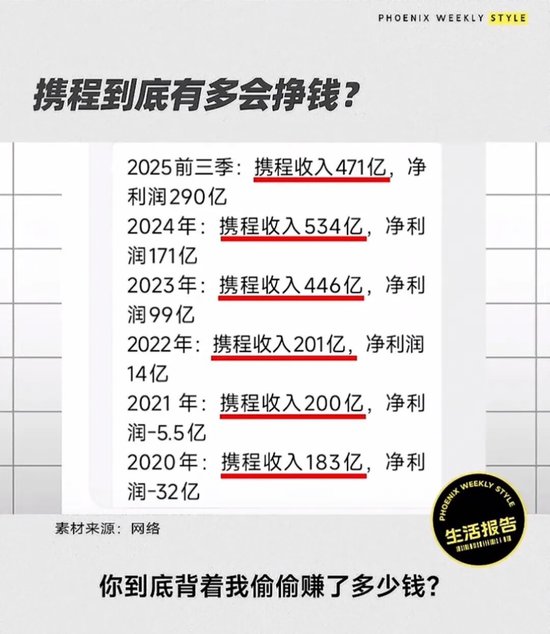
Core Viewpoint - The article critiques the current state of Chinese companies, particularly platform giants like Ctrip, for prioritizing profit over social value, suggesting that this focus on growth has led to a distorted business ethos [2][4][12]. Group 1: Company Performance and Impact - Ctrip reported a net profit of 19.9 billion yuan in the third quarter, averaging over 200 million yuan per day, which is more than the combined earnings of its upstream and downstream partners in the industry [2]. - The article highlights that the suffering is not limited to Ctrip but extends to other platform companies like Meituan, Pinduoduo, and Douyin, indicating a broader issue within the platform economy [3]. Group 2: Business Philosophy and Values - The growth mindset of Chinese companies has become overly performance-oriented, treating financial metrics as the sole purpose of existence, which is seen as a fundamental misunderstanding of business [4][5]. - The essence of a company should not be merely profit generation but rather solving social problems, as articulated by business theorists like Coase, Schumpeter, and Drucker [6][11]. Group 3: Ethical Considerations and Responsibilities - The article argues that the current approach of companies, driven by metrics and monopolistic practices, leads to societal discontent and a loss of ethical grounding [10][12]. - Companies are urged to reflect on their societal impact and responsibilities, questioning whether their existence benefits the world or merely serves their own growth ambitions [14].


携程年赚300亿元+,或被罚65亿高不高?
Xin Lang Cai Jing· 2026-01-16 07:14
Core Viewpoint - Ctrip is facing a potential fine ranging from 4.9 billion to 6.5 billion yuan due to an investigation by the State Administration for Market Regulation, which is higher than the fines imposed on other major companies like Meituan and Didi [1][15]. Group 1: Potential Fines - The estimated fine of 6.5 billion yuan is calculated based on the Anti-Monopoly Law, which allows for penalties of 1% to 10% of the previous year's revenue. Assuming a revenue of 65 billion yuan for 2025, the maximum fine could reach 6.5 billion yuan [2][16]. - This fine is significant, as many large companies do not generate this amount in annual net profit, indicating that such a penalty could severely impact Ctrip's financial performance [3][17]. Group 2: Financial Performance - Ctrip reported revenues of 47.1 billion yuan and a net profit of 29 billion yuan for the first three quarters of 2025, with an expected total profit exceeding 35 billion yuan for the year [5][19]. - The company has an impressive gross margin of 81% and a market share of 72%, showcasing its strong profitability and market position [7][21]. Group 3: Market Implications - The fine is not merely a financial penalty but is expected to lead to significant business restructuring, particularly targeting revenue streams that operate in gray areas [9][23]. - There are allegations that Ctrip's practices may involve not only price discrimination but also more serious issues such as money laundering and fraud, highlighting the need for a fair competitive environment in the market [9][23]. Group 4: Company Background - Ctrip is registered in the Cayman Islands, indicating its international operational structure [10][24].
携程被查背后:到底触碰了哪些红线
Xin Lang Cai Jing· 2026-01-16 07:08
Core Viewpoint - The investigation into Ctrip Group for alleged abuse of market dominance marks a significant event in China's online travel agency (OTA) sector, highlighting the extension of antitrust regulations from e-commerce to travel services [1][20]. Group 1: Investigation Background - Ctrip's investigation is a result of long-standing monopolistic practices that have led to collective grievances from merchants and a surge in consumer complaints, prompting regulatory intervention [21]. - The domestic OTA market is highly concentrated, with the top four companies holding over 85% market share, disrupting fair competition [21]. - Ctrip's financial performance starkly contrasts with the struggling hotel industry, with Ctrip reporting revenues of 62.85 billion yuan and a net profit of 29.113 billion yuan in 2025, while the average net profit margin for hotels is only 5%-8% [21]. Group 2: Monopolistic Practices - Ctrip's monopolistic behavior is characterized by three main areas: exploitation of suppliers, consumer exploitation, and stifling competition [22]. - On the supply side, Ctrip employs coercive strategies such as exclusive agreements and high commissions, forcing small businesses into untenable positions [23]. - Ctrip's pricing tools allow it to unilaterally adjust hotel prices without merchant consent, significantly impacting their profitability [24]. - The commission rates charged by Ctrip have increased from 8%-10% to 15%-22%, severely squeezing the profit margins of partner businesses [25]. Group 3: Consumer Impact - Ctrip's practices have led to consumer exploitation through differential pricing based on user profiles, resulting in significant price discrepancies for similar services [26]. - The company employs forced bundling of services, which increases costs for consumers and complicates the purchasing process [26]. - High cancellation fees and restrictive refund policies further diminish consumer rights and satisfaction [27]. Group 4: Competitive Landscape - Ctrip has utilized capital acquisitions to eliminate competition, significantly increasing its market share to over 70% by acquiring key competitors [28]. - The company imposes restrictions on new platforms, limiting their access to hotel resources and data, thereby maintaining its dominant position [28]. Group 5: Broader Implications - Ctrip's monopolistic behavior has stifled innovation within the OTA industry, leading to a decline in investment in service upgrades and product innovation [30]. - The financial strain on suppliers has increased, with many small businesses facing unsustainable operating conditions due to high commission fees [31]. - Consumers are paying significantly higher prices through OTA platforms compared to direct bookings, with estimates suggesting an annual overpayment exceeding 120 billion yuan [33]. - Following the investigation announcement, Ctrip's market value plummeted, with a loss of approximately 248 billion HKD in a single day, reflecting investor concerns over future profitability [34]. Group 6: Regulatory Insights - The investigation signifies a shift towards regularized antitrust enforcement in China's platform economy, with clear compliance boundaries established for OTA operations [35]. - Ctrip may face substantial fines if found guilty of violating antitrust laws, which could range from 5.3 billion to 53.3 billion yuan based on its previous year's revenue [35]. - The outcome of this investigation could reshape the competitive landscape, fostering a more equitable environment for smaller players and enhancing consumer choices [36].
逼迫“二选一”、抢夺定价权 携程“盘剥”商户被反垄断调查
Xin Lang Cai Jing· 2026-01-16 07:08
Core Viewpoint - The State Administration for Market Regulation has initiated an investigation into Ctrip Group for suspected abuse of market dominance, particularly in its hotel business, following numerous complaints from merchants and prior local discussions [3][12]. Group 1: Investigation Background - The investigation is a response to previous local discussions and industry complaints, with Ctrip having been repeatedly interviewed by market regulators since the second half of 2025 [3][12]. - The investigation is based on the Anti-Monopoly Law of the People's Republic of China, focusing on Ctrip's alleged monopolistic practices in the online travel industry [3][12]. Group 2: Merchant Complaints - Numerous merchants have reported unreasonable terms imposed by Ctrip, claiming they have lost pricing power and are forced to comply with platform demands [4][14]. - Merchants have expressed frustration over the difficulty in disabling the "price adjustment assistant" feature, which they claim undermines their pricing strategies [4][13]. - Complaints have highlighted Ctrip's "choose one from two" policy, which may restrict merchants from listing on competing platforms while maintaining high commission rates [4][14]. Group 3: Market Share and Competition - Ctrip holds a significant market share in the hotel and travel sector, with a projected GMV market share of 56% in 2024, while its closest competitor, Tongcheng, holds 13% [6][14]. - The combined market share of Ctrip and Tongcheng accounts for nearly 70% of the domestic OTA market, indicating a lack of fair competition [6][14]. Group 4: Financial Performance - Despite the challenges faced by merchants, Ctrip's financial performance has been strong, with a net profit of 17.2 billion yuan in 2024, representing a 72% year-on-year increase [7][15]. - Approximately 40% of Ctrip's revenue is derived from hotel booking services, highlighting the importance of this segment to its overall business [7][15]. Group 5: Regulatory Context - The investigation aligns with the government's broader efforts to address "involutionary" competition, which is characterized by low-quality, low-price competition that disrupts the market [8][17]. - New regulations under the Anti-Unfair Competition Law aim to prevent platforms from forcing merchants to sell below cost and engaging in deceptive practices [9][18]. - If found guilty of abusing its market position, Ctrip could face administrative fines and the confiscation of illegal gains, as stipulated by the Anti-Monopoly Law [9][18].

15天3起“反垄断”,说明了什么?
Jing Ji Guan Cha Wang· 2026-01-16 07:01
Core Viewpoint - The Chinese government is intensifying its antitrust regulations, signaling a shift towards a "strong regulatory" period in response to market monopolies and unfair competition [2][5]. Group 1: Antitrust Actions - The State Administration for Market Regulation (SAMR) has conducted three significant interventions in January, targeting the food delivery industry, polysilicon alliances, and travel platforms like Trip.com, all aimed at reinforcing antitrust measures [2]. - Recent discussions with the China Silicon Corporation and leading polysilicon companies emphasized that agreements on production capacity, utilization rates, sales volumes, and pricing are prohibited, highlighting that "anti-involution" cannot be used as an excuse for monopolistic practices [3]. Group 2: Market Competition Dynamics - The belief that larger scale equates to immunity from antitrust scrutiny is prevalent, especially in the internet sector, where companies operate under the "winner takes all" mentality [3][4]. - Local governments sometimes interfere in market competition to protect local economies, leading to de facto market segmentation or regional monopolies, which complicates regulatory enforcement [4]. Group 3: Importance of Antitrust Regulations - Antitrust laws are fundamental to maintaining market order and ensuring competition, which is essential for market vitality and innovation [4]. - The recent surge in antitrust investigations across various sectors indicates that there is no room for complacency regarding compliance with antitrust regulations [5].

今天,提示一下风险
Xin Lang Cai Jing· 2026-01-16 06:45
炒股就看金麒麟分析师研报,权威,专业,及时,全面,助您挖掘潜力主题机会! 港股"子"曰 | 今天,提示一下风险 个人感觉,有必要提示一下短期风险了。 近期,不论是A股还是港股,都已经陷入涨又涨不动,但随时可能下跌的窘境,所以对于面临的潜在短 期风险,决不能视而不见。 先说A股,前天(1月14日),沪深北交易所调整保证金比例,将投资者融资买入证券时的融资保证金 最低比例从80%调高至100%。这个政策,尽管有解读认为这还是比较温和的调控,市场影响不会太 大。但既然降杠杆的"牌"已经打出来了,那么管理层对市场降温的意图就很明显,不想市场太疯狂,还 是要维持慢牛、长牛。 A股疯狂吗?如果说上证指数,其实也不算太疯狂,但热门概念股的炒作,确实已经很疯了,尤其是商 业航天、存储芯片等板块。2026年才交易了不到两周,已经有个股翻倍,甚至还有翻两倍的。大量个股 飙升,投资者的短期情绪很快就达到顶点。所以,这个时候,管理层必须要给市场降温,提示风险。最 近两天,大家也可以看出来,A股主动性的调整非常明显。 再说港股,虽然港股表现没有A股疯,但投资者的情绪是会传染的。尤其是很多同时参与港股和A股的 大户、机构投资者,想赚大钱 ...

携程涉嫌垄断被立案调查,其金融版图都有哪些?
Sou Hu Cai Jing· 2026-01-16 04:50
Core Viewpoint - Ctrip is under investigation by the State Administration for Market Regulation for suspected monopolistic behavior, which may lead to significant fines and increased regulatory scrutiny on its comprehensive financial ecosystem [2] Group 1: Investigation and Financial Impact - The investigation is based on the Anti-Monopoly Law of the People's Republic of China, with potential fines estimated at 4% of Ctrip's domestic sales revenue for 2024, amounting to approximately 1.5 billion RMB, which could reduce its net profit margin by 2 percentage points in fiscal year 2026 [2] - Ctrip has stated it will cooperate with regulatory authorities and aims to foster a sustainable market environment [2] Group 2: Financial Ecosystem Overview - Ctrip has developed a comprehensive financial ecosystem that includes consumer finance, insurance agency, payment services, and micro-lending, leveraging its vast user base to monetize traffic and enhance its core business competitiveness [3] - In 2024, the financial segment generated revenue of 4.6 billion RMB, accounting for 8.61% of total revenue, with a year-on-year growth of 31.43% [3] Group 3: Key Financial Licenses and Operations - Ctrip has acquired multiple financial licenses through direct investments and full ownership, including a third-party payment license obtained through the acquisition of Shanghai Dongfang Huirong Information Technology Service Co., Ltd. [4] - The core entity, Chongqing Ctrip Micro Loan Co., Ltd., has a registered capital of 5 billion RMB and offers consumer finance products, contributing significantly to Ctrip's financial operations [4] Group 4: Compliance Risks and Regulatory Challenges - Ctrip's financial operations include commercial factoring, financing guarantees, insurance agency, and fund sales, with a leading position in license coverage among OTA peers [5] - Despite strong growth in Chongqing Ctrip Micro Loan's revenue and profit, compliance risks are emerging, particularly regarding the ownership structure of Shanghai Shangcheng Consumer Finance Co., Ltd., which does not fully comply with new regulatory requirements [6][7] - Ctrip's fund sales division faces challenges due to the lack of a public fund sales license, limiting its business expansion in this area [8]