
速腾聚创

Search documents
赴港IPO排起长龙,乐动机器人重走来时路
2 1 Shi Ji Jing Ji Bao Dao· 2025-12-08 13:47
Core Viewpoint - The robot industry is experiencing fluctuating interest in the capital market, with a notable focus on humanoid robots expected to be mass-produced by 2025. However, the listing process for companies like Ledong Robotics has faced delays and challenges due to market conditions and competition [1]. Company Overview - Ledong Robotics, established in 2017, is a full-stack intelligent robotics company focusing on visual perception technology. It aims to provide intelligent robotic infrastructure and products for various applications, including home, commercial, and industrial sectors [2]. - According to market research, Ledong Robotics is projected to be the largest global company in visual perception-based intelligent robotics by 2024, with 6 million robots enabled and 720,000 units of DTOF radar shipped [2]. Financial Performance - Ledong Robotics reported total revenues of 234 million RMB, 277 million RMB, and 467 million RMB for the years 2022, 2023, and 2024, respectively. The company also recorded losses of 73.13 million RMB, 68.49 million RMB, and 56.48 million RMB during the same period [3]. - For the first half of 2025, the company achieved revenues of 386 million RMB and 196 million RMB, with losses of 28.93 million RMB and 13.78 million RMB, respectively. The ongoing losses are attributed to the company's focus on product innovation and global expansion during its growth phase [3]. Market Dynamics - The machine vision industry is divided into 3D vision and AI-based 2D vision, with increasing automation in manufacturing driving growth. However, the sector faces intense competition from established players like Hikvision and others, leading to price wars [4]. - Ledong Robotics' gross margin decreased from 27.3% in 2022 to 19.5% in 2024, before rebounding to 25.4% in the first half of 2025, reflecting the impact of industry competition [5]. Strategic Initiatives - The company plans to use the funds raised from its IPO to enhance R&D in visual perception technology, expand its brand internationally, optimize production capacity, and explore potential investment opportunities [3]. - Ledong Robotics has entered the lawn mowing robot market, launching its first generation of robots in 2024 and achieving cumulative sales of 10,000 units. The second generation, featuring AI algorithms, is expected to drive further growth [5]. Competitive Landscape - The lawn mowing robot market is estimated to have annual sales of 30 million units, with current robotic models holding less than 10% market share. This presents a significant growth opportunity for Ledong Robotics, although competition from leading lidar companies is anticipated [5]. - The company primarily targets the mid-to-low-end market for laser radar applications, which may limit its ability to penetrate the high-end autonomous vehicle market, where demand is increasing [6].

速腾聚创:获得一汽丰田一款畅销车型新定点,五年累计订单规模近百万台
Xin Lang Cai Jing· 2025-12-08 12:37
Core Insights - RoboSense has secured a new pre-installation mass production order from FAW Toyota for a well-known best-selling model, with a cumulative order scale of nearly 1 million units over five years [1] - Previously, RoboSense obtained an exclusive three-year order for a pure electric model from FAW Toyota [1] Company Summary - RoboSense has established a significant partnership with FAW Toyota, indicating strong demand for its products in the automotive sector [1] - The cumulative order of nearly 1 million units highlights the company's growth potential and market acceptance [1] Industry Summary - The collaboration with FAW Toyota reflects the increasing integration of advanced sensing technologies in the automotive industry, particularly in electric and hybrid vehicles [1] - The trend towards mass production of smart automotive technologies is likely to drive further innovation and competition within the industry [1]
速腾聚创(02498):ADAS业务持续推进,机器人业务快速突破
Yong Xing Zheng Quan· 2025-12-08 10:47
Investment Rating - The report maintains a "Buy" rating for the company, indicating a positive outlook on its future performance [4]. Core Insights - The company's ADAS (Advanced Driver Assistance Systems) laser radar products continue to grow, with sales reaching 185,600 units in Q3 2025, a year-on-year increase of 34%. Specifically, laser radar products for ADAS applications saw a 14.3% increase, with 150,000 units sold [1]. - The Robotaxi business is advancing, with significant partnerships established, including a collaboration with Didi Autonomous Driving for L4 Robotaxi equipped with RoboSense laser radar. The company has also signed mass production agreements with several leading Robotaxi and Robotruck firms [2]. - The company is expected to turn a profit in Q4 2025, with a record monthly delivery of over 120,000 laser radar units in October 2025, marking a key point for improving operational efficiency [3]. Summary by Sections Financial Performance - For the first three quarters of 2025, the company reported a revenue of 1.19 billion yuan, a year-on-year growth of 1.24%, but incurred a net loss of 252 million yuan [1]. - The adjusted net profit forecast for 2025-2027 is projected at -176 million yuan, 207 million yuan, and 573 million yuan respectively, with corresponding P/E ratios of -138.82, 29.86 [4][11]. Revenue Growth Projections - Revenue is expected to grow significantly from 1.649 billion yuan in 2024 to 5.417 billion yuan in 2027, with annual growth rates of 47%, 37%, 59%, and 51% respectively [6][13]. Product Development and Market Expansion - The company has successfully secured production orders from 31 automotive manufacturers and suppliers, with a total of 134 models, and has achieved SOP (Start of Production) for 47 models from 15 manufacturers [1]. - The sales of laser radar products for robotics and other applications surged by 393.1% year-on-year, with 35,500 units sold in Q3 2025 [2].
121家企业不满10岁即上市,深圳盛产上市“少年兵”
Di Yi Cai Jing Zi Xun· 2025-12-08 10:41
Core Viewpoint - Shenzhen has seen a surge in young companies going public, with 121 companies listed within ten years of establishment, driven by innovation resources, supportive policies, and active financial capital [2][3][4]. Group 1: Young Companies and Market Dynamics - A total of 121 companies in Shenzhen have successfully gone public within ten years, including notable firms like BYD and Dazong Laser [2][4]. - Many of these young companies are leaders in niche markets, with some being the first in their respective industries [4]. - The "20+8" industrial cluster in Shenzhen has become a primary source for new public companies, reflecting both market trends and local policy choices [5]. Group 2: Innovation and Supply Chain Advantages - Shenzhen's innovation ecosystem is characterized by a strong supply chain network, allowing rapid product development and prototyping [6][7]. - The region's "1-hour industrial circle" enables efficient procurement of components, significantly shortening the time from design to production [6]. - Companies like YingShi Innovation and YueJiang Robotics have relocated to Shenzhen to leverage its supply chain advantages [7]. Group 3: Government Support and Policies - Shenzhen's government has implemented various supportive policies to facilitate company listings, including a comprehensive nurturing system for market entities [8][9]. - The city has established a one-stop service platform for companies seeking to go public, which has been replicated nationwide [9]. - Recent measures aim to enhance the quality of listed companies and expand the pool of potential listings [10]. Group 4: Capital Market and Financial Ecosystem - Shenzhen has developed a multi-layered capital ecosystem, with over 1.5 trillion yuan in private equity and venture capital funds [11]. - The city hosts regular events like "Shenzhen Venture Capital Day" to connect innovative companies with global capital [11]. - Government investment funds have played a significant role in supporting nearly 600 companies to go public [12]. Group 5: Impact of Capital Markets on Technology Companies - The capital market in Shenzhen has effectively supported technology companies, with a significant percentage of IPOs coming from the tech sector [13]. - The continuous interaction between technology, industry, and finance in Shenzhen exemplifies a successful model for fostering innovation and growth [13].


乐动机器人"带伤"再闯港交所:连年亏损、研发占比或跌近上市红线 债务承压、采购销售对外高度依赖
Xin Lang Zheng Quan· 2025-12-08 10:08
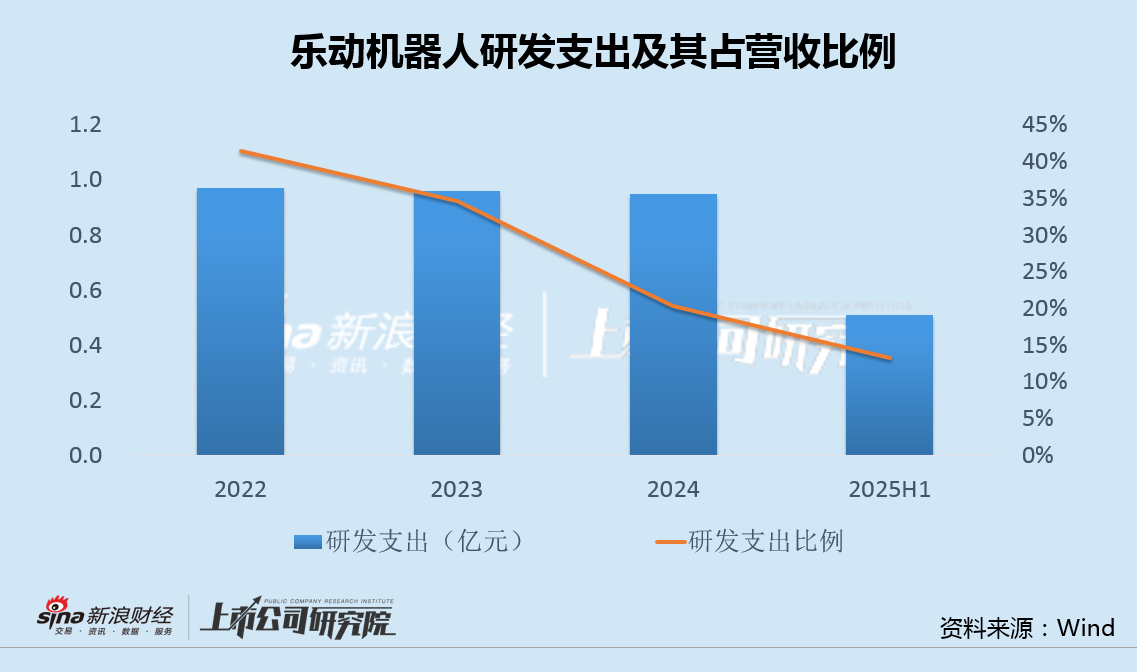
Core Viewpoint - Shenzhen Ledong Robot Co., Ltd. has submitted a second application for IPO on the Hong Kong Stock Exchange after its first application lapsed in May 2023, despite significant order and revenue growth, the company continues to face substantial losses and increasing competition in the robotics sector [1][3]. Group 1: Company Performance - Ledong Robot's revenue increased from 234 million in 2022 to 467 million in 2024, with a 97.03% year-on-year growth in the first half of this year, reaching 386 million [3]. - The company reported net losses of 73 million, 68 million, and 56 million for the years 2022 to 2024, with an additional loss of 14 million in the first half of this year [3]. - The gross margin for the sensor business has dropped to 15.2%, significantly lower than comparable companies [3]. Group 2: Research and Development - Ledong Robot has been reducing its R&D spending, with the proportion of R&D expenses to revenue declining from 41% in 2022 to an estimated 13% in the first half of 2025, approaching the 15% threshold set by the Hong Kong Stock Exchange for IPO eligibility [3][6][7]. - The company plans to use IPO proceeds to enhance R&D in intelligent robot visual perception technology, optimize products, and expand internationally [2]. Group 3: Competitive Landscape - The company faces increased pressure from downstream clients who are developing their own technologies and reducing reliance on external suppliers, as well as competition from traditional lidar manufacturers entering the robotics market [7][9]. - Competitors like Stone Technology and Chasing Technology are showcasing advanced technologies that diminish the demand for Ledong Robot's products [8][9]. Group 4: Financial Health - Ledong Robot's debt ratio has risen from 16% in 2022 to 49% by mid-2023, with accounts payable exceeding 316 million, a 64% increase from the previous period [10][12]. - The company has reported negative operating cash flow, with a cumulative outflow of 224 million, despite raising over 600 million in external financing [10][12]. - The concentration of procurement and sales is high, with over 70% of components sourced externally and significant reliance on a few major suppliers and customers [12].
121家企业不满10岁即上市,深圳盛产上市“少年兵”
第一财经· 2025-12-08 09:51
Core Viewpoint - Shenzhen has seen a surge in young companies going public, with 121 companies established for less than ten years successfully listing, driven by innovation resources, supportive policies, and financial capital [3][4][6]. Group 1: Young Companies and Market Dynamics - Shenzhen has produced a significant number of "young listed companies," with 121 companies achieving this milestone, including notable firms like BYD and Dazong Laser [3][6]. - Many of these companies are leaders in niche markets, with some becoming the first in their respective industries to go public [6]. - The "20+8" industrial cluster in Shenzhen is a primary source of these new listings, reflecting both market trends and the city's commitment to fostering an innovative ecosystem [6][7]. Group 2: Innovation and Resource Transformation - Shenzhen's focus on enterprise-led innovation has resulted in a large pool of innovative companies, contributing to the listing resource dividend [7]. - The city has over 25,000 national high-tech enterprises, leading the nation in density, and has a significant number of specialized "little giant" companies [7]. - The local supply chain network allows for rapid product development, with 90% of components available within an hour's drive, facilitating quick transitions from design to production [7][8]. Group 3: Policy Support - Shenzhen's government has implemented various supportive policies to nurture companies from inception to public listing, including a comprehensive cultivation system for market entities [10][11]. - The city has established a one-stop service platform for companies seeking to go public, which has been replicated nationwide [11]. - Recent measures aim to enhance the quality of listed companies and expand the pool of potential listings through targeted policies [11][12]. Group 4: Capital Market and Financial Ecosystem - Shenzhen has developed a multi-layered capital ecosystem, with private equity and venture capital funds exceeding 1.5 trillion yuan, supporting a large number of enterprises [14][15]. - The city hosts regular events like "Shenzhen Venture Capital Day" to connect innovative companies with global capital, facilitating significant funding agreements [14][15]. - Government investment funds have played a crucial role in supporting nearly 600 companies to go public, with a focus on long-term investment strategies [15][16].

港股收盘 | 恒指收跌1.23% 券商、芯片股等逆市上涨 百度集团-SW领升蓝筹
Zhi Tong Cai Jing· 2025-12-08 08:51
Market Overview - The Hong Kong stock market faced pressure, with the Hang Seng Index dropping over 1%, closing at 25,965.36 points, down 1.23% or 319.72 points, with a total turnover of HKD 2,062.3 million [1] - The Hang Seng China Enterprises Index fell by 1.25% to 9,083.53 points, while the Hang Seng Tech Index remained flat at 5,662.55 points [1] Blue Chip Performance - Baidu Group-SW (09888) led blue-chip stocks, rising 3.45% to HKD 125.8, contributing 8.38 points to the Hang Seng Index [2] - Other notable performers included SMIC (00981) up 2.94%, China Ping An (02318) up 2.15%, while China Construction Bank (00939) fell 4.01%, dragging the index down by 54.39 points [2] Sector Highlights - Large tech stocks generally declined, with Alibaba down over 1% and Tencent down 0.82% [3] - Chinese brokerage stocks rose against the trend, with Huatai Securities (06886) up 5.17% and GF Securities (01776) up 3.1% [3] - The light communication sector saw significant gains, with Huiju Technology rising over 7% [4] - Lithium stocks mostly increased, with Ganfeng Lithium (01772) up 6.95% and CATL (03750) up 3.28% [5] Regulatory Developments - The Chairman of the China Securities Regulatory Commission (CSRC) emphasized the need to accelerate the development of top-tier investment banks and institutions, indicating a potential easing of regulations for quality institutions [4] - The CSRC plans to optimize risk control indicators and moderately open up capital space and leverage limits, which could benefit leading brokerages [4] New Listings and Stock Movements - Two new stocks were listed, with Zhuoyue Ruixin (02687) surging 87.26% and Naxinwei (02676) declining 4.31% [7] - Restructured Energy (02570) faced a significant drop of 27.33% on its first trading day after the lock-up period ended [8] - Silver Pharma-B (02591) saw a decline of 14.32% following its inclusion in the Hong Kong Stock Connect [9] - Sutech (02498) performed well, rising 5.23% after securing a major order from FAW Toyota [10] Pharmaceutical Sector Updates - The National Healthcare Security Administration announced the addition of 114 new drugs to the 2025 National Medical Insurance Drug List, with a success rate of 88%, up from 76% in 2024 [6]


港股收盘(12.08) | 恒指收跌1.23% 券商、芯片股等逆市上涨 百度集团-SW(09888)领升蓝筹
智通财经网· 2025-12-08 08:40
Market Overview - The Hong Kong stock market faced pressure, with the Hang Seng Index dropping over 1%, closing at 25,965.36 points, down 1.23% or 319.72 points, with a total turnover of HKD 206.23 billion [1] - The Hang Seng China Enterprises Index fell by 1.25% to 9,083.53 points, while the Hang Seng Tech Index remained flat at 5,662.55 points [1] Blue Chip Performance - Baidu Group-SW (09888) led blue-chip stocks, rising 3.45% to HKD 125.8, contributing 8.38 points to the Hang Seng Index [2] - Other notable performers included SMIC (00981) up 2.94% and China Ping An (02318) up 2.15%, while China Construction Bank (00939) fell 4.01%, dragging the index down by 54.39 points [2] Sector Highlights - Major technology stocks generally declined, with Alibaba down over 1% and Tencent down 0.82% [3] - Chinese brokerage stocks rose against the trend, with Huatai Securities (06886) up 5.17% and GF Securities (01776) up 3.1% [3][4] - The light communication sector saw significant gains, with Huiju Technology (01729) rising 7.65% [4] - Lithium stocks mostly increased, with Ganfeng Lithium (01772) up 6.95% and CATL (03750) up 3.28% [5] Regulatory Developments - The Chairman of the China Securities Regulatory Commission (CSRC) emphasized the need to accelerate the development of top-tier investment banks and institutions, indicating a potential easing of regulations for quality institutions [4] - The CSRC plans to optimize risk control indicators and open up capital space and leverage limits [4] New Drug Listings - The National Healthcare Security Administration announced the addition of 114 new drugs to the 2025 National Medical Insurance Drug List, with a success rate of 88%, significantly higher than the previous year's 76% [6] New Listings and Stock Movements - New listings included Zhuoyue Ruixin (02687), which surged 87.26% to HKD 126.4, while Naxin Micro (02676) fell 4.31% [7] - Restructured Energy (02570) saw a significant drop of 27.33% on its first trading day after the lock-up period ended [8] - Silver Pharma-B (02591) experienced a decline of 14.32% as it was adjusted into the Hong Kong Stock Connect [9] - Sutech (02498) performed well, rising 5.23% after securing a major contract with FAW Toyota [10]
121家企业不满10岁即上市:深圳何以盛产上市“少年兵”
Di Yi Cai Jing· 2025-12-08 08:09
Core Viewpoint - Shenzhen has seen a surge in young companies going public, driven by the transformation of innovation resources, supportive policies, and financial capital [1][2][3] Group 1: Young Companies Going Public - In the past week, seven Shenzhen tech companies submitted listing applications in the Hong Kong market, including companies like Ledong Robotics and Xihua Technology, many of which are under ten years old [1] - As of now, Shenzhen has 121 companies that have successfully gone public within ten years of establishment, including notable firms like BYD and Dazong Laser [1][3] - The emergence of these young companies is attributed to Shenzhen's long-term focus on high-tech industries, attracting talent and entrepreneurial ventures [2] Group 2: Resource Transformation - Many of the listed companies are leaders in their respective niche markets, with some being the first in their industries, such as BYD as the "first stock" in the Chinese automotive sector [3] - The "20+8" industrial cluster in Shenzhen has become a primary source for new public companies, reflecting both market trends and the city's commitment to fostering an innovative ecosystem [3][4] Group 3: Innovation and Supply Chain - Shenzhen has cultivated a large group of innovative enterprises, with over 25,000 national high-tech companies, the highest density in the country [4] - The city has developed a robust supply chain network, allowing for rapid product development and manufacturing, which is crucial for tech companies [4][5] Group 4: Policy Support - Shenzhen's government has implemented various supportive policies to facilitate company listings, including a comprehensive nurturing system for market entities [7][8] - The city has established a one-stop service platform for companies seeking to go public, which has been replicated nationwide [8] Group 5: Financial Capital - Shenzhen has a well-established financial ecosystem, with over 1.5 trillion yuan in private equity and venture capital, supporting around 14,000 companies [10][11] - The city hosts regular events like "Shenzhen Venture Capital Day" to connect innovative companies with global capital [10] - Government investment funds have played a significant role in promoting company listings, with over 600 companies listed due to these initiatives [11]
港股午评 恒生指数早盘跌1.1% 中资券商板块逆市走强
Jin Rong Jie· 2025-12-08 05:03
Group 1 - The Hang Seng Index fell by 1.10%, down 285 points, closing at 25,799 points, while the Hang Seng Tech Index decreased by 0.24% [1] - Chinese brokerage stocks saw significant gains, with the CSRC chairman suggesting an expansion of capital space for brokerages, potentially increasing the ROE ceiling for quality brokerages. Hongye Futures rose by 7.67%, Huatai Securities by 6.09%, and Guotai Junan by 5.45% [1] - The automotive sector is optimistic about the new national standard for steering systems, with Naisite rising over 6% [1] Group 2 - The semiconductor sector is experiencing a positive trend, with a focus on domestic substitution. Chip stocks generally rose, with Huahong Semiconductor and SMIC both increasing by over 3% [1] - The AI and computing power sectors are showing strong upward movement, with optical communication concepts rising against the market trend. Changfei Optical Fiber Cable increased by over 5%, and Huiju Technology rose by over 4% [1][2] Group 3 - Cambridge Technology surged over 6% as the global optical module industry accelerates its upgrade to 800G/1.6T, benefiting from the growing demand for AI computing power [2] - Suto Technology rose over 4% after securing exclusive designation for a well-known model from FAW Toyota [3] Group 4 - Tianyu Semiconductor rebounded over 12% on its second day of listing, although it remains 20% below its IPO price [4] - Coal stocks faced significant declines, with coking coal futures dropping sharply. China Qinfa fell by 12%, China Coal Energy by 4%, and China Shenhua by 3% [4] Group 5 - Zhongshuo Energy plummeted over 20%, reaching a historical low as it faced a lock-up expiration after one year of listing [5] - Innovent Biologics, on its first day in the Hang Seng Index, dropped over 8%, with multiple large transactions exceeding HKD 1.2 billion [6]