
雀巢

Search documents
高德美股价暴涨,这家医美公司凭什么值3000亿?
Sou Hu Cai Jing· 2025-11-18 05:39
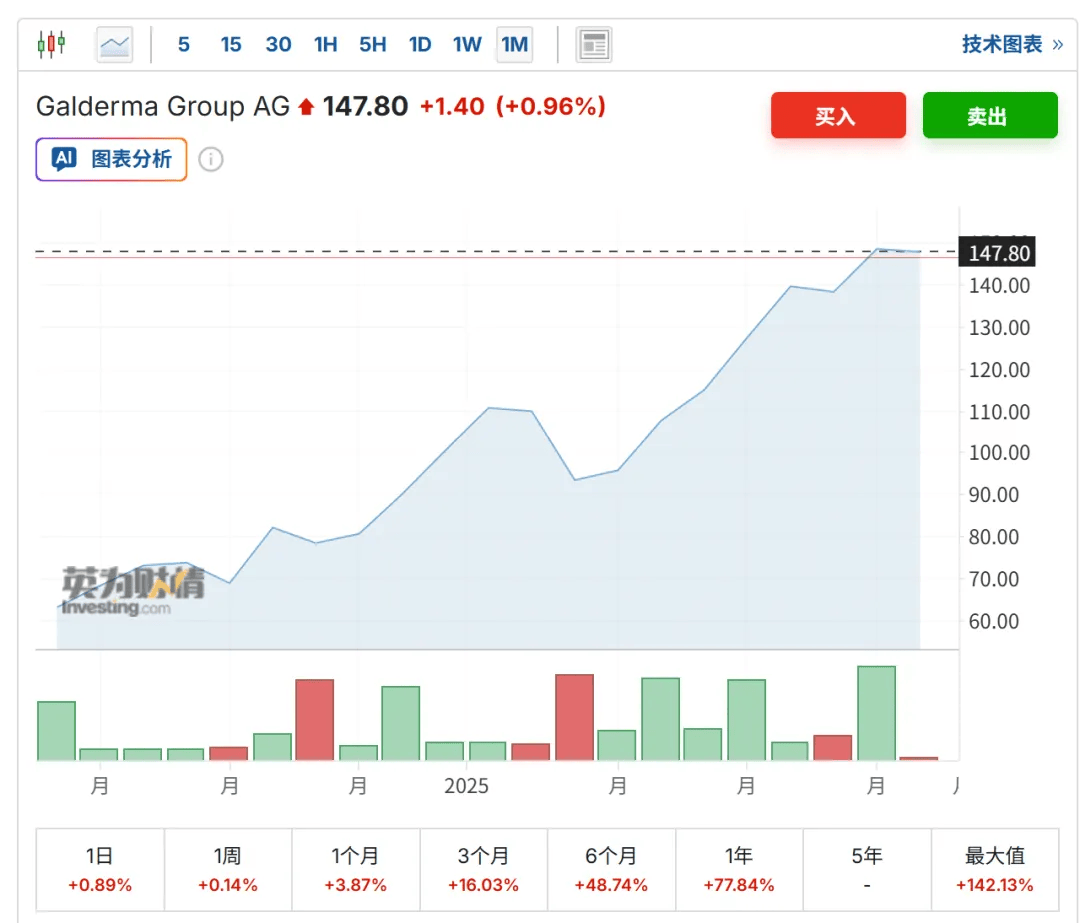
Core Insights - Galderma's market capitalization has exceeded 35 billion Swiss francs (approximately 310 billion RMB) as of November 2025, reflecting significant growth since its IPO in March 2024 [1][2] - The company has demonstrated strong financial performance, with a sales revenue of 1.289 billion USD (approximately 9.2 billion RMB) in Q3 2025, marking a 21% year-on-year increase [4] - Galderma has raised its full-year revenue growth guidance for 2025 to 17.0%-17.7%, up from the previous estimate of 12%-14% [4] Company Background - Galderma originated from the American Owen Laboratory, founded in 1961, and has undergone several ownership changes, including acquisitions by Alcon and Nestlé [5][6][10] - The company was established as a joint venture between Nestlé and L'Oréal in 1981, focusing on dermatological research [7] - In 2019, Nestlé sold its stake in Galderma, which then became an independent entity, emphasizing skincare and aesthetic medicine [10] Product Portfolio - Galderma's product range includes brands such as Restylane, Dysport, and Cetaphil, covering aesthetic injectables, skincare, and dermatological treatments [11][13] - The company has a robust pipeline with over 40 years of research experience, five R&D centers, and 55 patents [10][20] Financial Performance - In the first nine months of 2025, Galderma's three main business segments—injectable aesthetics, daily skincare, and dermatological treatments—showed overall growth [18] - The injectable aesthetics segment generated 1.871 billion USD (approximately 13.325 billion RMB) in sales, with a 10.5% year-on-year increase [15] - The dermatological treatment segment saw a remarkable 40.4% increase in sales, reaching 804 million USD (approximately 5.726 billion RMB) [16] Strategic Insights - Galderma's success is attributed to its long-term commitment to R&D, establishing a competitive edge in the skincare industry [20] - The company employs a "pyramid" product strategy, balancing stable cash flow from daily skincare with high-growth and high-margin aesthetic injectables [21][23] - Galderma's global presence in over 100 countries is complemented by localized strategies that cater to specific market preferences [25][26] Industry Implications - The medical aesthetics industry is shifting from marketing-driven approaches to product and R&D-focused strategies, with Galderma serving as a model for other companies [19] - Establishing "professional trust" through clinical partnerships and scientific evidence is becoming increasingly important in a market saturated with low-level marketing [28]

Consumer Brands Shake Things Up...With Mergers
Yahoo Finance· 2025-11-17 18:45
AI Market Insights - Federal Reserve Chairman Jerome Powell emphasized that current AI investments are different from the dot-com bubble due to the presence of earnings in established companies [1][2] - The AI market is being driven by profitable companies like NVIDIA, Microsoft, and Alphabet, which are generating substantial AI-related revenue, contrasting with many pre-profit companies during the dot-com era [2][3] - There is a speculative element in current valuations, primarily concerning the anticipated returns on AI investments rather than the existence of viable business models [2][5] Consumer Goods M&A Activity - Recent M&A activity in the consumer goods sector includes Kimberly Clark's acquisition of Kenvue for over $40 billion, Kraft Heinz splitting into two, and PepsiCo's multiple smaller acquisitions [6][7] - A Boston Consulting Group study indicated a 10% increase in global M&A activity in the first nine months of 2025 compared to the previous year, with a significant rise in deal value in the consumer sector [6][7] - The consumer staples sector has underperformed the S&P 500 by 15% over the past three years, prompting consolidation efforts among companies [6][8] Company-Specific Analysis - Kimberly Clark's acquisition of Kenvue aims to enhance its position in the higher-margin consumer healthcare space, potentially generating $32 billion in annual revenue [6][9] - Concerns exist regarding Meta's ability to monetize its investments, as it has shifted from funding through free cash flow to taking on significant debt [4][9] - The middle segment of the retail market has been hollowed out, with consumers favoring premium brands or store brands, which poses challenges for companies like Kraft Heinz and Kimberly Clark [8][9]


日本7-Eleven卖的这瓶“水”,居然能补5g蛋白质
新消费智库· 2025-11-17 13:05
Core Viewpoint - The article discusses the launch of a transparent protein water product by Japan's 7-Eleven under its private brand Cycle.me, highlighting its unique positioning in the beverage market and the growing consumer interest in protein intake [6][15][19]. Product Overview - Cycle.me's protein water is priced at 193 yen (approximately 9.3 RMB) and contains 5g of low molecular collagen protein per bottle [15][18]. - The product is marketed with three key selling points: hydration while consuming protein, moderate sweetness with a peach flavor, and the use of mineral-rich deep-sea water from Kochi Prefecture [18][19]. Market Trends - A survey indicates that protein is the most desired nutrient among consumers, which has driven the development of protein water [19]. - According to Fuji Economic Group, the demand for protein food and beverages is expected to grow by 2.8% in 2024, reaching 276.3 billion yen (approximately 11.4 billion RMB) [20]. Development Challenges - Cycle.me faced challenges in maintaining the clarity and stability of the liquid during production, requiring extensive optimization of the entire production process [22][23]. - The final product successfully mimics the appearance of water while retaining nutritional value and a pleasant taste [25][26]. Comparison with Global Trends - The article contrasts Cycle.me's transparent protein water with similar products in the Western market, which often use hydrolyzed whey protein to create semi-transparent beverages [31][32]. - The trend of "Clear Protein" is gaining traction in the U.S., with a market size of $2.72 billion in 2023 and an expected annual growth rate of 6.7% from 2024 to 2030 [36]. Broader Industry Innovations - The article notes that the integration of protein into various food and beverage categories is becoming more prevalent, with brands innovating in areas such as protein-infused coffee and high-protein snacks [50][51]. - The success of high-protein products, such as Greek yogurt and low-calorie ice cream, demonstrates a significant shift in consumer preferences towards healthier, protein-rich options [54][55].

CII: Options Fund With 7% Income, Decent Growth, Zero Leverage, And Lower Volatility
Seeking Alpha· 2025-11-16 13:00
High Income DIY Portfolios: The primary goal of "High Income DIY Portfolios" Marketplace service is high income with low risk and preservation of capital. It provides DIY investors with vital information and portfolio/asset allocation strategies to help create stable, long-term passive income with sustainable yields. The portfolios are designed for Income-Investors (including retirees or near-retirees). We provide seven portfolios: 3 buy-and-hold, 3 Rotational portfolios, and 3-Bucket NPP Model Portfolio. T ...

U.S. And Switzerland Reach Trade Agreement—Lowering Tariffs To 15%
Forbes· 2025-11-14 15:40
Core Points - The U.S. and Switzerland have reached a trade agreement to lower tariffs on Swiss goods from 39% to 15% [1] - Switzerland is committed to investing $200 billion in the U.S. during Trump's second presidency, including $70 billion next year [2] - The total goods trade between the U.S. and Switzerland was estimated at $88.4 billion in 2024, with Swiss watch exports to the U.S. growing significantly [4] Trade Agreement Details - The agreement aims to reduce tariffs on luxury exports from Switzerland, which include jewelry, coffee, and chocolate [1] - U.S. trade representative Jamieson Greer indicated that the agreement is "essentially" finalized [1][3] Investment Commitments - Switzerland plans to invest heavily in U.S. sectors such as pharmaceuticals and gold smelting, with Roche pledging $50 billion [2] - The commitment includes purchasing more Boeing commercial planes [2] Impact on Goods Trade - Swiss exports to the U.S. have been growing at a rate of 14% annually since 2019, significantly outpacing the global average [4] - Swiss watch exports surged 18.2% overall, with shipments to the U.S. increasing by 149% following the announcement of tariffs [4]

研产销多点攻破,AI基因由内而外渗入雀巢品系
Cai Jing Wang· 2025-11-14 07:43
Core Insights - The integration of AI into Nestlé's operations is transforming its product development, production, and marketing processes, enhancing innovation efficiency and responsiveness to market demands [1][2][4]. Group 1: Innovation and R&D - Nestlé is enhancing its R&D capabilities by establishing a new deep technology center focused on biotechnology, which aims to optimize innovation processes and improve operational efficiency [2][3]. - The new capabilities will lead to the development of innovative nutritional solutions, particularly in maternal and early life nutrition, as well as medical nutrition [3][4]. - The company plans to leverage advanced technologies such as next-generation screening analysis and precision fermentation to drive significant advancements in precision nutrition [3][4]. Group 2: Production and Supply Chain Optimization - AI is being utilized to optimize production processes, improve supply chain management, and enhance product quality through precise data analysis [4][5]. - Nestlé has implemented AI technologies in smart factories to identify product defects and ensure safety, significantly improving overall production efficiency [4][5]. - The application of machine learning and AI data modeling in specific production processes has led to stable product quality and increased output efficiency [4]. Group 3: Marketing and Consumer Engagement - AI is enabling Nestlé to better understand consumer preferences, allowing for the customization of products and services [4][5]. - The company is adopting AI-driven digital twin technology to create high-quality product content for e-commerce and digital media, significantly reducing the time and cost associated with content creation [5][6]. - Nestlé aims to deliver engaging content across various online platforms, enhancing consumer connection and brand positioning [6]. Group 4: Sustainable Packaging Innovations - Nestlé is collaborating with IBM to develop AI-driven tools for identifying new high-barrier packaging materials, aiming to reduce reliance on virgin plastics and enhance sustainability [7][8]. - The partnership focuses on utilizing AI to analyze molecular structures and properties, leading to the creation of innovative packaging solutions that protect sensitive products [7][8]. - The new AI-driven language model is expected to optimize sustainable packaging solutions across various product lines, reinforcing Nestlé's leadership in digital transformation within the food and beverage industry [8].

咖啡“卷”到2.9元/杯,雀巢这家公司靠高附加值咖啡能否抢赢中国市场?
Mei Ri Jing Ji Xin Wen· 2025-11-13 13:32
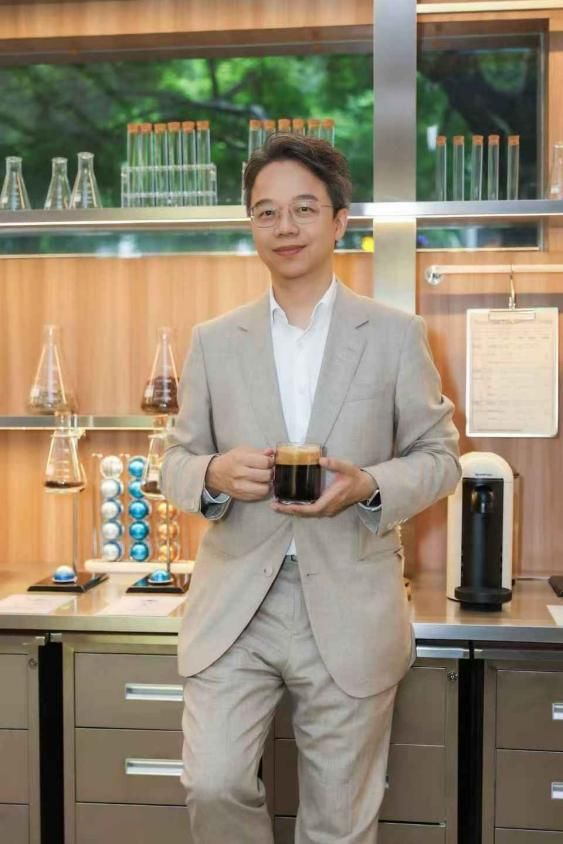
Core Insights - The Chinese coffee market has experienced rapid growth since the 1980s, with various coffee formats emerging, including instant, ready-to-drink, capsule, and freshly brewed coffee [1][2] - Intense competition has characterized the market, particularly in 2023, with significant price reductions and the expansion of coffee shops into lower-tier cities [1][4] - Nestlé's Nespresso views China as a high-priority market with substantial growth potential, although consumption levels still lag behind mature markets [1][4] Market Dynamics - The coffee market in China has seen a shift in brand rankings due to increased competition, with major players like Starbucks adjusting their strategies, including the sale of a majority stake in its Chinese operations [1][4] - Nespresso's sales in 2022 reached 6.378 billion Swiss francs, highlighting its significant contribution to Nestlé's overall performance [2] Consumer Trends - There is a growing preference for larger coffee servings in China, with over 60% of consumers favoring milk-based coffee, contrasting with European habits of consuming smaller espresso shots [6][7] - The trend of "specialty" coffee and innovative ingredients is becoming popular among younger consumers, indicating a shift towards more personalized coffee experiences [6][7] Product Development - Nespresso aims to differentiate itself by emphasizing its unique brand story and product offerings, particularly in the context of the growing capsule coffee segment, which has seen a 226.8% year-on-year growth, albeit from a low sales base [5][6] - The company recognizes the need to adapt its marketing strategies to resonate with local cultural preferences and consumer behaviors, moving away from a one-size-fits-all approach [6][9] Emotional Connection - Chinese consumers are increasingly seeking emotional value from their coffee experiences, desiring not just product innovation but also meaningful connections through promotions and collaborations [7][9] - Nespresso's partnership with table tennis athlete Wang Chuqin as a brand ambassador reflects the company's strategy to localize its brand presence and appeal to younger demographics [9]
「咖啡启蒙者」光环褪色,雀巢咖啡要赢得中国年轻消费者有多难? | 声动早咖啡
声动活泼· 2025-11-12 10:05
Core Viewpoint - Nestlé, once a leader in the instant coffee market in China, is now facing challenges in attracting young consumers, necessitating a strategy to rejuvenate its brand and appeal to this demographic [2][8]. Company Overview - Nestlé, a Swiss food and beverage giant, has a diverse portfolio that includes coffee, dairy products, confectionery, beverages, and pet food, with over 2,000 brands operating in more than 100 countries [4]. - The company originated from a baby food product developed in the 1860s by pharmacist Henri Nestlé, which aimed to reduce infant mortality rates in Switzerland [4]. Coffee Business Development - Nestlé's instant coffee, Nescafé, was created in 1930 using spray-drying technology to address surplus coffee production in Brazil, becoming a staple for U.S. troops during WWII and gaining popularity post-war [5]. - The coffee segment has become a core part of Nestlé's business, with Nescafé generating approximately $10 billion in annual sales, accounting for 36% of the company's coffee business revenue [5][9]. - In 2018, Nescafé held over 70% market share in China's instant coffee market, significantly outpacing its closest competitor, Maxwell [5]. Market Trends and Challenges - The instant coffee market in China is currently valued at approximately 78 billion yuan, representing nearly half of the national coffee market, but has seen a slight decline of 1.5% year-on-year [9]. - The rise of fresh coffee consumption and changing health perceptions among consumers have led to a preference for low-sugar, no-cream instant black coffee, impacting traditional instant coffee sales [9]. - Competitors like Luckin Coffee and Starbucks have become more prominent in the minds of young consumers, overshadowing Nestlé's historical presence in the market [7][9]. Product Innovation and Strategy - In response to market changes, Nestlé has introduced new products, including upgraded classic series, zero-sugar options, and beverages like sparkling Americano, while also diversifying into various formats such as drip coffee and ready-to-drink products [9][10]. - Despite these innovations, Nestlé faces challenges in reshaping consumer perceptions, as many still associate the brand primarily with sugary instant coffee [10]. Distribution and Sales Dynamics - Nestlé has traditionally employed a "deep distribution" model, requiring distributors to purchase in bulk, which has led to inventory issues and financial pressures amid slowing consumer demand [11][12]. - Recent shifts in strategy aim to transition from a distribution-driven model to one focused on actual consumer sales, indicating a need for better engagement with end consumers [12].

AI加速狂飙,裁员如火如荼
3 6 Ke· 2025-11-12 09:17
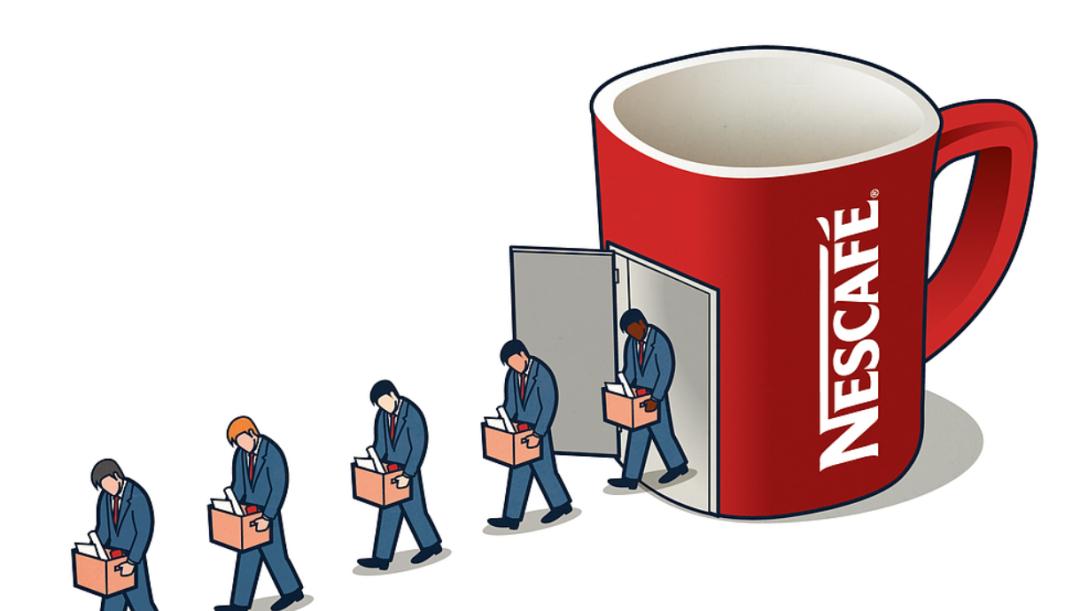
Core Insights - Accenture's CEO announced a significant workforce reduction, with over 10,000 employees laid off in three months due to the inability to adapt to AI skills [1] - The rise of generative AI is reshaping the skill requirements in industries traditionally reliant on human labor, such as consulting and advertising [1][2] - Major companies like Nestlé and Procter & Gamble are also cutting jobs, indicating a broader trend across consumer brands [2] Group 1: Impact on Industries - The consulting and advertising sectors are experiencing the most significant job cuts, as AI begins to take over core tasks previously performed by humans [2] - The advertising industry is particularly affected, with many companies reducing middle and junior creative roles due to the efficiency brought by generative AI [4] - AI Agents are becoming essential infrastructure in advertising, leading to reduced creative support needs and fewer jobs in the supply chain [4] Group 2: Job Restructuring and AI Integration - The automation of processes in programmatic advertising has shielded it from the job cuts seen in other areas, as these processes were already moving towards automation [5] - Job cuts are not merely about replacing humans but reflect a strategic restructuring to integrate AI into workflows, enhancing efficiency [6][9] - Companies are transitioning roles from traditional execution to AI collaboration and oversight, indicating a shift in job functions rather than outright replacement [10][12] Group 3: Future Trends and Organizational Changes - The trend of layoffs is not one-sided; companies like Microsoft are also considering rehiring for AI-driven roles, suggesting a dynamic adjustment in workforce needs [10] - The advertising industry is moving towards a decentralized model where individual roles will emphasize cross-functional skills and AI collaboration [12][14] - The ongoing adjustments in workforce structure highlight the need for companies to balance efficiency with strategic decision-making capabilities [14]

雷鸟创新获融资;万辰集团启动上市NDR;帝亚吉欧任命CEO
Sou Hu Cai Jing· 2025-11-11 14:36
Investment Dynamics - Thunder Innovation has completed a Series C financing round led by CITIC Jinshi, with participation from CITIC Securities International Capital and CITIC Securities Investment. The funds will focus on R&D in near-eye display, AI algorithms, and multimodal interaction, aiming to transition AR glasses from niche products to mainstream smart devices [3] - Nestlé is intensifying its efforts to develop nutritional solutions targeting emerging growth areas, particularly focusing on women's health, longevity, and weight management through strategic collaborations with universities [6] - Timex Group has acquired a 51% stake in Daniel Wellington, marking the brand's entry into Timex's multi-brand matrix while maintaining its independence and design ethos [8] - Wancheng Group plans to launch a non-deal roadshow (NDR) for its Hong Kong IPO on November 11, aiming to raise approximately $300 million to $500 million, equivalent to about 2.1 billion to 3.6 billion RMB [11] - Meet Noodle is set to begin its pre-IPO roadshow this month, with expected fundraising between $100 million to $200 million, which will be used for store expansion and central kitchen development [14] - If Coconut Water has signed a memorandum of cooperation with the Shanghai Xihongqiao government to establish its first mainland China branch, enhancing its product matrix and consumer service experience [17] Financial Reports - Swire Properties reported that as of September 30, 2025, its three core shopping centers in Hong Kong maintained a 100% occupancy rate, with retail sales increasing by 3.6%, 3.0%, and 0.2% year-on-year [19] - Tapestry, the parent company of Coach, reported a 16% increase in sales for the first fiscal quarter, reaching $1.7 billion, with adjusted operating income rising by 24.2% to $354 million [21] Personnel Dynamics - PepsiCo plans to close two Frito-Lay facilities in Orlando, Florida, affecting a total of 500 jobs, as part of its strategy to curb declining snack sales in the U.S. [23] - Diageo has appointed Dave Lewis as CEO, effective January 1, 2024, who previously served as CEO of Tesco and has extensive experience at Unilever [26]
