
法国巴黎银行

Search documents
BNP Paribas SA 2025 SREP notification: P2R requirements lower compared to 2024 SREP
Globenewswire· 2025-10-30 18:09
Core Points - BNP Paribas has received notification from the European Central Bank regarding the 2025 Supervisory Review and Evaluation Process (SREP), which outlines the Group's capital requirements and leverage ratio on a consolidated basis [2][3] - The Pillar 2 Requirement (P2R) for BNP Paribas is set at 1.73% as of January 1, 2026, reflecting a decrease of 11 basis points compared to the 2024 SREP [3] - The Common Equity Tier 1 (CET1) requirement is 10.44% as of January 1, 2026, which includes various buffers [4] Capital Requirements - As of September 30, 2025, BNP Paribas exceeds the regulatory capital requirements with a CET1 ratio of 10.51%, a Tier 1 ratio of 12.31%, and a Total Capital ratio of 14.71% [5] - The Tier 1 Capital ratio requirement is 12.23%, while the Total Capital ratio requirement is 14.62% [7] - The leverage ratio remains unchanged at 3.85% [7] Stress Test Results - The results from the 2025 stress test conducted by the EBA and ECB place BNP Paribas in the first bucket of the ECB's Pillar 2 Guidance (P2G), with a range of 0 to 100 basis points, lower than the previous range of 50 to 200 basis points [5] Corporate Profile - BNP Paribas operates in 64 countries with nearly 178,000 employees, focusing on various banking and financial services [6] - The Group has a strong presence in Europe, the Americas, and Asia-Pacific, with key positions in commercial banking, investment services, and corporate banking [6] - The company has implemented a Corporate Social Responsibility approach to contribute to a sustainable future while ensuring performance and stability [8]



刚刚,欧央行宣布“按兵不动”!货币政策没有预设路径
Sou Hu Cai Jing· 2025-10-30 14:46
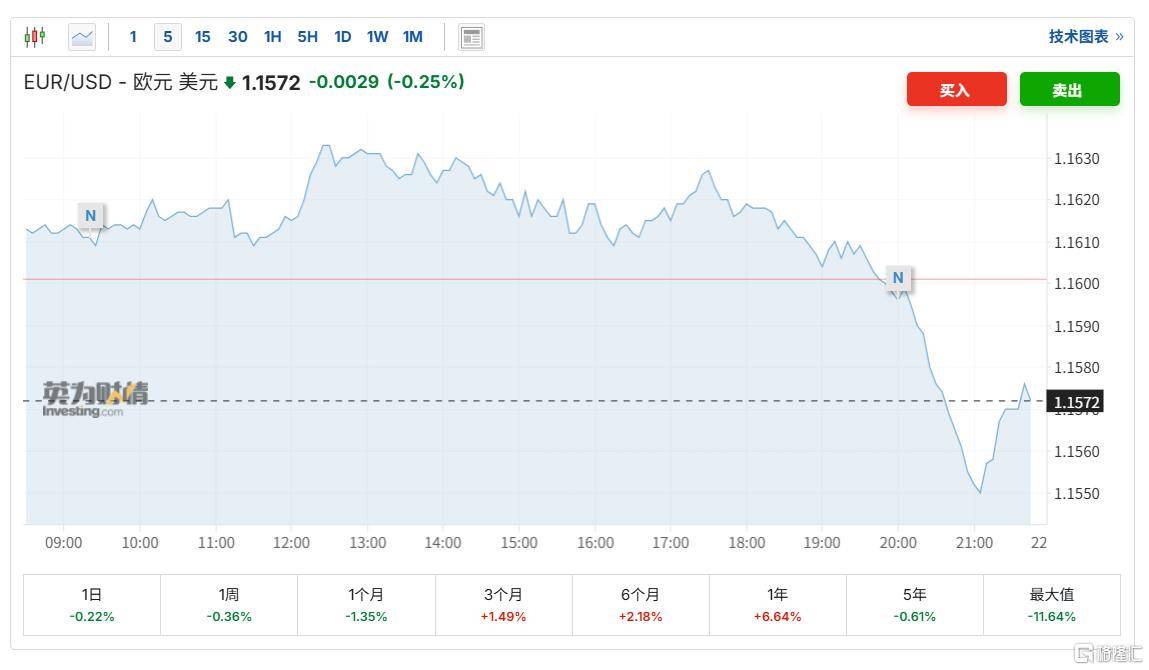
Core Points - The European Central Bank (ECB) has decided to maintain interest rates at 2%, marking the third consecutive meeting with no changes, despite market volatility due to trade relations [1][3] - The ECB has cut rates by 2 percentage points over the past year but has since adopted a wait-and-see approach, as inflation has reached the policy target of 2%, which other major central banks have not yet achieved [1][6] - Following the announcement, the euro fell by 0.23% against the dollar, trading at 1.1572 [1] Summary by Sections Monetary Policy - The ECB's deposit facility rate, main refinancing rate, and marginal lending rate remain unchanged at 2%, 2.15%, and 2.40% respectively [3] - The ECB aims to ensure medium-term inflation stability at the 2% target and has not committed to a specific interest rate path, indicating readiness to adjust all tools based on data and meeting reviews [6] Economic Outlook - The ECB maintains its assessment of inflation near the 2% target, with decisions based on inflation outlook and risks, while the eurozone economy continues to grow despite global trade tensions and geopolitical uncertainties [6][7] - The ECB is gradually reducing its asset purchase programs (APP and PEPP) as the euro system stops reinvesting the principal of maturing securities [6] Market Reactions - Analysts suggest that further rate cuts will require signs of data deterioration, with a high threshold for additional cuts despite some council members favoring a "risk management" approach [7] - The latest data shows the eurozone's inflation rate at 2.2% in September, above the 2% target, providing confidence for the ECB to pause rate cuts [7][8] - Most economists view eurozone inflation as moderate, with recent increases in German inflation still close to long-term averages, supporting the ECB's decision to hold rates steady [8]
美联储再次降息!四大央行紧急行动,鲍威尔发声,市场反应如何?
Sou Hu Cai Jing· 2025-10-30 12:42
Group 1 - The core focus of the article is the simultaneous meetings of major central banks, including the Federal Reserve, Bank of Canada, European Central Bank, and Bank of Japan, highlighting the rarity of such coordinated discussions on interest rates since early 2021 [1][12] - The Federal Reserve's decision to lower the federal funds rate target range by 25 basis points to 3.75% to 4.00% marks the second consecutive rate cut of the year, but internal disagreements among board members have become apparent [3][4] - The contrasting views within the Federal Reserve, with one member advocating for a larger cut to mitigate economic risks and another opposing any change to control inflation, reflect the divided signals in the U.S. economy [5][6] Group 2 - Other central banks have clearer policy focuses compared to the Federal Reserve, with the Bank of Canada facing strong employment data against persistent inflation, while the European Central Bank is likely to maintain its current stance due to stubborn service sector inflation [8][10] - The Bank of Japan's policy direction is constrained by political pressures, delaying expectations for interest rate hikes [10][12] - The divergence in central bank policies underscores the lack of synchronized economic recovery globally, with the Federal Reserve's decisions having significant spillover effects on other economies, particularly emerging markets [12][15] Group 3 - The Federal Reserve's recent rate cut and the decision to end its balance sheet reduction are significant shifts in policy focus, moving from price control to stabilizing liquidity in the financial system [12][14] - The internal divisions within the Federal Reserve reveal deeper contradictions in policy-making, with differing views on the economic outlook and inflation risks influencing future decisions [14][21] - Market reactions to the Federal Reserve's statements indicate a shift in expectations regarding future rate cuts, with a notable decrease in the probability of a December rate cut following the Chair's comments [14][23] Group 4 - The article suggests that the Federal Reserve's rate cuts may create a more accommodating external environment for other economies, particularly benefiting emerging markets and potentially easing pressures on the Chinese yuan [17][19] - The ongoing adjustments in global asset allocation are evident, with market volatility reflecting structural changes in response to the Federal Reserve's actions [19][23] - The current state of the Federal Reserve's rate cut cycle is characterized as entering an observation phase, with uncertainty surrounding future decisions becoming more pronounced [23]
HSBC expands Innovation Banking business to Singapore
Yahoo Finance· 2025-10-30 11:48
Core Insights - HSBC has expanded its Innovation Banking unit to Singapore, allocating $1.5 billion to support startup companies in the region [1] - The expansion is part of HSBC's global initiative to increase lending in sectors such as technology and life sciences [1] - Neil Falconer has been appointed to lead the Singapore arm of HSBC Innovation Banking [1] Business Performance - The Innovation Banking division now includes over 900 bankers and serves clients across multiple regions including the US, UK, Australia, and China [2] - In the first half of the year, HSBC's Innovation Banking business saw a nearly 60% increase in its active client base [2] - Deposits rose by approximately 50% and loan commitments increased by around 25% during the same period [2] Strategic Focus - HSBC's global head of Innovation Banking emphasized the bank's tailored credit policy to support cash-intensive businesses in technology and healthcare [3] - The bank aims to provide a stable environment for capital raised in technology sectors, particularly during IPOs [3] - HSBC has also launched an enhanced entrepreneurial wealth proposition in Singapore to support entrepreneurs at various stages of their business journey [3] Market Position - Singapore is recognized as a leading hub for entrepreneurs, with 15% of them planning to move their wealth there and 12% considering relocation [4] - The increase in liquidity and transition activity among founders linked to HSBC's Corporate and Institutional Banking network has been noted over the past year [4] - BNP Paribas has recently completed the acquisition of HSBC's private banking operations in Germany, indicating ongoing strategic shifts within the bank [4]

投资级主导下的欧洲可转债复苏:低息融资与稀缺性博弈的双重变奏
Sou Hu Cai Jing· 2025-10-30 11:01
Core Insights - The European convertible bond market is experiencing a revival, with over $10 billion issued by investment-grade companies in 2023, marking a significant recovery from last year's historical lows [1][2] - The recovery is characterized by a dominance of investment-grade issuers, reflecting a supply-demand imbalance and a shift in market structure driven by high interest rates and increased volatility [1][3] Group 1: Market Dynamics - The current environment is described as "financing-friendly," with higher interest rates enhancing the low-cost advantage of convertible bonds, allowing companies to secure long-term funding at lower costs [2][3] - The demand for new bonds is driven by a scarcity of existing high-quality bonds, leading to significant oversubscription for new issues, even those with stringent terms [2][6] Group 2: Structural Characteristics - The dominance of investment-grade issuers in the convertible bond market is a continuation of long-term structural trends, with a higher proportion of investment-grade participants compared to the U.S. and Asia [3][4] - Investment-grade companies are leveraging the current market conditions to diversify their funding sources, often issuing convertible bonds not out of urgent need but as a strategic move to lock in low-cost financing [3][5] Group 3: Risk and Return Considerations - The revival of the market, while positive, raises concerns about "low-quality prosperity," where terms are heavily skewed in favor of issuers, resulting in compressed investor returns [6][7] - The absence of mid-sized companies in the market could lead to a lack of high-growth opportunities, potentially stifling market vitality in the long run [6][7] Group 4: Future Outlook - The current investment-grade dominance may lead to a lack of diversity in the market, with calls for a more balanced mix of issuers, including high-yield borrowers, to ensure a healthier market environment [6][7] - As economic conditions evolve, there is potential for the market to shift towards a more balanced structure, but for now, investment-grade companies are capitalizing on the scarcity premium in the convertible bond market [7]
机构风向标 | 康泰医学(300869)2025年三季度已披露持仓机构仅6家
Sou Hu Cai Jing· 2025-10-30 01:28
Group 1 - The core viewpoint of the news is the disclosure of institutional and public fund holdings in Kangtai Medical as of the third quarter of 2025, indicating a slight decline in institutional ownership compared to the previous quarter [1][2] - As of October 29, 2025, six institutional investors hold a total of 8.1538 million shares of Kangtai Medical, representing 2.03% of the total share capital, with a decrease of 0.31 percentage points from the previous quarter [1] - Among public funds, two funds increased their holdings, including a medical device ETF and Dachen Jingheng Mixed A, with an increase in holding proportion of 0.25% [1] Group 2 - One social security fund, Penghua Fund Management Co., Ltd. - Social Security Fund 1804 Combination, was not disclosed in the current period compared to the previous quarter [2] - One foreign fund, Hong Kong Central Clearing Limited, reduced its holdings by 0.29% compared to the previous quarter [2]

外资重点加仓A股高端制造业
2 1 Shi Ji Jing Ji Bao Dao· 2025-10-29 11:49
Core Insights - QFII continues to favor A-share core assets, particularly in high-end manufacturing and defensive sectors, reflecting a strategic shift towards tactical accumulation under domestic autonomy logic [1][7][11] - As of the end of Q3, nearly 40 QFII institutions held approximately 119.4 billion yuan in A-shares, indicating a significant foreign interest in the Chinese market [1][10] QFII Investment Trends - QFII has increased holdings in over 500 A-share companies, with notable investments in banking, electrical equipment, building materials, chemicals, software services, machinery, and hardware [2][3] - Major QFII purchases include 124 million shares of Nanjing Bank by BNP Paribas and 72.85 million shares of China West Electric by JPMorgan Securities, highlighting a focus on financial stability and growth potential [2][3] Key Stocks and Sectors - Significant QFII increases were observed in stocks such as Oriental Yuhong, Baofeng Energy, and Huasheng Tiancheng, with multiple QFII institutions accumulating shares [4][5] - The most heavily accumulated stocks include Nanjing Bank, China West Electric, and Shengyi Technology, with QFII holdings in these companies reaching substantial market values [11][12] Sector Analysis - The banking sector saw a total increase of 124 million shares, while electrical equipment and computer sectors also received notable QFII investments, driven by stable dividends and growth prospects [7][11] - QFII's diversified approach includes investments across various industries, such as machinery, food and beverage, and biopharmaceuticals, while maintaining a focus on leading companies and core assets [11][12] Future Outlook - Analysts suggest that QFII's continued interest in Chinese assets reflects confidence in the market's upward trajectory, despite potential short-term fluctuations [13][14] - High-profile institutions like Goldman Sachs and UBS maintain a positive outlook on Chinese equities, advocating for a diversified investment strategy that includes growth stocks and high cash yield portfolios [13][14]

Q3利润不降反升!转型收官在即 德银(DB.US)靓丽财报力证改革成效
智通财经网· 2025-10-29 07:38
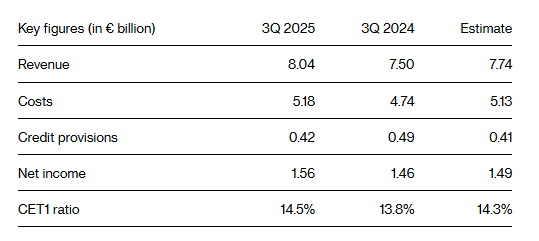
Core Viewpoint - Deutsche Bank reported a 7% year-on-year increase in net profit for Q3, defying market expectations of a decline, driven by significant growth in its global investment banking division [1][4]. Financial Performance - Total revenue for the quarter reached €8.04 billion, with net profit attributable to shareholders at €1.56 billion (approximately $1.82 billion), up from €1.46 billion in the same period last year and exceeding analyst expectations of about €1.34 billion [1][2]. - The investment banking division emerged as the largest revenue source, with a notable 18% increase in revenue, surpassing the market expectation of 10.8% [5]. - Fixed income and foreign exchange trading revenue reached €2.48 billion, reflecting a 19% year-on-year growth, outperforming the expected 8.1% [5]. - The underwriting and advisory business saw a 27% revenue increase, exceeding the anticipated 24.4% [5]. Strategic Context - The financial results come as Deutsche Bank approaches the conclusion of its three-year transformation plan, with CEO Christian Sewing expressing confidence in achieving the financial targets set for 2025 [2][4]. - The bank aims to return over €8 billion to shareholders between 2022 and 2026, with plans for strategic adjustments to be announced in November [8]. - The retail banking segment experienced a 4% revenue increase, aligning closely with the expected 3.4%, while corporate banking revenue declined by 1%, contrary to analyst expectations of slight growth [8]. Market Position - Compared to European competitors, Deutsche Bank's investment banking performance was strong, while peers like BNP Paribas underperformed and Barclays showed mixed results [8]. - The bank's asset management subsidiary, DWS, reported a significant 34% increase in net profit for the period [9].

X @Bloomberg
Bloomberg· 2025-10-29 04:25
BNP and HSBC are both being vague about a few awkward questions right now, but only one is being punished for it by shareholders, writes @PaulJDavies (via @opinion) https://t.co/Tj5eRfxUZs ...
美联储降息25个基点几成定局 鲍威尔前瞻指引或陷“沉默时刻”
智通财经网· 2025-10-29 03:49
智通财经APP获悉,市场对本周美联储政策会议的两件事有普遍的预期——政策制定者们将决定把利率 下调25个基点;鲍威尔则可能不会提供太多前瞻指引,因为决策者之间日益扩大的分歧令未来政策路径 变得模糊不清。 一些美联储官员还指出,经济中某些板块(如服务业)的价格涨幅依然顽固地偏高,而这些领域理应较少 受到关税影响。此外,美国最近对中国和加拿大加征新关税的威胁,为物价走势和经济前景增添了新的 不确定性。因此,FOMC内部的分歧可能比9月份更为严重。当时,9位委员支持今年最多再降息一次。 在这种背景下,分析师预计鲍威尔将避免对未来几次会议的政策路径做出明确指引。由于政府停摆导致 官方经济数据缺失,他将更为谨慎。德意志银行美国首席经济学家Matthew Luzzetti表示:"希望未来公 布的数据能帮助弥合两派之间的分歧。"但他补充称,只要分歧仍在,鲍威尔就会对"12月及之后的会议 发出极少信号"。 美联储理事米兰(Stephen Miran)已表示将再次投票反对主流意见,支持降息50个基点。而在其余投票成 员中,堪萨斯城联储主席施密德(Jeff Schmid)可能成为支持维持利率不变的潜在异议者。 美联储观察人士还认 ...