
嘉士伯

Search documents
涉中国香港、新加坡和马来西亚市场,嘉士伯回应出售部分亚洲业务
Xin Lang Cai Jing· 2025-11-20 12:01
Core Viewpoint - Carlsberg is considering selling part of its Asian business, with Sapporo Brewery as a potential buyer, but the deal may not proceed if key terms are not agreed upon [1] Group 1: Potential Transaction - Sapporo Brewery has established a business partnership with Carlsberg in 2023, focusing on production and sales in Hong Kong, Singapore, and Malaysia [1] - If the transaction occurs, Sapporo could leverage Carlsberg's distribution network in Asia, aligning with its strategy to strengthen its core beer business [1] Group 2: Financial Performance - Carlsberg is facing growth pressure in the Chinese market, with a slight decline of 2% expected in the overall beer market [1] - In Q3, Chongqing Brewery reported revenue of 4.22 billion yuan, a year-on-year increase of 0.41%, but net profit decreased by 12.71% to 376 million yuan [1] - For the first three quarters of 2023, Chongqing Brewery's revenue was 13.06 billion yuan, a slight decrease of 0.03%, and net profit was 1.24 billion yuan, down 6.83% [2] Group 3: Strategic Initiatives - Carlsberg is actively expanding non-current drinking channels, enhancing its premium strategy, and increasing investment in innovative products [3] - Chongqing Brewery has introduced several new products, including "Ushu Craft Red Robe Beer" and "Dali Craft," to boost market share in canned products [3] - Carlsberg's CEO noted an 8% growth in its premium market segment, largely driven by growth in China [3] Group 4: Market Dynamics - Despite a 1.18% increase in revenue from high-end products, mainstream and economy products saw declines of 1.66% and 1.21%, respectively, leading to only a slight overall increase in main business revenue [4] - Chongqing Brewery is accelerating its entry into non-beer categories to meet diverse consumer demands, particularly in dining [4] - Carlsberg is strengthening its brand association with football, having established partnerships with both European and local Chinese football events [4] - Looking ahead to Q4, Carlsberg anticipates a slight decline in the overall Chinese beer market but expects positive sales growth in its own operations [4]


2025年第45周:酒行业周度市场观察
艾瑞咨询· 2025-11-12 00:06
Group 1: Industry Environment - The white liquor industry is experiencing a slowdown in performance and increasing differentiation, with 19 listed companies reporting a 7% year-on-year decline in total revenue by Q3 2025, while only Moutai and Fenjiu maintained growth [2] - The industry is entering a phase of volume competition, with intensified price wars and channel battles increasing cost pressures, particularly for small and medium-sized enterprises [2] - Future competitiveness will favor companies that actively transform and focus on long-term value, as the industry shifts towards rational development [2] Group 2: Consumer Trends - Young consumers are driving a trend towards mixed drinks, such as white liquor with cola, leading to a demand for lower alcohol content products [3] - Companies are responding with innovative products, including cross-industry collaborations like the "yellow wine + beer" from Guyue Longshan and Carlsberg's low-sugar sparkling fruit wine [3] - The industry is debating the definition of low-alcohol liquor, with a push towards maximizing flavor rather than adhering to strict alcohol content classifications [3] Group 3: Regional Enterprises - Regional liquor companies face significant challenges, including high inventory pressure and price inversions, as national brands dominate the market [4] - Strategies for regional companies include becoming provincial leaders, focusing on core markets, or considering exit strategies [4] - Key pathways for success involve brand premiumization, product structure optimization, and deepening distribution channels [4] Group 4: Policy and Development - The Ministry of Industry and Information Technology has included liquor production in the "historical classic industries," promoting cultural heritage and high-quality development [5] - Goals include cultivating over 50 billion-level leading enterprises and creating trillion-level industry clusters by 2028 [5] - The focus is on integrating culture, technology, and ecology to facilitate the transformation and upgrading of the liquor industry [5] Group 5: Brand Dynamics - Yanjing Beer reported a net profit of 1.77 billion yuan for Q3 2025, a 37.45% increase year-on-year, driven by a high-end strategy and cross-industry collaborations [15] - Luzhou Laojiao achieved revenue of 23.127 billion yuan and net profit of 10.762 billion yuan in the first three quarters of 2025, demonstrating resilience amid industry challenges [16] - Wuliangye's revenue reached 60.945 billion yuan with a net profit of 21.511 billion yuan, as the company adjusted its strategy to meet changing consumer demands [18] Group 6: Innovation and Sustainability - The first sustainable development report for the core sauce-flavored liquor production area was released, focusing on ecological protection and circular economy [9] - Moutai introduced a "date selection" service for consumers, enhancing personalization and emotional value in product offerings [23] - Niulanshan Chenxiang achieved significant sales milestones, selling 6 billion bottles over ten years, supported by strong brand recognition and market positioning [24]





永顺泰:公司已与百威啤酒等知名啤酒制造商有超过20年的合作历史
Zheng Quan Ri Bao Wang· 2025-11-11 14:10
Core Viewpoint - The company is progressing with the construction of a new specialized malt production line with a capacity of 50,000 tons per year, expected to be completed by the end of 2025, and emphasizes its strong technical capabilities and market influence to meet diverse customer demands in the brewing industry [1] Group 1: Project Development - The specialized malt production line project is planned to be completed by the end of 2025 [1] - The company encourages stakeholders to monitor its periodic reports for updates on the project's progress [1] Group 2: Market Position and Customer Relationships - The company has over 20 years of collaboration with major breweries such as Budweiser, Carlsberg, Heineken, China Resources Snow Beer, Tsingtao Brewery, Yanjing Beer, and Zhujiang Beer [1] - The company exports its products to various regions including Southeast Asia, Central and South America, Japan, South Korea, and Africa [1] Group 3: Product Flexibility and Customization - The company possesses deep technical expertise and market influence, allowing it to produce malt products that meet the quality standards of diverse brewing customers [1] - The specialized malt production line is designed to adapt to different flavor preparation needs, showcasing the company's ability to customize products based on downstream demand [1]
Carlsberg A/S (CABGY) Q3 2025 Sales Call Transcript
Seeking Alpha· 2025-10-31 00:06
Core Insights - The company reported strong volume and revenue growth driven by the Britvic acquisition, with successful integration and synergy realization [2] - Despite a challenging consumer environment, solid underlying volume and revenue growth was achieved in Western Europe, along with sequential improvement in Asia [2] - The company has taken decisive actions to adjust its cost base to protect earnings growth and ensure continued investments in the business [2] - Full-year earnings guidance has been maintained [2] Group Headlines - The Britvic acquisition and consolidation of Gorkha Brewery contributed significantly to the group's performance [3]


Carlsberg Beer Volumes Fall on Tough Consumer Sentiment
WSJ· 2025-10-30 08:02
Core Insights - The brewer reported a 3% drop in organic volumes but maintained its full-year guidance [1] Group 1 - The company experienced a decline in organic volumes by 3% [1] - Despite the drop in volumes, the company has decided to keep its full-year guidance unchanged [1]

从“苏超”到“湘超”“川超”“蒙超”……“省超”营销哪家强?
创业邦· 2025-10-21 03:12
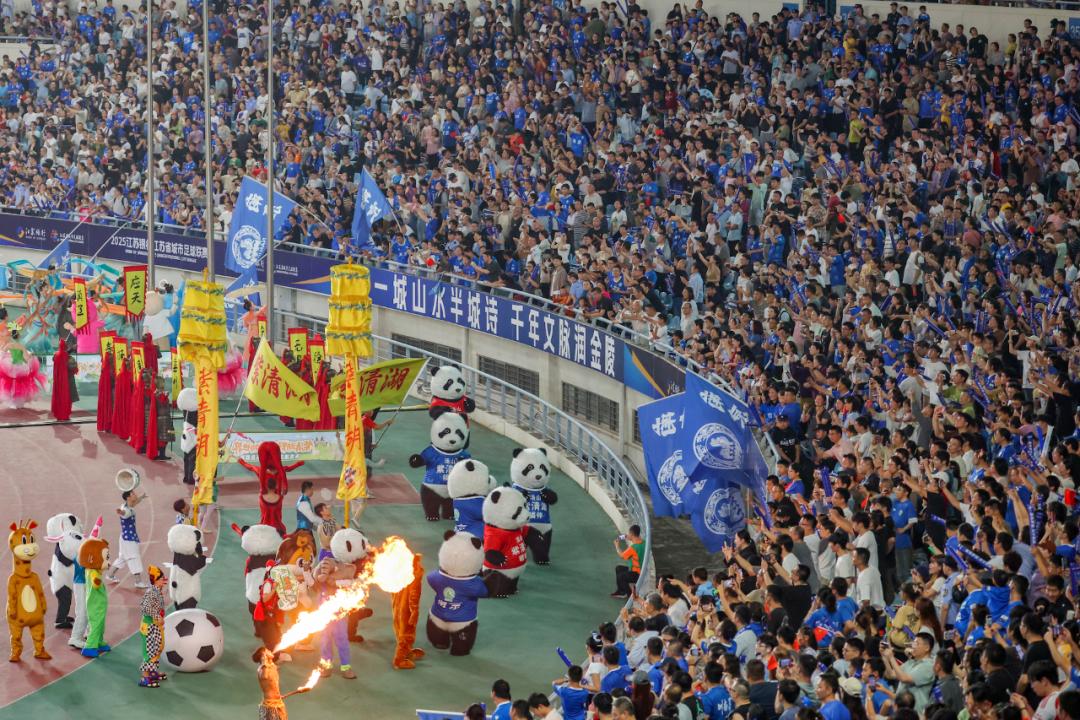
Core Insights - The article discusses the unprecedented popularity of the "Sichuan Super League" (苏超) and its impact on local football events across various provinces in China, highlighting its role as a social symbol that transcends sports, culture, tourism, and public services [4][5]. Group 1: Event Popularity and Marketing - Since its launch in mid-May, the Sichuan Super League has seen record attendance and significant online engagement, leading to a surge in local football events like "Jiangxi Super League" and "Hunan Super League" [4]. - The emergence of these local leagues has sparked a marketing frenzy, attracting numerous brands and sponsors, thereby creating a vast flow of engagement and commercial opportunities [5][12]. Group 2: Sponsorship and Commercial Potential - The "Hunan Super League" has attracted 15 sponsors, including major partners like China Construction Bank and Wuliangye, while the "Sichuan Super League" has reached 19 sponsors, showcasing the high commercial appeal of these events [7][8]. - The "Guangdong Super League" has garnered 24 sponsors, with top-tier sponsorships from brands like Yili and Dongfeng Nissan, indicating a strong trend of investment in local football leagues [8][12]. Group 3: Market Dynamics and Future Outlook - The regional nature of these leagues allows local businesses to engage effectively, with sponsorship opportunities structured to maximize exposure and engagement [12][17]. - The increasing number of sponsors and the commercial viability of these leagues suggest a promising future for sports marketing in China, with expectations for more refined partnerships and marketing strategies as events evolve [17][18].

从“苏超”到“湘超”“川超”“蒙超”……“省超”营销哪家强?
3 6 Ke· 2025-10-20 00:17
再看看9月20日揭幕的"川超"——四川省城市联赛。该赛事进一步就赞助层级进行细分。根据公众号"川超足球联赛"消息,除去赛事直转播运营商及平 台、网络媒体合作平台,"川超"的赞助商数量已经达到19家。最高赞助层级身份"全球独家冠名赞助商"为四川银行;其次,首席至尊合作伙伴青花郎,官 方合作伙伴中国移动,官方赞助商百威,这3个赞助层级都分别只有1家品牌或企业参与。而官方支持企业以及官方供应商类别则共计有15家,其中包括有 可口可乐、长虹、卡尔美体育、京东电器等长期参与体育营销的品牌。 自5月中旬开赛,苏超掀起了一股前所未有的足球狂热——线下上座人数持续创造纪录,线上自发诞生的热梗与讨论把这项城市足球联赛带进了更多人的 视野,另外在营销层面也展现强劲的商业吸引力。总之,2025年的苏超已然远超出足球赛事本身,成为了一种跨越体育、文旅、消费及公共服务的社会符 号。 "苏超"的火,也点燃了其他省级行政单位的区域性本土足球赛事的热情。"赣超""湘超""川超"等10余个省和直辖市落地举行城市联赛,"齐鲁超赛""广东省 超"也陆续开展俱乐部业余联赛。当然,还包括原有的"村超"类草根足球赛事以及各地社会足球邀请赛,这一系列足球 ...
孙雪真金白银十年磨一剑执拗打磨 湖北泛黄县志里藏着诗经故乡的“土城门”黄酒
Chang Jiang Shang Bao· 2025-10-19 23:33
Core Insights - The article highlights the success of Suchi Wine in the yellow wine industry, particularly through its product "Tuchengmen Emperor General Yellow Wine," which won multiple awards at the China International Wine Expo and the "Zhongshi Cup" competition, showcasing the brand's recognition and innovation in a challenging market [3][5][6]. Company Overview - Suchi Wine, founded by Sun Xue, has made significant strides in the yellow wine sector by focusing on high-quality products and innovative brewing techniques, including a unique bottle cap design that enhances wine preservation [5][6][7]. - The company has shifted its strategy from a broad product range to focusing on two core products, targeting the new middle-class market with a price point of 198 yuan [5][6]. Industry Challenges - The yellow wine industry faces three main constraints: significant regional barriers with Jiangsu, Zhejiang, and Shanghai accounting for 70%-80% of revenue, a lack of diverse consumption scenarios, and limited brand recognition due to historical perceptions of yellow wine as merely cooking wine [4][8][9]. - The industry is characterized by a disparity in support and resources, particularly for non-traditional production areas, leading to challenges in competition and growth [9][10]. Market Trends - Despite the challenges, the yellow wine sector is experiencing gradual growth, with production reaching 1.9 million kiloliters and sales revenue of 21 billion yuan in 2023, reflecting a year-on-year increase of 3.2% and 2.1% respectively [8]. - The market is witnessing a shift towards health-conscious and low-alcohol beverages, with increasing consumer recognition of yellow wine's unique qualities and nutritional benefits [11]. Future Outlook - There is optimism for the yellow wine industry as it seeks to expand its consumer base and diversify consumption scenarios beyond traditional settings, with potential growth in everyday drinking and social occasions [11]. - Companies like Suchi Wine are positioning themselves for future success by investing in innovation and collaboration with educational institutions to address talent shortages in the industry [10][11].

别再以为是国货了!这些品牌原来早被美国收购,难怪价钱越来越贵
Sou Hu Cai Jing· 2025-10-12 03:41
Core Insights - The article discusses the transformation of the Chinese beer market over the past 40 years, highlighting the shift from affordable local brands to the dominance of foreign brands like Budweiser, which has significantly altered consumer preferences and pricing dynamics [2][19]. Group 1: Budweiser's Entry and Strategy - Budweiser entered the Chinese market in 1995, investing $1.7 billion to establish a brewery and acquiring 80% of a local company for $50 million, marking the beginning of its expansion in China [4]. - The company adapted to local tastes by producing lighter beers with lower bitterness, using rice to replace some malt, which reduced costs and extended shelf life, allowing for widespread distribution [4][6]. - Budweiser's pricing strategy, starting at 1.5 yuan per bottle, enabled it to capture a significant share of the premium beer market in Wuhan and later across China [6]. Group 2: Market Dynamics and Competition - The Chinese beer market saw a wave of mergers and acquisitions, with major players like China Resources Snow Beer and Tsingtao Beer consolidating their positions, leading to a market dominated by five major brands by 2020, which held 92% market share [9][10]. - Despite the consolidation, the intense competition did not lead to profit growth, with even leading brands earning significantly less than their counterparts in the liquor industry [10]. Group 3: Shift to Premiumization - Starting in 2014, major beer companies collectively raised prices, recognizing the need to shift towards premium products, a strategy that benefited Budweiser, which had already established a strong presence in the high-end market [12]. - The gap in brand premiumization between domestic and foreign brands allowed Budweiser to capture high-end market opportunities while local brands struggled to reposition themselves [13]. Group 4: Emerging Trends and Future Opportunities - The craft beer segment is experiencing rapid growth, with projections indicating the market could exceed 100 billion yuan by 2025, driven by younger consumers and changing consumption patterns [15][17]. - There is potential for Chinese beer brands to expand into international markets, with examples of local craft beers entering regions like Africa, mirroring the consumption upgrade trends seen in China [17]. Group 5: Conclusion - The evolution of the beer industry in China reflects broader consumer trends, moving from cost-driven strategies to a focus on quality and brand differentiation, suggesting a sustainable path forward for the industry [19].

Carlsberg to invest in UK soft-drinks production
Yahoo Finance· 2025-10-09 12:53
Core Points - Carlsberg is investing £20 million ($40.1 million) in a new soft drinks canning line at its Rugby factory in the UK to significantly increase production capacity [1][2] - The new canning line will create over 30 permanent, full-time jobs, bringing the total number of employees at the Rugby site to more than 430 [2] - The Rugby facility will increase its production capacity from 560,000 to 610,000 canned soft drinks per hour, enabling the production of brands like Tango and Pepsi Max [1][3] Investment Strategy - This investment is part of Carlsberg's broader strategy to enhance its supply chain and production capabilities [2][3] - The total investment in the Rugby site over the past five years has exceeded £60 million [3] - The company is also focusing on operational efficiency and reducing carbon emissions, supported by a government grant for sustainability initiatives [4] Market Expansion - Carlsberg Britvic has signed an exclusive deal with an undisclosed retailer and is preparing to launch the US prebiotic soda brand Poppi in the UK within the next four months [5][6] - The new supply chain setup is expected to support the launch of Poppi, although it is not confirmed if the products will be produced locally or shipped from elsewhere [6]