光威复材

Search documents
光威复材(300699) - 北京植德律师事务所关于威海光威复合材料股份有限公司2025年第一次临时股东大会的法律意见书
2025-09-17 09:30
北京植德律师事务所 法律意见书 植德京(会)字[2025] 0128 号 二〇二五年九月 北京市东城区东直门南大街 1 号来福士中心办公楼 12 层 邮编:100007 12 th Floor, Raffles City Beijing Office Tower, No.1 Dongzhimen South Street, Dongcheng District, Beijing 100007 P.R.C 电话(Tel):010-56500900 传真(Fax):010-56500999 www.meritsandtree.com 北京植德律师事务所 关于威海光威复合材料股份有限公司 2025 年第一次临时股东大会的 法律意见书 植德京(会)字[2025] 0128 号 关于威海光威复合材料股份有限公司 2025 年第一次临时股东大会的 2.本所律师无法对网络投票过程进行见证,参与本次会议网络投票的股东 资格、网络投票结果均由深圳证券交易所交易系统和互联网投票系统予以认证; 1 3.本所律师已经按照《股东会规则》的要求,对贵公司本次会议所涉及的 相关事项进行了必要的核查和验证,所发表的结论性意见合法、准确,不存 ...

哈工大威海办学40年,校地联手书写“双向奔赴”故事
Da Zhong Ri Bao· 2025-09-17 06:41
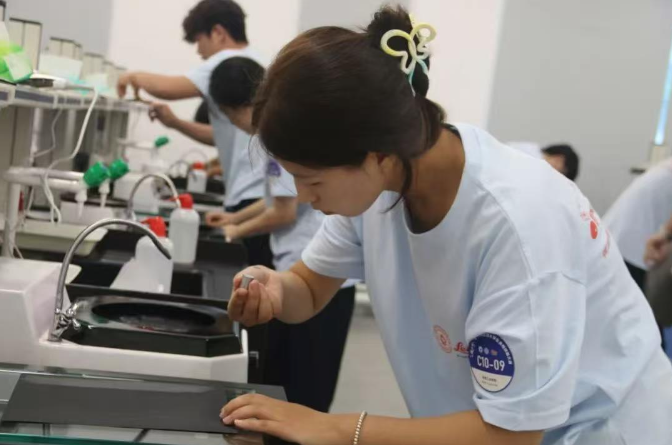
Core Viewpoint - The article highlights the achievements and contributions of Harbin Institute of Technology (HIT) in Weihai over the past 40 years, emphasizing its role in talent cultivation, technological innovation, and collaboration with local industries to support national and regional development [1][5][11]. Group 1: Talent Development - HIT Weihai has established a comprehensive university system, growing from 2 programs and 205 students to 38 programs and over 14,000 students, producing more than 60,000 graduates [5]. - The university has excelled in innovation, as evidenced by its students winning 10 gold and 1 silver awards at the Shandong Province College Student Innovation Competition [1][5]. Group 2: Technological Innovation - The Shandong Provincial Key Laboratory of Special Welding Technology, unique in the province, has contributed to significant national projects, showcasing a transition from following to leading in welding technology [3]. - HIT Weihai's research team has developed the "Weihai No. 1" satellite constellation, which enables advanced maritime target detection and identification, supporting marine resource protection and emergency rescue operations [6][8]. Group 3: Industry Collaboration - HIT Weihai collaborates with local companies, such as AVIC High-Tech and Weihai Guangwei Composite Materials Co., to enhance the modern aviation industry and break foreign monopolies in high-performance carbon fiber production [9]. - The university has established innovation parks and development bases to foster regional economic growth and support over 300 local enterprises with critical technologies [9][11]. Group 4: Government Support - The establishment and growth of HIT Weihai have received significant backing from national ministries and local governments, with various agreements signed to enhance collaboration in education and technology [11]. - The university aims to leverage its engineering strengths to contribute to the green, low-carbon, and high-quality development of Shandong Province [11].

4520亿和谐健康减持3家公司股份,陪伴2家企业冲刺IPO
Sou Hu Cai Jing· 2025-09-16 14:06
Summary of Key Points Core Viewpoint - Harmony Health Insurance is continuously shrinking its investment portfolio, particularly through share reductions in Wanda Information, indicating a strategic shift in its investment approach [2][5][10]. Group 1: Share Reduction Activities - On September 14, Wanda Information announced that Harmony Health plans to reduce its stake by up to 3% within three months, potentially lowering its ownership from nearly 5% to below 2% [2]. - This reduction could yield approximately 317 million yuan based on the closing price of 7.33 yuan per share on September 15 [2]. - Harmony Health has already executed multiple share reductions in Wanda Information this year, totaling over 660 million yuan in cash from three separate transactions [6][8][10]. Group 2: Financial Performance of Wanda Information - Wanda Information has faced significant financial challenges, with net profits from 2020 to 2024 showing losses of 12.92 billion yuan, 0.69 billion yuan, 2.9 billion yuan, 8.99 billion yuan, and 6.86 billion yuan, respectively [10]. - In the first half of 2025, Wanda Information reported a further loss of 2.99 billion yuan, continuing its trend of poor financial performance [10]. Group 3: Investment History and Future Prospects - Harmony Health initially acquired a significant stake in Wanda Information in late 2020 through a judicial auction, investing approximately 2.334 billion yuan at a cost of 19.92 yuan per share [11]. - The stock price has since declined by over 60%, with the current price at 7.42 yuan per share as of September 16 [11]. - Harmony Health has also invested in other companies, including a 2 billion yuan investment in Moer Thread and Changxin Storage, both of which are in the critical phase of their IPO processes [5][21][23].


中国工业行业:重回基本面-China Industrials_ Pivoting back to fundamentals
2025-09-15 01:49
Summary of Key Points from the Conference Call Industry Overview - The conference call primarily discusses the **China Industrials** sector, focusing on various companies within the electric components and battery supply chain industries. Core Insights and Arguments 1. **Company Ratings and Market Performance**: - **Hongfa (600885.SS)**: Rated as "Buy" with a market cap of Rmb 38,479 million and a target price of Rmb 36.50, indicating a 38% upside [3][5] - **LOPAL-H (2465.HK)**: Also rated "Buy", with a market cap of Rmb 6,913 million and a target price of Rmb 15.00, showing a 36% upside [3][5] - **CSSC (600150.SS)**: Rated "Buy", market cap of Rmb 171,652 million, target price of Rmb 45.50, with a 19% upside [3][7] - **Ronbay (688005.SS)**: Rated "Neutral", market cap of Rmb 20,698 million, target price of Rmb 26.00, indicating a -10% downside [3][6] 2. **Financial Metrics**: - **P/E Ratios**: Companies like Hongfa and CSSC have P/E ratios of 20x and 23x respectively for 2026E, while Ronbay has a significantly higher P/E of 175x for 2025E [3][5][6] - **ROE**: CSSC shows a ROE of 14% for 2026E, while Hongfa has a ROE of 18% for the same year [3][5][7] 3. **Profit Forecasts**: - **Net Profit Estimates**: Hongfa's net profit is projected to grow from Rmb 1,921 million in 2025E to Rmb 2,556 million in 2027E, reflecting a growth trajectory [3][5] - **Consensus vs. UBS Estimates**: For CSSC, UBS estimates a net profit of Rmb 1,479 million in 2026E, which is 35% higher than the consensus estimate [3][7] 4. **Comparative Analysis**: - The report includes a comparative analysis of various companies in the electric components and battery supply chain sectors, highlighting differences in market cap, P/E ratios, and growth rates [5][6][7] Additional Important Insights 1. **Market Trends**: - The electric components sector is experiencing a shift towards more sustainable and efficient technologies, with companies like CATL leading in solid-state battery innovations [8][9] - The battery supply chain is under pressure with limited pricing opportunities, as indicated by the correlation between production schedules and battery index performance [11] 2. **Investment Risks**: - Companies like Nuode (600110.SH) and Yinghe (300457.SZ) are rated "Sell" due to significant projected declines in net profit and high P/E ratios, indicating potential investment risks [3][5][6] 3. **Future Catalysts**: - The potential for solid-state batteries in various applications, including electric vehicles, is highlighted as a significant growth driver for the industry [9][10] 4. **Sector Performance**: - The overall performance of the China Industrials sector is closely monitored, with specific attention to the electric components and battery supply chain segments, which are expected to see varying levels of growth and profitability [3][4][6] This summary encapsulates the key points discussed in the conference call, providing a comprehensive overview of the current state and future outlook of the China Industrials sector, particularly focusing on electric components and battery supply chains.





研判2025!中国台球杆行业产业链、市场规模、出口数量、竞争格局及发展趋势分析:台球消费持续升温,带动台球杆行业规模上涨[图]
Chan Ye Xin Xi Wang· 2025-09-12 01:17
Core Insights - The inclusion of billiards in the "National Fitness Public Service System" has led to a surge in billiards consumption, driving the growth of billiard halls and clubs, as well as the B-end market for billiard equipment like cues [1][7] - The billiard cue industry in China has seen a significant increase in market size, growing from 720 million yuan in 2018 to an expected 1.744 billion yuan by 2024, indicating a promising future for the industry [1][8] - The rise in disposable income and consumer spending among Chinese residents has contributed to the growing popularity of billiards as a leisure activity, further increasing the demand for billiard cues [5][6] Billiard Cue Industry Overview - Billiard cues are essential tools for playing billiards, typically measuring between 1.3m and 1.5m in length, with a diameter of 9-12mm at the tip. They consist of various components including the tip, ferrule, shaft, and butt [3][4] - The cue market is categorized into three main types: English cues, American cues, and Chinese cues, each designed for different styles of play [3][4] Market Dynamics - The number of billiard halls in China has rapidly increased, with 55,300 new halls expected by 2024, marking a 33.3% year-on-year growth, which presents opportunities for the supporting equipment market [6][7] - The export of billiard products and accessories has shown recovery, with a significant increase of 55.7% expected in 2024 compared to the previous year, indicating a rebound in international demand [9] Competitive Landscape - Historically, the billiard cue market has been dominated by foreign brands, but domestic brands are beginning to emerge, particularly in the mid-range market, while high-end segments remain largely occupied by international companies [9][10] Industry Trends - Innovations in materials such as carbon fiber and titanium alloys are being adopted to enhance cue performance, with ongoing research into new composite materials to meet the demands of competitive play [11][12] - Customization services for billiard cues are becoming more prevalent, driven by consumer demand for personalized products that reflect individual style and improve performance [13] - The trend towards smart design in billiard cues is emerging, with companies investing in technology to create cues equipped with sensors that track and analyze player performance [14]

研判2025!中国气体扩散层行业产业链、产量、需求量、竞争格局及发展趋势分析:政策力推燃料电池车发展,气体扩散层行业市场规模达到10亿元以上[图]
Chan Ye Xin Xi Wang· 2025-09-11 01:20
Core Viewpoint - The gas diffusion layer (GDL) industry is closely related to the demand for fuel cells, with significant growth driven by government policies promoting hydrogen fuel cell vehicles in China. The market size of the GDL industry is expected to reach 1.258 billion yuan in 2024, reflecting a year-on-year increase of 52.4% [1][10]. Industry Overview - The gas diffusion layer is a critical component in fuel cells, providing uniform diffusion channels for gaseous reactants and managing water flow [3][4]. - The GDL is primarily composed of materials such as carbon fiber paper and carbon fiber woven fabric, each with distinct performance characteristics under varying humidity conditions [4][6]. Market Size and Growth - The GDL industry in China is projected to grow significantly, with a market size of 1.258 billion yuan in 2024, up 52.4% year-on-year [1][10]. - The carbon fiber production in China is expected to reach 59,044 tons in 2024, marking an 8.2% increase, while the carbon fiber paper market size is anticipated to be 620 million yuan, up 6.9% [6][7]. Competitive Landscape - The GDL market has been historically dominated by foreign companies, with domestic production rates currently below 10%. However, this is expected to improve in the coming years [10][11]. - Key domestic companies in the GDL sector include Carbon Energy Technology Co., Ltd., Shandong Renfeng Special Materials Co., Ltd., and Hunan Jinbo Carbon Co., Ltd. [10][11]. Development Trends - Technological innovation is expected to lead to performance breakthroughs in GDL materials, with advancements in nanotechnology and new low-cost materials enhancing efficiency [15]. - Cost reduction is a critical focus for the GDL industry, with efforts to optimize production processes and supply chains to lower overall costs [15][16]. - The market is anticipated to become more competitive and diversified as new entrants leverage technological advancements and cost control strategies [16].


航空复材20250910
2025-09-10 14:35
Summary of the Conference Call on Aerospace Composite Materials Industry Overview - The military aerospace auxiliary materials market is experiencing stable growth, driven by the development and mass production of new military aircraft. Over the next decade, the demand for composite materials in Chinese military aircraft is expected to reach 18,000 tons, excluding the demand for drones, indicating a potentially larger market space [2][5]. - The demand for composite materials in the civil aviation sector significantly exceeds that of military applications. New civil aircraft like Boeing 787 and Airbus A350 have a composite material usage ratio exceeding 50%. It is projected that over the next 20 years, the demand for composite materials in China's civil aviation market will reach 108,000 tons, several times that of the military market [2][6]. - In the low-altitude economy sector, general aviation and eVTOL (electric Vertical Take-Off and Landing) aircraft show substantial potential for carbon fiber composite material demand. It is estimated that the demand for carbon fiber in general aviation will be around 20,000 tons over the next 20 years, with eVTOL requiring 2,600 tons annually by 2030 in China [2][7]. Key Companies and Competitive Landscape - Domestic companies are gradually maturing through technological iterations and experience accumulation. Projects like C919 are expected to adopt more domestic auxiliary materials, aiming for over 50% usage rate, indicating significant potential for domestic substitution [2][8]. - The competitive landscape of the domestic carbon fiber industry is clear, with Guangwei Composite and Zhongjian Technology being the main players in the military aerospace sector. AVIC High-Tech dominates the prepreg segment, while aircraft manufacturers and their auxiliary material suppliers are responsible for the forming of auxiliary materials and structural components [2][10]. Market Trends and Future Outlook - During the "14th Five-Year Plan" period, the aerospace auxiliary materials market experienced explosive growth, particularly in the first few years. Major companies in the industry, such as AVIC High-Tech, Guangwei Composite, and Zhongjian Technology, achieved significant performance growth. The military aerospace auxiliary materials market is expected to continue stable growth, with civil aviation emerging as a second growth curve [3][9]. - The demand for composite materials in the military aviation sector is rapidly increasing, with the "14th Five-Year Plan" serving as a starting point. The market is expected to significantly expand in the coming years as domestic replacement processes and new model equipment are introduced [9][15]. Technological Developments - Key breakthroughs in composite materials technology are focused on the upstream fiber segment and downstream resin applications. Improvements in fiber performance are foundational for the application of composite materials, with significant advancements in high-performance carbon fiber technology achieved domestically [11][14]. - Cost control potential for carbon fiber auxiliary materials is primarily concentrated in the upstream carbon fiber production and downstream auxiliary material component forming segments. Scale effects and automation in production can effectively reduce costs [12][16]. International Comparison - There are notable differences in the application of military aerospace composite materials between domestic and international markets. For instance, the composite material usage in the U.S. fourth-generation fighter jets like F-22 and F-35 is 25% and 35%, respectively, with future sixth-generation aircraft expected to increase this ratio further [4][6]. - The global leaders in carbon fiber auxiliary materials, such as Hexcel and Toray, have distinct development paths. Hexcel has a strong focus on the U.S. market, while Toray has a more extensive global presence, indicating varying strategies in international competition [17][20]. Conclusion - The domestic aerospace composite materials market is poised for significant growth, driven by advancements in technology, increasing demand in civil aviation, and the successful implementation of domestic projects like C919. Companies that strategically position themselves in the civil aviation sector and leverage technological advancements are likely to benefit from the expanding market opportunities [2][28].

全球最大订单!人形机器人市场爆发,碳材料如何接住“泼天富贵”
DT新材料· 2025-09-05 16:04
Core Viewpoint - The article highlights the growing significance of carbon materials in the development of humanoid robots, emphasizing their role in enhancing performance through lightweight, high-strength, and reliable components, as well as energy storage and thermal management solutions [4][5][6]. Group 1: Market Opportunities - UBTECH, the first humanoid robot company, secured a procurement contract worth 250 million yuan for its Walker S2 humanoid robot, marking the largest disclosed order in the global humanoid robot sector [4]. - The Walker series has garnered nearly 400 million yuan in contracts, with expectations to deliver over 500 industrial humanoid robots this year, aiming for an annual production capacity of 1,000 units [4]. - The global humanoid robot market is projected to exceed 2 million units by 2035, with a potential market space of $30 billion to $50 billion, and could reach $1.4 trillion to $1.7 trillion by 2050 [4]. Group 2: Material Innovations - Carbon fiber and its composites are identified as the most mature options for structural lightweighting, providing equivalent or superior stiffness and strength compared to metals, thus widely used in robot frameworks and components [5]. - The carbon fiber production capacity in China is increasingly directed towards applications in robots, UAVs, and automotive lightweighting, with key players working on integrated solutions from raw materials to composite parts [5]. - In thermal management, diamond and carbon-based high thermal conductivity films are emerging as solutions to address heat dissipation challenges in high-power robots, enhancing reliability and reducing weight [6]. Group 3: Energy Storage and Integration - Carbon materials serve as active materials in batteries and conductive agents, with a focus on high-capacity, long-cycle-life anode materials being crucial for humanoid robots' operational efficiency [6]. - The large-scale industrialization of silicon-carbon anodes is expected to significantly enhance energy density, thereby extending operational time or reducing battery size for robots [6]. - Companies are actively expanding production capacities in this area, indicating a rapid industrialization process [6][8]. Group 4: Functional Applications - Graphene and carbon nanotubes are highlighted for their potential in flexible sensors, conductive electrodes, and EMI shielding, transitioning from laboratory research to application-driven development [8]. - The integration of porous carbon materials and graphene-modified coatings is becoming increasingly important in robotic applications, contributing to tactile feedback, noise control, and structural design [8]. - The multi-functional characteristics of carbon materials enable them to fulfill various roles within a single robot, optimizing material, structure, and function [8].
光威复材股价连续4天下跌累计跌幅7.22%,华夏基金旗下1只基金持2.54万股,浮亏损失5.92万元
Xin Lang Cai Jing· 2025-09-03 07:53
Group 1 - The stock price of Guangwei Composites has declined by 3.36% on September 3, reaching 29.95 CNY per share, with a trading volume of 578 million CNY and a turnover rate of 2.32%, resulting in a total market capitalization of 24.899 billion CNY. The stock has experienced a continuous decline for four days, with a cumulative drop of 7.22% during this period [1] - Guangwei Composites, established on February 5, 1992, and listed on September 1, 2017, specializes in the research, production, and sales of carbon fiber, carbon fiber fabrics, carbon fiber prepregs, carbon fiber composite products, and core production equipment for carbon fiber. The revenue composition of its main business includes: carbon fiber and fabrics 52.93%, carbon beams 30.73%, prepregs 9.27%, products and others 6.58%, and other (supplementary) 0.49% [1] Group 2 - According to data from the top ten holdings of funds, one fund under Huaxia Fund has a significant position in Guangwei Composites. The Huaxia Specialized and New Mixed Initiation A Fund (018916) held 25,400 shares in the second quarter, unchanged from the previous period, accounting for 5.45% of the fund's net value, ranking as the fourth-largest holding. The estimated floating loss today is approximately 26,400 CNY, with a total floating loss of 59,200 CNY during the four-day decline [2] - The Huaxia Specialized and New Mixed Initiation A Fund (018916) was established on September 12, 2023, with a latest scale of 13.5564 million CNY. Year-to-date returns are 17.98%, ranking 4171 out of 8180 in its category; the one-year return is 51.52%, ranking 2373 out of 7967; and since inception, the return is 27.47% [2] - The fund manager of Huaxia Specialized and New Mixed Initiation A Fund is Tang Mingzhen, who has been in the position for 1 year and 358 days. The total asset scale during his tenure is 280 million CNY, with the best fund return being 74.06% and the worst being 12.67% [2]
深市材料龙头助力构筑大国重器根基 持续创新彰显中国力量
Zheng Quan Shi Bao Wang· 2025-09-03 01:27
Core Viewpoint - A group of Shenzhen-listed companies is leveraging advanced material technology to support China's transition from "catching up" to "keeping pace" and "leading" in high-quality manufacturing [1] Capital Market Empowerment - Companies like Guangwei Composite Materials have utilized nearly 1 billion yuan raised from their IPO to establish carbon fiber production lines and a composite materials R&D center, leading to product upgrades and optimized industrial layout [1] - Jinli Permanent Magnet has seen its revenue grow from 1.7 billion yuan in 2019 to 6.7 billion yuan in 2024, a nearly threefold increase, while total assets rose from 2.8 billion yuan to 12.3 billion yuan, a 3.4-fold increase [2] - CITIC Special Steel became the largest specialized steel company in the A-share market after its restructuring in 2019, enhancing its competitiveness in high-end steel markets through capital raising [2] Autonomous Core Competence - Companies are determined to overcome foreign technology blockades, achieving a shift from dependency to self-sufficiency in high-end materials [3] - Guangwei Composite Materials has become a leading supplier of carbon fiber materials for military applications in China [3] - Jinli Permanent Magnet has reduced rare earth usage by 50% to 70% through its core technology, leading to a projected 90% product share in 2024 [3] - CITIC Special Steel has maintained a leading position in the production of high-end bearing steel for over a decade [3] Innovation "Moat" - Guangwei Composite Materials has maintained R&D investment above 8.5% for five years, with over 931 authorized intellectual property certificates [5] - Jinli Permanent Magnet's R&D expenses reached 321 million yuan in 2024, accounting for 4.74% of revenue, with 127 patents in various stages of approval [6] - CITIC Special Steel has participated in multiple national key technology projects and has been awarded numerous national and industry-level technology advancement awards [6] High-Growth Pathways - Companies are aligning their development paths with national strategies, focusing on high-demand areas under the "dual carbon" goals and new industrialization [7] - Guangwei Composite Materials is applying carbon fiber in wind turbine blades, while Jinli Permanent Magnet is supplying permanent magnet materials for new energy vehicles [7] - CITIC Special Steel is developing green special steel for wind power, photovoltaics, and hydrogen energy [7] - The collective efforts of these companies reflect the high-quality development of China's material industry and the significant role of the capital market in supporting technological innovation [7]