小鹏汇天

Search documents
碳纤维复材企业,签约小鹏汇天
DT新材料· 2025-07-10 14:15
Core Viewpoint - The collaboration between Yunlu Composite Materials and XPeng Huaitian marks a significant advancement in the lightweight materials sector for flying cars, focusing on high-performance carbon fiber composite materials and advanced manufacturing processes [1][3]. Group 1: Company Overview - XPeng Huaitian, a subsidiary of XPeng Motors, is the largest flying car company in Asia, established in December 2020, and is headquartered in Guangzhou [2]. - The company plans to invest 3 billion RMB in the flying sector by 2025 and aims to build a modern factory in Guangzhou with an annual production capacity of 10,000 flying cars [3]. Group 2: Technological Development - Yunlu Composite Materials specializes in the research and production of three-dimensional woven intelligent equipment and high-performance fiber composite materials, leveraging nearly 20 years of research from a team of academicians at Donghua University [3]. - The company has developed the third generation of three-dimensional weaving intelligent equipment, achieving domestic substitution for high-end equipment and has extensive experience in developing and mass-producing carbon fiber composite components [3]. Group 3: Project Collaboration - The partnership will focus on addressing pain points in traditional composite material production processes, enhancing weaving efficiency, optimizing weaving precision, and expanding the applicability of new fiber materials [1]. - This collaboration signifies a new height in the industrial application of Yunlu's three-dimensional weaving technology in the low-altitude flying vehicle sector [1].


朱克力 |“十四五”新质生产力:数字浪潮、AI觉醒与低空起飞
Sou Hu Cai Jing· 2025-07-09 14:10
Core Viewpoint - The "14th Five-Year Plan" period has seen China’s economy grow steadily despite challenges, with emerging fields like digital economy, artificial intelligence, and low-altitude economy becoming core drivers of high-quality development [1] Digital Economy - The digital economy has achieved a dual leap in scale and quality during the "14th Five-Year Plan," with its size reaching 50.2 trillion yuan by 2024, accounting for 41.5% of GDP, an increase of approximately 20 trillion yuan and 6.5 percentage points from the end of the "13th Five-Year Plan" [2] - The online retail scale is projected to reach 15.3 trillion yuan in 2024, growing by 11.8% year-on-year, with leading companies like Alibaba and JD.com innovating to evolve from simple transactions to a "consumption + service" ecosystem [2] - The integration of digital economy with the real economy is crucial, exemplified by SANY Heavy Industry's "lighthouse factory," which improved production efficiency by 30% and reduced unit costs by 20% through smart production decisions [4] Artificial Intelligence - Breakthroughs in AI, particularly large models, are a hallmark of technological innovation during the "14th Five-Year Plan," with significant advancements in natural language processing and knowledge question answering [6][8] - AI large models have shown strong capabilities in various sectors, enhancing medical diagnosis accuracy by 10%-20%, improving risk assessment in finance, and personalizing education [8] - The "three new" economy, driven by AI, has generated over 24 trillion yuan in added value by 2024, indicating a shift towards high-end, intelligent industrial structures [9] Low-altitude Economy - The low-altitude economy has emerged as a new growth area, supported by favorable policies and technological innovations, with 380 general airports established by the end of 2024, an increase of 120 from the end of the "13th Five-Year Plan" [10][12] - Innovations in drone technology have positioned China as a global leader, with applications in agriculture that enhance efficiency by over 30 times compared to manual methods [12] - The low-altitude economy's applications are expanding, with drone delivery improving logistics efficiency and low-altitude tourism projects boosting related industries [13] Conclusion - The "new quality productivity" demonstrated during the "14th Five-Year Plan" showcases the strong driving force of technological innovation and application scenarios, which are expected to release greater potential in the future [13]

东安动力实现产销“双过半” 整机产销同比大幅增长
Xin Lang Cai Jing· 2025-07-09 00:25
Core Insights - Dong'an Power achieved significant growth in engine production and sales in the first half of the year, with production reaching 330,721 units, a year-on-year increase of 33.95%, and sales totaling 311,624 units, up 45.44% [1] - The company has focused on cost reduction and innovation to navigate the challenging external environment and intense competition in the automotive industry, successfully reducing costs by over 100 million yuan [1][3] - Dong'an Power has developed a new market development model that emphasizes proactive market guidance and innovative pricing management, resulting in a 173% increase in new market project acquisitions [3] Production and Innovation - The company launched a rotor engine project in collaboration with AVL and signed a strategic cooperation agreement with XPeng Huitian, a leading flying car company [5] - A total of 285 new product projects were advanced in the first half of the year, including 21 platform development projects and 217 automotive engine matching projects [5] Reform and Development - As a state-owned enterprise, Dong'an Power is committed to reform and enhancing core competitiveness, focusing on technological innovation and industry control [8] - The company is implementing a comprehensive reform plan with a completion rate of 93% for its action items, which cover technology research and development, management optimization, and industry chain collaboration [10]

城市低空经济50强:万亿之城“洗牌”,14座地级市“突围”
Mei Ri Jing Ji Xin Wen· 2025-07-08 10:12
Core Insights - The low-altitude economy is accelerating towards scale and standardization, with institutional barriers gradually being removed by government initiatives [1][3] - The release of the "Linkage Power" Index for urban low-altitude economies highlights the competitive landscape and development trends across nearly 300 cities [3][4] - Major cities like Beijing, Shenzhen, and Shanghai are leading the low-altitude economy, showcasing significant advantages in enterprise aggregation, innovation, and capital [7][8] Group 1: Industry Development - The low-altitude economy is segmented into four key areas: infrastructure, manufacturing, operational services, and flight assurance, forming a complete industrial system [4] - In the past year, 2,427 new enterprises have entered the low-altitude economy, reflecting a new phase of scale development [4] - By 2026, Guangdong's low-altitude economy is projected to exceed 300 billion, with a significant increase in flight hours for general aviation [17] Group 2: Competitive Landscape - The "Linkage Power" Index shows Beijing and Shenzhen leading with scores of 95.58 and 86.12, respectively, while Shanghai follows with 79.15, indicating a widening gap with other cities [4][8] - Cities like Guangzhou, Chengdu, Nanjing, and Suzhou are also emerging as strong contenders, with scores above 43, indicating robust development potential [10][12] - The report identifies 13 additional cities, including Zhuhai and Shaoxing, that have made it into the top 50, showcasing diverse paths to success in the low-altitude economy [12][14] Group 3: Regional Collaboration - Major economic regions such as the Greater Bay Area, Yangtze River Delta, and Beijing-Tianjin-Hebei are recognized as key centers for low-altitude economic development [15][19] - Collaborative efforts among cities are becoming a trend, with initiatives like the intercity low-altitude bus route in the Yangtze River Delta marking a new phase of integrated transportation [15][19] - The report emphasizes the importance of patience and strategic positioning for cities to effectively engage in the low-altitude economy [19]

东安动力预计上半年净利润同比扭亏 AT变速器订单增加
Zheng Quan Shi Bao Wang· 2025-07-07 11:25
Financial Performance - Dong'an Power (600178) expects a profit of 6.51 million to 9.77 million yuan for the first half of 2025, representing a growth of 60% to 140% compared to the same period last year [1] - The company anticipates a net profit attributable to shareholders of 3.52 million to 5.28 million yuan, indicating a turnaround from losses in the previous year [1] - The increase in orders for AT transmissions has significantly boosted revenue and gross profit [1] Product Development and Market Strategy - Dong'an Power's engine products primarily supply Changan Automobile in the passenger vehicle sector, while AT transmissions are targeted at both domestic and overseas markets [2] - The company is developing a hybrid-specific transmission (DHT) for Zhengzhou Nissan's Frontier Pro model, expected to launch within the year [2] - The company has secured 51 new market agreements with 26 enterprises, with a projected total sales volume of 1.5 million units over a 5 to 10-year lifecycle [2] New Energy and Aviation Initiatives - Dong'an Power is entering the aviation power sector through a strategic partnership with XPeng Huitian to develop next-generation hybrid systems for flying cars [3] - The company has initiated a rotor engine development project in collaboration with AVL, marking a significant step in expanding its presence in the low-altitude economy [3] - The successful launch of the AHT22 aircraft-specific hybrid transmission prototype signifies a breakthrough in aviation power technology [4]
北上广深,竞逐低空经济第一城
3 6 Ke· 2025-07-07 10:58
Core Insights - The low-altitude economy is emerging as a significant sector in China, with various cities competing to establish themselves as leaders in this field [2][3][5] - The market for low-altitude economy is projected to grow substantially, with estimates suggesting a market size of approximately 5,060 billion yuan in 2023, potentially reaching 1 trillion yuan by 2026 and 3.5 trillion yuan by 2035 [5][6] - Major cities like Beijing, Shanghai, Shenzhen, and Guangzhou are at the forefront of this competition, leveraging their unique strengths to develop low-altitude economic activities [8][10][11] Market Overview - The low-altitude economy encompasses a wide range of activities, including manned and unmanned aerial operations, aerial tourism, and logistics, operating within the airspace below 1,000 meters [3][5] - The sector is still in its infancy compared to more established industries like smartphones and personal computers, indicating significant growth potential [2][3] Policy and Government Support - The Chinese government has recognized the low-altitude economy as a strategic emerging industry, with various policies introduced to support its development [6][7] - Over 100 cities have issued policies related to the low-altitude economy, with specific targets set for industry growth and innovation [6][7] City Competitiveness - Shenzhen has been identified as a leading city in the low-altitude economy, scoring 90.0 in a comprehensive assessment of 58 cities [8] - Beijing is leveraging its political and technological resources to foster low-altitude economic development, despite facing challenges related to airspace management [10][14] - The Guangdong-Hong Kong-Macau Greater Bay Area, particularly Shenzhen and Guangzhou, is recognized for its robust manufacturing base, which supports the low-altitude economy [11][15] Challenges and Solutions - The low-altitude economy faces challenges such as airspace management, safety assurance, and the need for unified technical standards [14][15] - Cities are exploring various solutions, including technological innovations and policy reforms, to address these challenges and enhance the industry's growth [14][15][18] Future Outlook - The competition among cities to become the "first city" in the low-altitude economy is expected to intensify, with success dependent on effective policy support, industry foundations, and technological advancements [14][18] - The ultimate winner in this sector may not be a single city but rather those that can effectively leverage their strengths and address the industry's challenges [18]
【新能源】2025年5月新能源汽车行业月报
乘联分会· 2025-07-07 08:36
Sales Performance - In May, the total sales of passenger cars reached 1.866 million units, a year-on-year increase of 9.6% and a month-on-month increase of 10.0% [4] - The sales of the new energy vehicle (NEV) market were approximately 965,000 units, with a year-on-year increase of 22.9% and a month-on-month increase of 10.8%, slightly outperforming the overall market [4] - In May, NEV sales accounted for 51.7% of total passenger car sales, an increase of 0.4% from the previous month and up 5.6% from the same period last year [4] New Energy Market Performance - In May, pure electric vehicle sales were about 579,000 units, a year-on-year increase of 19.6% and a month-on-month increase of 5.3% [9] - Plug-in hybrid sales reached approximately 386,000 units, with a year-on-year increase of 28.2% and a month-on-month increase of 20.2% [9] - Cumulative sales of new energy vehicles reached 4.165 million units by 2025, with a cumulative year-on-year increase of 30.3% [9] Top Cities for NEV Sales - The top 10 cities accounted for 25.5% of NEV sales, consistent with the previous month, with the top three cities being Shanghai, Shenzhen, and Chengdu [10] - In the top 10 cities, the penetration rate of NEVs exceeded 50%, with Shenzhen at 67.7%, Wuhan at 62.7%, and Xi'an at 61.3% [10] Pure Electric Market Analysis - The top three segments in the pure electric market in May were A0 class (19.8%), A-SUV (14.6%), and B-SUV (13.2%), with A0 class market share expanding from 13.6% to 19.8% year-on-year [15] - Personal users accounted for 86.4% of pure electric vehicle sales, a year-on-year increase of 24.1%, while unit users accounted for 5.5%, a year-on-year decrease of 59.5% [16] Industry Dynamics - On May 7, Geely announced plans to acquire all issued shares of Zeekr, aiming for a complete merger to enhance its global competitiveness in the smart NEV sector [20] - On May 13, Chery held a safety night event, promoting its new safety system and technology achievements [22] - On May 22, Honda released its 2025 global business plan, focusing on electrification and reducing the expected share of pure electric vehicle sales by 2030 [23] Policy Developments - On May 18, the Central Committee and State Council issued revised regulations prioritizing the use of NEVs for government vehicles, mandating that at least 30% of new and updated vehicles be NEVs [31][32] - The regulations also stipulate that government vehicles should be procured centrally, with strict standards for vehicle types and pricing [33]



政策赋能 低空经济“腾飞”
Jin Rong Shi Bao· 2025-07-07 03:23
Core Insights - Guangzhou is emerging as a significant player in the low-altitude economy, showcasing advancements in technology and manufacturing, particularly in the drone sector [1][4] - The Guangdong province accounts for 30% of the national low-altitude industry chain and holds 95% of the consumer drone market share and 54% of the industrial drone market share in China [1] Group 1: Low-altitude Economy Development - The Guangdong Aerospace Technology Research Institute (广天院) is a key player in low-altitude technology, focusing on intelligent unmanned systems and has developed various innovative products, including a single-person jetpack [2][3] - 广天院 has undertaken 21 projects, including national and provincial-level initiatives, highlighting its commitment to advancing low-altitude technology [2] Group 2: Technological Innovations - The single-person jetpack developed by 广天院 features enhanced stability and safety, allowing for user-friendly operation and multiple application scenarios such as emergency rescue and short-distance commuting [3] - The "YK-A2" drone countermeasure system is designed to enhance urban low-altitude safety, integrating intelligent recognition and tracking capabilities [3] Group 3: Policy Support - National policies have increasingly recognized the low-altitude economy, with the concept being included in the national strategic planning since 2021 [4][5] - Guangdong province is actively promoting low-altitude economic development through infrastructure improvements, industry layout, and application scenarios, with the sector's scale exceeding 100 billion yuan and over 15,000 related enterprises [5]
亿航智能、小鹏汇天、御风未来、沃飞长空、沃兰特,最新大动作
DT新材料· 2025-07-06 15:39
Core Viewpoint - The Chinese eVTOL (electric Vertical Take-Off and Landing) industry is transitioning from technology validation to large-scale operations, with significant advancements reported by companies such as EHang, XPeng, YF Future, and others in areas like airworthiness certification, technological breakthroughs, capacity planning, and commercial deployment [3]. Group 1: EHang Intelligent - EHang signed a strategic cooperation memorandum with FAdeA to focus on the airworthiness certification and local production of the EH216-S in Argentina and Latin America [4]. - EHang partnered with ANRA Technologies to promote urban air mobility development [4]. - EHang is collaborating with the Changchun Jingyue High-tech Industrial Development Zone to establish a low-altitude economy demonstration zone [4]. - EHang's EH216-S completed its first flight in Mexico, expanding its global flight footprint to 19 countries [6]. - EHang's production capacity is set to increase to 1,000 units by the end of 2025 due to the expansion of its Yunfu production base [7]. Group 2: XPeng Heavens - XPeng's production license application for the X3-F flying vehicle has been accepted, marking the beginning of the mass production review process [8]. - The construction of XPeng's flying car manufacturing base is progressing, with 70% completion expected by Q4 2025 [8]. - XPeng signed a cooperation framework with several companies in Shandong to innovate in low-altitude and cultural tourism scenarios [9]. Group 3: YF Future - The M1B eVTOL has completed several critical tests, including structural and power system tests, and is expected to achieve airworthiness certification by 2025 [11]. - YF Future signed a strategic cooperation agreement with AVIC Leasing for an intention order of 100 M1 eVTOLs, valued at over 1 billion RMB [12]. Group 4: WoFei ChangKong - The AE200 eVTOL has completed significant flight tests and is entering the mass production review phase [14]. - WoFei ChangKong has established strategic partnerships to accelerate low-altitude operation scenarios and develop electric drive systems for eVTOLs [16]. Group 5: WoLante - The first aircraft of the VE25-100 model has been produced, featuring a composite wing structure and a range of 200 to 400 kilometers [17]. - WoLante has secured initial orders for the VE25-100 model from China Southern General Aviation [18]. - The smart manufacturing base in Zigong is expected to achieve an annual production capacity of 300 units, generating over 7.5 billion RMB in output [19].


涉及低空载人飞行和驾驶员培育!广州黄埔低空经济再迎新政
Nan Fang Du Shi Bao· 2025-07-04 15:02
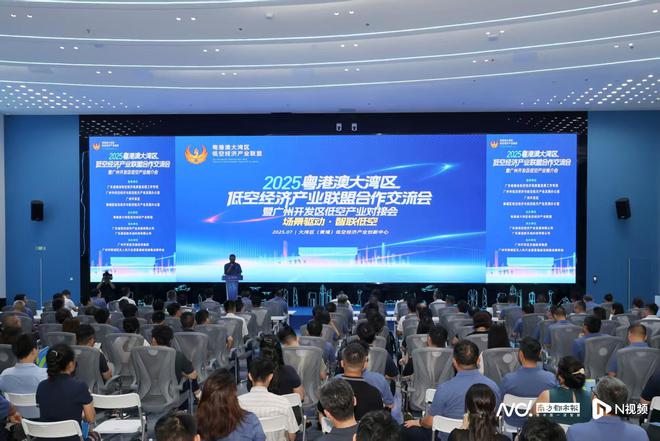
Core Viewpoint - The Guangdong-Hong Kong-Macao Greater Bay Area is advancing its low-altitude economy through the establishment of the Low-altitude Economic Industry Alliance and the release of supportive policies, aiming to enhance industrial integration and innovation in the sector [1][4]. Group 1: Industry Development - The Low-altitude Economic Industry Alliance welcomed new member units and released the "Low-altitude 11 Measures," which are expected to accelerate the formation of new productive forces in the low-altitude economy [1][4]. - Guangzhou is one of the three major clusters for low-altitude economic industries in Guangdong Province, with Huangpu District identified as a pioneering area for development [1][4]. - Huangpu aims to create a national model for low-altitude economy characterized by high-end manufacturing and technological innovation, with a focus on integrating low-altitude and aerospace industries [4][12]. Group 2: Financial Support and Infrastructure - The "Low-altitude 11 Measures" include financial incentives for various aspects such as project cultivation, infrastructure, and talent training, with individual measures offering up to 30 million yuan in rewards [4][5]. - Huangpu has established a comprehensive air traffic support system, including five digital vertical take-off and landing sites and 17 automated hangars, to facilitate low-altitude operations [5][8]. - The district plans to provide subsidies for infrastructure construction related to low-altitude operations, with a maximum annual subsidy of 6 million yuan per enterprise [5][8]. Group 3: Application Scenarios - Huangpu is implementing practical applications of low-altitude services, such as using drones for logistics and urban management, with successful operations already in place [8][9]. - The district has developed a low-altitude logistics platform that enables automated customs clearance for bonded goods, significantly reducing transportation time and costs [9][12]. - Huangpu encourages the development of commercialized demonstration projects in various sectors, including emergency rescue and medical services, to expand the low-altitude economy's reach [9][12]. Group 4: Industry Collaboration and Talent Development - Huangpu is fostering collaboration between enterprises and educational institutions to enhance research and development in the low-altitude economy, including training programs for drone operators [12][13]. - The district aims to attract over 100 low-altitude enterprises by the end of the year through strategic initiatives and support for high-impact projects [12][13]. - The introduction of innovative companies into the Low-altitude Economic Industry Alliance highlights the potential for growth and technological advancement in the sector [12][13].