SHEIN

Search documents
跨境电商大洗牌,谁能找到下一片蓝海
2 1 Shi Ji Jing Ji Bao Dao· 2025-07-09 14:08
Core Insights - The cancellation of the T86 exemption policy by the U.S. has significantly impacted cross-border e-commerce, pushing sellers to seek new markets while facing increased operational challenges [1][2][5] - Companies like SHEIN and Temu, which previously benefited from the exemption, are now experiencing a decline in user engagement and are accelerating their expansion into overseas markets [2][3] - Emerging markets such as Japan, Europe, and Latin America are being considered for expansion due to their growth potential, although challenges like compliance and logistics remain [3][4][5] Group 1: Market Dynamics - The U.S. has reduced the tax exemption for small packages, leading to a shift in the business model for cross-border sellers [1][2] - SHEIN and Temu have seen significant drops in daily active users, with SHEIN's U.S. monthly active users decreasing by 30% in May compared to March [1][2] - The cancellation of the exemption policy has forced companies to adapt quickly, with many looking towards markets like Japan, which offers lower logistics costs and a high consumer acceptance rate [3][4] Group 2: Regional Opportunities - Japan is emerging as a preferred market due to its proximity, high consumer income, and low return rates, making it attractive for cross-border sellers [3][4] - The European market presents strong consumer purchasing power but comes with complex compliance requirements, such as VAT registration [4] - Latin America, particularly Brazil and Mexico, is showing rapid growth in e-commerce, with expected revenue growth rates of 17.6% and 19% respectively [4][5] Group 3: Operational Challenges - The shift from fully managed to semi-managed models increases operational burdens on sellers, requiring them to handle logistics and customs themselves [7] - The need for local warehousing and the associated costs pose significant challenges, especially in distant markets like Latin America [4][6] - Companies must now focus on localizing their operations and understanding consumer behavior to remain competitive in the evolving landscape of cross-border e-commerce [7][8]
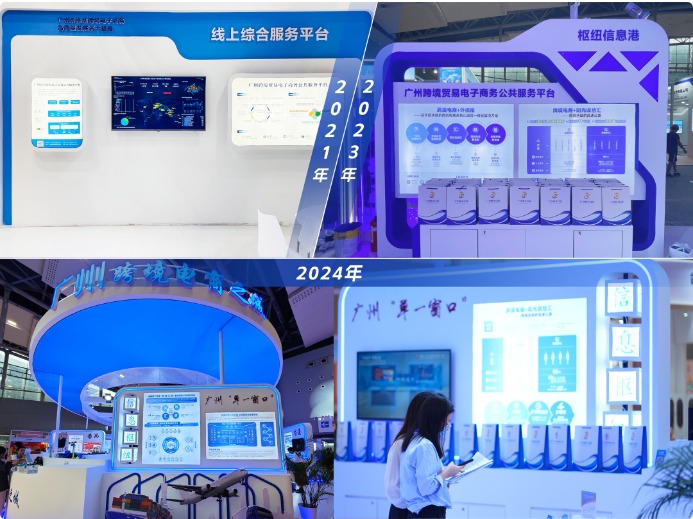
广州外贸“单一窗口”十周年:智通四海 “窗”新启航
Guang Zhou Ri Bao· 2025-07-09 12:46
Core Insights - The Guangzhou International Trade Single Window has evolved over ten years, integrating various regulatory systems and enhancing efficiency for over 530,000 enterprises, processing 4.5 billion declarations [1][2][4] Group 1: Digital Transformation and Efficiency - The platform operates on a model of "one platform, one submission, one standard," breaking down data barriers and leading the digital transformation of traditional customs processes [2] - Since its launch in 2015, the platform has upgraded from version 1.0 to 3.0, extending its functions from basic customs clearance to the entire international trade lifecycle, significantly improving efficiency and reducing costs [2][4] - The electronic release platform for import containers has reduced processing time by over 75%, completing 840,000 paperless transactions and saving over 420,000 sheets of paper [5] Group 2: Cross-Border Trade and E-commerce Support - The platform supports cross-border e-commerce and market procurement, establishing a comprehensive service system that integrates customs, taxation, and financial services, benefiting over 120,000 e-commerce enterprises [9][11] - The platform has processed nearly 4.2 billion import and export transactions, maintaining Guangzhou's position as a leader in cross-border e-commerce [9] Group 3: Innovation and Future Development - New products and services were introduced, including smart logistics information services and compliance management guidelines, aimed at addressing enterprise challenges [4][12] - The platform has integrated AI technology to enhance customer service, providing intelligent responses and support for complex inquiries [14] - Future plans include transforming the platform into a "smart trade comprehensive service platform," contributing to the new development pattern of foreign trade [14]

Parvus增持开云股份;Le Coq Sportif被收购;老佛爷百货任命CEO
Sou Hu Cai Jing· 2025-07-09 04:00
Investment Dynamics - UK hedge fund Parvus has increased its stake in Kering to 5% [1] Financing Dynamics - UK affordable luxury brand Rise & Fall has completed a new funding round totaling £4 million, with £1.4 million from Wealth Club, aimed at supporting its five-year growth strategy [6] - Rise & Fall has achieved annual revenue growth of 100% since its inception three years ago, enhancing its brand appeal [6] Acquisition Dynamics - French-Swiss entrepreneur Dan Mamane has successfully acquired the sports brand Le Coq Sportif, which has faced operational challenges and filed for bankruptcy protection in 2024 [9] Listing Dynamics - Tea brand Hu Shang Ayi announced plans to implement an H-share full circulation plan, converting up to 35,255,992 domestic unlisted shares into H-shares, representing approximately 33.51% of its total issued share capital [11] Brand Dynamics - LV Beauté is set to open its first store in Nanjing, China, featuring a range of high-end beauty products, marking LVMH's accelerated expansion in the Chinese beauty market [13] - The French regulatory authority DGCCRF has fined SHEIN €40 million for misleading promotional practices, highlighting the need for compliance and transparency in the fast fashion sector [16][17] - Dior has expanded its collaboration with UNESCO through the "Women Dior" program, providing guidance to 2,500 women from 140 countries [20] Personnel Dynamics - Isabel Marant has appointed Sophie Condroyer as the new Chief Marketing Officer, bringing over 17 years of experience in the fashion and luxury industry [21] - LVMH has appointed Michael Burke as the Chairman and CEO of its Americas division to enhance its business presence in North and South America [24] - Galeries Lafayette has appointed Arthur Lemoine as the new CEO, marking a new growth phase for the company [27]

7.9犀牛财经早报:经营贷利率跌穿3% 罗马仕电芯供应商拟注销新公司
Xi Niu Cai Jing· 2025-07-09 01:36
Group 1 - In the first half of the year, the registration scale of "insurance version ABS" exceeded 180 billion yuan, with a year-on-year growth of 46% [1] - 13 insurance asset management institutions registered 38 asset-backed plans, indicating a strong demand for stable cash flow and lower risk compared to equity assets [1] - The decline in operating loan rates below 3% indicates ongoing pressure on banks' net interest margins and profitability [1][2] Group 2 - The number of A-share companies intending to acquire IPO candidates has significantly increased, with 27 companies disclosing plans compared to 6 last year [1] - The surge in acquisition plans is attributed to policy benefits, increased exit demands from venture capital, accelerated industry consolidation, and valuation advantages of IPO candidates [1] - The solid-state battery technology is expected to gradually find applications across multiple fields, with significant advancements in energy density and safety [2] - The lithium battery industry is focusing on optimizing capacity structure, moving away from price competition towards quality and innovation [2] Group 3 - Apple COO Jeff Williams announced his retirement, marking a significant personnel change within the company [4] - The restructuring of Chang'an Group is expected to be finalized in August, indicating a strategic shift in the automotive sector [6] - GAC Fiat Chrysler has declared bankruptcy due to the lack of restructuring possibilities [6] Group 4 - ByteDance denied rumors regarding the sale of TikTok's U.S. operations to a consortium led by Oracle, stating the information is false [5] - The IPO of Wuhan Dazhong Dental Medical has seen a subscription rate of 108 times for its public offering in Hong Kong [7] - Meicheng Technology has initiated the IPO counseling process with CITIC Securities for its listing on A-shares [8]
传赴港IPO为向英国监管施压?SHEIN回应
第一财经· 2025-07-08 15:29
今日有消息传闻称 SHEIN 赴港IPO为拟向英国监管施压,对此, SHEIN 独家回应第一财经称:消息不实,系 恶意揣测。 ...

2025年中国品牌全球影响力报告
Sou Hu Cai Jing· 2025-07-08 01:06
Core Insights - The report highlights the accelerating global influence of Chinese brands, particularly in emerging markets, with significant growth in online traffic, engagement, and strategic globalization from 2024 to 2025 [1][10]. Group 1: Key Changes in Globalization - Chinese brands are transitioning from a "go out" strategy to a "go in" approach, focusing on localized operations and user experience [2]. - The electronics sector remains dominant, with 54 out of the top 100 brands, including realme, Huawei, and Xiaomi, leading in innovation and market positioning [2][18]. - The automotive sector is also gaining recognition, with brands like MG Motors and BYD making strides, especially in the electric vehicle market [2]. Group 2: Emerging Market Focus - The strategy emphasizes targeting emerging markets while deepening presence in developed markets, with the Middle East showing the fastest growth at a 69.8% increase in digital scores [4]. - North America and Europe remain key targets, with 67.4% of Chinese brands having a digital presence in North America, despite challenges like tariffs [4]. - Southeast Asia, Africa, and South America are highlighted as strong performers in emerging markets, with significant digital score increases [4]. Group 3: Digital Channels as Growth Engines - Social media, particularly TikTok, is crucial for growth, with 91% of the top 100 brands active on the platform, leading to increased user engagement [5]. - The shift from reliance on third-party platforms to a "platform + independent site" model is evident, with 75% of top brands having Amazon stores and many establishing DTC websites [5]. Group 4: Characteristics of Successful Brands - Successful Chinese brands share three traits: clear value propositions, flexible growth strategies, and sensitivity to user needs [6]. - New entrants like Insta360 and Zeelool are gaining traction by focusing on niche markets and leveraging social marketing [6]. Group 5: Future Trends in Brand Globalization - The report suggests a shift from "product export" to "brand export," emphasizing brand recognition and user loyalty as key competitive factors [7]. - Localization efforts are evolving beyond language translation to cultural integration, enhancing brand relevance in local markets [7]. - The overall trend indicates a move towards quality enhancement and comprehensive output of "products + services + brands" [7].

日本停滞35年,迎来“中国时刻”
凤凰网财经· 2025-07-05 14:01
Core Viewpoint - The article discusses the structural opportunities for Chinese e-commerce platforms in the Japanese market, which has been experiencing economic stagnation for 35 years, while highlighting the unique characteristics of Japanese consumers and the evolving e-commerce landscape [1][3][21]. Group 1: Economic Context - Japan's GDP has seen a significant decline, dropping from approximately 15.3% of global GDP in 1989 to 4.18% in 2022, with its global ranking falling from second to fourth [1]. - The Japanese economy is characterized by a prolonged period of stagnation, with the government expressing increased concerns about economic risks, as indicated by the frequent mention of "risk" in recent policy documents [3]. Group 2: E-commerce Market Entry - Chinese e-commerce platforms like TikTok Shop, Temu, TAO, and JD Japan are entering the Japanese market, which is the third largest e-commerce market globally, valued at $169 billion [1][2]. - The e-commerce penetration rate in Japan is still below 10%, indicating significant growth potential compared to markets like China and the U.S. [21][25]. Group 3: Consumer Behavior - Japanese consumers are known for their high standards and preference for in-person shopping experiences, which include social interactions and personalized services that online shopping cannot replicate [7][8][9]. - The trend of consumption downgrade among Japanese consumers is evident, with a growing preference for second-hand goods and discounted products, reflecting a shift towards value-oriented purchasing [25][26]. Group 4: Market Opportunities for Chinese Brands - Chinese brands are well-positioned to capitalize on the Japanese market's demand for high-quality, cost-effective products, as Japanese consumers are increasingly price-sensitive while still valuing quality [22][25]. - The recognition of Chinese brands in Japan has improved, with successful examples like Ecoflow and SwitchBot demonstrating the potential for Chinese products to fill market gaps [27][28]. Group 5: Challenges and Considerations - The Japanese market presents unique challenges, including a complex logistics system, high operational costs, and cultural barriers that require a deep understanding of local consumer preferences [37][40]. - The long-term nature of building brand trust in Japan means that companies must be prepared for a patient approach to market entry and growth, as Japanese consumers tend to be cautious and require time to develop loyalty [31][36].

日本停滞35年,迎来“中国时刻”
创业家· 2025-07-05 09:59
以下文章来源于霞光社 ,作者岭南人鱼机 霞光社 . 赋能企业全球化 日本消费者的钱包,还有得赚。 来源: 霞光社 作者:岭南人鱼机 "经济上行的美"成为今年上半年的流行词,带着对昨日生机勃勃的浓烈怀旧气息,击中了无数 年轻人的心。 2025年Q1,日本GDP再次出现负增长,这意味着自1989年日本泡沫经济破裂后,经济停滞 的状态已经长达35年之久。期间,日本GDP全球占比从1989年的约15.3% [1] 降至2022年的 4.18%,GDP总量从位居全球第二,先后在2010年、2023年被中国、德国超越,跌至全球第 四。 而耐人寻味的是,在日本经济持续疲软的当下,多家中国新兴电商却开始将目的地看向这 一"失落地"。6月30日,TikTok宣布在日本推出TikTok Shop,购物功能正式上线,允许卖 家进军这一全球第三大电商市场 (据Statista Market Insights数据,日本以1690亿美元的 市场表现排在全球第三) 。此外,Temu、TAO (阿里巴巴旗下) 、京东日本站分别于 2023~2024年期间登陆日本,SHEIN也于2020年末在日本上线。 如果说"经济上行的美"是一种向前奔跑的 ...

停滞35年的日本,迎来“中国时刻”
创业邦· 2025-07-04 11:01
Core Viewpoint - The article discusses the structural opportunities for Chinese e-commerce platforms in the Japanese market, which is currently experiencing economic stagnation and a shift towards lower-priced, quality products. Group 1: Economic Context - Japan's GDP has shown negative growth in Q1 2025, marking 35 years of economic stagnation since the 1989 bubble burst, with its global GDP share dropping from approximately 15.3% in 1989 to 4.18% in 2022 [3][5]. - The Japanese e-commerce market is the third largest globally, valued at $169 billion, and is projected to grow at a compound annual growth rate (CAGR) of 5.2% over the next four years [5][20]. Group 2: Chinese E-commerce Platforms in Japan - Several Chinese e-commerce platforms, including TikTok Shop, Temu, TAO, and SHEIN, are entering the Japanese market, capitalizing on the current economic conditions [5][6]. - TikTok Shop is set to launch in June 2025, leveraging a user base of 40 million, while Temu and TAO are also targeting the Japanese market with distinct strategies [6][7]. Group 3: Consumer Behavior and Market Dynamics - Japanese consumers are known for their high standards and are considered difficult to please, which presents a challenge for new entrants [9][10]. - The shift towards online shopping has been accelerated by the COVID-19 pandemic, with e-commerce becoming one of the few sectors to maintain growth during this period [20][21]. Group 4: Market Opportunities - The low penetration rate of e-commerce in Japan, currently under 10%, indicates significant growth potential compared to markets like China and the U.S. [7][24]. - The trend of Japanese consumers moving towards lower-priced, quality products creates an opportunity for Chinese brands, which are perceived to offer better value [24][26]. Group 5: Challenges and Considerations - Japanese market entry requires understanding local consumer preferences and compliance with strict regulations, which can be a barrier for foreign brands [43][44]. - The logistics and payment infrastructure in Japan presents challenges, including high costs and inefficiencies in last-mile delivery [40][42]. Group 6: Long-term Outlook - The article suggests that while the Japanese market is challenging, it offers a unique opportunity for patient capital and brands willing to invest in long-term relationships with consumers [31][38]. - The evolving landscape of consumer behavior, particularly among younger demographics, indicates a potential shift in market dynamics that could favor innovative and adaptable brands [21][30].

电商生意里,有沃尔玛的好日子和坏日子
3 6 Ke· 2025-07-04 10:50
Core Insights - Walmart has successfully navigated a "midlife crisis" over the past decade, adapting to the e-commerce era and achieving significant revenue and profit growth in fiscal years 2024 and 2025 [2] - However, uncertainties such as Trump's tariff policies may hinder Walmart's ability to maintain high growth rates in the coming years [2] Financial Performance - In fiscal year 2025, approximately 75% of Walmart's growth came from households earning over $100,000 annually, with the shopping rate among these households increasing from 77% in 2019 to 89% in 2024 [4] - Walmart's total sales increased from $494.206 billion in fiscal year 2022 to $584.3 billion in fiscal year 2025, a growth of over $90 billion [11] - E-commerce sales reached $121 billion in fiscal year 2025, accounting for 17.94% of total sales, up from just 2.53% a decade ago [9] Strategic Developments - Walmart's e-commerce business has been significantly bolstered by key leadership changes and strategic acquisitions, including the $16 billion purchase of Indian e-commerce company Flipkart [15] - The company has shifted its focus to smaller store formats and upgraded existing locations to enhance customer experience [16][19] - Walmart's e-commerce operations have become a crucial growth driver, with online sales accounting for nearly 50% of its revenue in China [19] Competitive Landscape - Walmart faces increasing competition from emerging cross-border e-commerce players like SHEIN and TikTok Shop, which are targeting price-sensitive consumers and younger demographics [22][23] - The company is expected to experience slower growth, with projected net sales and adjusted operating profit growth rates for fiscal year 2026 lower than those of fiscal year 2025 [20] - The retail landscape is evolving, with new players leveraging innovative business models and consumer engagement strategies, posing a challenge to Walmart's market position [25][27]