
中兴通讯

Search documents
上海浦东VS深圳南山,谁是中国第一强区
Sou Hu Cai Jing· 2026-01-28 10:29
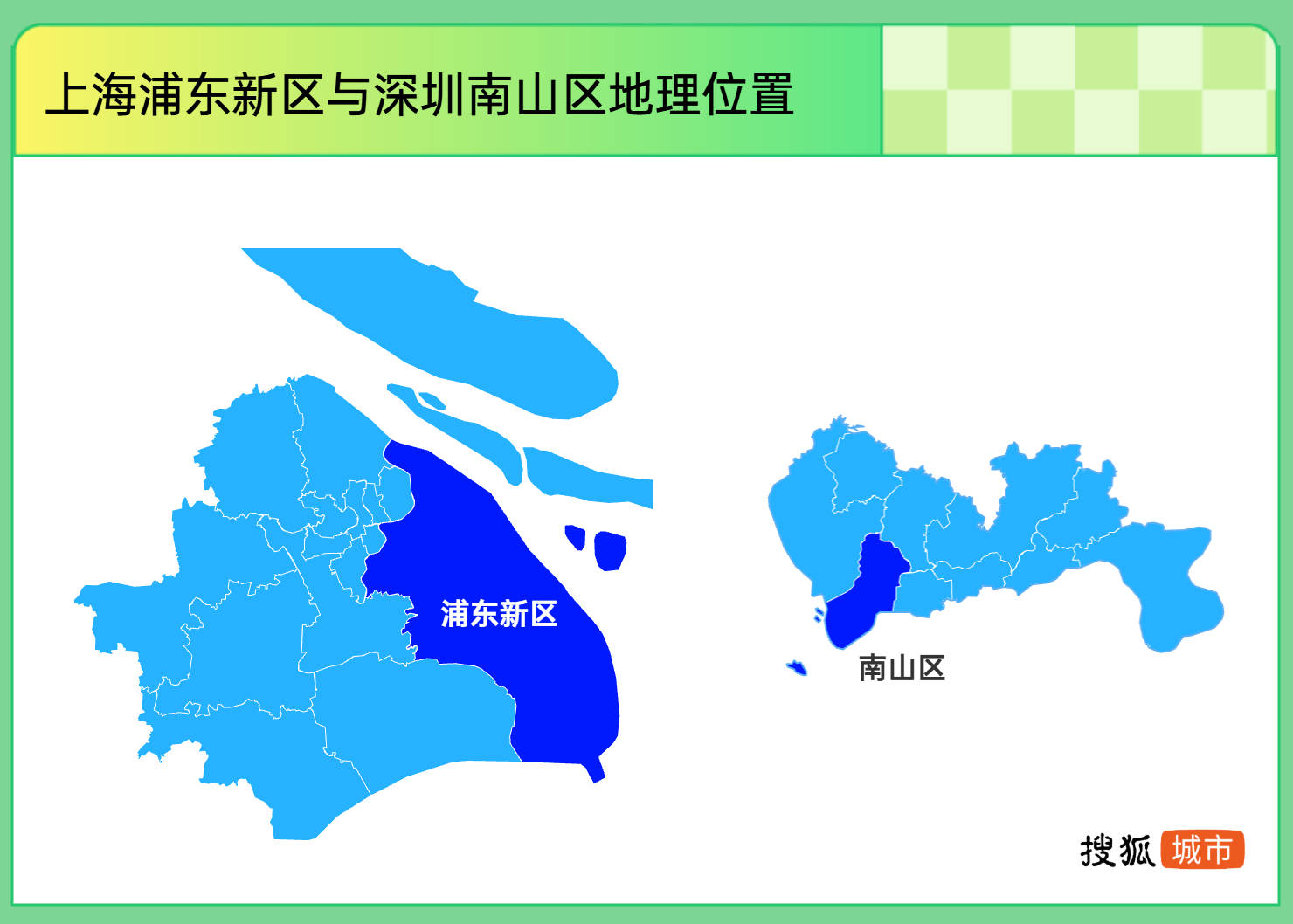
Group 1 - Shenzhen Nanshan District officially announced that its GDP will exceed 1 trillion yuan by 2025, becoming the third "trillion-yuan district" in the country and the first trillion-yuan district under a city jurisdiction [1] - Shanghai Pudong New Area disclosed that its GDP is expected to reach approximately 1.88 trillion yuan by 2025, positioning it as the first "2 trillion-yuan economic region" in the country [1][3] - In terms of economic scale, Pudong has a significant advantage with a resident population of 5.7858 million and a GDP of 1.88 trillion yuan, nearly double that of Nanshan [1][3] Group 2 - Nanshan District has a higher development efficiency, with a per capita GDP exceeding 500,000 yuan, which is 1.7 times that of Pudong, and a land GDP of over 5 billion yuan, which is 3.5 times that of Pudong [1][3] - Pudong New Area is a core functional area for Shanghai's international economy, finance, trade, shipping, and technological innovation, housing numerous high-end platforms [6][8] - Nanshan District is recognized for its high density of listed companies, with 218 listed companies and 6,037 high-tech enterprises, making it the highest in the country [10] Group 3 - Beijing's Chaoyang District is projected to be the next to reach a GDP of 1 trillion yuan, with an expected GDP of 966.85 billion yuan in 2025, just 350 billion yuan short of the target [11][13] - Chaoyang's economy is heavily reliant on the service sector, with over 95% of its GDP coming from tertiary industries, significantly higher than that of Pudong and Nanshan [13]

美国商务部撤换对中国鹰派官员
制裁名单· 2026-01-28 01:03
Core Viewpoint - The recent personnel changes in the U.S. Department of Commerce, particularly in the Office of Information and Communication Technology Services (OICTS), indicate a potential shift in the U.S. approach towards technology competition with China, moving from a hardline stance to a more lenient one [1][2]. Group 1: Personnel Changes - Liz Cannon, the executive director of OICTS, resigned under pressure, while her deputy was placed on administrative leave [2]. - OICTS is crucial for protecting U.S. technology supply chains and communication infrastructure from threats posed by China and other adversaries [2]. Group 2: Policy Background - The previous hardline stance against China is showing signs of relaxation, with indications of a "pause in sanctions" [3]. - The Biden administration had previously implemented measures such as import and sales bans on Chinese connected vehicles due to data security risks [5]. Group 3: Reactions and Impact Analysis - There are internal concerns in the U.S. regarding the softening stance towards China, with some officials fearing it may weaken the U.S. technology defense system [5]. - The Department of Commerce stated that the personnel changes would "enhance the effectiveness" of the office, with new leadership expected to be announced soon [5]. Group 4: Key Impacts on U.S.-China Technology Competition - Short-term benefits for Chinese tech companies are anticipated if the U.S. pauses new sanctions, potentially alleviating pressure on firms like Huawei and ZTE [4]. - The approval of selling NVIDIA AI chips to China may ease the AI computing power bottleneck for companies like Baidu and Alibaba [6]. - The ongoing personnel changes reflect a contradiction in U.S. technology policy towards China, oscillating between containment and cooperation [6].

白宫突发!美元,“崩”了!芯片,涨价!涨价!多国发力,建设本国卫星
Jin Rong Jie· 2026-01-28 00:31
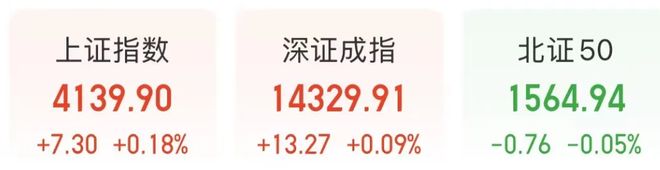
4、面对美国政府一系列的霸凌行为,越来越多国家的政府愈发重视起了卫星主权。欧洲、中东和亚洲 国家正纷纷投资建设本国卫星,或付费获取私营卫星的专属使用权。阿曼MB集团与商业卫星初创公司 Astranis达成互联网卫星合作协议。加拿大政府向位于渥太华的Telesat公司提供约16亿美元贷款,用于 Lightspeed卫星通信网络建设。总部位于巴黎的卫星公司Eutelsat,去年也获得了英法两国政府的资金支 持。 5、欧盟政府卫星通信计划已于"上周"启动。该计划汇集了27个欧盟成员国政府拥有的卫星的现有通信 能力。该计划据称是欧洲天基通信摆脱对外国供应商依赖的第一步,旨在确保关键业务的顺利开展。欧 盟国防和太空事务专员披露,该计划未来将进一步扩大带宽和覆盖范围;卫星互联网星座IRIS²预计在 2029年完成初步部署。IRIS²星座规划由近290颗卫星组成。此外,4助推器版的阿丽亚娜-6火箭很快将 迎来首飞。 股市动态 | 上证指数 | 深证成指 | 北证50 | | --- | --- | --- | | 4139.90 | 14329.91 | 1564.94 | | +7.30 +0.18% | +13.27 ...
“富”可敌市,中国第一个万亿GDP地市辖区,诞生
虎嗅APP· 2026-01-28 00:23
Core Viewpoint - Shenzhen's Nanshan District is set to become China's first district with a GDP exceeding 1 trillion yuan by 2025, marking a significant milestone in the economic landscape of non-direct-controlled cities [5][8]. Group 1: Economic Milestone - Nanshan's GDP surpassing 1 trillion yuan signifies a breakthrough for non-direct-controlled urban areas, positioning it alongside major economic districts like Shanghai's Pudong and Beijing's Haidian [6][12]. - The district's rapid economic growth is highlighted by its average annual compound growth rate of nearly 15% over the past 35 years, transitioning from a marginal area to a leading economic zone [17][15]. Group 2: Economic Density and Competitiveness - Nanshan boasts the highest economic density in the country, with a per capita GDP exceeding 540,000 yuan and a land GDP of over 5.4 billion yuan per square kilometer [19]. - The district is recognized for its innovation capabilities, with a significant number of patents and R&D investment intensity nearly three times the national average [21][23]. Group 3: Industrial Structure and Growth Drivers - Nanshan's economy is characterized by a balanced integration of high-end manufacturing and modern service industries, with nearly 80% of its GDP coming from the tertiary sector [30][31]. - The district is home to numerous leading enterprises, including Tencent and DJI, and has a high concentration of high-tech companies, with over 6,000 high-tech firms and 218 listed companies [34][35]. Group 4: Future Development and Strategic Initiatives - Nanshan aims to enhance its global competitiveness through a strategic framework focusing on domestic and international circulation, as well as marine economy development [44]. - The district is positioned to lead in emerging industries such as artificial intelligence and low-altitude economy, with significant investments and initiatives planned for the next decade [36][39].


马化腾罕见点评豆包手机、阿里背后:AI入口争夺战已经打响
Nan Fang Du Shi Bao· 2026-01-27 09:56
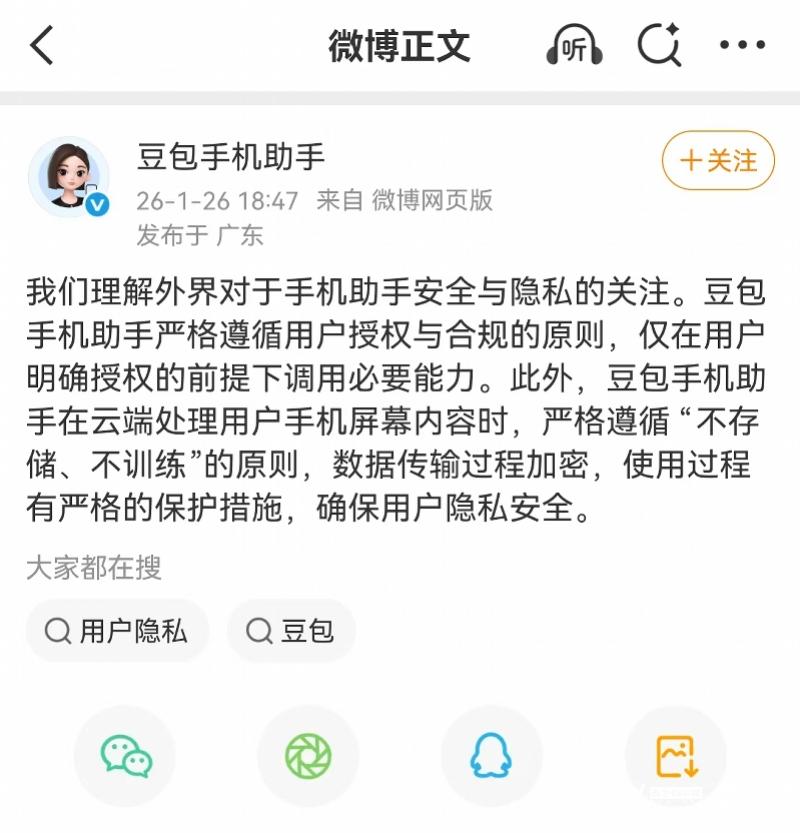
Core Viewpoint - Tencent's CEO Ma Huateng expressed concerns about the security and responsibility of user data handling in AI applications, particularly criticizing the practices of ByteDance and ZTE's Doubao phone, while acknowledging Alibaba's AI ecosystem model [1][7]. Group 1: AI Applications and Market Competition - The competition for AI assistants and system-level intelligent agents is intensifying among major companies, with a focus on transforming user interaction from app-based to direct demand [5][9]. - ByteDance's collaboration with ZTE aims to integrate AI directly into smartphones, allowing for cross-application tasks without waiting for app interfaces to open [5][9]. - Alibaba's AI application "Qianwen" emphasizes a controlled API approach, integrating its services within its ecosystem, which has led to a noticeable increase in user inquiries [6][9]. Group 2: Privacy and Security Concerns - Ma Huateng's strong stance against cloud-based screen recording practices highlights the inherent risks associated with such technologies, emphasizing the need for secure data handling [7][8]. - Doubao phone assistant claims to operate under strict user authorization and compliance, ensuring no data storage or training occurs during cloud processing [3][7]. - The response from various platforms, including WeChat and payment apps, indicates a growing concern over security and privacy, leading to restrictions on Doubao's functionalities [8][9]. Group 3: Industry Trends and Regulatory Needs - The divergence in AI application strategies reflects a broader trend in the industry, with two main routes emerging: the "screen reading + simulated clicking" approach and the "API interface calling" method [9][10]. - The need for standardized regulations regarding personal information protection and data security in cross-app operations is becoming increasingly critical as the industry evolves [10]. - The competition among Doubao, Alibaba's Qianwen, and Tencent's Yuanbao signifies a new phase in the AI entry battle, characterized by product acceleration and the need for regulatory frameworks [10][11].

瑞银:在中兴通讯的持股比例升至9.38%
Ge Long Hui· 2026-01-27 09:26
Group 1 - UBS Group increased its stake in ZTE Corporation's H-shares from 8.88% to 9.38% as of January 21 [1]

6G专题之语义通信:太空算力遗珠,6G卫星新范式
ZHONGTAI SECURITIES· 2026-01-27 08:48
Investment Rating - The report suggests a positive investment outlook for companies involved in semantic communication and 6G technology, highlighting specific companies as potential investment opportunities [5]. Core Insights - The report emphasizes that traditional communication technologies are approaching Shannon's limit, necessitating a shift towards semantic communication to enhance efficiency and reliability in 6G networks [5][15]. - Semantic communication is positioned as a breakthrough technology that can bypass traditional limitations by focusing on the transmission of meaning rather than just bits, significantly reducing bandwidth requirements [5][15]. - The report identifies key players in the industry, such as Zhongbei Communication, Xinke Mobile, and Fenghuo Communication, which are actively engaged in advancing semantic communication technologies [5][63]. Summary by Sections Industry Background - The report discusses the transition from traditional communication paradigms to semantic communication, which integrates AI to enhance data transmission efficiency and reduce redundancy [6][15]. Technical Pathways - Semantic communication architecture introduces a semantic layer that extracts and reconstructs information, allowing for more efficient data transmission compared to traditional methods [26][29]. - Two main technical routes are identified: IS-JSCC (Iterative Structured Joint Source-Channel Coding) and SGSCC (Semantics-Guided Source-Channel Coding), both aiming to optimize communication in 6G networks [29]. Industry Shape - The report outlines the transformation of satellite networks into AI-native intelligent computing networks, emphasizing the integration of computing capabilities within satellite nodes to enhance data processing and transmission [37][42]. - The establishment of space data centers is highlighted as a critical infrastructure development to support the increasing demand for data processing in the context of 6G [42]. Related Companies - Zhongbei Communication is noted for its focus on 5G infrastructure and cloud computing services, positioning itself as a key player in the semantic communication landscape [63]. - Xinke Mobile is recognized for its leadership in 5G technology and its role in developing standards for satellite internet, contributing to the advancement of semantic communication [73]. - Fenghuo Communication is mentioned for its development of low-power satellite routing systems, which are expected to benefit from the push towards 6G and semantic communication [75].


尼泊尔中资企业协会换届选举大会举行


Zhong Guo Xin Wen Wang· 2026-01-27 07:55
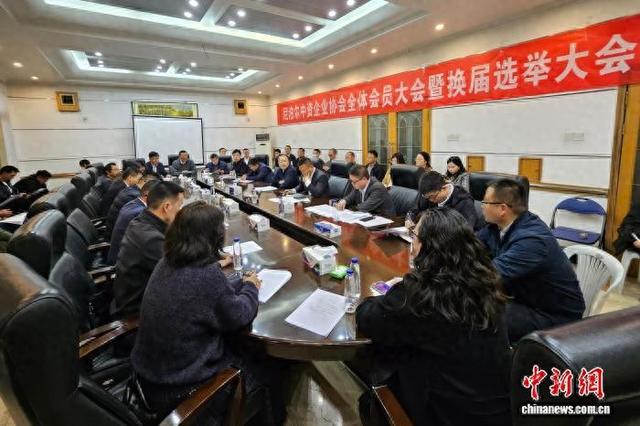
Group 1 - The Nepalese Chinese Enterprises Association held a general meeting and election on January 26, 2023, in Kathmandu, electing China Power Construction Corporation as the president unit, with Chen Xu as the president [1][3] - The meeting reviewed the work report from the previous president unit, China Communication Services Nepal, and featured representatives from various sectors sharing experiences and analyzing challenges in expanding the Chinese enterprises' market presence in Nepal [3] - The new board of directors was elected, including prominent companies such as China Power Construction, China Communication Services Group, and others, with China Communication Services Group serving as the secretary-general unit [3][4] Group 2 - The meeting also approved the revised constitution of the Nepalese Chinese Enterprises Association for 2026 [3] - The Chinese Embassy in Nepal acknowledged the association's role in uniting and serving Chinese enterprises and promoting Sino-Nepal economic cooperation [4] - The Nepalese Chinese Enterprises Association was established in 2013 and currently has 70 member units [4]
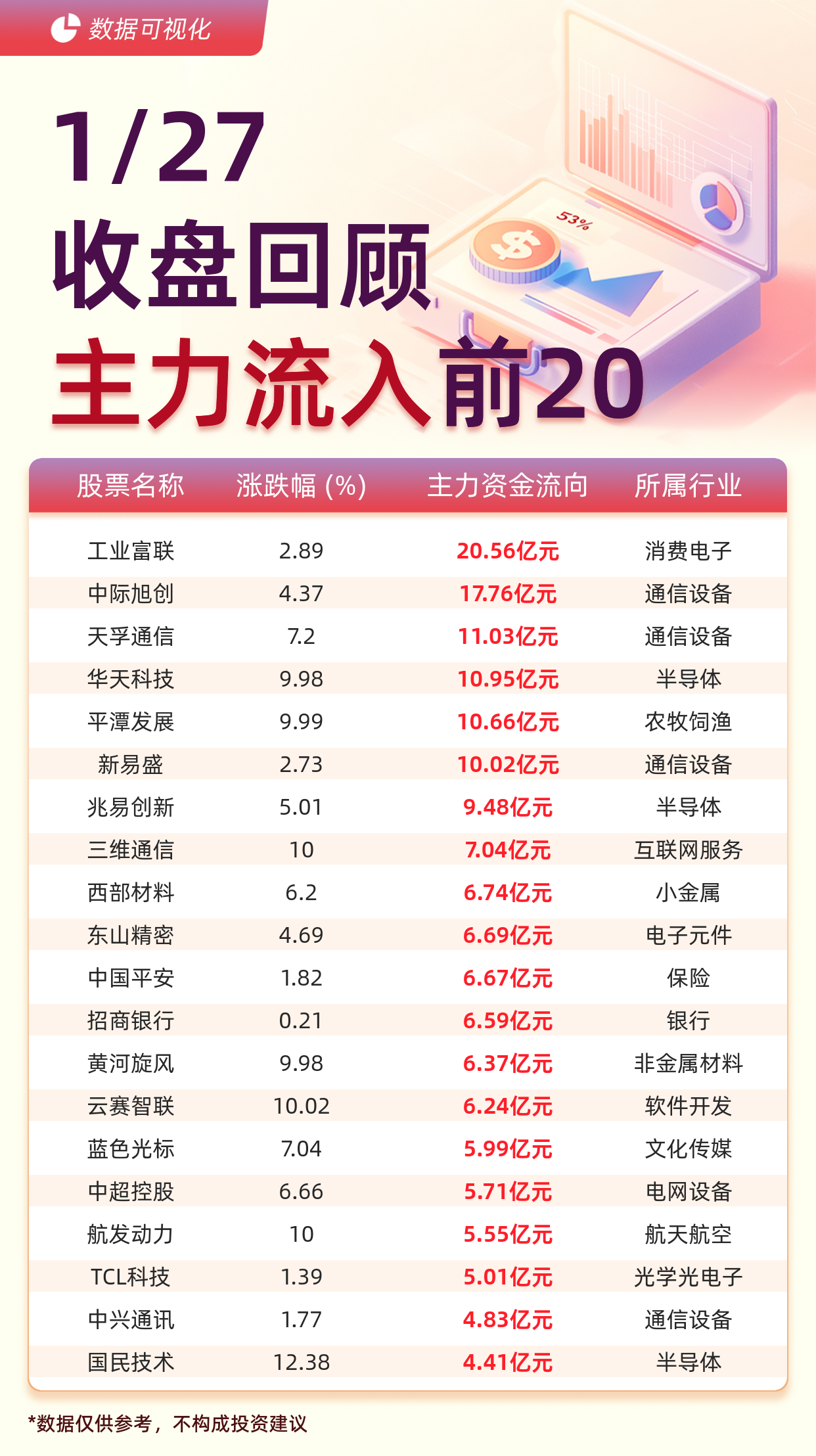
主力资金流入前20:工业富联流入20.56亿元、中际旭创流入17.76亿元
Jin Rong Jie· 2026-01-27 07:30
Group 1 - The top 20 stocks with the highest main capital inflow as of January 27 include Industrial Fulian (20.56 billion), Zhongji Xuchuang (17.76 billion), and Tianfu Communication (11.03 billion) [1][2] - The sectors represented among the top inflow stocks include consumer electronics, communication equipment, semiconductors, agriculture, and banking [2][3] - Industrial Fulian leads with a capital inflow of 20.56 billion, followed by Zhongji Xuchuang with 17.76 billion, and Tianfu Communication with 11.03 billion [1][2] Group 2 - Other notable stocks include Huada Technology (10.95 billion), Pingtan Development (10.66 billion), and Xinyi Technology (10.02 billion) [1][2] - The banking sector is represented by China Ping An with 6.67 billion and China Merchants Bank with 6.59 billion [2][3] - The data indicates a significant interest in technology and communication sectors, with multiple companies in these fields receiving substantial capital inflows [1][2][3]






腾讯员工大会后,豆包手机再次回应安全争议
2 1 Shi Ji Jing Ji Bao Dao· 2026-01-27 06:17
Core Viewpoint - Tencent's CEO Ma Huateng discussed the integration of AI agents into mobile applications, emphasizing the importance of user privacy and security in contrast to competitors like Alibaba and ByteDance [1][3]. Group 1: Tencent's Position on AI - Ma Huateng criticized the use of "black market plugins" for data processing, labeling them as "extremely unsafe" and "irresponsible" [1]. - Tencent is contemplating how to introduce AI into its WeChat ecosystem while balancing user needs and privacy concerns [4]. Group 2: Competitor Analysis - Alibaba's Qianwen has adopted an A2A (Agent to Agent) model, allowing direct interaction between AI and platform systems, which Ma Huateng acknowledged as leveraging Alibaba's ecosystem advantages [3]. - In contrast, the GUI technology used by ByteDance's Doubao assistant allows AI to operate independently of app cooperation, raising privacy and platform rule concerns [2]. Group 3: Industry Trends and Responses - The launch of Doubao assistant led to immediate privacy and security controversies, prompting the team to limit its operational boundaries [2]. - Tencent's recent AI updates, such as the "Yuanbao Party" feature, focus on social interaction rather than task execution, indicating a different approach to AI integration [4].