
Waymo

Search documents
FatPipe Inc Highlights Proven Fail-Proof Autonomous Vehicle Connectivity Solutions to Avoid Waymo San Francisco Outage-like Situations
Accessnewswire· 2025-12-23 19:15
Core Viewpoint - Recent service disruptions of Waymo autonomous vehicles in San Francisco highlight the critical challenge of reliance on a single network or network access technology in autonomous mobility [1] Group 1: Service Disruptions - Waymo vehicles faced difficulties in maintaining reliable 5G connectivity during a widespread power and infrastructure outage [1] - The disruptions led to service pauses and stalled operations for Waymo vehicles [1]


L4级自动驾驶赛道分化,Robobus将成为“第一战场”?
3 6 Ke· 2025-12-23 11:17
Core Insights - The autonomous driving industry is transitioning from a phase of singular breakthroughs to a critical point of track differentiation, with companies reassessing their strategic focus based on the varying technical adaptability and commercialization potential across different scenarios [1][3] Track Differentiation - The differentiation in the L4 autonomous driving track reflects a renewed understanding of technology implementation, moving away from the misconception that overcoming core technology guarantees universal commercialization [3] - The complexity, safety, and commercial value of specific scenarios are crucial for the successful deployment of L4 technology, with Robotaxi facing significant challenges compared to more controlled environments like Robotruck and Robobus [3][4] Financing Trends - Since 2025, financing in the autonomous driving sector has increasingly concentrated on Robobus, Robotruck, and Robovan, with notable investments such as over $600 million in New Stone Technology, setting a record in China's autonomous driving financing [4] Robovan Insights - Robovan focuses on last-mile logistics with a core emphasis on low-cost scalability, with leading companies nearing the threshold of 10,000 units delivered, and prices dropping significantly to as low as 16,800 yuan [4][5] Robotruck Insights - Robotruck aims to revolutionize efficiency in long-distance logistics, addressing cost reduction needs in traditional logistics plagued by low-price competition and safety issues, gaining attention from logistics companies [5] Robobus Insights - Robobus benefits from public transport attributes, addressing high-frequency demand in urban micro-circulation and providing a clear commercial path, supported by strong policy backing [5][8] - The operational flexibility of Robobus allows it to adapt to various semi-open and closed scenarios, significantly lowering the implementation difficulty of L4 technology [9] Commercialization Pathways - Robobus has two primary commercialization models: To G, collaborating with governments for public transport integration, and To B, providing customized services for specific venues [9][10] - The scalability of Robobus operations can further reduce costs through increased order volumes, creating a positive feedback loop of cost reduction and expanded service [10] Global Expansion - Chinese companies are positioned to lead in the Robobus sector globally, leveraging complete industrial chain advantages and rich operational experience, as evidenced by successful projects in Singapore [11][12] Competitive Landscape - The competition in the Robobus sector extends beyond technology to include business models, ecosystem integration, and global capabilities, necessitating a comprehensive approach for success [12][13] - Companies must adapt to local regulations and establish deep collaborations with local partners to navigate the complexities of international markets [13][14] Challenges Ahead - Robobus faces technical challenges in specific scenarios, such as adverse weather conditions affecting sensor accuracy and the need for effective vehicle-road collaboration [14] - Initial investment costs for L4 Robobus remain high, necessitating strong financial capabilities for companies to achieve scalability [14] - A robust operational maintenance system is essential for Robobus, which includes not only vehicle maintenance but also monitoring and upgrading autonomous driving systems [14][15]
Robotaxi产业深度报告:高阶智驾准入,Robotaxi商业化提速
Shanghai Aijian Securities· 2025-12-23 10:51
证券研究报告 行业研究 / 行业深度 2025 年 12 月 23 日 资料来源:聚源数据,爱建证券研究所 相关研究 《特斯拉 Robotaxi 取消安全员,纯视觉方案商 业化提速——Robotaxi 系列报告(三)》 2025-12-12 《曹操出行提"十年百城千亿"战略目标—— Robotaxi 系列报告(二)》2025-12-12 《奔驰自动驾驶出租车于阿布扎比开启路测— —Robotaxi 系列报告(一)》2025-12-12 《车企年销量目标完成度分化——智能汽车数 据销量跟踪(二)》2025-12-03 《蔚来业绩创历史新高,25Q4 有望实现盈利 ——智能汽车系列报告(五)》2025-12-03 证券分析师 汽车 一年内行业指数与沪深 300 指数对比走势: 吴迪 S0820525010001 021-32229888-25523 wudi@ajzq.com 联系人 徐姝婧 S0820124090004 021-32229888-25517 xushujing@ajzq.com 行业及产业 高阶智驾准入,Robotaxi 商业化提速 ——Robotaxi 产业深度报告 强于大市 投资要点: 规模 ...

马斯克:走上最细、最险的那根钢丝
3 6 Ke· 2025-12-23 10:06
Group 1 - The core viewpoint of the article highlights Elon Musk's commitment to a pure vision-based approach for autonomous driving, despite criticism regarding user safety and the ability to handle complex weather and road conditions [2] - Tesla's autonomous driving system costs less than a quarter of Waymo's, indicating a significant cost advantage that could lead to Tesla dominating the industry if the pure vision approach proves successful [2] - The article discusses the risks associated with Tesla's reliance on visual algorithms, which have previously led to accidents due to misinterpretations in low-contrast situations [2] Group 2 - The financial prospects of the Robotaxi industry are described as a double-edged sword, where the pursuit of extreme cost reduction conflicts with public intolerance for safety risks [3] - The ultimate challenge for Tesla and the Robotaxi industry is balancing the deployment of services to avoid limited growth and cost reduction while also not disrupting the existing employment market for drivers [4] - The article emphasizes that while society is eager to see technological advancements, there is a reluctance to bear the costs associated with these changes, highlighting a societal tension [4]
【特稿】美国调查Waymo无人驾驶出租车因停电“集体趴窝”
Xin Hua She· 2025-12-23 09:33
Core Viewpoint - Waymo's autonomous taxis experienced significant operational issues during a large-scale power outage in San Francisco, leading to increased traffic congestion and prompting an investigation by California regulators [1][2][3] Group 1: Incident Overview - On December 20, a power outage caused by a transformer fire affected approximately 130,000 users in San Francisco, with power not fully restored by December 22 [2] - Waymo's autonomous taxis became immobilized at intersections during the outage, exacerbating traffic congestion and causing public frustration [2] - The company temporarily suspended its taxi services on the evening of December 20 and resumed operations by the afternoon of December 21 [2] Group 2: Regulatory Response - The California Public Utilities Commission announced an investigation into the incident following the power outage and the resulting traffic issues caused by Waymo's taxis [3] - Concerns had previously been raised by city officials and emergency services regarding the potential risks of autonomous taxis becoming immobilized in emergency situations [3] Group 3: Expert Opinions - Experts highlighted that the immobilization of Waymo's taxis was not due to software failure but rather operational management issues, as the system struggled to handle multiple vehicles needing remote support simultaneously [3] - There are warnings that if a major disaster occurs, such as an earthquake, the presence of numerous immobilized autonomous taxis could lead to severe consequences for emergency response [3] - Some experts argue that urban infrastructure is not yet prepared for the widespread integration of highly automated vehicles, suggesting the need for a human backup mechanism in autonomous systems [3]
两家美国网约车公司在英国与百度展开合作
Guan Cha Zhe Wang· 2025-12-23 08:12
Group 1 - Uber and Lyft are collaborating with Baidu to launch autonomous taxi trials in the UK, indicating a competitive push for autonomous taxi services globally [1][3] - Uber plans to initiate a pilot project with Baidu's Apollo Go in London in the first half of 2026, following their initial partnership announcement in July [3] - Lyft's CEO announced plans to test dozens of Apollo Go RT6 vehicles in London next year, pending regulatory approval, as part of their collaboration with Baidu [3] Group 2 - The shift towards partnering with Chinese autonomous driving companies, such as Baidu, may be influenced by recent operational issues faced by Waymo's autonomous vehicles in the US [4] - Global ride-hailing platforms are increasingly choosing to collaborate with Chinese autonomous driving firms, expanding their services to various regions [4] - Southeast Asian ride-hailing company Grab is partnering with Momenta and WeRide to extend autonomous taxi services in Southeast Asia, while other companies are testing autonomous shuttle services in Singapore [5]


旧金山全城瘫痪!Waymo断电变「废铁」,马斯克纯视觉赢麻了
猿大侠· 2025-12-23 04:11
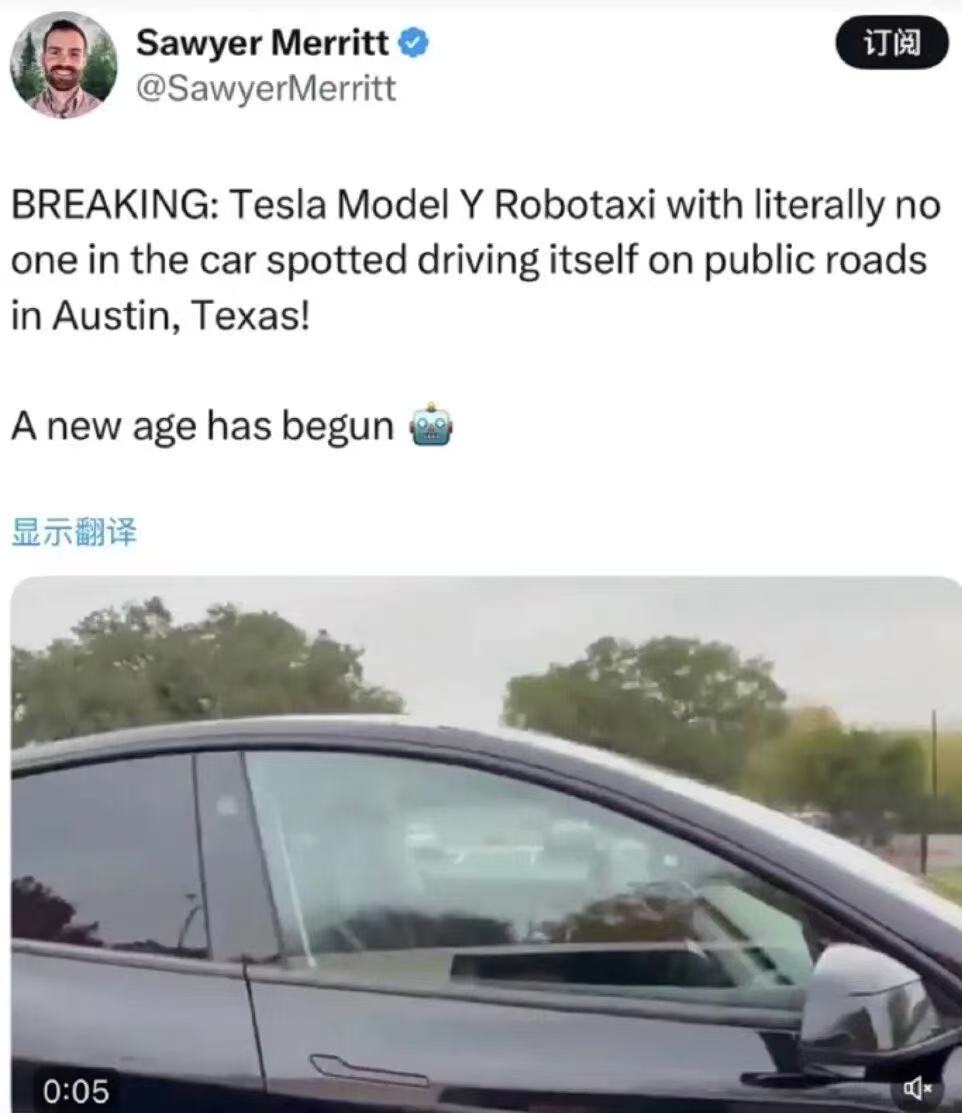
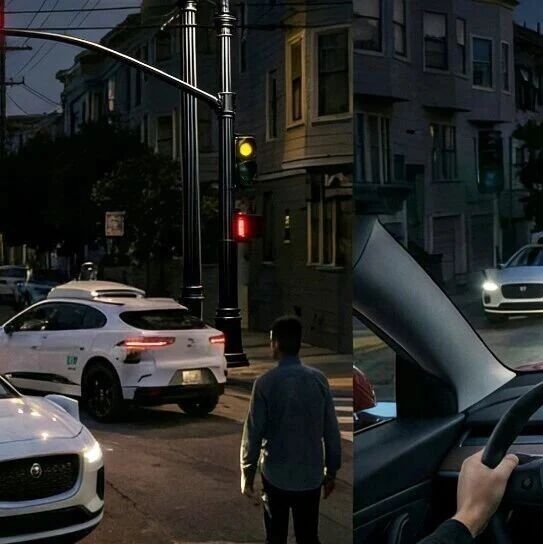
Core Viewpoint - The recent power outage in San Francisco highlighted the vulnerabilities of autonomous driving systems, particularly Waymo's, as their vehicles became immobilized and caused traffic chaos, contrasting with Tesla's unaffected Robotaxi service during the same incident [1][13][47]. Group 1: Incident Overview - A significant power outage in San Francisco disrupted the entire city's public transportation system and traffic signals, affecting up to 130,000 users during a peak shopping season [15]. - Waymo's autonomous vehicles became stranded at intersections and main roads, unable to move, effectively turning into "roadblocks" [4][6][7]. - The incident sparked widespread discussion on social media, showcasing the limitations of AI-driven systems in unexpected situations [8][12]. Group 2: Waymo's Response and Technology - Waymo temporarily suspended its ride-hailing service in the Bay Area and stated it was working closely with city officials to monitor infrastructure conditions [10]. - The power outage exposed a critical weakness in Waymo's reliance on a multi-sensor fusion system, which includes lidar, radar, cameras, and high-definition maps, as it struggled to operate without functioning traffic signals [22][24]. - The incident raised questions about the system's ability to handle chaotic urban environments, where predictable behavior is disrupted [33][35]. Group 3: Comparison with Tesla - In stark contrast, Tesla's vehicles, which rely primarily on cameras and AI, continued to operate without interruption during the outage, highlighting a fundamental difference in their technological approaches [48][49]. - While Waymo's system opted for a conservative risk management strategy by halting operations, Tesla's approach emphasizes adaptability in unpredictable conditions [51][52]. - The event underscored the ongoing debate about the reliability of autonomous driving technologies and the need for better solutions to handle sudden urban disruptions [55][56].
强化学习应用在自动驾驶中的一些思考
自动驾驶之心· 2025-12-23 00:53
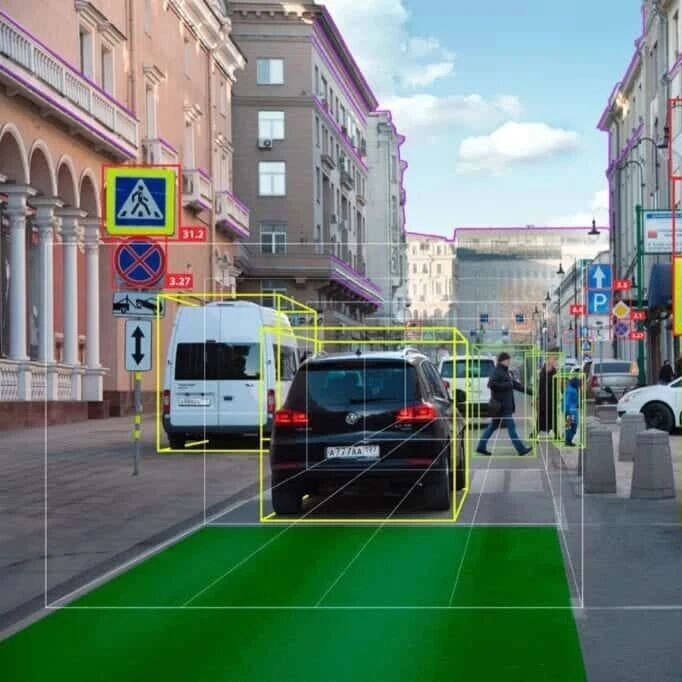
Core Viewpoint - The article discusses the application of reinforcement learning (RL) fine-tuning in trajectory planning for autonomous driving, emphasizing the transition from open-loop to closed-loop training methods to enhance the effectiveness of training models [3][4]. Group 1: Training Methodology - The mainstream planning modules based on learning typically use imitation learning, which can struggle with out-of-distribution scenarios during real-world testing [3]. - A closed-loop training approach is proposed, which simulates real vehicle testing environments, making it more effective than open-loop training [4]. - The article introduces a network structure based on Waymo's previous work, MotionLM, which outputs trajectories in an autoregressive manner, ensuring causal relationships are maintained [4][6]. Group 2: Input and Output Structure - The network's input is designed to be scene-centered, summarizing static information over a specified time frame rather than relying on the current frame alone, which helps prevent the vehicle from navigating outside the perceived road [6]. - Many imitation learning methods combine single-frame perception with ground truth (GT) data over several seconds, which can lead to causal inconsistencies if the perception range is limited [7]. Group 3: Reward Function and Training Phases - The training process consists of two phases: pretraining and reinforcement learning, with a simple reward function that balances efficiency and safety by considering both GT fitting and collision avoidance [11]. - The reward function is calculated by normalizing the rewards across all samples and time steps, allowing for the omission of a critic network, similar to the GRPO method [13]. Group 4: Challenges and Future Directions - The article notes that many imitation learning methods introduce auxiliary losses that can lead to undesirable model outputs, highlighting the limitations of open-loop training [14]. - The core value of reinforcement learning lies in closed-loop learning, which can significantly enhance model capabilities even with smaller datasets [14].
快手直播间出现大量涉黄内容,快手回应:遭到黑灰产攻击;吉利汽车宣布完成极氪私有化;Waymo无人车闯祸了!路口集体趴窝导致堵车
雷峰网· 2025-12-23 00:34
Key Points - Waymo's autonomous vehicles experienced a significant malfunction, causing traffic congestion in San Francisco due to a power outage affecting traffic lights, leading to passengers being trapped for extended periods [4][5] - Light sail technology company, a Xiaomi-affiliated startup, is set to launch the world's first AI headphones with a camera, aiming to enhance human-computer interaction [8][9] - Kuaishou faced a major issue with explicit content appearing in live streams, which the platform attributed to a black market attack, and has reported the incident to authorities [10] - BYD confirmed salary increases for its R&D personnel, with adjustments targeting engineers in key areas such as battery materials and autonomous driving algorithms [12] - Geely announced the completion of the privatization of its electric vehicle brand, Zeekr, which will now be a wholly-owned subsidiary [15] - Tencent has hired a key talent from ByteDance's AI team, indicating a strategic move to bolster its capabilities in artificial intelligence [18] - Polestar, supported by Geely, secured a $600 million loan to stabilize its operations amid financial challenges, with plans for new model launches [31] - Honor's executive highlighted the ongoing cost pressures in the electronics industry, indicating that price increases for smartphones are inevitable [32] - Noitom Robotics completed a Pre-A+ funding round, raising several hundred million yuan to enhance its data solutions for humanoid robots [29][30] - The German railway company has ordered 200 electric buses from BYD, sparking controversy over local manufacturing preferences [48] - Nvidia's $5 billion investment in Intel aims to reshape the chip industry, focusing on developing customized CPUs and integrating GPU technologies [49][51]
