
京北方

Search documents
热点追踪周报:由创新高个股看市场投资热点(第202期)-20250711
Guoxin Securities· 2025-07-11 09:46
Quantitative Models and Construction Methods 1. Model Name: 250-Day New High Distance Model - **Model Construction Idea**: This model tracks the distance of a stock or index from its 250-day high to identify market trends and hotspots. It is based on the premise that stocks nearing their 52-week high tend to outperform, as supported by prior research such as [George@2004] and the CANSLIM methodology[11][18]. - **Model Construction Process**: The 250-day new high distance is calculated using the formula: $ 250 \text{-day new high distance} = 1 - \frac{Close_t}{ts\_max(Close, 250)} $ Where: - $ Close_t $ represents the latest closing price - $ ts\_max(Close, 250) $ represents the maximum closing price over the past 250 trading days If the latest closing price reaches a new high, the distance is 0; otherwise, the distance is positive, indicating the percentage drop from the high[11]. 2. Model Name: Stable New High Stock Screening Model - **Model Construction Idea**: This model identifies stocks with stable momentum characteristics, emphasizing smooth price paths and consistent new highs. Research suggests that smoother momentum stocks outperform those with jumpy price paths due to underreaction by investors[26]. - **Model Construction Process**: Stocks are screened from the pool of those that hit a 250-day high in the past 20 trading days. The screening criteria include: - **Analyst Attention**: At least 5 "Buy" or "Overweight" ratings in the past 3 months - **Relative Strength**: Top 20% in 250-day price performance - **Price Stability**: Evaluated using metrics such as cumulative absolute daily returns over 120 days and price path smoothness - **New High Continuity**: Average 250-day new high distance over the past 120 days - **Trend Continuity**: Average 250-day new high distance over the past 5 days Stocks meeting these criteria are ranked, and the top 50% are selected for further analysis[26][28]. --- Model Backtesting Results 1. 250-Day New High Distance Model - **Key Metrics**: - Major indices' 250-day new high distances as of July 11, 2025: - Shanghai Composite: 0.00% - Shenzhen Component: 6.95% - CSI 300: 5.67% - CSI 500: 4.79% - CSI 1000: 2.28% - CSI 2000: 0.00% - ChiNext Index: 13.46% - STAR 50 Index: 11.75%[12][13][33] 2. Stable New High Stock Screening Model - **Key Metrics**: - From the pool of 873 stocks that hit a 250-day high in the past 20 trading days, 38 stocks were identified as "stable new high" stocks. - Sector distribution: - Manufacturing: 11 stocks - Technology: 10 stocks - Defense: Leading sector within manufacturing[29][34] --- Quantitative Factors and Construction Methods 1. Factor Name: 250-Day New High Distance - **Factor Construction Idea**: Measures the relative position of a stock's closing price to its 250-day high, serving as a momentum indicator[11]. - **Factor Construction Process**: The formula is the same as the 250-day new high distance model: $ 250 \text{-day new high distance} = 1 - \frac{Close_t}{ts\_max(Close, 250)} $ - $ Close_t $: Latest closing price - $ ts\_max(Close, 250) $: Maximum closing price over the past 250 days[11]. 2. Factor Name: Price Path Smoothness - **Factor Construction Idea**: Evaluates the stability of a stock's price movement over time, favoring stocks with less volatile paths[26]. - **Factor Construction Process**: - **Metric 1**: Cumulative absolute daily returns over the past 120 days - **Metric 2**: Ratio of price displacement to total price path length[26][28]. 3. Factor Name: New High Continuity - **Factor Construction Idea**: Captures the consistency of a stock's ability to maintain proximity to its 250-day high over time[28]. - **Factor Construction Process**: - Average 250-day new high distance over the past 120 days[28]. 4. Factor Name: Trend Continuity - **Factor Construction Idea**: Measures the short-term persistence of a stock's proximity to its 250-day high[28]. - **Factor Construction Process**: - Average 250-day new high distance over the past 5 days[28]. --- Factor Backtesting Results 1. 250-Day New High Distance - **Key Metrics**: - Major indices' distances as of July 11, 2025: - Shanghai Composite: 0.00% - Shenzhen Component: 6.95% - CSI 300: 5.67% - CSI 500: 4.79% - CSI 1000: 2.28% - CSI 2000: 0.00% - ChiNext Index: 13.46% - STAR 50 Index: 11.75%[12][13][33] 2. Price Path Smoothness - **Key Metrics**: - Stocks with smoother price paths demonstrated higher returns compared to those with jumpy paths, as evidenced by the selection of 38 stable new high stocks[26][29]. 3. New High Continuity - **Key Metrics**: - Average 250-day new high distance over 120 days was a significant determinant in identifying stable momentum stocks[28]. 4. Trend Continuity - **Key Metrics**: - Average 250-day new high distance over 5 days was used to rank stocks, with the top 50 selected for further analysis[28].
由创新高个股看市场投资热点
量化藏经阁· 2025-07-11 09:09
Group 1 - The report tracks stocks, industries, and sectors that are reaching new highs, indicating market trends and hotspots [1][4] - As of July 11, 2025, the distance to the 250-day new high for major indices is as follows: Shanghai Composite Index 0.00%, Shenzhen Component Index 6.95%, CSI 300 5.67%, CSI 500 4.79%, CSI 1000 2.28%, CSI 2000 0.00%, ChiNext Index 13.46%, and STAR Market 11.75% [5][24] - The sectors closest to their 250-day new highs include Power and Utilities, Steel, Comprehensive Finance, Pharmaceuticals, and Non-ferrous Metals, while Food and Beverage, Coal, Consumer Services, Automotive, and Oil and Petrochemicals are further away [8][24] Group 2 - A total of 873 stocks reached a 250-day new high in the past 20 trading days, with the most significant numbers in Basic Chemicals, Machinery, and Pharmaceuticals [2][13] - The highest proportion of new high stocks is found in Banking, Comprehensive Finance, and National Defense and Military Industry, with respective proportions of 90.48%, 40.00%, and 33.61% [13] - The manufacturing and cyclical sectors had the most new high stocks this week, with 245 and 233 stocks respectively [15] Group 3 - The report identifies 38 stocks that are considered stable new highs, including Shenghong Technology, Beijing North, and Nanhua Futures, with the most in the Manufacturing and Technology sectors [3][21] - The Manufacturing sector had the highest number of new highs, particularly in the National Defense and Military Industry, while the Technology sector saw the most in the Electronics industry [21][25]


稳定币是什么?附港美A股相关标的
贝塔投资智库· 2025-07-11 03:59
Group 1: Core Concept of Stablecoins - Stablecoins are cryptocurrencies designed to maintain a stable value, typically pegged to fiat currencies or commodities [1] - They emerged to address the volatility of cryptocurrencies like Bitcoin, simplifying the transaction process by allowing users to exchange fiat for stablecoins, which can then be traded on-chain [2] Group 2: Operational Logic - Stablecoins are issued with a 1:1 peg to specific assets, ensuring that for every stablecoin issued, an equivalent asset is held in reserve [3] - When users redeem stablecoins, the corresponding amount is destroyed, and the equivalent reserve asset is paid out, maintaining a synchronized supply [4] Group 3: Types of Stablecoins - Stablecoins can be categorized into four main types: fiat-collateralized (e.g., USDT, USDC), commodity-collateralized (e.g., PAXG), crypto-collateralized (e.g., DAI), and algorithmic stablecoins (e.g., USNBT) [5] Group 4: Regulatory Landscape - In August 2023, Singapore's Monetary Authority released a regulatory framework for stablecoins, followed by the EU's Crypto Asset Market Regulation in December 2024 [6] - Hong Kong is set to implement its Stablecoin Ordinance in August 2025, with several institutions participating in a regulatory sandbox [8] Group 5: Market Outlook - As of July 2025, the global stablecoin market comprises 264 types with a total market capitalization exceeding $255 billion, with projections suggesting it could reach $2 trillion in the coming years [10] - However, JPMorgan has a more conservative estimate, predicting a market size of only $500 billion by 2028, indicating a growth rate of over 25% regardless of the outlook [10] Group 6: Investment Opportunities - Key exchanges include Coinbase, Robinhood, and OSL, which are integral to the stablecoin ecosystem [12] - Major issuers like Circle, which issues USDC, derive most of their revenue from reserve asset yields, making their profitability closely tied to interest rates [14] - Other notable players include PayPal with its PYUSD stablecoin and various entities in the JD and Yuan ecosystems focusing on cross-border payments [16][17][18]






退休人员基本养老金上调2%;对于俄美关系,俄方最新表态;特朗普政府:将禁止→
第一财经· 2025-07-11 01:02
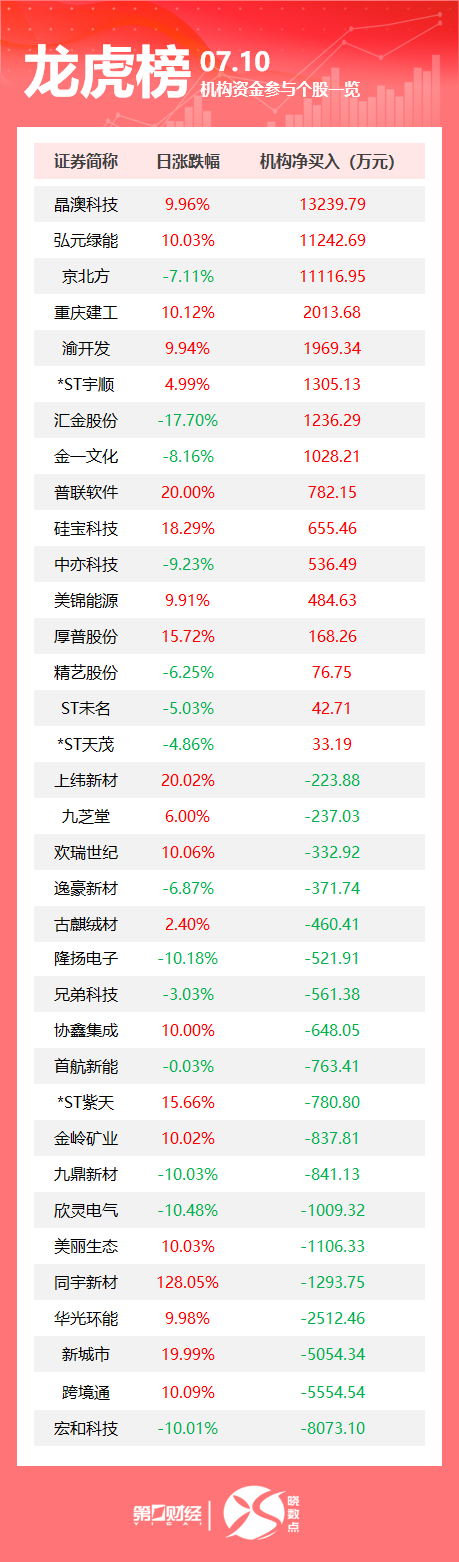
Group 1 - The basic pension for retirees will be increased by 2% starting from January 1, 2025, considering factors such as price changes and wage growth [2] - The Ministry of Commerce has initiated a special action to combat the smuggling and export of strategic minerals, including antimony and gallium, to prevent illegal outflows [5] - The Ministry of Finance has issued a notice regarding government procurement measures for medical devices imported from the EU, excluding EU companies from projects over 45 million RMB [6] Group 2 - In the first half of 2025, China achieved significant breakthroughs in mineral exploration, discovering 38 new mineral sites, with continued growth in non-oil and gas mineral exploration investment [8] - The automotive industry in China saw production and sales exceed 15 million units for the first time in the first half of 2025, with new energy vehicles accounting for 44.3% of total new car sales [10] - The Beijing government is supporting the expansion of trading product types in securities markets and encouraging companies to increase dividend rates [11] Group 3 - The Shanghai Disney Resort has halted offline sales of certain products due to excessive markups by resellers, indicating a move to regulate the market [22] - TikTok has denied reports of developing a separate application for U.S. users, emphasizing that the claims are inaccurate [23] - Institutional investors sold 19 stocks while buying into Jingao Technology with a net purchase of 132.39 million RMB on July 10 [25][26]

商务部:已部署开展打击战略矿产走私出口专项行动;俄外交部:俄美愿恢复经济等领域直接交流;特朗普政府将禁止非法移民子女参与学前教育项目|早报
Di Yi Cai Jing· 2025-07-11 00:45
Group 1 - The basic pension for retirees will be increased by 2% starting January 1, 2025, considering factors like price changes and wage growth [2] - The Ministry of Commerce has initiated a special action to combat the smuggling and export of strategic minerals, including antimony and gallium, to prevent illegal outflow [3] - In the first half of 2025, China discovered 38 new mineral sites, with continued growth in non-oil and gas mineral exploration investment [9] Group 2 - In the first half of 2025, China's automobile production and sales both exceeded 15.6 million units, marking a year-on-year increase of 12.5% and 11.4% respectively [11] - The Beijing government is supporting the expansion of trading product types in securities markets and encouraging companies to increase dividend rates [12] - Shanghai is accelerating the revision of regulations to promote the development of the artificial intelligence industry [13] Group 3 - The U.S. stock market saw slight gains, with the Dow Jones up 0.43% and the Nasdaq reaching a new historical high, driven by significant increases in companies like Tesla and Nvidia [28] - Institutions sold 19 stocks while buying into Jingao Technology with a net purchase of approximately 132.4 million yuan [25]
金融工程日报:指冲上3500点创年内新高,金融、地产领涨-20250710
Guoxin Securities· 2025-07-10 15:29
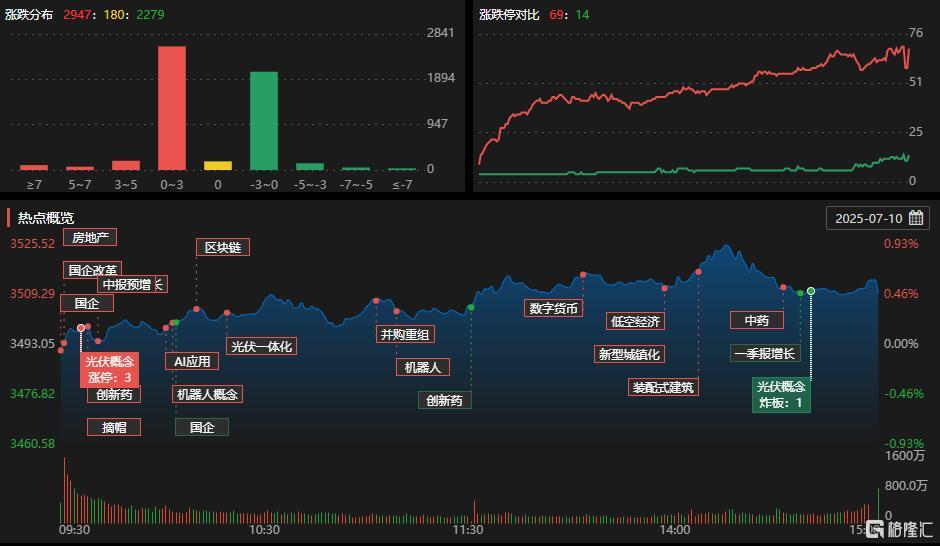
- The report does not contain any quantitative models or factors related to construction, testing, or evaluation[1][2][3][4][5][6][8][9][10][12][13][14][15][16][17][18][19][20][21][22][23][24][25][26][27][28][29][30][31][32][33][34][35][36][37][38][39][40][41]
【数据看盘】机构、游资博弈京北方 量化资金活跃度持续提升
Xin Lang Cai Jing· 2025-07-10 09:58
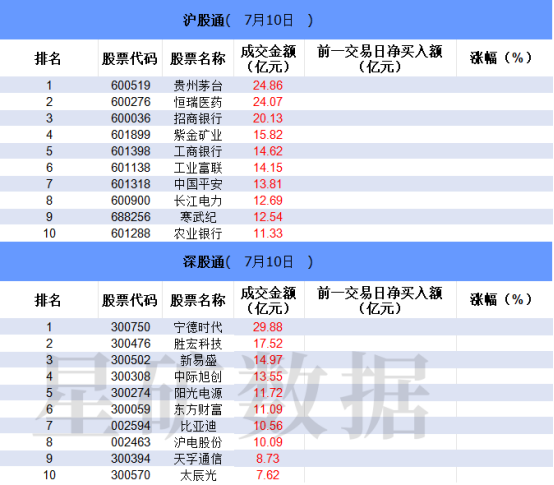
Summary of Key Points Core Viewpoint - The trading volume of the Shanghai and Shenzhen Stock Connect reached a total of 202.64 billion, with Kweichow Moutai and CATL leading in individual stock trading volume. The non-bank financial sector saw the highest net inflow of funds, while the coal ETF experienced a significant increase in trading volume. Trading Volume - The total trading amount for the Shanghai Stock Connect was 1009.52 billion, and for the Shenzhen Stock Connect, it was 923.12 billion [2]. Top Trading Stocks - In the Shanghai Stock Connect, Kweichow Moutai ranked first with a trading volume of 24.86 billion, followed by Hengrui Medicine at 24.07 billion and China Merchants Bank at 20.13 billion [3]. - In the Shenzhen Stock Connect, CATL led with a trading volume of 29.88 billion, followed by Shenghong Technology at 17.52 billion and Xinyi Technology at 14.97 billion [4]. Sector Performance - The sectors with the highest net inflow of funds included: - Non-bank financial: 34.07 billion (3.97% net inflow rate) - Real estate: 22.61 billion (8.36% net inflow rate) - Securities: 22.28 billion (4.67% net inflow rate) [5]. - The sectors with the highest net outflow of funds included: - Electronics: -63.45 billion (-3.76% net outflow rate) - Computers: -40.40 billion (-2.58% net outflow rate) [6]. ETF Trading - The top ETF by trading volume was the Hong Kong Securities ETF with 207.00 billion, followed by the Hong Kong Innovative Drug ETF at 56.60 billion [8]. - The coal ETF saw a remarkable increase in trading volume, growing by 318% [9]. Futures Positioning - In the futures market, both long and short positions increased significantly, with the IF and IC contracts seeing a greater increase in long positions [10]. Institutional Activity - Institutional buying was notable in stocks like JA Solar, which saw a purchase of 1.32 billion, while New City faced a sell-off exceeding 500 million [11]. - The overall activity of institutional investors was relatively low, with significant selling in stocks like Honghe Technology [12]. Retail and Quantitative Trading - Retail investors showed a decline in activity, with significant buying in Xiexin Integration exceeding 1.2 billion, while stocks like BYD faced substantial selling [12]. - Quantitative trading was active, with notable purchases in Xinya Technology exceeding 1.2 billion [13].
龙虎榜 | 城管希1亿顶板中科金财,五大主力狂砸欢瑞世纪
Ge Long Hui· 2025-07-10 09:54
Market Overview - On July 10, A-shares saw all three major indices rise collectively, with a total market turnover of 1.515 trillion yuan, a decrease of 12.4 billion yuan from the previous day, and over 2,900 stocks experienced gains [1] - Market hotspots focused on sectors such as silicon energy, real estate, rare earth permanent magnets, diversified finance, and weight loss drugs [1] Stock Performance - A total of 59 stocks hit the daily limit up, with 18 stocks achieving consecutive limit-ups, and 20 stocks failed to hit the limit, resulting in a limit-up rate of 75% (excluding ST and delisted stocks) [3] - Notable stocks included: - Shangwei New Materials: +20.02% [2] - Jinlian Software: +20.00% [2] - New City: +19.99% [2] - Huaxia Happiness: +10.22% [2] - Guanheng Pharmaceutical: +10.18% [2] Trading Dynamics - The top three net buying stocks on the Dragon and Tiger list were Zhongke Jincai, Jingao Technology, and Xiexin Integration, with net purchases of 312 million yuan, 182 million yuan, and 144 million yuan, respectively [5] - The top three net selling stocks were Jinyi Culture, Liren Lizhuang, and Xianda Shares, with net sales of 179 million yuan, 115 million yuan, and 109 million yuan, respectively [6] Sector Insights - Silicon Energy: Multiple silicon wafer companies raised their prices, with increases ranging from 8% to 11.7% [16] - Jingao Technology, a solar component manufacturer, reported a trading volume of 2.457 billion yuan and a turnover rate of 6.48%, with institutional net buying of 132 million yuan [12][17] - Xiexin Integration, which focuses on solar components and blockchain, also saw significant trading activity, with a turnover of 1.422 billion yuan and a turnover rate of 8.69% [18][21] Institutional Activity - Institutional buying was prominent in stocks like Zhongke Jincai and Jingao Technology, indicating strong interest in these companies [7][9] - Conversely, stocks like Kuaijingtong and New City saw significant institutional selling, reflecting a shift in investor sentiment [8][23] Conclusion - The market exhibited a robust performance with significant gains in various sectors, particularly in silicon energy and solar technology, driven by price adjustments and institutional interest. The trading dynamics suggest a healthy market environment with active participation from both retail and institutional investors.


电子身份证概念下跌1.63%,5股主力资金净流出超亿元
Zheng Quan Shi Bao Wang· 2025-07-10 08:59
Market Performance - The electronic ID concept sector declined by 1.63%, ranking among the top declines in concept sectors, with major declines seen in companies like Jingbeifang, Dongxinheping, and Chutianlong [1] - In contrast, the silicon energy sector led gains with an increase of 3.39%, followed by housing inspection at 2.89% and organic silicon at 2.51% [1] Fund Flow Analysis - The electronic ID concept sector experienced a net outflow of 1.642 billion yuan, with 33 stocks seeing net outflows, and 5 stocks exceeding 100 million yuan in outflows [1] - Jingbeifang had the highest net outflow at 344 million yuan, followed by Xinguodu and Chutianlong with net outflows of 262 million yuan and 169 million yuan, respectively [1] Stock Performance - Among the electronic ID stocks, Jingbeifang saw a significant decline of 7.11%, while Xinguodu and Chutianlong also faced declines of 5.08% and 6.78% respectively [2] - Conversely, stocks like Zhongke Jiangnan and Sitqi experienced gains of 2.85% and 1.25%, respectively, indicating a mixed performance within the sector [2]



京北方今日跌7.11%,2家机构专用席位净买入1.11亿元
news flash· 2025-07-10 08:24
Group 1 - The stock of Jingbeifang (002987) decreased by 7.11% today, with a trading volume of 4.124 billion yuan and a turnover rate of 19.07% [1] - The post-market data shows that the Shenzhen Stock Connect special seat bought 291 million yuan and sold 219 million yuan, resulting in a net purchase of 111 million yuan by two institutional special seats [1]