
大疆

Search documents
全球硬件爆款,扎堆深圳留仙大道
3 6 Ke· 2026-01-05 11:31
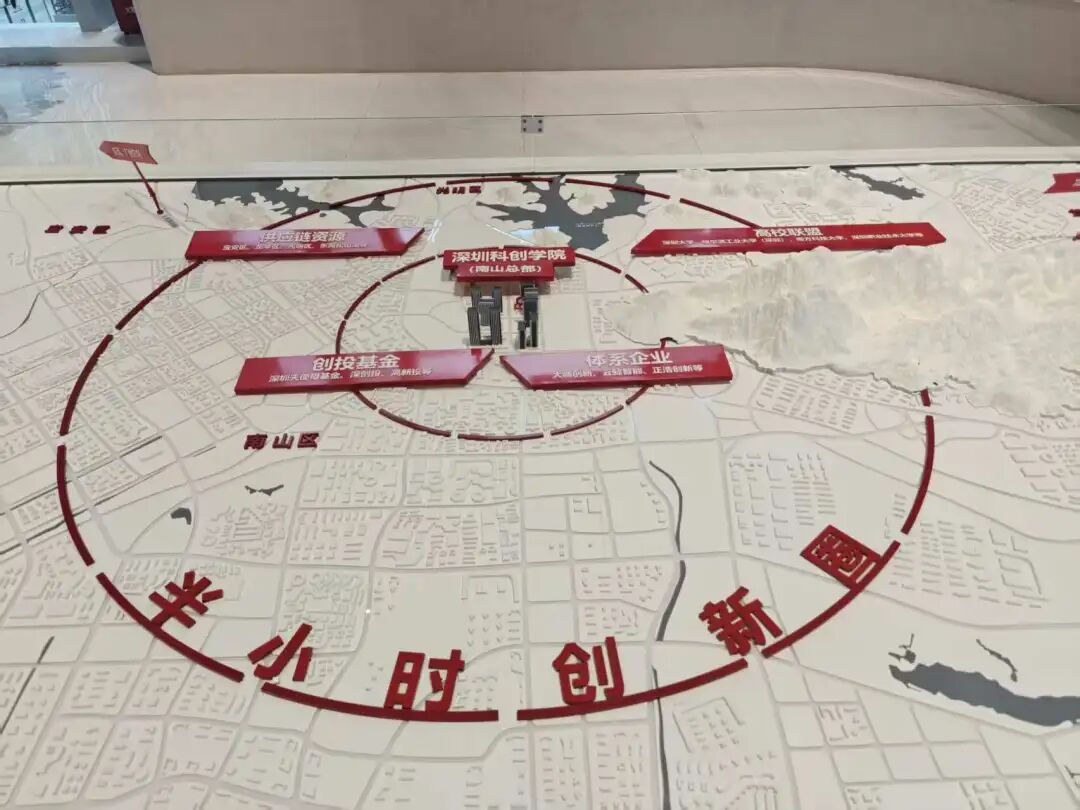
Core Insights - The article highlights the emergence of "Liuxian Avenue" in Shenzhen as a central hub for global hardware innovation, attracting numerous cross-border companies and startups [1][3][14] - Major brands such as DJI, Anker, and others have established their presence along this avenue, indicating its significance in the hardware industry [2][4][8] Group 1: Overview of Liuxian Avenue - Liuxian Avenue has transformed from a rural road into a bustling corridor for hardware innovation, now home to over 1,500 companies and a billion-level industrial cluster [9][10] - The area is strategically located between major transport hubs, enhancing connectivity for businesses [2][16] Group 2: Key Companies and Innovations - Notable companies like Anker, DJI, and others have set up their headquarters or significant operations along Liuxian Avenue, contributing to its reputation as a "golden corridor" for tech firms [2][4][8] - Anker's new headquarters, established with an investment of 1.542 billion yuan, is positioned to serve as a southern R&D center [2][4] Group 3: Ecosystem and Support - The region boasts a rich ecosystem of innovation resources, including educational institutions and research centers, which support hardware startups [5][16] - Initiatives like the "Innovation Circle" and various tech parks provide essential support for entrepreneurs, fostering a collaborative environment [5][12] Group 4: Future Prospects - The ongoing development of transportation infrastructure, such as the Xili High-speed Rail Hub, is expected to further enhance the operational efficiency of companies along Liuxian Avenue [16][17] - The area is positioned to play a crucial role in the next phase of global competition for Chinese hardware brands, reflecting a shift in the global value chain [14][15]


创创创2026创1创5创,创20创新高
Donghai Securities· 2026-01-05 09:14
Market Overview - The domestic retail market for robotic vacuum cleaners is expected to grow due to policy incentives, with a notable effect from the Q4 base year[7] - In 2025, the online sales of robotic vacuum cleaners increased by 6% in revenue and 9% in volume year-on-year during the first 51 weeks[7] - The average retail price of robotic vacuum cleaners saw a decline of 6% to 3535 RMB during the "Double 11" shopping festival, influenced by increased promotions and brand competition[7] Product Trends - The introduction of active water cleaning technology is leading the innovation cycle in the market, with brands like Ecovacs and Roborock launching new models that enhance cleaning efficiency[10] - The global market for smart robotic vacuum cleaners is projected to ship 2,060.3 million units in 2024, reflecting an 11.2% year-on-year growth, with a total sales value of $9.31 billion, up 19.7%[13] - The average price of robotic vacuum cleaners is expected to rise by 7.6% to $452 in 2024 due to technological upgrades[13] Competitive Landscape - The top five global robotic vacuum manufacturers are all Chinese companies, with Roborock and Ecovacs leading in shipment volumes[13] - Roborock achieved a market share of 21.7% in the global robotic vacuum market during the first three quarters of 2025, with significant sales growth in North America and Europe[13] - The competitive landscape is shifting as iRobot faces challenges, including a 6.7% decline in global shipments and a 2.6 percentage point drop in market share to 13.7%[48] Future Outlook - The market is expected to see increased competition, with a focus on cost control and supply chain efficiency as brands compete on price and technology[49] - The trend towards smart home integration and personalized cleaning solutions is anticipated to drive future product development, with a potential rise in subscription-based services[49] - Companies are advised to focus on understanding consumer needs and enhancing product features to maintain competitiveness in a rapidly evolving market[49]


3D打印机、无人机、运动相机,成了“吃灰三件套”
Xin Lang Cai Jing· 2026-01-05 03:52
Core Insights - The article discusses the decline in popularity and rapid depreciation of certain electronic consumer products, specifically 3D printers, action cameras, and drones, referred to as the "dust-collecting trio" [2][10][11] - It highlights the phenomenon of "emotional consumption," where initial excitement quickly fades, leading to regret over the rapid loss of value in these products [10][36] Group 1: Market Trends - The market for consumer-grade 3D printers has seen significant growth, with companies like拓竹科技 (Tuozhu Technology) projected to achieve revenues of 55-60 billion RMB in 2024 and a valuation of 100 billion USD [5][19][49] - The average price of consumer-grade 3D printers has decreased by 60% over the past three years due to domestic alternatives and supply chain optimization [43][50] - The Chinese 3D printing market is expected to exceed 630 billion RMB, reflecting a 30-fold growth over the past decade, indicating strong industry potential [50] Group 2: Consumer Behavior - Young consumers often purchase these products impulsively, leading to a cycle of buying and quickly reselling them on second-hand platforms like闲鱼 (Xianyu) [10][42] - The depreciation of these products is rapid, with examples showing significant price drops, such as a 3D printer originally priced at 2300 RMB now selling for around 1900 RMB on second-hand markets [2][11] - Many consumers express frustration with customer service and product reliability, which further discourages long-term use and leads to products being left unused [4][32] Group 3: Competitive Landscape - Major companies in the industry, such as DJI and影石创新 (Yingshi Innovation), are increasingly competing in overlapping markets, leading to price wars and innovation [51] - The competitive dynamics are shifting, with companies like影石 (Yingshi) entering the drone market, while DJI expands into action cameras, indicating a blurring of product lines [51] - The second-hand market is becoming a significant activation tool for these companies, helping to circulate products and maintain consumer interest in new releases [42][51]
卓驭科技“跨界”:乘用车之外,拓展重卡NOA、无人车等泛自动驾驶
Jing Ji Guan Cha Wang· 2026-01-05 01:00
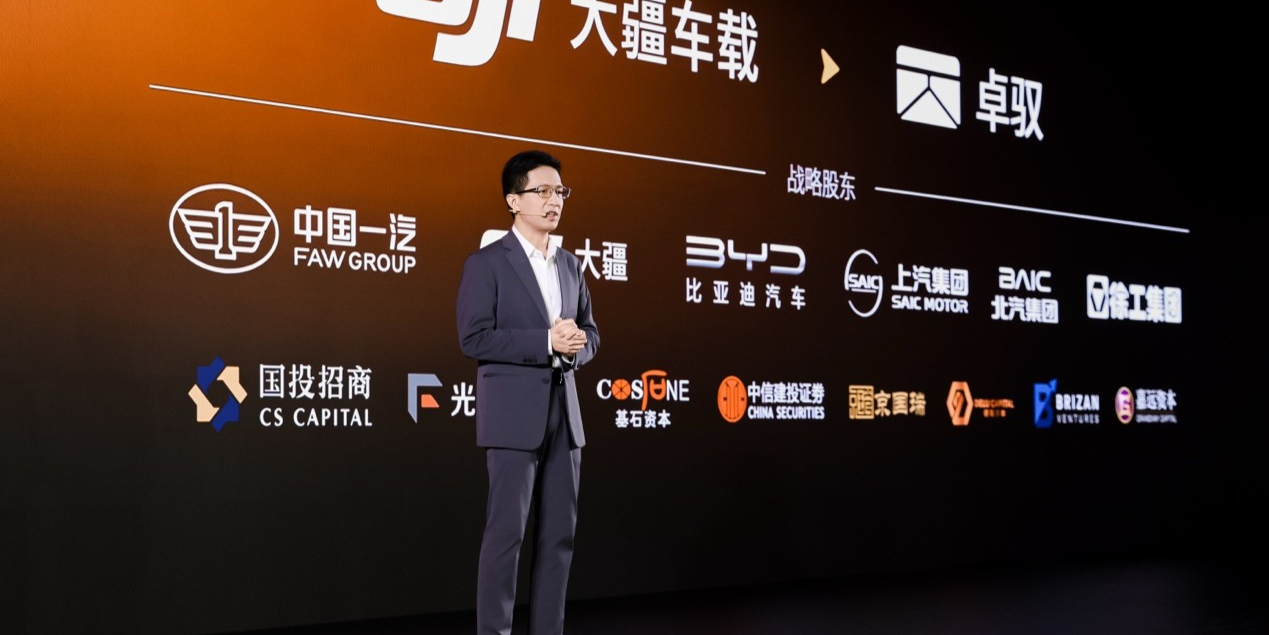
Core Insights - Zhuoyu Technology celebrated its 10th anniversary in Shenzhen, unveiling a new multimodal end-to-end world model as a "data-driven spatial intelligent mobility foundation" for the future [2] - The company, founded in 2016 and spun off from DJI in 2023, has transitioned to an independent player in the driver assistance solutions market [2] - CEO Shen Shaojie emphasized the shift from a "rule-driven" approach to an end-to-end model, which has improved the company's situation amid financial pressures [2] Technology and Market Position - Zhuoyu's end-to-end approach draws inspiration from Tesla's philosophy, breaking down the VLA into interpretable, modular components, effectively addressing industry challenges like causal reasoning and low-frequency data generation [3] - The company boasts a competitive edge in computational power and sensor optimization, achieving performance comparable to dual Orin X chips while maintaining lower computational requirements [3] - Zhuoyu has successfully implemented L2+ driver assistance using a mid-computational power visual solution, launching the world's first high Qualcomm 8775 integrated cockpit solution, which enhances cost efficiency in the industry [3] Client Base and Industry Strategy - Zhuoyu has secured nine major clients, serving 15 brands and covering over 50 vehicle models in the passenger car sector [3] - The company targets the mass-market passenger vehicle segment, offering affordable driver assistance solutions, which has earned it the nickname "price butcher" [4] - Zhuoyu aims to transition from L2+ to L3 driver assistance, believing that consumer trust in fully developed products will shift pricing logic from BOM cost to value in time savings and attention release [4] Future Expansion and Business Model - The company plans to extend its business beyond passenger vehicles into heavy-duty trucks and unmanned logistics vehicles, indicating a shift towards a more comprehensive mobility technology enterprise [5] - Zhuoyu has initiated a heavy-duty truck highway NOA project to enhance logistics safety and efficiency, collaborating with leading industry players for mass production by mid-2026 [6] - Despite diversifying, Zhuoyu expects that the majority of its revenue will continue to come from passenger vehicles in the near term, with any new ventures being carefully evaluated for resource allocation [6]
首款无人机销量遇冷?影石刘靖康很急、很刚、很惑
Xin Lang Ke Ji· 2026-01-05 00:45
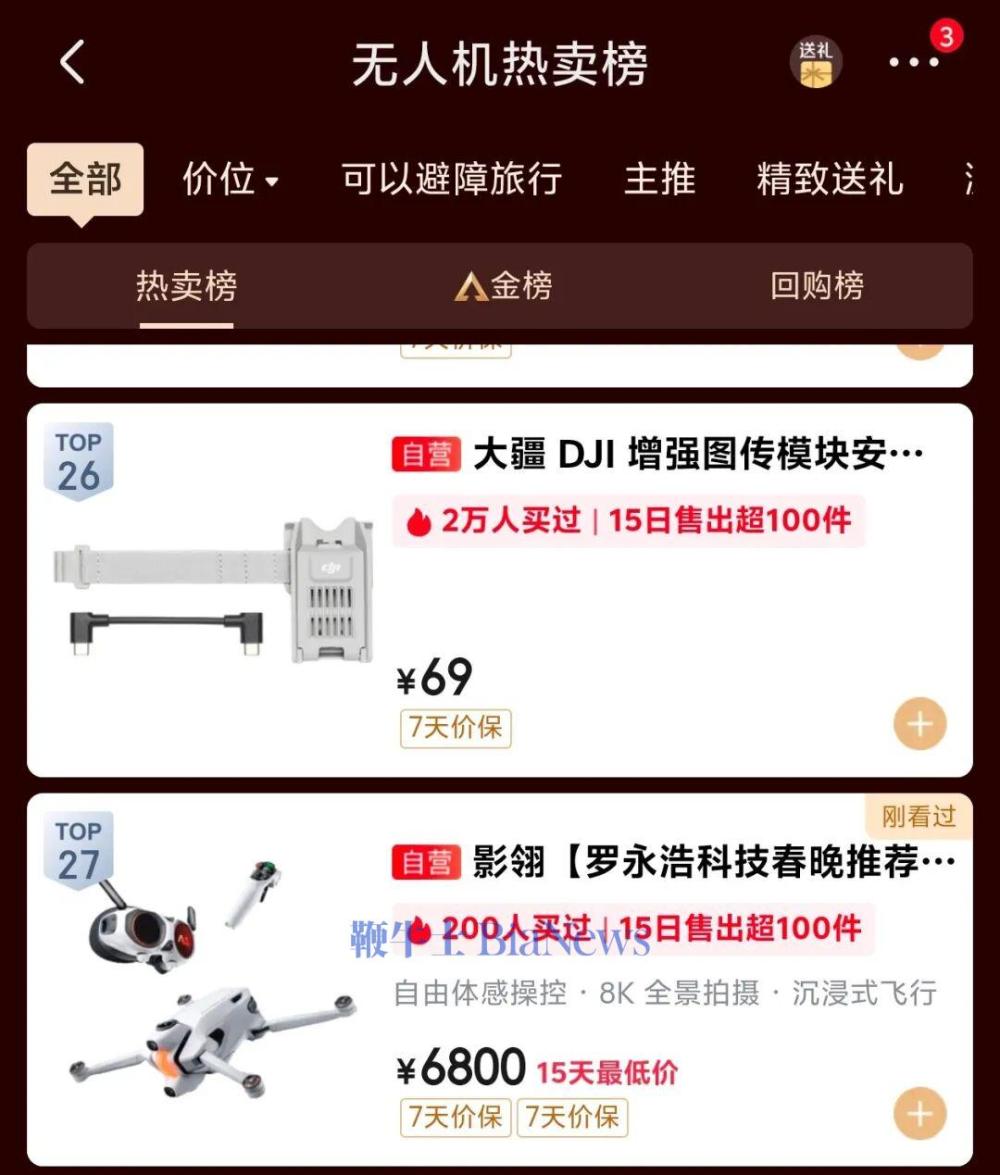
Core Viewpoint - The launch of the影翎A1 drone by影石创新 has faced significant challenges, including disappointing sales figures and negative public perception, particularly in comparison to competitors like DJI [1][3][6]. Sales Performance - The影翎A1 generated over 30 million yuan in sales within 48 hours in China, translating to approximately 3,000 to 4,000 units sold at a price point of around 7,000 to 8,000 yuan per unit [1][4]. - As of January 4, the影翎A1 ranked 27th on JD's top 30 drone sales list and was absent from the top 20 on Tmall, indicating a lack of market traction [1][6]. Market Positioning - The影翎A1 was marketed as the first drone to integrate 360° panoramic imaging and immersive flight perspectives, but initial sales have not met expectations [3][6]. - Despite being a new product, the影翎A1's performance is significantly lagging behind established brands like DJI, which dominate the market [6]. Financial Performance -影石创新 has been experiencing a trend of increasing revenue without corresponding profit growth, with a net profit decline of 15.9% year-over-year in Q3 2025 [2][16]. - In Q1 2025, the company reported revenues of 1.355 billion yuan, a 40.7% increase, but net profit fell by 2.5% [15]. - For the first three quarters of 2025, total revenue reached 6.611 billion yuan, up 67.18%, while net profit decreased by 5.95% [16]. R&D and Marketing Expenses - The company has significantly increased its sales and R&D expenses, with sales costs rising by 102.6% to 1.13 billion yuan and R&D expenses increasing by 127.02% to 1.085 billion yuan in the first three quarters of 2025 [17]. - The CEO has indicated that the decline in net profit is a strategic decision influenced by high R&D and marketing investments aimed at long-term competitiveness [18]. Competitive Landscape - The CEO of影石创新 has publicly accused DJI of engaging in unfair competitive practices, claiming that the影翎A1's sales issues are a result of attacks from DJI [9][11]. - The company has faced challenges in supply chain and channel access, which the CEO attributes to competitive pressures from DJI [11][12].

首款无人机销量遇冷? 影石刘靖康很急、很刚、很惑 | BUG
Xin Lang Cai Jing· 2026-01-05 00:26
Core Viewpoint - The first drone product, Yingling A1, launched by Ying Shi Innovation, is facing poor sales performance and criticism, particularly in comparison to DJI's products [2][20][22]. Sales Performance - Yingling A1 generated over 30 million yuan in sales within 48 hours of its launch, translating to approximately 3,000 to 4,000 units sold at a price point of around 7,999 yuan [2][20]. - As of January 4, 2025, Yingling A1 ranked 27th on JD's top 30 drone sales list and did not appear in the top 20 on Tmall [5][22]. - Sales data from various platforms indicate that the product sold over 500 units on JD, 400 units on Tmall, and 100 units on Douyin [5][22]. Market Competition - Liu Jingkang, the founder of Ying Shi Innovation, has publicly accused DJI of engaging in unfair competition and has expressed a commitment to continue fighting against these pressures [11][28]. - The company has reported facing significant challenges in supply chain and channel access due to alleged exclusionary tactics from competitors [28]. Financial Performance - Ying Shi Innovation has been experiencing a trend of increasing revenue without corresponding profit growth, with a net profit decline of 15.9% year-over-year in Q3 2025 [15][33]. - For the first three quarters of 2025, the company reported revenues of 66.11 billion yuan, a 67.18% increase, but net profits fell by 5.95% [33]. - The company has significantly increased its sales and R&D expenses, with sales expenses rising by 102.6% and R&D expenses by 127.02% compared to the previous year [34][35]. Product Feedback - Users have reported issues with the drone's image quality and transmission reliability, with some expressing dissatisfaction compared to previous models [25]. - Customer service has attributed the image quality concerns to the nature of 360-degree panoramic imaging, while transmission issues are said to be affected by environmental factors [25].

最新金融榜:内地10城横扫全球前列,深圳距上海1分、成都超杭州20名、南京685分登第九
Sou Hu Cai Jing· 2026-01-04 17:51
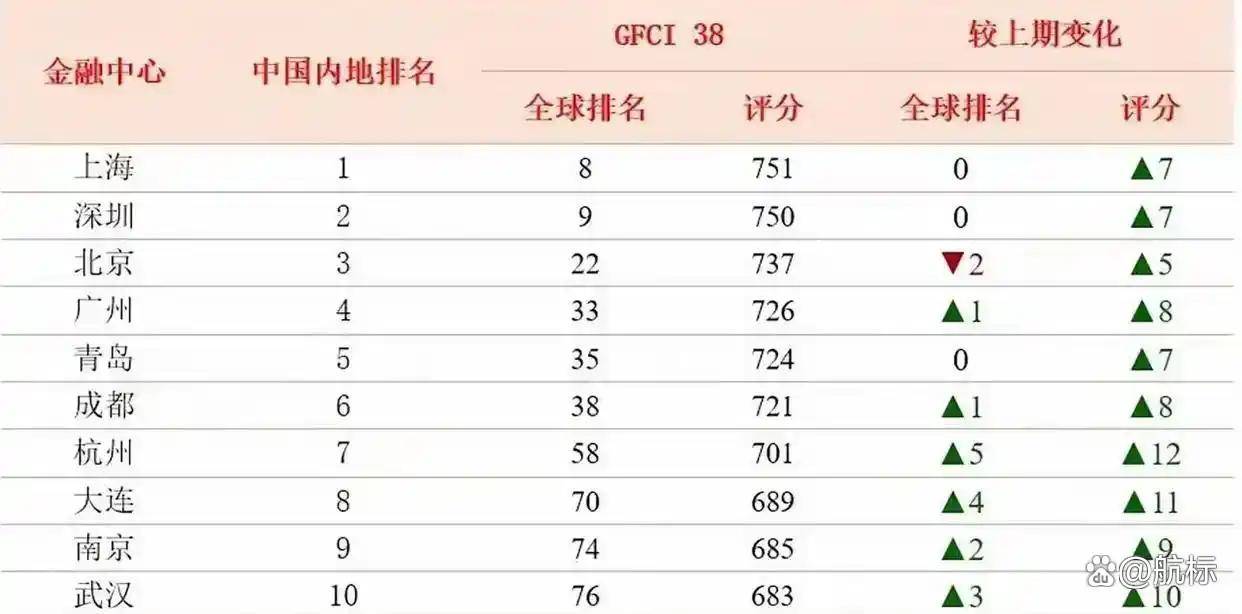
Core Insights - The GFCI 38 report highlights the rise of ten cities in mainland China, showcasing a collective advancement in global financial rankings, particularly in the Pearl River Delta, Yangtze River Delta, and Chengdu-Chongqing regions [1] Group 1: Rankings and Scores - Shanghai ranks 1st in mainland China and 8th globally with a score of 751, while Shenzhen follows closely at 2nd in mainland China and 9th globally with a score of 750, both cities showing an increase of 7 points from the previous period [2] - Beijing ranks 3rd in mainland China and 22nd globally with a score of 737, while Guangzhou, Qingdao, Chengdu, Hangzhou, Dalian, Nanjing, and Wuhan follow in respective positions, with notable movements in rankings and scores [2] Group 2: Factors Contributing to Rankings - Shenzhen's rapid ascent is attributed to its "innovation and finance" synergy, with flexible cross-border financial regulations in the Qianhai area facilitating over 100 billion yuan in capital flow last year [3] - Chengdu's rise to 38th globally is supported by its role as a "Western gateway," with over half of the financial settlements for the China-Europe Railway Express occurring there, alongside a strong output of financial talent and green finance initiatives [5] - Nanjing's ranking improvement to 9th in mainland China and 74th globally is linked to its blockchain technology applications in supply chain finance and significant issuance of green bonds for ecological restoration projects [7] Group 3: Overall Trends - The overall trend indicates that financial cities in mainland China are not merely relying on policy support but are leveraging geographical advantages, industrial strengths, and service capabilities to enhance their global standings [7]
2026上海国际家电及消费电子展AWE
Sou Hu Cai Jing· 2026-01-04 13:10
Group 1 - The AWE2026 (China Household Appliances and Consumer Electronics Expo) will take place from March 12 to 15, 2026, in Shanghai, featuring a new "one exhibition, dual zones" model [4] - The theme of AWE2026 is "AI Technology, Enjoying the Future," focusing on the innovative applications of artificial intelligence in the home appliance and consumer electronics sectors [6][10] - Over 1,500 exhibitors from more than 70 countries and regions are expected, with anticipated attendance exceeding 400,000, showcasing thousands of smart living products and solutions [6] Group 2 - Major Chinese brands such as Haier, Midea, Changhong, TCL, and Hisense will showcase their latest AI technologies and scenario-based products, highlighting China's technological leadership in manufacturing [6] - International brands like Bosch, Panasonic, Samsung, and LG will also participate, adding a global dimension to the expo [6] - The event will emphasize "full-domain interconnection," "proactive intelligence," and "personalized adaptation," marking a shift from focusing solely on product functionality to integrating advanced technologies [8] Group 3 - AWE2026 will introduce a new exhibition area in the Shanghai Oriental Hub International Business Cooperation Zone, aimed at showcasing advanced technologies in the consumer electronics industry [10] - This expo is positioned as a significant international event following the operational launch of the business cooperation zone, leveraging its unique advantages for global brand aggregation and technological innovation [10]

御风未来获首张混动+复合翼无人机型号合格证
Guan Cha Zhe Wang· 2026-01-04 09:08
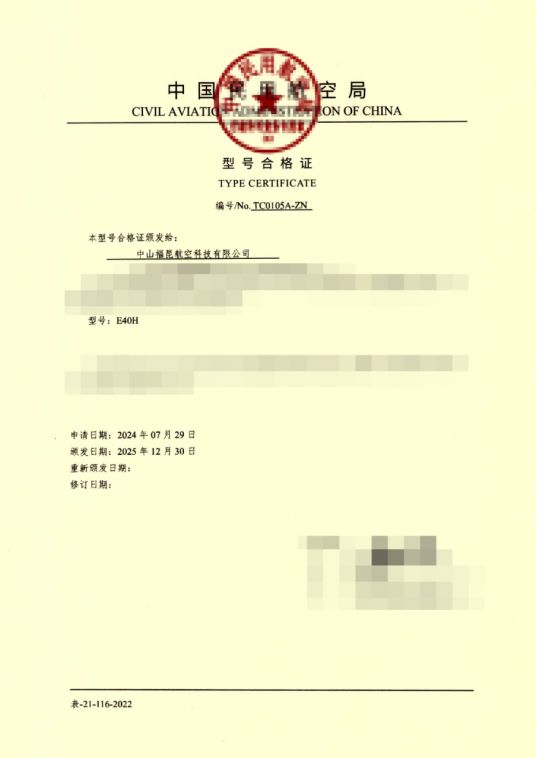
Core Viewpoint - The E40H unmanned aerial vehicle (UAV) developed by Yufeng Future has successfully obtained the Type Certificate (TC) from the Civil Aviation Administration of China, marking it as the first hybrid-powered UAV to meet airworthiness requirements globally and the first to receive a TC under the new Civil Aviation Law in China [1][8]. Technical Specifications - The E40H has a total length of 3.78 meters, a height of 0.99 meters, a maximum flight speed of 115 km/h, a maximum altitude of 1000 meters, a maximum takeoff weight of 150 kilograms, an empty weight of 100 kilograms, a maximum payload of 50 kilograms, a maximum flight time of 10 hours, and a maximum range of 800 kilometers [1][3]. Development Timeline - The application for the TC was submitted on July 29, 2024, and the approval was granted on December 30, 2025, taking a total of 1 year and 5 months [3]. Industry Impact - The E40H is the first of its kind in the industry to achieve airworthiness certification for hybrid and composite wing UAVs, with expectations for a series of similar eVTOLs to follow [3]. - The primary application scenarios for the E40H include emergency cargo transport and surveillance operations, with operational restrictions such as not flying over densely populated areas and prohibiting manned flights [3]. Operational Achievements - The E40H participated in various real-world rescue operations, including flood relief and typhoon rescue missions, and successfully completed logistics flights over a distance of 150 kilometers [5][8]. Future Plans - Yufeng Future is advancing its large eVTOL model M1B, which has already submitted its TC application and is expected to complete certification within the year, focusing on emergency firefighting and logistics [5][8]. - The company plans to submit a TC application for a manned version of the M1 at an appropriate time, gradually moving towards commercial operations [7]. Financing and Commercial Strategy - Yufeng Future has completed nine rounds of financing and is currently in the B round, with a recent funding round aimed at accelerating the testing and certification of the M1 model [8]. - The company follows a development path outlined by the National Development and Reform Commission, focusing on cargo transport before moving to manned operations, with a target for commercial deployment of large eVTOLs by the second half of 2026 [8]. Certification Landscape - As of December 30, 2025, a total of 12 aircraft have received TC certificates this year, with Yufeng Future's E40H being the first UAV certified under the revised Civil Aviation Law [8][9].
御风未来获颁中型复合翼无人驾驶航空器型号合格证
Xin Hua Cai Jing· 2026-01-04 03:28
Core Viewpoint - Yufeng Future's E40H, a 150 kg class civil unmanned aerial vehicle, has received a Type Certificate (TC) from the Civil Aviation Administration of China (CAAC), marking it as the first medium composite wing and hybrid drone globally to meet airworthiness standards [1][2]. Group 1 - The issuance of the Type Certificate signifies that the design safety and reliability of the E40H fully comply with the stringent airworthiness standards set by the CAAC, enabling the potential for large-scale commercial operations [1]. - Currently, there are 19 civil unmanned aerial vehicles from 10 domestic companies that have received Type Certificates, with DJI accounting for 9 of these, primarily in emergency, agricultural, and transport applications [1]. - The E40H is recognized as the world's first medium composite wing drone and the first hybrid drone to obtain a TC [1]. Group 2 - The E40H was developed by Yufeng Future's eVTOL brand, Fukun, which ensured that the Design Assurance System (DAS) was operational during the certification process, leading to the approval of the DAS by the CAAC on December 10, 2025 [2]. - The approval of the DAS indicates that Fukun's design, compliance verification, and independent oversight activities have been recognized by the CAAC, laying a foundation for efficient airworthiness certification in the future [2]. - Yufeng Future is also progressing with the airworthiness certification of its 2-ton class eVTOL model, M1B, with the application accepted by the CAAC in January 2024, and expected to complete certification by 2026 for applications in emergency firefighting and logistics [2].