海康威视

Search documents
A股回购规模超1400亿元,真金白银护航市场估值修复|2025中国经济年报
Hua Xia Shi Bao· 2025-12-23 14:15
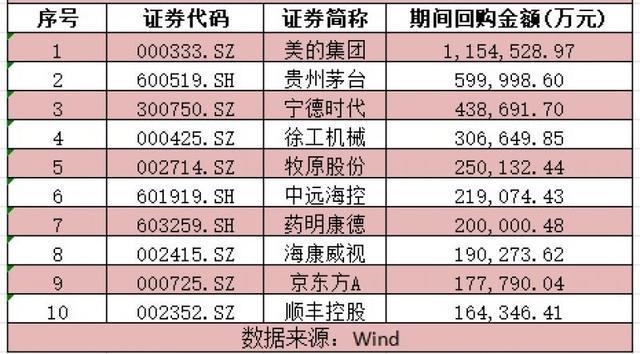
Core Viewpoint - The A-share market has seen a significant wave of stock buybacks in 2025, with nearly 1,500 companies participating, reflecting a robust response to economic recovery and external fluctuations [2][3]. Group 1: Market Overview - As of December 23, the Shanghai Composite Index closed at 3,919.98 points, with a year-to-date increase of 16.95%, peaking above 4,000 points [1]. - The overall market has shown a "shock bottoming and gradual recovery" trend, supported by favorable policies and improved corporate earnings [3]. - The three major indices have all risen this year, with the Shanghai Composite Index, Shenzhen Component Index, and ChiNext Index increasing by 16.95%, 28.37%, and 49.66%, respectively [3]. Group 2: Buyback Activity - Nearly 1,500 companies have initiated stock buybacks this year, with a total repurchase amount exceeding 1,400 billion yuan and over 13 billion shares repurchased [2][3]. - The buyback trend spans various sectors, including consumer, manufacturing, technology, and finance, indicating a comprehensive market support structure [2]. - Companies are increasingly using buybacks to enhance shareholder value and stabilize market expectations [2][3]. Group 3: Leading Companies in Buybacks - The top ten companies by buyback amount include Midea Group (11.55 billion yuan), Kweichow Moutai (5.99 billion yuan), and CATL (4.39 billion yuan) [1][6]. - Notably, Midea Group is the only company with a buyback amount exceeding 10 billion yuan this year [6]. - Companies like JD Display and XCMG Machinery have also made significant contributions to both buyback quantity and amount, showcasing their commitment to shareholder interests [6][7]. Group 4: Industry Participation - The manufacturing, consumer, and information technology sectors have the highest participation rates in buybacks, with leading firms like BOE Technology Group and XCMG Machinery actively repurchasing shares [4][5]. - These companies, backed by stable operating performance and ample cash flow, play a crucial role in stabilizing their stock prices and driving industry valuation recovery [4]. Group 5: Regulatory Support - The ongoing buyback trend is supported by regulatory policies, including the establishment of stock buyback and repurchase loans, which provide low-cost funding for companies [7]. - As of December 23, over 780 companies have disclosed receiving buyback loan support, with total loan amounts reaching over 100 billion yuan [7]. - The combination of these policies encourages companies to shift from passive stabilization to proactive value management [7][8].







政策破冰,资本竞逐!上市公司加速抢滩无人驾驶新赛道
Xin Lang Cai Jing· 2025-12-23 12:09
Core Insights - The Chinese autonomous driving industry has reached a significant milestone with the issuance of the first L3 conditional autonomous driving vehicle permits by the Ministry of Industry and Information Technology on December 15, 2025, marking the transition to commercial applications [2][4] - Starting from December 16, 2025, at least eight listed companies have added the "autonomous driving" concept to their business strategies, indicating substantial advancements in perception, decision-making, execution, and application scenarios [2][5] Company Summaries - Haicheng Bonda introduced the "autonomous driving" concept on December 16, 2025, with a project in Hefei that utilizes "unmanned vehicles and unmanned warehouses" to enhance logistics efficiency [2][5] - Changguang Huaxin also added the "autonomous driving" concept on December 16, focusing on the development of laser radar light source solutions, including VCSEL laser chips for automotive applications [2][5] - Hanxin Technology entered the "autonomous driving" space on December 16, with products related to vehicle-road collaboration, including edge computing devices and cloud control platforms [3][5] - Hikvision joined the "autonomous driving" sector on December 17, providing a full-stack sensor solution for various levels of intelligent driving systems, including cameras and radars [3][5] - Century Hengtong added the "autonomous driving" concept on December 17, specializing in multi-modal data fusion and automated processing capabilities to support high-level autonomous driving development [3][6] - Lian Microelectronics entered the field on December 18, focusing on compound semiconductor chip manufacturing, with VCSEL chips widely used in laser radar for intelligent driving [3][6] - Lingyun Co., Ltd. announced on December 18 that it has completed the design of a steering system for unmanned logistics vehicles, which is a critical component for achieving autonomous driving [3][6] Industry Outlook - The issuance of L3 permits is seen as a starting gun for the commercial race in China's autonomous driving sector, with the eight companies' responses reflecting the industry's readiness for policy changes and technological advancements [7]

NAS市场爆发,国产厂商有机会吗?
Xin Lang Cai Jing· 2025-12-23 11:48
Core Insights - The NAS (Network Attached Storage) market is experiencing rapid growth driven by increasing demand from both consumer and enterprise sectors, with some companies reporting sales growth rates as high as 300% [1] - The global home NAS market is projected to reach 24.4 billion yuan in 2023 and grow to 289.3 billion yuan by 2030, with China accounting for 29.19% of the global market in 2023 [1] - Companies like UGREEN are leading the consumer NAS market in China, with significant revenue growth reported [2] Group 1: Company Performance - UGREEN reported a revenue of 6.364 billion yuan and a net profit of 467 million yuan for the first three quarters of 2025, marking a year-on-year growth of 47.8% and 45.08% respectively [2] - The storage product segment for UGREEN saw a staggering revenue increase of 125%, becoming a key driver of the company's growth [2] - Another company, which entered the NAS market in 2021, now derives over 30% of its total revenue from NAS, indicating its importance for overall performance [2] Group 2: Market Drivers - The explosive growth of data volume is a primary driver for the NAS market, with China's data volume expected to grow from 7.6 ZB in 2018 to 48.6 ZB by 2025, reflecting a compound annual growth rate of 30% [3] - Innovations in storage technology, such as RAID and network storage, have facilitated the development of NAS, allowing for efficient data management and cost reduction [3] - The acceleration of digitalization and the expansion of application scenarios, particularly with advancements in 5G technology, have significantly increased the demand for data management solutions [3][4] Group 3: Market Structure - The NAS market is witnessing a restructuring with the entry of new players, including well-known brands like Xiaomi, leading to intensified competition [5] - The market is categorized into three main segments: established technology-driven companies like Synology, consumer-focused brands like UGREEN, and large tech firms like Huawei and Xiaomi that integrate NAS into broader smart ecosystems [6] - Data shows that from January to May 2025, online sales of NAS in China increased by 32% in volume and 62% in revenue, indicating strong market momentum [6] Group 4: AI Integration - The emergence of AI NAS is transforming traditional storage devices into intelligent data centers, enhancing their functionality [7] - Companies like QNAP and Intel are developing AI-integrated NAS solutions, which are expected to redefine the storage landscape [7] - UGREEN's storage product revenue reached 415 million yuan in the first half of 2025, with a year-on-year growth of 125.13%, driven by AI NAS products [7] Group 5: Opportunities for Domestic Solutions - The rapid growth of the NAS market presents opportunities for domestic chip and system solutions, as the ecosystem requirements are relatively low [9] - Domestic solutions, such as those based on Zhaoxin processors, are emerging, particularly in enterprise markets where privacy and security are paramount [9] - Huawei's Kirin chips, if adapted for NAS, could significantly reduce energy costs and enhance performance, potentially opening new market avenues [10][11]
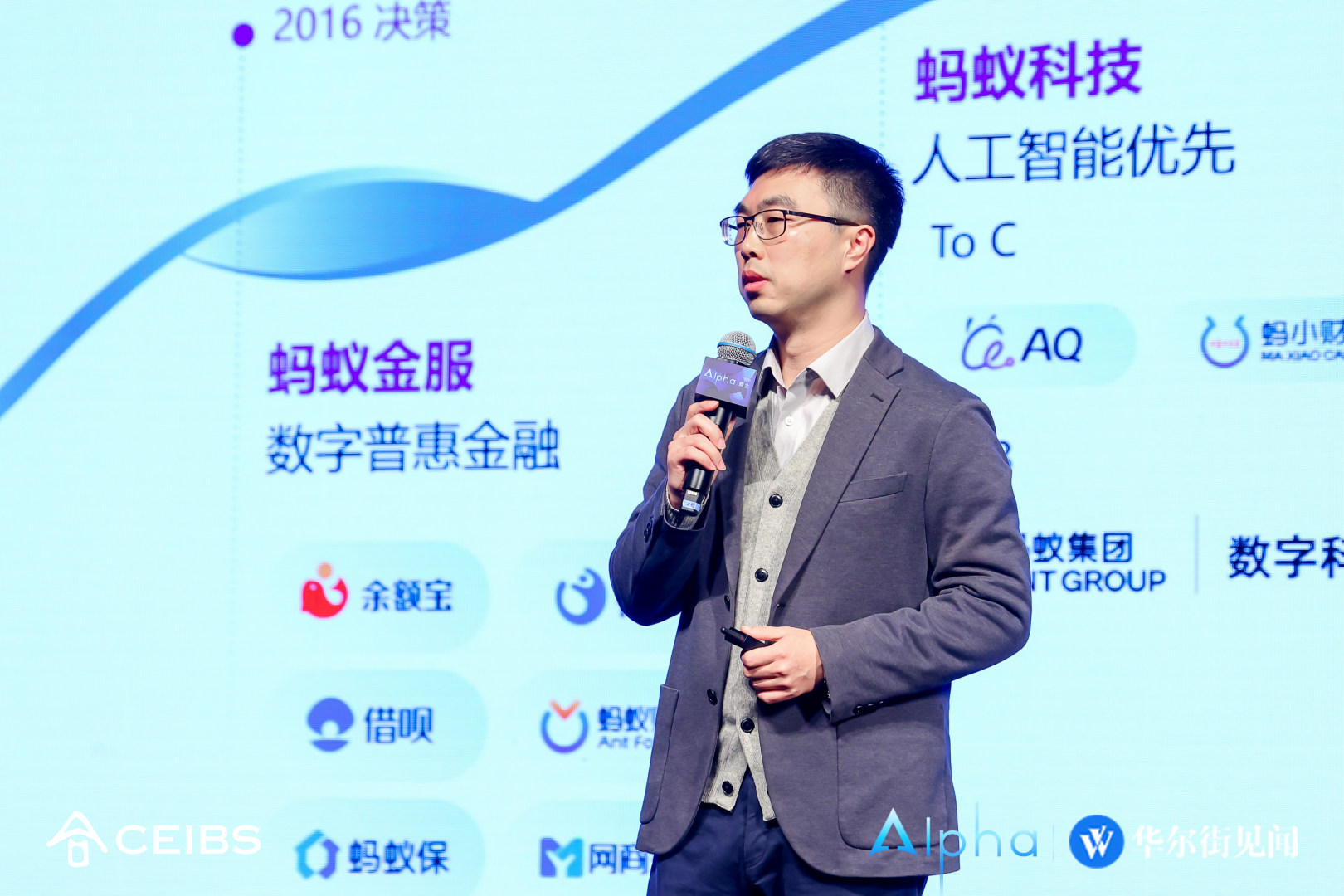
蚂蚁数科王磊:垂直大模型训练成本呈百倍级下降,金融AI落地需构建“可信智能体”三大基石 | Alpha峰会
Hua Er Jie Jian Wen· 2025-12-23 10:56
Core Insights - The emergence of open-source foundational models like DeepSeek and Qwen has shifted the focus of the industry from expensive pre-training to a "post-training" model, significantly reducing the iteration cycle for financial vertical models from months to weeks and lowering computational requirements from "ten thousand cards" to "hundred cards," resulting in a hundredfold decrease in training costs [1][7][15]. Group 1: AI Implementation in Finance - The application of AI in serious industries like finance requires a focus on rigor, professionalism, and compliance [3][8][17]. - A "trustworthy intelligent agent" in finance relies on three pillars: a financial model as the brain, a financial knowledge base for experience, and a financial toolset for execution [3][20][21]. - The introduction of large models has revolutionized natural language understanding, significantly lowering the barriers for human-computer interaction [4][14]. Group 2: Challenges and Solutions - The financial industry faces six major pain points in implementing large models: limited computational power, insufficient and low-quality data, rapid model iteration, lack of knowledge accumulation, absence of application methodologies, and talent shortages [16]. - To address these challenges, a robust system to suppress "hallucinations" in large models is essential, as these hallucinations can increase with enhanced reasoning capabilities [3][5][17]. Group 3: Training Methodology and Future Outlook - The training of financial models should adopt a two-phase approach, balancing general and financial data to enhance capabilities without compromising general knowledge [23]. - Continuous evaluation and iteration of intelligent agents are necessary, treating their development as an ongoing process rather than a one-time software delivery [6][23]. - The application of large models in industries is not just a technological transformation but also a strategic business reshaping, necessitating a departure from traditional workflows [9][10][24].
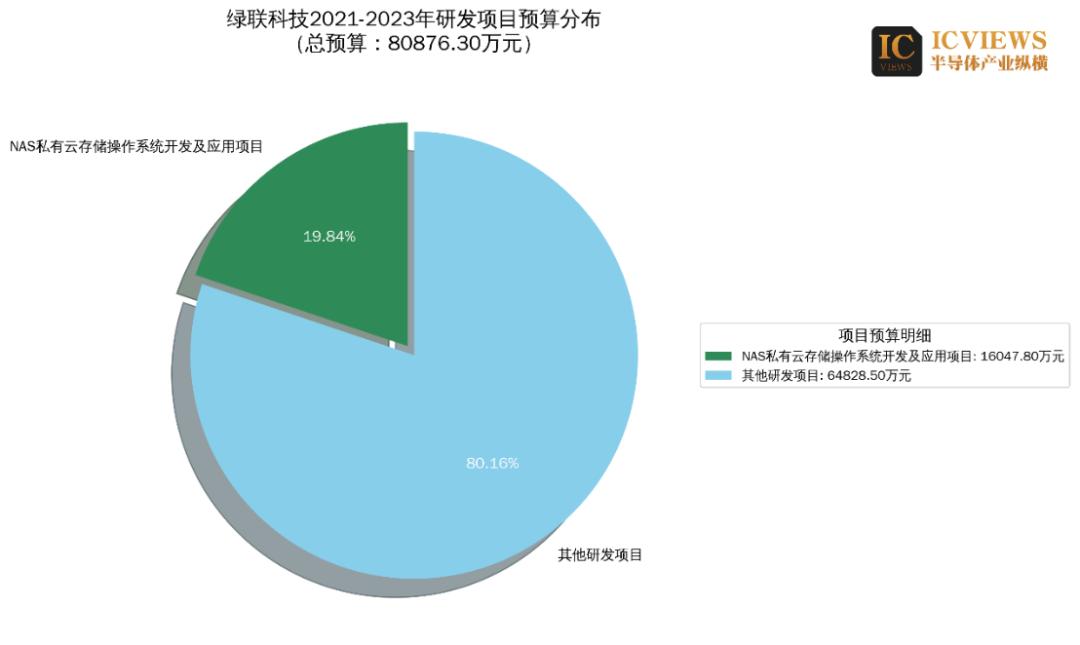
NAS市场爆发,国产芯片有机会吗?
3 6 Ke· 2025-12-23 10:12
Core Insights - The NAS (Network Attached Storage) market is experiencing rapid growth driven by digitalization, with some products achieving annual growth rates of up to 300% [1] - The global home NAS market is projected to reach 24.4 billion yuan in 2023 and grow to 289.3 billion yuan by 2030, with China accounting for 29.19% of the global market in 2023 [1] - NAS is increasingly recognized as a potential investment opportunity, often referred to as "private cloud" or "personal cloud" [1] Company Performance - UGREEN (绿联) leads the Chinese consumer NAS market and reported a revenue of 63.64 billion yuan and a net profit of 4.67 billion yuan for the first three quarters of 2025, marking a year-on-year growth of 47.8% and 45.08% respectively [2] - UGREEN's storage products saw a remarkable revenue increase of 125% year-on-year, driven by addressing industry pain points such as privacy issues with public cloud storage and complex configurations of traditional NAS products [2][3] - The revenue from UGREEN's storage products reached 3.28 billion yuan in 2023, reflecting a year-on-year growth of 338.06% [3] Market Dynamics - The NAS market's growth is fueled by the exponential increase in data volume, with China's data expected to grow from 7.6 ZB in 2018 to 48.6 ZB by 2025, representing a compound annual growth rate of 30% [6] - Innovations in storage technology, such as RAID and network storage, have facilitated the development of NAS, allowing for efficient data management and cost reduction [6] - The acceleration of digitalization and the expansion of application scenarios, particularly with advancements in 5G technology, have significantly increased the demand for NAS solutions [6] Competitive Landscape - The NAS market is witnessing an influx of new entrants, including well-known companies like Xiaomi, leading to a reshaping of the competitive landscape [7] - The market is categorized into three main segments: established technology-driven companies like Synology and QNAP, consumer-focused brands like UGREEN, and large tech firms like Huawei and Xiaomi [7][8] - UGREEN has shown strong performance in the consumer market, achieving top sales on major platforms in June 2025 [8] Technological Advancements - The emergence of AI NAS is transforming traditional storage devices into intelligent data centers, with companies like QNAP and Intel launching AI-integrated NAS solutions [9][10] - UGREEN's AI NAS iDX series, set to launch in 2025, will feature advanced functionalities such as AI photo classification and cross-device file synchronization, with prices ranging from 2999 to 5999 yuan [10] - The growth of AI NAS is expected to further expand the market size and enhance user experience [10] Opportunities for Domestic Solutions - The rapid growth of the NAS market presents opportunities for domestic chip and system solutions, as NAS has lower ecological requirements compared to other tech products [11] - Companies like Zhiyun Innovation and Chongqing Yushu Information Technology are developing NAS systems based on domestic chips, indicating a potential shift in the market [11] - Huawei's Kirin chips and HarmonyOS are positioned as strong contenders for the consumer NAS market, leveraging existing user bases and enhancing integration with IoT devices [12][13]
大疆回应美方管制
Bei Jing Ri Bao Ke Hu Duan· 2025-12-23 06:48
据环球时报消息,中国无人机制造商大疆创新23日在一份声明中表示,对于美国联邦通信委员会 (FCC)将所有非美国制造的无人机列入"Covered List"(受管制清单)的决定表示遗憾。此举不仅限制 了美国消费者与商业用户的选择自由,也损害了开放、公平竞争的市场原则。 转自:北京日报客户端 料图 声明表示,"作为全球民用无人机和航拍技术的开创者与引领者,大疆始终致力于为世界范围内的影像 创作者提供创新工具与灵感;我们的产品与技术也在农业、巡检、测绘、消防救援、自然资源保护等众 多关键领域深度应用,为提升生产效率、保障生命和公共安全创造了不可替代的价值。" 声明称,大疆产品的安全性与可靠性,多年来被全球市场和多家权威独立第三方机构所验证。"我们将 评估所有可行路径,坚定维护公司及全球用户的合法权益。" 来源:长安街知事微信公众号 近年来,FCC频频打着"国家安全"旗号对中国企业出手。据《科技日报》统计,2019至2022年间,先后 以安全风险为名拒绝中国移动在美国的运营申请,并撤销中国联通和中国电信在美运营许可。2020年, 将华为、中兴列入"国家安全威胁清单",禁止其设备进入美国市场。2022年,再以安全风险名 ...

钉钉发布全球首个工作智能操作系统Agent OS,AI人工智能ETF(512930)冲击3连涨
Xin Lang Cai Jing· 2025-12-23 05:24
Group 1 - The core viewpoint of the news highlights the growth and investment opportunities in the AI sector, particularly with the launch of DingTalk's AI operating system, Agent OS, which aims to enhance collaboration between humans and AI [1] - The AI industry is experiencing rapid growth, driven by advancements in technologies such as computing chips, optical modules, and high-end storage, with Chinese companies benefiting from this trend and the acceleration of domestic replacements [2] - The CSI Artificial Intelligence Theme Index (930713) includes 50 listed companies that provide essential resources, technologies, and application support for AI, reflecting the overall performance of AI-related securities [2] Group 2 - As of December 23, 2025, the CSI Artificial Intelligence Theme Index has shown a slight increase of 0.22%, with notable gains from constituent stocks such as Beijing Junzheng (3.37%) and Cambricon (3.33%) [1] - The top ten weighted stocks in the CSI Artificial Intelligence Theme Index account for 63.92% of the index, indicating a concentration of investment in key players within the AI sector [2]
“擎天租”亮相标志人形机器人进入“租时代”,人工智能AIETF(515070)北京君正大涨5.69%
Mei Ri Jing Ji Xin Wen· 2025-12-23 02:37
Group 1 - The A-share market saw a collective rise in the three major indices on December 23, with sectors such as lithography machines, Hainan, insurance, and precious metals leading the gains, while sectors like horse racing, retail, Tianjin Free Trade Zone, and education experienced declines [1] - The largest AI ETF in the Shanghai market, AI ETF (515070), rose by 0.47% during the session, with holdings like Beijing Junzheng surging by 5.69%, and other notable gainers including Deep Sanda A, Cambricon Technologies, Amlogic, and Lexin Technology [1] - The "Qingtian Rental" platform, the first open robot rental platform in China, was launched at the National Robot Rental Ecological Summit on December 22, covering 50 core cities and linking over 600 service providers, with rental prices ranging from 200 yuan to over 10,000 yuan [1] Group 2 - According to Guotai Junan Securities, the humanoid robot industry is entering a critical mass production phase, with hardware companies becoming the core driving force. The period from 2022 to 2025 is seen as the first phase, transitioning products from laboratories to industrialization, while the second phase starting in 2025 will focus on large-scale production [1] - The number of registered humanoid robot companies in China is expected to reach 104 by 2024, marking a year-on-year increase of 104%. From January to July 2025, there have been over 101 financing events totaling more than 26 billion yuan, indicating a high level of enthusiasm in the capital market [1] - The AI ETF (515070) tracks the CS AI Theme Index (930713), selecting component stocks that provide technology, basic resources, and application end stocks for artificial intelligence, focusing on the midstream and upstream of the AI industry chain, often referred to as the "brain" creators of robots [2]

英伟达、SK海力士与群联电子共同开发AI固态硬盘,AI人工智能ETF(512930)多空胶着
Xin Lang Cai Jing· 2025-12-23 02:16
数据显示,截至2025年11月28日,中证人工智能主题指数(930713)前十大权重股分别为中际旭创 (300308)、新易盛(300502)、寒武纪(688256)、中科曙光(603019)、澜起科技(688008)、科大讯飞 (002230)、海康威视(002415)、豪威集团(603501)、金山办公(688111)、浪潮信息(000977),前十大权重 股合计占比63.92%。 中信证券研报称,2025年以来,在AI服务器功耗和芯片功率大幅提升的背景下,液冷方案凭借更高的 散热效率、更低的PUE,正逐步成为数据中心节能降耗的主流技术路径。该机构预测,随着液冷加速渗 透叠加技术升级ASP提升,2027年全球液冷市场空间将达到218亿美元。从行业竞争格局看,当前液冷 产业链以台系厂商为主。随着芯片厂商逐步参与液冷供应链选择,国产厂商迎来重大机遇。看好国产厂 商充分受益AIDC液冷需求放量,推荐具备液冷核心组件量产能力及整体解决方案的厂商。 AI人工智能ETF紧密跟踪中证人工智能主题指数,中证人工智能主题指数选取50只业务涉及为人工智能 提供基础资源、技术以及应用支持的上市公司证券作为指数样本,以反映人工智 ...

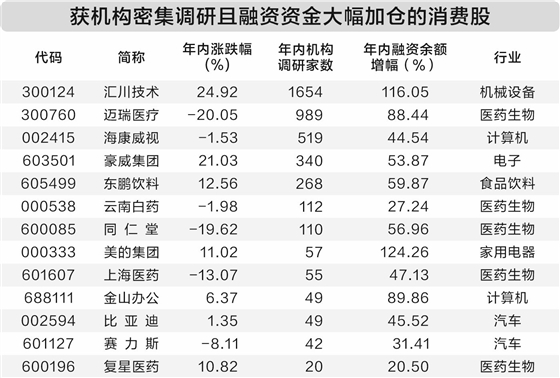
这些消费股获机构密集调研且融资资金大幅加仓(名单)
Zheng Quan Shi Bao Wang· 2025-12-23 01:20
Group 1 - The consumer sector shows signs of stabilization and rebound, with the Wind Consumer Index rising by 1.33% last Friday and continuing to increase by 0.13% on Monday [1] - The retail and dairy sectors have seen significant increases, with the Wind Retail Index up 7.44% and the Wind Dairy Index up 5.35% since December [2] - Over 20 ETFs related to consumption themes have seen a net inflow of over 2.2 billion yuan since December, with the Fortune CSI Tourism Theme ETF receiving nearly 1.4 billion yuan [2] Group 2 - The long-term growth resilience of China's consumer market is evident, with retail sales expected to rise from 39.1 trillion yuan in 2020 to 48.3 trillion yuan in 2024, averaging a growth rate of 5.5% [3] - The Wind Consumer Index has underperformed this year, with a year-to-date increase of only 5.34%, significantly lower than other popular indices [3] - The average price-to-earnings ratio of the Wind Consumer Index is 23.31, well below the 10-year average of 28.56 [3] Group 3 - Institutions predict that the total net profit of the Wind Consumer Index constituents will reach nearly 460 billion yuan in 2025, an increase of 8.63% from the previous year, with growth rates expected to exceed 14% in 2026 and 2027 [4] - The Wind Consumer Index and the Wind Domestic Demand Upgrade Index consist of 87 stocks across 12 industries, including pharmaceuticals, automotive, electronics, and food and beverage [4] - The average year-to-date increase for the 87 constituent stocks is over 29%, driven primarily by high-performing electronics and pharmaceuticals stocks [4] Group 4 - As of December 19, the total financing balance for the 87 constituent stocks is close to 320 billion yuan, an increase of over 45% from the end of last year, with more than 70% of the stocks seeing increased financing [4] - Thirteen stocks with a financing balance increase of at least 20%, over 20 institutional surveys, and a year-to-date increase of less than 25% are primarily in the pharmaceuticals, food and beverage, and home appliance sectors [4] Group 5 - Huichuan Technology, Mindray Medical, and Hikvision have received the highest number of institutional surveys this year, with Huichuan Technology's stock price increasing nearly 25% [5] - Mindray Medical has been surveyed by nearly 1,000 institutions, while Hikvision has received over 500 surveys [5] - Dongpeng Beverage has been surveyed by nearly 270 institutions, with a stock price increase of around 12% [5]