华住集团

Search documents
一个企业家的人生归宿,是“见自己”
Di Yi Cai Jing· 2025-10-09 11:56
Core Insights - The article discusses the journey of Qi Ji, the founder of Huazhu Group, highlighting his experiences through three significant crises that shaped his entrepreneurial spirit and philosophy [3][4][5]. Group 1: Entrepreneurial Journey - Qi Ji has successfully founded three companies, including Ctrip, Home Inn, and Hanting, all of which have a market value exceeding $1 billion, and has achieved four public listings [3]. - The article emphasizes the importance of understanding oneself, the world, and society in the entrepreneurial journey, reflecting on the philosophical dimensions of business [2][8]. Group 2: Personal Crises - The first crisis occurred during his university years when Qi Ji faced financial struggles and existential questions about life, leading him to explore philosophy and literature [4]. - The second crisis arose in 2004 when Qi Ji was forced out of the CEO position at Home Inn due to a lack of trust from board members, which he perceived as a personal betrayal [4][5]. - The third crisis was during the 2008 global financial crisis when a key investor withdrew funding for Hanting, leading to a severe cash flow issue and personal despair for Qi Ji [6][7]. Group 3: Lessons Learned - Each crisis contributed to Qi Ji's personal growth: the first taught him calmness, the second broadened his perspective on tolerance, and the third clarified his life mission [7][8]. - Qi Ji reflects on the idea that crises can present opportunities for growth, suggesting that maintaining a steadfast vision during challenging times can yield significant rewards [7]. Group 4: Philosophical Reflections - Qi Ji's philosophical journey includes influences from both Western and Eastern thought, emphasizing the importance of inner peace and self-awareness in achieving success [8][10]. - The article concludes with the notion that one's perception of the world is influenced by their inner state, suggesting that a positive mindset can lead to a more favorable view of circumstances [10].
华住集团:假期期间旗下酒店共接待超1055万人次 同比增长36%
Zheng Quan Shi Bao Wang· 2025-10-09 09:35
Core Insights - Huazhu Group reported that during the 2025 National Day and Mid-Autumn Festival holiday, its hotels received over 10.55 million guests, representing a 36% increase compared to the same holiday last year [1] - The number of foreign guests exceeded 57,000, marking a 75% increase year-on-year [1] - The overall occupancy rate of Huazhu Group's hotels surpassed 80% during the holiday period, with a peak occupancy rate exceeding 98% on October 3, and over 8,100 hotels were fully booked [1]
中金:国庆中秋假期出行增势良好 远途深度与情绪体验并进
Zhi Tong Cai Jing· 2025-10-09 02:55
Group 1: Travel Industry Insights - The travel volume during the Mid-Autumn and National Day holidays showed a slight decline compared to the May Day holiday, but remained strong, with a daily year-on-year increase of 6.2% in cross-regional personnel flow [2] - Long-distance deep travel and emotional experience payments are progressing together, with significant growth in certain tourist destinations, such as Changbai Mountain, which saw a 18.95% year-on-year increase in visitor numbers during the first four days of the holiday [2][3] - International flight passenger flow increased by 15.5% year-on-year during the holiday period, indicating a recovery in outbound tourism [2] Group 2: Hotel Industry Performance - The hotel industry is expected to continue the improvement trend seen in September, with a focus on the recovery of business travel post-holiday [3] - The RevPAR (Revenue per Available Room) for the hotel industry showed a mixed performance in September, with a year-on-year decline of 13.7% to a growth of 15.2% across different weeks, suggesting potential for improvement during the holiday period [3] Group 3: Duty-Free Sales - The sales at Sanya International Duty-Free City reached over 120 million yuan in a single day, marking a 60% year-on-year increase, highlighting the strong demand for duty-free shopping [4] - The average daily passenger volume at Haikou Meilan Airport increased by 7% year-on-year during the holiday, indicating a robust travel environment [4] Group 4: Dining Sector Performance - The sales of key retail and dining enterprises increased by 3.3% year-on-year during the first four days of the holiday, which is lower than the growth seen during the May Day holiday [5] - Specific dining brands like Tea Garden and Cha Bai Dao showed stable performance, with the latter experiencing a year-on-year increase in same-store sales [5] Group 5: Investment Recommendations - Companies recommended for investment include Luckin Coffee, Gu Ming, Mixue Group, Atour, Yum China, and Dasin Holdings, with a focus on those likely to benefit from service consumption policies [6] - Companies expected to see turning points or marginal improvements include Huazhu, Shoulv Hotel, Beijing Renli, Keri International, Tongdao Recruitment, Haidilao, China Duty Free Group, and Songcheng Performance [6]
十一出行及酒店住宿行业综述
2025-10-09 02:00
Summary of the Hotel Industry and Travel Insights Industry Overview - The hotel industry performed well during the 2025 National Day holiday, but a decline of approximately 3-4% is expected in Q4 due to an oversupply of hotels in recent years, leading to a short-term supply-demand imbalance. There may be opportunities for supply-demand restructuring next year [1][5][9]. Key Performance Metrics - During the 2025 National Day holiday, Huazhu Group's RevPAR (Revenue per Available Room) reached 105.1%, an increase of 5 percentage points year-on-year. The average room rate was 393 RMB, up 4% year-on-year, with an occupancy rate of 88.2%, up 1.1 percentage points [2]. - Jinjiang Group reported an ADR (Average Daily Rate) of 366 RMB, a 4.5% increase year-on-year, with an occupancy rate of 85.5%, up 4 percentage points. RevPAR was 312 RMB, an increase of 8.6 percentage points year-on-year [2]. Consumer Behavior and Preferences - Consumers are increasingly prioritizing customer experience, safety, and hygiene, leading to a preference for chain brands over individual inns. During the 2025 National Day holiday, chain hotels performed well, while homestays saw poor occupancy [3][11]. - Huazhu's OTA (Online Travel Agency) orders accounted for 40% of bookings, while member orders made up about 50% during the holiday, indicating effective control over OTA order ratios by leading hotel chains [3][16]. Pricing Dynamics - The significant price increases by Huazhu and Jinjiang are related to budget planning based on last year's revenue performance, with ADR rising over 4%, indicating strong demand. However, consumer sensitivity to high prices may limit future price increases [7][8]. - Despite the rapid increase in hotel supply, prices are not expected to drop significantly due to budget pressures on operators. New hotels are primarily concentrated in lower-tier markets, gradually moving towards mid-range and high-end products, allowing for pricing power during peak holiday periods [9][10]. Market Trends and Future Outlook - The hotel industry is expected to face challenges in Q4 due to an oversupply, but the exit of smaller hotels may create opportunities for RevPAR improvement next year [5]. - The 2025 National Day holiday's extension to 8 days did not significantly boost hotel demand, as most travelers preferred shorter trips [13][14]. - The government has shown limited intervention in hotel pricing, allowing market forces to dictate prices, although some cities had previously implemented price control measures [10]. Conclusion - The hotel industry is navigating a complex landscape of supply-demand dynamics, consumer preferences, and pricing strategies. While current performance metrics are strong, future challenges related to oversupply and consumer price sensitivity will require careful monitoring and strategic adjustments by industry players [1][5][9].


酒店专家交流
2025-10-09 02:00
Summary of Hotel Industry Conference Call Industry Overview - The hotel industry experienced a strong performance during the National Day holiday in 2025, with chain hotel Average Daily Rate (ADR) increasing due to high consumer trust in chain brands, stable pricing strategies, and a preference for family travel [2][3][6] - Mid-range hotels like Atour and Hilton Garden Inn performed exceptionally well, while the economy segment saw HanTing leading [2][7] - The peak booking period was from October 1 to 4, 2025, extending one day compared to the previous year [2][8] - The industry is expected to see a positive RevPAR year-on-year only by the second half of 2026 due to multiple factors including a slowdown in new contracts and strong demand [2][9] Key Performance Metrics - During the National Day period, Huazhu Group reported an ADR of 393 RMB, an occupancy rate (OCC) of 88.2%, and a RevPAR of 346.6 RMB, reflecting a year-on-year increase of 4%, 1.1 percentage points, and 5.1% respectively [3] - Jinjiang Group's ADR was 366 RMB, with an OCC of 85.5% and a RevPAR of 312 RMB, showing increases of 4.5%, 4 percentage points, and 8.6% respectively [3] - The overall performance was strong despite a decline compared to the May Day holiday due to the longer duration of the National Day holiday [3] Regional Performance - Key cities such as Beijing, Shanghai, Chengdu, Nanjing, Hangzhou, Suzhou, Chongqing, and Tianjin showed strong hotel performance, while Shenzhen and Guangzhou's RevPAR was weaker due to typhoon impacts [5] - The North China region, including Beijing-Tianjin-Hebei and Shanxi, saw RevPAR increases of 100% to 120% [5] - Southwest and Northwest regions benefited from rich tourism resources and relatively low hotel supply, enhancing their pricing power [5] Future Outlook - The hotel supply side is expected to decrease in the second half of 2026, with many poorly performing hotels facing closure or rebranding [10][11] - The industry is experiencing a cleansing phenomenon, particularly affecting single hotels, with about 80% of the affected being independent hotels [13] - Major hotel groups like Huazhu and Jinjiang continue to expand despite overall supply slowing down, focusing on increasing market share [16] Investment and Financial Metrics - Full Season hotels have the best investment return rate, with a payback period of approximately 4 to 4.5 years, translating to a return rate of 23-24% [15] - HanTing leads in the economy segment with a payback period of about 5 years in high-tier cities and slightly shorter in lower-tier cities [15] - The investment landscape is shifting, with a growing proportion of younger investors and those with government connections entering the market [24][25] Booking Trends - The proportion of bookings through Central Reservation Systems (CRS) is increasing, with Huazhu at approximately 65% and Atour at around 60% [4][19] - The trend is moving towards enhancing member contribution rates, aiming for a 70% self-owned channel and 30% OTA channel [4][19] Key Challenges - The hotel industry faces challenges such as increased competition, saturation in key markets, and the need for strategic rebranding to attract customers [17][18] - The overall demand for business travelers has increased in absolute terms but decreased as a percentage of total guests due to the growing number of hotels [12] Conclusion - The hotel industry is poised for a complex recovery, with strong performance indicators during peak seasons but facing challenges in supply and market saturation. The focus on strategic expansion and rebranding will be crucial for navigating the evolving landscape.

社会服务行业点评:双节出行延续高景气,消费市场活力持续
GOLDEN SUN SECURITIES· 2025-10-08 11:14
Investment Rating - The industry investment rating is "Maintain Overweight" [5] Core Viewpoints - The travel and consumption market remains vibrant, with significant increases in cross-regional travel during the holiday period, indicating strong consumer activity [1][2][3] - The report highlights four main investment themes: new consumption growth, transformation and reform opportunities, overseas expansion, and favorable policies [4][7][8] Summary by Sections Travel and Tourism - During the Mid-Autumn and National Day holidays, cross-regional travel is expected to reach 2.36 billion trips, a 3.2% increase from last year [1] - Tourist attractions have seen record visitor numbers, with notable increases in various regions, such as a 22.16% rise in visitors to Changbai Mountain [2] Hotel and Retail Performance - Hotel occupancy rates have improved, with an average of 64.7% during the first four days of the holiday, up 2 percentage points year-on-year [2] - Retail sales from key enterprises increased by 3.3% year-on-year during the holiday period, with specific regions like Guangxi showing an 11.3% increase [3] Investment Recommendations - Short-term focus on companies with strong Q3 performance certainty and those likely to benefit from the upcoming holiday season, including cross-border e-commerce and certain tourist attractions [4] - Recommended companies include Xiaogoods City, Yonghui Supermarket, and Jiuhua Tourism, among others [4][7][8]
华住集团(01179.HK):黄金周消费带动酒店行业受惠
Xin Lang Cai Jing· 2025-10-08 04:46
Core Insights - During the 2025 National Day Golden Week, China's tourism consumption demand showed significant resilience, with a year-on-year increase in nationwide travel volume, particularly in eastern cities like Shanghai and Nanjing [3] - The southern and western regions experienced slightly weaker performance due to weather factors, but self-driving trips and scenic area visits continued to rise, leading to a notable improvement in hotel occupancy rates, with some areas achieving record high RevPAR [3] - Retail and dining sectors recorded steady growth during the holiday, indicating a rational consumer behavior leaning towards mid-to-high-end experiences, with larger brands and companies demonstrating stronger performance elasticity amid industry competition [3] - Short trips and day tours became mainstream, while some traditionally popular tourist destinations like Hainan saw slow recovery due to weather impacts [3] - Huazhu Group, as an industry leader, has a dense layout in high-demand areas, achieving significant increases in occupancy rates and revenue per room during the Golden Week, benefiting from the tourism recovery [3] - The group's efficient operations and multi-brand strategy are expected to help it maintain a leading position amid the upgrading of domestic consumption structures [3]

年轻人抢住“拼楼酒店”
首席商业评论· 2025-10-08 02:28
Core Viewpoint - The rise of "building-sharing" hotels in China reflects a shift in the hotel industry from expansion to survival in a competitive market, offering consumers better choices and cost-effectiveness while addressing the challenges of high investment and limited locations [3][19][21]. Group 1: Market Trends - The "building-sharing" model is rapidly gaining popularity, with multiple hotel brands coexisting within the same building, creating a "vertical hotel cluster" phenomenon [9][19]. - Consumers appreciate the increased choice and cost-effectiveness of this model, as it allows them to easily switch between different hotel brands without the hassle of moving to another location [13][19]. - The model reduces transaction costs for consumers, enabling them to compare and decide among various brands in a single location [13][21]. Group 2: Economic Context - The Chinese hotel industry is facing a harsh reality of declining occupancy rates and prices, with a reported 8% year-on-year drop in RevPAR during the summer of 2025, and some regions experiencing price declines of 20% to 30% [19][21]. - The "building-sharing" model emerges as a response to the high investment barriers and long payback periods associated with traditional hotel operations [21][23]. Group 3: Operational Advantages - The model allows for shared facilities among different hotel brands, enhancing operational efficiency and reducing vacancy risks for property owners [21][23]. - Consumers benefit from a diverse range of services and amenities, as brands compete to offer better experiences, leading to a richer service environment [15][21]. Group 4: Challenges and Risks - Despite its advantages, the "building-sharing" model faces potential issues such as brand conflicts, service fragmentation, and management difficulties, which could impact its sustainability [25][26]. - The blending of different hotel brands may dilute the unique characteristics of higher-end brands, leading to concerns about customer experience and loyalty [26][30]. - Safety and security concerns arise from shared spaces, as incidents in similar setups have highlighted the risks associated with multiple brands operating in close proximity [30][31].
超级黄金周火爆开局:小众游占C位,中资邮轮唱主角,主题公园上演“神仙打架”
Xin Lang Cai Jing· 2025-10-02 03:51
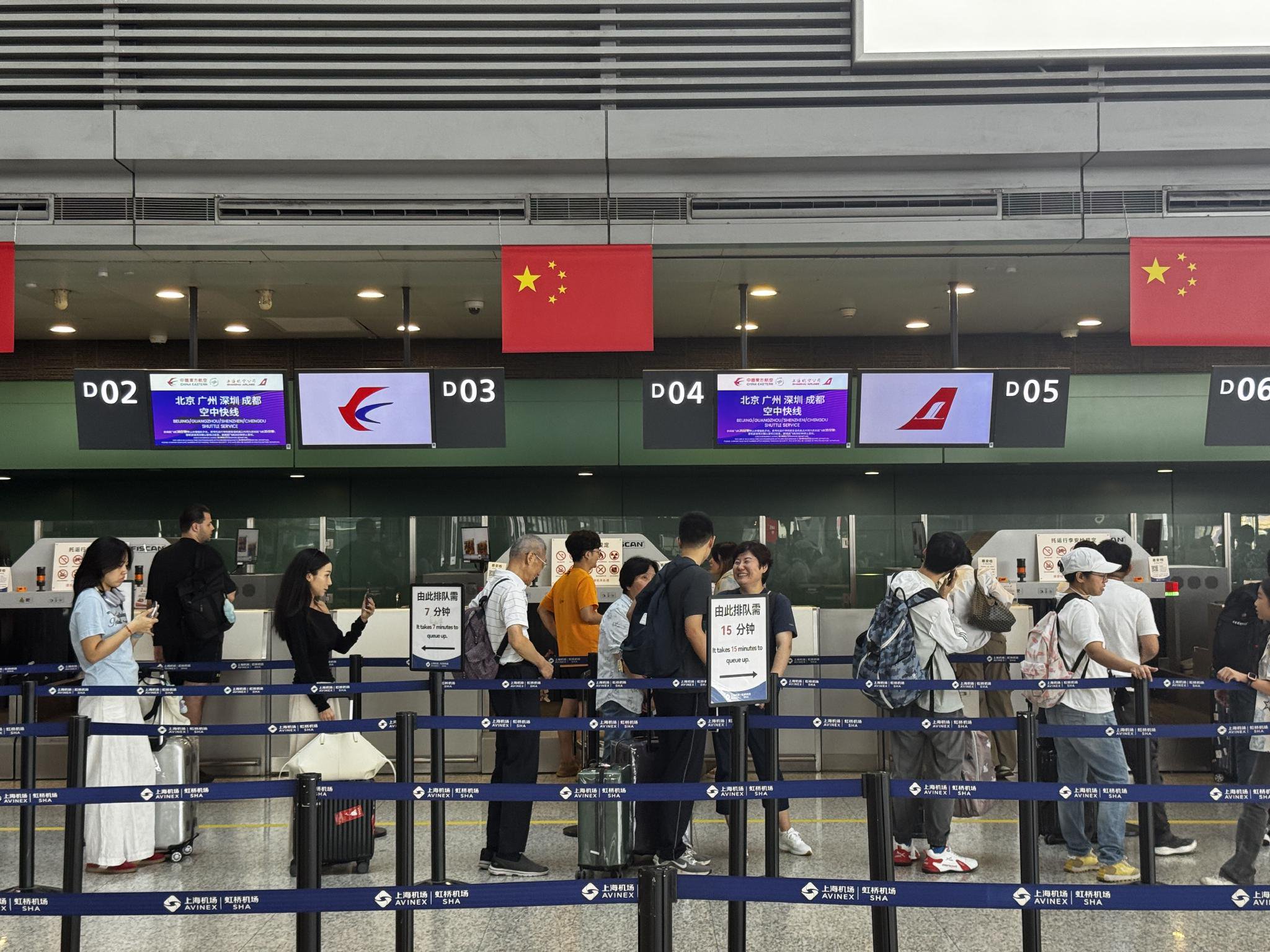
Core Insights - The "Super Golden Week" during the National Day and Mid-Autumn Festival has seen unprecedented enthusiasm in the tourism market, with significant increases in travel demand and passenger volumes across various transportation sectors [1][3][6] Transportation Sector - The Civil Aviation Administration of China predicts that air passenger transport during the holiday will reach 19.2 million, a year-on-year increase of 3.6%, marking the highest level for this period [1] - The railway sector anticipates sending 219 million passengers from September 29 to October 10, with October 1 expected to be the peak travel day [1] - Eastern Airlines plans to operate over 3,200 flights on the first day of the holiday, carrying more than 460,000 passengers, with international routes performing particularly well [3][6] Hotel and Accommodation Sector - Hotel booking rates for the holiday have increased by 3 percentage points compared to last year, with first-tier cities like Beijing leading in bookings [9] - Specific hotels in cities like Changsha have seen occupancy rates rise by 20% compared to the previous year, indicating strong demand for accommodations [9] Tourist Attractions - Popular tourist destinations have experienced a surge in visitors, with the Forbidden City seeing a 150% increase in visitor numbers compared to normal days [2] - The top ten attractions for ticket bookings include natural parks and theme parks, with significant interest in places like Jiuzhaigou and Universal Studios Beijing [2] Emerging Trends - There is a notable shift towards "reverse tourism" and lesser-known destinations as travelers seek to avoid crowded hotspots, with searches for small destinations increasing by over 110% [11] - The demand for "AI route planning" and "AI travel itinerary" services has surged, reflecting travelers' desire to optimize their holiday experiences [11] Cruise Industry - The domestic cruise market is gaining traction, with the launch of the "Aida Magic City" cruise receiving strong demand, indicating a growing interest in cruise travel [13][14] - The international cruise market remains cautious, with MSC Mediterranean Cruises planning to return to China in 2026, reflecting a strategic approach to market re-entry [15][16] Theme Parks - Theme parks are experiencing a significant influx of visitors, with major parks like Shanghai Disneyland and Universal Studios Beijing implementing promotional activities to attract guests [18][19] - The overall performance of theme parks during the holiday is expected to be better than last year, with a projected growth of up to 10% in visitor numbers for well-known parks [23]
12天超长“拼好假”,黄金周的钱都进了谁的口袋?
3 6 Ke· 2025-10-01 05:55
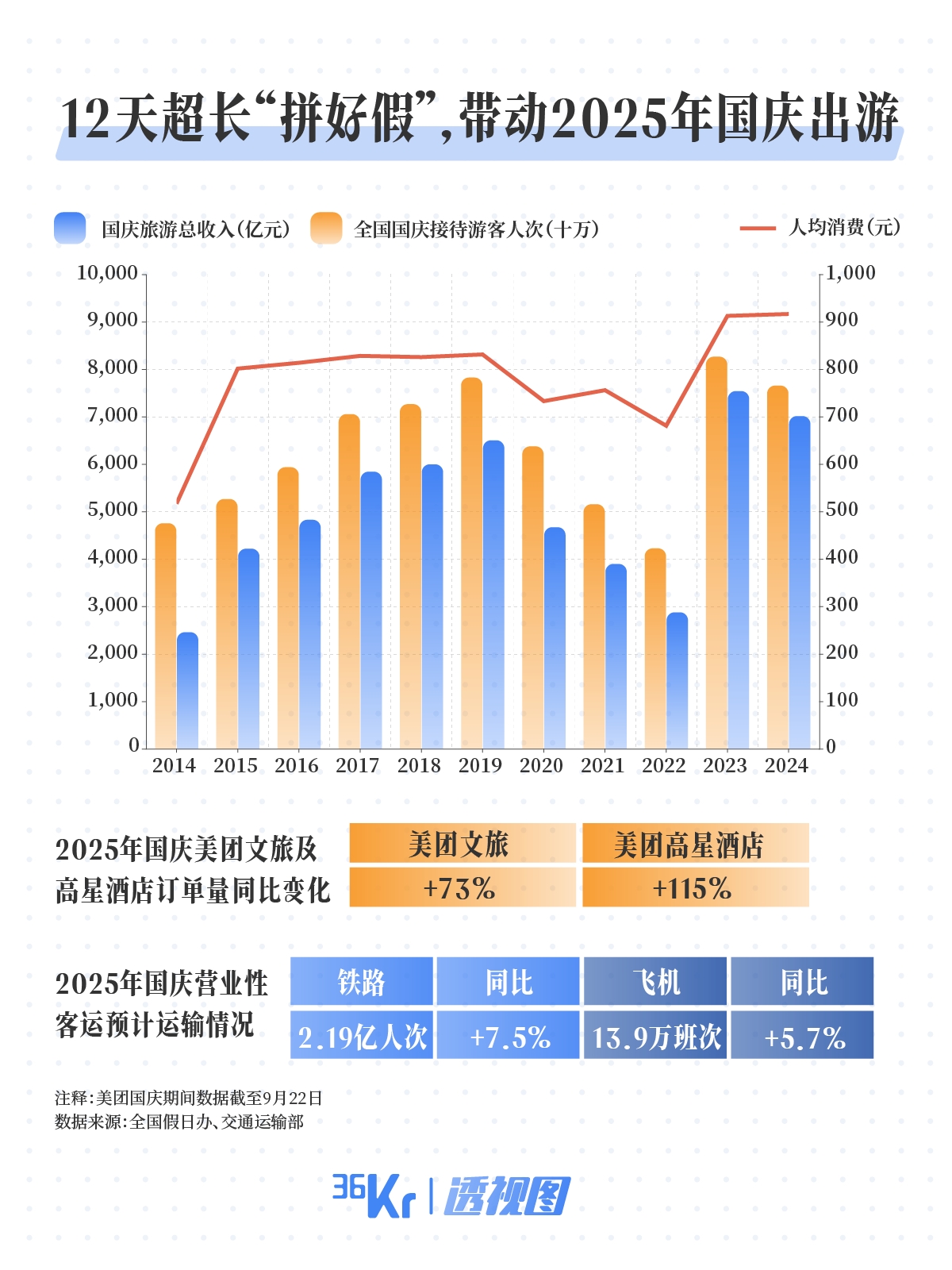
Core Insights - The upcoming National Day holiday is expected to set new records for travel indicators, indicating a significant shift in consumer behavior towards travel and consumption [1] Group 1: Travel Demand and Projections - The Ministry of Transport predicts that during the National Day and Mid-Autumn Festival holiday from September 29 to October 10, 2025, approximately 219 million passengers will be transported by rail, a 7.5% increase compared to the previous year [4] - The civil aviation sector is expected to execute a total of 139,000 passenger flights, with a daily year-on-year growth of 5.7% [4] - Multiple travel platforms indicate a substantial year-on-year increase in the number of travelers during this holiday period, suggesting a peak in tourism and consumption [4] Group 2: Market Performance and Company Analysis - Since September, the performance of travel stocks has shown a divergent trend, with Ctrip leading significantly in terms of market capitalization and net profit attributable to shareholders [6] - Major airlines are generally experiencing losses due to macroeconomic conditions and cost fluctuations, leading to increased complaints from consumers about rising ticket prices and high seat selection fees during the holiday [8] - Many small and medium-sized hotels, travel agencies, and scenic spots are operating at low profit margins or even losses, indicating that the overall profit in the tourism industry is increasingly concentrated in Ctrip [11] Group 3: Competitive Landscape and Industry Dynamics - JD.com has targeted the OTA (Online Travel Agency) sector, with CEO Liu Qiangdong stating that high profits for any platform will reduce profits for upstream and downstream players, negatively impacting the entire industry [14] - JD.com has introduced a "zero commission policy" for merchants, and Douyin has implemented a hotel scanning and commission-free strategy starting October 1 [14] - Despite the presence of numerous OTA participants, none have yet been able to significantly challenge Ctrip's dominant position in the market [14] - Data from QuestMobile shows that in October 2022, Ctrip's monthly active users were several times greater than those of other travel platforms, and this gap is expected to widen by October 2024 [17] - Ctrip has announced an investment of over 100 million yuan to alleviate the burden on merchants, suggesting a future trend of "multi-platform price comparison" in the OTA industry [17]