奇瑞汽车

Search documents
蔚来第100万台量产车下线 李斌称未来将保持每年销量增长40%-50%
Xin Hua Cai Jing· 2026-01-06 06:44
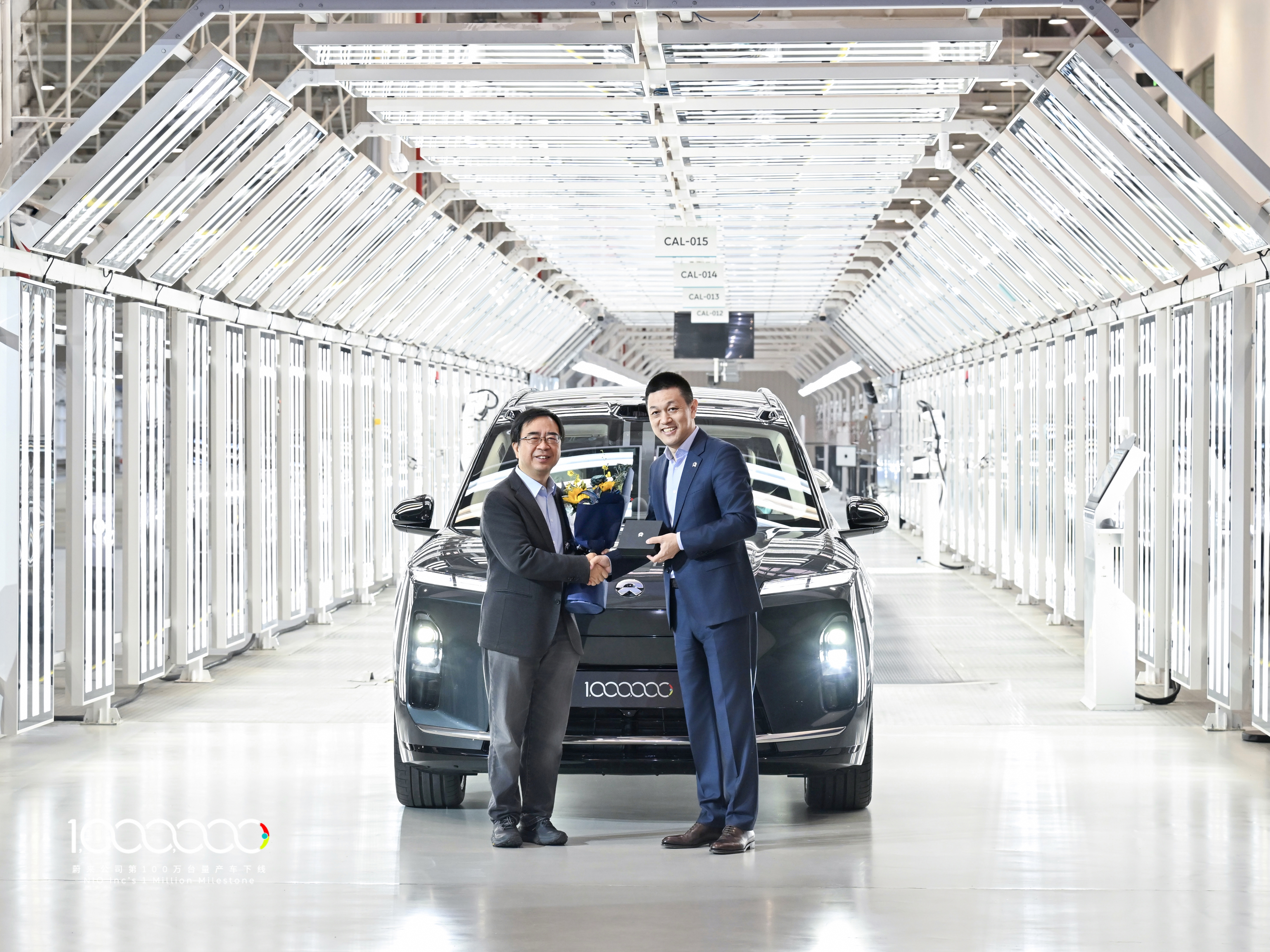
Core Insights - NIO has achieved a significant milestone with the production of its one millionth vehicle at its manufacturing facility in Hefei, Anhui, and aims for annual sales growth of 40% to 50% in the future [2] Group 1: Company Strategy and Goals - The company plans to maintain its focus on 12 core technologies to ensure a leading edge in technology and products [2] - NIO aims to invest in infrastructure development, targeting over 10,000 charging and battery swap stations by 2030 [2] - The company intends to deepen its presence in the Chinese market while expanding globally in a more stable and efficient manner [2] Group 2: Collaborations and Investments - NIO has signed a framework agreement with Chery Automobile and JAC Motors to establish a collaborative innovation platform for the automotive industry [2] - The company has completed a collaboration project with Longxin Semiconductor for the industrialization of vehicle chips, aiming to foster a mutually beneficial industrial ecosystem in Anhui and Hefei [2] Group 3: Financial Investments and Infrastructure - Since its establishment in 2014, NIO has invested a total of 65 billion yuan in technology research and development, focusing on 12 core technologies for smart electric vehicles [3] - The company has invested 18 billion yuan in charging and battery swap infrastructure, with 8,541 charging stations built nationwide and over 96 million battery swap services provided [3] - NIO has developed a comprehensive capability system encompassing vehicle research, design, production, sales, and service, along with a brand matrix that includes NIO, Ladao, and Firefly [3]


蔚来公司第100万辆量产车下线!
Zhong Guo Qi Che Bao Wang· 2026-01-06 06:24
Core Insights - NIO has achieved a significant milestone with the production of its one millionth vehicle, marking a key point in the company's development since its establishment in 2014 [1][5][6] - The production of the one millionth vehicle reflects not only NIO's growth but also the upward trajectory of China's smart electric vehicle industry, with projections indicating that China's new energy vehicle production will exceed 15 million units by 2025 [5][6] Company Achievements - The one millionth vehicle, a starry green NIO ES8, was donated to the Anhui Mozi Quantum Technology Foundation to support innovation in quantum technology [1] - NIO has launched a limited edition ET9 to commemorate this milestone, honoring innovators across various sectors [1] Industry Impact - NIO's achievement is seen as a representation of the technological and brand advancements within China's automotive industry, contributing positively to the transformation and upgrading of the sector [6][7] - The automotive industry in Anhui has experienced rapid development, becoming a leader in production and export of new energy vehicles, with NIO's operations significantly supported by the local government [6][7] Future Plans - NIO aims to enter a new phase focused on high-quality growth, with plans to enhance its technological and product leadership, expand its infrastructure, and deepen collaboration among its three brands [11] - The company has committed to investing in 12 core technologies and aims to build over 10,000 charging and battery swap stations by 2030 [11]
奇瑞汽车公布垂直起降飞行器专利
Zheng Quan Shi Bao Wang· 2026-01-06 05:36
Core Viewpoint - Chery Automobile has recently applied for a patent for a "Vertical Takeoff and Landing Aircraft," indicating its expansion into the aerospace sector and innovation in aircraft design [1] Summary by Categories Patent Application - The patent application reveals a new type of vertical takeoff and landing aircraft, which falls under the category of aircraft technology [1] - The design features a serial layout of a first fixed wing and a second fixed wing, aimed at enhancing the aircraft's spatial adaptability and structural rigidity while maintaining the same payload capacity [1]
蔚来与奇瑞、江汽、龙迅半导体签约合作,推动技术共享
Xin Lang Ke Ji· 2026-01-06 02:47
责任编辑:江钰涵 当日,蔚来公司还与奇瑞汽车、江淮汽车共同签署《关于共建汽车产业发展协同创新平台的框架协 议》,与龙迅半导体完成车芯协同产业化合作项目签约。蔚来将与产业伙伴携手推动安徽企业之间的技 术共享,进一步推动安徽和合肥开放协同、互利共赢的产业生态。 新浪科技讯 1月6日上午消息,在今日的蔚来公司第100万台量产车下线仪式上,蔚来创始人、董事长、 CEO李斌发表演讲。 他宣布,蔚来公司第100万台量产车正式下线,第100万台量产车为全新蔚来ES8。 ...


从小切口透视大行业 ——2025年汽车供应链变革“风暴眼”
Zhong Guo Qi Che Bao Wang· 2026-01-06 02:18
Core Insights - The automotive industry's core competitiveness is shifting from traditional mechanical performance to smart technology, safety, and integration with energy networks [3] - Eight key component areas have emerged as focal points for change in the automotive supply chain by 2025 [3] Group 1: AI and Smart Technology - AI large models, including VLA and VLM, are reshaping the perception, decision-making, and interaction systems in smart vehicles [4] - Companies like Li Auto and XPeng are actively developing and deploying VLA-based autonomous driving systems, with plans for mass production by 2026 [4] - The competition in AI models is intensifying, with a focus on the underlying support systems like computing power and data [4] Group 2: Vehicle-to-Grid (V2G) Interaction - V2G is becoming a hot topic as electric vehicles can act as distributed energy storage units within new energy systems [5] - Government policies are driving the adoption of V2G, with pilot projects and plans to expand the scope of V2G applications by 2027 [5][6] - Companies like GAC Group are implementing V2G functionalities in their models and developing charging infrastructure to support this transition [6] Group 3: Battery Safety Standards - The new national standard for electric vehicle batteries, effective July 2026, emphasizes safety by requiring batteries to be "non-flammable and non-explosive" [7] - The updated standards will compel battery manufacturers to innovate in materials, design, and production processes to meet stricter safety requirements [7] - Leading battery companies like BYD are already adapting to these new standards, which will enhance safety and consumer trust in electric vehicles [7] Group 4: Door Handle Innovations - Electric hidden door handles are becoming a focal point due to safety concerns arising from their failure in collision scenarios [8][9] - New regulations are being proposed to ensure that all door handles, including electronic ones, have a mechanical release function for emergency situations [9] Group 5: Solid-State Batteries - Solid-state batteries are gaining traction due to their advantages in energy density and safety, with several companies planning to launch new products or production lines [10] - The development of solid-state batteries is seen as a key competitive factor for companies in the next generation of electric vehicles [10][11] Group 6: Human-Car-Home Ecosystem - The "Human-Car-Home" ecosystem is emerging, integrating automotive, home, and personal devices into a cohesive smart system [12] - Companies like Haier and Midea are collaborating with automotive brands to create interconnected systems that enhance user experience [12][13] Group 7: Humanoid Robots - The automotive industry is increasingly intersecting with humanoid robotics, with companies exploring the integration of robotic technology into manufacturing processes [14][15] - The demand for precision and adaptability in manufacturing is driving the development of humanoid robots tailored for automotive applications [14] Group 8: Zero-Gravity Seats - Zero-gravity seats are becoming a key feature in mid to high-end vehicles, enhancing passenger comfort and experience [16] - The lack of standardized regulations for these seats poses challenges, particularly regarding safety during vehicle operation and collisions [16]

车市进入高销量低增长周期,行业从拼价格转向拼价值
Bei Jing Ri Bao Ke Hu Duan· 2026-01-06 00:34
Group 1 - The core viewpoint of the articles highlights the transformation and challenges in the Chinese automotive market, emphasizing a shift from price competition to value-driven growth, with a focus on innovation and technology integration [1][5][8] - In 2025, China's automotive market is expected to achieve record production and sales, driven by policies such as trade-in incentives and tax exemptions for new energy vehicles, indicating sustained consumer demand [1][6] - The competition landscape is evolving, with companies like BYD surpassing Tesla in electric vehicle sales, marking a shift towards systematic competition based on cost, supply chain, and product matrix [2][3] Group 2 - The industry is witnessing a significant shift towards "boundaryless integration," with companies exploring new technologies and markets beyond traditional automotive manufacturing, such as AI and robotics [3][4] - The year 2025 is anticipated to be a turning point for intelligent driving technology, with advancements making high-level autonomous driving features more accessible to the broader market [3][4] - The automotive sector is facing increasing pressure from regulatory changes and market dynamics, leading to a decline in profit margins and a need for companies to focus on value creation through innovation and quality [5][7] Group 3 - The outlook for 2026 suggests a transition to a phase of high sales but low growth, with expectations of stable annual sales around 30 million vehicles, and a significant increase in exports, particularly in the new energy vehicle segment [6][8] - Capital operations within the automotive industry are becoming more active, with several companies successfully listing on stock exchanges, indicating a trend towards consolidation and value reassessment [7][8] - The competitive environment is expected to intensify, with companies needing to accelerate their transition to new energy and global markets to survive the anticipated market shakeout [8]
地方债发行大幕开启,OPEC+将维持石油产量稳定 | 财经日日评
吴晓波频道· 2026-01-06 00:21
Group 1: Local Government Bonds - Shandong Province issued 723.81 billion yuan in local government bonds, marking the first issuance in the country for the year [2] - The issuance included 467.72 billion yuan in new special bonds and 256.09 billion yuan in refinancing special bonds, focusing on investment in new projects [2] - The Ministry of Finance established a dedicated Debt Management Department to enhance government debt management, which was previously fragmented [2][3] Group 2: Pharmaceutical Industry - In 2025, China approved 76 innovative drugs, significantly surpassing the 48 approved in 2024, with domestic drugs accounting for 85.5% of the total [4] - The total value of authorized transactions for innovative drugs exceeded 130 billion USD, with over 150 transactions, setting a new record [4] - The Chinese pharmaceutical industry has seen substantial growth, particularly in innovative drugs, supported by reforms in drug approval processes and enhanced intellectual property protections [5] Group 3: Automotive Industry - Six major listed car manufacturers reported their 2025 sales, with BYD leading at 4.6024 million units, a 7.73% increase, followed by SAIC and Geely [6] - The growth in sales was driven primarily by the expansion of electric vehicles, with BYD's electric vehicle sales surpassing Tesla for the first time [6][7] - The competitive landscape in the automotive market is intensifying, with companies focusing on optimizing product structures and expanding overseas [7] Group 4: Oil Market - OPEC+ decided to maintain stable oil production levels, postponing planned increases due to ongoing geopolitical tensions [8] - Despite Venezuela's significant oil reserves, production remains low due to insufficient investment, limiting its impact on global supply [8][9] - The global oil market faces challenges in stabilizing prices amid concerns of overproduction and geopolitical factors [9] Group 5: Stock Market Performance - In 2025, 385 Hong Kong stocks saw over 100% growth, with 14 stocks increasing more than tenfold, indicating a strong market performance [14] - The increase in "red stocks" reflects a growing willingness to assign long-term value to internet giants and a high enthusiasm for growth sectors [15] - The A-share market opened positively in 2026, with significant gains across various sectors, particularly in insurance and AI applications [16][17] Group 6: Consumer Products - Prices for certain LABUBU products in the second-hand market have dropped significantly, indicating a shift in supply and demand dynamics [10][11] - The price decline is attributed to increased production by the company, which aims to balance consumer demand with product scarcity [11] Group 7: Technology and AI - Samsung plans to double the number of mobile devices equipped with Google's Gemini AI system, aiming to regain market share in the smartphone sector [12][13] - The integration of AI into various products, including home appliances, highlights a trend towards combining hardware and software solutions [13]






车市进入高销量低增长周期行业从拼价格转向拼价值
Zheng Quan Shi Bao Wang· 2026-01-06 00:07
Core Insights - Despite challenges, the Chinese automotive market is expected to achieve record production and sales in 2025, with a total of 31.23 million vehicles produced and 31.12 million sold in the first eleven months of the previous year, both showing over 11% year-on-year growth [1] - The industry is transitioning from extensive competition to value-driven high-quality development, supported by factors such as over 50% penetration of new energy vehicles and advancements in autonomous driving technology [1][3] Industry Trends - 2026 is anticipated to be a watershed year for automakers, entering a new cycle characterized by high sales but low growth, with consumers benefiting from advanced features at lower prices [3] - The competition is shifting from individual models to a systematic approach focusing on cost, supply chain, and product matrix, as evidenced by BYD surpassing Tesla in electric vehicle sales [4] - New energy vehicle companies are approaching profitability, with Leap Motor achieving a 103% year-on-year increase in deliveries, while NIO aims for breakeven by Q4 2025 [4] Market Dynamics - The differentiation among automakers is widening, with companies like Li Auto facing challenges in meeting delivery targets during their transition to electric vehicles [5] - Companies are exploring "boundaryless integration," venturing into AI and robotics, indicating a shift towards a more technology-driven and ecosystem-oriented approach [5] - The automotive industry is expected to play a crucial role in driving technological innovation, with advancements in semiconductors and AI being applied at scale [6] Competitive Landscape - The industry is moving away from price wars towards value creation, with a focus on safety and quality as competitive advantages [7] - The market is projected to stabilize with annual sales around 30 million vehicles from 2026 to 2030, with significant growth in exports, particularly in new energy vehicles [8] Capital and Investment - A surge in IPOs within the automotive sector is noted, with companies like Chery and Seres successfully listing, indicating a robust capital operation environment [10] - Traditional automakers are actively restructuring and seeking value reassessment, with state-owned enterprises enhancing their market positions [10] Future Challenges - The automotive market is expected to face intensified competition in 2026, with potential policy rollbacks and rising costs posing significant challenges [11] - The industry is likely to undergo a rapid consolidation phase, with resources concentrating on high-quality enterprises as the market matures [11]
车市进入高销量低增长周期 行业从拼价格转向拼价值
Zheng Quan Shi Bao· 2026-01-05 18:38
Group 1 - The Chinese automotive market is expected to set new records in production and sales in 2025, with a cumulative completion of 31.23 million vehicles produced and 31.12 million sold in the first 11 months of the previous year, both showing an increase of over 11% year-on-year [1] - The industry is transitioning from extensive competition to high-quality development, driven by factors such as over 50% penetration of new energy vehicles and the rollout of L3 autonomous driving [1] - The year 2026 is anticipated to mark a turning point for automakers, entering a new cycle characterized by high sales but low growth, with consumers benefiting from advanced features at lower prices [1] Group 2 - BYD has surpassed Tesla in annual sales of pure electric vehicles, indicating a shift in the competitive landscape towards a focus on cost, supply chain, and product matrix [2] - New energy vehicle companies like Leap Motor and XPeng are approaching profitability, while NIO aims for breakeven in Q4 2025, highlighting a significant differentiation among automakers [2] - The competition is expected to evolve from mere delivery races to comprehensive assessments of cash flow, gross margins, and channel efficiency [2] Group 3 - Automakers are exploring "boundaryless integration," with companies like Li Auto and XPeng venturing into AI glasses and flying cars, respectively, indicating a shift towards technology and ecosystem development [3] - The year 2025 is seen as the "year of universal intelligent driving," with advancements in L2 and L3 driving assistance technologies becoming more mainstream [3] - The automotive industry is becoming a core driver of technological innovation, with a growing emphasis on integrating advanced technologies like semiconductors and AI [4] Group 4 - The automotive industry is moving away from price wars towards value creation, with a focus on safety and emotional value for consumers [5] - The market is expected to stabilize with annual sales around 30 million vehicles from 2026 to 2030, indicating a shift towards a more rational competitive environment [5] - The industry is witnessing a recovery in profit margins due to effective policies like the vehicle trade-in program, which has reduced the prevalence of price wars [5] Group 5 - The international market is becoming a crucial growth area, with projections of Chinese automotive exports reaching 8 million units by 2026 and 10 million by 2030, primarily driven by new energy vehicles [6] - Chinese automakers are transitioning from merely exporting products to establishing a comprehensive ecosystem that includes technology and supply chain collaboration [6] Group 6 - The automotive industry is experiencing a surge in IPOs, with companies like Chery and Seres successfully listing, indicating a vibrant capital market for the sector [7] - Traditional automakers are actively engaging in capital operations to enhance their market positions and prepare for intensified competition [7] - The market consensus suggests that 2026 will bring a more brutal competitive environment, with potential for increased consolidation and closures among weaker players [7][8] Group 7 - The automotive industry is expected to undergo rapid resource concentration towards high-quality enterprises, with the performance in 2025 serving as a ticket for the competitive landscape in 2026 [8] - Companies must accelerate their transition to new energy, strengthen technological barriers, and expand into global markets to survive in the upcoming competitive landscape [8]
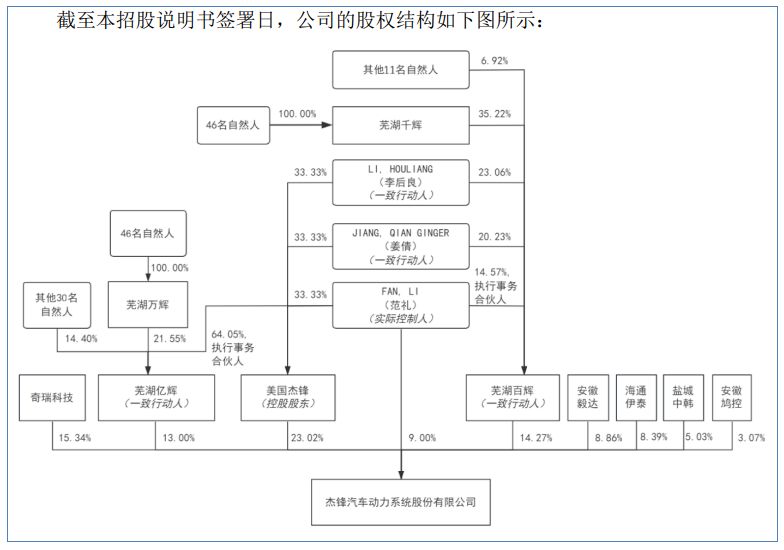
汽车零部件生产商杰锋动力闯关北交所:七成收入靠奇瑞 去年前三季度净利下滑12%
Mei Ri Jing Ji Xin Wen· 2026-01-05 13:56
Core Viewpoint - Jiefeng Power is planning to list on the Beijing Stock Exchange, but its heavy reliance on a single customer, Chery, raises concerns about its internal controls and sustainability of performance [1][4]. Group 1: Company Overview - Jiefeng Power focuses on the R&D, design, production, and sales of core automotive components, including exhaust systems, power systems, hydrogen fuel cell components, and intelligent suspension components [2]. - The company was established in partnership with Chery in 2005, with Chery initially holding a 75% stake [2]. - As of now, Jiefeng Power's largest shareholder is the American Jiefeng, while Chery remains the second-largest shareholder with a 15.34% stake [2]. Group 2: Customer Concentration - Chery has been a significant customer for Jiefeng Power, contributing over 70% of the company's revenue in 2024, with sales to Chery consistently accounting for 59% to 72% of total sales [4][5]. - The long-term partnership with Chery has led to an expansion of product offerings from exhaust systems to core components like engines and automatic transmissions [5]. Group 3: Financial Performance - In the first three quarters of 2025, Jiefeng Power's net profit decreased by 12% year-on-year, with revenue growth slowing to 8.77% [6]. - The company reported adjusted revenues of 10.63 billion, 17.07 billion, 21 billion, and 16.66 billion for the respective years, with net profits of 558.73 million, 1.31 billion, 1.45 billion, and 874.75 million [6]. - The gross profit margin for the reporting period was 19.18%, 20.37%, 18.13%, and 18.50%, with a noted decline in 2024 due to competitive pressures in the automotive market [6]. Group 4: Pricing and Sales Dynamics - The sales revenue from exhaust systems, Jiefeng Power's main product, accounted for 76.94%, 82.37%, 76.92%, and 76.91% of total revenue during the reporting period [7]. - The average selling price of exhaust systems has been declining, with prices dropping from 77.33 yuan per unit in 2023 to 69.67 yuan per unit in the first three quarters of 2025, a decrease of approximately 9.91% [7][8]. Group 5: Financial Structure and Cash Dividends - Jiefeng Power has a high debt-to-asset ratio, reported at 78.72%, 77.66%, 67.55%, and 69.73%, significantly above the industry average of 38.71% to 45.73% [10]. - Despite financial pressures, the company distributed nearly 1.49 billion in cash dividends during the reporting period [11]. - The company faces challenges with accounts receivable, which increased by over 20% compared to the end of 2024, indicating potential liquidity issues [9].