阿里巴巴

Search documents
德国总理来杭州见了哪些中方企业,一张合影透露不少信息
Xin Lang Cai Jing· 2026-02-26 12:28
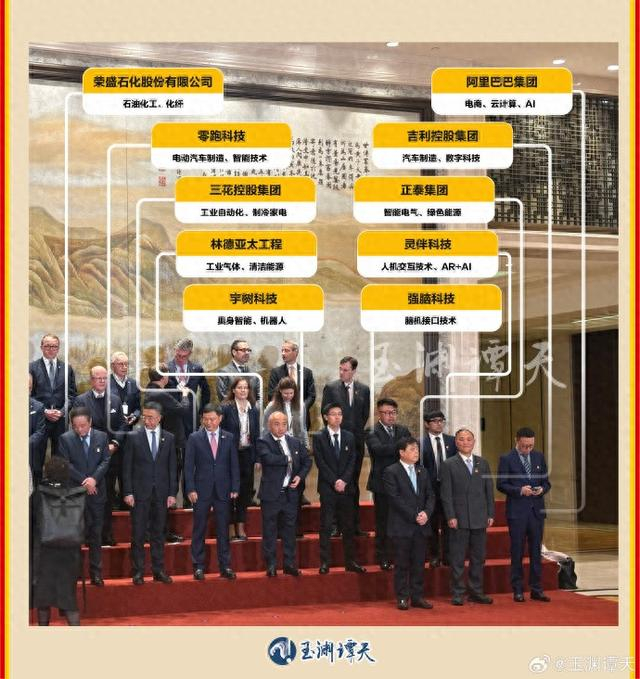
Group 1 - The meeting between German Chancellor Merz and local entrepreneurs in Hangzhou highlights the evolving landscape of Sino-German cooperation, showcasing a diverse range of industries from traditional manufacturing to internet technology and AI [1] - The list of participating Chinese companies includes notable names such as Zhejiang Chint Group, Geely Holding Group, Alibaba Group, and others, indicating a strong representation across various sectors [1] - This gathering reflects the trajectory of China's industrial exploration and suggests potential new directions for collaboration between China and Germany [1]




投资加速背景下,基于盈亏平衡框架的研究IDC企业信用特征研究
Lian He Zi Xin· 2026-02-26 11:53
Investment Rating - The report indicates a high investment rating for the IDC industry, driven by the explosive demand for AI computing power and accelerated investments in the sector [1][3]. Core Insights - The IDC industry is entering a high-growth phase characterized by a collaborative layout of "Eastern Core + Western Low Cost," with policies focusing on energy consumption and efficiency [1][3]. - The total computing power in China is projected to reach 280 EFLOPS by the end of 2024, with AI computing power accounting for over 30% [3][5]. - The report highlights a significant differentiation in credit levels among IDC companies, with top-tier firms exhibiting high utilization rates (above 60%) and low Power Usage Effectiveness (PUE) (below 1.3), indicating lower investment risks [1][37]. Industry Overview and Competitive Landscape - The IDC industry benefits from the explosive demand for AI computing power, with ongoing investments leading to a "quantity and quality" expansion phase [3][4]. - The competitive landscape includes telecom operators, third-party IDC providers, and cloud service providers, each leveraging their unique resources for differentiated competition [4][5]. - The market share distribution shows telecom operators holding approximately 40%, third-party IDC providers at 35%, and cloud service providers at 25% [4]. Investment Trends - IDC industry investments have been on the rise, with total investments from the three major telecom operators expected to reach approximately 85.9 billion yuan in 2024, a 25% increase year-on-year [5][6]. - Major cloud service providers like Alibaba and Tencent are projected to have capital expenditures exceeding 100 billion yuan in 2025, focusing on AI [5][6]. Policy Environment - The "East Data West Computing" initiative and stringent "dual carbon" targets have raised industry entry barriers, mandating a minimum overall utilization rate of 60% and an average PUE below 1.5 by the end of 2025 [7][8]. - The report emphasizes the importance of energy efficiency as a core competitive factor, with PUE becoming a hard constraint for project approvals [7][21]. Key Factors Influencing Profitability - The report identifies key variables affecting the breakeven point for IDC companies, including utilization rate, PUE, electricity prices, and depreciation policies [8][10]. - High utilization rates directly influence revenue and cost distribution, with a higher rate leading to lower unit costs and quicker attainment of breakeven [11][19]. - PUE is highlighted as a critical cost variable, with lower PUE values indicating higher energy efficiency and lower operational costs [21][23]. Industry Differentiation and Credit Characteristics - The report concludes that companies maintaining a utilization rate above 60% and a PUE below 1.3 exhibit strong operational stability and lower investment risks [37]. - Conversely, companies with low utilization rates and high PUE face significant risks of deteriorating profitability and potential debt defaults, warranting a cautious investment approach [37].
2月井喷!中国AI调用量首超美国 四款大模型霸榜全球前五 国产算力需求正经历指数级增长
Mei Ri Jing Ji Xin Wen· 2026-02-26 11:40
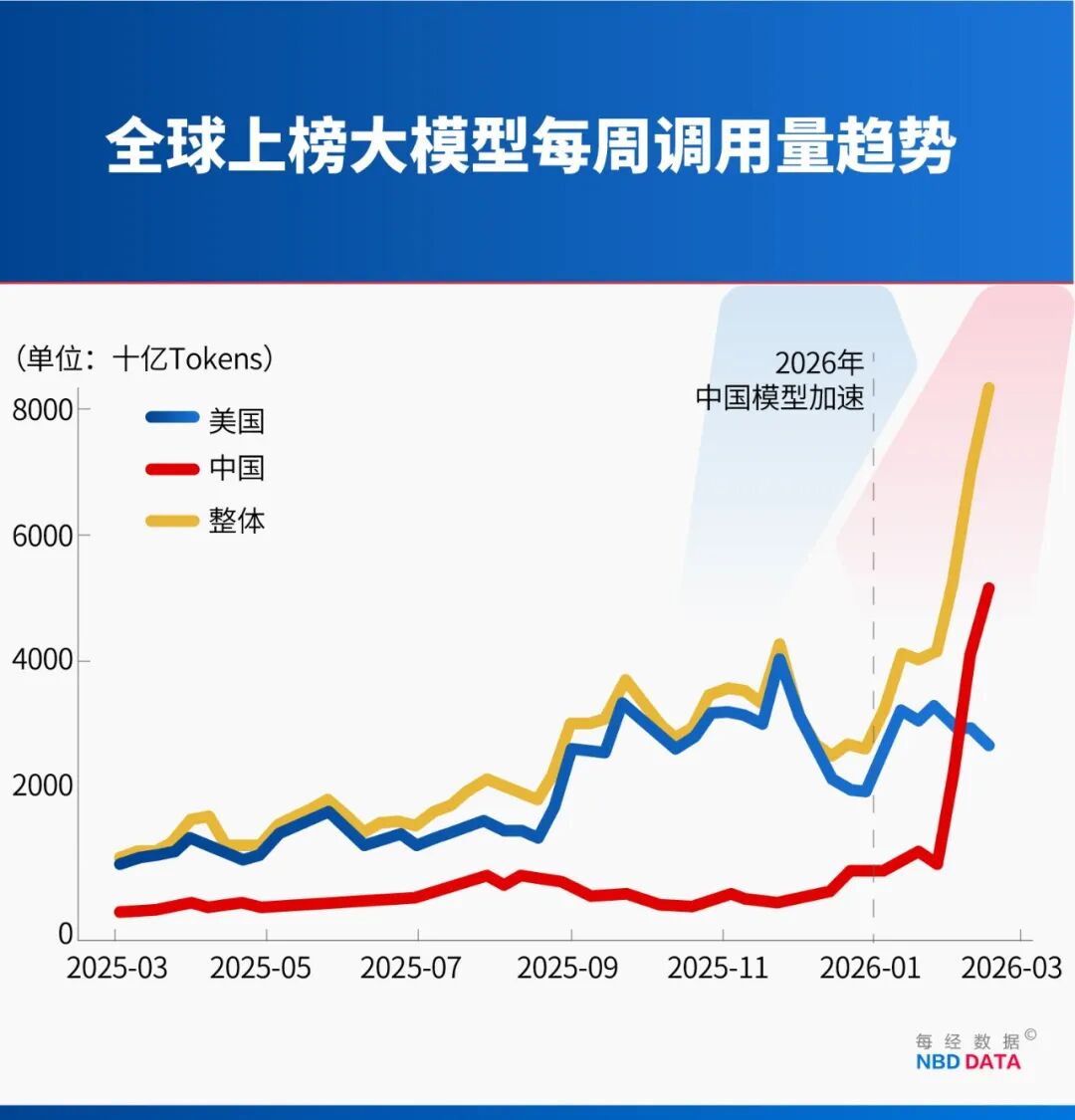
Core Insights - In February, China's AI model API call volume surged, surpassing that of the United States for the first time, with 41.2 trillion tokens compared to the U.S.'s 29.4 trillion tokens during the week of February 9-15 [1][7] - The following week, China's model call volume increased to 51.6 trillion tokens, marking a 127% growth over three weeks, while U.S. model calls dropped to 27 trillion tokens [1][7] - Four out of the top five models in global API call volume are from Chinese companies, indicating a collective rise of Chinese AI manufacturers rather than reliance on a single product [1][10] Token Call Volume Growth - The global model token call volume has experienced explosive growth, increasing from 12.4 trillion tokens in the week of March 3-9, 2025, to 139.5 trillion tokens by mid-February 2026, a tenfold increase in less than a year [6] - In early February 2026, China's model call volume reached 22.7 trillion tokens, signaling a strong competitive push against U.S. models [6][7] Leading Models and Their Performance - The top five models by call volume during the week of February 16-22, 2026, included four from Chinese manufacturers, contributing 85.7% of the total call volume [10] - MiniMax's M2.5 model, launched on February 13, 2026, quickly became the top model, contributing 14.4 trillion tokens to the total call volume of 32.1 trillion tokens during the week of February 9-15 [10] Cost Competitiveness - Chinese models are significantly cheaper than their U.S. counterparts, with MiniMax's M2.5 and Zhiyu's GLM-5 priced at $0.3 per million tokens for input, compared to $5 for Claude Opus 4.6, making Chinese models approximately 16.7 times cheaper [15][16] - For output, MiniMax's M2.5 costs $1.1 per million tokens, while Claude Opus 4.6 costs $25, representing a cost difference of about 22.7 times [16][17] Technological Innovations - The "Mixture-of-Experts" (MoE) architecture is a key factor in reducing inference costs for Chinese models, allowing for significant reductions in memory usage and increases in throughput [18] - Chinese AI companies are also pursuing vertical integration to optimize costs further, combining model algorithms, cloud infrastructure, and AI chips for better efficiency [19] Market Trends and Future Projections - The demand for tokens is expected to grow exponentially, with a projected compound annual growth rate of 330% from 2025 to 2030 in China [19] - The concept of "Token inflation" reflects a structural increase in token consumption per user, driven by deeper engagement with AI tools for complex tasks [20] - Future AI service pricing is anticipated to become highly customized and flexible, influenced by task complexity and resource consumption [22]
百度2025年总收入1291亿元 营收连续三个季度下滑
Xin Lang Cai Jing· 2026-02-26 11:28
人工智能热潮也推动百度云业务超越其他业务板块,并提升其半导体部门的发展前景。财报显示,百度 AI云持续增长,2025全年收入同比增长34%。AI原生营销服务方面,2025全年收入同比增长301%。整 理编辑/陈佳靖 2月26日,百度集团发布2025年全年业绩公告,公司2025年总收入为1291亿元,同比下降3%,主要由于 传统业务减少,部分被百度核心AI新业务增长抵消,AI业务营收达400亿元。归属百度的净利润为55.89 亿元,去年同期则为237.6亿元。 第四季度,百度营收下降4%,至327.4亿元,分析师平均预期为326.6亿元;AI业务收入占百度一般性业 务收入的43%,超出市场预期。 这是百度连续第三个季度营收下滑,凸显其核心广告业务和人工智能业务面临的挑战。百度正在经历从 一家以在线营销为核心的互联网公司向人工智能优先企业的艰难转型。该公司试图将人工智能嵌入其从 搜索到地图的各项服务中,这与Alphabet Inc.旗下的谷歌将Gemini模型整合到众多产品的努力如出一 辙。 "2025年是AI成为百度新核心的关键一年。AI云势头强劲,我们凭借差异化的全栈端到端AI能力赢得越 来越多的企业认可。我 ...

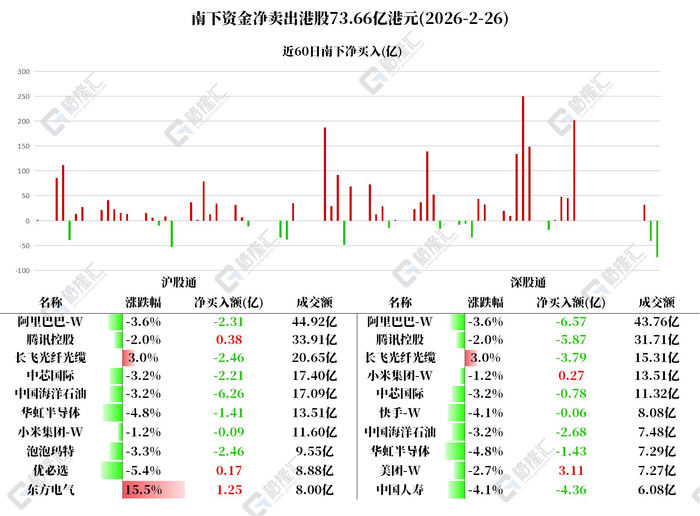
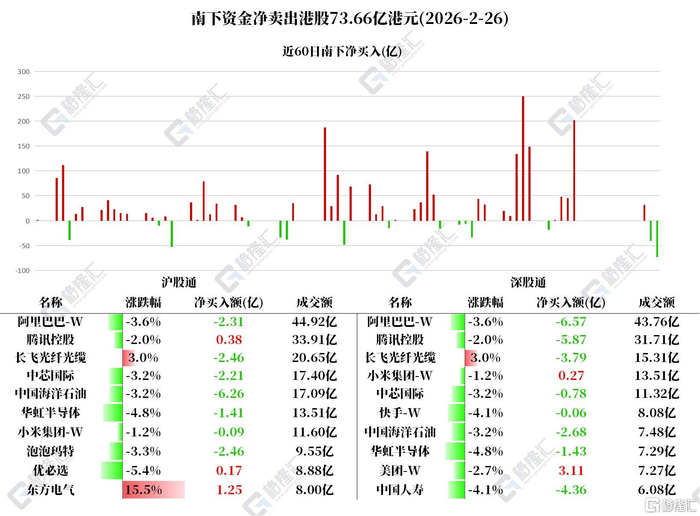
资金动向 | 北水抛售港股逾73亿港元,连续7日扫货美团
Ge Long Hui A P P· 2026-02-26 11:25
Group 1 - Southbound funds recorded a net sell of HKD 73.66 million in Hong Kong stocks today, marking the second consecutive day of net selling [1] - Notable net purchases included Meituan-W at HKD 311 million and Dongfang Electric at HKD 125 million, while significant net sales were observed in CNOOC at HKD 893 million and Alibaba-W at HKD 888 million [1] - Southbound funds have net bought Meituan for seven consecutive days, totaling HKD 3.61242 billion, and Xiaomi for five consecutive days, totaling HKD 3.22538 billion [3] Group 2 - Demand for optical fibers is surging due to AI requirements, with G.652.D optical fiber prices in China reaching a near seven-year high of HKD 35 per core kilometer, reflecting a 79% month-on-month increase and a 92% year-on-year increase as of January 2026 [4] - China plans to increase the production capacity of 7nm and 5nm chips from less than 20,000 wafers per month to approximately 100,000 by around 2028, with long-term goals to reach 500,000 wafers per month by 2030, primarily through SMIC [4] - Huahong Semiconductor is projected to achieve revenue of USD 660 million in Q4 2025, representing a year-on-year growth of 22.4%, driven by ASP improvements and cost reduction efforts [4]

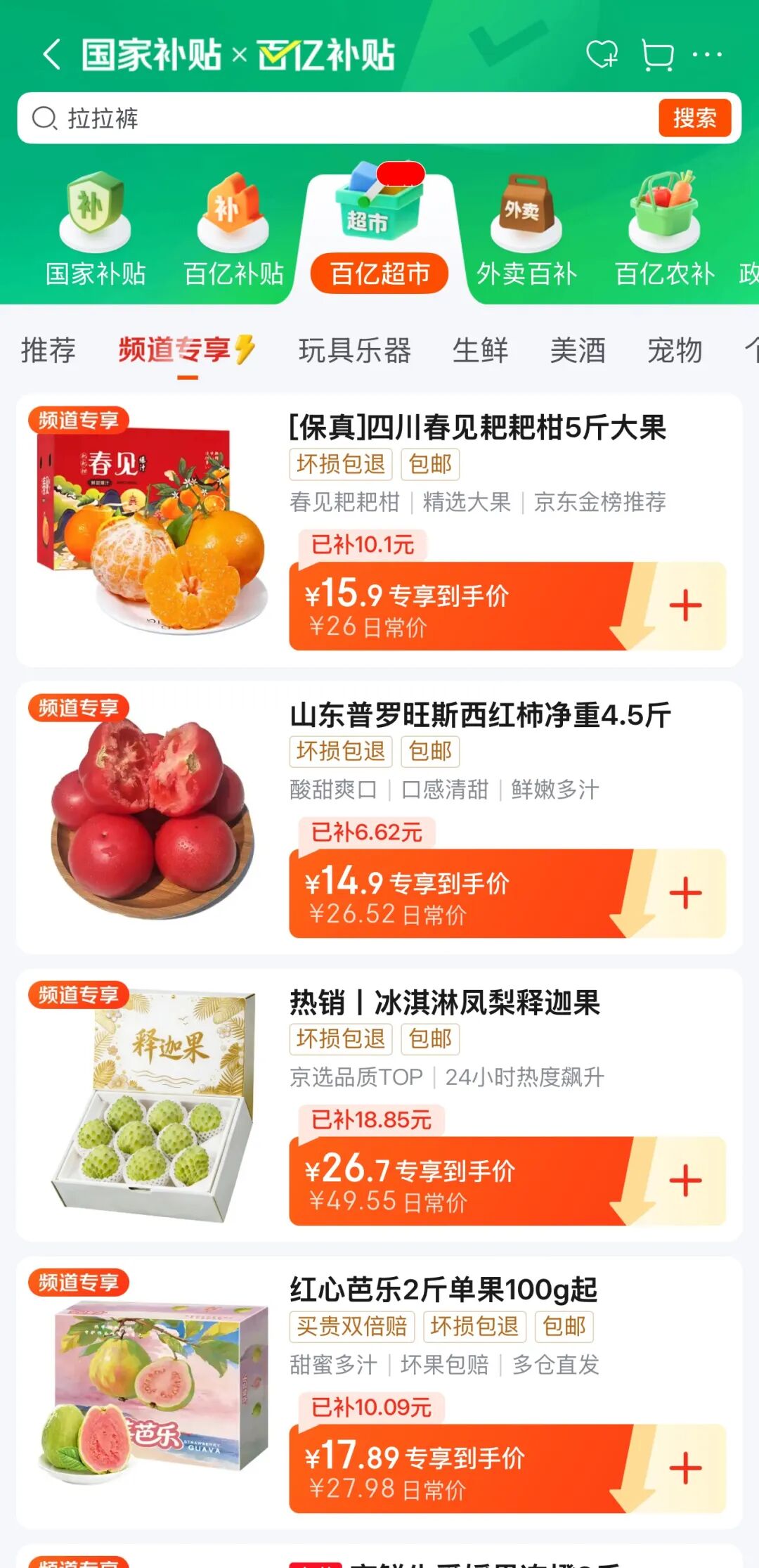
200亿补贴!京东正式上线“百亿超市”频道
Guo Ji Jin Rong Bao· 2026-02-26 11:23
Core Insights - JD.com has launched a new "Billion Supermarket" channel on its app, increasing its investment in subsidies for supermarket categories, with plans to invest over 20 billion yuan in the next three years to boost sales by 200 billion yuan for partner brands [1][4] - The "Billion Supermarket" will cover a wide range of daily consumer goods, including snacks, fresh produce, beverages, and personal care items, and aims to surpass subsidies for electronics, making it the largest category in JD's subsidy system [1] Group 1 - The focus of the "Billion Supermarket" is on two key categories: fresh produce and fast-moving consumer goods (FMCG), which are considered strategic due to their high-frequency consumption patterns [4] - High-frequency consumption in these categories is expected to enhance user engagement and repurchase rates, which are critical for the long-term development of e-commerce platforms [4] - Other platforms like Alibaba's Hema and Pinduoduo are also targeting the supermarket sector with similar strategies to increase user stickiness and repurchase rates [4] Group 2 - The concept of "Billion Supermarket" is not entirely new, as Pinduoduo has also been testing a similar feature within its app, focusing on limited-time offers and low-price subsidies for essential categories [5] - Both JD.com and Pinduoduo have embedded their "Billion Supermarket" features within their existing subsidy sections, making them less visible to users [5]

量子位;2025年度AI十大趋势报告
Sou Hu Cai Jing· 2026-02-26 11:08
Group 1: Core Trends in AI Development - The report outlines ten key trends in AI development for 2025, categorized into four dimensions: infrastructure, model evolution, application landscape, and China's development [1][7]. - AI infrastructure is characterized by the rapid growth of computing power and chip innovation, with a strategic focus on building large-scale data centers and transitioning chips towards AI-native designs [1][9]. Group 2: Infrastructure Trends - The demand for computing power is skyrocketing, leading to a surge in the construction of large-scale data centers, which are evolving into integrated powerhouses for computation, storage, and networking [17][19]. - Countries are elevating computing power infrastructure to a strategic level, with China planning a national integrated computing network to optimize resources and support digital transformation across industries [19][20]. Group 3: Model Evolution - Innovations in model architecture, such as the Mixture of Experts (MoE) and linear/sparse attention mechanisms, are addressing efficiency bottlenecks in large models, allowing for better performance without significantly increasing computational costs [29][33]. - The trend towards model distillation is gaining traction, enabling smaller models to replicate the capabilities of larger models, which is crucial for deploying AI on edge devices with limited computational resources [38]. Group 4: Application Landscape - The emergence of the Agentic Internet is reshaping user interaction, with AI agents capable of closing the loop from perception to execution, thus lowering development barriers and enabling multi-scenario applications [2][9]. - Multi-modal applications are becoming essential, with advancements in video, 3D, and code generation technologies driving productivity across various industries [2][9]. Group 5: China's Unique Opportunities - China is seizing unique opportunities in the global AI landscape, with a focus on developing core technologies and enhancing the influence of domestic open-source models [3][9]. - The country is accelerating the domestic replacement of AI chips and software, achieving significant milestones in training large models with domestic technologies, thus ensuring a self-sufficient AI ecosystem [25][27].
德国总理默茨访华,会见了哪些中方企业?中德经贸合作一览
2 1 Shi Ji Jing Ji Bao Dao· 2026-02-26 11:07
2月25日至26日,德国总理默茨对中国进行正式访问,这是他就任以来首次访华。此次约30位来自汽 车、化工、生物制药、机械制造、循环经济等德国优势领域的头部企业高管随同默茨总理访华。 默茨26日下午在浙江杭州率团参访宇树科技。根据行程安排,默茨一行还将参访在华德企。 外交部发言人毛宁表示,访问期间,中德两国总理共同见证签署绿色转型、海关、体育、媒体等领域合 作文件,还出席了中德经济顾问委员会座谈会,60多位中德企业家参加。德国企业纷纷表示看好中国经 济发展前景,愿进一步扩大对华投资,共享中国式现代化发展机遇。 商务部新闻发言人何咏前表示,中德双方在经贸领域开展了深入交流,取得了积极务实成果。访问期 间,中德双方企业还达成了十余项商业协议,涉及汽车、机械、能源、物流、金融等行业。 据玉渊谭天,2月26日,德国总理默茨与随行代表团在浙江杭州与当地企业家共进午餐。席前的一张合 影,透露出不少信息,参与合影的10家中方企业分别是:正泰集团、吉利控股集团、阿里巴巴集团、荣 盛石化股份有限公司、三花控股集团、零跑科技、林德亚太工程、宇树科技、强脑科技、灵伴科技。从 传统制造到互联网科技,从新能源汽车到AI前沿——这份名单, ...

智通港股通活跃成交|2月26日
智通财经网· 2026-02-26 11:01
Core Insights - On February 26, 2026, Alibaba-W (09988), Tencent Holdings (00700), and Yangtze Optical Fibre and Cable (06869) were the top three companies by trading volume in the Southbound Stock Connect, with trading amounts of 4.492 billion, 3.391 billion, and 2.065 billion respectively [1] - The same companies also led in trading volume in the Shenzhen-Hong Kong Stock Connect, with trading amounts of 4.376 billion, 3.171 billion, and 1.531 billion respectively [1] Southbound Stock Connect Trading Activity - **Top Active Companies**: - Alibaba-W (09988): Trading amount of 4.492 billion, net buy of -0.231 billion [2] - Tencent Holdings (00700): Trading amount of 3.391 billion, net buy of +37.9726 million [2] - Yangtze Optical Fibre and Cable (06869): Trading amount of 2.065 billion, net buy of -0.246 billion [2] - SMIC (00981): Trading amount of 1.740 billion, net buy of -0.221 billion [2] - CNOOC (00883): Trading amount of 1.709 billion, net buy of -0.626 billion [2] Shenzhen-Hong Kong Stock Connect Trading Activity - **Top Active Companies**: - Alibaba-W (09988): Trading amount of 4.376 billion, net buy of -0.657 billion [2] - Tencent Holdings (00700): Trading amount of 3.171 billion, net buy of -0.587 billion [2] - Yangtze Optical Fibre and Cable (06869): Trading amount of 1.531 billion, net buy of -0.379 billion [2] - Xiaomi Group-W (01810): Trading amount of 1.351 billion, net buy of +27.0028 million [2] - Kuaishou-W (01024): Trading amount of 0.808 billion, net buy of -0.06332 billion [2]

图解丨南下资金连续第2日净卖出港股,抛中海油、阿里




Ge Long Hui A P P· 2026-02-26 10:29
净卖出中国海洋石油8.93亿、阿里巴巴-W 8.88亿、长飞光纤光缆6.24亿、腾讯控股5.48亿、中国人寿 4.36亿、中芯国际2.98亿、华虹半导体2.84亿、泡泡玛特2.45亿。 据统计,南下资金已连续7日净买入美团,共计36.1242亿港元;连续5日净买入小米,共计32.2538亿港 元;连续4日净卖出中海油,共计12.2479亿港元。 格隆汇2月26日|南下资金今日净卖出港股73.66亿港元,为连续第2日净卖出。其中: 净买入美团-W 3.11亿、东方电气1.25亿; ...