
诺诚健华

Search documents
超百亿美元大单却带不动股价 创新药BD催化剂失灵?
Di Yi Cai Jing· 2025-10-29 10:05
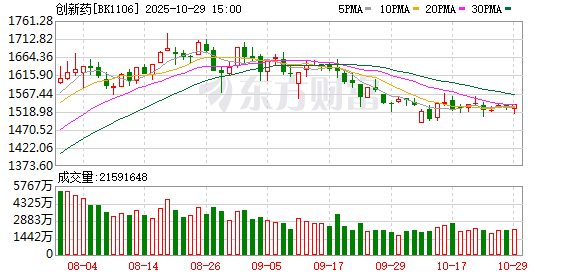
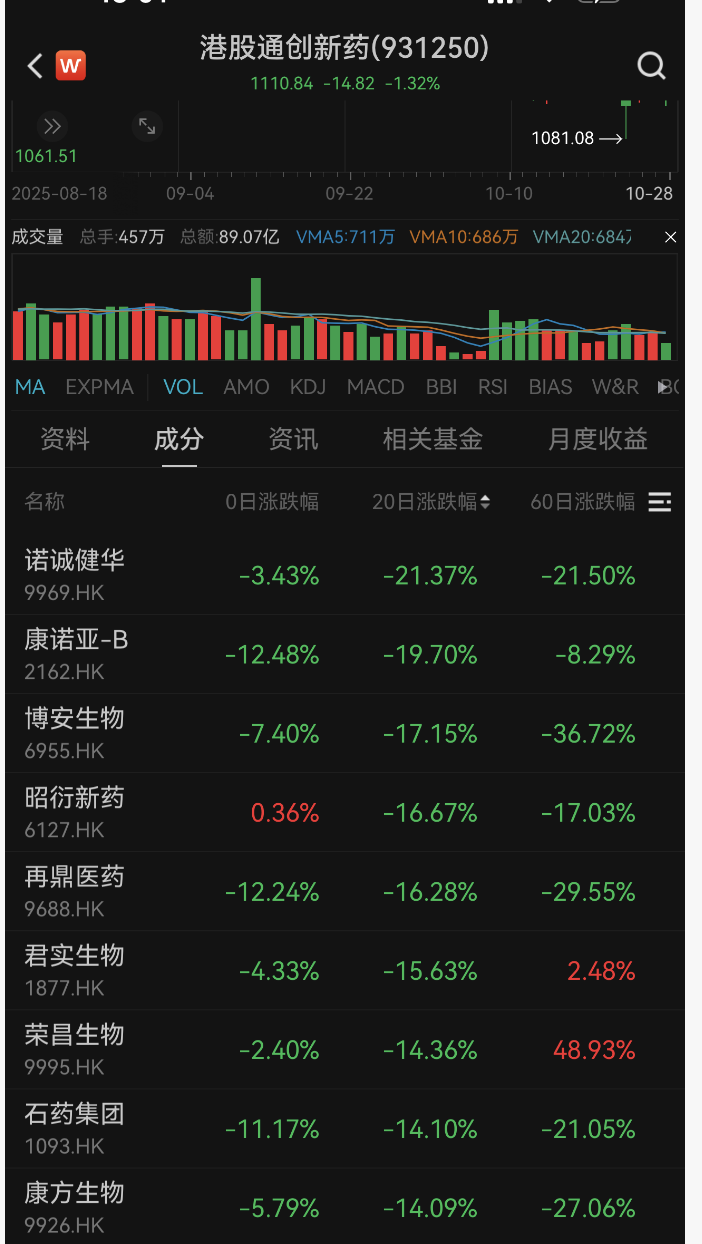
Core Viewpoint - Despite significant business development (BD) agreements exceeding $10 billion, the stock prices of innovative pharmaceutical companies remain sluggish, indicating a disconnect between positive news and market performance [2][3]. Market Performance - The Hong Kong Stock Connect innovative drug index has declined from over 1240 points on October 9 to 1110 points, reflecting a drop of approximately 10.5% [3]. - Over the past month, the innovative drug sector has seen a 16% decline from a peak of 1326 points on September 8 [3][4]. - Notable declines in stock prices include over 21% for Innovent Biologics and over 19% for CanSino Biologics in the last 20 trading days [3]. Business Development Agreements - Recent BD agreements include a $11.4 billion collaboration between Innovent Biologics and Takeda Pharmaceuticals, which failed to boost market confidence, with Innovent's stock dropping by 1.96% on the announcement day [3][4]. - The trend of BD agreements previously led to significant stock price increases, with 17 innovative drug companies reaching new highs between July and September [4]. Financial Performance - Most innovative drug companies have reported revenue growth, but profitability remains a concern, with only four out of eleven companies showing positive net profits [6][10]. - For instance, CanSino Biologics reported a staggering 812.1% increase in revenue, while others like BeiGene and Innovent also showed substantial growth [7][8]. Industry Dynamics - The innovative drug sector is characterized by high failure rates, with nearly half of the companies that went public on NASDAQ between 2004 and 2018 no longer in operation [10]. - The long-term nature and uncertainty of BD projects contribute to market hesitance, as evidenced by a 40% termination rate of license-out agreements [10]. Future Outlook - Analysts suggest that the recent stock price adjustments may be a correction from overly optimistic BD expectations, with a potential for recovery as new catalysts emerge [12][13]. - The competitive advantage of domestic assets being "value for money" is highlighted, with ongoing BD transactions expected to continue despite market fluctuations [13].

超百亿美元大单却带不动股价,创新药BD催化剂失灵?
Di Yi Cai Jing· 2025-10-29 10:00
Core Viewpoint - Despite significant business development (BD) agreements exceeding $10 billion, the stock prices of innovative pharmaceutical companies remain sluggish, indicating a disconnect between market expectations and actual performance [1][2]. Group 1: Market Performance - The Hong Kong Stock Connect innovative drug index has declined from over 1240 points on October 9 to 1110 points, reflecting a drop of approximately 10.5% [1][2]. - Notable companies like 信达生物 (Innovent Biologics) have seen their stock prices fall despite announcing major collaborations, with 信达生物's stock dropping 1.96% to 85.2 HKD per share on October 22 [2]. - Over the past month, the innovative drug sector has experienced a 16% decline from a peak of 1326 points on September 8, with several companies like 诺诚健华 (Nocera) and 康诺亚-B (CanSino) seeing stock drops exceeding 19% [2][4]. Group 2: Financial Performance - Many innovative drug companies have reported revenue growth, yet profitability remains a concern, with only four out of the listed companies achieving positive net profits [6][7]. - 康诺亚-B reported a staggering 812.1% year-on-year revenue increase, while other companies like 诺诚健华 and 信达生物 also showed significant revenue growth of over 40% [6][7]. Group 3: Industry Dynamics - The innovative drug sector is characterized by high competition and a high rate of project failure, with a significant percentage of BD agreements facing termination [8]. - The long-term outlook for the Chinese innovative drug industry remains positive, driven by an increase in BD transactions, although the market is becoming increasingly competitive [8][9]. - Analysts suggest that the recent stock price adjustments may be a result of previously overly optimistic expectations regarding BD agreements, and the market may be entering a phase of stabilization [10].
牛市氛围暴增!ETF资金两头押注
Sou Hu Cai Jing· 2025-10-29 07:23
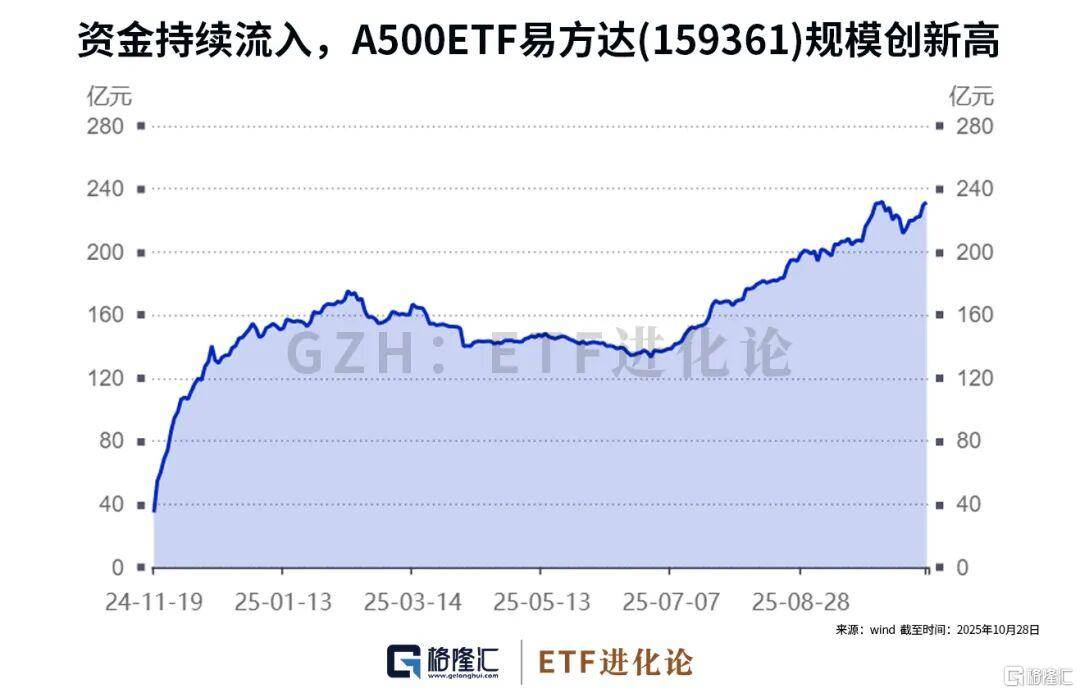
Group 1 - The Shanghai Composite Index has surpassed the 4000-point mark for the first time in ten years, with a year-to-date increase of 19.8%, indicating a significant bullish market sentiment [1] - The domestic ETF market has reached a scale of 5.72 trillion yuan, reflecting its growing influence on the market [2] - Investors are increasingly seeking balance between stable and growth-oriented assets, with funds flowing into both the A500 index and the Hang Seng Innovation Drug sector [2][20] Group 2 - The A500 ETF has seen a net inflow of over 5.6 billion yuan since the second half of the year, making it the largest ETF in the Shenzhen market [3] - The A500 index covers 500 stocks with large market capitalization and good liquidity across all major industries, achieving nearly full coverage of the A-share market [5] - The A500 index has a year-to-date return of 22.8%, outperforming the Shanghai Composite Index's 19.2% increase [6] Group 3 - The current valuation of the A500 index is 17 times earnings, which is lower than the S&P 500's 30 times earnings, while its dividend yield of 2.33% is higher than that of the S&P 500 [10][11] - The Hang Seng Innovation Drug sector has attracted over 1.2 billion yuan in net inflows since October, despite recent adjustments in the market [13] - The fourth quarter is expected to bring multiple catalysts for the innovation drug sector, including significant academic conferences and a busy period for business development transactions [16] Group 4 - The A500 index represents a balanced investment approach, while the Hang Seng Innovation Drug sector offers high-growth potential, indicating a dual-path investment strategy [20][21] - Both the A500 and the innovation drug sector reflect a positive outlook on Chinese assets, showcasing the diversity of investment opportunities [22][24]
多家生物医药企业三季报业绩亮眼,港股创新药精选ETF(520690)午后震荡拉升
Xin Lang Cai Jing· 2025-10-29 05:38
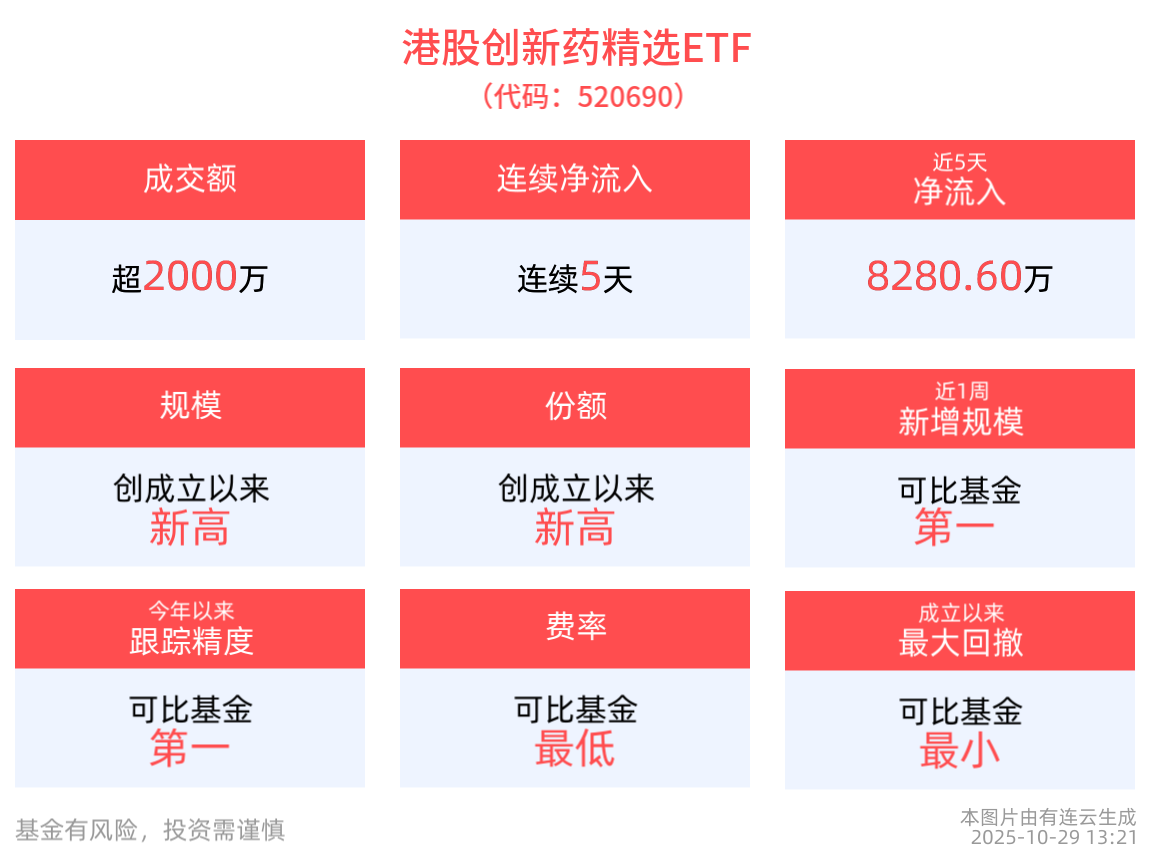
Group 1: Market Performance - The Hong Kong Innovative Drug Selected ETF (520690) increased by 0.22%, with the latest price at 0.89 yuan as of October 29, 2025 [3] - The ETF recorded a turnover of 4.25% during the trading session, with a total transaction value of 21.78 million yuan [3] - Over the past year, the average daily transaction volume of the ETF was 120 million yuan [3] Group 2: Clinical Data and Industry Insights - Grail presented initial data from its multi-cancer early detection product Galleri at the 2025 ESMO annual meeting, showing a positive predictive value of 61.6% and a specificity of 99.6% [3] - Among the detected new cancers, 69.3% were in stages I-III, with a tissue origin accuracy of 91.7% [3] - Guosen Securities views this data as a significant milestone in the multi-cancer early detection field, suggesting Galleri could enhance existing screening systems [3] Group 3: Company Earnings and Trends - Over 280 pharmaceutical and biotech companies, including Heng Rui Pharmaceutical and WuXi AppTec, reported strong Q3 results, driven by advancements in R&D pipelines and new drug launches [3] - The overall industry is exhibiting a positive trend characterized by "innovation as a foundation and overseas expansion" [3] Group 4: CDMO Sector Performance - Lonza, a leading overseas CDMO, reported strong Q3 results, maintaining a revenue growth forecast of 20-21% for the year, with core EBITDA margins between 30-31% [4] - Medpace has seen consecutive growth in new orders for two quarters, indicating a recovering financing environment for U.S. small and mid-sized biotech firms [4] - WuXi AppTec exceeded Q3 performance expectations and raised its full-year guidance, further confirming the positive outlook for the CXO industry [4] Group 5: ETF Size and Inflows - The latest size of the Hong Kong Innovative Drug Selected ETF reached 512 million yuan, marking a new high since its inception [4] - The ETF's share count also hit a record high of 574 million shares [4] - In the past five days, the ETF experienced continuous net inflows, with a peak single-day net inflow of 31.48 million yuan, totaling 82.81 million yuan in net inflows [4]


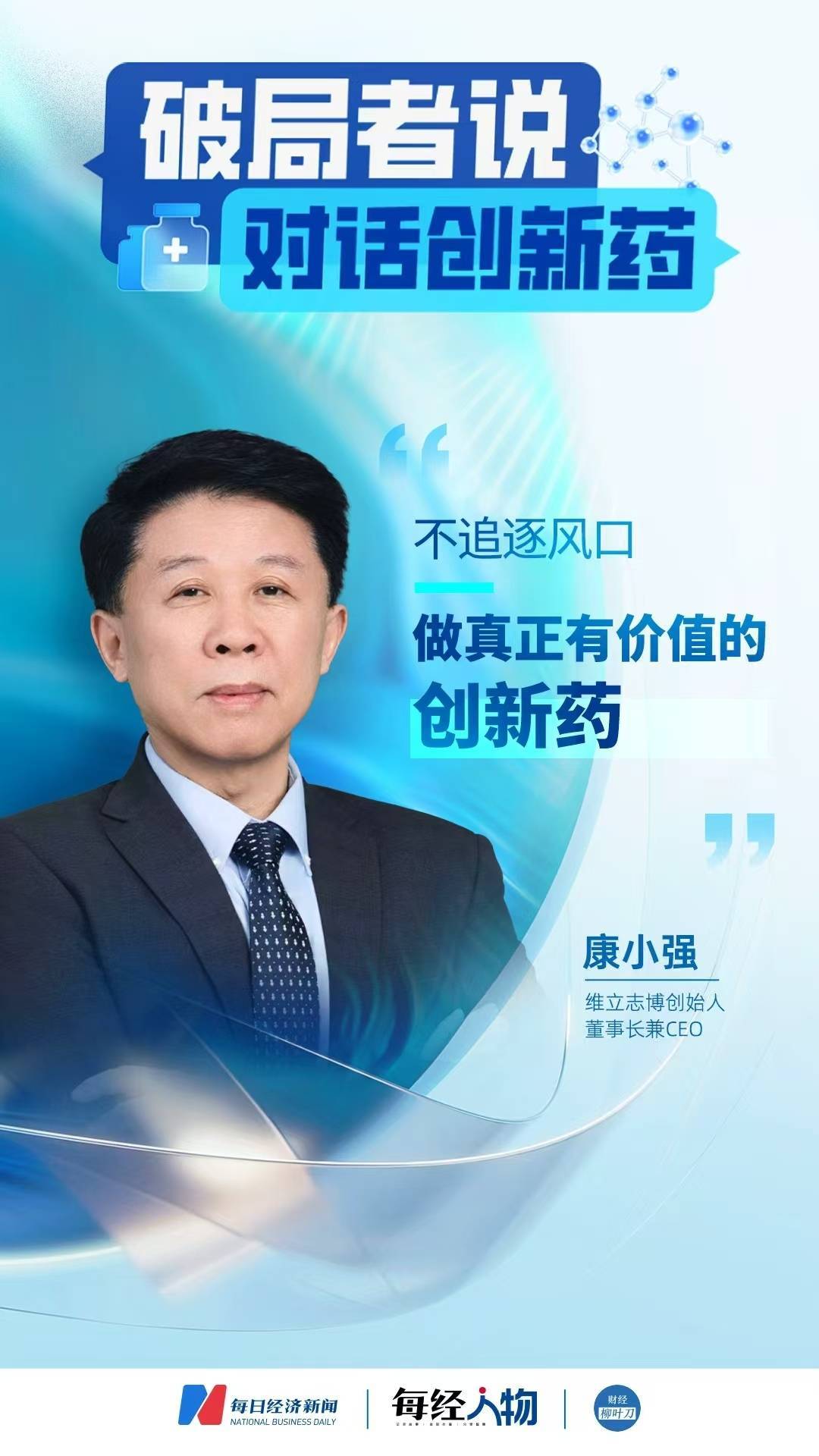
港股创新药的调整期真的来了?对话维立志博董事长康小强:不会把注意力集中在“追风”上
Sou Hu Cai Jing· 2025-10-28 13:20
Core Viewpoint - The company, Weili Zhibo, has successfully positioned itself in the T-cell engager (TCE) segment of the biotech industry, which is less mainstream compared to antibody-drug conjugates (ADC), and aims to create real value in innovative drugs rather than chasing trends [5][6][7]. Company Overview - Weili Zhibo completed its IPO on July 25, 2023, becoming the first TCE-focused company listed in China, with significant market interest reflected in a subscription rate of 3494.8 times for retail investors and 40.8 times for institutional investors [5][6]. - The company has a pipeline of six innovative drug candidates, with the closest to market being LBL-024, targeting advanced neuroendocrine carcinoma, expected to submit for approval in Q3 2026 [10][12]. Market Positioning - The TCE technology is gaining traction in the immunotherapy space, particularly for blood cancers, but remains less recognized than ADCs. The company believes that TCEs and ADCs serve different purposes and can coexist in the market [7][8]. - The first TCE drug to surpass $1 billion in sales is Amgen's Blincyto, which highlights the potential of this segment despite the challenges faced by other companies in the field [8]. Clinical Development - Weili Zhibo's LBL-034 has shown promising clinical trial results, achieving a 90% objective response rate in patients with relapsed/refractory multiple myeloma, outperforming the only approved competitor [9][10]. - The company plans to expand its focus from niche indications like neuroendocrine carcinoma to larger cancer types, including small cell lung cancer and non-small cell lung cancer, to create a broad-spectrum oncology portfolio [12][14]. Financial Strategy - The company currently has approximately 2 billion RMB in funds, sufficient to support its R&D plans for the next 4 to 5 years without immediate need for additional financing [16][17]. - Weili Zhibo has engaged in a global licensing agreement with Dianthus Therapeutics, which could yield up to $38 million in upfront payments and over $1 billion in total deal value, indicating a strategic focus on business development [16]. Industry Outlook - The innovative drug market is experiencing a shift towards rational investment, with companies focusing on clinical data and development pipelines rather than speculative trends [6][18]. - The domestic market for innovative drugs in China is expected to grow significantly over the next decade, providing a supportive environment for companies like Weili Zhibo, even amid international challenges [17].
百亿基金经理,调仓新动向
Zhong Guo Zheng Quan Bao· 2025-10-28 08:40
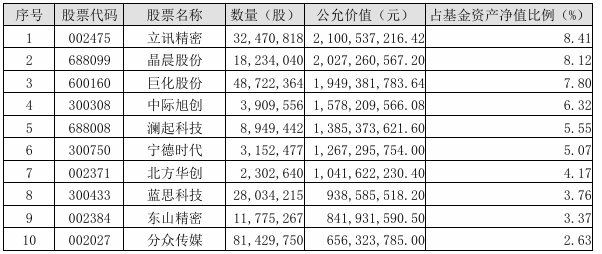
Core Insights - In the third quarter, several billion-dollar fund managers achieved significant performance increases, with returns exceeding 50% for some products and over 40% for others [1][2] - The successful funds capitalized on opportunities in sectors such as computing power, chips, robotics, and consumer electronics, while also increasing positions in innovative pharmaceuticals, non-ferrous metals, and new consumption [1][2] Fund Performance - Notable funds like Ruiyuan Growth Value A and Xinguang He Run A saw returns over 50% and 30% respectively, while others like Yongying Ruixin A and Huashang Runfeng A also performed well [1][2] - Specific stocks such as Industrial Fulian and Zhongji Xuchuang saw price increases of over 200% and 170% respectively, with continued upward trends into October [2] Stock Adjustments - Some funds reduced their holdings in stocks that had seen significant price increases, such as Xinyi Sheng and Shenghong Technology, indicating a strategy of profit-taking [3] - The funds also made new purchases in companies like Industrial Fulian and Zhongji Xuchuang, reflecting a focus on high-growth potential stocks [2][3] Market Outlook - Fund managers believe that most sectors are at historical high valuations, suggesting a shift from broad market rallies to selective stock picking based on fundamentals [4] - The interaction between basic economic conditions and liquidity is expected to drive long-term market trends, with a focus on sectors like technology and high-end manufacturing [4][5] Sector Focus - Key sectors identified for future growth include semiconductors, consumer electronics, medical services, non-ferrous metals, and photovoltaics, with a strong outlook for artificial intelligence [5] - The pharmaceutical sector is also highlighted, with a focus on companies with first-in-class and best-in-class potential [5] Hong Kong Market Insights - The Hong Kong market underperformed in the third quarter due to macroeconomic factors and increased competition in sectors like e-commerce and electric vehicles [6] - However, the "anti-involution" policies are expected to alleviate some pressures, providing potential opportunities for investment in core companies with strong growth logic [6]


谢治宇三季度最新持仓披露!大幅加仓AI算力 中际旭创新进前十大重仓股
Zhi Tong Cai Jing· 2025-10-28 08:27
Core Insights - The fund managed by renowned fund manager Xie Zhiyu has made significant adjustments in its third-quarter report, indicating a strong focus on AI computing power sectors [1][3] - The fund has increased its positions in leading companies such as Zhongji Xuchuang, Lanke Technology, Beifang Huachuang, and Dongshan Precision, which are key players in optical modules, high-speed interconnect chips, semiconductor equipment, and PCBs [1][3] - Conversely, companies like Haida Group, Perfect World, and Pengding Holdings have been removed from the top ten holdings, suggesting a strategic shift in investment focus [1] Fund Performance - The XQ He Run Mixed A fund rose by 36.16% in Q3, significantly outperforming the benchmark return of 13.84% [2] - Year-to-date, the fund has increased by 39.63%, ranking in the top 35% among 4,503 similar products [2] - The fund's total assets increased by 3.127 billion yuan, reaching 24.982 billion yuan, with a stock position ratio of 90.28% as of the end of Q3 [3] Investment Strategy - The XQ He Yi fund also saw a rise of 30.89% in A shares and 30.69% in C shares during Q3, with a total asset growth of 2.7 billion yuan, reaching 18.679 billion yuan [5] - The fund's stock position ratio stood at 91.21% at the end of Q3, indicating a strong commitment to equity investments [5] - Xie Zhiyu noted that the rapid growth in AI sectors has led to market volatility, with concerns about the sustainability of demand growth amid changing macroeconomic conditions [5][6] Market Trends - The overseas computing power sector, particularly in optical modules and PCBs, remains a key driver of market growth, despite investor concerns about the long-term sustainability of demand [5] - The Chinese market has shown resilience due to strong fundamentals in technology and high-end manufacturing, with breakthroughs in domestic computing power boosting semiconductor equipment shipments [6] - The Hong Kong market has underperformed in Q3, influenced by fluctuations in the Hong Kong dollar and increased competition in sectors like e-commerce and new energy vehicles [6]


股价暴涨33%!Zenas宣布CD19抗体Obexelimab临床II期大获成功 诺诚健华持股市值大增
美股IPO· 2025-10-28 00:25
Core Viewpoint - Zenas BioPharma's Obexelimab has shown significant efficacy in treating relapsing multiple sclerosis (RMS) in the Phase 2 MoonStone trial, achieving a 95% reduction in new gadolinium-enhanced (GdE) T1 lesions compared to placebo, indicating a strong potential for this therapy in autoimmune diseases [1][3][9]. Group 1: Clinical Trial Results - The MoonStone trial demonstrated a statistically significant primary endpoint, with Obexelimab reducing the accumulation of new GdE T1 lesions by 95% (p=0.0009) compared to placebo [1][3]. - In the Obexelimab treatment group, near-complete suppression of new GdE T1 lesions was observed at 8 weeks, which continued to 12 weeks [3][12]. - The average number of new GdE T1 lesions in the Obexelimab group was 0.01, while the placebo group had 0.23, highlighting the treatment's effectiveness [9]. Group 2: Mechanism and Development - Obexelimab is a bifunctional antibody targeting CD19 and FcγRIIb, designed to inhibit B cell activity without causing B cell depletion, making it a promising candidate for various autoimmune diseases [3][4]. - The drug's unique mechanism, combined with its subcutaneous self-administration and tolerability, positions it as a potential option for addressing B cell-mediated pathologies in autoimmune diseases [16]. Group 3: Future Milestones and Collaborations - Zenas BioPharma is expected to report 24-week data from the MoonStone trial in Q1 2026, which will include additional secondary and exploratory endpoints [16]. - The company anticipates announcing the final results of the Phase 3 INDIGO trial for IgG4-related disease by the end of 2025 and the Phase 2 SunStone trial for systemic lupus erythematosus (SLE) in mid-2026 [16]. - Zenas has entered a collaboration agreement with Bristol Myers Squibb for Obexelimab's rights in several Asia-Pacific regions, enhancing its market reach [5][17].
首批增量科创成长层公司今日上市
Shang Hai Zheng Quan Bao· 2025-10-27 20:50
Core Insights - The article discusses the emergence of three companies, He Yuan Bio, Xi'an Yicai, and Bibet, as leaders in the newly established Sci-Tech Growth Tier, despite all being unprofitable firms. These companies have demonstrated strong capabilities in "hard technology" [1][3] Group 1: Company Highlights - Xi'an Yicai is a rising star in the semiconductor industry, ranking as the top domestic and sixth globally in 12-inch silicon wafer production, with a projected monthly shipment volume and capacity accounting for approximately 6% and 7% of the global market, respectively [1] - He Yuan Bio has developed a globally pioneering "rice-derived blood" technology, with its recombinant human albumin injection approved for market in July, addressing the long-standing reliance on imported human serum albumin in China [2] - Bibet focuses on innovative drug development for major diseases, with its first-class innovative drug BEBT-908 approved for market in June, targeting relapsed or refractory diffuse large B-cell lymphoma patients [2] Group 2: Industry Trends - The introduction of the "1+6" policy by the China Securities Regulatory Commission has led to the establishment of the Sci-Tech Growth Tier, which includes 32 unprofitable listed companies primarily in strategic emerging industries such as new-generation information technology and biomedicine [3] - These 32 companies have collectively invested 30.6 billion yuan in R&D, with a median R&D expenditure to revenue ratio of 65.4%, indicating a strong commitment to innovation [3] - The growth of innovative drug companies in the Sci-Tech Growth Tier has resulted in the launch of 20 new national class 1 drugs, showcasing significant potential for development and commercialization [3] Group 3: Market Opportunities - Several innovative drug companies have successfully executed overseas licensing agreements, with potential transaction values totaling nearly 5 billion USD, indicating a robust international market presence [4] - In the semiconductor sector, companies like ChipLink Integrated have become major players in the automotive-grade IGBT market, while firms like Cambricon are enhancing AI computing capabilities [5] - The growth of the Sci-Tech Growth Tier reflects the quality of growth among hard technology enterprises and the capacity of the reform "testbed" [5]
首批增量科创成长层公司今日上市 科创板包容性集聚“硬科技”动能
Shang Hai Zheng Quan Bao· 2025-10-27 20:32
Core Points - Three companies, He Yuan Bio, Xi'an Yicai, and Bibete, will be listed on the Shanghai Stock Exchange, marking the first batch of companies in the newly established Sci-Tech Innovation Board Growth Layer [1] - The total number of companies in the Sci-Tech Innovation Board will reach 592, with the Growth Layer companies totaling 35 [1] - The introduction of the "1+6" policy by the China Securities Regulatory Commission aims to deepen reforms in the Sci-Tech Innovation Board, highlighting its support for hard technology enterprises [1][4] Company Summaries - Xi'an Yicai is a leading player in the 12-inch silicon wafer market, ranking first in China and sixth globally, with a market share of approximately 6% in monthly shipments and 7% in production capacity [2] - He Yuan Bio has developed a globally innovative "rice-derived blood" technology, with its recombinant human albumin injection approved for market, addressing the long-standing reliance on imported human serum albumin in China [3] - Bibete focuses on innovative drug development for major diseases, with its product BEBT-908 recently approved for treating relapsed or refractory diffuse large B-cell lymphoma [3] Industry Insights - The Sci-Tech Innovation Board Growth Layer has attracted 32 existing unprofitable companies, primarily in strategic emerging industries such as new-generation information technology and biomedicine [4] - These companies have shown strong innovation potential, with a combined R&D investment of 30.6 billion yuan in 2024, representing a median R&D investment ratio of 65.4% of their revenue [4] - The Growth Layer has seen 13 innovative drug companies successfully launch 20 new drugs, demonstrating significant development potential and the ability to achieve breakthrough therapy designations [5] Market Trends - Several innovative drug companies are accelerating their transition from R&D to commercialization, with potential transaction values nearing 5 billion USD from various licensing agreements [5] - In the semiconductor sector, companies like Xinlian Integrated Circuits have become major players, supplying over 90% of domestic new energy vehicle manufacturers [6] - The Growth Layer's expansion reflects the quality of growth among hard technology enterprises and the capacity of the reform "testbed" [6]