
新城控股

Search documents
2025W45房地产周报:香港楼市回暖背后,哪些因素在起作用?-20251110
NORTHEAST SECURITIES· 2025-11-10 03:17
Investment Rating - The report maintains an "Outperform" rating for the real estate industry [6] Core Insights - The Hong Kong real estate market is showing signs of recovery, driven by a combination of policy changes and improved financial conditions [16][20] - The necessary conditions for stabilization in the Hong Kong market include the full withdrawal of restrictive measures by February 2024 and a decrease in transaction costs, which has been observed after 15 months of market adjustment [20] - The sufficient conditions for recovery involve a significant drop in mortgage rates, with the 1-month HIBOR falling from 3.98% to 0.57%, leading to mortgage rates around 2% [24] - The expectation of improved market conditions is supported by the "rent-to-mortgage" theory, which has reactivated the financial attributes of the Hong Kong real estate market [27] Summary by Sections 1. Market Overview - The report highlights that the Hong Kong private residential price index has risen for four consecutive months, with a 1.32% month-on-month increase in September [16] - The rental index has also increased for ten consecutive months, reaching a historical high [16] 2. Stock Market and Credit Bonds - The A-share real estate sector underperformed the market with a decline of 0.22%, while the Hong Kong real estate sector outperformed with an increase of 1.87% [31][43] - The total issuance of real estate credit bonds reached 72.50 billion, with a net financing amount of -15.20 billion [31] 3. REITs Market - The REITs index decreased by 0.55%, with the property REITs index down by 1.00% [52] - The total transaction volume for REITs was 14.17 billion, reflecting a 7.46% decrease [52] 4. Real Estate Transactions - New and second-hand housing transaction areas saw year-on-year declines of 26.88% and 21.63%, respectively [5] - The report indicates a cumulative year-on-year decrease of 15.01% for new homes and an increase of 3.30% for second-hand homes [5] 5. Land Market - The report notes an increase in land supply and transaction area across 100 cities, with a 3.77% increase in supply and a 19.15% increase in transaction area [4]
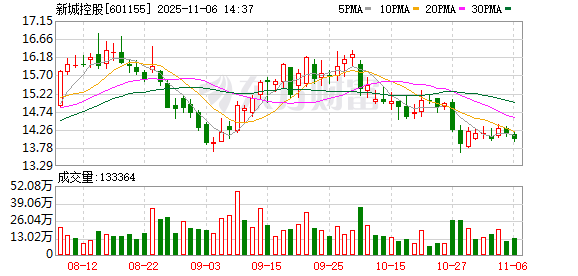
新城控股涨2.02%,成交额1.51亿元,主力资金净流出1336.11万元
Xin Lang Cai Jing· 2025-11-10 02:49
Core Insights - New City Holdings' stock price increased by 2.02% on November 10, reaching 14.11 CNY per share, with a total market capitalization of 31.827 billion CNY [1] - The company has experienced a year-to-date stock price increase of 17.98%, but has seen declines of 0.42% over the last five trading days, 8.50% over the last 20 days, and 10.75% over the last 60 days [1] Financial Performance - For the period from January to September 2025, New City Holdings reported a revenue of 34.371 billion CNY, a year-on-year decrease of 33.34%, and a net profit attributable to shareholders of 0.974 billion CNY, also down 33.05% year-on-year [2] - Cumulative cash dividends since the company's A-share listing amount to 14.595 billion CNY, with no dividends distributed in the past three years [3] Shareholder Structure - As of September 30, 2025, the number of shareholders decreased by 12.34% to 43,200, while the average number of tradable shares per person increased by 14.07% to 52,155 shares [2] - The top ten circulating shareholders include Hong Kong Central Clearing Limited, which holds 16.6308 million shares, a decrease of 701,400 shares from the previous period, and ICBC Value Selection Mixed A, a new shareholder with 15.7412 million shares [3]

房地产行业2025年三季报综述:盈利结构性拐点可期,更加重视经营持续性
Changjiang Securities· 2025-11-09 15:24
Investment Rating - The report maintains a "Positive" investment rating for the real estate industry [14] Core Insights - The industry is currently experiencing downward pressure, but after over four years of adjustment, it may have entered the latter half of the cycle. Individual performance among companies is beginning to show significant differentiation. Structural turning points in profitability are expected due to optimized land reserves, with some high-quality companies already seeing performance improvements [22][12][20] Summary by Sections Profitability - Revenue decline has narrowed, with a year-on-year decrease of 2.7% for key real estate companies in Q1-Q3 2025. The gross profit margin improved by 0.1 percentage points to 9.3%. However, individual profitability is increasingly differentiated, with companies like Binhai Group and Urban Development seeing over 40% growth in net profit [8][21][26] Debt Management - Maintaining financial safety is crucial, with a slight increase of 0.6% in interest-bearing debt by the end of Q3 2025. The overall debt risk in the industry is being cleared, and companies are beginning to tilt towards operational sustainability while ensuring financial safety [9][48][49] Cash Flow - Operating cash receipts saw a year-on-year decline of 9.3%, but the decrease has narrowed significantly. Investment activities remain restrained, and financing activities continue to show net outflows. Companies are focusing on cash flow safety through stringent cash management [10][24][48] Operations - Sales decline has narrowed, with a year-on-year decrease of 12.2% in sales amount for key companies. However, land acquisition has become more aggressive, with a 110.4% increase in land acquisition amount. The focus is shifting towards land quality, with floor prices rising by 38.9% [11][20][22]



房地产行业 25 年 10 月市场总结:高基数增速全面承压,政策空窗期板块走弱
GF SECURITIES· 2025-11-08 14:12
Core Insights - The real estate sector is experiencing significant pressure with high base growth rates leading to a decline in market performance [1] - The report maintains a "Buy" rating for the industry, indicating potential investment opportunities despite current challenges [2] Market Performance - In October 2025, the transaction volume of commodity residential properties in 46 cities decreased by 33.3% year-on-year, with a notable decline in first-tier cities at 39.1% [11][12] - The cumulative transaction volume from January to October 2025 shows a 10.9% year-on-year decrease [11] - The second-hand housing market also faced challenges, with transaction volumes in 11 cities down by 21.3% year-on-year [35] Market Sentiment - The second-hand housing prices fell by 1.7% month-on-month in October 2025, marking a total decline of 13.0% since the beginning of the year [5][35] - Inventory levels in the new housing market showed a slight decrease, with a 2.1% reduction in short-term inventory in 10 key cities [5] Policy Environment - The "14th Five-Year Plan" emphasizes promoting high-quality development in real estate, shifting from suppression to encouragement of reasonable demand [5][29] - The government is gradually lifting restrictive measures, which may positively impact market sentiment in the long term [5] Land Market Dynamics - In October 2025, the land transfer revenue in 600 cities dropped by 27.8% year-on-year, indicating a cooling land market [5] - The average land premium rate fell to 3.3%, the lowest since 2025, reflecting cautious bidding behavior among developers [5] Company Performance - The top 100 real estate companies reported a sales amount of 276.6 billion yuan in October 2025, a 41% year-on-year decline [29] - State-owned enterprises showed a year-on-year sales decline of 37%, while private enterprises faced a more severe drop of 52% [30] Investment Outlook - The SW Real Estate Index fell by 2.37% in October 2025, underperforming the broader market by 2.4 percentage points [5] - The report suggests holding quality real estate development companies, as the market is expected to stabilize and recover gradually [5]




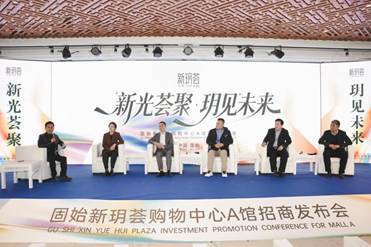
盯上下沉市场,河南县域迎来20万m²大型商业综合体
Sou Hu Cai Jing· 2025-11-07 18:12
Core Insights - The county market, previously on the periphery of the commercial landscape, is undergoing significant transformation with an influx of shopping centers and chain brands targeting lower-tier cities [1][5] - The recent opening of a large shopping center in Gushi County, Henan, and the establishment of a Sam's Club in Jiangsu Zhangjiagang highlight the trend of capitalizing on the sinking market [1][2] Summary by Sections Project Launch - A 200,000 m² shopping complex, Gushi New Yuehui Shopping Center, is set to open on May 1 next year, with its A building covering 40,000 m² and featuring over 200 brands [2][4] - The A building is a renovation of the former Xinhui Shopping Plaza, aiming to fill a gap in the large commercial market in the northern region of Gushi [4] Market Potential - Gushi County has a retail sales total of 12.758 billion yuan from January to August this year, with a year-on-year growth of 6.5%, indicating strong consumer capacity [4][5] - The county has a population of over 1.8 million, with approximately 450,000 residents within a 5 km radius of the new shopping center, suggesting a substantial consumer base [4] Competitive Landscape - The emergence of the Gushi shopping center coincides with the presence of Asia Shopping Plaza, raising questions about future competition in the local market [5] - The county market's retail sector accounted for 38.8% of total social retail sales in the first three quarters of this year, reflecting a slight increase from earlier in the year [5][6] Industry Trends - Numerous brands and commercial projects are rapidly entering the county market, including Starbucks and Sam's Club, which are expanding their presence in lower-tier cities [6] - Government policies aimed at enhancing county commercial systems and rural consumption are driving this trend, providing institutional support for market development [6][7] Strategic Considerations - Experts suggest that while the county market presents growth opportunities, companies must adapt their strategies to local consumer needs and preferences for sustainable development [7]

新消费趋势引致线下零售分化 解码商业地产竞争优势来源
Zhong Guo Jing Ji Wang· 2025-11-07 12:33
Group 1 - The core viewpoint of the article highlights the steady growth of China's consumption market and the reduced impact of online shopping on offline consumption, presenting new opportunities for the commercial real estate sector [1][2] - From January to September 2023, the total retail sales of consumer goods in China reached 36.6 trillion yuan, a year-on-year increase of 4.5%, indicating a stable expansion of the overall consumption market [2] - The contribution rate of final consumption expenditure to GDP growth in the first half of 2023 was 52%, an increase of 7.5 percentage points compared to the previous year, emphasizing the significant role of consumption in economic growth [2] Group 2 - The competition among existing centralized commercial properties is intensifying, with the number of new openings slowing down due to market saturation and reduced investment in commercial projects [4] - As of 2024, the number of new centralized commercial projects is expected to be 436, down from an average of 660 per year from 2015 to 2019 [4] - The total number of existing centralized commercial projects in China has surpassed 10,000, with a total commercial area of 708 million square meters [4] Group 3 - The operational performance of domestic brand commercial real estate companies has been strong, with retail sales growth outpacing the overall retail sales growth [5] - Major listed companies like China New Town Development and China Resources Land have reported significant increases in rental income and retail sales, with China Resources Land's rental income reaching 19.4 billion yuan and retail sales reaching 195.3 billion yuan in 2024 [5] - The successful operation of commercial real estate companies relies on their ability to position themselves effectively in different consumer markets, categorized into high-end, high-energy, and sinking markets [5] Group 4 - In the high-end market, the ability to attract customer traffic has become crucial for successful mall operations, with luxury sales showing signs of recovery [6] - The opening of the "Louis" maritime-themed landmark at Xinyi Taikoo Hui in Shanghai significantly boosted foot traffic and sales, with weekend visitor numbers increasing by over 100% [6] - High-end malls are diversifying their offerings by incorporating dining and experiential retail to reduce reliance on traditional retail sales [7] Group 5 - The high-energy market, including outlets and themed commercial spaces, has shown strong performance, particularly in core cities where consumer preferences are shifting towards practical and emotional value [8] - Outlets have outperformed overall retail sales growth, with visitor numbers and sales increasing significantly compared to national averages [8] - The two-dimensional market is rapidly growing, with the number of related brand openings increasing significantly, indicating a new growth point for offline commercial spaces [9] Group 6 - The sinking market is experiencing higher consumption growth rates, with three to four-tier cities showing better performance compared to first and second-tier cities [10] - New Town Holdings' Wu Yue Plaza has successfully attracted foot traffic and sales growth by leveraging its extensive brand partnerships, achieving a 19% increase in both metrics in 2024 [11]


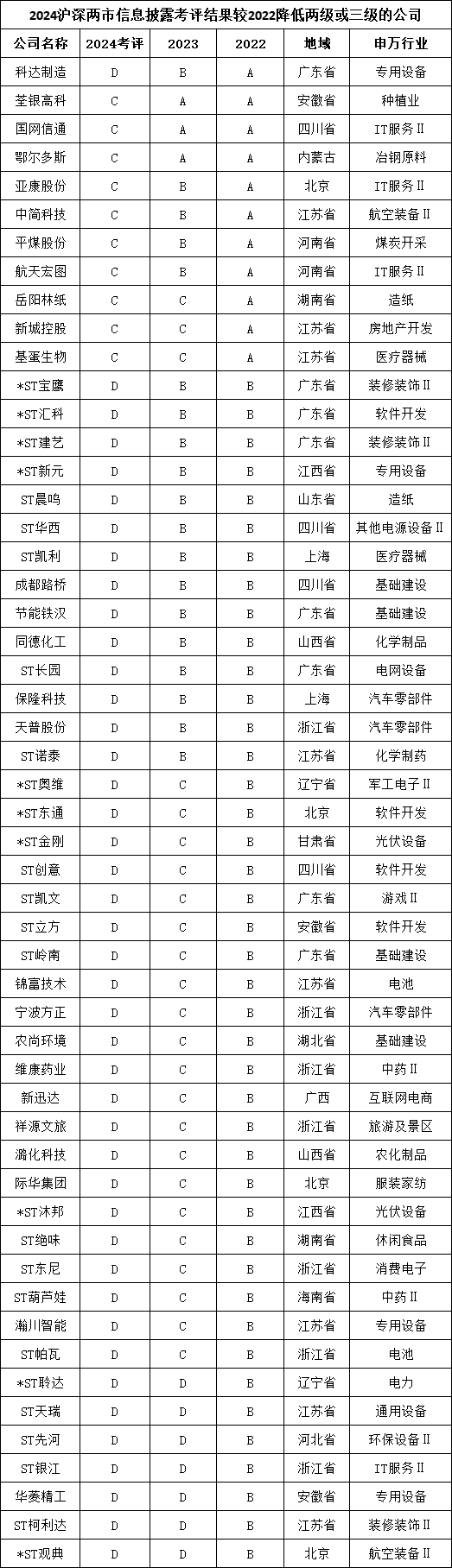
新城控股信披评级两年下降两级,从A优秀降低至C合格
Xin Lang Zheng Quan· 2025-11-07 10:07
Core Viewpoint - The information disclosure evaluation results for listed companies in 2024 show a significant decline in ratings for several companies, including New城控股, which dropped from an A rating to a C rating compared to 2022 [1][2]. Group 1: Company Performance - New城控股's information disclosure rating decreased two levels from A to C in 2024 [1]. - The company is primarily engaged in real estate development and sales, with its revenue composition being 68.63% from real estate development sales, 29.06% from property leasing and management, and 2.31% from other sources [3][4]. Group 2: Industry Context - New城控股 belongs to the real estate development sector, specifically commercial real estate, and is associated with various concept sectors including REITs, elderly care industry, new retail, mid-cap, and heavily held by funds [4].
China's Emerging Frontiers-C-REITs A New Investment Chapter for the Next Decade
2025-11-07 01:28
Summary of Key Points from the Conference Call Industry Overview - The conference call discusses the transition of China's property industry from new construction to rental asset operations, driven by the emergence of the C-REIT (China Real Estate Investment Trust) market, which is expected to reshape the competitive landscape and long-term investment thesis of the industry [2][12][31]. Core Insights - **C-REIT Market Potential**: The C-REIT market is projected to reach a market capitalization of approximately US$1 trillion, which is over 30 times larger than its current size. This growth is anticipated to attract long-term yield investors [4][11]. - **Policy Support**: Since the third quarter of 2025, supportive policies have accelerated the issuance of onshore REITs, expanding the asset scope and issuer background, which is crucial for the growth of C-REITs [4][11]. - **Investment Strategy**: Listed developers are seen as a viable way to access the expanding C-REIT theme due to their large rental portfolios and strategic commitment to divesting mature properties into REITs [5][11]. Key Beneficiaries - **Short-term Beneficiaries**: CR Land (1109.HK) is identified as the primary beneficiary in the short term, followed by Seazen (601155.SS) and Longfor (0960.HK), due to their substantial but highly pledged malls [6][11]. - **Medium-term Beneficiaries**: Other developers such as COLI (0688.HK), Vanke (2202.HK), and Poly (600048.SS) may benefit from the expansion of REIT coverage due to their rich non-retail rental assets [6][11]. Market Dynamics - **Transition Drivers**: The transition is driven by diminishing housing demand due to aging demographics and regulatory changes that have lowered development returns on equity (ROE) [13][21][23]. - **Regulatory Changes**: The introduction of the "three red lines" policy has tightened leverage for developers, leading to a shift towards a dual-track housing supply system focusing on public and rental housing [22][23]. Competitive Landscape - **Shift to Rental Focus**: Developers are increasingly focusing on recurring income from rental properties as the attractiveness of traditional property development diminishes. This shift is expected to reshape the competitive landscape and investment thesis of the industry over the next 10-20 years [29][31]. - **Challenges in Transition**: The transition to a rental-focused model is slow due to the asset-heavy nature of rental businesses, slow asset turnover affecting ROE, and limited exit channels for unlocking asset value [29][30]. Long-term Investment Thesis - **Evolving Investment Logic**: The investment logic is expected to shift from high leverage and turnover models to a focus on stable recurring income and dividend visibility, reflecting a more balanced growth approach [31][35]. - **Future Focus on REITs**: As developers transform into landlords and the C-REIT market matures, the focus may shift from developers to REITs with strong recurring income assets, similar to trends observed in developed markets [35][41]. Regulatory Framework for C-REITs - **Development Stages**: The development of C-REITs has progressed through four stages: initial preparation, gradual progress, increased promotion, and full acceleration, with significant regulatory milestones achieved since 2021 [43][44]. - **Regulatory Characteristics**: C-REITs have stringent regulations compared to developed markets, including requirements for shareholding, leverage, and cash distribution [46][48]. Conclusion - The transition in China's property industry towards a rental-focused model and the growth of the C-REIT market present significant investment opportunities. Developers with strong rental portfolios are well-positioned to benefit from this shift, while the evolving regulatory landscape will further facilitate the growth of C-REITs in the coming years [4][11][31].


新城控股缩表求生,进入转型关键期
2 1 Shi Ji Jing Ji Bao Dao· 2025-11-06 06:37
Core Viewpoint - New City Holdings reported a decline in both revenue and profit for the first three quarters of 2025, while commercial operation income increased, indicating a shift in focus amid ongoing challenges in the residential sector [2][3]. Financial Performance - For the first three quarters of 2025, New City Holdings achieved operating revenue of 34.37 billion yuan, a year-on-year decrease of 33.3%, and a net profit attributable to shareholders of 970 million yuan, down 33.1% year-on-year [2]. - The decline in performance is attributed to a reduction in the scale of development business turnover, with a completed area of 3.5 million square meters, down 59.8% year-on-year [3]. - Total assets decreased from 534.2 billion yuan in 2021 to 307.2 billion yuan in 2024, with liabilities reduced from 437.2 billion yuan to 224.5 billion yuan, indicating a significant contraction of over 200 billion yuan in three years [3]. Debt Management - New City Holdings is approaching the end of its debt repayment peak, with only two debts remaining due in 2025: a $250 million overseas bond maturing in October and a 2 billion yuan medium-term note maturing in December [3]. - As of the end of Q3 2025, the company’s payable construction funds were 38.39 billion yuan, down from 45.27 billion yuan at the beginning of the year, reflecting a reduction in cash outflow pressure [3]. Financing and Market Position - New City Holdings has successfully navigated financing channels, issuing two medium-term notes totaling 1.9 billion yuan and two unsecured U.S. dollar bonds totaling $4.6 billion in 2025 [4]. - Despite the successful financing, the company faces inventory pressure, with the overall real estate market experiencing a slowdown in sales [4]. Commercial Operations - The company has opened and managed 176 Wuyue Plazas, generating total commercial operation revenue of 10.51 billion yuan, an increase of 10.8% year-on-year, with an average occupancy rate of 97.7% [6]. - New City Holdings is expected to generate approximately 14 billion yuan in taxable rental income and around 13 billion yuan in revenue in 2025, while its market valuation stands at approximately 31.872 billion yuan [6]. Investor Sentiment - Investors express concerns regarding New City Holdings' ability to navigate through economic cycles, especially following recent incidents involving the misuse of funds by major shareholders, which have led to audit complications [6].
商业增长超预期、融资渠道通畅 摩根士丹利上调新城控股评级至“超配”
Xin Lang Cai Jing· 2025-11-06 02:54
Core Viewpoint - New City Holdings has received recognition from both domestic and international capital markets due to its robust performance and unexpected results in the commercial sector, leading to an upgrade in its rating by Morgan Stanley to "Overweight" and an increase in its target price by 25% to 19.7 yuan [1][2] Group 1: Company Performance - New City Holdings achieved a total commercial operation revenue of approximately 10.511 billion yuan in the first nine months of 2023, representing a year-on-year growth of 10.82% [1] - The company has established 205 comprehensive projects across 141 cities, with a total rental property occupancy rate of 97.7% as of the end of the third quarter [1] - Despite a lackluster overall retail market, New City Holdings recorded an 11% revenue growth in the first nine months of the year, attributed to its strong position in core urban areas [2] Group 2: Market Outlook - Morgan Stanley forecasts that New City Holdings' rental income will grow at a compound annual growth rate of approximately 8%, reaching 15.2 billion yuan by 2027, supported by government initiatives to boost consumption [2] - The recent "Urban Commercial Quality Improvement Action Plan" issued by the Ministry of Commerce and other departments aims to support commercial real estate projects, which may provide long-term financing support for New City Holdings [2] - The company is expected to leverage its scale advantage with over 200 Wuyue Plazas to gain more financing benefits, ensuring stable development in the new real estate cycle [2]