
中国电科

Search documents
2025中国国际大数据产业博览会在贵阳开幕 数聚产业新动能 落地应用新场景
Shang Hai Zheng Quan Bao· 2025-08-28 19:41
Core Insights - The 2025 China International Big Data Industry Expo showcases the integration of data elements and AI technology, highlighting new solutions and applications for industrial transformation and upgrading [1][2] Group 1: Data Infrastructure and AI Development - China is focusing on building computing power infrastructure and enhancing the development and sharing of data resources [2] - As of July, Guizhou Province has accumulated 29 large-scale data centers, with a total computing power of 92.60 EFLOPS, making it one of the regions with the strongest intelligent computing capabilities in the country [2] - High-quality datasets are crucial for AI training, determining the "intelligence" of AI systems, and are seen as a "moat" for AI development [2][3] Group 2: Industry Applications and Innovations - Numerous companies are seizing opportunities in AI and big data across various sectors, including low-altitude economy, medical diagnosis, and tourism [4] - The AI-driven personalized itinerary planning product by Mafengwo significantly enhances user experience and efficiency in travel planning [4] - The "39AI Doctor" product, implemented in over 40 hospitals and 187 community medical institutions in Guizhou, has a diagnostic result adoption rate of 92% [4] Group 3: Future Directions and Collaborations - Companies like Zhongke Xingtu are focusing on the low-altitude economy, presenting a comprehensive product system that includes planning, safety assurance, and application scenarios [6] - The development of a unified digital platform for government investment attraction by Zhaoshangyi aims to provide efficient services to enterprises [5][6] - Experts believe that with improved policies, technological advancements, and deepened application scenarios, data elements will release greater value and drive industries towards a new stage of intelligence [6]
方正富邦基金吴昊:为什么军工的机会,没有结束?
Zhong Guo Jing Ji Wang· 2025-08-26 08:45
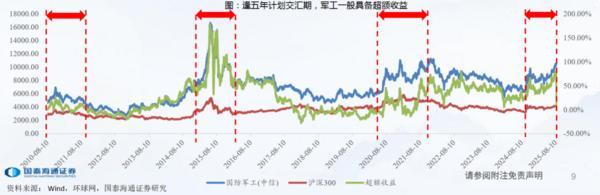
Group 1 - The military industry is experiencing a significant increase in attention and stock performance, particularly following the announcement of the 80th anniversary of the victory in the Anti-Japanese War, with the defense industry index rising by 23.94% from June 24 to August 25 [1] - The defense industry index has recorded three consecutive monthly gains, with August likely to be positive, marking the longest continuous increase since mid-2021 [1] - Key companies such as Guangqi Technology, AVIC Shenyang Aircraft Corporation, and Feilihua have reached historical stock price highs, indicating strong market performance [1] Group 2 - The military industry is shifting towards a fundamental-driven market, with military expenditure growth being a key driver; the 2025 defense budget is set at 1,784.665 billion yuan, reflecting a 7.2% increase [2] - China's defense budget as a percentage of GDP remains low compared to developed countries, suggesting significant growth potential for the military sector [2] - The military trade sector is emerging as a secondary growth avenue for military enterprises, with nine Chinese companies making it to the global top 100 military enterprises list, generating a total of 102.89 billion USD in weapon sales [2] Group 3 - The current year marks the end of the 14th Five-Year Plan, with the upcoming 15th Five-Year Plan (2026-2030) expected to drive a peak in equipment upgrades [3] - The first and last years of the Five-Year Plan are typically critical for performance, indicating that these periods may warrant closer attention from investors [3]

东方航天港:逐梦星辰的“海上摇篮”
Zhong Guo Zi Ran Zi Yuan Bao· 2025-08-25 07:43
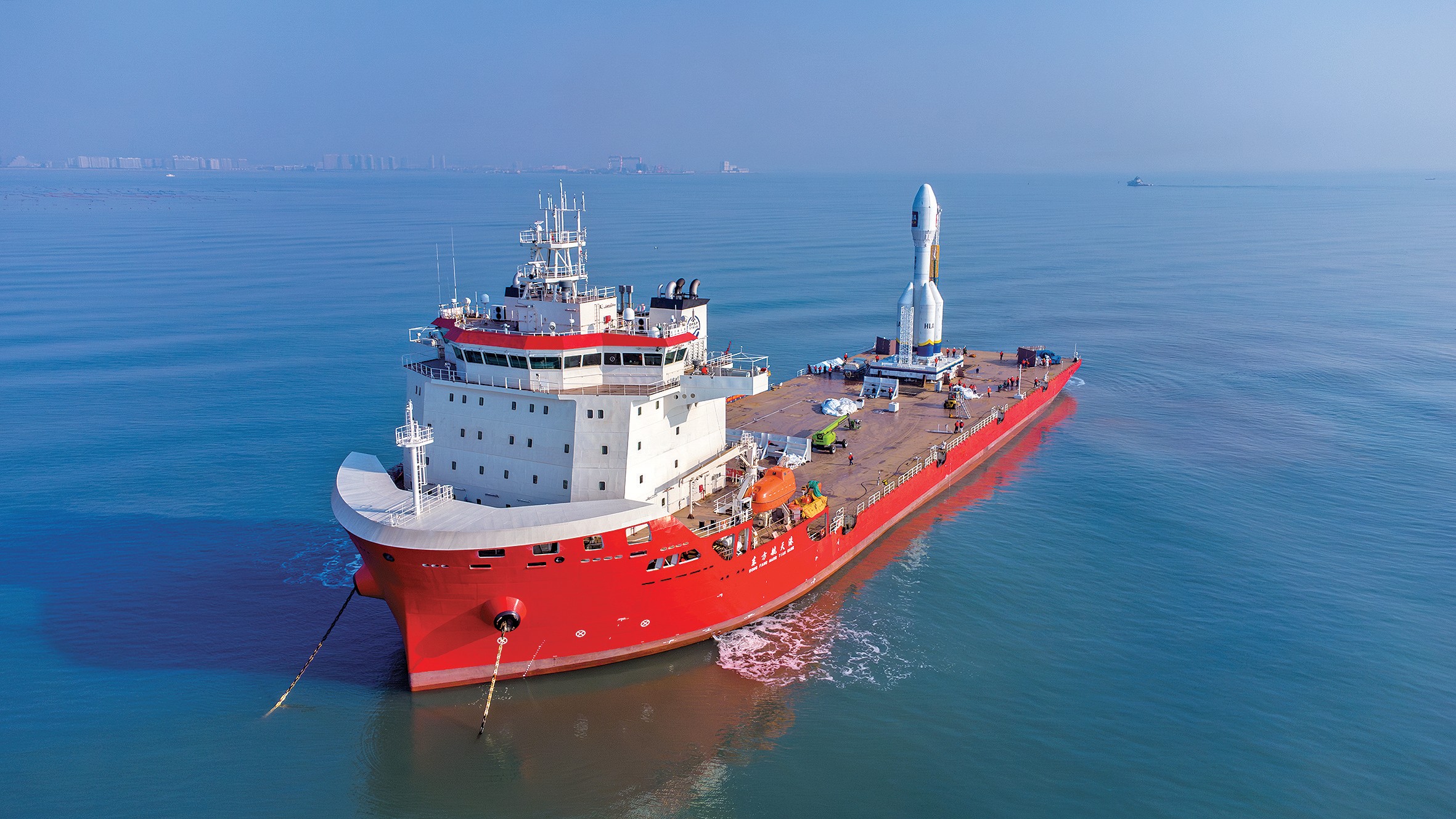
Core Viewpoint - The successful launch of the Jielong-3 rocket marks a significant advancement in China's commercial space capabilities, particularly in maritime rocket launches, indicating a shift towards efficient mass production of rockets [3][4][11]. Group 1: Launch Achievements - The Jielong-3 rocket successfully launched 11 satellites into LEO, marking the 17th maritime launch from the Dongfang Spaceport in Shandong Province [3]. - The Dongfang Spaceport is China's fifth rocket launch site and the only maritime launch port, having successfully supported 17 maritime launch missions [3][4]. - The Jielong-3 rocket's transition from customized to mass production is expected to enhance capacity and reduce costs, catering to the demand for low-cost, high-frequency commercial launches [4][11]. Group 2: Technological Innovations - The Jielong-3 rocket has entered a phase of intensive launches, with three missions scheduled within two months, showcasing its adaptability and operational efficiency [4]. - The successful maritime recovery test of the Yuanzheng-1 rocket represents a milestone in reusable rocket technology, making China the second country globally to achieve this capability after the United States [11][12]. - The Yuanzheng-1 rocket utilized a stainless steel body and anti-corrosion coatings to withstand harsh maritime conditions, demonstrating significant advancements in materials science [11][12]. Group 3: Industry Implications - The development of reusable rockets like the Yuanzheng-1 is projected to lower launch costs significantly, potentially bringing costs down to below $3,000 per kilogram, comparable to SpaceX's Falcon 9 [11][12]. - The successful integration of various technologies, including liquid oxygen-methane engines and intelligent navigation systems, is fostering the growth of a maritime aerospace industry cluster in regions like Qingdao and Yantai [12]. - The maritime recovery approach offers risk diversification advantages, as the designated splashdown area is away from shipping lanes and populated areas, aligning with international green aerospace trends [12][13]. Group 4: Competitive Landscape - The global maritime recovery landscape is characterized by the United States leading with SpaceX, while China is rapidly advancing with the Yuanzheng-1 and other technologies [13]. - Compared to the U.S., China is still in the verification phase for maritime recovery, but the Yuanzheng-1's technology path presents a potential latecomer advantage [12][13]. - Future developments in active stabilization technology are expected to further mitigate the impact of platform motion on launch precision, enhancing the capabilities of the Dongfang Spaceport [13].
“航天+海工”的技术融合,推动青岛、烟台等地形成海上航天产业集群——东方航天港:逐梦星辰的“海上摇篮”
Zhong Guo Zi Ran Zi Yuan Bao· 2025-08-25 01:25
Core Insights - The successful launch of the Jielong-3 rocket marks a significant milestone for China's commercial space industry, indicating a shift towards efficient mass production of rockets [3][4] - The development of the Yuyuan-1 rocket and its successful sea recovery trial positions China as a key player in reusable rocket technology, second only to the United States [10][11] Group 1: Launch Achievements - The Jielong-3 rocket successfully launched 11 satellites into LEO, marking the 17th sea launch from the Dongfang Spaceport [3][4] - The Dongfang Spaceport is China's only sea-based rocket launch site, enhancing the flexibility and safety of launch operations [3][4] - The Jielong-3 rocket's transition from customized to mass production is expected to lower costs and increase launch frequency, catering to commercial demands [4][10] Group 2: Technological Innovations - The Yuyuan-1 rocket, made of thin-walled stainless steel and using liquid oxygen and methane propellants, successfully completed a sea recovery test, filling a gap in China's liquid rocket capabilities [5][10] - Advanced technologies such as "sea-based launch dynamic compensation" and real-time monitoring systems have been developed to address the challenges of sea launches [6][9] - The integration of aerospace dynamics, marine engineering, and artificial intelligence is crucial for the success of sea launch and recovery operations [9][10] Group 3: Industry Implications - The reusable rocket technology is projected to significantly reduce launch costs, with potential costs dropping below $3,000 per kilogram, comparable to SpaceX's Falcon 9 [10][11] - The successful sea recovery of the Yuyuan-1 rocket is expected to drive the development of related industries, including liquid oxygen and methane engines and smart navigation systems [11] - China's advancements in sea recovery technology provide a competitive edge in international space endeavors, particularly in low Earth orbit satellite networks and deep space exploration [10][12]
今年上半年北京石景山区实现地区生产总值696.6亿元
Xin Jing Bao· 2025-08-21 13:13
Economic Performance - In the first half of the year, Shijingshan District achieved a GDP of 69.66 billion yuan, with a year-on-year growth of 7.6%, ranking first among central urban areas [2] - Since the beginning of the 14th Five-Year Plan, the district's GDP has increased from 97.38 billion yuan in 2020 to 131.29 billion yuan in 2024, with an annual increase of approximately 10 billion yuan [2] Investment and Budget - From 2021 to 2024, Shijingshan District completed nearly 180 billion yuan in fixed asset investment, accounting for 5.2% of the city's total investment [2] - The average annual growth rate of general public budget revenue is 7.7%, also ranking first among central urban areas [2] Industrial Development - The district is focusing on developing strategic emerging industries and future industries that attract young talent, with an emphasis on technological innovation [5] - Shijingshan District has received 7 national science and technology awards and 59 Beijing science and technology awards during the 14th Five-Year Plan period [5] Talent Incentives - The district has implemented 12 tailored measures to support innovation and entrepreneurship for young talents, including providing up to 500,000 yuan in research funding for eligible projects [7] - A new innovation and entrepreneurship base for young talents has been established, offering free office space for up to one year [7] Urban Renewal - A total of 481 urban renewal projects have been implemented, driving over 90 billion yuan in investment, with 106 old residential communities covering 5.51 million square meters successfully renovated [8] - The district has transformed old factory areas into technology and cultural parks, enhancing urban aesthetics and functionality [8] Environmental and Urban Management - Shijingshan District has a green coverage rate of 55.28% and an average of 24.48 square meters of park green space per capita, contributing to its recognition as a "National Forest City" [9] - The district is actively improving urban governance, including waste classification initiatives and enhancing property service quality through a "red-black list" evaluation system [9]

叮——机器人来敲门
Jing Ji Ri Bao· 2025-08-15 22:17
Core Insights - The 2025 World Robot Conference in Beijing showcased over 1,500 exhibits from more than 200 domestic and international robot companies, with over 100 new products launched, marking a historical high and nearly doubling the previous year's numbers [1] - The robot industry is entering a new era of scale and industrialization, with applications ranging from industrial manufacturing to life services and emergency rescue [1] Group 1: Human-like Robots - The humanoid robot Moz1 demonstrated traditional skills by making sugar-coated hawthorn, showcasing its ability to interact with customers and perform tasks like sorting clothes [2] - Humanoid robots are becoming a focal point in the industry, with various models displaying diverse capabilities at the conference [2] - The humanoid robot R1, launched by Yushutech, emphasizes affordability with a low-cost version priced at 39,900 yuan, indicating a trend towards more accessible humanoid robots [3] Group 2: Versatile Robotics - The UP robot from Yunji Technology breaks the limitations of single-function service robots, allowing for multiple roles in commercial settings, such as delivery and cleaning [4] - The modular design of the UP robot enables quick function switching and multi-robot coordination, enhancing operational efficiency in various environments [4][5] - Guangzhou Automobile Group's GoMove and GoSide robots are tailored for elderly care, demonstrating the potential for robots to assist in daily life and mobility [5] Group 3: Advanced Robotics Applications - The semi-horse robot showcased by China Electronics Technology Group features advanced mobility and adaptability, capable of performing complex tasks in various terrains [6] - A dexterous robotic hand developed by the Chinese Academy of Sciences is designed for high-end research, capable of intricate tasks like threading a needle and making coffee [7] - The robotics industry is projected to reach a trillion yuan scale, with robots evolving into intelligent systems that integrate perception and action, enhancing productivity in various sectors [7]

量子专题:2025中国量子计算产业市场现状及发展前景研究报告
Sou Hu Cai Jing· 2025-08-14 15:48
Core Viewpoint - The report provides an in-depth analysis of the current state and future prospects of the quantum computing industry in China, highlighting significant developments, key players, and market trends. Group 1: Overview of Quantum Computing Industry - Quantum computing is defined as a computational model utilizing the fundamental properties of quantum mechanics, which significantly differs from classical computing in terms of information storage, computational power, entanglement characteristics, and computation methods [7]. - The technology framework of quantum computing consists of three main pillars: hardware, software, and algorithms, with cloud platforms serving as an integration point for user services [11]. Group 2: Global and Chinese Market Development - The global quantum computing market is rapidly expanding, with the market size projected to grow from $5 billion in 2021 to $50 billion by 2024, accounting for 63% of the total quantum information industry [16]. - North America leads the global quantum computing market, followed closely by Europe and China, with market shares of 29.8%, 28.8%, and 25.2% respectively by 2024 [18]. Group 3: Key Players in the Industry - Major companies involved in quantum computing include Google, IBM, and domestic players such as Tencent, Huawei, and China Electronics Technology Group, with significant advancements in quantum computer prototypes [1]. - Notable developments include the "Jiuzhang" quantum computing prototype in China, which achieved rapid solutions for Gaussian boson sampling tasks [1]. Group 4: Industry Trends and Policies - The quantum computing industry is entering a phase of technological breakthroughs, with significant investments and supportive policies from governments, particularly in the U.S. and Canada, aimed at maintaining global leadership in quantum technology [20][21]. - In Europe, various countries are implementing favorable policies to support quantum computing development, with Germany and the EU investing heavily in quantum technology initiatives [27][28].



2025中国量子计算产业市场现状及发展前景研究报告
Sou Hu Cai Jing· 2025-08-14 14:04
Core Viewpoint - The report provides a comprehensive analysis of the current state and future prospects of the quantum computing industry in China, highlighting significant developments, key players, and market trends in both global and Chinese contexts [1]. Group 1: Overview of Quantum Computing Industry - Quantum computing is defined as a computational model utilizing the fundamental properties of quantum mechanics, which significantly differs from classical computing in terms of information storage, computational capability, entanglement characteristics, and computation methods [8][10]. - The technology framework of quantum computing consists of three main pillars: hardware, software, and algorithms, with cloud platforms serving as integration points for user services [11]. Group 2: Global Quantum Computing Development - The global quantum computing industry is entering a phase of technological breakthroughs, with significant milestones achieved by companies like Google, IBM, and D-Wave, as well as notable advancements from Chinese entities [17]. - The global quantum computing market is rapidly expanding, with the market size projected to grow from $0.7 billion in 2021 to $5 billion by 2024, accounting for 63% of the total quantum information industry [18]. Group 3: Market Size and Distribution - North America leads the global quantum computing market, followed closely by Europe and China, with projected market shares in 2024 of 29.8%, 28.8%, and 25.2% respectively [21]. - The North American quantum computing market is expected to reach $1.5 billion in 2024, with a growth rate of 6.4% compared to the previous year [27]. Group 4: Key Players in the Industry - Major companies involved in quantum computing include Tencent, Huawei, and China Electronics Technology Group, with significant advancements reported by domestic firms such as Origin Quantum and Huayi Quantum [1]. - The report highlights the progress of various quantum computing prototypes, such as Huayi Quantum's HYQ - A37 and HYQ - B100, which demonstrate outstanding performance in multiple metrics [1]. Group 5: Policy and Support - The U.S. has implemented numerous policies to support quantum computing development, including the National Quantum Initiative Act, which authorized funding increases for quantum research [24][25]. - Canada has also launched a National Quantum Strategy, focusing on investment and commercialization to enhance its competitive edge in quantum technology [26].

行业干货!智研咨询重磅发布《2025年中国量子计算产业市场现状及发展前景研究报告》
Chan Ye Xin Xi Wang· 2025-08-13 07:43
Group 1 - Quantum computing utilizes the fundamental properties of quantum mechanics to solve problems, with a rapidly expanding global market projected to reach $5 billion by 2024, driven by increasing demand for computational power and advancements in quantum performance [1][16] - North America leads the global quantum computing market with a 29.8% share, followed closely by Europe at 28.8% and China at 25.2% [21][22] Group 2 - China's quantum computing industry has grown significantly, with a projected market size of 9.04 billion yuan ($1.3 billion) in 2024, reflecting an 82.1% year-on-year increase, and accounting for 68.6% of the total quantum technology market [2][45] - The Chinese government has implemented multiple supportive policies to enhance quantum computing technology development, establishing a robust national and local policy framework [38][41] Group 3 - The global quantum computing market is expected to grow from approximately $800 million in 2021 to $5 billion in 2024, indicating a strong upward trend [16][17] - In North America, the quantum computing market is projected to reach $1.5 billion in 2024, with a growth rate of 6.4% year-on-year [26] Group 4 - Investment in China's quantum computing sector has surged, with financing reaching 2.93 billion yuan ($420 million) in 2024, marking a 38.2% increase [50] - Major players in the Chinese quantum computing landscape include Tencent, Huawei, and various startups like Benyuan Quantum and Guodun Quantum, contributing to a vibrant ecosystem [2][59]
中国电科多款最新机器人亮相2025世界机器人大会
Xin Lang Cai Jing· 2025-08-08 13:52
Core Insights - The 2025 World Robot Conference opened in Beijing on August 8, showcasing advancements in robotics technology [1] Company Highlights - China Electronics Technology Group Corporation (CETC) presented several innovative robotic products, including humanoid robots, centaur robots, quadruped inspection robots, and lightweight exoskeleton assistive devices [1]