
人保财险

Search documents
保险保障 资金支持 科技赋能——2024年山东保险业:多维发力筑牢实体经济根基
Zhong Guo Fa Zhan Wang· 2025-07-16 04:48
Core Viewpoint - The 2024 Shandong Insurance Industry Development and Social Responsibility Report highlights the active role of insurance institutions in supporting the modernization of Shandong's industrial system and ensuring social stability and people's well-being through robust insurance mechanisms [1] Group 1: Financial Support for the Real Economy - Insurance funds are being utilized to provide diverse financing services to the real economy, with significant investments made by various insurance companies in Shandong, including 498 billion yuan by Shandong People's Insurance, 765.51 billion yuan by Taikang Insurance, and 1,415.48 billion yuan by Ping An Life [2] - These investments are crucial for the development of major infrastructure projects and the growth of high-tech enterprises in Shandong, contributing to the province's economic transformation [2] Group 2: Risk Protection for Economic Development - Insurance institutions are focusing on key areas such as national strategies and small and micro enterprises, providing tailored insurance solutions to strengthen risk management [3] - Notable risk coverage includes 1 billion USD for the "Guohe No.1" nuclear power project and 374.9 billion yuan for Shandong Steel Group, showcasing the commitment to safeguarding significant projects [3] Group 3: Support for Small and Micro Enterprises - Ping An Property & Casualty provided over 32 trillion yuan in risk protection for more than 114,000 small and micro enterprises, highlighting the importance of these businesses in the economy [4] - Other companies, such as Dadi Insurance and Taiping Life, also contributed significantly to employee health and financial support for small businesses, ensuring a stable working environment [4] Group 4: Technological Empowerment in Insurance - Shandong insurance institutions are developing comprehensive insurance solutions for technology companies, addressing challenges such as high risk and financing difficulties [5] - The use of advanced technologies like big data and IoT is transforming insurance services from reactive claims to proactive risk management, significantly reducing overall societal risks [6] Group 5: Agricultural Risk Management - The application of drones and satellite technology in agriculture is enhancing monitoring and disaster prevention, shifting from passive compensation to proactive defense [7] - The insurance sector in Shandong is committed to integrating insurance protection, financial investment, and technological empowerment to effectively serve the real economy [7]

智驾兜底承诺辨析:责任怎么认定?风险如何定价?
Di Yi Cai Jing· 2025-07-14 09:50
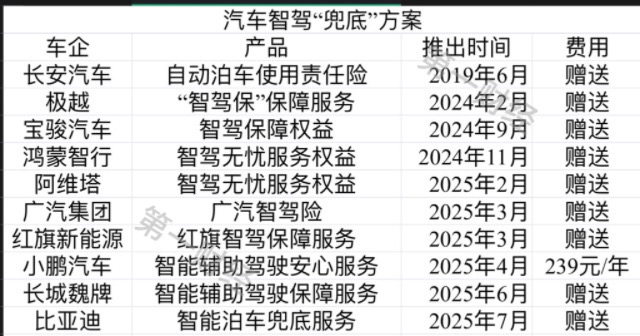
Core Viewpoint - Multiple automotive companies are providing safety guarantees for intelligent driving through direct after-sales services or insurance, with BYD recently committing to comprehensive coverage for its "Heavenly Eye" vehicles in smart parking scenarios, sparking industry discussions [1][3]. Group 1: Companies Offering Intelligent Driving Guarantees - At least 10 automotive companies have adopted intelligent driving insurance to cover smart assisted driving, specifying coverage limits and usage conditions [1][2]. - BYD's guarantee for smart parking does not have a coverage limit and does not affect future insurance premiums, unlike other companies that have set maximum compensation amounts [4][5]. - Companies like Changan, Xiaopeng, and Hongmeng have also introduced various forms of intelligent driving insurance, often provided for free in the first year [2][5]. Group 2: Market Context and Consumer Concerns - The rise of intelligent driving insurance is driven by the increasing penetration of smart assisted driving in the automotive market, alongside consumer concerns regarding safety and accident liability [2][3]. - Current intelligent driving insurance is often viewed as a value-added service rather than a standalone insurance product, with companies covering repair and compensation costs [6][7]. - There are significant challenges in defining liability and compensation standards for intelligent driving incidents, particularly in complex driving scenarios compared to simpler parking scenarios [7][8]. Group 3: Future Developments and Regulatory Needs - The insurance industry is expected to evolve with clearer guidelines as the penetration of intelligent driving vehicles increases, necessitating a comprehensive study of the long-term impacts on insurance operations [6][8]. - There is a need for improved legal frameworks to address liability issues in intelligent driving accidents, including data ownership and responsibility [8][9]. - Third-party involvement in intelligent driving insurance is being considered to enhance consumer confidence and clarify liability among manufacturers, insurers, and consumers [9].


保险机构逐浪体育赛事新蓝海
Jin Rong Shi Bao· 2025-07-01 04:23
Core Insights - Insurance companies are increasingly entering the emerging sports industry, particularly in the Jiangsu province's "Su Super" football league, to capture market opportunities [1][2][6] Group 1: Insurance Participation - Multiple insurance firms, including China Ping An and Xinhua Insurance, have announced partnerships with the "Su Super" league, providing various insurance products for players and fans [1][2][3] - China Ping An's "Golden Leg" insurance offers comprehensive coverage for players, with a total coverage amount exceeding 44.6 million yuan [2][6] - Xinhua Insurance aims to enhance the event's impact and promote fitness through its involvement, indicating a strategic move to align financial services with sports [2][6] Group 2: Market Growth and Engagement - The "Su Super" league has seen a surge in popularity, with over 1 billion views on related topics and an increase in sponsors from 6 to 21, including major brands like Yili and JD.com [4][6] - Insurance companies are tailoring their offerings to meet the unique risks associated with sports events, such as athlete injuries and event cancellations, which differ from traditional insurance scenarios [6][7] Group 3: Long-term Value Creation - National policies are supporting financial institutions' involvement in the sports industry, encouraging the development of diverse financial products and services [6] - The participation of insurance firms in sports events is expected to create long-term value, enhancing brand visibility and connecting with younger demographics [6][7] - Companies like China Life are providing comprehensive risk management solutions for various sports events, indicating a commitment to supporting the local sports industry [7]

2024年财险公司“13精”综合竞争力排名榜:平安、太保、人保均为AAA!(2025年第四期 总第六十三期)
13个精算师· 2025-06-26 10:35
Core Viewpoint - The article emphasizes the importance of a comprehensive evaluation of insurance companies, considering multiple indicators such as risk, profitability, development, and scale, rather than focusing solely on premiums or profits [1][10]. Group 1: Comprehensive Strength of Insurance Companies - The "13精" comprehensive competitiveness ranking for 2024 includes 30 companies, with five rated as AAA: Ping An Property & Casualty, Taiping Property & Casualty, PICC Property & Casualty, China Life Property, and Sunshine Property [5][18]. - The ranking is based on a revised evaluation system that now includes service capability as a dimension, reflecting the industry's focus on consumer rights protection [1][10]. Group 2: Industry Performance in 2024 - In 2024, the property insurance sector reported a premium income of 1.69 trillion yuan, a year-on-year increase of 5.6% [13]. - The net profit for 84 property insurance companies reached 605 billion yuan, marking a 23% increase year-on-year, attributed to growth in underwriting profit and investment returns [13][14]. Group 3: Competitive Landscape - The "Matthew Effect" is evident in the industry, with major players like the "old three" (Ping An, PICC, and Taiping) maintaining significant advantages in both premium growth and profitability [16][18]. - Smaller insurance companies, particularly those with premium scales below 3 billion yuan, face challenges in profitability, with nearly 30% reporting losses [16][48]. Group 4: Key Performance Indicators - Ping An Property & Casualty has shown a stable growth in non-auto insurance premiums, with a growth rate exceeding 15% for three consecutive years [21][23]. - PICC Property & Casualty has the lowest comprehensive cost ratio among the "old three," while Taiping Property & Casualty has demonstrated rapid premium growth, particularly in non-auto insurance [31][41]. Group 5: Adjustments in Evaluation Criteria - The "13精" competitiveness evaluation system has undergone several adjustments, including the removal of the leverage indicator and the addition of service capability metrics, reflecting the industry's shift towards high-quality development [79][82].


引金融服务入田间地头 保险业助乡村全面振兴
Zhong Guo Zheng Quan Bao· 2025-06-25 20:36
Core Insights - The insurance industry is increasingly playing a vital role in rural revitalization through innovative products, optimized service models, and technology empowerment [1][6][7] Group 1: Agricultural Insurance Development - The agricultural insurance product system has significantly expanded, covering major crops and local specialty products, with a total insurance premium scale of 152.1 billion yuan, providing risk protection exceeding 5 trillion yuan for 147 million households [2] - In 2024, China Life Property & Casualty Insurance plans to cover over 11.5 million acres of major grain crops, providing risk protection of approximately 80.5 billion yuan [2] Group 2: Innovative Insurance Products - Insurance companies are launching specialized insurance products based on local resources, such as pomegranate planting insurance in Shandong and apple industry chain insurance in Gansu [3] Group 3: "Insurance+" Service Model - The insurance industry is evolving from simple risk compensation to a comprehensive service model that supports rural industry development, exemplified by the "breeding insurance + live collateral loan" model in Shanxi [4] Group 4: Personal Risk Protection - The insurance sector is also providing personal risk protection for local residents, with China Life offering over 28 billion yuan in personal risk coverage for nearly 490,000 people in targeted poverty alleviation areas in 2024 [5] Group 5: Technology Empowerment - The application of technologies such as big data and satellite remote sensing is reshaping agricultural insurance services, enhancing the precision and efficiency of underwriting and claims [6][7] - China Life Property & Casualty Insurance is promoting disaster monitoring and early warning systems to improve risk management capabilities [7]
从“散点创新”迈向“体系搭建” 政企险联手畅通科技企业保障路径
Shang Hai Zheng Quan Bao· 2025-06-25 18:46
Group 1 - The core viewpoint of the article is that the insurance coverage for technology companies is gradually improving through three main approaches: collaboration with insurance companies to develop customized insurance products, finding suitable products within regulatory frameworks, and utilizing government subsidies for insurance premiums [2][3][9] - Technology companies are increasingly able to secure insurance coverage, alleviating previous difficulties in finding appropriate products due to high risks or costs [2][3] - The collaboration between technology companies and insurance providers is becoming a significant pathway for obtaining insurance, as seen in the case of Huadian Gongxian and Jimei University, which developed a specialized insurance product for research and development expenses [5][6] Group 2 - Local financial regulatory bodies are taking the lead in building a technology insurance product system to address the uncertainties faced by technology companies [7][8] - The Shanghai financial regulatory bureau has established a comprehensive technology insurance product system, which includes a risk protection mechanism for the biopharmaceutical industry, resulting in significant insurance coverage and premium income [7][8] - Government subsidies for technology insurance premiums are being implemented in various regions to reduce the financial burden on small and medium-sized technology enterprises, thereby encouraging them to obtain insurance [9][10]

监管要求分红水平不得“内卷”;友邦人寿、荷兰全球人寿获批筹建保险资管公司;平安斥资6.05亿完成核心人员持股计划|13精周报
13个精算师· 2025-06-21 02:30
Regulatory Dynamics - The Financial Regulatory Bureau has issued guidelines to prevent excessive competition in dividend levels for insurance products, requiring justification for proposed dividend levels under certain conditions [7][8]. - The Financial Regulatory Bureau, in collaboration with the Shanghai Municipal Government, has released an action plan to support the construction of Shanghai as an international financial center [9]. - The Financial Regulatory Bureau has recognized China Reinsurance (Group) Corporation as an internationally active insurance group, aiming to enhance its risk management and international competitiveness [10]. - The Central Financial Committee has emphasized the need to innovate in shipping insurance and reinsurance businesses to align with the development of Shanghai as an international financial center [11]. - The Ministry of Human Resources and Social Security reported that the national enterprise annuity fund has surpassed 3.7 trillion, with a cumulative return rate of 7.46% over the past three years [12]. Company Dynamics - Ping An Life has increased its stake in Postal Savings Bank by acquiring 22.797 million shares, raising its holding to 12.07% [25]. - China Ping An has also increased its stake in Agricultural Bank of China by 2.58 billion HKD, bringing its holding to 13.12% [27]. - China Ping An announced a cash dividend of 1.62 CNY per share to be distributed on June 30 [32]. - Zhong Postal Insurance has been approved to increase its registered capital to 32.643 billion [29]. - China Life Insurance has launched its first guaranteed renewable 10-year medical insurance product [68]. Industry Dynamics - The Hong Kong insurance market is experiencing a surge in demand as customers rush to secure high-yield policies before new regulations take effect [56]. - New insurance products with a 1.5% guaranteed interest rate have been introduced, marking a shift in the market as companies adjust to lower interest rates [57]. - The proportion of newly launched dividend insurance products has increased to 37%, up 9 percentage points year-on-year [58]. - The IPE has released a list of the top 500 asset management companies for 2025, with 13 Chinese insurance institutions making the list [59]. - Over 90% of insurance asset management products have reported positive returns, with the highest returns exceeding 26% in the past six months [62].
这几天,保险机构在忙啥
Jin Rong Shi Bao· 2025-06-09 12:08
Group 1: Core Initiatives by Insurance Companies - PICC provides priority services for vehicles involved in accidents during the college entrance examination, including priority reporting, repair, and consultation [1] - China Life has launched a service station for parents accompanying students, offering comfortable seating, drinking water, and emergency supplies to alleviate anxiety [2] - Taiping Insurance's volunteers set up support stations near exam sites, providing shade, seating, and emergency supplies for students and parents [3] Group 2: Emergency Support and Community Engagement - Taiping Insurance organized a volunteer team to offer free transportation services for students and parents in need [6] - China Ping An mobilized nearly 40 volunteers to provide support at exam sites, distributing water and other supplies, and activated emergency plans during adverse weather conditions [7] - Sunshine Insurance provided free transportation services and set up multiple support stations across various cities to assist students during the examination period [9] Group 3: Fraud Prevention and Safety Measures - Taiping Insurance launched initiatives to combat financial fraud targeting students during the examination period, educating parents and the public on common scams [8] - Taiping Insurance also introduced a "three-speed" service for quick assistance to exam-related vehicles, ensuring rapid response and claims processing [8]
山东兰陵:“双向奔赴”打造蔬菜产业保障“升级版”
Qi Lu Wan Bao· 2025-05-22 08:30
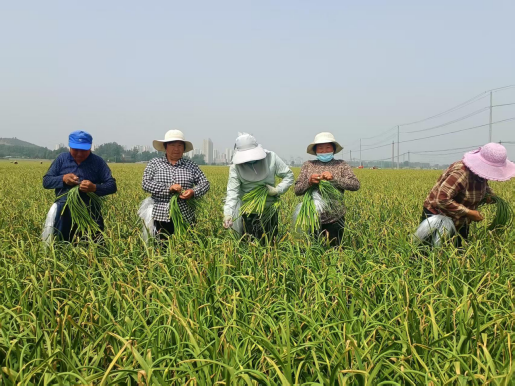
Core Viewpoint - The article highlights the collaboration between the government of Linyi County, Shandong Province, and various insurance companies to establish a multi-layered agricultural insurance system, particularly focusing on vegetable industry insurance to support farmers and promote rural revitalization [1][4]. Group 1: Agricultural Insurance Development - The central government has emphasized the need to improve the agricultural insurance system, particularly for specialty agricultural products, as outlined in the 2025 Central No. 1 Document [1]. - Linyi County has developed a "vegetable target income insurance" model, which enhances farmers' income security against market price fluctuations and natural disasters [4][10]. - The insurance model has been in place for ten years, covering various vegetables such as garlic, chili, cucumber, and potato, ensuring farmers receive compensation when market prices fall below target levels [4][10]. Group 2: Financial Mechanism and Support - The vegetable target income insurance is funded with 60% of the premium covered by provincial, municipal, and county-level finances, while farmers only pay 40% [10]. - The insurance compensates farmers for income losses due to price drops or reduced yields, with a specific example showing a target income of 3,600 yuan per mu (approximately 0.067 hectares) [10]. - The total area insured for garlic and garlic sprouts has reached 283,600 mu, providing risk coverage of 567 million yuan for over 30,000 farmers [12][13]. Group 3: Impact on Farmers - Farmers express increased confidence in their vegetable production due to the dual insurance mechanism that protects both yield and price [5][12]. - The insurance scheme has led to a significant increase in participation, with expectations to cover around 760,000 mu of vegetable income insurance, mitigating production risks of approximately 1.15 billion yuan [13]. - The collaboration between government and insurance companies has effectively utilized financial resources to stabilize the agricultural sector and enhance farmers' income security [13].
保险业双向赋能助力民营经济高质量发展
Zhong Guo Zheng Quan Bao· 2025-05-21 21:58
Core Viewpoint - The insurance industry plays a crucial role in supporting the development of the private economy in China by providing tailored risk management solutions and financial support to meet diverse needs [1][2][3]. Group 1: Insurance Product Innovation - The insurance industry is actively innovating products to meet the specific insurance needs of private enterprises and their employees, such as customized accident insurance for small and micro enterprises [2]. - Various specialized insurance products have been developed to cater to different sectors, including auto repair, renovation, and catering, addressing the unique risks faced by these industries [2]. - The insurance sector is expanding its product offerings to include export credit insurance and logistics service insurance, thereby supporting foreign trade enterprises [2]. Group 2: Comprehensive Support for Private Economy - The insurance industry provides comprehensive support to the private economy by offering risk protection, innovative insurance products, and financing enhancement services [3]. - Insurance companies are establishing a risk protection system that covers the entire lifecycle of technology innovation enterprises, addressing the complex risks associated with technological advancements [3][4]. - The industry is focusing on developing insurance products for emerging fields such as intelligent connected vehicles, robotics, and digital economy, indicating a strong growth potential for technology insurance [4]. Group 3: Financial Support and Collaboration - Insurance funds are characterized by long terms and large scales, providing stable financial support to private enterprises through equity and bond investments [4][5]. - Collaborative models between insurance companies, government, and banks are being established to facilitate resource allocation towards private enterprises, including risk compensation funds and interest rate subsidies [6]. - In the first four months of the year, the banking and insurance sectors provided approximately 17 trillion yuan in new financing to the real economy, highlighting the significant financial contributions of these industries [6].
