
凯莱英

Search documents
创新链系列:中国创新药研发景气度渐趋改善,早研产业链或显著受益
Changjiang Securities· 2026-02-02 15:09
Investment Rating - The investment rating for the healthcare industry is "Positive" and maintained [14] Core Insights - The funding levels for Chinese innovative pharmaceutical companies are increasing, leading to a gradual improvement in the research and development (R&D) investment sentiment within the industry. This is expected to usher in a new cycle of prosperity for the innovative drug industry chain [5][12] - The trend of external business development (BD) is likely to benefit the domestic early-stage research industry significantly, as new business models allow early-stage projects to become tradable and monetizable assets, enhancing R&D investment returns [13] Summary by Sections Innovative Chain Development Review - Before 2020, multiple factors converged to initiate a significant rise in China's innovative drug sector, leading to the rapid development of the innovative chain, including CXO and life sciences services [10][30] - From 2020 to the first half of 2022, the global public health crisis accelerated capital inflow into the biopharmaceutical sector, resulting in high demand and a leap in the innovative chain segment, which also triggered a wave of IPOs and substantial supply-side expansion [10][39] - The second half of 2022 to 2024 saw a transition from a heated to a cooling phase, with a significant shift in supply-demand dynamics leading to industry internal competition and pressure on revenues and profit margins [10][54][57] Improvement in R&D Investment Sentiment - Starting from 2025, the R&D investment sentiment in China's innovative drug sector is expected to improve, with companies experiencing increased funding levels. The total amount raised through IPOs and additional offerings in 2025 is projected to reach 201.5 billion yuan, a 145% year-on-year increase [11][62] - The potential milestone payments from external BD are expected to reach 880.5 billion yuan in 2025, marking a 185.9% year-on-year increase, indicating a robust funding environment for innovative drug companies [11] Benefits to Early-stage Research Industry - The new external BD business model enhances the R&D investment return rates for Chinese innovative drug companies, thereby increasing their willingness to invest in R&D [11][13] - The early-stage research industry, including drug discovery CROs and clinical trial services, is expected to benefit significantly from the external BD trend, with leading companies in these segments poised for rapid growth [13]



CXO行业系列专题报告(3):小核酸突围,大服务赋能
Guoxin Securities· 2026-02-01 07:44
Investment Rating - The report maintains an "Outperform" rating for the industry [1] Core Insights - The small nucleic acid drug market is experiencing robust growth, transitioning from technology validation to accelerated commercialization, with a global market size increasing from $2.7 billion in 2019 to $4.6 billion in 2023, and projected to reach $45.7 billion by 2033, reflecting a CAGR of 26.08% [2][39] - The small nucleic acid CXO sector is benefiting from technological breakthroughs and commercialization acceleration, establishing a comprehensive CRDMO service system [2] - Key players in the small nucleic acid field include CROs with core technologies and rich project experience, such as Chengdu XianDai and Kanglong Chemical, and CDMOs with leading production capabilities like WuXi AppTec and Kailai Ying [2] Summary by Sections 1. Small Nucleic Acid Drugs - Small nucleic acid drugs encompass various types, including ASO, siRNA, and aptamers, which target gene expression for disease treatment [11][12] - These drugs offer advantages such as shorter development cycles, broad therapeutic areas, sustained efficacy, and higher success rates compared to traditional drugs [15][16] 2. Market Expansion and BD Activity - The small nucleic acid market is expanding, with significant BD transactions occurring, including a $9 billion collaboration between Wobang Pharmaceutical and Novartis, and a $2 billion platform authorization between Rebio and Boehringer Ingelheim [48] - Domestic companies are actively developing drugs targeting hyperlipidemia, hypertension, and hepatitis B, with notable progress in clinical stages [45][47] 3. CXO Empowerment in Small Nucleic Acid R&D - The CXO industry is crucial for supporting the R&D and production of small nucleic acid drugs, with a focus on enhancing delivery technologies and chemical modifications to improve drug stability and efficacy [22][26]



资金为何密集涌入医疗ETF?
Xin Lang Cai Jing· 2026-01-30 02:49
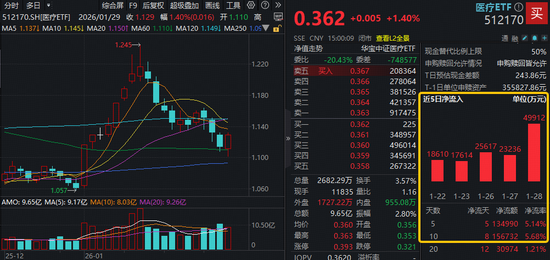
Core Viewpoint - The medical sector is showing signs of recovery in 2026, driven by policy clarity and the realization of innovative outcomes, leading to increased investment interest in medical ETFs [1][19]. Group 1: Current Core Logic and Positive Factors in the Medical Sector - The transition from "selling expectations" to "performance realization" is evident, with domestic medical device innovations gaining global recognition, thus becoming a new growth engine for the industry [3][21]. - The medical sector is experiencing a high proportion of companies meeting or exceeding their 2025 performance forecasts, indicating a favorable industry outlook [3][21]. - The recent surge in AI medical technologies is not just speculative but demonstrates clear cost-reduction and efficiency-enhancing capabilities in hospital operations and drug development [4][23]. Group 2: Policy Environment Changes - The policy environment has shifted from a "speed over quality" approach to one of "value co-creation," with recent signals indicating a more favorable stance on centralized procurement and medical insurance negotiations [6][24]. - Optimizations in the approval process for innovative medical devices and continuous improvements in procurement rules are expected to enhance the competitive landscape and restore profitability for companies [8][26]. - The introduction of a market exclusivity period in the revised Drug Administration Law is expected to boost long-term investment confidence in pharmaceutical R&D [9][27]. Group 3: Financial Support for Medical Equipment Updates - The national "two new" policy, focusing on large-scale equipment updates and consumer goods replacement, has allocated 62.5 billion yuan in special bonds to support medical equipment upgrades, benefiting listed companies in the medical device sector [10][28]. - There is a significant demand for replacing outdated medical equipment in domestic healthcare institutions, coupled with policies favoring domestic alternatives, leading to increased orders and market share for leading companies in imaging, surgical robots, and in-vitro diagnostics [10][28]. Group 4: Reasons for Recent Fund Inflows into Medical ETF (512170) - The medical ETF (512170) has seen substantial inflows, with a single-day capital increase of 499 million yuan on January 28, 2026, and a total of 1.8 billion yuan over nine consecutive trading days, reflecting a shift in market sentiment towards value recovery [1][19][14]. - The medical ETF is currently one of the largest medical-themed ETFs in A-shares, with a market size exceeding 26 billion yuan, driven by high cost-effectiveness and a consensus on bottom valuations [14][32]. - The ETF closely tracks the CSI Medical Index, with significant allocations in medical devices (53.17%) and medical services, making it an attractive option for both institutional and retail investors [14][32][34].

凯莱英(06821.HK)获Norges Bank增持9.97万股
Ge Long Hui· 2026-01-29 15:21
Group 1 - Norges Bank increased its stake in Kailaiying (06821.HK) by purchasing 99,700 shares at an average price of HKD 80.6683 per share, amounting to approximately HKD 8.0426 million [1] - Following this transaction, Norges Bank's total shareholding in Kailaiying rose to 4.2353 million shares, increasing its ownership percentage from 14.86% to 15.22% [1]

开源晨会0130-20260129
KAIYUAN SECURITIES· 2026-01-29 15:20
Group 1: Macro Economic Insights - The Federal Reserve maintained interest rates in the range of 3.5%-3.75% during the January FOMC meeting, indicating a stable economic expansion in the U.S. [5][6] - The labor market's downward trend and inflation risks have eased, suggesting that maintaining stable interest rates is the best choice for the short term [7][8] - Market reactions post-FOMC meeting showed little change in risk appetite, with the Dow Jones and Nasdaq indices experiencing slight increases [8] Group 2: Industrial Profit Insights - In December 2025, industrial profits for large-scale enterprises grew by 0.6% year-on-year, marking a return to positive growth after three consecutive years of decline [10][11] - The profit structure within the industrial sector is showing signs of divergence, with the equipment manufacturing sector becoming a significant driver of profit growth [13] - High-tech manufacturing profits increased by 13.3% year-on-year, significantly outpacing the average growth of all industrial sectors [13] Group 3: Pre-prepared Food Industry - The Chinese government is drafting national standards for pre-prepared foods to enhance consumer protection and industry quality [25][26] - The introduction of these standards is expected to raise compliance costs for smaller companies, leading to a market reshuffle favoring larger, established firms [27][28] - As industry standards improve, leading companies are likely to benefit from enhanced brand trust and market share [29] Group 4: Chemical Industry Developments - The Ministry of Ecology and Environment is pushing for the exit of outdated capacity in the chlor-alkali industry, particularly in PVC production, due to environmental concerns [31][32] - The implementation of the Minamata Convention will increase production costs for companies using mercury-based processes, accelerating the exit of less competitive firms [33] - Beneficiaries of these changes include companies like Xinjiang Tianye and Zhongtai Chemical, which are better positioned to adapt to the new regulatory environment [34] Group 5: Medical Industry Insights - Kailaiying, a leading small molecule CDMO, is transitioning towards a dual business model that includes emerging sectors like peptides and small nucleic acids, showing strong growth potential [35][36] - The company is expanding its peptide production capacity significantly to meet the rising demand for GLP-1 drugs, positioning itself favorably in a high-growth market [36] - The overall investment environment in the healthcare sector is improving, which may lead to increased demand for CDMO services [37]
Norges Bank增持凯莱英(06821)9.97万股 每股作价约80.67港元
智通财经网· 2026-01-29 11:03
智通财经APP获悉,香港联交所最新资料显示,1月28日,Norges Bank增持凯莱英(06821)9.97万股,每 股作价80.6683港元,总金额约为804.26万港元。增持后最新持股数目为423.53万股,最新持股比例为 15.22%。 ...
Norges Bank增持凯莱英9.97万股 每股作价约80.67港元
Zhi Tong Cai Jing· 2026-01-29 11:02
Group 1 - Norges Bank increased its stake in Kelaiying (002821) by purchasing 99,700 shares at a price of HKD 80.6683 per share, totaling approximately HKD 8.0426 million [1] - After the purchase, Norges Bank's total shareholding in Kelaiying reached 4.2353 million shares, representing a holding percentage of 15.22% [1]
猜想谁是26年"易中天"系列——英矽智能
格隆汇APP· 2026-01-29 10:08
Core Viewpoint - InSilico Medicine leverages its generative AI platform to enhance drug discovery efficiency, developing multiple promising pipelines and establishing collaborations with several multinational pharmaceutical giants, thereby creating a certain competitive moat through a combination of in-house development and external licensing [5][6]. Industry Background - AI-driven drug discovery and development (AIDD) is becoming an increasingly important trend in the pharmaceutical industry, with AI technology applicable in both early and late stages of drug development to improve efficiency in identifying targets, designing molecules, and optimizing clinical trials [10][11]. Market Potential - The global AIDD market is projected to grow from $11.9 billion in 2023 to $74.6 billion by 2032, representing a compound annual growth rate (CAGR) of 22.6% [12]. Advantages of AI in Drug Discovery - AI can significantly enhance efficiency across various stages of drug discovery, addressing key challenges by analyzing large and complex datasets to identify potential drug candidates, discover biomarkers and therapeutic targets, predict pharmacological properties, and optimize clinical trial outcomes [15][16]. Company Overview - Founded in February 2014 by Dr. Alex Zhavoronkov, InSilico Medicine is an AI-driven drug discovery and development company that has generated over 20 clinical or IND-stage assets through its Pharma.AI platform, with three assets licensed to international pharmaceutical and healthcare companies, totaling a contract value of up to $2.1 billion [6][24]. Business Model - The company operates under a dual CEO structure, integrating generative AI with drug discovery and development through a collaborative operational model. The business model includes drug discovery and pipeline development, software solutions, and other non-pharmaceutical discovery businesses, with primary revenue sources from licensing and collaboration agreements [23][25]. Pipeline Development - InSilico Medicine has developed a robust pipeline of 20 clinical or IND-stage assets across various therapeutic areas, including fibrosis, oncology, immunology, metabolism, and pain management [28][30]. Collaborations and Partnerships - The company has established collaborations with 13 of the top 20 global pharmaceutical companies, with significant agreements totaling over $2 billion, reflecting strong confidence in its platform and pipeline [33][34]. Financial Performance - InSilico Medicine's revenue has shown rapid growth through external licensing, with revenues of $30.15 million, $51.18 million, $85.83 million, and $27.46 million for the years 2022, 2023, 2024, and the first half of 2025, respectively. However, the company remains in a loss position [37][39]. Future Outlook - The company is expanding the application of its Pharma.AI platform to various industries, including advanced materials, agriculture, nutritional products, and veterinary medicine, indicating a broadening of its operational scope [26].

凯莱英:公司首次覆盖报告小分子CDMO龙头,多肽与小核酸共筑新增长极-20260129
KAIYUAN SECURITIES· 2026-01-29 07:25
Investment Rating - The investment rating for the company is "Buy" (首次) [1] Core Insights - The company is a leading small molecule CDMO with over 25 years of experience, currently transitioning from a single small molecule business to a dual-driven model of "small molecule + emerging business" [5][17] - The new business segment is experiencing rapid growth, contributing significantly to revenue, while traditional business remains resilient [5][6] - The company is expected to achieve net profits of 1.16 billion, 1.30 billion, and 1.51 billion yuan for 2025, 2026, and 2027 respectively, with corresponding EPS of 3.23, 3.59, and 4.18 yuan [5] Financial Summary and Valuation Metrics - Revenue projections for 2025, 2026, and 2027 are 6.66 billion, 7.69 billion, and 8.94 billion yuan respectively, with year-over-year growth rates of 14.7%, 15.4%, and 16.3% [8] - The company’s gross margin is projected to be around 42% for 2025, with a net margin of 17.5% [8] - The current P/E ratios are 31.0, 27.8, and 23.9 for 2025, 2026, and 2027 respectively [8] Business Development and Strategy - The company is focusing on expanding its capabilities in the peptide and small nucleic acid sectors, with significant investments in production capacity [6][79] - As of H1 2025, the new business segment generated 756 million yuan in revenue, a 51.22% increase year-over-year, accounting for 23.71% of total revenue [6] - The company has established partnerships with major pharmaceutical companies, enhancing its market presence and customer base [44] Industry Trends - The global healthcare investment environment is gradually recovering, with a total investment of 63.88 billion USD in 2025, marking a 10.13% increase year-over-year [47] - The domestic healthcare investment market is also improving, with a total of 73.78 billion yuan in 2025, a 39.05% increase year-over-year [53] - The global CDMO market is expected to grow significantly, with the small molecule CDMO/CMO market projected to reach 112 billion USD by 2029, growing at a CAGR of 16.6% [65]
国联民生证券:全球CXO行业强势复苏 2026年有望延续高景气
Zhi Tong Cai Jing· 2026-01-28 08:13
Group 1 - The global biotech and pharmaceutical investment and financing activities are expected to rebound significantly in 2025, driven by the robust development of innovative drug technology platforms, leading to a comprehensive recovery in the CXO industry and sustained industry prosperity into 2026 [1] - The Chinese CRO market is projected to return to a growth trajectory in 2025, with a notable 19% year-on-year increase in IND numbers and a substantial rise in BD transaction amounts, indicating a vibrant domestic innovative drug market [1] - The demand side globally is showing a strong rebound, establishing a solid foundation for growth, with biotech financing reaching a historical high in Q4 2025 and multinational pharmaceutical companies experiencing a recovery in demand [1] Group 2 - WuXi AppTec (药明康德) is expected to report impressive performance in 2025, with adjusted net profit increasing by 41.3%, driven by the TIDES business, which has seen revenue growth exceeding 90% [2] - WuXi Biologics has reached a record high of 945 projects, with a 30% growth in dual monoclonal and ADC projects, indicating a strong pipeline for future commercialization [2] - WuXi AppTec's subsidiary, WuXi STA, is focusing on the ADC/XDC sector, with revenue growth exceeding 40% in 2025 and an increase in global market share to over 24% [2] Group 3 - The Chinese clinical CRO market is at a clear turning point, with Tigermed (泰格医药) benefiting from the industry recovery, as order prices stabilize and the domestic clinical pipeline grows alongside improved financing conditions [3] Group 4 - Global CDMO giants are accelerating expansion, with optimistic performance guidance; Fujifilm is expected to secure $8 billion in new orders in 2025, reflecting strong demand for large molecule CDMO services [4] - Charles River anticipates an improvement in order trends starting in H2 2025, with a forecast for revenue growth in its safety assessment business by H2 2026, serving as an early indicator of recovery in the CXO industry [4] Group 5 - Investment recommendations include focusing on leading clinical CRO platforms like Tigermed and niche leaders such as Pruis, as well as front-end CRO companies with shorter order fulfillment cycles and greater marginal elasticity [5] - In the CDMO sector, attention is advised on leading companies in the peptide supply chain, ADC beneficiaries, and those with forward-looking layouts in small nucleic acids, as well as companies with significant potential for marginal traction from large products [5]
