
商汤科技

Search documents
MiniMax对决智谱,谁才算“六小虎”领军者?
3 6 Ke· 2026-01-09 12:27
Core Insights - The large model market is experiencing significant activity with the IPOs of Zhipu and MiniMax, highlighting a shift in market dynamics towards consumer-oriented models [1][3] - MiniMax's stock surged by 109.09% on its first trading day, outperforming Zhipu, which indicates a market preference for consumer-facing applications [1][3] - The current competitive landscape shows a divergence from previous AI companies focused on B2B, with MiniMax representing a new wave of consumer engagement [1][3] Company Performance - MiniMax's revenue for the first nine months of the previous year exceeded $50 million, indicating a willingness among overseas consumers to pay for its services [10] - The company has a small team of over 400 employees, with only about 20 working overseas, yet it has managed to innovate and reach international markets [6][7] - MiniMax's business model includes enterprise services and consumer applications, with a focus on balancing profitability across its offerings [20] Market Trends - The shift towards consumer applications is evident as MiniMax embraces new market opportunities, contrasting with previous AI companies that primarily targeted B2B [5][15] - The competitive environment is intensifying, with rising costs leading to potential price increases for AI services, as seen with ChatGPT's Pro version pricing [13] - The market is witnessing a bifurcation where companies are either focusing on B2B or C2D models, with MiniMax preparing to target Southeast Asian enterprise clients [15][19] Legal and Regulatory Challenges - MiniMax faces legal challenges, including lawsuits from major entertainment companies over copyright issues, which could impact its financial stability [23][25] - The company must navigate a complex landscape of content regulation and copyright enforcement, which poses risks to its business model [25] Financial Outlook - The financial performance of MiniMax and Zhipu is under scrutiny, with concerns about their ability to sustain growth amidst rising operational costs and competitive pressures [19][27] - The IPOs of both companies have attracted significant investment, but there are questions about whether their stock performance will mirror that of previous AI companies like SenseTime [27]

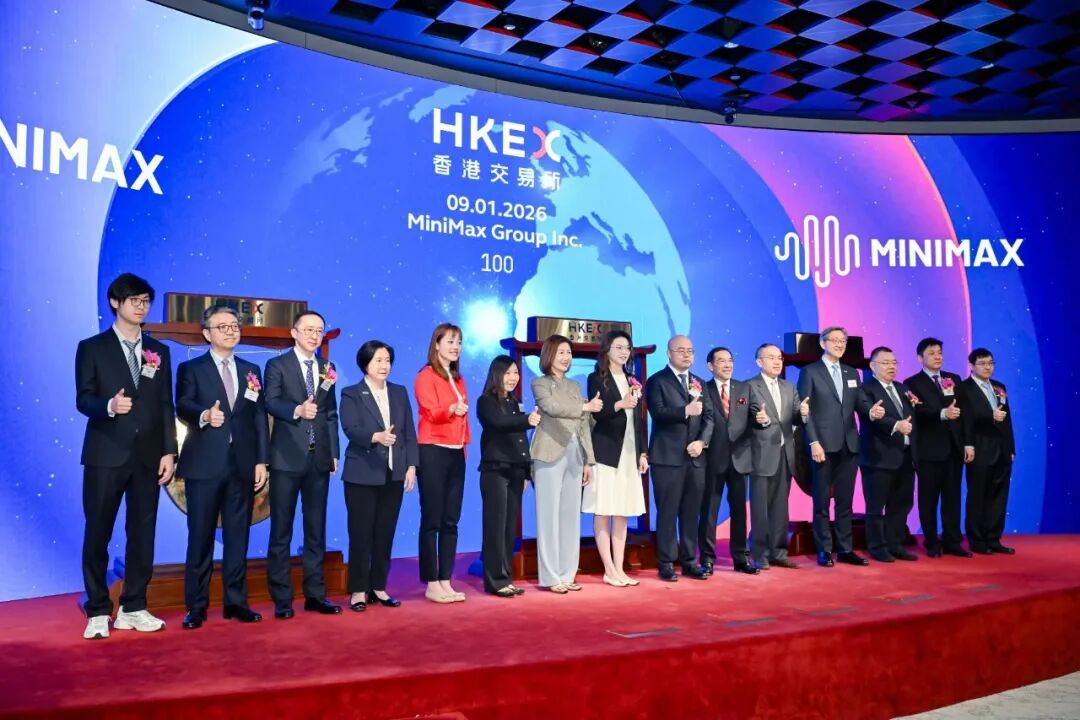
MiniMax接力:“红高腾阿爱”联手,押注大模型另一种活法
2 1 Shi Ji Jing Ji Bao Dao· 2026-01-09 05:05
Core Insights - MiniMax successfully completed its IPO on the Hong Kong Stock Exchange on January 9, with a strong opening price of 235.4 HKD, representing a 42.67% increase from the issue price of 165 HKD, leading to a market capitalization of 71.9 billion HKD [1] - The company has established itself as a leader in the competitive large model industry, attracting significant investment from global long-term institutional investors [3][4] - MiniMax's early investors include prominent venture capital and private equity firms, as well as industry players like MiHoYo, Tencent, and Alibaba, highlighting its strong backing [4][5] Investment Highlights - The IPO attracted substantial interest, with the public offering being oversubscribed by 1,837 times and the international offering by 37 times, indicating high demand from investors across various regions [3] - MiniMax's business model focuses on a multi-modal approach, integrating text, voice, and video technologies, which has differentiated it in the market [4][9] - The company has achieved impressive financial metrics, with AI-native product revenue accounting for 71.1% of total revenue and a gross margin of 69.4% for the first three quarters of 2025 [9][13] Growth and Development - MiniMax was founded in November 2021 by Yan Junjie, who previously held a senior position at SenseTime, and has since built a strong team with an average age of 29 [4][14] - The company has successfully implemented a "MoE architecture" for its models, achieving significant cost efficiency and performance, with a reported revenue of 53.4 million USD for the first nine months of 2025, reflecting a year-on-year growth of over 170% [9][13] - MiniMax's products, such as Talkie and Hai Luo, have reached a user base of 2.12 billion globally, with a 15-fold increase in paid users over two years, showcasing its strong market penetration [13][14] Strategic Vision - The company's strategic vision emphasizes the importance of foundational models for achieving general artificial intelligence (AGI), with a commitment to long-term development despite market uncertainties [10][11] - MiniMax's organizational structure is designed for efficiency, with a flat hierarchy that allows for rapid decision-making and innovation, contributing to its competitive edge [14] - The focus on both model development and commercial application has positioned MiniMax as a benchmark for the globalization of domestic AI models, with over 70% of its revenue coming from international markets [12][13]
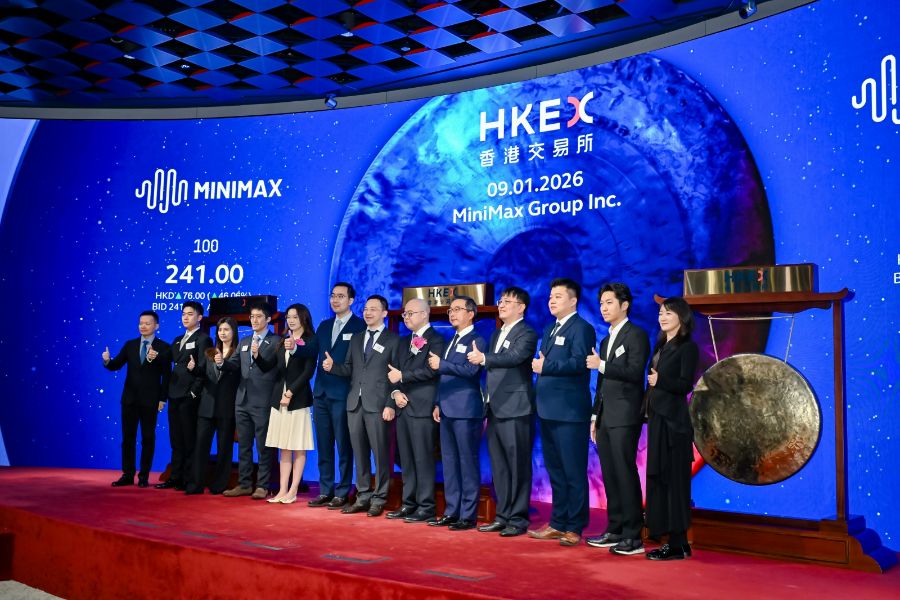
见微知沪丨AI企业密集上市背后,上海为智能未来打造的“钢筋铁骨”
Xin Lang Cai Jing· 2026-01-09 04:13
Core Viewpoint - The recent surge of AI companies going public in Shanghai reflects a well-structured ecosystem supported by strategic policies and a robust industrial foundation, indicating a significant growth trajectory for the AI sector in the region [1][10][16]. Group 1: Recent IPOs and Market Impact - MiniMax (稀宇科技) officially listed on the Hong Kong stock market on January 9, achieving a market capitalization of over 76.3 billion HKD, marking it as the largest IPO for an AI model company to date [1]. - Tian Shu Zhi Xin and Bi Ran Technology also recently went public, with Tian Shu Zhi Xin's stock price rising by 31.54% on its first day [1]. - In total, five AI companies from Shanghai have gone public within a month, showcasing the rapid growth and interest in the AI sector [1][10]. Group 2: Strategic Policy Support - The "Molding Shanghai" initiative, launched in late 2024, aims to create a world-class AI industrial ecosystem, focusing on foundational infrastructure, key productivity tools, and innovative applications [1][2]. - Shanghai's strategic agility and determination in supporting AI development are evident in its long-term planning and investment in foundational technologies like integrated circuits [5][16]. Group 3: Industry Growth and Ecosystem - The integrated circuit industry in Shanghai generated revenue of 391.2 billion CNY in the first eleven months of 2025, reflecting a year-on-year growth of 23.72% [5]. - Shanghai has established itself as a hub for AI innovation, with over 1,200 integrated circuit companies and approximately 40% of national talent in the sector [5][15]. - The "Molding Shanghai" initiative includes the establishment of public service platforms to support AI development, such as the Shanghai Intelligent Computing Public Service Platform [5]. Group 4: Technological Advancements - MiniMax is recognized for its comprehensive research in text, video, and voice modalities, boasting over 212 million users across more than 200 countries [7]. - The AI landscape in Shanghai features a development framework of "1 open-source base model + 3 commercial base models + N innovative models," positioning it competitively on an international scale [7][8]. - Companies like Yingxi Intelligent are leveraging AI for drug development, significantly reducing the drug discovery cycle from an industry average of 4.5 years to 12-18 months [8]. Group 5: Future Outlook - Shanghai's AI industry is projected to exceed 550 billion CNY in scale by 2025, with an expected growth rate of over 30% [16]. - The city is fostering a comprehensive ecosystem that integrates various sectors, ensuring a cohesive approach to AI development and innovation [16].

上海一个月5家AI企业上市
Xin Lang Cai Jing· 2026-01-09 00:59
Core Insights - Shanghai has achieved a record of "five AI companies listed in one month," indicating that the AI industry in Shanghai is entering a "harvest period" [1] - The five listed AI companies possess high technological content, reflecting Shanghai's comprehensive industrial chain from algorithms to applications, unlike other cities that focus on single breakthroughs [1][2] - Shanghai is home to a significant concentration of AI talent, with 250,000 AI professionals, accounting for one-third of the national total [2] AI Industry Growth - By 2025, Shanghai's AI industry is expected to exceed 550 billion yuan in scale, with a growth rate of over 30% [2] - In the first three quarters of 2025, 394 large-scale enterprises in Shanghai reported revenues of 435.49 billion yuan, a year-on-year increase of 39.6% [2] - MiniMax, a local AI company, has achieved rapid growth, with 2.12 billion personal users and a monthly active user count of 27.6 million by September 2025 [4] Technological Advancements - Shanghai has established a development pattern of "1 open-source base model + 3 commercial base models + N innovative models" in model algorithm innovation [4] - The city is focusing on the development of large models, with significant advancements in multi-modal scientific models that outperform leading closed-source models [4] - Companies like MiniMax and SenseTime are leading in the development of advanced models, with MiniMax's model achieving code generation speeds twice that of competitors at a fraction of the cost [4] GPU and Semiconductor Industry - Shanghai is recognized as China's "GPU capital," with four major GPU companies successfully listed, contributing to the city's robust semiconductor industry [5][7] - The city has a well-established integrated circuit industry, ranking fourth globally and first in mainland China, supporting the AI industry's growth [7][8] - The local government provides substantial financial support for the semiconductor sector, enhancing the overall ecosystem [7] Robotics and Physical AI - Shanghai is making strides in humanoid robotics, with companies like Zhiyuan Robotics achieving significant production milestones [9][11] - The city is leveraging its strong supply chain in the Yangtze River Delta to support the rapid scaling of humanoid robot production [11][12] - Recent technological breakthroughs in humanoid robots and related components are driving the industry forward, with a focus on enhancing training facilities and data collection standards [12]
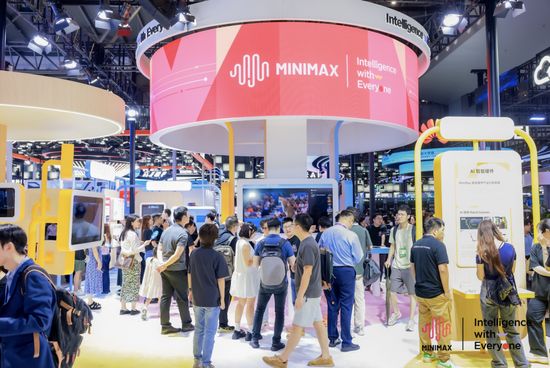
上海一个月5家AI企业上市
第一财经· 2026-01-09 00:54
Core Viewpoint - Shanghai's AI industry is entering a "harvest period" with five AI companies listed in one month, indicating a robust ecosystem that integrates hardware, software, and applications, unlike other cities that focus on singular breakthroughs [3][4]. Group 1: AI Industry Growth - In the past 30 days, five AI companies from Shanghai have gone public, showcasing a unique "listing wave" that reflects the city's comprehensive AI industry chain [3]. - Shanghai is building a complete ecosystem from "brain" (computational algorithms) to "blood" (data) and "limbs" (embodied intelligence), which is not seen in other cities [3][4]. - The AI industry in Shanghai is projected to exceed 550 billion yuan in scale by 2025, with a growth rate of over 30% [5]. Group 2: Major AI Companies - MiniMax, established in early 2022, is a representative of Shanghai's local AI model companies, achieving the fastest IPO globally with a workforce where 73.8% are R&D personnel [5][6]. - MiniMax's model, MiniMax-M2, has a code generation speed twice that of its U.S. counterpart Claude, at only 8% of the cost, demonstrating significant efficiency [5][6]. - By September 2025, MiniMax had 212 million personal users, with 73.1% of its revenue coming from overseas, highlighting its global expansion [6][8]. Group 3: GPU and Computational Power - Shanghai is recognized as China's "GPU capital," with four major GPU companies successfully listed, indicating a strong foundation for AI technology [10][12]. - The local integrated circuit industry has been developing for decades, positioning Shanghai as a leader in the global semiconductor landscape [12][13]. - The city has established a complete integrated circuit industry chain, fostering numerous leading enterprises across various segments [13]. Group 4: Embodied Intelligence and Robotics - Human-shaped robots are seen as the ideal carriers for embodied intelligence, with significant milestones achieved in mass production [15][17]. - Shanghai's local robotics companies are rapidly scaling up production, with plans for substantial increases in output capacity [17][18]. - The city is enhancing its embodied intelligence training facilities and supporting the establishment of unified training standards across regions [18][19].

上海一个月5家AI企业上市,5500亿产业“护城河”全链开花
Di Yi Cai Jing· 2026-01-09 00:09
Group 1 - Shanghai is building a complete AI ecosystem, unlike other cities that focus on single breakthroughs, with five AI companies listed in one month, indicating the industry is entering a "harvest period" [1] - The five listed AI companies in Shanghai, including MiniMax, have high technological content, supported by a comprehensive industrial chain that includes hardware, software, algorithms, and applications [1][2] - By 2025, Shanghai's AI industry is expected to exceed 550 billion yuan in scale, with a growth rate of over 30%, reflecting significant revenue and profit increases among major enterprises [2] Group 2 - MiniMax, established in early 2022, is a representative of Shanghai's local AI model companies, achieving the fastest IPO globally, with a high proportion of R&D personnel [3] - MiniMax's model, MiniMax-M2, has a code generation speed twice that of its competitors at a fraction of the cost, showcasing its efficiency [3][6] - Shanghai has developed a model algorithm innovation system with a structure of "1 open-source base model + 3 commercial base models + N innovative models" [6] Group 3 - Shanghai is recognized as China's "GPU capital," with four major GPU companies listed, indicating a robust foundation for AI technology [7][11] - The integrated circuit industry in Shanghai has been developing for decades, ranking fourth globally and first in mainland China, supporting the AI industry's growth [7][11] - The city has established a complete integrated circuit industry chain, fostering leading enterprises in various segments, including chip design and manufacturing [11] Group 4 - Human-shaped robots are seen as the ideal carriers for embodied intelligence, with significant production milestones achieved by local companies [12][14] - Shanghai's robot companies have rapidly scaled production, supported by a well-established supply chain in the Yangtze River Delta region [14][15] - The city is enhancing the effectiveness of embodied intelligence training facilities and building a high-quality data set for training [15]
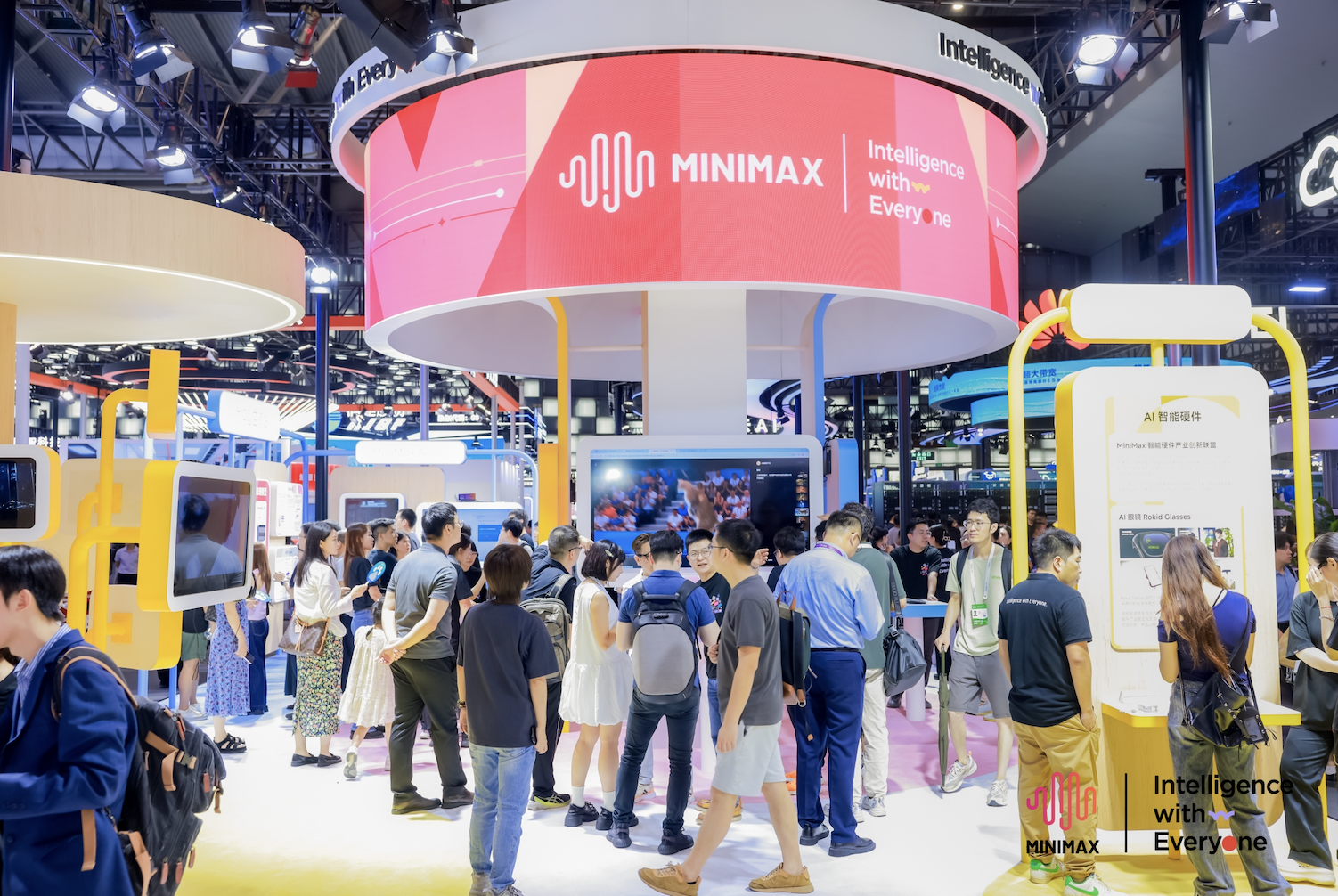
MINIMAX-WP(00100):中国AI出海标杆,多模态布局未来
Soochow Securities· 2026-01-08 09:19
Investment Rating - The report does not provide a specific investment rating for the company [1]. Core Insights - MiniMax is positioned as a benchmark for AI expansion in China, focusing on multi-modal development to build competitive large models for the global market [7]. - The company has adopted a dual-driven business model (ToC and ToB), with consumer products generating significant cash flow and enterprise services providing high margins [7]. - MiniMax's revenue is projected to grow significantly, with estimates of $80.88 million in 2025 and $398.66 million in 2027, reflecting a compound annual growth rate of over 130% [7]. - The company has a strong global execution capability, with products covering over 2.12 billion personal users and more than 100,000 enterprise clients across 200 countries [7]. Summary by Sections Company Overview - MiniMax was established in December 2021, focusing on general AI technology development and aiming for global market presence [12]. - The company has raised over $1.5 billion in funding, with notable investors including Alibaba and Xiaomi, which supports its high R&D intensity [12][13]. - As of September 2025, MiniMax has a workforce of 385 employees, predominantly young and tech-focused, enhancing its execution efficiency [12]. Business Model - The company operates a dual-driven model, with consumer business leading in scale and cash flow, while developer enterprise business supports high margins [30]. - Consumer products include Talkie and Hailuo AI, which have shown strong performance in overseas markets, particularly in North America [31][34]. - Developer enterprise business generates revenue through API calls and model licensing, with a significant increase in paid clients from 400 in 2024 to approximately 2,500 in 2025 [39]. Technology Route and Competitive Advantages - MiniMax's core technology strategy is based on a multi-modal architecture, focusing on language, vision, and speech models [43]. - The company emphasizes a system engineering approach, ensuring high efficiency in model training and deployment [44][46]. - MiniMax's ability to rapidly iterate and improve its models positions it favorably against competitors, as it can unlock new application scenarios with each model upgrade [47][48].
博泰车联(02889):软硬云协同筑壁垒,AI赋能打开成长空间
Soochow Securities· 2026-01-08 06:39
Investment Rating - The report assigns a "Buy" rating for the company, marking its first coverage [1]. Core Insights - The company is a leading provider of integrated smart cockpit solutions, having successfully transitioned from a focus on vehicle networking systems to smart cockpit solutions since 2018, solidifying its position in the industry [8][13]. - The penetration rate of smart cockpits in domestic and global passenger vehicles is steadily increasing, with projections indicating a rise in China's market penetration from 35.3% in 2019 to 75.9% by 2025, and globally from 38.4% to 59.4% in the same period [8][42]. - The company's revenue growth is primarily driven by the increasing orders for high-end domain controllers, with expectations of a turnaround in net profit by 2025 [8][49]. Summary by Sections Company Overview - The company was established in 2009 and initially focused on vehicle networking systems, later shifting its focus to integrated software, hardware, and cloud services for smart cockpit solutions [8][13]. - It has established six R&D centers and three manufacturing bases, serving over 50 automotive brands, with Li Auto being a key customer driving revenue growth [8][22]. Market Position and Growth - The domestic and global market for smart cockpit solutions is rapidly expanding, with the Chinese market expected to grow from 129 billion RMB in 2024 to 299.5 billion RMB by 2029, reflecting a compound annual growth rate (CAGR) of 18.4% [42][48]. - The company has formed deep partnerships with Qualcomm and Huawei, enhancing its competitive edge in high-end domain controller products [8][56]. Financial Projections - Revenue forecasts indicate significant growth, with total revenue expected to reach 34.58 billion RMB in 2025, 54.52 billion RMB in 2026, and 78.39 billion RMB in 2027, alongside a projected net profit turnaround in 2025 [1][8]. - The company has shown a consistent increase in revenue since 2021, with a compound annual growth rate of 43.5% from 2021 to 2024 [26][30]. Product Development and Strategy - The company emphasizes a "software + hardware + cloud" self-research system, developing core technologies that support the scalability and customization of its smart cockpit solutions [61]. - The high-end domain controller product ratio is increasing, with shipments rising from 1.5% in 2023 to 51.1% in early 2025, indicating a shift towards higher-value products [64].
智谱-Minimax-商汤
2026-01-08 02:07
Summary of Conference Call Records Companies and Industry - **Companies Involved**: Zhipu, MiniMax, and SenseTime - **Industry Focus**: AI and large model technology, targeting both B-end (business) and C-end (consumer) markets Key Points and Arguments Zhipu - **Business Model**: Operates an integrated MaaS (Model as a Service) platform that supports both local and cloud deployments, with local deployment revenue accounting for approximately 85% of total revenue [1][5] - **Financial Performance**: - Revenue compound annual growth rate (CAGR) from 2022 to 2024 is 130% - 2024 revenue reached 300 million RMB, with a net loss of 2.5 billion RMB in 2024 and 1.75 billion RMB in the first half of 2025, indicating a 70% year-over-year increase in losses [1][12] - Maintains a gross margin above 50%, with 2024 gross margin at 56% and 2025 first half at 50% [12] - **Customer Growth**: Customer count for local deployment increased from 48 in 2022 to 123 in 2024, with annual customer spending rising from 1.14 million RMB to 2.15 million RMB [5] MiniMax - **Business Model**: Focuses on AI-native applications and an open platform for enterprise services, with over 70% of revenue coming from AI-native applications [1][6] - **Financial Performance**: - 2024 revenue of 30 million USD (approximately 200 million RMB), an increase of nearly 8 times year-over-year [1][13] - First three quarters of 2025 revenue reached 50 million USD (approximately 360 million RMB), a 175% year-over-year increase [13] - Gross margin improved from -12% in 2023 to 23% in the first three quarters of 2025 [14] - **User Engagement**: Monthly active users for Talkie reached 20 million, contributing significantly to revenue [6] SenseTime - **Business Model**: Combines software and hardware, focusing on B-end large model applications, with a strong computational infrastructure [2][10] - **Financial Performance**: - Generated 1.8 billion RMB in revenue from generative AI in the first half of 2025, a year-over-year increase of over 70%, accounting for 77% of total revenue [4][15] - Gross margin around 40%, with significant improvements in trade receivables [15] - **Computational Infrastructure**: Operates a substantial computational center with over 25,000 units, primarily using NVIDIA cards [10] Market Dynamics - **B-end vs. C-end Performance**: B-end commercialization is progressing faster than C-end, with Zhipu's revenue tripling in the first half of 2025. MiniMax's C-end product penetration is only 0.9%, significantly below the global average of 3% [16] - **Global C-end AI Product Potential**: Approximately 1.7 to 1.8 billion people have interacted with AI tools, but the overall payment penetration rate is only about 3%, compared to over 20% for other consumer products [17][18] Valuation and Future Outlook - **Valuation Estimates**: - MiniMax's IPO valuation is estimated between 46 billion to 50 billion HKD, while Zhipu is around 51 billion HKD [20] - SenseTime's market value is approximately 95 billion HKD, with a projected revenue of 5.5 billion RMB from generative AI in 2026 [20] - **Investment Potential**: If these companies maintain high revenue growth, their future prospects appear promising, with SenseTime being considered undervalued [22] Additional Important Information - **Training Costs**: MiniMax's training costs for computational power reached 142 million USD in the first three quarters of 2025, indicating a strong focus on maintaining technological leadership [19] - **Commercialization Challenges**: The C-end market remains in an exploratory phase, with unclear monetization paths for AI products [18]
智谱(02513):从清华实验室到港股AI新贵,关注模型迭代与生态飞轮
Soochow Securities· 2026-01-07 13:06
Investment Rating - The report does not provide a specific investment rating for the company [1]. Core Insights - The company, Zhipu AI, is a leading independent general large model developer in China, established in 2019, and has developed a unique General Language Model (GLM) framework that excels in long text understanding and logical reasoning [6][12]. - Zhipu AI's flagship products, GLM-4.5 and GLM-4.7, have achieved top rankings in international benchmark tests and have gained significant recognition in the global developer community [6][14]. - The company has a strong market position, ranking first among independent general large model developers in China with a market share of 6.6% as of 2024 [6][15]. - Zhipu AI plans to go public on the Hong Kong Stock Exchange on January 8, 2026, with an IPO price of HKD 116.20 per share, aiming to raise approximately HKD 4.3 billion [6][15]. Summary by Sections 1. Company Overview - Zhipu AI is built on technology from Tsinghua University and aims to compete with OpenAI, focusing on a self-regressive fill-in-the-blank GLM framework [12][16]. - The company has released several significant models, including the GLM-130B, which marked its entry into the mainstream large language model market [12][16]. 2. Business Model and Operations - The business model is centered around Model as a Service (MaaS), offering both localized and cloud deployment options [21][24]. - Localized deployment accounts for a significant portion of revenue, with high margins, while cloud deployment is rapidly growing and aims to capture a larger market share [24][25]. 3. Historical Financial Analysis - Revenue has shown rapid growth, with projections indicating revenues of CNY 785 million in 2025 and CNY 1.55 billion in 2026, reflecting a compound annual growth rate of over 130% from 2022 to 2024 [1][30]. - The company has been operating at a loss due to substantial R&D investments, with cumulative R&D expenses exceeding CNY 4.4 billion from 2022 to 2024 [6][30]. 4. Core Competitiveness - Zhipu AI's competitive edge lies in its fully self-developed technology system, leading model performance, and a robust open-source ecosystem [38][39]. - The GLM series models have demonstrated significant advantages in various applications, including multi-modal understanding and generation [39][40]. 5. Profitability Forecast and Investment Suggestions - The company is expected to achieve revenues of CNY 7.9 billion in 2025, CNY 15.5 billion in 2026, and CNY 32.2 billion in 2027, with a gradual shift towards cloud-driven revenue [6][7]. - The overall gross margin is projected to reach 50% by 2025, with improvements in cloud margins as the business scales [6][7].