
沙特阿拉伯国家石油公司

Search documents
欧洲央行维持三大利率不变:申万期货早间评论-20251031
申银万国期货研究· 2025-10-31 00:50
Core Viewpoint - The European Central Bank has maintained its three key interest rates unchanged, with the deposit rate at 2.0%, the main refinancing rate at 2.15%, and the marginal lending rate at 2.4% [1] Economic News - The Eurozone's GDP for Q3 showed a year-on-year increase of 1.3% and a quarter-on-quarter increase of 0.2%, outperforming market expectations. However, there is a growing divergence in performance among member countries, with France's GDP growing by 0.5% quarter-on-quarter, marking the fastest growth rate in 2023, while Germany's GDP remained flat, continuing a 14-quarter period of low performance [5] Domestic News - The consensus from the recent China-U.S. economic talks revealed that the U.S. will cancel the 10% tariff on Chinese goods related to fentanyl and will continue to suspend the 24% tariff for another year. Additionally, the U.S. will pause the implementation of export control rules and investigations related to maritime and logistics for one year, while China will adjust or suspend corresponding countermeasures [6] Industry News - A total of 500 billion yuan in new policy financial tools have been fully deployed, significantly supporting key areas and projects, with an expected total investment boost of over 7 trillion yuan. The focus of these tools includes technological innovation, expanding consumption, and stabilizing foreign trade [7] Commodity Insights Precious Metals - Recent declines in gold and silver prices have been followed by a rebound. The Federal Reserve is expected to cut rates by 25 basis points this week and end quantitative tightening by December 1. However, market expectations for a December rate cut have cooled following hawkish comments from Powell. Geopolitical risks have eased, and central banks are increasing gold reserves amid rising distrust in the financial system, reinforcing gold's status as a safe-haven asset [2][17] Copper - Copper prices fell in the overnight market, with tight supply of concentrates and smelting profits at breakeven. However, smelting output continues to grow. Data from the National Bureau of Statistics indicates positive growth in power grid investment, while real estate remains weak. A mining accident in Indonesia is likely to create a global copper supply gap, supporting prices in the long term [3][18] Oil - The SC night market saw a decline of 0.24%. The International Energy Agency reported that the daily oil supply from nine OPEC countries with quotas in September was 23.87 million barrels, an increase of 760,000 barrels from August, exceeding their target by 940,000 barrels. Saudi Arabia's daily oil supply was 9.98 million barrels, also up from August, aligning with targets [12] Financial Markets - The U.S. stock indices fell, with the Shanghai Composite Index dropping below 4000 points. The market's trading volume was 2.46 trillion yuan. The financing balance increased by 11.587 billion yuan, indicating a potential for continued liquidity in the domestic market [10]


普京对西方供乌武器划“红线”:若使用“战斧”导弹袭击俄领土,将招致惊人回应
Huan Qiu Shi Bao· 2025-10-24 22:52
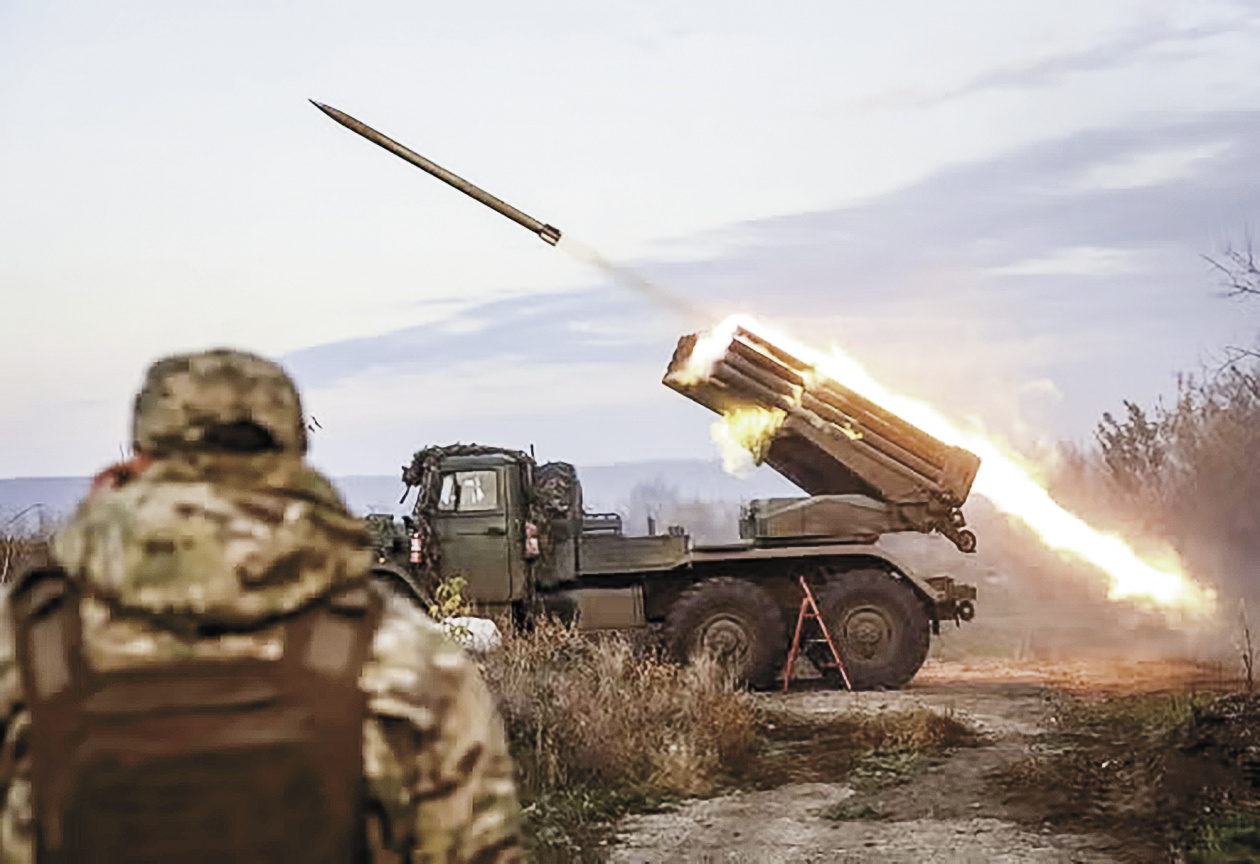
Group 1: Geopolitical Developments - Ukrainian President Zelensky attended the "Volunteer Alliance" meeting in London, with key figures such as UK Prime Minister Starmer and NATO Secretary General Stoltenberg present, while French President Macron joined via video [1] - The US announced sanctions against Russia's two largest oil companies, and the EU implemented its 19th round of sanctions targeting the Russian oil and gas sector [1][3] - Russia's response to the sanctions has been relatively calm, with President Putin indicating that the sanctions would not significantly impact the Russian economy [4][5] Group 2: Financial Support for Ukraine - The EU has not reached a consensus on using frozen Russian assets to support Ukraine, with approximately €140 billion currently frozen in Belgium [3] - European Council President Costa affirmed the EU's commitment to meet Ukraine's urgent financial needs over the next two years [3] - Zelensky welcomed the EU's political support for using Russian assets to aid Ukraine, despite the lack of immediate financial action [3] Group 3: Military Dynamics - Ukraine successfully used the jointly developed "Storm Shadow" missile to strike a chemical plant in Russia's Bryansk region [3] - Starmer is expected to announce additional air defense missiles for Ukraine, as part of a £1.6 billion agreement signed in March [3] - Russian military experts warned that any attacks on Russian territory using long-range missiles would provoke a strong response, potentially including nuclear options [5] Group 4: Oil Market Implications - The sanctions against Russian oil companies could lead to global supply tightness, as these companies account for nearly 50% of Russia's oil exports [6] - OPEC is prepared to increase oil production to counter potential shortages resulting from the sanctions, with Kuwait's oil minister warning that sanctions could drive up global oil prices [6][7] - The market is currently stabilizing, with oil prices showing signs of returning to equilibrium amid geopolitical tensions [6]
国际油价跌破60美元关口 供应过剩警报愈发刺耳
2 1 Shi Ji Jing Ji Bao Dao· 2025-10-13 23:31
Core Viewpoint - International oil prices are under significant pressure due to a combination of factors including oversupply, geopolitical tensions, and economic uncertainties, leading to a bearish outlook for the market [1][2][3]. Supply and Demand Dynamics - Brent crude futures have fallen over 15% and WTI crude futures over 16% year-to-date, indicating a persistent weakness in international oil prices [2]. - The global oil market is currently experiencing a seasonal decline in demand, with major institutions forecasting limited growth in oil consumption for the fourth quarter [1][3][8]. - OPEC+ has agreed to increase oil production by 137,000 barrels per day starting in November, which is lower than market expectations, but still contributes to concerns about oversupply [4][5]. Geopolitical and Economic Factors - The U.S. government's threats of new tariffs and trade tensions with China are exacerbating market fears, leading to increased risk aversion among investors [1][2][3]. - The easing of geopolitical tensions in the Middle East has reduced risk premiums, further applying downward pressure on oil prices [3]. OPEC+ Production Strategy - OPEC+ is managing production levels to maintain oil prices within a controllable range, but the current increase in production may lead to a worsening oversupply situation [5][6]. - The total idle capacity of OPEC+ is estimated at 4.05 million barrels per day, with Saudi Arabia holding the largest share, indicating potential for future supply adjustments [7]. Market Outlook - Analysts predict that the oil market may remain in a state of oversupply for the foreseeable future, with global oil demand expected to peak around 2027 [8][9]. - The current market conditions suggest that oil prices may continue to face downward pressure, especially as the market enters a demand lull and geopolitical uncertainties persist [8][9].
原油:过剩和地缘交织,油价震荡运行
Zheng Xin Qi Huo· 2025-10-10 09:15
Report Industry Investment Rating - Not provided in the content Core Viewpoints - In October, geopolitical disturbances and supply surplus will continue to dominate the oil market. With the rising expectation of interest rate cuts and uncertainties in the Russia-Ukraine situation, but the extremely low level of crude oil inventories provides bottom support. It is expected that oil prices will continue to fluctuate mainly in the range of WTI $60 - $65 per barrel, similar to September. In the medium to long term, pay attention to shorting opportunities on rebounds caused by geopolitical disturbances. For safety, virtual call options can be used to hedge the risk of upward breakthrough due to sudden geopolitical events. The surplus pattern will further intensify in the next six months, and crude oil is still considered to be in a downward trend. Although OPEC+ has not clearly defined its production increase route, once oil prices rise, it will boost OPEC+'s enthusiasm for increasing production, which will always suppress the upside of oil prices [5]. Summary by Relevant Catalogs 1. International Crude Oil Analysis - **Price Trend**: In September, the oil market was mainly driven by geopolitical and supply surplus factors, with prices fluctuating between WTI $60 - $65 per barrel. Geopolitical concerns pushed oil prices to challenge the upper pressure level, but they failed to break through effectively. When concerns about surplus intensified, potential geopolitical risks and low inventories supported oil prices above $60. As of September 30, the monthly average settlement prices of WTI and Brent were $63.57 per barrel (-3.21%) and $67.58 per barrel (-3.54%) respectively; the monthly average settlement price of INE SC was 486.19 yuan per barrel (-1.01%) [8]. - **Financial Aspect**: In September, the economic data released by the United States showed that inflation was controllable but employment was weak. At the beginning of the month, the expectation of interest rate cuts increased, and the Fed cut interest rates as scheduled at the September FOMC meeting and sent a dovish signal. As of September 30, the S&P 500 index continued to rebound since mid - April, reaching 6753.72; the VIX volatility was 16.3, significantly lower than when the tariff policy was first implemented and still at a low level this month [13]. - **Crude Oil Volatility and Dollar Index**: The crude oil ETF volatility and the dollar index fluctuated. As of September 30, the crude oil volatility ETF was 31.53, and the dollar index was 98.849. In September, the drivers of the crude oil market were intertwined with geopolitical, macroeconomic, and fundamental factors. Overall, the crude oil volatility remained at the bottom, lacking a strong driver to break through the oscillation range. The employment data released in September was worse than expected, combined with the Fed's interest rate cut, causing the dollar index to oscillate at a low level [17]. - **Crude Oil Fund Net Long Positions**: The net long positions of WTI funds increased, but the speculative net long positions decreased. As of September 23, the net long positions of WTI managed funds increased by 0.19 million contracts month - on - month to 2.65 million contracts, a monthly increase of 7.6%; the speculative net long positions decreased by 0.84 million contracts to 7.65 million contracts, a monthly decrease of 9.9%. There were obvious differences in the market, and the long positions of funds showed characteristics of left - hand side layout. Oil prices generally continued to oscillate within a range, and the trading volume had decreased significantly [20]. 2. Crude Oil Supply - Side Analysis - **OPEC Production**: In August, OPEC's crude oil production increased by 47.8 barrels per day to 2794.8 barrels per day compared with the previous month. Most countries have started to increase production, with Saudi Arabia, the UAE, and Iraq leading the pace. However, the production of the eight core OPEC+ countries that agreed to increase production was still 15.4 barrels per day lower than the plan in August, mainly because some countries were implementing their submitted compensatory production cut plans [25]. - **OPEC+ Production Cut Situation**: According to the IEA's statistical caliber, the production of nine OPEC member countries in August was 2328 barrels per day, an increase of 19 barrels per day compared with the previous month. Among them, the UAE, Iraq, Kuwait, and Kazakhstan still had significant over - production, but the overall over - production amplitude of the nine countries decreased compared with the previous month, perhaps because the organization's requirement to produce according to the quota began to have a certain effect. Seven countries updated their compensatory production cut plans, and the concentrated production cuts were extended to the first half of next year [29]. - **Saudi and Iranian Production**: Saudi Arabia's production continued to rise. In August, its crude oil production increased by 25.9 barrels per day to 970.9 barrels per day. Iran's production continued to decline. In August, its crude oil production decreased by 2.7 barrels per day to 321.8 barrels per day. Sanctions on Iran in late July and the 12 - day war between Israel and Iran in June hindered Iran's subsequent oil production, and the impact of geopolitics has begun to be reflected in its production [33]. - **Russian Supply**: According to OPEC's statistical caliber, Russia's crude oil production in August was 917.3 barrels per day, an increase of 5.3 barrels per day compared with the previous month; according to the IEA's statistical caliber, its production was 928 barrels per day, an increase of 8 barrels per day compared with the previous month. Under the production increase plan, production is gradually recovering but still at a relatively low level [41]. - **US Production**: As of the week of October 3, the number of active oil rigs in the US increased by 10 to 422 compared with the previous month, a year - on - year decrease of 57. The high oil prices during the peak season in the third quarter boosted producers' sentiment, and the number of drilling rigs stopped falling. The improvement in drilling and well efficiency enables producers to maintain record - high production while controlling capital expenditure. As of the week of October 3, US crude oil production rebounded, increasing by 12.4 barrels per day to 1362.9 barrels per day compared with the previous week and month, a year - on - year increase of 1.71%. The low oil prices in the first half of the year had suppressed producers' enthusiasm and compressed the increase in US oil production. However, the high oil prices since June seem to have boosted production enthusiasm again, and US crude oil production has continuously refreshed the historical record since last year in September [45][48]. 3. Crude Oil Demand - Side Analysis - **US Petroleum Product Demand**: As of the week of October 3, the total average daily demand for refined oil products in the US was 2089.7 barrels per day, an increase of 55.3 barrels per day compared with the previous week and a year - on - year increase of 1.68%. September is a period of seasonal weakening in oil product demand, and the weakening support of demand for oil prices has caused the oscillation center of oil prices to move down. In October, there will be a phased rebound peak in oil product demand [52]. - **US Crude Oil, Gasoline, and Distillate Data**: From September 5 to October 3, US crude oil production increased by 13.4 barrels per day, consumption increased by 0.9 barrels per day, refinery processing volume decreased by 52.1 barrels per day, and the refinery utilization rate decreased by 2.5 percentage points. Gasoline production increased by 16.6 barrels per day, and the implied demand decreased by 12.5 barrels per day. Distillate production decreased by 6 barrels per day, and the implied demand increased by 1.7 barrels per day [56]. - **US Gasoline, Diesel, and Kerosene Consumption**: As of the four - week period ending on October 3, the average demand for gasoline in the US increased by 10.3 barrels per day to 880.2 barrels per day, a year - on - year decrease of 2.62%; the average demand for distillates increased by 24.2 barrels per day to 383 barrels per day, a year - on - year decrease of 1.08%; the average consumption of kerosene decreased by 1.4 barrels per day to 164 barrels per day, a year - on - year decrease of 6.92% [57]. - **US Gasoline and Heating Oil Crack Spreads**: As of October 8, the gasoline crack spread was $17.65 per barrel, and the heating oil crack spread was $33.68 per barrel. In September, the crack spread trends were in line with the seasonality of each oil product. Gasoline entered the seasonal off - season as expected, and the spread continued to decline. The demand for distillates was still in the seasonal recovery period, and the crack spread performed better [61]. - **European Diesel and Heating Oil Crack Spreads**: As of October 8, the ICE diesel crack spread was $26.31 per barrel, and the heating oil crack spread was $29.98 per barrel. In the first half of the third quarter, European diesel performed better than heating oil due to low inventories and peak - season restocking demand. The overall oil products were in a relatively warm atmosphere driven by diesel, and the crack spreads continued to rise and remained at a high level in September [65]. - **China's Oil and Refinery Situation**: In August, China's crude oil processing volume increased by 439.1 million tons year - on - year to 6346 million tons (+7.43%); the import volume increased by 39.2 million tons year - on - year to 4949.2 million tons (+0.8%). Since the beginning of this year, the escalation of the Middle East situation has raised concerns about supply, leading to a surge in China's oil imports from the Gulf region. At the same time, the recovery of Russian oil supply has been much higher than the same period in previous years. The import volume rebounded seasonally in August [68]. - **Institutional Forecasts for Demand Growth**: Three major international institutions have become more optimistic about this year's demand growth. OPEC maintained its previous forecast, while the IEA and EIA raised their forecasts for global oil demand growth. In September, the EIA, IEA, and OPEC expected this year's global crude oil demand growth rates to be 90 barrels per day (↑), 74 barrels per day (↑), and 130 barrels per day (-) respectively. Next year's growth rates are expected to be 128 barrels per day, 70 barrels per day, and 140 barrels per day respectively [73]. 4. Crude Oil Inventory - Side Analysis - **US Crude Oil Inventory**: In September, US commercial crude oil inventories first decreased and then increased. As of October 3, EIA commercial crude oil inventories increased by 3.715 million barrels to 420.26 million barrels compared with the previous week, a year - on - year decrease of 0.59%; SPR inventories increased by 285,000 barrels to 406.99 million barrels; and Cushing crude oil inventories decreased by 763,000 barrels to 22.704 million barrels [74]. - **Inventory Changes**: As of the four - week period ending on October 3, the net import volume of US crude oil decreased by 71.3 barrels per day to 281.3 barrels per day. The refinery processing volume decreased by 52.1 barrels per day to 1629.7 barrels per day compared with the end of the previous month, and the refinery utilization rate rebounded by 1 percentage point to 92.4% last week [78]. - **WTI Monthly Spread**: The WTI monthly spread generally maintained a backwardation structure. As of September 30, the WTI M1 - M2 monthly spread was $0.44 per barrel, and the M1 - M5 monthly spread was $1.01 per barrel. The monthly spread indicator continued to weaken. As the demand for refined oil products in the US gradually peaks, the support of the peak season for oil prices begins to weaken. At the same time, with OPEC's accelerated production increase in the near term, the monthly spread may remain at a low level and rebound periodically during geopolitical disturbances [81]. - **Brent Monthly Spread**: The Brent monthly spread still maintained a backwardation structure. As of September 30, the Brent M1 - M2 monthly spread was $0.99 per barrel, and the M1 - M5 monthly spread was $1.88 per barrel. Similar to the WTI monthly spread, the Brent monthly spread also showed a contango pattern but was relatively stronger. This is because the sanctions imposed by Europe and the US on Russia due to the Russia - Ukraine conflict have made the supply outlook in the European region more tense [84]. 5. Crude Oil Supply - Demand Balance Difference - **Global Oil Supply - Demand Balance Sheet**: In September, the EIA predicted that this year's global oil supply would be 105.54 million barrels per day, and the demand would be 103.81 million barrels per day, with a daily surplus of 1.73 million barrels, which continued to increase compared with the previous month. Although the EIA raised its demand forecast in this period, due to OPEC+ opening a flexible production increase window of 1.65 million barrels per day, it is expected that the pressure of supply surplus will be greater this year [88]. - **Term Structure**: The US fundamental data indicates that the off - season has arrived, and the term structure continues to flatten. However, due to geopolitical factors, the supply of Brent still has a tight expectation, and the strong crack spread can support a more robust contango structure. Currently, international oil products can maintain a contango term structure. However, as the peak - season demand gradually weakens, if OPEC continues to accelerate production increase in the near term, the term structure may change [91].
沙特联手俄罗斯,每天减产366万桶石油,但中国的供应无需担心
Sou Hu Cai Jing· 2025-10-08 10:46
能源市场这几年真是风起云涌,石油价格像过山车一样忽高忽低。 说起2023年那次大动作,沙特阿拉伯和俄罗斯带头搞了个石油减产协议,当时每天减产总量高达366万桶,这事儿在国际上闹得沸沸扬扬。 不少人担心全球油价会飙升,尤其是像中国这样的大进口国,会不会供应跟不上。但实际情况是,中国这边石油供应稳得一批,没啥大问题。 石油是全球经济命脉,产油国们为了稳住价格,经常通过OPEC+这个组织来协调产量。OPEC是石油输出国组织,里面主要是中东国家,沙特是老大。 后来俄罗斯等非OPEC国家加入,就成了OPEC+。2022年下半年,全球石油市场供过于求,美国那边页岩油产量猛增,油价开始往下走。 2022年10月,OPEC+就决定减产200万桶每天,从11月开始执行到2023年底。这已经是很大一笔了,占全球需求的2%左右,目的是抬高油价,保护产油国的 收入。 大家一开始都怕中国石油供应会出问题,成品油价格会不会跟着涨。但说实话,中国没那么脆弱。 首先,中国石油储备超级充足,据国际能源署数据,中国是全球最大石油储备国,战略储备加上商业库存,达到4.5亿桶以上。这能顶几个月的需求波动, 就算短期减产,也够缓冲。 其次,中国和俄罗 ...
交易员预计OPEC+或在11月继续增产 旨在夺回全球市场份额
智通财经网· 2025-09-26 14:32
据外媒对交易员和分析师的调查,沙特阿拉伯及其盟友很可能批准11月增产,幅度或与10月计划增产的 每日13.7万桶相当。包括沙特和俄罗斯在内的八个核心成员国将于10月5日举行视频会议做出决定。 OPEC+已开始分阶段恢复此前暂停的每日166万桶的原油产量,尽管业内普遍警告这一举动可能导致市 场出现过剩。沙特在近期迅速恢复此前220万桶/日的供应,顶住了市场看空的压力,结果油价仅小幅回 落。中国为战略储备大量购入原油,以及OPEC+宣布的增产尚未完全落地,也在一定程度上支撑了油 价。 截至周五,伦敦原油期货交投于每桶69美元附近,今年迄今累计下跌约7%。油价走软为全球消费者带 来一定缓解,也有助于美国总统特朗普推动降息,并对俄罗斯施压以结束乌克兰战争。 调查结果显示,在21名受访者中,仅有三人认为OPEC+将按兵不动,大多数预测增产幅度为每日13.7万 桶。然而,沙特能源大臣阿卜杜勒阿齐兹·本·萨勒曼以"出其不意"闻名,曾通过超预期增产加速恢复供 应。尽管面临制裁和乌克兰的攻击,作为联盟共同领导者的俄罗斯也基本支持增产计划。 智通财经APP获悉,周五,随着石油输出国组织及其盟友(OPEC+)力图重夺全球原油市场份 ...
全球原油行业简报:Q1:OPEC如何影响国际原油价格?-20250922
Tou Bao Yan Jiu Yuan· 2025-09-22 12:38
Investment Rating - The report does not explicitly state an investment rating for the oil industry Core Insights - OPEC controls approximately 40% of global oil production and 60% of oil trade, with Saudi Arabia maintaining 1.5 to 2 million barrels per day of idle capacity to influence market prices [2][3] - OPEC+ market share has declined from 53% in 2016 to 47% in 2024, indicating a weakening dominance in the global oil market [9] - The U.S. oil production is expected to reach a record high of over 12.3 million barrels per day in 2024, significantly impacting global supply dynamics [14] Summary by Sections OPEC's Influence on Oil Prices - OPEC's production adjustments are crucial for managing oil prices, with their idle capacity serving as a buffer against supply shocks [2][3] - The sensitivity of oil prices to geopolitical events is heightened when OPEC's idle capacity is low, leading to higher risk premiums [2] OPEC+ Production Increase Reasons - OPEC+ aims to regain market share lost to non-OPEC producers, particularly the U.S. shale oil sector [9] - Internal discipline within OPEC+ is weakening, with countries like Iraq and the UAE exceeding their production quotas [12] U.S. Oil Production Impact - The U.S. is not bound by any production cuts and can benefit from rising international oil prices, with its production significantly affecting global supply [14] - OPEC+ has initiated a new production increase plan, aiming to add 2.2 million barrels per day by October 2025, which may disrupt previous production cut agreements [14] Oil Price Reactions to OPEC+ Decisions - Following OPEC+'s announcement of production increases in April 2025, oil prices fell sharply, with a cumulative drop of over 25% by June 2025 [21] Future Supply and Demand Changes - Global oil supply is projected to increase from 102.75 million barrels per day in 2024 to 105.43 million barrels per day by 2026, while demand is also expected to rise [32][33] - The oil market is experiencing structural changes, with a shift towards chemical products and organic materials, indicating a dual trend of declining energy demand and increasing chemical demand [33]
原油:地缘和OPEC+拉锯,油价宽幅震荡
Zheng Xin Qi Huo· 2025-09-15 11:24
Report Industry Investment Rating No relevant information provided. Core Viewpoints of the Report - OPEC+ has confirmed the second - round of production increase, and the EIA weekly data shows a signal of peaking demand. The pressure of crude oil surplus will further increase in the fourth quarter. Although OPEC+ has not clearly defined the production increase route, any rise in oil prices will boost OPEC+'s enthusiasm for production increase, which will always suppress the upside of oil prices. The medium - to - long - term strategy of shorting on rallies remains unchanged. In the short term, investors should seize the rebound and building - position opportunities brought about by the volatile geopolitical situation and interest - rate cut expectations [5]. Summary According to the Table of Contents 1. International Crude Oil Analysis - **Crude Oil Price Trends**: From September 8 - 12, international oil prices fluctuated widely. Although OPEC+ announced continued production increase, the deadlock in the tri - party negotiation between the US, Russia, and Ukraine and the threat of new sanctions on Russia by Europe and the US almost offset the short - term bearish sentiment caused by the supply surplus. As of September 12, the settlement prices of WTI and Brent were $62.72/barrel (-1.87%) and $66.65/barrel (-1.22%) respectively; the settlement price of INE SC was 482.72 yuan/barrel (-0.72%) [8]. - **Financial Aspects**: The US CPI in August exceeded expectations, but the number of initial jobless claims jumped to the highest level in nearly four years. The market still anticipates consecutive interest - rate cuts this year. As of September 12, the S&P 500 index continued to rebound since mid - April and reached a new high; the VIX volatility dropped significantly compared to when the tariff policy was first implemented and remained at a low level [11]. - **Crude Oil Volatility and US Dollar Index**: The volatility of crude oil ETF declined this week, and the US dollar index fluctuated. As of September 12, the crude oil volatility ETF was 31.77, and the US dollar index was 97.6178. The market's expectation of interest - rate cuts continued to rise due to weak employment data and higher - than - expected CPI data, causing the US dollar index to continue to decline [13]. - **Net Long Positions of Crude Oil Funds**: As of September 9, the net long positions of WTI managed funds decreased by 17,300 contracts week - on - week to 10,000 contracts, a weekly decline of 63.4%; the speculative net long positions decreased by 3,300 contracts to 71,800 contracts, a weekly decline of 4.3%. OPEC+ announced continued production increase, high - frequency data indicated the arrival of the off - season, and the unexpected inventory build - up of crude oil further weakened the bullish support, leading to insufficient confidence in going long [16]. 2. Crude Oil Supply - Side Analysis - **OPEC Overall Production**: In August, OPEC's crude oil production increased by 478,000 barrels per day to 27.948 million barrels per day. Most countries have started to increase production, with Saudi Arabia, the UAE, and Iraq leading the pace. However, the production of the eight core OPEC+ countries that agreed to increase production was still 154,000 barrels per day lower than the plan in August, mainly because some countries were fulfilling their submitted compensatory production - cut plans [21]. - **OPEC+ Production - Cut Situation**: According to the IEA's statistical criteria, the production of nine OPEC member countries in August was 23.28 million barrels per day, a month - on - month increase of 190,000 barrels per day. The UAE, Iraq, Kuwait, and Kazakhstan still had significant over - production, but the overall over - production of the nine countries decreased compared to the previous month. Seven countries updated their compensatory production - cut plans, and the concentrated production - cut will be extended to the first half of next year [25]. - **Crude Oil Production of Saudi Arabia and Iran**: Saudi Arabia's production continued to rise. In August, its crude oil production increased by 259,000 barrels per day to 9.709 million barrels per day. Iran's production continued to decline. In August, its crude oil production decreased by 27,000 barrels per day to 3.218 million barrels per day. Sanctions and the Israel - Iran war have affected Iran's oil production [27]. - **Crude Oil Supply in Russia**: According to OPEC's statistical criteria, Russia's crude oil production in August was 9.173 million barrels per day, a month - on - month increase of 53,000 barrels per day; according to the IEA's statistical criteria, it was 9.28 million barrels per day, a month - on - month increase of 80,000 barrels per day. Production is gradually recovering under the production - increase plan but remains at a relatively low level [37]. - **US Crude Oil Rig Count**: As of the week of September 12, the number of active oil - drilling rigs in the US was 416, an increase of 2 from the previous week and a decrease of 72 year - on - year. The improvement in drilling and well efficiency allows producers to maintain record - high production while controlling capital expenditure. The rig count in the Permian Basin has decreased significantly, which may limit the upside potential of crude oil production [41]. - **US Crude Oil Production**: As of the week of September 5, US crude oil production rebounded marginally to 13.495 million barrels per day, an increase of 72,000 barrels per day from the previous week and a year - on - year increase of 1.47%. Although low oil prices in the first half of the year dampened producers' enthusiasm and limited the upside potential of US oil production in the second half of the year, relatively healthy oil prices during the peak season in the third quarter and high well - production efficiency will prevent a sharp decline in production [44]. 3. Crude Oil Demand - Side Analysis - **Total US Petroleum Product Demand**: There are signs of a decline in US petroleum product demand. Both the single - week and four - week average demand for refined products have decreased. As of the week of September 5, the four - week average total demand for petroleum products was 20.888 million barrels per day, a week - on - week decrease of 394,000 barrels per day but a year - on - year increase of 1.97% [48]. - **US Crude Oil, Gasoline, and Distillate Data**: In the week of September 5, US crude oil production increased by 72,000 barrels per day to 13.495 million barrels per day; consumption decreased by 394,000 barrels per day to 20.888 million barrels per day; refinery throughput decreased by 51,000 barrels per day to 16.818 million barrels per day; the refinery utilization rate increased by 0.6% to 94.9%; net imports increased by 668,000 barrels per day to 3.526 million barrels per day [52]. - **US Gasoline, Diesel, and Kerosene Four - Week Average Consumption**: The demand for refined products has seasonally declined. As of September 5, the four - week average demand for gasoline decreased by 123,000 barrels per day to 8.927 million barrels per day, a year - on - year decrease of 0.58%; the average demand for distillates decreased by 81,000 barrels per day to 3.813 million barrels per day, a year - on - year increase of 2.01%; the average consumption of kerosene decreased by 18,000 barrels per day to 1.772 million barrels per day, a year - on - year increase of 4.91% [54]. - **US Gasoline and Heating Oil Crack Spreads**: This week, the US gasoline crack spread and heating oil crack spread fluctuated. As of September 12, the gasoline crack spread was $20.7/barrel, and the heating oil crack spread was $33.49/barrel. The crude oil side is relatively strong due to geopolitical uncertainties, while the gasoline demand has peaked, causing the crack spread to decline seasonally. The heating oil demand is in a seasonal upward trend [57]. - **European Diesel and Heating Oil Crack Spreads**: As of September 12, the ICE diesel crack spread was $27.28/barrel, and the heating oil crack spread was $29.19/barrel. After weeks of diesel inventory build - up, the support for refined products weakened, causing the crack spreads to decline. Recently, the distillate demand has entered a seasonal upward channel, and the crack spreads have recovered [61]. - **Chinese Oil Products and Refinery Situation**: China's crude oil demand is in the peak season. In August, China's crude oil processing volume increased by 4.391 million tons year - on - year to 63.46 million tons (+7.43%); in July, imports increased by 392,000 tons year - on - year to 49.492 million tons (+0.8%). Due to the escalation of the Middle East situation, China's imports of oil from the Gulf region have surged, and Russia's oil supply has also rebounded significantly [65]. - **Institutional Forecasts of Demand Growth**: Three major international institutions have become more optimistic about this year's demand growth. In August, EIA, IEA, and OPEC predicted that the global crude oil demand growth rate this year would be 900,000 barrels per day (↑), 740,000 barrels per day (↑), and 1.3 million barrels per day (-) respectively, and 1.28 million barrels per day, 700,000 barrels per day, and 1.4 million barrels per day next year [69]. 4. Crude Oil Inventory - Side Analysis - **US Crude Oil Inventory**: US commercial crude oil inventories have rebounded to within the five - year range. As of September 5, EIA commercial crude oil inventories increased by 3.939 million barrels from the previous week to 424.65 million barrels, a year - on - year increase of 1.31%; SPR inventories increased by 514,000 barrels to 405.22 million barrels; Cushing crude oil inventories decreased by 365,000 barrels to 23.857 million barrels [70]. - **Inventory Changes**: As of the week of September 5, US crude oil net imports increased by 668,000 barrels per day to 3.526 million barrels per day. US refinery throughput decreased by 51,000 barrels per day to 16.818 million barrels per day, and the refinery utilization rate increased by 0.6% to 94.9% [74]. - **WTI Monthly Spread**: The WTI monthly spread remains in a backwardation structure. As of September 12, the WTI M1 - M2 monthly spread was $0.27/barrel, and the M1 - M5 monthly spread was $0.7/barrel. The monthly spread indicator continues to weaken. With the peak of US refined product demand and OPEC+'s accelerated production increase in the near term, the monthly spread may continue to decline [77]. - **Brent Monthly Spread**: The Brent monthly spread also remains in a backwardation structure. As of September 12, the Brent M1 - M2 monthly spread was $0.45/barrel, and the M1 - M5 monthly spread was $1.15/barrel. The Brent monthly spread is stronger than the WTI monthly spread due to the expected tight supply in Europe caused by sanctions on Russian crude oil [80]. 5. Crude Oil Supply - Demand Balance Difference - **Global Oil Supply - Demand Balance Sheet**: In August, the EIA predicted that the global oil supply would be 105.36 million barrels per day this year, and the demand would be 103.72 million barrels per day, resulting in a daily surplus of 1.64 million barrels, which is an increase compared to the previous month. Although the EIA has raised the demand forecast, the early end of OPEC+'s voluntary production - cut plan of 2.2 million barrels per day will lead to greater supply pressure this year [84]. - **Term Structure**: This week, the US fundamental data shows that the peak - season demand has peaked, and the term structure has continued to flatten compared to last week. Brent can support a stronger contango structure due to the strong diesel demand and good crack profits. Currently, international oil products can maintain the contango term structure, but as the peak - season demand weakens, if OPEC continues to accelerate production increase in the near term, the term structure may change [87].
欧佩克月报:8月份欧佩克+原油产量平均为4240万桶/日,比7月份增加50.9万桶/日
Sou Hu Cai Jing· 2025-09-11 12:45
Group 1 - OPEC monthly report indicates that in August, OPEC+ crude oil production averaged 42.4 million barrels per day, an increase of 509,000 barrels per day compared to July [1] - Saudi Arabia's crude oil production in August rose by 258,000 barrels per day, reaching 9.71 million barrels per day [1] - The forecast for non-OPEC+ countries' supply growth for 2025 is maintained at 810,000 barrels per day, while the forecast for 2026 is kept at 630,000 barrels per day [1]
欧佩克:主要产油国10月将继续增产
Sou Hu Cai Jing· 2025-09-08 02:02
Group 1 - OPEC and eight major oil-producing countries have decided to increase production by 137,000 barrels per day starting in October [1] - The countries involved in this decision include Saudi Arabia, Russia, Iraq, UAE, Kuwait, Kazakhstan, Algeria, and Oman [1] - The decision was made during an online meeting, considering the current stable global economic outlook and low oil inventories [1]