鱼跃医疗

Search documents
2026中国创新医疗图景:源头活水何在,产业生态又将如何重塑?
Xin Lang Cai Jing· 2026-01-26 06:56
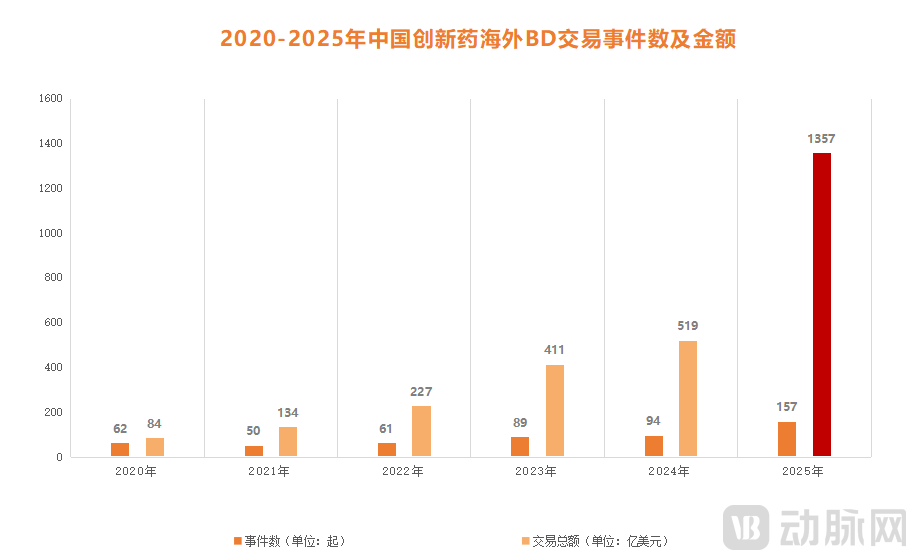
Core Insights - The Chinese healthcare industry experienced a significant surge in 2025, marked by a record number of innovative medical devices and drugs approved for market entry, indicating a growing focus on innovation in the sector [1][3] - The total value of overseas business development (BD) transactions for innovative drugs reached $135.7 billion in 2025, accounting for 49% of the global total, surpassing the United States for the first time [3] - The IPO market for healthcare companies in China saw a revival, with 37 companies successfully listed in 2025, doubling the number from 2024, reflecting strong investor interest in the sector [7] Innovation in Medical Devices and Drugs - In 2025, 109 innovative medical devices were approved, with a 19.67% year-on-year increase in Class III devices, while 76 innovative drugs were approved, focusing on advanced fields like oncology and autoimmune diseases [1] - The rapid growth in innovative drug approvals and medical device registrations highlights China's increasing capabilities in healthcare innovation [1][8] Business Development and Market Dynamics - The number of overseas BD transactions for innovative drugs reached 157 in 2025, with a total transaction value of $135.7 billion, both figures representing historical highs [3] - The increasing recognition of Chinese innovative drugs by global pharmaceutical companies is evident, particularly as they face pressures from patent expirations and global competition [8] IPO Activity and Market Sentiment - The healthcare sector in China saw a resurgence in IPO activity, with 37 companies going public in 2025, compared to 17 in 2024, indicating a robust market sentiment [7] - Over 60 healthcare companies are currently in the IPO pipeline on the Hong Kong Stock Exchange, reflecting sustained investor enthusiasm for the healthcare sector [7] Challenges and Industry Landscape - Despite the growth, challenges persist, including difficulties in financing and market entry for medical companies, exacerbated by domestic healthcare cost controls and intensified competition [7] - The industry is undergoing significant consolidation, presenting both opportunities and challenges for companies navigating this complex landscape [7][11] AI Integration in Healthcare - AI technology is increasingly integrated into the healthcare sector, enhancing the efficiency and safety of medical devices and drug development processes [10] - The shift towards data-driven, proactive healthcare solutions is transforming traditional practices, with AI expected to play a crucial role in future clinical pathways [10] Investment Trends and Future Outlook - The investment landscape in the healthcare sector is shifting towards high-tech, innovative companies, with a notable decrease in the number of financing events but an increase in total investment amounts [16] - The next 5-10 years are anticipated to be a golden period for innovation in Chinese healthcare, with a focus on projects that address unmet clinical needs [17]


医药生物行业报告(2026.1.19-2026.1.23):国家统计局公布各项经济与人口数据,65岁及以上人口占比进一步提升
China Post Securities· 2026-01-26 06:45
Industry Investment Rating - The industry investment rating is "Outperform the Market" and is maintained [1] Core Views - The report highlights the ongoing decline in the national population and birth rates, with a significant increase in the elderly population, which is expected to drive demand for home medical devices and supplies [5][21] - The report emphasizes the long-term positive trend in the innovative drug sector, supported by the strength of China's innovative drug companies in global competition [7] - The medical device sector is showing signs of improvement, with major companies reporting better performance in Q3, indicating a potential recovery in the industry [9] Summary by Relevant Sections Industry Overview - As of January 26, 2026, the closing index stands at 8623.36, with a 52-week high of 9323.49 and a low of 6876.88 [1] Recent Market Performance - During the week of January 19-23, 2026, the A-share pharmaceutical sector fell by 0.39%, outperforming the CSI 300 index by 0.23 percentage points but underperforming the ChiNext index by 0.05 percentage points [6][24] - The medical device sector is expected to attract more investment as the pressure from centralized procurement diminishes [9][30] Population and Demographics - By the end of 2025, the total population of China was 1,404.89 million, with a natural population growth rate of -2.41% [15] - The elderly population (aged 65 and above) reached 22,365 million, accounting for 15.9% of the total population, indicating a trend towards an aging society [18][20] Investment Recommendations - The report suggests focusing on companies in the elderly care medical sector, such as Yuyue Medical, Kefu Medical, and Loxin Medical, due to the anticipated increase in demand for home medical devices [5][22] - In the innovative drug sector, companies like Innovent Biologics and Kintor Pharmaceutical are highlighted as beneficiaries of the growing global participation of Chinese innovative drug firms [7][27] - For the medical device sector, companies such as Mindray and Hunan Aohua are recommended due to their improving performance and market position [9][30] Future Outlook - The report anticipates a recovery in the medical device sector as procurement policies become more reasonable and the pressure from centralized procurement decreases [30] - The innovative drug sector is expected to continue its upward trajectory, with more innovative projects anticipated in 2026 [26][28]
2026年中国无障碍产业政策、产业链、市场规模、竞争企业及发展趋势研判:随着老龄化加速和残障群体需求升级,无障碍产业迎来前所未有的发展机遇[图]
Chan Ye Xin Xi Wang· 2026-01-26 01:40
Core Viewpoint - The accessibility industry is emerging as a significant economic growth point in China, transitioning from a welfare-focused sector to a market-driven one, driven by the aging population and the increasing needs of disabled groups [1][2]. Group 1: Industry Definition and Service Objects - The accessibility industry aims to improve, compensate, or replace human functions for groups such as the disabled, elderly, patients, and pregnant women, enhancing their quality of life and promoting social inclusion [1][2]. Group 2: Current Development Status - The market size of China's accessibility industry is projected to grow from 78 billion yuan in 2020 to 140 billion yuan by 2025, with an expected increase to 163 billion yuan by 2026 [2]. Group 3: Industry Chain - The upstream of the accessibility industry includes raw materials like metals, plastics, and electronic components, while the midstream consists of software systems and hardware products, and the downstream applications are found in homes, public buildings, and rehabilitation institutions [3]. Group 4: Development History - The accessibility industry in China has undergone four stages: the embryonic stage (2001-2007), the regulatory stage (2008-2014), the smart transformation stage (2015-2023), and the service ecosystem stage (2024-present) [3]. Group 5: Policy Environment - Recent national policies, such as the "Barrier-Free Environment Construction Law," have established a legal framework for the development of the accessibility industry, enhancing the construction of urban accessibility facilities [4]. Group 6: Competitive Landscape - Major companies in the accessibility software sector include iFlytek, SenseTime, and Tencent, while hardware companies include Yuyue Medical, Kefu Medical, and Shanghai Construction Group, among others [5][6]. - Kefu Medical reported a revenue of 1.496 billion yuan in the first half of 2025, with rehabilitation aids contributing 563 million yuan, accounting for 37.63% of total revenue [7][8]. - Yuyue Medical is a leading supplier of medical consumables, with a focus on rehabilitation care products, generating 234 million yuan in revenue from these products in the first half of 2025 [6]. Group 7: Future Development Trends - The accessibility industry is expected to expand significantly due to the aging population, with a shift from physical accessibility standards to digital, cultural, and social service areas, indicating a trend towards high-value software services and integrated solutions [9][10].




2026年中国医疗器械物流配送行业发展历程、政策、运力情况、竞争格局及趋势研判:医疗器械物流基础建设不断完善,物流运输自有车辆突破4万台[图]
Chan Ye Xin Xi Wang· 2026-01-24 02:30
Core Viewpoint - The strategic importance of medical device logistics and distribution is increasingly recognized as the market for medical devices continues to expand, leading to a strong demand for specialized and efficient logistics services [1][8]. Industry Overview - Medical device logistics and distribution involves the effective transfer of medical device products from suppliers or manufacturers to medical institutions, pharmacies, or other relevant endpoints, ensuring safety, timeliness, and accuracy [2][3]. - The industry has evolved through four stages, from minimal focus during the early marketization phase to a rapid development period from 2010 to 2020, driven by increasing demand and regulatory policies [3]. Industry Policies - Recent government policies have provided strong support for the development of the medical device logistics industry, promoting standardization, efficiency, and scale [4]. - Key policies include the establishment of a risk-sharing alliance for online sales of medical devices and encouragement for wholesale companies to integrate storage and transportation resources [4]. Industry Chain - The upstream of the medical device logistics chain includes suppliers of logistics vehicles, software, medical devices, storage equipment, and packaging materials [4]. - The midstream consists of logistics service providers, which are crucial for the entire supply chain, while the downstream includes medical institutions and patients as the primary demand side [4]. Current Industry Status - The logistics total cost for medical devices in China is projected to reach 26.78 billion yuan in 2024, with a year-on-year growth of 1.88% [8]. - The logistics warehousing area is expected to be 23.58 million square meters in 2024, reflecting a 0.8% increase [8]. Market Trends - The medical device logistics industry is expected to accelerate its digital transformation and integration of intelligent technologies, utilizing IoT for real-time monitoring and big data for demand forecasting [12][14]. - Service models are evolving towards highly specialized and integrated solutions, addressing specific requirements for different categories of medical devices [14]. - The logistics network is anticipated to deepen into lower-tier cities, establishing regional distribution centers to enhance efficiency and reduce costs [15].






【财经分析】从制造高地到枢纽节点 无锡进出口总值何以突破8000亿元大关
Xin Hua Cai Jing· 2026-01-23 02:57
Core Insights - China's foreign trade is accelerating its upgrade from "quantity stability" to "quality improvement," driven by cross-border e-commerce and port openness, with Wuxi emerging as a significant player in this transformation [1] Group 1: Trade Performance - Wuxi's total import and export value for 2025 surpassed 800 billion yuan, reaching 829.28 billion yuan, a year-on-year increase of 7.6% [1] - The number of enterprises engaged in import and export in Wuxi exceeded 14,000, an increase of over 3,500 compared to the end of the 13th Five-Year Plan [1] Group 2: Technological Innovation - The "AI digital content production assembly line" at Wuxi's Daliyu Live Streaming Base enables local companies to quickly generate bilingual advertising videos, facilitating access to overseas markets [1][2] - The base's digital tools have successfully helped local businesses, such as a pickleball racket company, to sell products to Africa [2] Group 3: Logistics and Transportation - Wuxi Shuofang Airport's international cargo transport volume reached 34,000 tons in 2025, with e-commerce cargo volume doubling compared to 2024 [3] - The airport has increased its direct flights to Latin America, with the Wuxi-Mexico City route expanding from three to five flights per week due to rising demand [3][4] Group 4: Economic Activation - The integration of manufacturing, e-commerce, and logistics in Wuxi is revitalizing the economy, showcasing a successful model of "industrial base + digital channels + hub infrastructure" [5] - The opening of the Wuxi-Mexico City route directly supports businesses in capturing market opportunities in Latin America, transforming manufacturing capacity into global delivery advantages [5] Group 5: Policy Support - The "2025 Wuxi Cross-Border Trade Facilitation Action Plan" outlines strategies to enhance port facilities, expand international logistics channels, and improve the digitalization of cross-border trade [6] - The plan includes innovative measures for customs and logistics collaboration, such as 24/7 appointment customs clearance and integrated supervision of various cargo types [6]
远超行业平均增速,增长最快的十大医疗器械爆品
3 6 Ke· 2026-01-23 01:40
Core Insights - The global medical device market is projected to grow at a rate of approximately 6% annually, with a shift towards high-growth segments as multinational corporations divest slower-growing businesses [1] - Ten high-growth product segments have been identified, each with a market growth rate exceeding 15%, driven by innovative products that significantly outperform their peers [1] Group 1: Pulsed Field Ablation (PFA) - PFA has achieved over 20% penetration in the U.S. electrophysiology market within two years, with a market size exceeding $2 billion, making it one of the fastest-growing segments historically [2][4] - Major players like Boston Scientific and Medtronic are heavily investing in PFA commercialization, with Medtronic's PFA revenue expected to reach $1 billion in FY2025 and increase by another $1 billion in FY2026 [4] - The PFA market is projected to exceed $13 billion with an annual growth rate of over 25%, with penetration expected to reach 80% by 2028 [5] Group 2: Single-Use Endoscopes - Single-use endoscopes have rapidly gained market share due to their ability to eliminate cross-infection risks associated with reusable endoscopes and significantly reduce hospital costs [6][8] - Ambu, a leader in the single-use endoscope market, reported over 25% revenue growth in urology, ENT, and gastrointestinal departments, with expectations of maintaining a compound growth rate exceeding 20% [8][9] - The global single-use endoscope market is expected to continue growing rapidly, driven by aging populations and increasing demand for safe, efficient, and cost-effective solutions [9] Group 3: Laparoscopic Surgical Robots - The laparoscopic surgical robot market has surpassed $10 billion, with an annual growth rate exceeding 20%, despite a penetration rate of less than 15% in global minimally invasive surgeries [10][12] - The Da Vinci surgical system, a market leader, has seen significant revenue growth, with a projected revenue of over $10 billion in 2025, reflecting a 21% year-on-year increase [13] - The domestic laparoscopic surgical robot market is also experiencing growth, with sales of 119 units in the first 11 months of 2025 and expectations for further expansion as regulatory barriers ease [13] Group 4: Continuous Glucose Monitoring (CGM) - CGM technology addresses chronic disease management challenges, providing continuous glucose monitoring for diabetes patients, with significant market growth driven by U.S. Medicare coverage [14][17] - Abbott's CGM sales are expected to exceed $8 billion in 2025, with a year-on-year growth rate of approximately 23%, while Dexcom anticipates revenues of $4.63 to $4.65 billion [17] - The domestic CGM market is entering an accelerated penetration phase, driven by local companies leveraging supply chain advantages and cost reductions [18] Group 5: Mechanical Thrombectomy - Mechanical thrombectomy is gaining attention with significant acquisitions, such as Inari Medical's $4.9 billion acquisition by Stryker, highlighting the long-term value of this segment [19][21] - Inari Medical reported a 52.3% year-on-year revenue growth in Q2 2025, while Penumbra is expected to achieve a revenue growth of 21.4% to 22.0% in Q4 2025 [21][22] - The domestic market for mechanical thrombectomy is also growing rapidly, with over 20% growth driven by a large patient base and technological advancements [22] Group 6: Transcatheter Mitral and Tricuspid Valve Therapies (TMTT) - TMTT is rapidly becoming a key growth area in cardiovascular treatment, with Abbott and Edwards Lifesciences reporting significant revenue increases in this segment [23][24] - The domestic market is expanding, with an increase in regulatory approvals for TMTT products, indicating a growing demand [24] Group 7: Bronchoscopic Surgical Robots - The bronchoscopic surgical robot market is entering a phase of large-scale commercialization, with significant advancements in technology improving diagnostic accuracy and treatment outcomes [25][27] - Major platforms have received FDA approval, with Ion platform installations reaching 905 units and a surgical volume increase of over 50% in 2025 [27][28] Group 8: Poly-L-Lactic Acid Microbeads (PLLA) - PLLA is experiencing rapid growth in the medical aesthetics market, driven by consumer preferences for natural and long-lasting anti-aging solutions [29][30] - The market is characterized by a competitive landscape where international brands lead, but domestic companies are quickly gaining market share through cost advantages [30] Group 9: Non-invasive Ventilators - The non-invasive ventilator market is witnessing strong growth, particularly in the U.S., driven by increased consumer health awareness and market restructuring [31][33] - Companies like ResMed and Yuyue Medical are reporting significant revenue growth, with ResMed's overseas revenue increasing by 52.96% [33] Group 10: Shockwave Intravascular Lithotripsy (IVL) - IVL has achieved over $1 billion in market size, addressing calcification issues in coronary interventions, with a penetration rate of approximately 10% in the U.S. [34][36] - The market is expected to expand further as more products are introduced, capitalizing on the significant clinical need for effective treatment options [36]



【医药】AI重构医疗,从场景落地到变现讨论 ——AI医疗行业专题报告(吴佳青)
光大证券研究· 2026-01-22 23:07
Core Viewpoint - The article emphasizes the growing integration of AI in the healthcare sector, highlighting its potential to transition from technology validation to commercial realization, driven by the need for cost control in healthcare and advancements in AI technology [4]. Group 1: AI in Healthcare - Domestic and international healthcare companies are increasingly investing in AI products and services across various segments, including health management, precision medicine, digital clinical trials, drug development, sequencing, and medical impact [4]. - The core investment logic revolves around "data closed-loop" and "scene necessity," with AI becoming a key productivity driver in new healthcare infrastructure [4]. - Future competition will hinge on who possesses exclusive, high-quality private data and can achieve continuous data iteration through business scenarios [4]. Group 2: Key AI Applications in Healthcare - AI drug development is highlighted for its ability to significantly shorten new drug research cycles, leading to strong willingness to pay from pharmaceutical companies [4]. - AI medical imaging is noted as the most mature application area, with companies like United Imaging Healthcare leading the market [5]. - AI chronic disease management is emphasized for its potential to reduce long-term insurance payouts, showcasing its commercial value [4]. - AI surgical robots are recognized for addressing uneven distribution of medical resources, presenting strong domestic substitution logic [4]. Group 3: Company Highlights - Crystal Technology's core advantage lies in its combination of quantum physics computing, AI algorithms, and robotic experimentation, evolving its business model from biotech to CRO+ [5]. - United Imaging Healthcare is a leader in medical imaging equipment, continuously innovating and integrating AI into its devices to enhance imaging quality and operational efficiency [6]. - Yuyue Medical focuses on smart home medical devices, utilizing AI to analyze user health needs, which is crucial for long-term chronic disease management [6]. - MicroPort Robotics is positioned as a leader in the surgical robot sector, leveraging AI and 5G technology to facilitate remote surgeries, addressing the challenge of uneven medical resource distribution [6].

AI医疗行业专题报告:AI重构医疗,从场景落地到变现讨论
EBSCN· 2026-01-22 06:14
AI重构医疗,从场景落地到变现讨论 ——AI医疗行业专题报告 2026年1月22日 分析师:吴佳青,执业证书编号:S0930519120001 证券研究报告 目录 CONTENT S 第一章:复盘 •本轮行情与上轮行情的异同 第二章:AI+药物研发 •靶点发现与验证 •变现模式探讨:看好 CRO+Biotech 第四章:AI+诊疗 •环境智能与自动病历生成 •大模型驱动的 AI医生助手 第五章:AI手术机器人&健康管理 • AI在手术机器人领域的应用 可穿戴设备与数字疗法 • 第三章:AI+医学影像 •从 辅助诊断迈向全流程赋能 2025年初国内外AI医疗概念股普涨,美股AI医疗行情更侧重于健康管理、AI数字化临床实验领域,国内有相关概念映射标的 涨幅较大 1)健康管理服务:商业模式以订阅制为主,提供AI智能问诊、AI私人医生等服务,制定针对患者的个性化健康管理方案。 2)AI数字化临床实验:提供药物研发和医疗信息服务,在临床试验中运用AI技术进行数据管理、患者招募和疗效评估等。 •变现模式探讨 第六章:投资建议 第七章:风险分析 请务必参阅正文之后的重要声明 2 26年初国内AI医疗概念股普涨,行情发酵侧重 ...
招商中证全指医疗器械ETF投资价值分析:如何一键布局“脑机接口”赛道
CMS· 2026-01-21 14:00
- The report does not contain any quantitative models or factors related to financial engineering or quantitative analysis[1][3][4]

医保局规定手术机器人定价!器械出海空间广阔,医疗器械 ETF(562600)涨近1%
Sou Hu Cai Jing· 2026-01-21 06:02
Group 1 - The core viewpoint of the news highlights the positive performance of the medical device sector, with significant stock price increases for various companies and a favorable market outlook driven by new pricing policies and international trade initiatives [1][2][3] Group 2 - As of January 21, the Shanghai Composite Index rose by 0.22%, while the medical device index increased by 0.69%, with notable stock performances from Tianzhihang-U (+13%), Sanyou Medical (+7%), and others [1] - The medical device ETF (562600) saw a 0.77% increase, with a trading volume of 254.268 billion yuan and a turnover rate of 4.15%. Over the past six months, the fund has gained 4.80%, and 11.30% over the past year [1] Group 3 - On January 20, the National Healthcare Security Administration issued guidelines for pricing medical services related to surgical robots and remote surgeries, establishing a structured pricing system to enhance innovation returns and improve accessibility to precision medicine [2] - A special seminar was held on January 17 to discuss how to leverage the medical device procurement and pricing platform to support the international expansion of Chinese medical devices, with plans for a cross-border channel based on procurement platforms in Guangxi and Tianjin [2] Group 4 - Multiple authoritative institutions have expressed optimism about the medical device sector, with expectations for a turning point in operations by 2026 due to optimized procurement rules and significant growth potential in domestic and international markets for surgical robots and AI medical technologies [3] - The medical device ETF (562600) tracks the CSI All Index for medical devices, with the top ten weighted stocks accounting for 45.04% of the total, including major players like Mindray Medical and United Imaging [3]