高通

Search documents
金十图示:2025年04月08日(周二)美股热门股票行情一览(美股收盘)
news flash· 2025-04-08 20:07
金十图示:2025年04月08日(周二)美股热门股票行情一览(美股收盘) 诺基亚 易趣 组柯钢铁 277.41亿市值 260.39亿市值 239.24亿市值 59.53 4.64 103.68 -1.66(-2.71%) -0.04(-0.75%) -1.29(-1.23%) 达美航空 FOX 福克斯-A = 爱立信 Delta 231.84亿市值 227.01亿市值 215.15亿市值 35.89 6.78 47.45 -1.40(-3.75%) -0.12(-1.74%) -1.10(-2.27%) 7 惠普 205.98亿市值 (0) 沃达丰(US) FOX 福克斯-B 198.78亿市值 204.47亿市值 21.85 8.19 43.84 -0.16(-1.92%) -0.69(-1.55%) -1.53(-6.54%) 哈里伯顿 Pinterest Inc-A 图民 167.32亿市值 182.16亿市值 166.02亿市值 25.81 19.26 24.67 -0.73(-3.65%) -1.71(-6.21%) -0.73(-2.87%) 华纳音乐 西部数据 Dropbox Inc-A 76. ...


金十图示:2025年04月08日(周二)美股热门股票行情一览(美股盘初)
news flash· 2025-04-08 13:45
金十图示:2025年04月08日(周二)美股热门股票行情一览(美股盘初) @ JIN10.COM 金十数据 | 一个交易工具 110.89 86.33 484.13 +1.72(+1.58%) +3.04(+3.64%) +18.63(+4.00%) 奥多比 Q 高通 Uber 优步 1484.71亿市值 1468.77亿市值 1435.49亿市值 348.36 132.80 68.64 +7.66(+2.25%) +3.08(+2.37%) +3.00(+4.57%) 索尼 AMDE 超威半导体 CAT 卡特彼勒 SONY 1403.35亿市值 1362.18亿市值 1340.56亿市值 == 22.23 86.83 285.01 +4.96(+1.77%) +3.19(+3.81%) +0.99(+4.68%) 康卡斯特 COMCAST BLACKROO 贝莱德 Plizer 库瑞 1315.77亿市值 1283.66亿市值 1283.17亿市值 848.76 33.95 22.63 +31.26(+3.82%) +0.48(+1.43%) -0.01(-0.02%) 康菲石油 o TotalEnergi ...

科技周报|雷军回应小米汽车事故;OpenAI融资400亿美元
Di Yi Cai Jing· 2025-04-06 04:26
Group 1: Xiaomi Incident - Xiaomi's chairman Lei Jun expressed deep sorrow over the traffic accident involving a Xiaomi SU7 that resulted in the death of three female university students, and a special team was formed to address the incident [1] - The accident has raised concerns about the stability and safety of new energy vehicle technologies, with the National Development and Reform Commission highlighting issues of disorderly competition in China's automotive industry [1] Group 2: OpenAI Financing - OpenAI announced a new financing round of $40 billion, bringing its post-money valuation to $300 billion, with SoftBank contributing 75% of the funding [2] - The valuation has significantly increased from $157 billion in the previous round, surpassing the combined market capitalization of major tech companies like Intel and AMD [2] Group 3: JD and Dada Merger - Dada announced a merger agreement with its parent company JD Sunflower Investment Limited, which will make Dada a wholly-owned subsidiary of JD [3] - The merger is expected to be completed by the third quarter of 2025, aiming to enhance JD's capabilities in instant retail and delivery services [3] Group 4: US Tariff Impact on Home Appliance Manufacturers - Following the announcement of new tariffs by the US, home appliance exporters have varied responses, with some considering relocating showrooms to the US or shifting focus to other markets [4] - The China Machinery Industry Federation's appliance division noted that the tariff changes have a neutral impact on the competitiveness of Chinese companies [4] Group 5: STMicroelectronics and Innoscience Collaboration - STMicroelectronics and Innoscience signed a GaN technology development and manufacturing agreement, allowing both companies to leverage each other's manufacturing capabilities [5][6] - The collaboration aims to expand and accelerate the adoption of GaN technology across various sectors, including consumer electronics and automotive [6] Group 6: EHang's Response to Tariff Measures - EHang stated that the recent US-China tariff measures are not expected to have a substantial impact on its operations, as 95% of its revenue comes from the Chinese market [7] - The company clarified that it does not export its autonomous aerial vehicles to the US and does not rely on US-sourced components [7] Group 7: Kuaishou's AIGC Consumption Growth - Kuaishou reported that daily consumption of AIGC materials has surpassed 30 million, with significant growth in its automated advertising solutions [8] - The company plans to upgrade its advertising engine to a next-generation AI smart commercial engine, with controlled growth in AI-related capital expenditures [8] Group 8: Qianxun Intelligent Financing - Qianxun Intelligent announced the completion of a 528 million RMB Pre-A round financing, led by Prosperity7 Ventures [9] - Despite some investors exiting the sector, the continued financing activity indicates ongoing interest in the field of embodied intelligence [9] Group 9: "Little Giant" Enterprises M&A Activity - The number of M&A events involving "Little Giant" enterprises has increased, with 62 disclosed transactions in 2024, a 121.4% year-on-year growth [10] - The total disclosed transaction amount reached 18.254 billion RMB, reflecting a 107.4% increase compared to the previous year [10] Group 10: Investment Trends in Various Sectors - The biopharmaceutical sector saw one financing event this week, while the semiconductor sector experienced a decrease in financing events [12] - The artificial intelligence sector reported an increase in financing events, indicating a growing interest in AI technologies [12]
华泰证券 SEMICON China反馈
2025-03-31 05:54
Summary of SEMICON China 2025 Conference Call Industry Overview - **Industry**: Semiconductor Industry - **Event**: SEMICON China 2025 - **Attendance**: Record high with 80,000 attendees on the first day, totaling nearly 200,000 over three days [2][3] Key Insights and Arguments - **AI-Driven Growth**: The global semiconductor market is projected to reach $1 trillion by 2030, with over 75% of demand related to AI applications, including computing chips and industrial semiconductors [2][4] - **Increase in Domestic Production**: U.S. export control policies have led to a significant rise in the use of domestic equipment and materials in Chinese factories, enhancing competitiveness in advanced packaging and multi-exposure technologies [2][5] - **Global Capital Expenditure Trends**: Global capital expenditure is expected to grow by 8% in 2025, with companies like SMIC and TSMC increasing their capital spending, while Samsung slightly decreases. The Chinese market remains stable, benefiting from reduced external dependency [2][7] - **Impact of U.S. Entity List**: The Biden administration's inclusion of 106 Chinese semiconductor companies on the entity list has affected supply chains but has also accelerated the localization of equipment components, boosting demand for companies like SMIC [2][8][9] - **Market Share of Domestic Equipment**: The market share of Chinese domestic equipment has risen from approximately 14% a year ago to 25% by Q4 last year, driven by increased procurement from Chinese clients [2][10] - **Valuation Adjustments in Equipment Stocks**: Chinese equipment stocks are undergoing valuation adjustments, making them attractive to foreign investors. For instance, North Huachuang has a PE ratio of around 25 times [2][18] Emerging Companies and Technologies - **New Kai Lai**: Gained significant attention at SEMICON China 2025, with successful product launches, but its potential as a platform company remains to be seen [3][6][11][15] - **AI Glasses Market Potential**: The global high-end traditional glasses market has an annual shipment of about 320 million units. Transitioning to AI-enabled smart glasses presents substantial opportunities for chip and display companies [2][20][23] Future Trends and Considerations - **Trends in AR/VR Market**: There is a notable disparity in the AR/VR market, with non-display AR glasses seeing higher demand compared to display-enabled versions [2][21] - **Investment Directions**: Key investment areas include edge deployment of large models, electronic viewfinders with display functions, and advancements in micro-display technologies [2][24] - **Overall Industry Outlook**: The semiconductor equipment sector is becoming increasingly attractive for global investors, with recommended stocks including SMIC, Huahong Semiconductor, and North Huachuang [2][25] Additional Important Points - **Challenges for New Kai Lai**: Despite its potential, New Kai Lai faces challenges such as limited external production capacity and restrictions on component procurement due to the U.S. entity list [2][13][16] - **Long-Term Development of Semiconductor Equipment**: The semiconductor equipment industry is characterized by cyclical trends, and significant market share changes or price drops are not expected in the near term [2][14] This summary encapsulates the key points discussed during the SEMICON China 2025 conference call, highlighting the current state and future prospects of the semiconductor industry, particularly in relation to AI and domestic production capabilities.

雷军说明了,凌晨五点半,武汉大学樱花树下拍摄,主要怕人太多
Sou Hu Cai Jing· 2025-03-30 06:15
Core Points - Lei Jun, the founder of Xiaomi, visited Wuhan University early in the morning to film promotional content for the new Xiaomi SU7 Ultra and YU7 models during the cherry blossom season [1][3] - The visit attracted attention from the university community, as it coincided with a peak time for alumni returning to the campus to enjoy the cherry blossoms [3] - Lei Jun's commitment to Wuhan University is evident through his significant donations and the establishment of the "Lei Jun Excellence Scholarship" [1][4] Group 1 - Lei Jun filmed promotional videos for Xiaomi's new car models, SU7 Ultra and YU7, at Wuhan University during the cherry blossom season [1][3] - The cherry blossom season is a popular time for alumni visits, leading to high foot traffic on campus, prompting Lei Jun to arrive early to avoid crowds [3] - The design of the new Xiaomi car models is expected to be appealing, reflecting lessons learned from previous product designs [4] Group 2 - Lei Jun hosted notable tech leaders, including Samsung's Lee Jae-Yong and Qualcomm's Cristiano Amon, at Xiaomi's headquarters shortly before his visit to Wuhan [4] - He awarded ten students with the "Lei Jun Excellence Scholarship," totaling 1 million yuan, and emphasized the importance of the Lei Jun class initiative [4]

2025边缘AI报告:实时自主智能,从范式创新到AI硬件的技术基础
3 6 Ke· 2025-03-28 11:29
Core Insights - The Edge AI Foundation has rebranded from the TinyML Foundation and released the "2025 Edge AI Technology Report," highlighting the maturity and real-world applications of TinyML [1][3]. Group 1: Edge AI Technology Drivers - The report discusses advancements in hardware and software that support Edge AI deployment, focusing on innovations in dedicated processors and ultra-low power devices [3]. - Edge AI is transforming operational models across various industries by enabling real-time analysis and decision-making capabilities [3]. Group 2: Industry Applications of Edge AI - In the automotive sector, Edge AI enhances safety and response times, with examples like Waymo and NIO utilizing real-time data processing for improved performance [7][8]. - Manufacturing benefits from Edge AI through predictive maintenance, quality control, and process optimization, with reported reductions in maintenance costs by 30% and downtime by 45% [9][12]. - In healthcare, localized AI accelerates diagnostics and improves patient outcomes by analyzing medical data directly on devices [14]. - Retail operations are optimized through real-time behavior analysis and AI-driven systems, reducing checkout times by 30% [16]. - Logistics is enhanced by integrating Edge AI with IoT sensors, allowing for immediate analysis of data and optimization of supply chain operations [18]. - Smart agriculture utilizes Edge AI for precision farming, reducing water usage by 25% and pesticide use by 30% [21]. Group 3: Edge AI Ecosystem and Collaboration - The Edge AI ecosystem relies on collaboration among hardware vendors, software developers, cloud providers, and industry stakeholders to avoid fragmentation [24]. - A three-layer architecture is recognized for Edge AI, distributing workloads across edge devices, edge servers, and cloud platforms [24][25]. - Cross-industry partnerships are increasing, with companies like Intel and Qualcomm collaborating to enhance Edge AI deployment [26][27]. Group 4: Emerging Trends in Edge AI - Five emerging trends are reshaping Edge AI, including federated learning, quantum neural networks, and neuromorphic computing [30]. - Federated learning is expected to enhance model adaptability and collaboration across industries, with a projected market value of nearly $300 million by 2030 [31]. - Quantum computing is set to redefine Edge AI capabilities, enabling faster decision-making and real-time processing [34][36]. - AI-driven AR/VR applications are evolving with Edge AI, allowing for real-time responses and improved energy efficiency [39]. - Neuromorphic computing is gaining traction for its energy efficiency and ability to handle complex tasks without cloud connectivity [41].
华为麒麟芯片,全球第六
半导体芯闻· 2025-03-28 10:01
Group 1 - The core viewpoint of the article highlights that MediaTek is expected to maintain its leadership in the global smartphone processor market with a 34% market share in Q4 2024, followed by Apple at 23% and Qualcomm at 21% [1] - Samsung's market share has declined to 4% in Q4 2024, down from 5% in Q3 2024, indicating a significant downturn [1] - Samsung's Galaxy S25 series will exclusively use Qualcomm's Snapdragon 8 Elite chip due to poor yield rates of its second-generation 3nm process, which hindered the supply of its Exynos processors [1] Group 2 - There are rumors that Samsung is attempting to reduce its reliance on Qualcomm's Snapdragon processors, with the Galaxy Z Flip FE potentially being the first foldable device to use an Exynos processor if yield rates meet expectations [1] - Huawei's Kirin chip ranks sixth globally, despite facing various restrictions [2]
成熟芯片,顶不住了?
半导体芯闻· 2025-03-28 10:01
消息人士称,芯片封装商日月光半导体制造公司和矽品精密工业公司(SPIL)也是暂停马来西亚 扩张计划的厂商之一,因为许多芯片供应商将投资策略转向"观望"模式。 由于市场对老款或成熟芯片的需求不温不火,台积电正在放缓其在日本的扩张步伐。三位知情人士 向《日经亚洲》透露,这家全球最大的芯片制造商目前已决定,在 2026 年之前,其位于熊本的首 家日本芯片工厂将不需要生产 16 纳米和 12 纳米芯片的设备。 一位芯片业高管表示:"消费电子、汽车和工业应用的需求不太好,复苏前景也不容乐观。因此, 目前还不急于大规模扩张。……台积电熊本工厂目前的利用率远低于预期。" 如果您希望可以时常见面,欢迎标星收藏哦~ 来源:内容 编译自日经 ,谢谢。 该工厂被视为台积电最成功的海外扩张,因为它的建设时间晚于其在美国亚利桑那州的工厂,但投 产时间更早。目前,该工厂能够生产 28 纳米和 22 纳米级别的芯片,主要供应日本客户索尼、电 装和瑞萨。 《日经亚洲》获悉,由于旧芯片需求低迷以及关税不确定性,包括台湾半导体制造公司和英特尔在 内的领先芯片制造商和封装商已经放缓了在日本和马来西亚的扩张步伐。 在芯片制造中,一般来说,纳米数越大 ...

AI推理时代:边缘计算成竞争新焦点
Huan Qiu Wang· 2025-03-28 06:18
Core Insights - The competition in the AI large model sector is shifting towards AI inference, marking the beginning of the AI inference era, with edge computing emerging as a new battleground in this field [1][2]. AI Inference Era - Major tech companies have been active in the AI inference space since last year, with OpenAI launching the O1 inference model, Anthropic introducing the "Computer Use" agent feature, and DeepSeek's R1 inference model gaining global attention [2]. - NVIDIA showcased its first inference model and software at the GTC conference, indicating a clear shift in focus towards AI inference capabilities [2][4]. Demand for AI Inference - According to a Barclays report, the demand for AI inference computing is expected to rise rapidly, potentially accounting for over 70% of the total computing demand for general artificial intelligence, surpassing training computing needs by 4.5 times [4]. - NVIDIA's founder Jensen Huang predicts that the computational power required for inference could exceed last year's estimates by 100 times [4]. Challenges and Solutions in AI Model Deployment - Prior to DeepSeek's introduction, deploying and training AI large models faced challenges such as high capital requirements and the need for extensive computational resources, making it difficult for small and medium enterprises to develop their own ecosystems [4]. - DeepSeek's approach utilizes large-scale cross-node expert parallelism and reinforcement learning to reduce reliance on manual input and data deficiencies, while its open-source model significantly lowers deployment costs to the range of hundreds of calories per thousand calories [4]. Advantages of Edge Computing - AI inference requires low latency and proximity to end-users, making edge or edge cloud environments advantageous for running workloads [5]. - Edge computing enhances data interaction and AI inference efficiency while ensuring information security, as it is geographically closer to users [5][6]. Market Competition and Player Strategies - The AI inference market is rapidly evolving, with key competitors including AI hardware manufacturers, model developers, and AI service providers focusing on edge computing [7]. - Companies like Apple and Qualcomm are developing edge AI chips for applications in AI smartphones and robotics, while Intel and Alibaba Cloud are offering edge AI inference solutions to enhance speed and efficiency [7][8]. Case Study: Wangsu Technology - Wangsu Technology, a leading player in edge computing, has been exploring this field since 2011 and has established a comprehensive layout from resources to applications [8]. - With nearly 3,000 global nodes and abundant GPU resources, Wangsu can significantly improve model interaction efficiency by 2 to 3 times [8]. - The company's edge AI platform has been applied across various industries, including healthcare and media, demonstrating the potential for AI inference to drive innovation and efficiency [8].

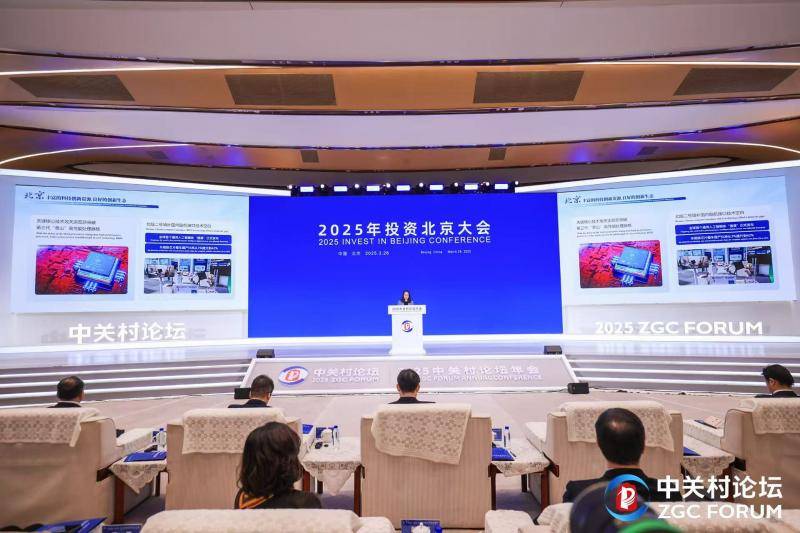
2025年投资北京大会举办 签约30个重点产业项目、总额达615.4亿|关注2025中关村论坛
Sou Hu Cai Jing· 2025-03-28 03:09
Core Insights - The "Investment Beijing" conference held on March 28, 2025, resulted in the signing of 30 key industrial projects with a total investment of 61.54 billion RMB, covering various sectors including biomedicine, finance, technology services, intelligent manufacturing, and green energy [1][6] Group 1: Event Overview - The conference was themed "Invest in Beijing, Win the Future" and included various segments such as keynote speeches, project signings, and investment consultations, attended by over 600 representatives from global companies and investment institutions [2][3] - The event showcased Beijing's international technological innovation advantages and high-quality business environment, aiming to enhance investment confidence and attract high-end projects [5] Group 2: Economic Context - Beijing's economic output is projected to reach 49.8 trillion RMB in 2024, with a growth rate of 5.2%, and a per capita GDP of 32,000 USD, ranking first in the country [3] - The city aims to strengthen its role as a global investment hub by promoting high-level openness and optimizing the business environment [10] Group 3: Project Highlights - The signed projects include significant investments in biomedicine, such as the Harvard Medical Innovation Center in Fangshan and a 1 billion RMB medical headquarters in Daxing [6][7] - In the technology services and new information technology sectors, projects worth 15.457 billion RMB were signed, including a 1 billion RMB supercomputing project in Shijingshan [7] - Green energy projects totaled 1.035 billion RMB, focusing on hydrogen fuel cells and carbon capture technologies [8] Group 4: Investment Opportunities - A total of 215 investment projects were announced, with a total investment amount of 95.45 billion RMB, targeting trillion-level industrial clusters in information technology, healthcare, and technology services [5] - The conference emphasized the importance of creating innovative application scenarios to facilitate the transformation of technological achievements into practical applications [5]