光刻设备

Search documents
芯片公司,霸榜全球市值!
半导体行业观察· 2026-03-26 00:36
Group 1 - The core viewpoint of the article highlights the significant growth of the semiconductor industry, driven by the rise of artificial intelligence, with seven semiconductor companies now in the top 25 global companies by market capitalization [1] - Nvidia has reached a market capitalization of nearly $4.3 trillion, a substantial increase from $661 billion three years ago, moving from sixth to first place in the rankings [1] - Gartner predicts a 33% growth in global chip revenue this year, surpassing $1 trillion, a milestone previously expected to be reached by 2030 [1] Group 2 - SK Hynix's stock price has increased nearly fivefold since early 2025, with a current market capitalization of approximately $470 billion, up from $49 billion three years ago, moving from 322nd to 21st place [2] - Other notable semiconductor companies in the top 25 include TSMC and Samsung Electronics, ranked 9th and 14th respectively, while new entrants include Broadcom at 7th and Micron Technology at 22nd [2] - SK Hynix is a leader in high bandwidth memory (HBM) technology, which enhances AI processing speeds for companies like Nvidia [2]

光刻技术的未来发展路线图
半导体行业观察· 2026-03-14 01:08
Core Viewpoint - The future development of advanced lithography technology is a key topic at the SPIE Advanced Lithography and Patterning Conference in 2026, with a consensus that existing technologies will not meet future demands in ten years. The focus is on increasing numerical aperture (NA) while shortening wavelength [2]. Group 1: Current Technology and Developments - The most advanced technology, Extreme Ultraviolet Lithography (EUV), uses a wavelength of 13.5 nanometers to create features as small as 8 nanometers. The resolution is proportional to the wavelength divided by the numerical aperture [3]. - ASML's latest equipment has a numerical aperture of 0.55, known as high NA EUV. Upcoming devices are being developed with a numerical aperture of 0.75, which could reduce the minimum printable size by 36% to approximately 5 nanometers [3]. - The transition to higher numerical aperture, referred to as hyper NA, is expected to occur, with ASML advancing this technology. Optical manufacturer Zeiss is designing a lens component slightly larger than those used in current high NA tools [3]. Group 2: Challenges and Solutions - A significant challenge in North America is the increased chip size leading to reduced depth of focus, which can blur images on chips, affecting performance and yield. Solutions involve improving focus control through enhancements in sensors and scanners or using flatter wafers [3]. - The need for ultra-high throughput nucleic acid testing technology is anticipated to be resolved, ensuring availability when required [4]. - IBM's roadmap discusses an alternative approach focusing on a next wavelength of 3.1 nanometers, which could provide advantages such as a smaller numerical aperture for achieving specific resolutions, resulting in greater depth of focus compared to longer wavelengths [4]. Group 3: Technical Considerations - The new wavelength can adjust optical designs and improve other aspects, potentially reducing line edge roughness by 20%, which is crucial for aligning patterns on wafers [7]. - Minimizing edge placement error is a key factor in determining wavelength, and reducing this error while shrinking feature sizes is a primary goal of IBM's lithography technology roadmap for the next 15 years [7]. - There are significant challenges remaining in perfecting lithography infrastructure, including the low reflectivity (35% to 40%) of mirrors capable of reflecting 3.1 nanometer light, which could lead to substantial light loss in lithography equipment [7][8].


未知机构:重视盛合晶微上市带来的半导体设备催化先进封装涉及光刻刻蚀薄膜-20260211
未知机构· 2026-02-11 01:45
Summary of Conference Call Notes Industry Overview - The focus is on the semiconductor equipment industry, particularly in relation to advanced packaging processes which include lithography, etching, thin film deposition, electroplating, bonding, and testing. These processes overlap significantly with front-end wafer manufacturing [1][2]. Key Insights - The listing of Shenghe Jingwei is expected to catalyze demand for semiconductor equipment, as the company will raise funds for expansion. This expansion is anticipated to directly increase the demand for related equipment [1][2]. - The entire domestic semiconductor equipment and materials supply chain is likely to undergo a value reassessment and order release due to this expansion, presenting a clear growth opportunity for relevant suppliers [1][2]. Recommended Suppliers - Specific equipment suppliers are highlighted for their potential benefits from this market shift, including: - Zhongwei Company (etching equipment) - Northern Huachuang (etching and thin film deposition) [2].
中小设备商的生死局:要么并购,要么淘汰
3 6 Ke· 2026-02-08 03:22
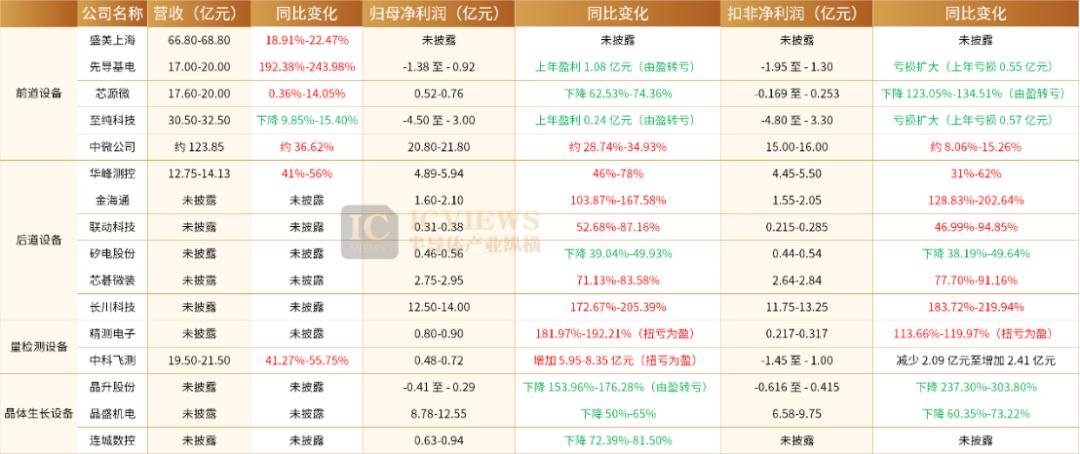
Core Viewpoint - The domestic semiconductor equipment industry is experiencing significant growth driven by increasing demand for chips, with a notable shift from "catching up" to "leading" in the global market [2][13]. Group 1: Market Growth and Projections - The global semiconductor equipment market is projected to reach $125.5 billion in 2025 and $138.1 billion in 2026, with sales exceeding $98.7 billion in the first nine months of 2025 [1]. - China's semiconductor equipment market achieved a sales figure of $18.7 billion in 2020, becoming the largest globally, and is expected to grow to $49.6 billion by 2024, capturing over 40% of the global market share [2]. Group 2: Domestic Competitiveness - By 2025, three Chinese companies are expected to be among the top 20 global chip equipment manufacturers, indicating a significant improvement in domestic competitiveness despite U.S. export controls [3]. - Notable companies include North Huachuang, which rose from eighth to fifth place, and Zhongwei Company, which entered the rankings at thirteenth [3]. Group 3: Performance Disparities - Among 13 domestic semiconductor equipment companies with clear profit data, 10 reported profits while 3 faced losses, highlighting a significant performance disparity across different sectors [4]. - The front-end equipment sector saw revenue growth, but most companies, except for leading firms like Zhongwei Company, experienced profit declines [5]. Group 4: Key Company Performances - Zhongwei Company reported a revenue of approximately $12.385 billion in 2025, a 36.62% increase, with net profits expected to reach between $2.08 billion and $2.18 billion [5]. - In contrast, Zhichun Technology faced a revenue decline of 9.85% to 15.40%, with net losses projected between -$450 million and -$300 million [6]. Group 5: Mergers and Acquisitions - Leading companies are increasingly adopting platform strategies and mergers as core expansion methods, with North Huachuang and Zhongwei Company actively pursuing acquisitions to enhance their product offerings [9][10]. - The trend of mergers and acquisitions is stabilizing the industry landscape, with top firms using these strategies to fill business gaps and strengthen their market positions [10]. Group 6: Challenges for Small Enterprises - Smaller semiconductor equipment companies are facing significant challenges, including increased market competition and financing difficulties, leading many to seek acquisition as a viable exit strategy [11][12]. - The pressure on small firms is exacerbated by the need for high-quality products and robust R&D capabilities, which many smaller players struggle to meet [12]. Group 7: Future Outlook - The domestic semiconductor equipment industry is at a critical juncture, with opportunities for growth amid challenges, as the market continues to evolve and stabilize [13].


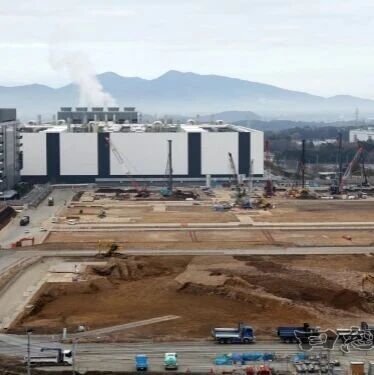
台积电熊本改产3纳米,日本供应链厚度增加
日经中文网· 2026-02-06 02:52
Group 1 - TSMC is constructing a new factory in Kumamoto, Japan, aimed at producing cutting-edge chips for artificial intelligence (AI) [2] - Rapidus plans to mass-produce 2nm products in Hokkaido, enhancing Japan's semiconductor supply chain with stable AI semiconductor production from both northern and southern bases [2] - The Japanese semiconductor equipment and materials sectors are expected to benefit significantly from these developments, as Japan holds a substantial market share in these areas [2] Group 2 - TSMC's CEO, Wei Zhejia, is considering adjustments to the production plan for the Kumamoto factory to manufacture 3nm semiconductors, which may increase the originally estimated investment of $12.2 billion [4] - The 3nm semiconductors will be utilized in NVIDIA's GPUs, highlighting the importance of ensuring a stable supply of advanced semiconductors as new data centers for AI are established in Japan [4] - Japan's semiconductor equipment market holds approximately 30% of the global share, while the materials sector accounts for about 50%, indicating a strong domestic capability to support advanced semiconductor production [4] Group 3 - Tokyo Electron plans to invest 700 billion yen in equipment over the next five years, with a new facility in Kumamoto set to begin operations in spring 2026, increasing development capacity by four times [5] - Canon is investing 50 billion yen by September 2025 to establish a new facility for photolithography equipment used in AI semiconductor assembly [6] - Ibiden plans to invest 500 billion yen over three years starting in 2026 to expand production capacity for packaging substrates used in AI server chips, expected to increase by 2.5 times by 2028 [6] Group 4 - The Japanese government aims to support the semiconductor and AI sectors with over 10 trillion yen by 2030, accelerating the establishment of a cutting-edge semiconductor supply chain [6] - Japan has provided approximately 1.2 trillion yen in subsidies to TSMC's factories and about 2.9 trillion yen to Rapidus, with conditions for TSMC to increase semiconductor production during supply shortages [6] - The competitive landscape for attracting investment in advanced semiconductor manufacturing is intensifying globally, necessitating a comprehensive approach to develop the domestic semiconductor industry, including equipment, materials, and design engineering [6]

阿斯麦入局半导体后工序光刻,撼动佳能垄断
日经中文网· 2026-02-01 00:33
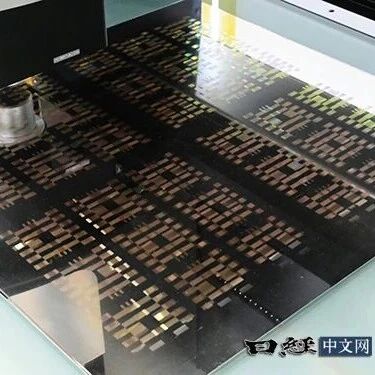
Core Viewpoint - The competition in the semiconductor lithography equipment market is intensifying, particularly in the back-end process, where Canon currently holds a dominant position. However, ASML is entering this market, posing a significant threat to Canon's market share [2][6]. Group 1: Market Dynamics - Canon entered the back-end lithography equipment market in 2011 and has nearly monopolized the sector used by semiconductor giants [2][6]. - ASML, the largest lithography equipment manufacturer, has begun to challenge Canon by launching equipment for the back-end process, which is increasingly important for enhancing the performance of advanced semiconductors [2][4]. - Nikon plans to start mass production of back-end lithography equipment by 2026, further intensifying competition in this space [2][6]. Group 2: Technological Advancements - ASML's new "XT:260" equipment reportedly has a production efficiency four times that of front-end lithography equipment and can handle thicker substrates, addressing issues related to substrate warping caused by multiple chip stacking [6]. - The demand for advanced packaging technology, which combines multiple chips like GPUs and memory, is growing, leading ASML to expand into this area [4][7]. - Canon's sales of lithography equipment are projected to reach 241 units by 2025, nearly doubling over five years, driven by the demand for back-end solutions [6]. Group 3: Industry Trends - The trend towards larger intermediate substrates is emerging, with a shift from 300mm round silicon wafers to larger square substrates to reduce waste [7]. - Companies like Panasonic are also entering the advanced packaging market, developing equipment for vertically stacked chips to meet AI semiconductor demands [7]. - The development direction for back-end technology remains unclear, requiring equipment manufacturers to be adept at capturing industry trends and demands [7].
1→3!“美国出口限制下,更多中企跻身全球芯片设备制造商20强”
Guan Cha Zhe Wang· 2026-01-31 08:23
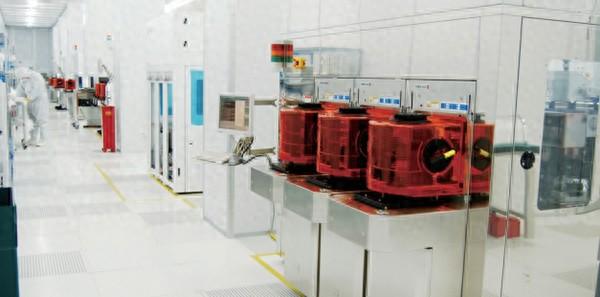
Core Viewpoint - By 2025, three Chinese companies are expected to be among the top 20 global semiconductor equipment manufacturers, a significant increase from one company before the U.S. export restrictions in 2022, indicating rapid growth in China's semiconductor industry [1]. Group 1: Company Rankings and Growth - North Huachuang Technology Group has risen from 8th place in 2022 to 5th place in 2025, following major global players like ASML, Applied Materials, and Lam Research [1]. - New entrant, Zhongwei Semiconductor Equipment (Shanghai) Co., Ltd., ranked 13th, with its core etching equipment reportedly used in 5nm chip production, indicating proximity to global advanced levels [1]. - Shanghai Micro Electronics Equipment (Group) Co., Ltd. (SMEE) ranks 20th, primarily producing photolithography equipment, which is crucial for chip performance [3]. Group 2: Industry Trends and Investments - China is increasing its investment in semiconductor self-sufficiency through national funds and local government support, leading to a rapid rise in the number of equipment manufacturers [3]. - Currently, 20% to 30% of semiconductor equipment is manufactured domestically in China, a significant increase from about 10% three years ago [3]. - The advanced semiconductor manufacturing process involves over 1,000 steps, with Chinese companies now capable of covering all process stages, including deposition, etching, and cleaning [3]. Group 3: Market Dynamics and Future Projections - The Chinese semiconductor equipment market is projected to grow by 35% year-on-year in 2024, reaching $49.5 billion, making it the largest market globally [4]. - ASML's revenue from China is expected to decrease from 33% in 2025 to 20% in 2026 due to U.S. export restrictions, indicating a shift in market dynamics [5]. - Chinese companies are striving to overcome challenges in photolithography technology, with efforts focused on developing extreme ultraviolet (EUV) lithography and utilizing deep ultraviolet (DUV) technology to bypass restrictions [5].
印度芯片,再增新筹码
半导体行业观察· 2026-01-25 03:52
Core Viewpoint - India has initiated a new semiconductor industry, focusing on advanced lithography processes essential for chip manufacturing [1][3] Group 1: Semiconductor Industry Development - The Indian government has announced the establishment of a semiconductor industry, with a focus on lithography technology, which is the most complex and precise part of the semiconductor manufacturing chain [1] - Minister Ashwini Vaishnaw highlighted that ASML, a leading global supplier of lithography equipment, will play a crucial role in India's semiconductor manufacturing [3] - The entry of ASML into India is seen as a significant opportunity for development in the semiconductor sector [3] Group 2: Manufacturing and Production Plans - Several approved semiconductor factories have begun trial production, with commercial production expected to start soon [3] - One of the four semiconductor factories that have started trial production is set to begin commercial operations in February [3] - This development is viewed as a major milestone after 60 years of efforts, reflecting Prime Minister Narendra Modi's commitment to building foundational technologies [3] Group 3: Ecosystem and Market Potential - India is currently establishing a strong and mature electronic ecosystem, making it an opportune time to develop indigenous mobile phone brands [3] - The minister anticipates that local mobile phone brands will emerge within the next 12 to 18 months [3]

中国10种半导体设备国产化率30%、特殊涂层零部件发展情况:产业链、技术工艺、应用领域
材料汇· 2026-01-20 16:00
Core Viewpoint - The article discusses the current state and future trends of the semiconductor equipment market in China, focusing on the localization rates of various equipment types and the growth potential of domestic manufacturers in the semiconductor components sector. Group 1: Semiconductor Equipment Localization Rates - The localization rate for photoresist equipment is projected to be 80-90% by 2024, with major domestic brands like Shengmei Shanghai and Zhichun Technology leading the market [2] - The localization rate for etching equipment is expected to be around 30-40%, with companies such as Zhongwei and Beifang Huachuang making significant contributions [3] - For cleaning equipment, the localization rate is anticipated to be between 30-40%, with domestic players like Shengmei Shanghai and Beifang Huachuang involved [3] - The localization rates for other equipment types, such as chemical mechanical polishing and coating, are lower, ranging from 10-30% and <10% respectively [2][3] Group 2: Market Size and Growth Projections - The semiconductor equipment market in China is projected to grow significantly from 2020 to 2029, with revenue expected to reach substantial figures in billions of yuan [4][18] - The market for semiconductor equipment components is also expected to see growth, with localization rates improving as domestic manufacturers enhance their technological capabilities [15][20] Group 3: Semiconductor Equipment Components Industry Chain - The semiconductor equipment components industry chain includes upstream raw material suppliers and midstream component manufacturers, serving both semiconductor equipment manufacturers and downstream IDM and foundry companies [6][10] - The components are categorized into mechanical, optical, and other types, each with specific applications in semiconductor manufacturing processes [12][19] Group 4: Trends in Surface Treatment Components - The surface treatment components market is defined by stringent requirements for materials, structure, and process precision, which are critical for enhancing wafer quality and ensuring process stability [19] - The domestic market for surface treatment components is expected to see increased localization, driven by advancements in technology and government support for R&D [20][24] Group 5: Special Coating Components Market - The market for special coating components is characterized by high technical barriers and significant potential for domestic substitution, particularly in high-value segments of semiconductor manufacturing [34][40] - The demand for high-performance coatings is rising, driven by the need for enhanced durability and stability in extreme processing environments [46][47] Group 6: Competitive Landscape - As of 2024, the top five companies in the special coating components market hold a combined market share of 55.7%, indicating a concentrated competitive landscape [47][48] - Leading companies have established strong customer relationships through successful validation processes, creating high entry barriers for new entrants [47][48]
半导体设备,2026年最强风口
3 6 Ke· 2026-01-11 04:37
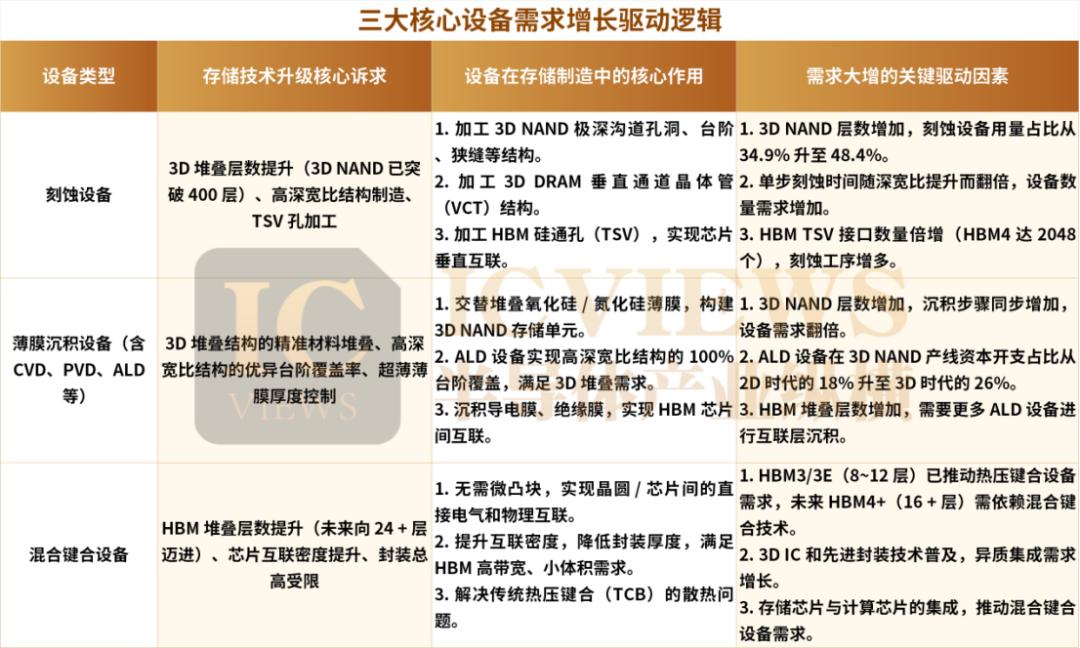
Group 1 - The semiconductor equipment market is experiencing significant growth driven by the demand for AI-related investments, particularly in advanced logic circuits, memory, and packaging technologies [2][3] - The global semiconductor equipment sales are projected to reach a record $133 billion in 2025, with a year-on-year growth of 13.7%, and expected to continue rising to $145 billion in 2026 and $156 billion in 2027 [2] - The wafer fabrication equipment (WFE) sector is anticipated to achieve a sales record of $104 billion in 2024, with an 11% increase to $115.7 billion in 2025, reflecting higher-than-expected investments in DRAM and HBM [2] Group 2 - Major global memory manufacturers are expanding production and upgrading technology, which is a key driver for semiconductor equipment demand [3][4] - Samsung and SK Hynix are accelerating memory capacity expansion, with Samsung focusing on high-end products and SK Hynix preparing to complete a new factory by 2027 [4] - By 2026, South Korea is expected to reclaim the second position in global chip equipment spending, reaching approximately $29.66 billion, a 27.2% increase from 2025 [4] Group 3 - The evolution of storage chips, particularly 3D NAND and DRAM, is driving demand for etching and deposition equipment, with significant increases in the number of layers and complexity of structures [5][6] - The demand for etching equipment is expected to rise sharply as 3D NAND layers increase from 32 to 128, with etching equipment usage rising from 34.9% to 48.4% [10] - The global spending on storage-related equipment is projected to reach $136 billion between 2026 and 2028, with over 40% attributed to 3D NAND investments [11] Group 4 - The demand for deposition equipment is also surging, with the need for more steps in the deposition process as the number of 3D NAND layers increases [11] - Advanced technologies such as atomic layer deposition (ALD) are becoming more critical, with ALD equipment's share in capital expenditures rising from 18% in the 2D era to 26% in the 3D era [11] - HBM technology is increasing the demand for lithography and hybrid bonding equipment due to the need for high-density interconnections and precision [12] Group 5 - Domestic companies are making significant progress in the production of core semiconductor equipment, including etching, deposition, and hybrid bonding devices [14][15] - Companies like Zhongwei, Northern Huachuang, and Yitang Semiconductor are leading in etching equipment, while Northern Huachuang and TuoJing Technology are notable in deposition equipment [14][15] - The hybrid bonding sector is also seeing advancements, with companies like Qinghe Crystal and TuoJing Technology developing innovative bonding solutions for various applications [16][17]