欣旺达

Search documents
金浔资源于12月31日至1月6日招股,获基石投资认购约6026万美元
Zhi Tong Cai Jing· 2025-12-30 23:02
Group 1 - The company, Jin Xun Resources, plans to globally offer 36.7656 million H-shares at a price of HKD 30 per share, with 10% allocated for Hong Kong and 90% for international sales, and an overallotment option of 15% [1] - The expected trading start date for the H-shares on the Hong Kong Stock Exchange is January 9, 2026 [1] - Jin Xun Resources is a leading manufacturer of high-quality cathode copper, ranking fifth among Chinese producers based on production in the Democratic Republic of the Congo (DRC) and Zambia, with production figures of approximately 16,000 tons and 5,000 tons respectively for 2024 [1] Group 2 - The company's revenue for the years 2022, 2023, 2024, and the six months ending June 30, 2025, were RMB 637 million, RMB 676 million, RMB 1.77 billion, and RMB 596 million, RMB 964 million respectively [2] - Net profits for the same periods were RMB 83.5 million, RMB 29.1 million, RMB 202 million, RMB 93.1 million, and RMB 135 million respectively [2] - The company has entered cornerstone investment agreements with several investors, including Glencore AG and others, agreeing to subscribe for shares totaling approximately USD 60.26 million under certain conditions [2] Group 3 - The estimated net proceeds from the global offering, assuming the share price is HKD 30 and the overallotment option is not exercised, is approximately HKD 1.0426 billion [2] - About 80% of the proceeds will be used to expand the core business, 10% for repaying certain interest-bearing bank loans, and 10% for working capital and general corporate purposes [2]
欣旺达突遭天价索赔,市值蒸发47亿元,涉极氪001 WE 86车型
Hua Xia Shi Bao· 2025-12-30 12:53
Core Viewpoint - XINWANGDA (300207.SZ) experienced a significant stock price drop of 11.39% on December 29, following a lawsuit from its former partner, Weirui Electric Vehicle Technology (Ningbo) Co., Ltd., claiming damages of approximately 2.314 billion yuan due to alleged quality issues with battery cells supplied by XINWANGDA [2][3][4]. Group 1: Company Background and Financial Impact - XINWANGDA was selected as a designated supplier for Weirui's PMA platform project in April 2021, providing battery cells for various electric vehicle brands under Geely, including Zeekr and smart [4][5]. - In 2021, XINWANGDA's revenue from power batteries reached 2.933 billion yuan, a 584.67% increase from 2020's 428 million yuan [4]. - Following the lawsuit announcement, XINWANGDA's market capitalization dropped by over 60 billion yuan, reducing its total market value to 487 billion yuan [3][4]. Group 2: Legal and Market Reactions - The lawsuit claims that battery cells delivered by XINWANGDA from June 2021 to 2023 had quality issues, leading to significant losses for Weirui [5][10]. - Legal experts noted that while lawsuits over battery quality are not uncommon, claims involving such high amounts are rare, indicating potential for increased disputes as electric vehicle sales rise [2][6]. - On December 30, XINWANGDA's stock price showed a slight recovery, closing at 27.19 yuan per share, with a market capitalization of 502 billion yuan [2][4]. Group 3: Industry Context and Implications - The lawsuit highlights a growing trend of quality disputes between automakers and battery suppliers, although high-value claims remain infrequent [6][10]. - The impact of the lawsuit extends beyond financial implications, potentially affecting customer trust, supply qualifications, and brand reputation in the competitive electric vehicle market [10].


喜娜AI速递:今日财经热点要闻回顾|2025年12月30日
Xin Lang Cai Jing· 2025-12-30 11:38
Group 1: Precious Metals Market - The precious metals market experienced a significant drop on December 29, with spot gold falling over 4%, silver dropping over 9%, palladium plummeting over 15%, and platinum decreasing over 14% [2][7] - The decline was triggered by the CME Group's announcement to raise margin requirements for various metal contracts, leading to profit-taking by many traders [2][7] - There are rumors regarding a major bank facing a margin call on silver futures, although the authenticity of this claim is uncertain [2][7] Group 2: Tariff Adjustments - The State Council's Tariff Commission announced a tariff adjustment plan effective January 1, 2026, which will modify import duty rates and categories for key components, advanced materials, energy resources, and smart bionic robots [2][7] - Industry insiders believe this adjustment will positively support the transformation, innovation, and international market expansion of related industries [2][7] Group 3: Corporate Developments - WISCO Development announced plans for a major asset restructuring involving the acquisition of stakes in WISCO Mining and Luzhong Mining from its controlling shareholder, with stock trading suspended starting December 30 for up to 10 trading days [2][7] - Multiple gold jewelry brands in China have significantly adjusted their gold jewelry prices, reflecting the impact of the recent precious metals market crash [3][8] - Geely is suing Aoxinanda for 2.314 billion yuan over quality issues with battery cells delivered between 2021 and 2023, causing Aoxinanda's stock to drop by 15.97% [9] Group 4: Real Estate Market - Goldman Sachs predicts that the large-scale selling of homes by Chinese residents may end around 2026-2027, with property prices stabilizing in 2027, and suggests a stimulus plan of at least 8 trillion yuan to support the market [9]


23亿诉讼重创股价,欣旺达港股IPO平添“变数”?
Huan Qiu Lao Hu Cai Jing· 2025-12-30 11:30
Core Viewpoint - The company Xiwanda faces significant challenges due to a lawsuit related to product quality issues, which has led to a substantial drop in its stock price and may hinder its IPO process in Hong Kong [1][2][5]. Financial Impact - Xiwanda's stock price fell by 11.39% in a single day, resulting in a market value loss of over 6 billion yuan [1][2]. - The lawsuit involves a claim for 2.314 billion yuan, which is nearly equivalent to the company's projected net profit for 2023 and 2024 combined [3][5]. - Xiwanda's battery business revenue from 2021 to 2023 was reported at 2.933 billion yuan, 12.687 billion yuan, and 10.795 billion yuan respectively [1]. Business Strategy and Market Position - Xiwanda has adopted a low-price competition strategy, with its battery business gross margin at only 8.80% in 2024, down 2.42 percentage points from the previous year [1][7]. - The company has rapidly expanded its battery production capacity, with significant investments totaling nearly 100 billion yuan in 2021 and 2022 alone [6][7]. - Despite increasing production volume, Xiwanda's profitability has not improved, with cumulative losses reaching 6.859 billion yuan from 2021 to mid-2025 [8]. Customer Relationships and Partnerships - Xiwanda's key customer, Li Auto, has increased its procurement share to 30%, indicating a strong partnership despite the ongoing lawsuit [3][4]. - The lawsuit may damage customer trust and affect future procurement decisions, posing a risk to Xiwanda's market expansion [3]. IPO and Financing Challenges - Xiwanda's IPO process in Hong Kong may be significantly impacted by the lawsuit, which is seen as a major obstacle [5][10]. - The company has raised over 12 billion yuan in financing, attracting investments from notable firms, but the ongoing legal issues could deter future investment [5][10].
维通利深交所主板IPO通过上市委会议 拟募资近15.94亿元
Zhi Tong Cai Jing· 2025-12-30 11:12
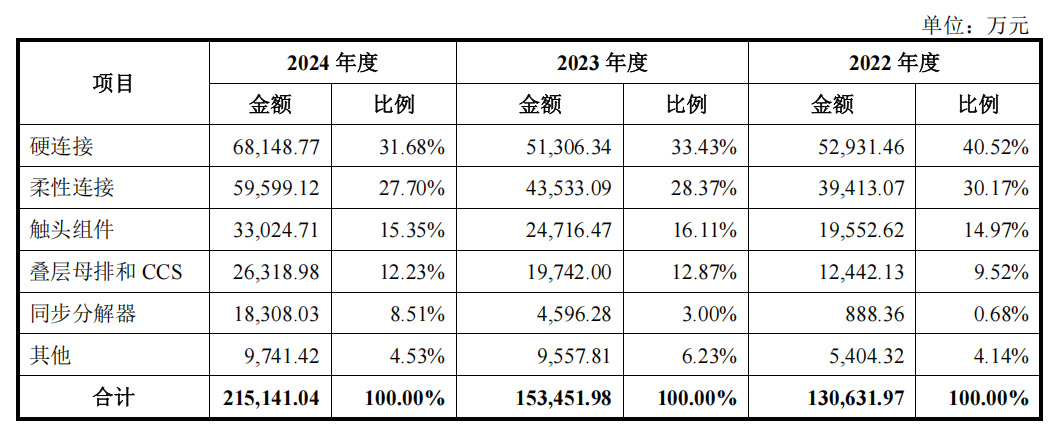
Core Viewpoint - Beijing Weitongli Electric Co., Ltd. has successfully passed the listing committee meeting of the Shenzhen Stock Exchange, aiming to raise 1.59374 billion yuan [1] Group 1: Company Overview - Weitongli specializes in the research, production, and sales of a series of electrical connection products, including hard connections, flexible connections, contact components, laminated busbars, and CCS [1] - The company aims to provide high-performance electrical connection products and customized solutions to global customers, enhancing safety, reliability, and intelligence in electrical connections [1] Group 2: Clientele and Market Position - Weitongli serves high-end clients in various sectors, with products recognized by leading companies in their respective fields, including Siemens, Schneider, ABB, Hitachi Energy, and GE in the electrical power sector [1] - In the new energy vehicle sector, clients include BYD, Stellantis, Leap Motor, and others [1] - The company also supplies products to major players in the wind and solar storage sector, such as Goldwind Technology and Sungrow Power [1] - In the rail transportation sector, clients include CRRC, Westinghouse, and Alstom [1] Group 3: Financial Performance - The company's revenue for 2022, 2023, and 2024 is approximately 1.437 billion yuan, 1.699 billion yuan, and 2.390 billion yuan, respectively [3] - Net profit for the same years is approximately 115 million yuan, 186 million yuan, and 271 million yuan [3] - The total assets as of December 31, 2024, are projected to be 2.357 billion yuan, with equity attributable to shareholders at 1.517 billion yuan [4] - The company’s operating income and net profit are expected to show significant growth, with a projected net profit margin increase [4]
欣旺达(300207) - 关于全资子公司与专业投资机构共同投资的进展公告
2025-12-30 09:50
证券代码:300207 证券简称:欣旺达 公告编号:<欣>2025-106 欣旺达电子股份有限公司 关于全资子公司与专业投资机构共同投资的进展公告 本公司及董事会全体成员保证信息披露内容的真实、准确和完整,没有 虚假记载、误导性陈述或重大遗漏。 一、与专业投资机构共同投资概述 欣旺达电子股份有限公司(以下简称"公司")全资子公司深圳市前海弘盛 创业投资服务有限公司(以下简称"前海弘盛")与普通合伙人深圳市远致储能 私募股权基金管理有限公司(以下简称"远致储能")、有限合伙人深圳市新型 储能产业股权基金合伙企业(有限合伙)(以下简称"新型储能")、有限合伙 人港华能源投资有限公司(以下简称"港华能源")签署《深圳市远致港欣智慧 能源产业投资私募股权基金合伙企业(有限合伙)合伙协议》,共同投资深圳市 远致港欣智慧能源产业投资私募股权基金合伙企业(有限合伙)(以下简称"远 致港欣"或"合伙企业"),该合伙企业认缴出资总额为人民币30,000万元,其 中有限合伙人前海弘盛认缴出资额为人民币6,000万元,认缴比例为20%;有限合 伙人新型储能认缴出资额为人民币14,700万元,认缴比例为49%;有限合伙人港 华能源认 ...
中国汽车工业协会新能源汽车电池分会筹备工作会议在京成功召开
Zheng Quan Shi Bao Wang· 2025-12-30 09:27
Group 1 - The core viewpoint of the article is the establishment of the Battery Branch by the China Association of Automobile Manufacturers (CAAM) to enhance the development of the new energy vehicle industry in China and to serve as a bridge between government, automotive, and battery enterprises [1] - The meeting held on December 29 in Beijing included participation from 28 companies, such as CATL, FAW Group, BYD, Geely, and Sunwoda, indicating strong industry support for the initiative [1] - The formation of the Battery Branch aims to consolidate and expand China's advantages in the new energy vehicle sector and promote high-quality development across automotive and battery industries [1]


撬动千亿级新增长极!记者探访深圳宝安低空经济产业
Hua Xia Shi Bao· 2025-12-30 08:08
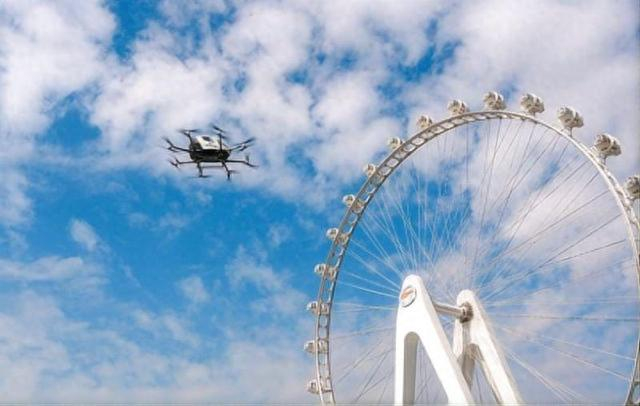
Core Viewpoint - The low-altitude economy has been integrated into national strategy as a key area for cultivating new productive forces, with Shenzhen's Bao'an District leading the transformation from industrial aggregation to value ecology [2][4]. Group 1: Low-altitude Economy Development - Bao'an District is leveraging its comprehensive resources and "1+3+N" low-altitude scene layout to initiate profound changes in the low-altitude economy [2]. - The "Baojing Chuangxiang" low-altitude economy scene docking conference resulted in signed and intended investments totaling 670 million yuan, highlighting the industrialization and ecological progress of the low-altitude economy [2]. - The focus has shifted from "competing for airspace" to "building scene ecology," reshaping the relationships among government, state-owned enterprises, and market entities [4]. Group 2: Collaborative Mechanisms - Bao'an's approach involves an innovative collaborative mechanism where the government facilitates, state-owned enterprises open up, associations connect, and enterprises engage [3]. - Bao'an Transportation Group is transforming from a traditional builder to a "scene operator" and "public service provider," emphasizing demand-driven infrastructure development [5][6]. - The association plays a dual role as an "ecological connector" and "standard setter," gathering over 150 enterprises to guide the industry towards sustainable development [8]. Group 3: Safety and Compliance - Safety is identified as the core bottom line for the development of the low-altitude economy, with a focus on balancing safety regulations and development speed [10][12]. - The establishment of a comprehensive airspace management system is crucial for achieving this balance, with local governments playing a significant role [10]. - Companies are encouraged to proactively build their airworthiness systems, shifting the mindset from "I need airworthiness" to "I want airworthiness" [9]. Group 4: Technological Advancements - Breakthroughs in core components, such as the "Xinyunxiao 1.0" low-altitude power battery with a density of 320Wh/kg, are essential for commercial viability [12]. - The commercial path for low-altitude technology requires a delicate balance between stringent safety regulations and the urgent expectations for returns from capital [12]. Group 5: Ecosystem Development - Bao'an aims to create a self-sustaining, iterative "circular" industrial ecosystem, moving from linear growth to networked value elevation [13]. - The collaboration between state-owned enterprises and associations provides a platform for various enterprises to find development opportunities [13]. - The integration of low-altitude economy with marine industries, static transportation, and urban management is fostering a synergistic effect, reducing the cost of introducing new business models [14].
极氪美股退市仅3天即发起23亿天价索赔 吉利实施私有化前是否刻意隐瞒重大信息?
Xin Lang Cai Jing· 2025-12-30 07:33
Core Viewpoint - Geely's subsidiary Zeekr has filed a lawsuit against battery supplier Sunwoda, claiming damages of 2.314 billion yuan due to quality issues with battery cells supplied over a period of two years, raising questions about the timing and motivations behind the lawsuit following Zeekr's recent privatization and delisting from the U.S. stock market [1][2][11]. Group 1: Lawsuit Details - The lawsuit was filed by Weir Electric Vehicle Technology, a key subsidiary of Zeekr, which has been involved in the development and manufacturing of core components for electric vehicles since its establishment in 2017 [2]. - Weir Electric claims that the battery cells delivered by Sunwoda from June 2021 to December 2023 had quality issues, leading to significant financial losses, including the principal claim of 2.314 billion yuan plus interest and legal costs [2][3]. - The relationship between Weir Electric and Sunwoda began in April 2021, with the first Zeekr model equipped with Sunwoda cells delivered in October 2021 [2]. Group 2: Market Impact and Financial Losses - Zeekr's rapid delisting from the U.S. market occurred just 19 months after its IPO, resulting in a direct loss of approximately 3.5 billion yuan for Geely, which raised concerns about the company's financial health and strategic decisions [7][8]. - The IPO raised a total of 3.62 billion yuan, but after accounting for underwriting fees and other costs, the net external funding was only about 1.496 billion yuan [8]. - Geely's total cash outlay for the privatization was around 24 billion yuan, with a significant portion of shareholders opting for cash payouts, leading to a direct cash loss of about 5 billion yuan [8]. Group 3: Quality Issues and Customer Feedback - The battery cells in question were primarily used in the Zeekr 001 WE86 model, which saw over 70,000 units sold in 2022, with more than 60% of those being the WE86 version [3]. - Customers reported issues such as slow charging speeds and discrepancies in advertised range, with complaints escalating in 2023 regarding battery performance and safety concerns [3][4]. - By the end of 2023, Weir Electric began reducing purchases from Sunwoda, shifting to products from CATL and Geely's own battery company [4]. Group 4: Strategic Implications of the Lawsuit - If Zeekr wins the lawsuit, the compensation could significantly improve its financial metrics, including net profit and cash flow, as the claimed amount exceeds its losses for the first three quarters of 2025 [9]. - The lawsuit could also help restore Zeekr's brand reputation by establishing supplier accountability for quality issues, potentially enhancing its negotiating power in future supply chain discussions [10]. - The timing of the lawsuit, following the delisting, raises questions about whether Geely aimed to avoid disclosure obligations under U.S. regulations, allowing for a more strategic approach to litigation [11][12].
锂电行业跟踪:动力和储能电池需求旺盛,储能电芯和系统均价上涨
Shanghai Aijian Securities· 2025-12-30 06:41
Investment Rating - The industry is rated as "Outperform" compared to the market [3]. Core Insights - The demand for power and energy storage batteries is strong, with an increase in average prices for storage cells and systems [3][4]. - In November 2025, domestic battery production reached 176.3 GWh, a year-on-year increase of 49.66% and a month-on-month increase of 3.34% [3]. - The production of lithium iron phosphate (LFP) cathode materials in November 2025 was 268,900 tons, up 29.43% year-on-year and 0.75% month-on-month, with a capacity utilization rate of 62.53% [3]. - The price of industrial-grade lithium carbonate rose to 116,000 CNY/ton as of December 26, 2025, with a weekly increase of 14.85% [3]. - The average price of LFP (power type) reached 45,100 CNY/ton, increasing over 15% since December 19, 2025 [3]. - The average price of square LFP energy storage cells remained stable, with slight increases noted in December 2025 [3]. - In November 2025, the monthly loading volume of LFP batteries was 75.3 GWh, a year-on-year increase of 43.62% and a month-on-month increase of 11.56% [3]. - The export volume of Chinese power batteries in November 2025 was 21.2 GWh, a year-on-year increase of 69.60% [3]. Summary by Sections Production - In November 2025, the production of LFP cathode materials and batteries showed significant growth compared to the same period in 2024 [3][4]. Prices - Prices for key materials such as lithium carbonate and LFP have seen substantial increases, indicating a tightening supply [3][4]. Domestic Demand - The domestic demand for batteries is robust, with record loading volumes and increased tender capacities for new energy storage projects [3][4]. Overseas Demand - The export market for Chinese power batteries is expanding, with notable year-on-year growth in November 2025 [3][4].