
光迅科技

Search documents
阿里的磐久超节点和供应链
傅里叶的猫· 2025-09-27 10:14
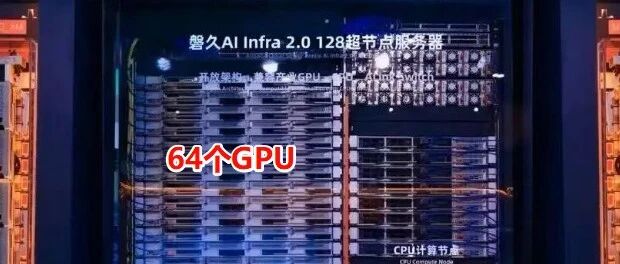
Core Viewpoint - The article provides a detailed comparison of Alibaba's super node with NVIDIA's NVL72 and Huawei's CM384, focusing on GPU count, interconnect technology, power consumption, and ecosystem compatibility. Group 1: GPU Count - Alibaba's super node, known as "Panjun," utilizes a configuration of 128 GPUs, with each of the 16 computing nodes containing 4 self-developed GPUs, totaling 16 x 4 x 2 = 128 GPUs [4] - In contrast, Huawei's CM384 includes 384 Ascend 910C chips, while NVIDIA's NVL72 consists of 72 GPUs [7] Group 2: Interconnect Technology - NVIDIA's NVL72 employs a cable tray interconnect method using NVLink proprietary protocol [8] - Huawei's CM384 also uses cable connections between multiple racks [10] - Alibaba's super node features an orthogonal interconnect without a backplane, allowing for direct connections between computing and switch nodes, reducing signal transmission loss [12][14] Group 3: Power and Optical Connections - NVIDIA's NVL72 uses copper for scale-up connections, while Huawei's CM384 employs optical interconnects, leading to higher costs and power consumption [15] - Alibaba's super node uses electrical interconnects for internal scale-up, with some connections made via PCB and copper cables, while optical interconnects are used between two ALink switches [18][19] Group 4: Parameter Comparison - Key performance metrics show that NVIDIA's GB200 NVL72 has a BF16 dense TFLOPS of 2,500, while Huawei's CM384 has 780, indicating a significant performance gap [21] - The HBM capacity for NVIDIA's GB200 is 192 GB compared to Huawei's 128 GB, and the scale-up bandwidth for NVIDIA is 7,200 Gb/s while Huawei's is 2,800 Gb/s [21] Group 5: Ecosystem Compatibility - Alibaba claims compatibility with multiple GPU/ASICs, provided they support the ALink protocol, which may pose challenges as major manufacturers are reluctant to adopt proprietary protocols [23] - Alibaba's GPUs are compatible with CUDA, providing a competitive advantage in the current market [24] Group 6: Supply Chain Insights - In the AI and general server integration market, Inspur holds a 33%-35% market share, while Huawei's share is 23% [33] - For liquid cooling, Haikang and Invec are key players, each holding 30%-40% of the market [35] - In the PCB sector, the number of layers has increased to 24-30, with low-loss materials making up over 60% of the composition, significantly increasing the value of single-card PCBs [36]


民生证券:互联网大厂云出海元年开启 海内外AI需求双轮驱动
智通财经网· 2025-09-26 07:24
Core Insights - Major domestic internet companies are launching cloud overseas strategies and utilizing debt financing to support these initiatives [1] - Alibaba Cloud plans to invest over 380 billion RMB in the next three years for cloud and AI hardware infrastructure, exceeding the total investment of the past decade [1] - Tencent Cloud has embraced internationalization, achieving high double-digit growth in international business over the past three years, with a doubling of overseas customer scale [2] Group 1: Cloud Overseas Strategies - Domestic internet giants are releasing cloud overseas strategic plans and leveraging debt financing to establish a foundation for these initiatives [1] - Alibaba Cloud aims to create a global cloud computing network covering China, Japan, South Korea, Southeast Asia, the Middle East, Europe, and the Americas, with a unified technical architecture and service platform [1] - Tencent Cloud has completed multiple product and function upgrades to adapt to the global technology ecosystem, with over 90% of internet companies and 95% of leading gaming companies choosing Tencent Cloud for their overseas ventures [2] Group 2: AI and Cloud Integration - The demand for AI overseas from internet giants is driving rapid expansion, with Tencent integrating models, computing power, and data across various sectors [2] - Alibaba is accelerating the deployment of AI applications to support numerous AI application enterprises [2] - ByteDance's overseas AI product matrix includes various fields such as chatbots, education, and emotional companionship, while Baidu is advancing its AI applications like Robotaxi and AI cameras [2][3] Group 3: Market Demand - There is a clear demand for AI and cloud solutions from Chinese enterprises, including industry leaders like BYD and Midea, as well as emerging unicorns like miHoYo [3] - The overseas market is experiencing significant growth in demand for localized AI applications, providing new business opportunities for internet giants [3] Group 4: Investment Recommendations - Suggested stocks include Alibaba Group-W (09988), Tencent Holdings (00700), and Baidu Group-SW (09888) in the cloud platform sector [4] - For computing power leasing, recommended stocks are Hongjing Technology (301396.SZ), Xiechuang Data (300857.SZ), and Youfang Technology (688159.SH) [4] - In the optical communication sector, notable companies include Dekeli (688205.SH), Shijia Photon (688313.SH), and Guangku Technology (300620.SZ) [5]


AI之光-光的新技术CPO和薄膜铌酸 锂
2025-09-26 02:28
Summary of Conference Call Records Industry Overview - The conference call discusses the AI industry and its related technologies, particularly focusing on the optical and semiconductor sectors, including CPO (Co-Packaged Optics) and thin-film lithium niobate technologies [1][2][4]. Key Points and Arguments AI Industry Dynamics - Short-term market fluctuations are normal, with significant structural rotation observed. Leading overseas computing chain companies like Xuchuang and Xinyi Sheng are expected to show strong performance and valuation support [1][2]. - The third quarter report window in October is anticipated to reinforce AI industry logic, potentially leading to a new market rally [1][4]. - After October, valuations for leading overseas computing chain companies are expected to switch to over 30 times next year's earnings, while current valuations remain below 20 times due to rapid performance release [1][4]. Domestic Computing Chain - The domestic computing chain, particularly in the edge computing sector, is also noteworthy. The fourth quarter is seen as a catalyst-rich period, with significant investments from major players like Alibaba Cloud and Huawei [1][5]. - Events such as the ByteDance AI conference and Huawei Mate 80 launch are expected to catalyze market movements, leading to a bullish trend in the autumn [1][5]. CPO and Thin-Film Lithium Niobate Technologies - CPO technology aims to reduce power consumption in data centers by eliminating DSP in optical modules, potentially lowering power usage by 30%-40% [1][6][7]. - Thin-film lithium niobate technology enhances modulation rates and is suitable for high-performance applications like 3.2T [3][24]. - The industry is expected to see a shipment volume of around 30,000 units by 2026, primarily led by NVIDIA [14][15]. Market Acceptance and Challenges - The acceptance of CPU solutions in North American data centers is gradually increasing, with major clients including Google, Meta, and Microsoft [15]. - Current challenges for CPO technology include low yield rates (around 50%), which lead to higher costs. If yield rates improve to 80%, market penetration is expected to increase [14][17]. Additional Important Insights - The optical module industry is experiencing rapid growth, with significant measures being taken to reduce power consumption, such as removing DSP and improving connection methods [8][9]. - The thin-film lithium niobate industry chain consists of several stages, including crystal growth, wafer cutting, chip manufacturing, and sales to optical module manufacturers [29][30]. - Companies like Nio Optoelectronics and Guangke Technology are noted for their competitive edge in the thin-film lithium niobate chip sector [30]. Conclusion - The AI and optical technology sectors are poised for significant growth, driven by advancements in CPO and thin-film technologies. The upcoming quarterly reports and major industry events are expected to catalyze market movements and reinforce investment opportunities in these areas [1][4][5].

中原证券晨会聚焦-20250926
Zhongyuan Securities· 2025-09-26 01:14
Core Insights - The report highlights a positive outlook for the semiconductor industry, with domestic companies showing strong performance in AI computing power and significant growth in revenue and profit [36][38]. - The automotive sector is experiencing a rebound, with notable increases in production and sales, particularly in the electric vehicle segment, supported by favorable policies [22][23]. - The report emphasizes the importance of the technology bond market in supporting innovation, particularly for private enterprises, which currently have low participation rates [10][12]. Domestic Market Performance - The A-share market showed slight fluctuations, with the Shanghai Composite Index closing at 3,853.30, down 0.01%, while the Shenzhen Component Index rose by 0.67% to 13,445.90 [3][4]. - The average P/E ratios for the Shanghai Composite and ChiNext are 15.72 and 50.19, respectively, indicating a suitable environment for medium to long-term investments [9][14]. Industry Analysis - The semiconductor industry reported a 23.84% increase in August, outperforming the Shanghai Composite Index, with integrated circuits rising by 31.47% [36]. - The automotive industry saw a production and sales increase of 8.66% and 10.15% respectively in August, with electric vehicle sales maintaining strong growth [22][23]. - The technology bond market has evolved since its inception in 2015, with state-owned enterprises dominating issuance, while private enterprises account for only 10% [11][12]. Investment Recommendations - The report suggests focusing on sectors with stable fundamentals and high dividend yields, such as engineering machinery and mining equipment [19][20]. - It recommends monitoring investment opportunities in the semiconductor and automotive sectors, particularly in AI computing and electric vehicles [14][36]. - The report advises investors to remain cautious and avoid blind chasing of high prices, while looking for structural optimization opportunities [9][14].

深交所组织上市公司赴韩路演 韩国投资者对中国市场信心增强
Shang Hai Zheng Quan Bao· 2025-09-25 18:14
Group 1 - The event "Investing in New Opportunities in China" was held in Seoul, showcasing five Shenzhen-listed companies to over 60 Korean investors, highlighting the companies' operational status, investment value, and future development plans [1] - Korean investors expressed increased confidence in the Chinese market, recognizing the innovative vitality and development potential of Chinese enterprises through direct communication with company management [1][2] - Chinese companies are seen as transitioning from "technology followers" to "standard setters" in the global value chain, particularly in sectors like semiconductors, due to their strong R&D investments [2] Group 2 - The rapid development of China's technology innovation has led to the emergence of globally influential tech products, supporting the optimization of China's asset valuation system [3] - The stability and growth potential of China, as the world's second-largest economy, make it a preferred market for international investors amid rising geopolitical risks and economic uncertainties [3] - The event is part of a series organized by the Shenzhen Stock Exchange to enhance mutual understanding and trust between domestic companies and foreign investors, thereby boosting confidence in Chinese assets [4] Group 3 - The Shenzhen Stock Exchange plans to continue enhancing market attractiveness and inclusivity, aiming to create a favorable environment for global investors to participate in the Chinese capital market [5]


全光运力成为数字经济高质量发展新引擎
Zheng Quan Ri Bao· 2025-09-25 17:26
Core Insights - The development of all-optical capacity networks is crucial for the digital economy, enabling efficient access to computing power and driving digital transformation [1][2] - The China Academy of Information and Communications Technology (CAICT) emphasizes the importance of all-optical capacity as a key component for high-quality development in computing infrastructure [1][2] Industry Developments - The forum held by CAICT discussed the construction of all-optical capacity networks to support millisecond-level computing access across various industries [1][2] - Recommendations were made to enhance capacity planning, strengthen network technology, and accelerate the integration of computing and networking services [2] Technological Advancements - Telecom companies are leading the construction of all-optical capacity networks, with China Unicom and China Mobile outlining their strategies to enhance computing capabilities and expand application scenarios [4] - Internet companies are also actively developing solutions, such as edge GPU computing pools, to leverage all-optical networks for cloud computing services [4] Market Opportunities - The demand for all-optical capacity is driving companies in the optical module sector, such as Zhongji Xuchuang and NewEase, to accelerate the development of high-speed optical modules [5] - Companies like Longfei Fiber and Hengtong Optics are focusing on new fiber technologies to support long-distance, high-capacity transmission [5] Business Model Transformation - The evolution of all-optical capacity is not just a technological upgrade but also a transformation in business models, making computing power as accessible as utilities like water and electricity [6]
中国资产,闪耀首尔!韩国机构:看好发展潜力!
Zheng Quan Shi Bao· 2025-09-25 15:47
Group 1 - The event "Investing in New Opportunities in China" was held in Seoul, featuring five Shenzhen-listed companies from sectors like artificial intelligence, information technology, and new energy [1][3] - Korean investors expressed increased confidence in investing in the A-share market after direct communication with the management of Shenzhen-listed companies, highlighting the innovative vitality and development potential of Chinese enterprises [1][3][8] - The event is part of a series aimed at enhancing the attractiveness and inclusivity of the capital market, with plans for continued engagement with international investors [1][4] Group 2 - The participating companies showcased their investment value through operational data and future plans, emphasizing their competitive advantages in the global supply chain, market space, and technology commercialization capabilities [3][4] - Korean investors noted that Chinese companies are transitioning from "technology followers" to "standard setters," indicating a growing importance in the global value chain [3][4] - The event's success reflects the increasing recognition of Chinese assets among Korean institutional investors, particularly in the context of rising geopolitical risks and economic uncertainties [7][8] Group 3 - The participating companies, including Keda Xunfei and Greenme, highlighted their localization efforts and technological innovations in overseas markets, enhancing their international competitiveness [5][6] - Korean investors are increasingly focusing on non-U.S. markets, recognizing China's advancements in AI and robotics, which are seen as pivotal for future technological competition [8][9] - The overall sentiment among Korean investors is optimistic regarding the long-term development prospects of Chinese companies, particularly in sectors like robotics, AI, new energy, and consumer electronics [8][9]
中国资产,闪耀首尔!韩国机构:看好发展潜力!
证券时报· 2025-09-25 15:44
Core Viewpoint - The article highlights the successful roadshow event held by Shenzhen Stock Exchange in Seoul, showcasing the investment potential of five Shenzhen-listed companies in the fields of artificial intelligence, information technology, and new energy, which has enhanced Korean investors' confidence in the Chinese market [2][4][10]. Group 1: Event Overview - On September 25, 2025, Shenzhen Stock Exchange hosted the "Investing in New Opportunities in China" roadshow in Seoul, featuring executives from five companies: iFlytek, Grinmei, Dongshan Precision, Shuanghuan Transmission, and Guangxun Technology [2]. - The event was attended by over 60 Korean investors who engaged in deep discussions with company management about operational performance, investment value, and future development plans [2][4]. Group 2: Investment Value Presentation - The roadshow focused on three cutting-edge sectors: artificial intelligence, information technology, and new energy, with companies presenting their operational data and future strategies to showcase their investment value [4]. - Korean investors expressed that face-to-face communication allowed them to perceive the innovative vitality of Chinese enterprises and gain a more intuitive understanding of the development of new productive forces in China [4][10]. Group 3: Competitive Advantages of Chinese New Productive Forces - The unique competitive advantages of Chinese new productive forces that attract Korean capital include a globally unique supply chain system, vast market space, and the ability to commercialize cutting-edge technologies [5]. - Korean investors noted that Chinese companies are transitioning from "technology followers" to "standard setters," establishing significant positions in the global value chain through high-intensity R&D and patent strategies [5][8]. Group 4: Global Competitiveness of Shenzhen Companies - In the context of global industrial chain restructuring, the development of Chinese new productive forces is expected to promote the globalization of the Chinese economy and attract more foreign investment [7]. - Companies like iFlytek and Grinmei have successfully localized operations and innovated technologies in overseas markets, enhancing their international competitiveness and sustainable development potential [8]. Group 5: Recognition of Chinese Assets by Korean Institutions - The event's positive reception underscores the attractiveness of the Chinese market, with Korean investors increasingly recognizing the rapid technological innovation in China and its potential for long-term investment [10][11]. - Korean institutions are gradually shifting their asset allocation focus towards non-U.S. markets, acknowledging China's advancements in AI and robotics, and forming a consensus on China's leading position in future technological competition [10].

深交所首尔“带货” 韩国投资者瞄准中国AI、机器人资产
2 1 Shi Ji Jing Ji Bao Dao· 2025-09-25 12:32
Group 1 - The event "Investing in New Opportunities in China" held by Shenzhen Stock Exchange in Seoul showcased five companies from sectors like AI, information technology, and new energy, enhancing investor confidence in A-shares through direct communication with company executives [1][6] - Korean investors expressed a strong recognition of China's innovative capabilities and development potential, particularly in the context of global supply chain restructuring and the shift from "technology following" to "standard setting" by Chinese firms [4][5] - The event is part of a broader initiative by Shenzhen Stock Exchange to promote Chinese companies abroad, with over a hundred companies participating in global roadshows to enhance mutual understanding and trust [6][7] Group 2 - Companies like iFlytek and Greenme have demonstrated significant technological breakthroughs through high R&D investments, contributing to their core competitiveness and attracting investor interest [4][5] - Korean institutional investors are increasingly focusing on non-U.S. markets, recognizing China's advancements in AI and robotics, which are seen as pivotal for future technological competition [6][7] - The overall sentiment among Korean investors is optimistic regarding the long-term development prospects of Chinese companies, particularly in the context of recovering A-share and Hong Kong markets [7]

深市上市公司全球路演来到首尔站 韩国投资者看好中国创新机遇
Zheng Quan Ri Bao Zhi Sheng· 2025-09-25 12:11
Group 1 - The event "Investing in New Opportunities in China" was held in Seoul, showcasing five Shenzhen-listed companies from sectors like AI, information technology, and new energy, which engaged with over 60 Korean investors [1] - Korean investors expressed a deeper understanding of the innovation vitality and development potential of Chinese companies through direct communication with management [1][3] - Companies like Keda Xunfei and Gree New Energy highlighted their latest technological breakthroughs achieved through high R&D investments, indicating a shift from "technology following" to "standard setting" in the global value chain [2][3] Group 2 - The integration of international strategies with localized operations has enhanced the competitiveness of Chinese companies in the global market, attracting significant attention from foreign investors [2][3] - Korean institutional investors recognized China's rapid technological innovation, particularly in AI and robotics, and formed a consensus on China's leading position in future tech competition [3][4] - The event is part of a series organized by the Shenzhen Stock Exchange to promote mutual understanding and trust between domestic companies and foreign investors, enhancing the appeal of Chinese assets [5][6]